Feeds:
Posts
Comments

Archive for the ‘Sport’ Category


One of the iconic images of the great British seaside holiday of the fifties and sixties is of happy families playing beach cricket.  Everyone joined in, playing with children’s bats, balls and stumps that reduced fathers who fancied themselves as Dexter or Sobers to the same level of competence as their seven year old sons, non-sporting wives and even the family dog (when they were still allowed on the beach between May and September). Truly, we had “never had it so good”.

Sadly, the advent of the foreign package holiday, breakdown in traditional family structures and expansion of alternative leisure pursuits, all contrived to render such a scene virtually obsolete.  Over the past weekend, therefore, I embarked upon a one man (at least for now) campaign to revive this venerable but floundering tradition, pitching up on Ramsgate Main Sands with my wife at 2pm on Sunday for an impromptu game.

I say impromptu because my planning had left something to be desired – a brief glance at the tide times beforehand would have revealed that this was the worst time of the day to start.  Nevertheless, after twenty minutes inspecting the fast diminishing slither of sand along the bay, I found a strip that was marginally more playable than the Rose Bowl.  It quickly became clear, however, that if the game was to be remotely watchable, or attract other participants, it was pointless bowling anything other than full tosses because once the ball had pitched, it was firmly plugged into the sand.

“Sticky dog” wicket aside, it proved a batsman’s paradise as the leg side boundary shortened sharply with the onrushing scum brown tide, ensuring that the merest of flicks resulted in a boundary.  That said, the smacking of  my extra cover drives against the sea wall was more satisfying.  Frank Keating once wrote that Ian Botham played a net “as if he is on Weston-super-Mare beach and the tide is coming in fast”.  I’d like to think that if you substituted Broadstairs for Weston, that might accurately describe my batting on this day.

Public interest was negligible, evidenced by a succession of families, oblivious of the sacred nature of my work, plodding across the wicket at regular intervals.  It reminded me of my primary school football pitch which had a concrete public footpath running diagonally across it, constantly trodden by young mothers with prams during vital matches against our bitter rivals from the adjoining parishes of Luton, Delce and Arden.  Understandably, dribbling was a skill particularly valued at Glencoe Road.

But back to the summer game.

Human indifference was not mirrored in the reaction of the indigenous bird population. An improbable infield of gulls occupyied short square leg, silly mid on and extra cover loitered, more, I suspect, in anticipation of the next tasty titbit thrown up by the thrashing waves than hovering in hope of a bat pad.  Their noisy sledging would have done justice to any Australian test team in history. Eventually, with the wicket completely submerged, the players were forced to dash from the square to the nearest ice cream van.

Undaunted, I resumed my missionary work two days later with a game on the much larger and more suitable Viking Bay beach in Broadstairs.  Low tide was scheduled for 2.04pm but, conscious that the tide came in a lot quicker than it went out, I decided that play should get underway an hour earlier.

An early inspection of prospective wickets revealed not only a soft, dune-like sand texture inconducive to a meaningful contest, but also an unmanageable abundance of people, deckchairs, windbreaks and bouncy castles, along with the ubiquitous volleyball court, populated by hordes of young Latino youths, led me to cancel plans to play there.  However, we rounded the bend at the end of the beach to enter Louisa Bay which, a full hour before the scheduled start of play,  sported a vast expanse of dark, compacted sand. Only sporadic handfuls of spectators scattered around what would serve as the boundary.

My excitement was heightened by the sight of  TWO sets of wickets already pitched further along the beach.  This was promising.  Our game got underway and soon acted as a magnet for every bored child on the beach.  Questions such as “can I play?” and “can my brother / sister join in?” (only the absence of the suffix “mister” reminded me I had not been transported back to 1960) were music to my ears as I suddenly found I was setting fields for TEN kids of assorted ages and having to remember in what order they all batted and bowled to avert tantrums.

The majority displayed more willing than competence, all wanting to field at mid wicket for some unaccountable reason (maybe the proximity of the tea hut and toilets had something to do with that), but uncomplainingly hared after every ball, regardless of how far and in what direction it had been despatched.  Falling into a rock pool or getting entangled in the profusion of seaweed were no barriers to their enthusiasm.

On a more serious note, it was heartening to learn that you could still play an innocent game in public with a group of children that you had never met before, without being accused of wanting to take salacious photographs of or, worse still, interfere with, them.  In fact, the parents seemed content to allow them to play, even the mother who was called upon to console her ten year old when he retired hurt after being struck on the left thigh by one of my rising eighty mile per hour inswingers.

The most poignant moment arose when one small boy advised me, with evident pride, and in hushed tones, that the reason his brother was scoring so freely with quasi-classical strokeplay and bowling off a run up that appeared to start just to the left of the Goodwin Sands, was because “he PLAYS cricket”.

The game lasted nearly three hours, interrupted only by obligatory lunch and tea intervals, dictated more by my need for regular rest than by the tyranny of the clock.  Each succeeding resumption of play appeared to draw even more players until the relentless waves washed the wicket away completely.

So beach cricket is alive and flourishing in the cradle of the game, not quite the High Weald, but still in God’s own county.  It can be no coincidence that shortly after this pilgrimage, I moved to Folkestone which boasts one of the firmest wickets on the coast at Sunny Sands.

Read Full Post »


I was born with cricket in my blood. My father was an enthusiastic if modest club performer who played for a team that, where once it had consisted largely of doctors from the local hospital from which it derived its name, and had been one of the strongest in the Medway area, had declined by the early sixties into a dad’s army of clerks, TV repair men and shipwrights (not to denigrate those trades but rather to demonstrate the disconnection over time from the medical profession).

My father’s skills were confined to a stubborn resistance to giving his wicket away easily (though, despite himself, he invariably did), and an aptitude for both pocketing slip catches himself, and occasionally by redirecting the ball from his commodious stomach into the hands of more agile teammates in the vicinity.

The team was my extended family – every player was an “uncle”, though not in the biological sense of the word, and I revered them, despite their limitations on the field. At the age of ten I graduated from mascot and scoreboard operator to become its official scorer. I fulfilled this role for the next five years, spending summer afternoons in cramped, rotting wooden sheds, invariably sat alongside grizzled, gap-toothed septuagenarians with a life long chain smoking habit.

But I loved it.

It wasn’t just the game that captured my young heart, but the environment surrounding it – the rickety double decker bus journeys through the Kent countryside, the team being forced to change on the bus if it was behind time, the sing-songs on the journey back (my party piece for some reason was Wouldn’t It Be Loverly from My Fair Lady) and the regular stops at pubs such as the Chequers at Loose and the Five Bells in Snodland. “Home” games at the Civil Service Sports Ground and Langton Playing Fields in Gillingham did not generate the same romance but were, nonetheless, events to be savoured. And then there was Tuesday night net practice, when I spent two hours building up a fearful sweat scurrying to retrieve balls that had been clubbed hither and thither (funny how they never managed it at weekends), was bliss.

At fifteen I made my own “first class” debut at Blue House Marden, a short walk from the Stile Bridge Inn and, “batting” at number eleven, notched a magisterial 0 not out in the customary crushing defeat. My other memory of that game was landing in a jungle of nettles, vainly chasing an edge down to third man. I could not sit down at school for the next three days.

And then there was the county side, on the cusp of its glory years of the seventies. Club commitments limited our outings to the Nevill, Garrison, Mote, Crabble, St Lawrence and Bat and Ball grounds, but my father and I managed a handful of days each season, courtesy of his Association of Kent Cricket Clubs pass.

OLYMPUS DIGITAL CAMERA

My greatest thrill came when our annual holiday to Folkestone in August coincided with the traditional Cricket Week. My parents would deposit me at the Cheriton Ground around ten o’clock in the morning and went off for a day of beach, bingo and Bobby’s shopping, allowing me to indulge in my busman’s holiday of scoring every ball of both matches and haring after Cowdrey, Knott and Underwood for their autographs as they left the field at lunch, tea and close. It was an era when, aside from newspaper photographs and occasionally black and white television coverage, we only saw our sporting idols “in the flesh” – yet they were more accessible for that.

Of course, I was playing cricket too at school, on both playground concrete and playing field grass. At Glencoe Road primary school I was the proud custodian of the chalk required to repaint the wicket on the wall at each break, lunchtime and long after the bell sounded to send us home. The only spectator sport that could compare were the regular fights outside the school gates at home time.

Although, unlike football, we did not play against other schools, I opened the batting in games at the Maidstone Road recreation ground in Chatham. My finest cricketing hour in those pre-eleven plus days was, however, imbued with tragedy when having, like Hutton at the Oval in 1948, carried my bat in a pathetically low team total, I arrived home to be informed by my mother that my pet dog, Patch, had been put down. I suppose the events of that afternoon taught me the value of treating those “twin imposters” of triumph and disaster equally.

Moving to Sir Joseph Williamson’s Mathematical School I was converted in my first year from an opening bat into a medium quick (for a twelve year old) bowler with a capacity for late swing – an pubescent Jimmy Anderson if you like. After flirting with the styles of Fred Trueman, Wes Hall and the mercurial Alan Brown, I began to model both my bowling action and fielding demeanour, if not my batting, which suffered in the process, on the mighty John Shepherd (though there was still the occasional Wes Hall whirl of the arms for variety).

My school had always been strong at cricket, competing successfully with teams from the Judd School, Skinner’s, King’s School Rochester and Dartford and Maidstone Grammar Schools to name but a few. At under twelve, thirteen, fourteen and fifteen levels I was a prolific wicket taker, with regular six and seven wicket hauls. My proudest moment, and I suspect my father’s too, was when he slipped away from work early in London one evening to watch me play for the under fourteens against Chatham South Technical School. I took eight wickets for three runs in eight overs and we won by ten wickets. I don’t recall him coming again – perhaps he just wanted to cherish that moment always.

The most publicly acclaimed performance was seven for fifteen against Faversham Grammar School. The school headmaster, a fine club cricketer himself for, I believe, Linton Park, who umpired a number of the age group games, announced at the school assembly on the following Monday morning that my spell had been the finest he had ever witnessed by a schoolboy of my age.

My exploits caught the eye of the Kent under fifteen selectors and I played in a handful of trial games, including the final eliminator for the county team. Playing for East against West Kent, I chose that match, however, to misplace my customary accuracy and spray the ball continually down the leg side of Graham Clinton who, when he managed to reach it, clipped it to fine leg for four. He made the Kent team, and forged a strong county career – I did not.

But I didn’t fade into cricketing obscurity – yet. In the second of three years in the First XI at “the Math” I took forty nine wickets, falling just three short of the all-time record. I followed this with a couple of highly successful seasons at university, and subsequently – albeit briefly – played at a decent level in both Yorkshire club cricket and around south east London in the late seventies and early eighties, where, oddly, I reverted to being a middle order batsman who bowled a little.

OLYMPUS DIGITAL CAMERA

My playing is now limited to fielding the occasional ball on the boundary at the St Lawrence or Nevill Ground, and the beach (I recommend Sunny Sands in Folkestone and Viking Bay at Broadstairs). I wonder too if I’m alone in strolling around the ground in the breaks between innings or along the seashore in the hope of being called upon to pouch a skier or pounce on a straight drive from one of the ever diminishing number of impromptu games.

Read Full Post »


We had not skied Heavenly since 2011, although we had visited in both of the intervening years.

In 2012, a planned three day break slotted between visits to San Francisco coincided with both of us contracting flu and being physically too weak to ski. And last June, logs, pipes and assorted wooden debris were all that lay on the mountain.

And for much of this winter the signs were ominous.

The guaranteed snow levels normally associated with Tahoe, and Heavenly in particular, had failed to materialise. Every day since Christmas, we scoured the webcams and weather forecasts, only to discover that many of the lifts and trails remained closed and the famed snow making operation was being pressed into overdrive.

We have always skied late in the season in the expectation that a) the snow would be plentiful and b) spring sunshine would dominate. So when we heard when we arrived in San Francisco at the beginning of the week that the long awaited snowfall would be pulling into town at the same time as us, and staying for the duration, we had mixed feelings.

OLYMPUS DIGITAL CAMERA

But we have been incredibly lucky.

We had purchased a four day lift pass, taking the Saturday off when the worst (or best depending upon your point of view) of the storms was projected to arrive.

OLYMPUS DIGITAL CAMERA

And it worked to perfection.

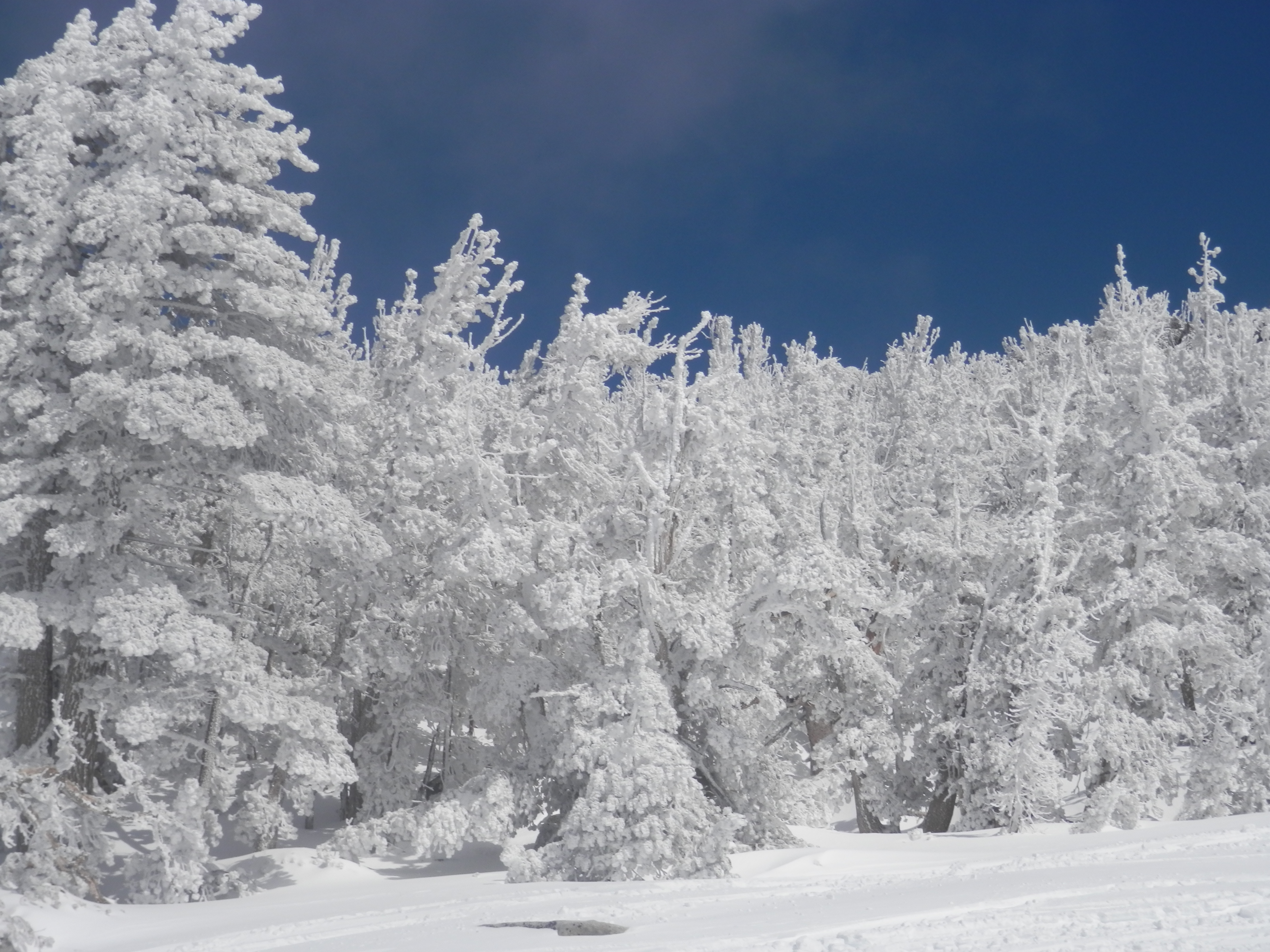
Although, with the exception of our final day, sun was in short supply, the wind that often affects resort operations, closing the higher lifts and restricting the capacity of skiers and riders to travel between the Nevada and California sides, was equally ineffective.

OLYMPUS DIGITAL CAMERA

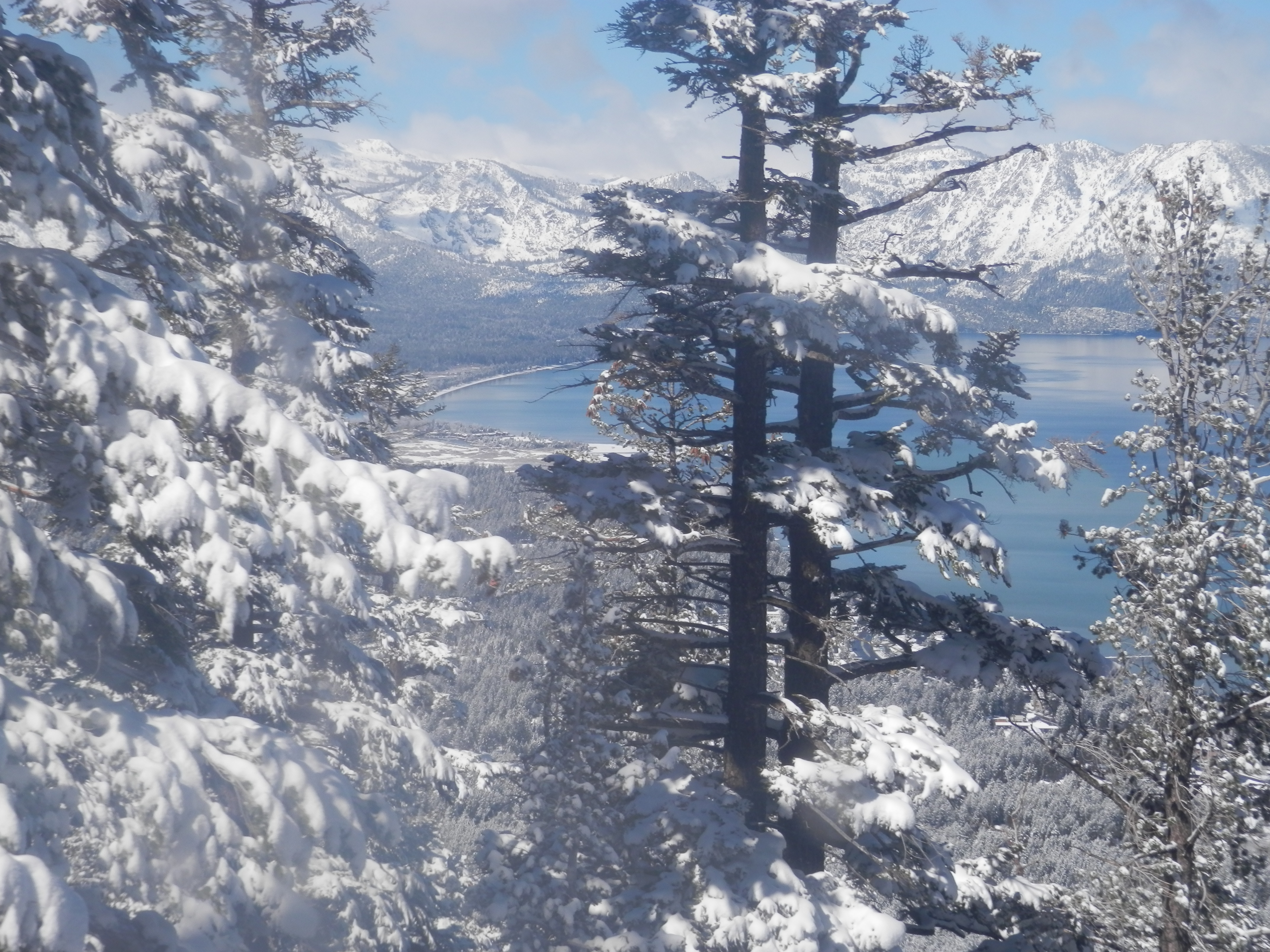
The intermittent gloom and smattering of snow flurries of the first couple of days enabled just to take some satisfyingly moody photographs.

OLYMPUS DIGITAL CAMERA

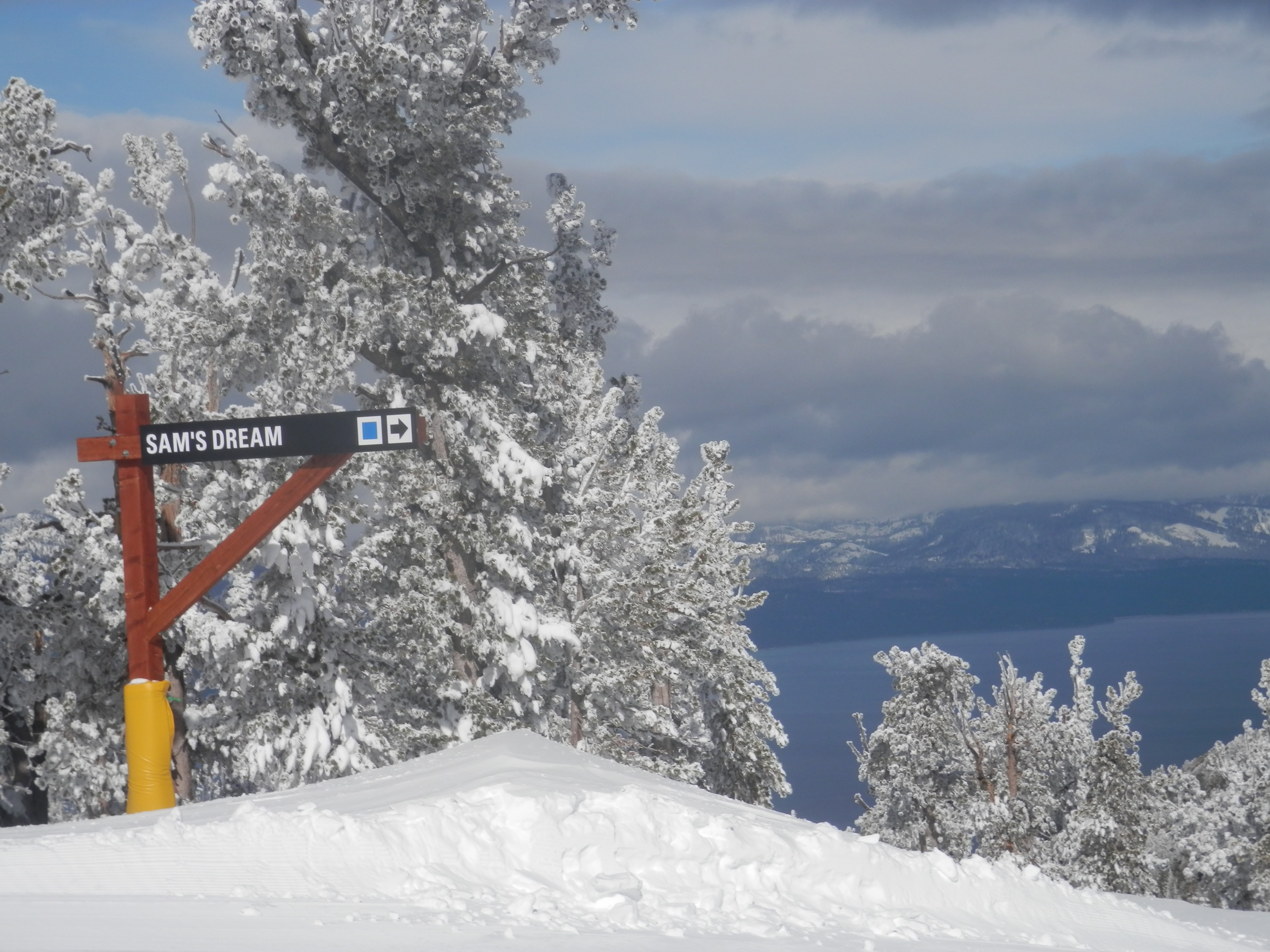
We were able to ski virtually the entire mountain over the four days. Only on the first day were we prevented from cruising both states, being confined to the California side due to the closure of the Tamarack chair. This was welcome, however, as we tend to spend more time on the longer trails in Nevada. With the Sky Express chair leading to the highest point in the resort open, we were allowed to spend time on our favourite trail, Ridge, which arguably provides the best views of the lake, and the High Five trail that we had not skied before.

OLYMPUS DIGITAL CAMERA

We also managed morning hot chocolate stops and lunch breaks at all the major mountain lodges – California, Tamarack (pictured), East Peak, Sky Deck and Stagecoach – that were open.

OLYMPUS DIGITAL CAMERA

OLYMPUS DIGITAL CAMERA

OLYMPUS DIGITAL CAMERA

My only regret?

Not having the presence of mind to reach for the camera as Janet struggled to get to her feet, having fallen on the Galaxy trail only minutes after she had joyfully proclaimed ONE NIL when I had suffered a similar indignity.

Ah well, you can’t have it all.

We may not have seen the last of the snow as we look set to grapple with the next big storm on our return to San Francisco tomorrow.


Read Full Post »


We had purchased tickets before leaving home for three San Francisco Giants games at AT & T Park this month. The first was against the American League East’s bottom side, the Toronto Blue Jays, whom they had beaten on the previous day, courtesy of a two-run homer from Andres Torres and a rare for this year, quality pitching display from Tim Lincecum that evoked memories of his Cy Young award winning years of 2008 and 2009.

OLYMPUS DIGITAL CAMERA

We arrived, courtesy of two MUNI routes, around an hour and a half before the scheduled first pitch to enable us to survey the wares in the Giants Dugout Store, perambulate around the park, take photographs and, of course, avail ourselves of the culinary delights on offer. Despite a hearty breakfast, the Polish kielbasa dog on the Say Hey Sausage concession stand proved too enticing to resist.

OLYMPUS DIGITAL CAMERA

Early morning fog had been burned away by the time the Canadian and American national anthems were sung beautifully, though I do not recall the name of the chanteuse  in question.

The starting pitchers, Barry Zito and R.A. Dickey, kept the offenses quiet during the first four innings, though Dickey took an immediate grip of the Giants batters, whereas Zito (pictured below), whilst maintaining a better, two to one strike to ball ratio, struggled to finish off his opponents.

OLYMPUS DIGITAL CAMERA

Dickey’s dominance with his knuckleball received its deserved support in the fifth inning when the Blue Jays bats scored the only four runs of the game. At the time we thought that Sandoval had made an out at third base that would have ended the innings at the cost of just two runs – and Pablo felt so too as he stood, arms in teapot position, for several seconds. Apparently, however, TV replays narrowly substantiated the umpire’s decision. It proved academic anyway as the Giants “failed to trouble the scorers” in cricketing parlance for the remainder of the game.

Last year’s National League MVP, Buster Posey had a frustrating afternoon, but his presence, at the plate and behind it, still evokes excitement, and not a little adoration, among the AT & T Park faithful. He will not have to wait long before again being a major influence on a game.

OLYMPUS DIGITAL CAMERA

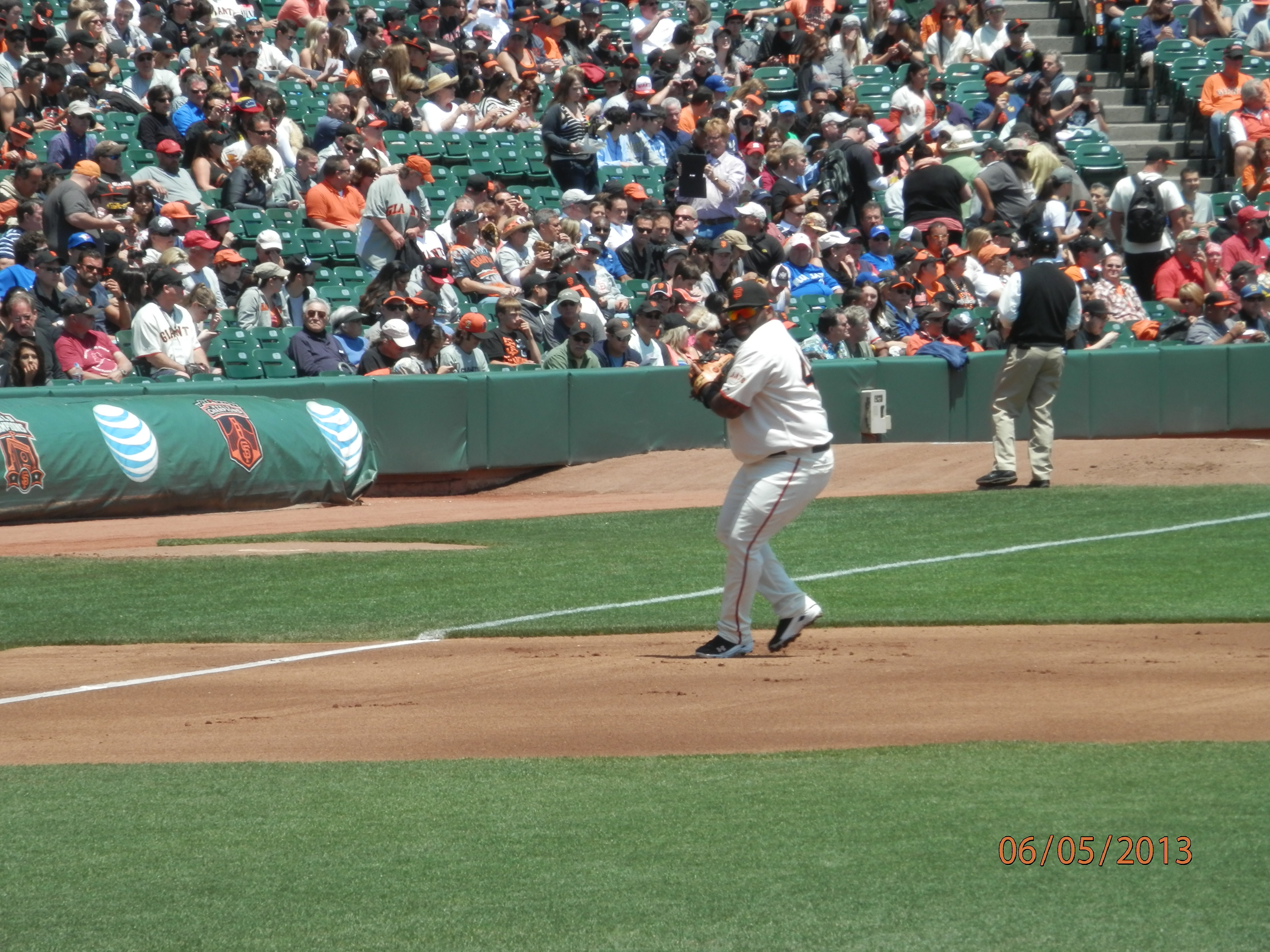
Pablo Sandoval, like Posey, leading the race for a position in the starting lineup in the National League’s All-Star team, was one of the few Giants to come out of the game with some credit, making the team’s first, and until the last inning, only, hit, and performing some neat, efficient plays at third base. Although his “running” around the bases is more likely to elicit chuckles than cheers, he is surprisingly athletic in the field and has an accurate, venomous throw.

OLYMPUS DIGITAL CAMERA

Hunter Pence, like many of his team mates, flattered to deceive with several ferocious swings of the bat that, at the moment of impact like that pictured below, looked as if they might end up in Oakland rather than the hands of the Blue Jays’ outfielders.

OLYMPUS DIGITAL CAMERA

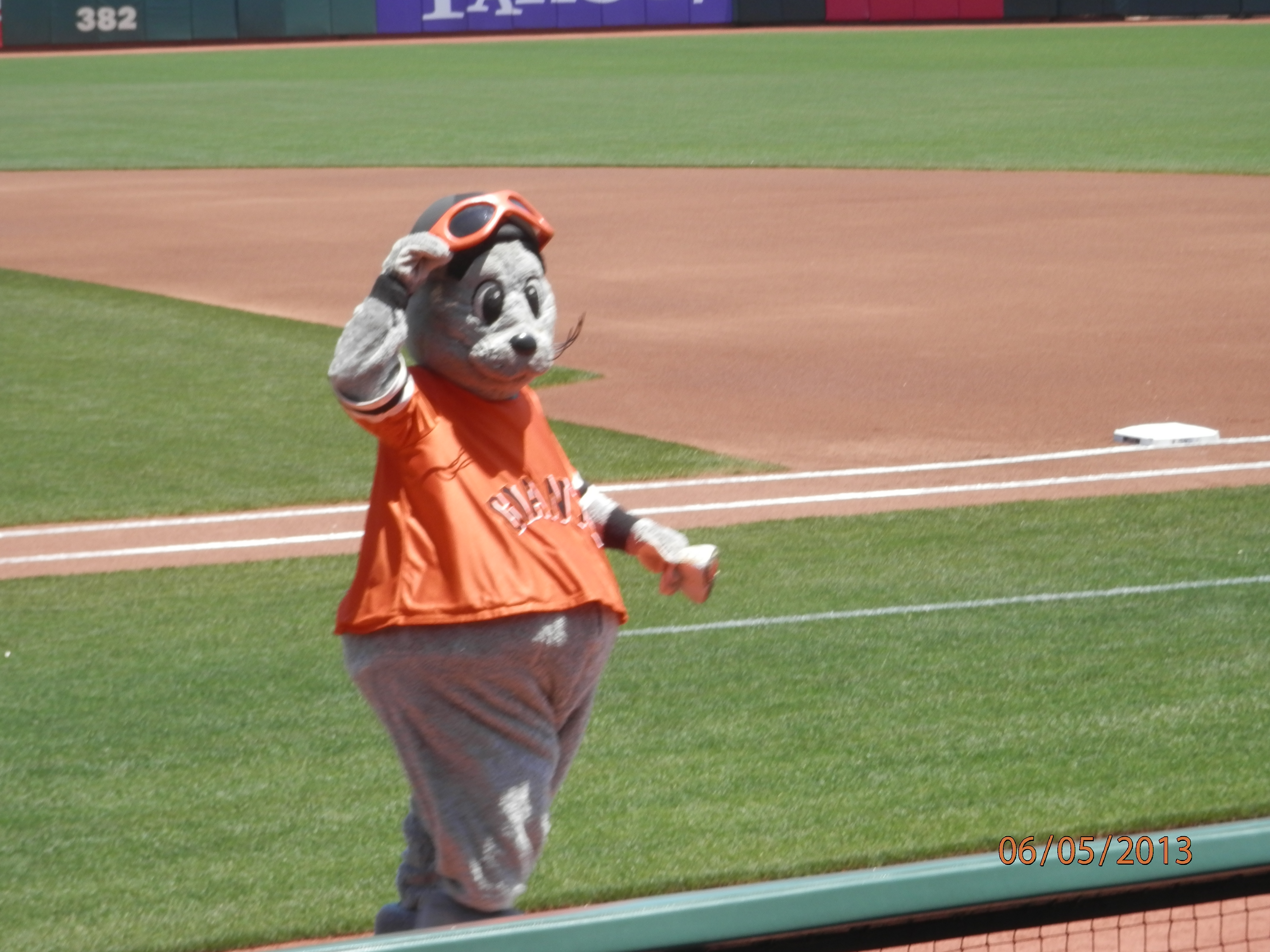
Giants’ mascot, Lou Seal, entertained the crowd, especially the younger fans, throughout the afternoon, though he was conspicuous by his absence at the end of the game. It was hard at times not to contemplate whether it might have been worth Bochy letting him loose as a pinch hitter late on in the game. Having said that, his speed around the field makes Sandoval look like Usain Bolt.

OLYMPUS DIGITAL CAMERA

Tradition dictates that, if the Giants’ are losing at the onset of their ninth innings,  the home crowd is encouraged to join in Journey’s great anthem Don’t Stop Believin’ . It has done the trick many times over the past three years but did nothing to inspire their innocuous bats on this occasion. There was to be no emotional walk-off win this afternoon, though they did manage to get two men on base in the ninth inning when Sandoval came to the plate for the last time with two outs.

OLYMPUS DIGITAL CAMERA

A limp display by the Giants but there were consolations – the weather was hot and sunny, the bay looked serene and we had great seats immediately behind the Blue Jays’ dugout, half way between home plate and first base. I had, however, committed the ultimate sin for anyone visiting San Francisco in believing the weather forecast. The early morning cloud was scheduled to linger by the bay for the afternoon, so we omitted to take either suncream and, in my case, Giants cap, to the park. The resulting sunburn was not what I had  anticipated having to contend with after barely 48 hours in the city!

I did, at least, remember to take my jacket!

After two World Series in three years, expectation is now high, perhaps unreasonably so, in the Giants Nation. And some comments on social media following the game exposed the irritating modern impatience for victory every time the team takes the field. The team has faltered before at various points in the season over recent seasons and, whilst there might be just cause (decline of the pitching rotation, lack of batting power, frailty on the road) to believe that they might not be playing in October, it is still far too early to be writing this proud, resilient team off. And the atmosphere as we walked back along the Embarcadero was resigned but relaxed rather than critical. You cannot get too depressed about the fortunes of your sporting heroes in this city. There is too much else to raise the spirit.

Our first port of call (pun perhaps intended) was the Wine Merchant in the Ferry Building where we mulled over a bottle of Napa Valley “pink” before deciding where to eat. We succeeded in resisting the blandishments of Fisherman’s Wharf, preferring to walk up Market Street and cutting up along Sutter before reaching Union Square.

P1020232

The Daily Grill, next to Lefty O’Doul’s on Geary Street, was relatively quiet (though, purely coincidentally, full by the time we left), so we took refuge in its old-style San Francisco ambience, the sort of dining establishment that famed San Francisco Chronicle columnist, Herb Caen, would be found in late at night.

And what was the first thing our server wanted to talk about – yes, the Giants ailing fortunes! There is no escape from baseball talk in a city where every third person you see appears to be wearing a cap or Giants sweatshirt or cap.

Read Full Post »


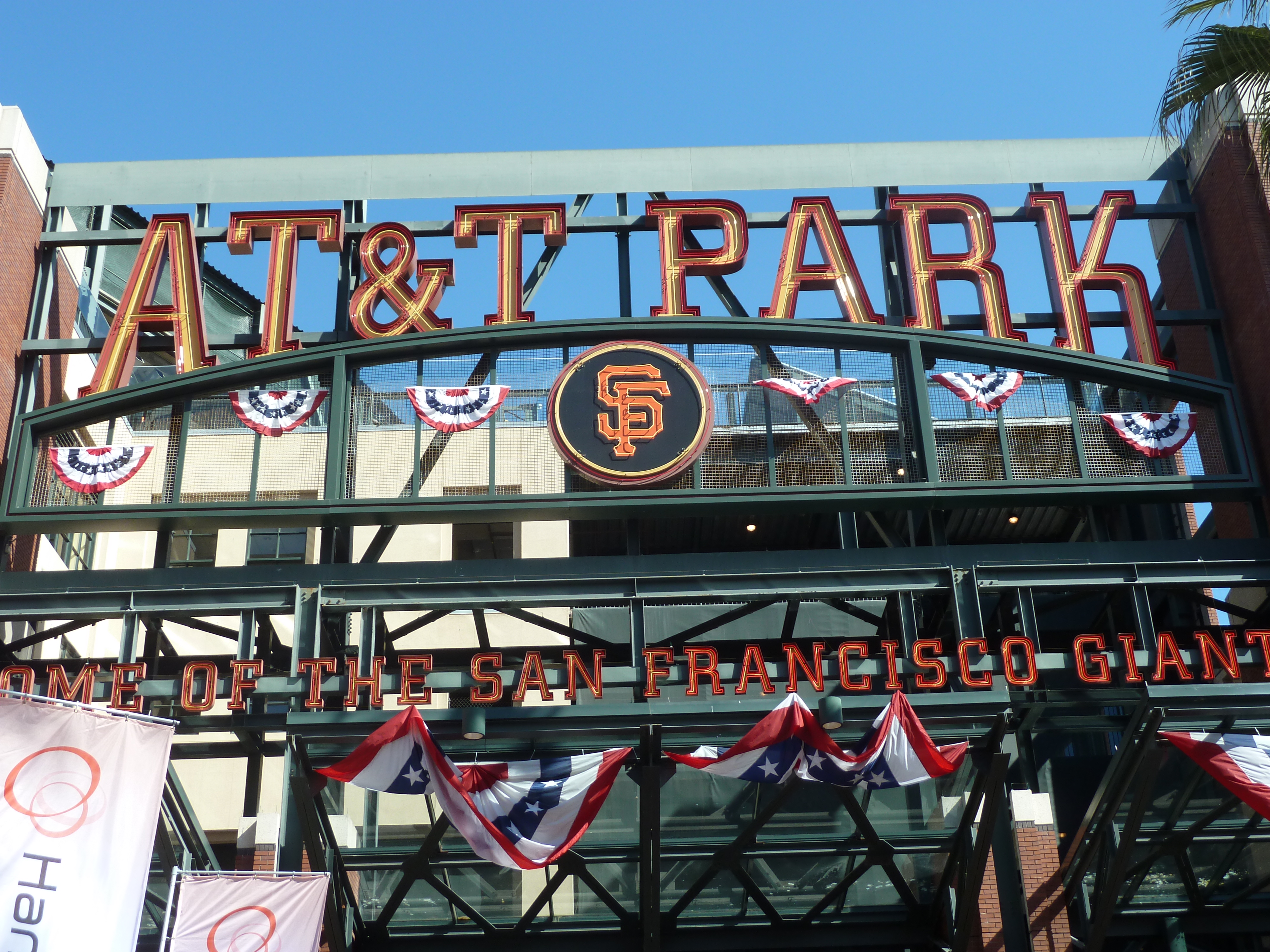
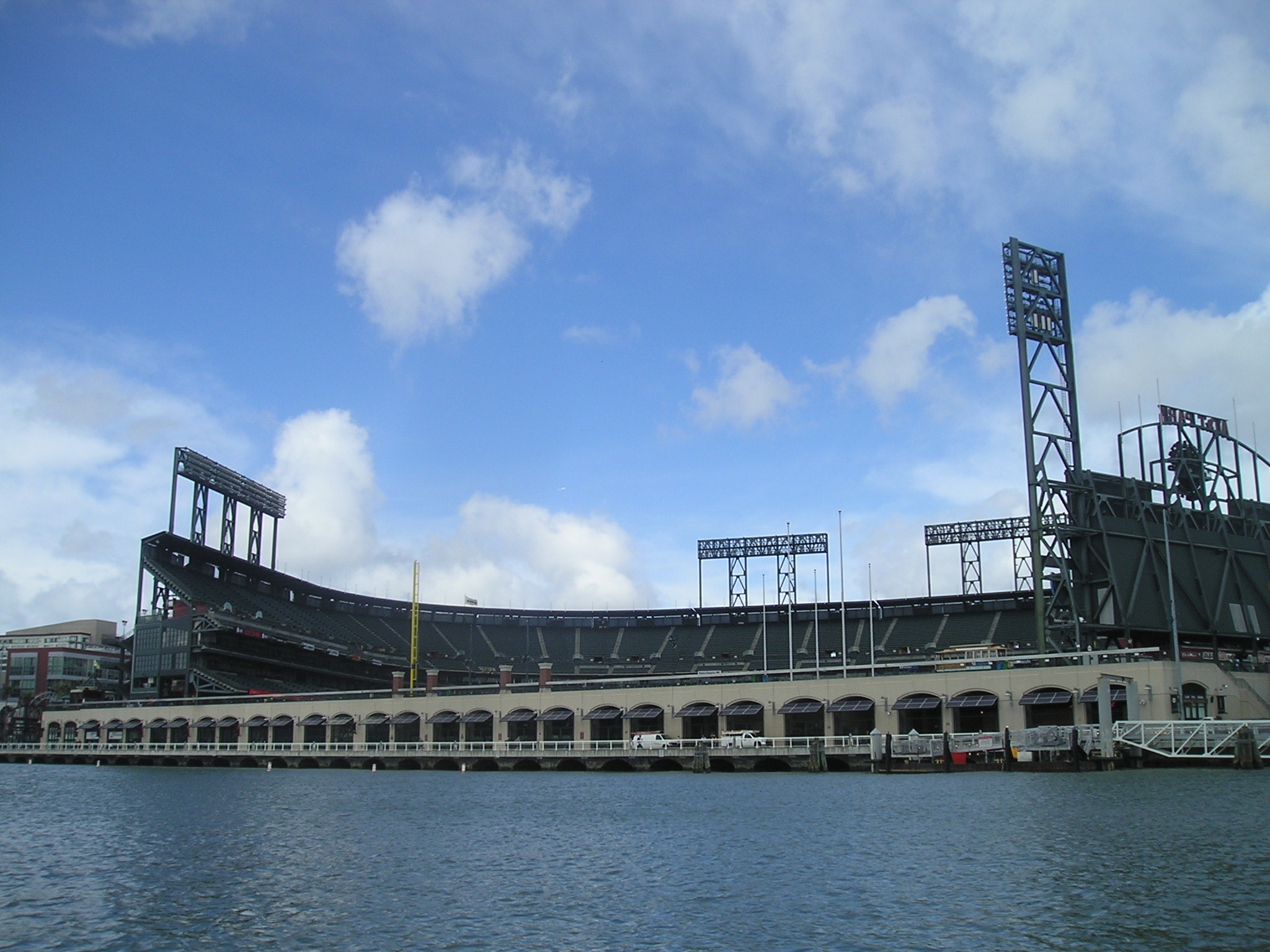
With the 2013 Opening Day a heartbeat away, it seemed as good a time as any to showcase some of my photos of the World Champions’ home. These were taken during the official tour of AT & T Park on in April 2010 and the opening home game against the Pittsburgh Pirates last year.

P1020035

Is there a better setting for a sports stadium anywhere in the States?

P1020038

Three hours to the first pitch. Go Zito!

P1020040

P1020052

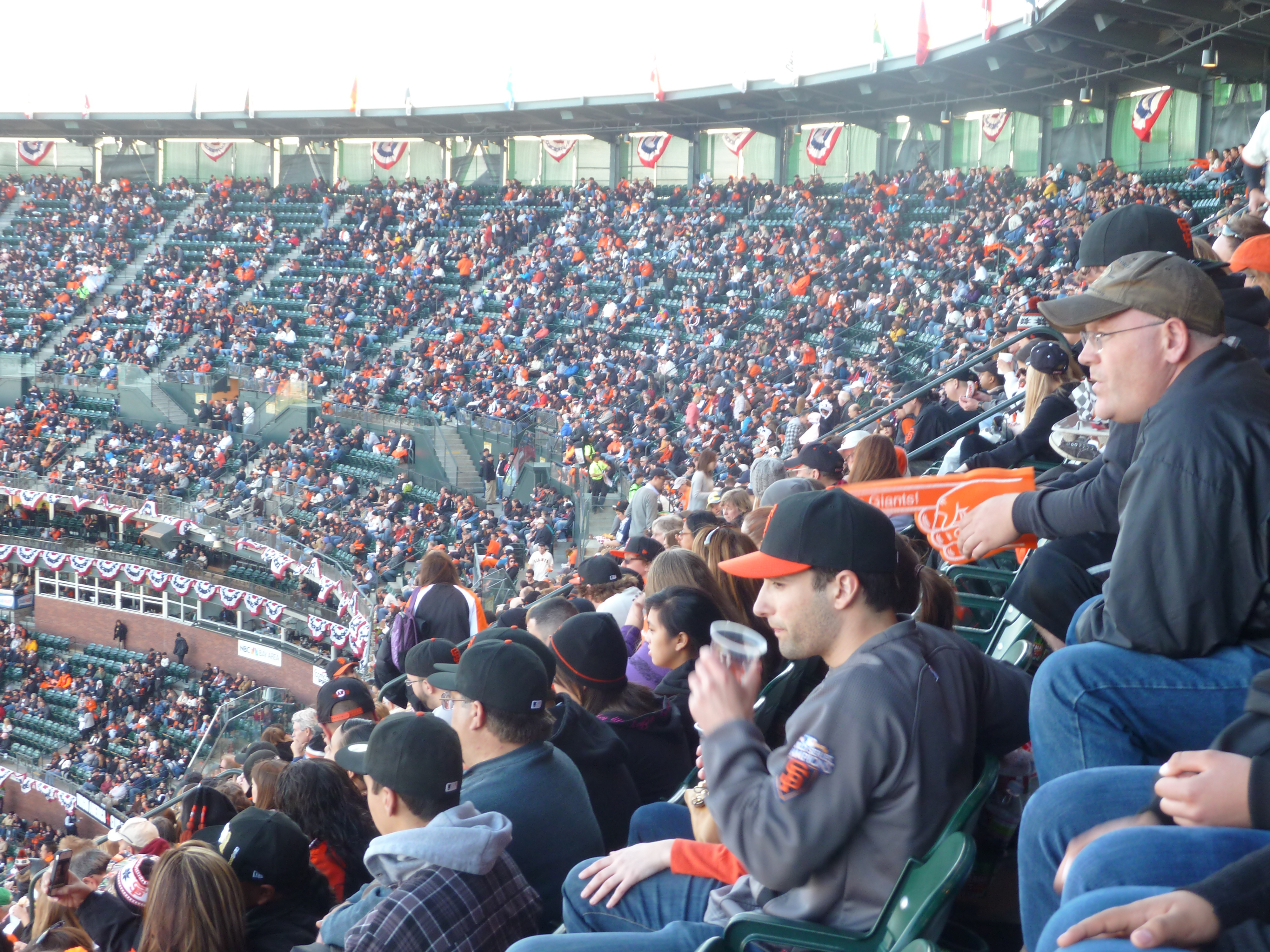
Filling up – yet another full house taking shape.

OLYMPUS DIGITAL CAMERA

P1020051

OLYMPUS DIGITAL CAMERA

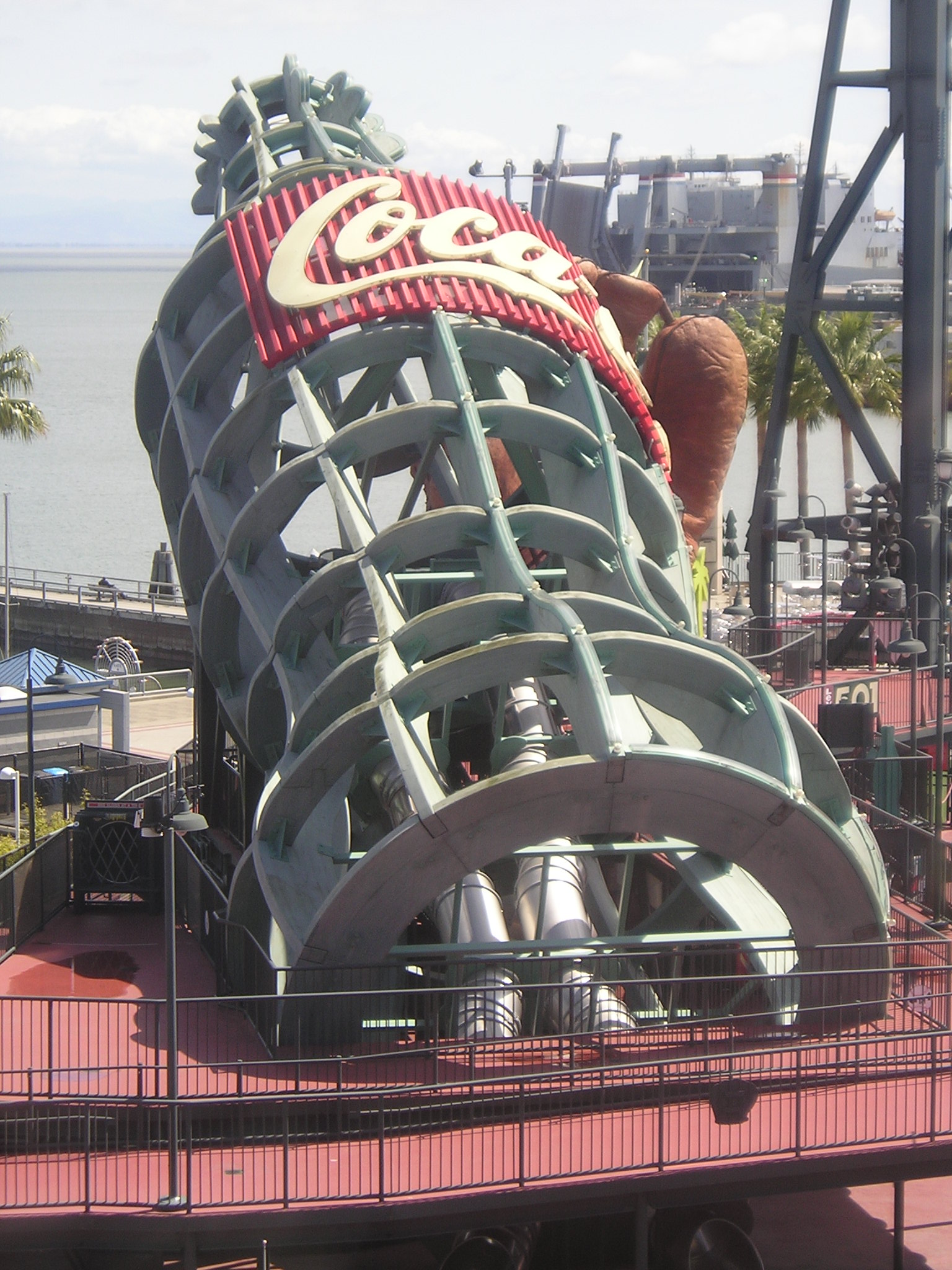
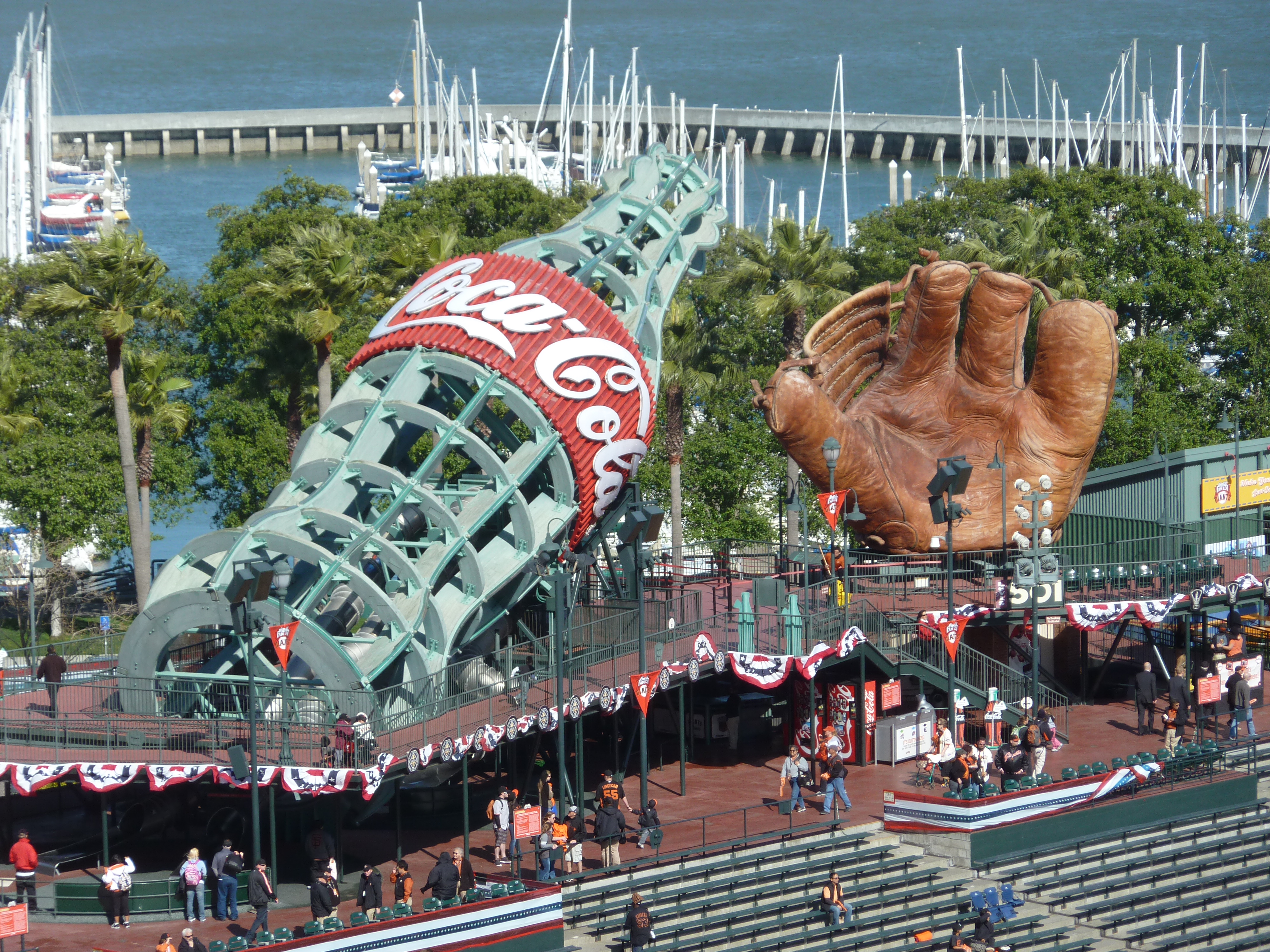
So disappointing to learn that I’m too old to ride the slides inside the Coke bottle!

OLYMPUS DIGITAL CAMERA

Or play in this miniature ballpark! I think even I could hit a home run here!

OLYMPUS DIGITAL CAMERA

Taken from the “Ride the Duck” tour – audio deliberately omitted.

P1020056

The eventual World Series MVP starts the season how he means to go on.

Read Full Post »


It was the longest of fortnights, it was the shortest of fortnights.

In witnessing the most exhilarating public event of my life, I, along with millions of others, was enraptured by, and became not a little knowledgeable about, previously obscure and disregarded sports like taekwondo, dressage, beach volleyball and BMX racing (I still draw the line at synchronised swimming), fuelled by the BBC’s all-embracing coverage.

But now they are over, gone as quickly as they arrived. What do I do now between the hours of 9am and midnight? Where are the rowing coxless pairs heats, 58kg weightlifting semi-finals and 50m rifle 3 position shooting final when you need them, and not just because they passed the time but because they inspired and enthralled us?

But let’s not dwell on my post-Games melancholia just yet.

Apologies in advance to my international readers – this is an unashamedly GB-centric piece, and merely passing reference to the prodigious feats of Usain Bolt, Michael Phelps, Missy Franklin, Oscar Pistorius, David Rudisha and many others does not diminish their extraordinary achievements.

It really all started on the first Wednesday (day 5) when my wife and I, intrigued but ticketless, decided to travel to Stratford and spend the evening at the Westfield shopping centre adjacent to the Olympic Park. As I had left the house, Helen Glover and Heather Stanning had just won Team GB’s first and, what seemed at the time, long overdue, gold medal in the women’s rowing pair.

Delivered in time by an efficient public transport system that belied the anxiety expressed by the IOC in the bidding process, I was able to marvel at the big screen with hundreds of others as the hugely popular Tour de France winner Bradley Wiggins doubled the tally in the men’s individual cycling time trial at Hampton Court.

The Olympic Stadium, home to the sometimes eccentric but always chest-swelling Opening Ceremony five days previously, was not to re-open for another 72 hours when the track and field athletics were scheduled to start. But the aquatics centre and other venues in the park were already providing thrilling action. The atmosphere in the adjoining mall was correspondingly electrifying.

The immediate impression on stepping off the high speed train at Stratford International was that there was a giant party going on, to which the whole world had been invited – after all, isn’t that what the Olympics is meant to be?

Athletes, coaches, officials, military personnel, volunteers, spectators and shoppers mingled in a festive, friendly atmosphere that would have disarmed the most hardened cynic.

Over there are two athletes dressed in Eritrean track suits with bulging carrier bags from River Island and John Lewis. Outside the Waitrose supermarket a soldier shares a joke with a couple of young Brazilian girls (beach volleyball competitors maybe?). And everywhere the “happy, shiny” Volunteers in their pink and purple outfits are directing pedestrian traffic and dispensing unlimited advice and bonhomie.

Everyone is smiling (the smile, along with the tears, becomes an abiding memory of the Games). There is not a hint of the stressed undercurrent that haunts busy shopping centres at any other time.

Is this Great Britain I ask myself? Is this the country that many of its own citizens said couldn’t be trusted to organise the biggest of all peacetime projects? Is this the city with the broken transport system? Are these the people notorious for being unwelcoming to visitors?

Not any more, at least for these two weeks.

And it just got better and better.

Yes, and I cried as much, nay probably more, than anybody at the swift procession of triumph and heartbreak assailing our TV screens, and not just those of the British participants. I will never forget the sight of Sarah Attar, the first Saudi Arabian woman ever to appear in the Games, lying crumpled on the track after pulling her hamstring immediately after springing from the blocks in her 100m hurdles heat.

Nor can I dismiss from my thoughts the sight of the exhausted and distressed Zac Purchase, virtually having to be carried out of the boat by his partner, Mark Hunter, after just missing out on the gold to Denmark in the lightweight men’s double sculls.

Most poignant of all were the interviews with competitors who, having put their lives on hold for the past four years for this “once in a lifetime opportunity” (the most frequently uttered quote of the Games), performed miserably when they arrived at the very moment that was meant to validate all that hard work and sacrifice.  Whilst British triple jumper Phillips Idowu may be the most high profile casualty, there were many others who failed to get out of their heats or, perhaps most criminally of all, did not achieve their personal best on the biggest stage.

Of the 65 GB medal winners, which were my favourites? A difficult choice but here, with apologies in particular to Sir Chris Hoy, the scary Ben Ainslie, the not so scary Jessica Ennis, the Brownlee brothers and, well, everybody else who captured gold, silver or bronze, are my top five:

1. Mo Farah, the Somali born Muslim who came to London at the age of eight, and through sheer hard work and sacrifice, was taken to the hearts of his adopted country and became on successive Saturday evenings, one of its greatest ever athletes;

2. Nicola Adams, the first ever Olympic woman’s boxing gold medallist, who said at the start of her campaign that she only wanted to make her mum proud, and having won, was going to celebrate with a trip to Nando’s;

3. Double gold cyclist, Laura Trott, whose infectious, post-race interviews (“I can’t believe this is happening….I’m just a 10 year old kid”) were as joyful as her performances were thrilling;

4. Jade Jones, our youngest gold medallist, in the women’s 57kg category of taekwondo who described her victory as “bonkers”- she could kick my head in any day; and

5. Bradley Wiggins – after his heroics in the Tour de France, striking of the Olympic bell in the Opening Ceremony and handsome time trial victory, “Sir Brad” became a bit of a forgotten man during the last ten days of the Games as new British heroes emerged. He probably preferred it that way as it would have allowed him to continue getting “blind drunk”. His feats can never be underestimated though, and he remains, for me, the brightest star of Britain’s glorious sporting summer.

TV moment of the Games? It has to be the interview with previously mild-mannered, even diffident British Finn class sailor Ben Ainslie. Aiming for his fourth Olympic Gold he lost to his Danish rival, Jonas Hagh-Christensen in the first six (of ten) races. In that sixth race the Dane, along with Dutchman, Pieter-Jan Postma, alleged that Ainslie had hit a mark whilst turning round it, thereby incurring a penalty. Ainslie felt obliged to repeat the manoeuvre, causing him to lose vaulable time, though he was unconvinced that he had committed the offense.

When interviewed about this afterwards, a clearly incensed Ainslie stated that he was “seriously unhappy” about this and that “they’ve made a big mistake, they’ve made me angry and you don’t want to make me angry”. I felt afeard even from the other side of the television screen. It reminded me of John McEnroe in his pomp when his public outbursts appeared to drive him to perform still better. Needless to say, Ainslie collected his fourth gold and the reward of carrying the GB flag at the Closing Ceremony.

One other hero – London.

Never was Samuel Johnson’s famous phrase that “when a man (or woman) is tired of London, he is tired of life; for there is in London all that life can afford” more apt. All that life could afford was present in this past fortnight.

Lord Coe recounted at the post-Games press conference that Jacques Rogge, President of the IOC, had advised him that if he exploited just 10% of London’s heritage in designing the venues, it would be spectacular. And spectacular it was.

I now offer a public apology to whoever took the decision to block off from the public a large chunk of Greenwich Park a year ago in order to prepare the site for the equestrian events. It was worth it. The most dramatic blend of action and backdrop was the sight of the show jumpers negotiating the “Moon” fence with the spendour of Greenwich’s maritime buildings in the immediate foreground and Canary Wharf and adjoining buildings in the background. Pure genius.

Only this could have beaten the volleyball arena in Horse Guard’s Parade, with the Whitehall rooftops and the London Eye enjoying birds eye views of the scantily attired athletes, into the silver medal position.

If there is a single word that defined these Games, and which my personal roll of honour above exemplifies, it is diversity or, if you prefer, inclusivity.

Tory MP Adam Burley called the opening ceremony “leftie multi-cultural crap”. As novelist Tony Parsons put it, “this was a rotten fortnight to be a bigot” as British athletes of black, white and mixed ethnic origin, of different religions, and from every corner of the nation, won medals. Burley’s angst will be intensified still further when the disabled Olympians take to the stage later this month.

I wrote this piece, not only as a counterpoint to the two articles published on the eve of the Games, but to provide some measure of catharsis or, in the modern vernacular, closure. But as I surround myself with commemorative brochures and newspaper reviews and look forward to the DVDs to come, I don’t want it to end, though I know it must.

The sceptic in me has re-entered the room, bragging that the spirit of generosity and celebration so overflowing in the past fortnight will soon be swept aside in arguments between politicians about the funding of sport in schools, surliness between strangers on the creaking tube, rail and bus network and a return to the national pastime of moaning.

Well, maybe, but we will always have London 2012.

I had intended to write also about that all-important issue of legacy, but I will leave it to others better qualified. Besides, I think I have occupied your time long enough.

All I will say is that I pray that these Games form not only the trigger to greater participation in the unifying and health-giving pursuit of sport in schools, clubs and throughout society (sustaining GB’s success in future Games), but that they act as a springboard to delivering the much-needed regeneration of eastern London that has been so trumpeted by politicians and adminstrators.

The true success of the Games, and its implications for the future of Britain, will be determined over a much longer timescale than a fortnight. And we face harsh economic times that might quickly remove the shine on those glorious medals.

But I will never forget the spectacle and the atmosphere, the way London 2012 made me feel good about my country, my fellow citizens, those inspirational athletes and the city I have lived and worked in for much of my life. Nothing will change that.

And let’s not forget – the Paralympics are returning home on 29th August and they are already scheduled to be the best supported in history. And I have two of the 600,000 tickets alone that have been purchased since the Opening Ceremony, enabling me to sample that extraordinary atmosphere in the Olympic Stadium!

Let’s replicate that feel-good atmosphere and celebrate a movement that, perhaps more than its big brother, exemplifies the Olympic ideals.

And finally, I’ll return to my previous article entitled Let the Games Begin when I concluded by stating that I would be “sparing a thought too for the friends and families of those who perished on 7 July 2005”.

I’d like now to finish with a quote from Dr Ian Harte who treated victims of the bombings that day:

I saw the worst of mankind that morning, and now I’m into this and I’ve seen the best.

Read Full Post »


If you have had the good fortune (sic) to read my previous article entitled “My Olympic Journey”, you will have gathered that my passion for the Games has waned over time. In fact, I didn’t watch a single minute of the XXIX Olympiad in Beijing in 2008, when Great Britain garnered its second highest medal tally – 47 – in the modern era.

Yet, three years earlier, at around a quarter to one on Wednesday 6 July 2005 to be exact, I had stood in the middle of Trafalgar Square with hundreds of office and shop workers, and a group of mildly bewildered Italian schoolgirls in matching pink and purple backpacks, and witnessed the fateful and surprising words of President Jacques Rogge, speaking from the organisation’s 117th session in Singapore: “The International Olympic Committee has the honour of announcing the games of the 30th Olympiad in 2012 are awarded to the city of……..London”.

The detonation of delight following that agonising, reality TV show-like pause was all the more exhilarating for the fact that it had been widely expected by that stage that Paris, in its third attempt at securing the ultimate gig, had snapped the winning tape in a photo finish ahead of London.

Of course, the elation of that afternoon was brutally crushed within a mere twenty hours when news started filtering through about explosions on underground trains between Liverpool Street and Aldgate, King’s Cross and Russell Square, at Edgware Road, Old Street and Moorgate, and at Tavistock Square on the number 30 bus travelling from Marble Arch to Hackney Wick.

My tube train was halted in the tunnel between Westminster and St. James’s Park for around twenty minutes, occasioning angry mutterings from fellow commuters accustomed to signal failures and emergency track repairs. It was only after we were released into an eerily quiet daylight that we discovered that the Aldgate blast had been on one of the trains directly in front of us.

As manager of the director of a government department human resources’ office, the remainder of my day was spent trying to account – to both statistically minded management and anxious friends and families – for the hundred or so staff expected in the office that day. Thankfully, nobody was lost.

However, others had not been so lucky. The prospect of the Olympic Games in this suddenly terrorised city, seven years and 52 lives away, vanished as quickly as it had been acclaimed.

And, irrespective of the tragic events of that day, that was always likely to be the case, at least for the ordinary citizen not involved in the planning and preparation. But it did not need such carnage to convince those of us living and working in London to realise that.

Beijing came and went and still my interest was not ignited. It was only in 2010 when I began research on a 2,200 word paper for my travel and tourism qualification on the state of preparedness of the public transport system, that I began to allow myself positive thoughts again about what the Games itself and, most importantly, their legacy might be for both the east end of London and the country as a whole.

From that date, I have kept a keener and better informed eye on developments. Moreover, I have been fortunate enough, living so close to the capital, to watch the Olympic Park and its stadia take shape and feel the sense of pride and excitement growing in the area around it.

Now, us Brits are a cynical lot, and we love to moan, which, given that one of our most familiar phrases is “mustn’t grumble”, is rather ironic (the capacity for which is also part of our national psyche). And I claim my share of that not particularly attractive character trait, but, in respect of the Olympics in the incomparable city of London, where I have been blessed to spend so much of my life, including living there for eight years, I feel it is time to celebrate rather than snipe.

That doesn’t stop me smirking, raising my eyebrows and shaking my head when I read the stories of the firm handed vast sums of money to ensure the Games were safe and secure, failing to recruit anywhere near enough staff and having to be bailed out by the armed forces, or of lengthy queues at immigration at Heathrow Airport and threats of strikes (thankfully now averted) by the very same staff operating those desks. Or of the closure of the vital M4 motorway route into the city, of taxi drivers protesting at the installation of Olympic road lanes and coach drivers getting lost en route from Heathrow Airport to Stratford.

All of these are ammunition for the soulless and negative people determined to see the Games fail. And yes, the cost has exceeded the original budget threefold, those we voted for (or rather didn’t) will make as much political capital as possible out of any successes – and watch for repeated attempts to “bury bad news”, and the dead hand of corporate sponsorship will be all pervasive. But these, sadly, are inevitable consequences of the staging of any modern global event.

And all this against a backdrop of one of the wettest summers on record.

However, what has struck me most in recent weeks – and I know this is a cliché – is the manner in which ordinary people, from all corners of the island, have embraced the spirit of the Olympics, as symbolised in the joyous and exhilarating torch relay. The sight of the torch adorning such iconic landmarks as the London Eye, Snowdonia, Forth Road Bridge and even scooting through the Hampton Court Maze, has been humbling and inspirational. I am even astonished that my teeth no longer grate when I hear the words “it is the opportunity of a lifetime”, because, after all, it is, isn’t it?

And whilst a good proportion of the screaming, mobile phone camera toting, followers (and runners) have been children, whipped, no doubt, into a frenzy by media, parents and teachers alike, that really doesn’t matter.

Anyway, isn’t that the point? If nothing else, the Games are about instilling a passion for sport, healthy living and pride in one’s community in the coming generations, and howsoever that has been generated, the genuine, not engineered, enthusiasm of thousands of young people throughout the nation that we have witnessed can only be heartening.

Moreover, I was struck by what rapper Dizzee Rascal, whose music is very popular amongst teenagers but leaves me cold, perhaps because I emigrated from teenagedom some while ago, had to say in an interview with the BBC last night. He hails from the area adjacent to the Olympic Park and many of his childhood friends still live in the vicinity. Although some still harboured mistrust towards the authorities, he declared that the reaction was generally a positive and optimistic one, and saw a new hope emerging in the community.

That is, of course, the huge challenge that now faces those responsible for delivering the Olympic legacy in that and other deprived parts of the capital in particular. This really must not fail.

The cynics will argue that the Games are a complete waste of money, a classic instance of bread and circuses, deflecting the brainwashed masses from the reality of a country in double-dip recession and a government devising social policies that would have made the Thatcher cabinet blush.

I don’t belittle those claims, and will not lose sight of the domestic political context within which the Games are being played out, but I believe that it is now time to get behind the event, the volunteers, the athletes, London, the country, and especially those young people whose futures are so dependent upon their success.

So will I go?

I had not applied for any tickets, and although there are still some available, primarily for the football (which I have always had difficulty accepting as an Olympic sport), I will need a lottery win this weekend to allow me to purchase any now.

But there are, of course, the Paralympic Games in a few weeks, with tickets still available both for the Olympic Park experience and some sports. Securing some is now a priority.

I will be sparing a thought too for the friends and families of those who perished on 7 July 2005.

Let the Games begin.

Read Full Post »


Now before you think that my Olympic medal winning exploits had passed you by, let me clarify at the outset that I haven’t even attended a Games, let alone competed in one, but cynically entitled this piece as I have to grab your hopefully more than fleeting attention. This is an account of my evolving connection with the Olympics over the past half century.

As I start this article the official website ( http://www.london2012.com ) informs me that it is one day, twelve hours and seventeen minutes to go to the Opening Ceremony of the XXX Olympiad in London, the precise details of which, including the identity of the individual lighting the Olympic cauldron, remain a surprisingly well guarded secret.

I leapt from the blocks at the Rome games of 1960, or rather sat on the living room floor with my legs, and, due to my proximity to the new but tiny black and white television, eyes, crossed, cheering on Great Britain’s two gold medallists, Anita Lonsbrough in the women’s 200 metres breaststroke and the diminutive Don Thompson, waddling hilariously for 50 kilometres in sunglasses and mum made white hat.

Great Britain doubled its gold medal tally in Tokyo in 1964 with victories for Ann Packer in the women’s 800 metres (whom of a certain age could forget David Coleman’s hysterical television commentary as she took the lead in the home straight and broke the world record?), Lynn Davies and Mary Rand in the men’s and women’s long jump respectively, and Ken Matthews in the shorter form (20 kilometres) waddle. The glory was accentuated by the fact that the television had grown a couple of inches in the intervening four years.

Don’t worry – this article is not a list of British gold medal winners over the last 50 years, but rather an account of how the Games have, or, on occasions, not, touched my life at various stages.

What is interesting about my childhood Games watching is that, bedtime regime permitting, I watched all of it, not just the glamorous events like the men’s 100 metres, pole vault and high jump (well ok, the 100 metres then), but everything – from fencing and water polo to weightlifting and graeco-roman wrestling.

And I loved it! There was never a chance that a British competitor would stalk the podium in the majority of sports, but it was the Olympics, the original “greatest show on earth” and it was on television! My only reservations at the time, as a prepubescent and then fully pubescent boy in the sixties, were that neither synchronised swimming nor  beach volleyball had been invented as Olympic sports for another 20 and 30 years respectively.

(one day, eleven hours and thiry six minutes).

It was the athletes from behind the iron curtain, particularly the Soviet Union, that fascinated me most. Perhaps it was their exotic names (the brilliant ice dance pairing of Lyudmila Belousova and Oleg Protopopov still raise a juvenile titter), or the fact that we knew so little about their society, or the allegations that most of their women were actually men, or the suggestion that they took performance-enhancing drugs, or that they received massive state sponsorship (there was still an expectation that competitors should be amateur) Or it may just have been because they were so bloody good.

The most notorious case was that of the Press sisters, Tamara (shot put gold in 1960 and 1964 and discus gold in 1964) and Irina (80 metres hurdles gold in 1960 and modern pentathlon gold in 1964), who were effectively hounded from the Games after Tokyo in the wake of persistent Western mockery and, more pertinently, the introduction of gender testing in 1966. They never took the test and their sudden disappearance was explained by Soviet officials as enforced retirement in the Ukraine to care for their ailing mother (or was that father?).

Before I move on, I must make it clear that, in the interests of political correctness and indeed accuracy, many of the most attractive women from that era bore the bibs of eastern European nations.

(one day, seven hours and fourteen minutes).

Leaving home and going to university in the Moscow Olympics year of 1972 put a virtual end to my slavish scrutiny of the Games, as I discovered other interests, or rather enjoyed the opportunity of exploiting those interests to the full. I will leave it to you to consider what they might have been.

As those interests, as well as responsibilities, expanded over the next thirty years, I became much more selective in what I watched, focusing largely on the track and field events.  The rivalry of Sebastian, now Lord, Coe and Steve Ovett over 800 and 1500 metres in the Moscow and Los Angeles Games of 1980 and 1984, probably stands out, not least because it sparked endless arguments between my mother, who adored the smarmy, former Loughborough University graduate Coe, and myself, who cheered on the Brighton bruiser, Ovett.

Memories of summer Games over that period centre on remarkable individual performances. The most notable for me included the four times gold medal winner at 200 metres (Atlanta 1996), 400 metres (Atlanta and Sydney 2000) and 4 x 400 metres relay (Barcelona 1992), Michael Johnson, pole vaulter Sergey Bubka, who, despite ten world championship golds, won just a single Olympic title in Seoul in 1988, Mark Spitz’s seven swimming golds in Munich in 1972 and Nadia Comaneci who, at the age of 14, won three gymnastic golds in Montreal in 1976 (and a further two in Moscow four years later). There are many others but these are my particular favourites.

(one day, three hours and twenty seven minutes).

But let’s not forget the Brits who have momentarily captured the imagination of this increasingly wearied Olympic follower –  (Sir) Steve Redgrave’s extraordinary five rowing gold medals, almost matched by (Sir) Matthew Pinsent’s four, Linford Christie becoming the oldest 100 metres champion in Barcelona in 1992, the hockey team that won gold at Seoul in 1988 and (my mother’s influence here), Torvill and Dean’s sublime ice dance routine to Ravel’s Bolero in Sarajevo in 1984. But, for me, the greatest achievement is that of Kent girl (Dame) Kelly Holmes who won double gold in Athens in 2004 (800m and 1500m) at the age of 34 and after years of injury heartache in major championships.

(one day, one hour and eighteen minutes).

With my discovery of skiing in the late eighties, I became more interested in the Winter Olympics over the next few years, modelling my own technique on that of Purmin Zurbriggen, downhill champion in Calgary in 1988, and Alberto Tomba, winner of slalom and giant slalom in both Calgary and, four years later, Albertville. If you’re wondering, the “modelling” extended no further than being able to stand upright on two skis.

They are my fondest memories of a truly global spectacle. My feelings about the only Olympics to be hosted in my country in my lifetime can be found in the following article entitled “Let the Games Begin”.

(eleven hours and forty two minutes).

Read Full Post »


Finally, after a pre-season match against the Oakland A’s in 2008 and a rain-curtailed “friendly” against the Seattle Mariners two years later, I made it to my first two Major League Baseball (MLB) games at AT & T Park for the opening weekend of 2012.

On Saturday evening the San Francisco Giants entertained the Pittsburgh Pirates in the second of a three game series, and then hosted the Philadelphia Phillies in the opening game of three on Monday evening.

This is not a match report on either game, though I will briefly outline  the action. It is more a series of impressions on the baseball experience.

So – the figures. On Saturday, the Giants squeezed out a 4-3 victory in the ninth after trailing both 2-0 and 3-2 earlier in the game. CRedit should go to much-maligned, and many believe, grossly overpaid, starting pitcher, Barry Zito’s second quality performance at the start of the season.

A disastrous first innings by star pitcher, Tim Lincecum, in which he gave up four runs, meant the Giants were always chasing the game against the Phillies’ Roy Halladay. Despite Buster Posey’s three hits and improved pitching by Lincecum and the bullpen, the deficit was too much for Giants to pull back, eventually losing 5-2.

One win and one defeat, not altogether unexpected, so I’ ll take that.

Although we had already printed our tickets at home back in the UK, we wanted to get to the ballpark well in advance of Saturday’s 6.05pm first pitch. We disembarked from a Muni Metro car at 3rd and King at around 4.30pm, just in time to be welcomed through the turnstiles with a large number of equally excited fans, most wearing the Giants’ orange and black colours.

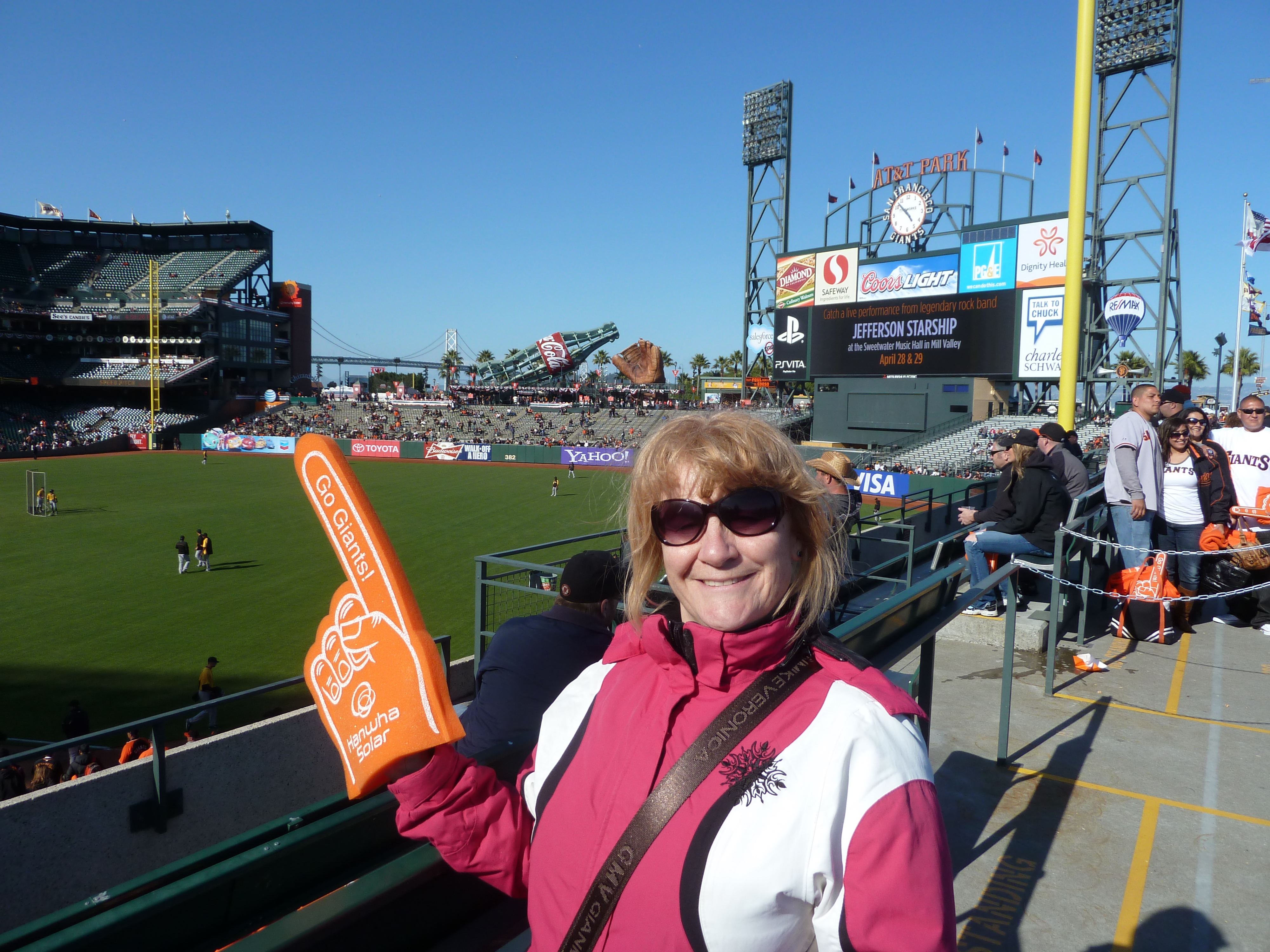
One of many reasons for wanting to get to the park early was that it would guarantee us securing the day’s free gift on entry. Although on Saturday this was a rather modest foam finger, the use for which is modelled in the photograph below, we received a far more elegant A5 size Giants 2012 schedule fridge magnet at the Phillies game. This was the first of a host of fan-oriented activities on both nights.

And it is this emphasis on ensuring that the spectators, especially families, have a memorable experience at the ballpark that is so impressive about American sports in general, and the San Francisco Giants organisation in particular, and which I want to concentrate on in this article.

Amongst the other gifts scheduled to be handed out at future home games during the season were bobbleheads of the most popular players, including Sergio Romo, Madison Bumgarner and Pablo Sandoval, a Brian Wilson gnome, a Matt Cain t-shirt, fedoras, knitted hats, texting gloves (sic), trading cards and caps. Some of these are limited to the first 20, 25 or 40 thousand fans through the turnstiles, one of many clever marketing ploys to get the spectators eating and drinking early inside the stadium rather than at the bars and restaurants around the “yard”.

For children aged 14 and under, they would be greeted at selected games with snap watches, rope necklaces, and Super Hero capes. Many of the above gifts were presented by companies such as Subway, See’s Candles, Comcast Sportsnet Bay Area and PG & E.

And then there would be the games that celebrated past glories such as the “Turn Back the Century Game – 1912” and the 2010 Giants World Series Team Reunion. On another day Virgin America would be providing two for one flight vouchers for all fans.

And it still doesn’t end there!

San Francisco is renowned for its commitment to diversity, demonstrated in a range of festivals and street fairs throughout the year that showcase its ethnic communities.

And the Giants play their part. Certain games are designated “heritage nights” where the culture and history of peoples that have played a key role in the history of the Bay Area is celebrated. The list includes Chinese, Japanese, Korean, Mexican (Cinco de Mayo), Irish, Jewish, Italian, Polynesian, African American, Filipinos, and, this being San Francisco, the lesbian, gay, bisexual and transgender (LGBT) community.

And then there are the games that are dedicated to firefighters, law enforcement officers, masons and even singles! And, again, it wouldn’t be San Francisco without a series of food festivals, including one where leading chefs from around the area set up stall and offer their wares at a fraction of the price that one would pay in their restaurants.

Once inside the stadium, the off-field entertainment, both before, during and, on occasions, after, the game, is excellent. In the lead up to the start of the Pirates game, the crowd was treated to Jefferson Starship ripping through their – or rather Jefferson Airplane’s – catalogue of classic songs, including Somebody to Love and White Rabbit. They returned to lead the traditional pre-match rendition of the American national anthem – not perhaps their finest hour, but I doubt the great majority of the crowd, wrapped in the emotion of the moment, were too concerned about that.

Although the breaks between innings in a ballgame are rarely more than a few minutes, the gaps are filled invariably with quizzes, competitions and interviews played out on the large screen / scoreboard, with yet more prizes and special offers available to the lucky fans. The middle of the seventh community singing of Take Me Out to the Ballpark is another tradition that raises the crowd’s spirits, even if the Giants are faltering.

Perhaps the most popular moments are when the camera scans round the crowd to hone in on unsuspecting couples whose duty it is then to kiss each other in front of 41,000 other people. These bring huge cheers, notably when a chaste peck turns into a more passionate clinch. On more than one occasion I wondered whether the “victims” had ever kissed before, might even be on their first date, such was the embarrassed on some faces. But most carry it off with good humour.

The antics of Lou Seal, the Giants’ larger than life (particularly around his midriff) mascot, contribute to the party atmosphere. A feisty character, his finest moment is when he strides and struts on the roof of the Giants dugout, leading the ninth innings rallying cry of Dont Stop Believin’ by Journey, which has become the team’s unofficial anthem since the World Series season of 2010. And it had the desired effect in the Pirates game in inspiring the team to pull round a 3-2 deficit to secure a walk-off win in the bottom of the ninth, adding a triumphant note to the spectacular fireworks display at the end.

Oh….and there’s always a baseball game going on if you get bored with all the ancillary entertainment!

I shall now turn to the other visible demonstration of the fan-friendly approach that epitomises the Giants organisation – the provision of refreshment.

For anyone unfamiliar with American sports, and, as a result, erroneously supposing that the food and beverages at venues barely extend beyond Coca-Cola, Budweiser, hot dogs and hamburgers, would be astonished to see the variety and quality on offer at AT & T Park.

Amongst the dozens of outlets at the stadium are California Cookout, Clam Chowder, Crazy Crab’z, Mission Creek Cantina, Cinnamon Roasted Nuts, First Base Carvery, McCovey’s 44 BBQ, Gourmet Sausages, Tres Mexican Kitchen, Long Taters Baked Potato, Doggie Diner, Haagen Dazs, Outta Here Cheesesteaks, Pier 44 Chowder House, Say Hey! Speciality Sausages, Port Walks Pizza, Ghiradelli, Mashi’s Sushi Bistro and Edsel Ford Fong’s. Some of these have multiple stands.

But the crowning glory, the signature dish, the product singularly responsible for the unmissable, pungent aroma of the ballpark, apart from on Grateful Dead Day when it is overpowered by the heady waft of dope, are Gilroy’s garlic fries, served up in generously filled trays at many of the aforementioned stands. These are the must eat” option, not only for the human visitors but also for the savvy seagulls that swoop and hover over proceedings in the latter stages of the game.

And yes, of course, soda and beer dominate the drinks scene, but this is San Francisco and elegant dining is available too, as witnessed by the Francis Ford Coppola wines my wife and I gravitated towards on both evenings.

My only quibble with all this eating and drinking – which clearly provides the Giants organisation with massive income – is that it is so enjoyable that a significant proportion of the sell-out crowds that flock to every game feel the need to keep going back for more – and more – and more – during the actual game, meaning that they miss a not inconsiderable part of the play. If you have the misfortune to sit behind someone who is constantly getting up out of their seat to stock up on yet more food and drink, it can be very annoying.

Now, I like a drink and something to eat when I watch football, cricket or baseball, but not at the expense of missing the play. I will get that out of the way before the game, or, occasionally, during a scheduled interval in play, such as half time in football. After all, I am there for the game, no more, no less.

But baseball, with its short breaks in play between innings, doesn’t allow one to do that. There is no lunch or tea interval as in cricket, where you may have between 20 and 40 minutes in which to satisfy your hunger or thirst.

So I do understand, not only the urge, but also the compulsion to eat constantly during the game, particularly when the fare is so tasty. And if you have children badgering you for a hot dog, coke or ice cream, during the play, it’s hard to resist.

But for some people, and not necessarily those with families, the actual game appears almost incidental – or rather that it is no more than a part of the overall experience or the excuse for attending a foodie extravaganza.

By the end of Saturday evening when we sat in section 324 View Reserve Infield, overlooking from the clouds (if there had been any) third base, I wondered whether I had been the only spectator in my block who could honestly claim that they had seen every single ball pitched during the game. Even my wife had had to make a call of nature (your fault Mr Coppola – who was at the Phillies game) during the seventh innings!

That said, I was one of the first in the extensive queue for the gentlemen’s restrooms at the end!

By way of contrast we sat in section 135 Lower Box Infield, immediately to the right of the bleachers on Monday evening and the “problem” was almost non-existent. The higher you sit in the stands the more likely you are to have people leaving their seats obscuring your view.

The situation would be worse – if that is the correct word, if it weren’t for the army of incredibly hard working vendors of hot dogs, cotton candy, ice cream and beer that flit amongst the crowd from beginning to end. Their energy, good humour and efficiency are a sight to behold.

Lessons to be learned for future visits?

1. If it’s a night game in spring or autumn (or summer for that matter) take a blanket. Although both evenings were clear and relatively still, it became decidedly chilly when the sun went down.

2.Choose seats at a lower level than section 324 – few fans struggled to make it back to their seats without pausing for breath. More chance of catching a ball there too.

3. Take more photos to supplement my report. This article  would certainly have benefited from that.

Read Full Post »


We hadn’t intended to ski this year.

And we didn’t.

But between those two statements lay a four month long gallimaufry of resolution, indecision, confusion, excitement, frustration, relief, misery, hope and resignation.

Following last year’s trip, our seventh, to Heavenly ski resort on the southern shore of Lake Tahoe, we decided to give skiing, at least in the USA, a miss this year, and perhaps even next.

But as the British summer shrugged its way into autumn, and our equal determination not to visit San Francisco this year,  dissipated, the prospect of not skiing at all became increasingly unpalatable.

With a major holiday planned for later in the year, we could not afford – in both senses of the word – more than two weeks away. We arranged, therefore, to spend a week in an apartment in San Francisco, drive up to Tahoe for four nights, skiing for three days, before returning to the city for the final weekend prior to flying home. Flights and accommodation were duly booked in the New Year, the lateness of which illustrated how we had prevaricated about going at all.

I have written elsewhere that my wife and I are “fair weather” skiers, liking nothing better than cruising perfectly manicured trails in warm spring sunshine. With that in mind, we booked to ski Heavenly between Wednesday 18th and Friday 20th April inclusive, providing us, we hoped, with a felicitous combination of good weather and a healthy accumulation of snow (2011 had been a record year).

So we were “sorted”, looking forward to what was fast becoming our annual American skiing fix.

Or so we thought, for that’s when it all started to unravel.

In deciding to ski late in the season, we’d given no thought to when the resort might be closing. After all, last year it had remained open until early May and only a few days prior to that the previous year. We were not only going to enjoy wonderful weather and spring conditions but would also get some great end of season bargains in the shops. 

I suppose we should have seen the warning signs earlier in the season as snowfall had been uncommonly sparse, weeks passing with barely a single natural flake bedding down with the undeniably impressive but limited layer of artificial snow provided by the resort’s convoy of groomers. Much of the skiing terrain remained closed.

But even at the end of February there appeared to be no cause for concern. Major storms were surely lining up out in the Pacific, ready to deposit the white stuff soon enough. And Heavenly would be prepared to stay open as long as possible to compensate for the relatively poor conditions of December through to March. Wouldn’t it?

How wrong we were.

Firstly, we discovered that Heavenly had planned all along to close on Sunday 15th April – nearly three weeks earlier than last year and, more alarmingly, THREE DAYS BEFORE we were due to arrive! A succession of frantic e-mails, Facebook and Twitter messages over the next 24 hours confirmed this to be the case.

At least we had not incurred great expense at this stage – just the first night’s accommodation, which could be cancelled up to 72 hours before arrival anyway. Unusually (we must have known), we had not booked our lift tickets and we would not obviously have hired equipment until we were in the resort.

But what were we going to do?

I devised eight alternative options for the middle leg of the vacation. These included remaining in San Francisco, driving down the coast and spending nights in San Luis Obispo, Carmel and Monterey, or in the opposite direction via Mendocino and Bodega Bay, even still travelling to South Lake Tahoe but amusing ourselves in other ways.

But the thought of not skiing at all, when the conditions were likely to be the best they had been all season, was too painful to contemplate. And, of course, you guessed it – by this time, those slothful storm systems had swung into town with a vengeance, depositing seven feet of snow in a week!

Having decided that we had, if we could, to ski somewhere, we found ourselves forced into doing what we had often spoken about but never got around to doing before – slide down some other slopes than Heavenly’s.

So perhaps it was all a blessing after all – provided we could find other resorts that were open whilst we were in the area.

The next few weeks were spent anxiously trawling the websites of, and sending e mails to, Sierra-at-Tahoe, Kirkwood, Homewood, Alpine Meadows, Sugarbowl and Squaw Valley to establish what their closure plans were.

Whilst, in one respect, we were now becoming increasingly excited at the prospect of skiing elsewhere, this threw up several practical issues. For example, if we were to ski near the north end of the lake, we would need to find alternative accommodation, and it was extremely limited in some resorts, particularly at such a late stage. We would also need to take a different route to the one we were accustomed to to get to the lake.

The fact that we would be skiing only a day, possibly two, at a new resort would also mean we would be unfamiliar with everything there – the terrain, transport, equipment hire and so on  – to the extent hat we might not derive much enjoyment from it.

But beggars can’t be choosers, and, after all, it meant we could ski.

And then……Heavenly decided to extend its season!

Great!

We could now avoid all the complications of staying and skiing elsewhere and return to our familiar, much loved Plan A of skiing in Heavenly for three days.

Or so we thought.

Rather than extending by a full perhaps two, to allow its customers to enjoy the fresh snow, the resort proposed to close as planned on 15th April and reopen for the next two weekends only (Friday to Sunday inclusive). The upshot of this would be that we would have ONE day in which to ski!

Again we considered different scenarios, including skiing only on the Friday, our last day. Better than nothing.

But we rather liked the idea now of skiing somewhere else too, and plumped for a day at nearby Sierra-at-Tahoe.

Now, neither of us had been fully fit in our last couple of days in San Francisco, suffering from sore throats, coughing, headaches and general tiredness. So we decided that two days skiing would be sufficient.

The final plan now went like this. As it was conveniently located just off the I-50, we would call into Sierra-at-Tahoe on our drive from San Francisco on Tuesday and familiarise ourselves with the resort. We would then take our first full day off and perhaps drive to Carson City, before skiing at Sierra on Thursday and Heavenly on Friday.

What could now go wrong? After the twists and turns, and mangled emotions, of the past three months, we were going to be skiing for two days, one of which was going to be at, for us, a new, exciting resort, and the forecast was for brilliant blue skies and warm temperatures.

Well, one three letter word ending in a vowel was about to be replaced by another and destroy those plans. 

Flu.

On the journey to South Lake Tahoe, we both started to deteriorate dramatically, to the extent not only that we abandoned the diversion via Sierra-at-Tahoe, but that we were only able to leave our room – reluctantly – in the next 48 hours to stock up on pharmaceutical supplies (and the occasional Starbuck’s). Dinner on our first evening consisted of a $1 packet of Dorito’s from the vending machine along the corridor.

It was only the last – fourth – night that we were both able to do any justice to an evening meal when we dragged ourselves to the Hard Rock Café in our hotel. Even then, we had had to cancel our reservation beforehand at the Riva Grill. We did manage, however, to drive around the lake during the day, as the last post testifies.

We had both been so debilitated during our stay that walking alone proved a challenge. As much as we wanted to, we could not have skiied. 

At least we saved on meals, ski hire and lift tickets  – although the colourful cocktail of pills, infusions and liquids – enough to have taken the weight of our baggage over the allowance had we been flying back to San Francisco – were not cheap!

We hadn’t intended to ski this year.

And we didn’t.

Read Full Post »

Older Posts »