Feeds:
Posts
Comments

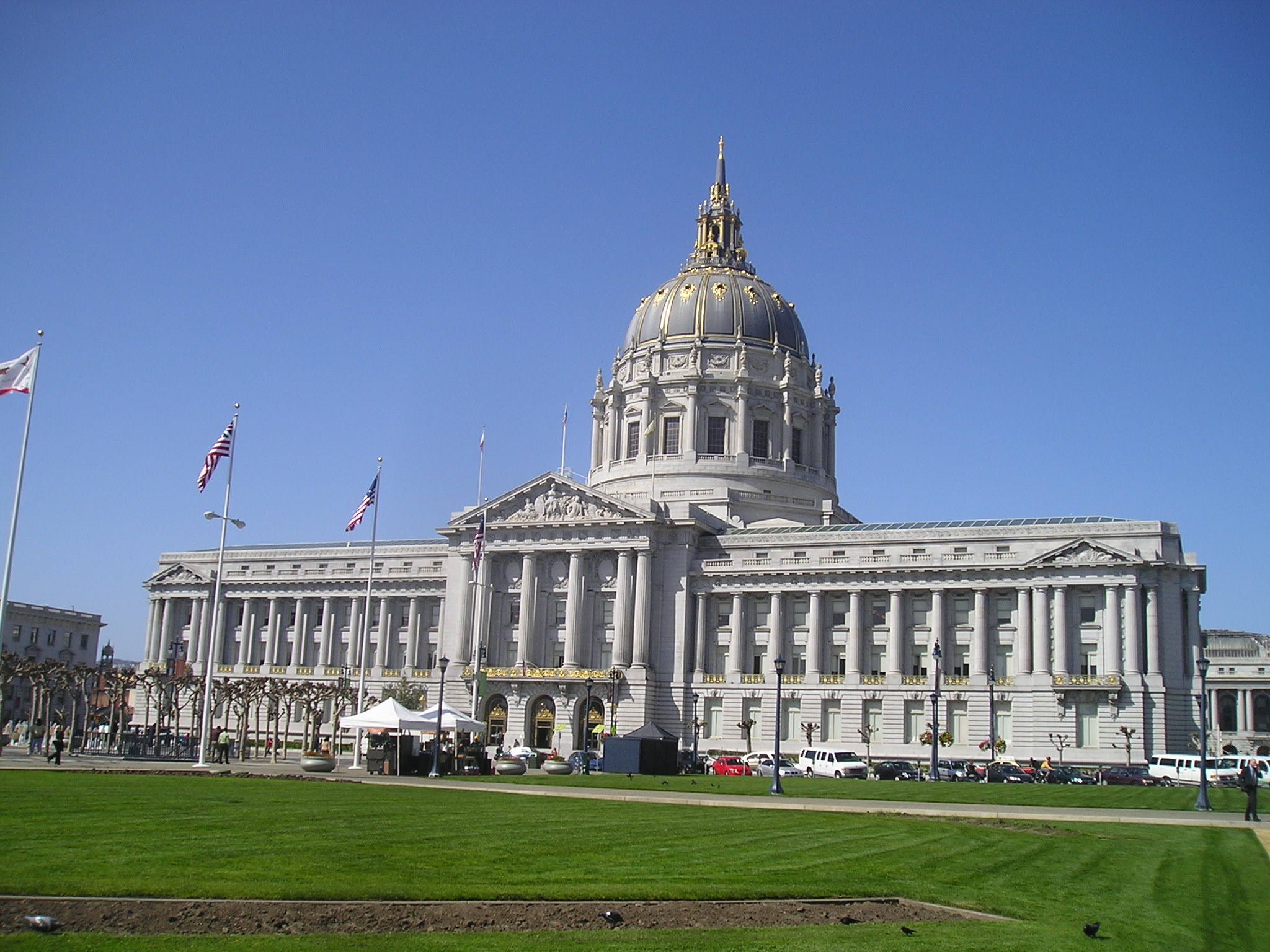
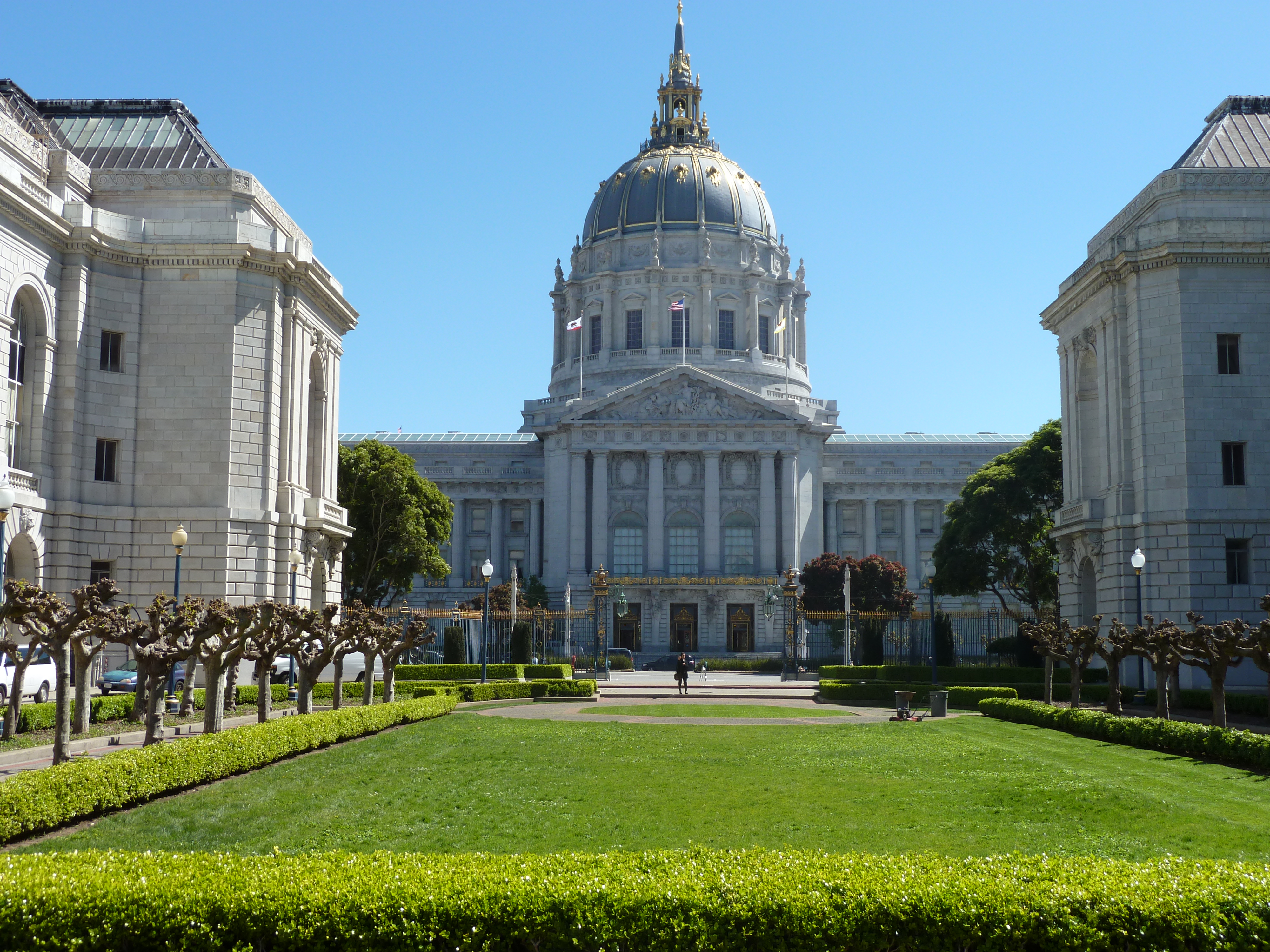
Sometimes overshadowed by the more instant charms of the waterfront and Union Square, and by the seediness of the surrounding Civic Center area, City Hall is one of San Francisco’s most precious jewels.

OLYMPUS DIGITAL CAMERA

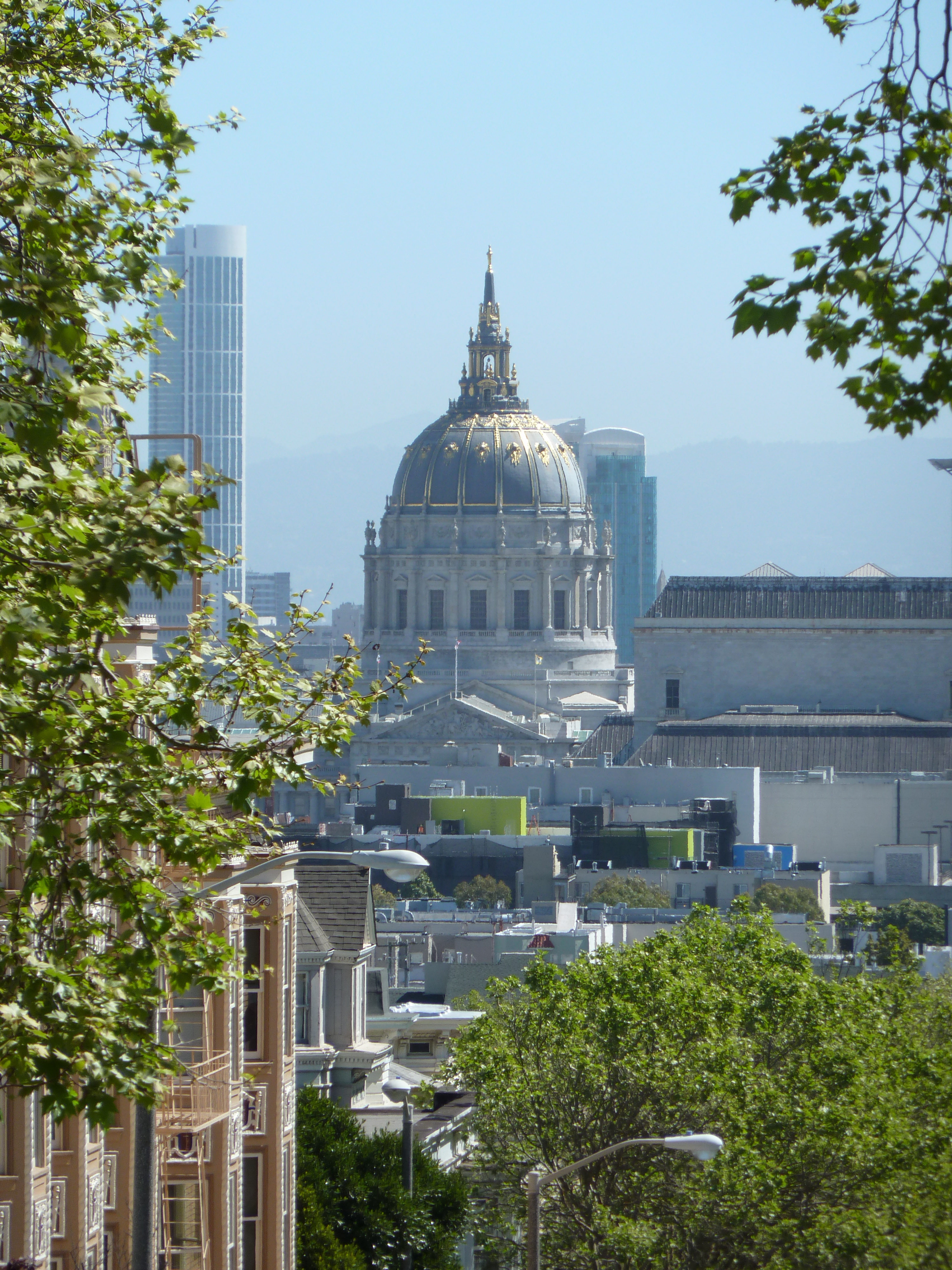
Its beautiful dome, resembling St. Peter’s in Rome, is the fifth largest in the world and is even forty feet higher than the U.S. Capitol in Washington D.C. Moreover, designed to withstand an earthquake, it is actually the world’s largest building  not touching the ground.

OLYMPUS DIGITAL CAMERA

P1000281

P1000278

P1010927

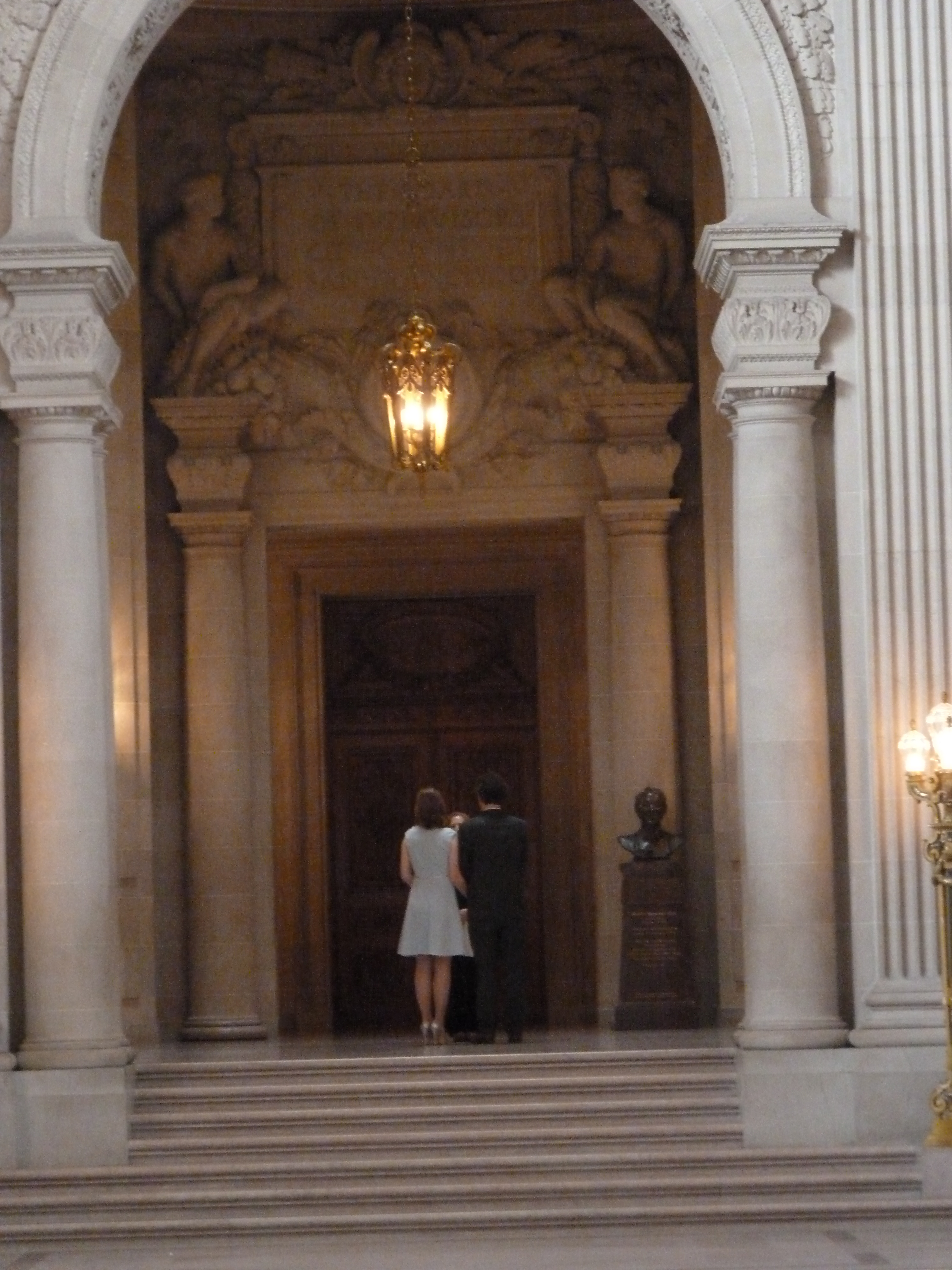
The interior is no less glorious with its central copper-domed rotunda and gleaming marble floors, and the offices must be some of the most palatial enjoyed by local politicians  anywhere.

P1010928

The above photograph illustrates its popularity as a wedding venue. On any working day, a continuous stream of couples tie the knot on the landing above its monumental staircase.

Whether you are a resident or a visitor, and you have not taken the opportunity before, walk inside and revel in its splendour.


Those “little cable cars” climbing “halfway to the stars” are one of the best loved and most iconic experiences for any visitor to San Francisco.  But few tourists hanging onto that lead rail as the Powell-Hyde car plunges down to the bay, or commuters perched atop Nob Hill on a California Street car about to sweep past the swanky hotels en route to the Financial District, will be aware that there was a time, shortly after the Second World War, when they became an endangered species.  Or even less so of the fact that they were saved for future generations through the foresight and resilience of a genteel, middle-aged lady from the eastern slopes of Telegraph Hill.

P1000416

The devastating earthquake and fire of 1906 destroyed much of the cable car system and triggered the rapid expansion in construction of electric streetcars with overhead wires, the first of which had been built in 1892.  And once it had been shown that the latest municipal buses, unlike the streetcars, could negotiate the steep hills, the continued viability of Andrew Hallidie’s invention was called into sharp focus.

By 1944 there were only five lines left in operation – the three independently owned by the California  Street Cable Railroad (Cal Cable) and the Powell-Mason and Washington-Jackson lines owned by the San Francisco Municipal Railway (Muni).

On 27th January 1947, in his annual message to the Board of Supervisors, Mayor Roger Lapham, a New York businessman who had been elected with a mandate to streamline the city’s finances, announced that the “city should get rid of its cable cars as soon as possible”, claiming that they were losing $200,000 a year.

Lapham’s vision of “super buses” replacing the cable cars met with little public favour, and the San Francisco Chronicle encapsulated the opposition’s argument in its editorial of 3rd February when it wrote that: “bus lines would be a good deal less expensive. But against this saving should be weighted………the market value of an institution which helps make the city stand out among cities of the world”.

Klussmann

But the strongest advocate for their retention came in the unlikely form of prominent socialite, Mrs Friedel Klussmann, who, outraged by this pronouncement, immediately began to mobilise opposition through the equally improbable auspices of the California Spring Blossom and Wildflowers Association and the San Francisco Federation of the Arts.

On 4th March, within sight of the Mayor’s office, she held a joint meeting attended by leaders of 27 women’s civic groups and formed a Citizen’s Committee to Save the Cable Cars, collecting more than 1,000 signatures in the first four hours of its campaign for an initiative charter amendment, a figure that was to rise to 50,000 by the end of the battle with City Hall. Despite the increasingly desperate arguments emanating from the Mayor’s office, the Board of Supervisors voted 7 to 4 to place Measure 10 on the November ballot.

Neither Mrs Klussmann nor her Committee were mere soft-hearted sentimentalists, and they put forth a robust rebuttal of the economic argument for closure in a detailed press release that spoke about the “$34,630,522 of new money” generated by tourism in the previous year, adding that San Francisco “is constantly striving to interest the rest of the world in its historical and colorful background, of which the cable cars are the No.1 attraction”.  The loss of the Powell and Market turnaround would be a blow to the city’s identity that “cannot be measured”.

P1000407

As Life Magazine put in in its 24th February edition: “It was as though Venice had proposed ridding itself of its gondolas”.  Visiting celebrities, including Elenor Roosevelt, publicly endorsed Mrs Klussmann’s campaign.  Newspapers were inundated with letters of support for the cable cars and accounts from passengers of their grim experiences waiting for and riding buses.

Measure 10 compelling the City to maintain and operate the existing cable car system was passed overwhelmingly by 166,989 votes to 51,457.  In her victory statement Mrs Klussmann said: “It is wonderful to know that San Franciscans appreciate their famous, efficient and safe cable cars”.  The Committee was galvanised again in 1950, 1951, 1954 and 1971 to fight further cost-cutting measures, with modest success.

OLYMPUS DIGITAL CAMERA

In the same year Mrs Klussmann also founded San Francisco Beautiful (www.sfbeautiful.org), the “only organisation in San Francisco whose sole purpose is to protect and enhance the city’s urban environment”, working to “improve the quality of daily life, strengthen communities and empower citizens to maintain the character of the city’s parks, neighbourhoods and streets”.  It continues to do excellent work today, not least through its Friedel Klussmann grants made to organisations that “seek to maintain or enhance San Francisco’s unique beauty and livability”.

When she died at the age of 90 in 1986 the cable cars were decorated in black in her memory.  On 4th March 1997, the fiftieth anniversary of the Committee’s initial meeting outside City Hall, the Friends of the Cable Car Museum dedicated a mural to Mrs Klussmann at the cable car barn.  The turntable at the outer terminal of the Powell-Hyde line was also dedicated to her.

So next time, dear visitor, when you skirt the ridge of Russian Hill on a clanking, rumbling Powell-Hyde cable car and catch your breath at the bay vista spread out before you, spare a thought for the prosperous, middle-aged lady, whose vision and courage sixty years ago ensured that you can have those unforgettable experiences today.

P1010990

I am particularly indebted to Walter Rice and Val Lupiz’s excellent article The Cable Car and the Mayor (www.cable-car-guy.com/html/cclm.html#top) for much of the detail provided above.


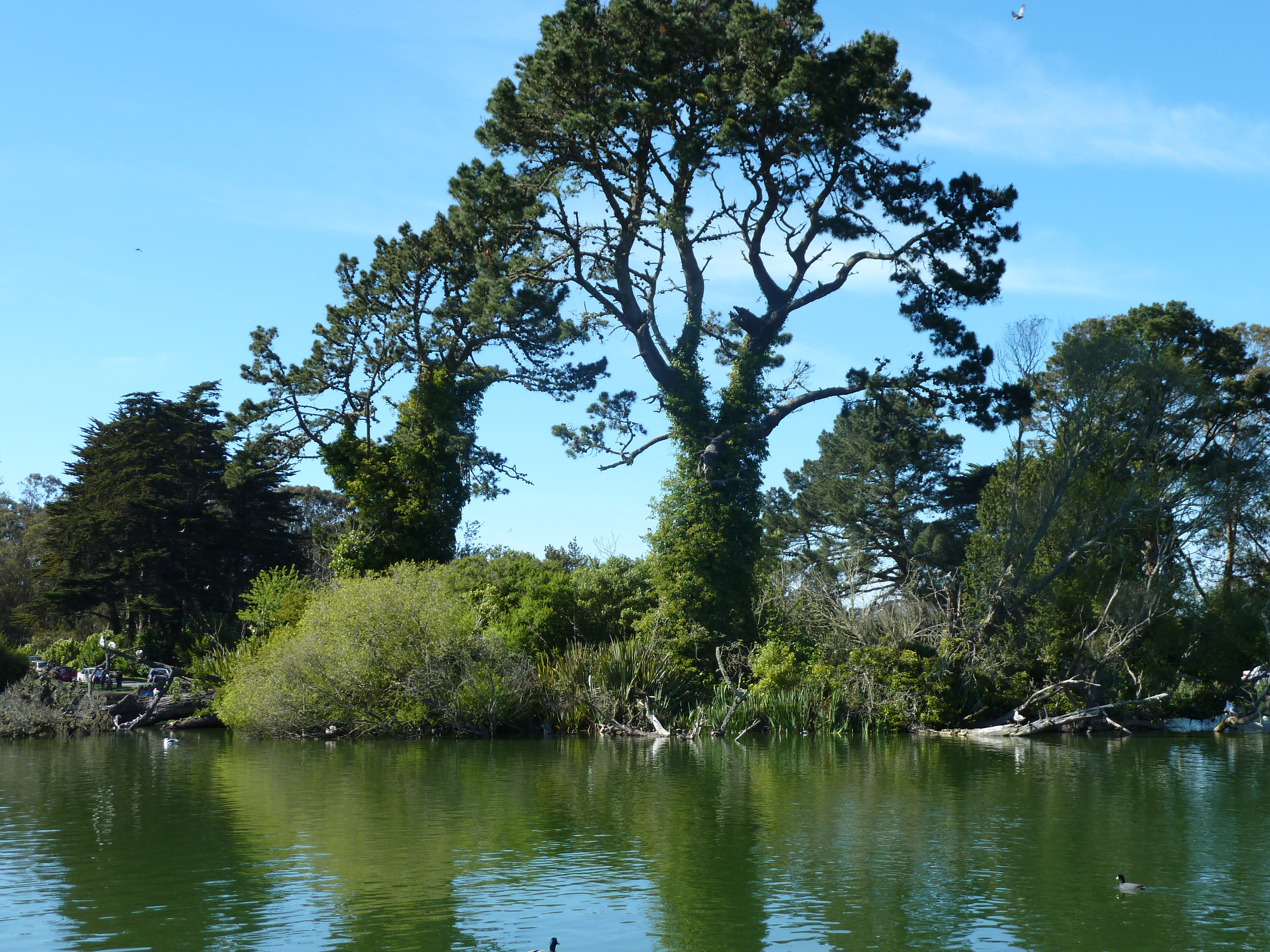
Stow Lake is frequented more by residents than tourists who are rather drawn to the heavily promoted, and undeniably impressive, adjacent attractions of the de Young Museum, California Academy of Sciences and Japanese Tea Garden. Yet it is only a few minutes walk away.

We stumbled upon it purely by accident on our second trip to the city fourteen years ago. Venturing west from those headliner venues, you quickly come across a pathway and 26 steps that lead to the south side of the lake. In the dense trees on the island opposite you soon encounter the charming Chinese Pavilion, a gift from the people of Taipei, shipped in 6,000 pieces and reassembled in 1981.

As you stroll along the path that encircles the lake you gain an immediate impression of both serenity and bustle. Young families, pushing strollers and trying to contain excited children, compete with joggers, dog walkers, cyclists and elderly immigrant couples reliving their first date 50 years ago for the narrow path. Ducks, gulls and other bird life glide along the placid surface, scanning for potential feeding stations wherever humans congregate by the water.

For now, pass the rustic stone bridge on your right and continue along the path  that leads to the boathouse (new photo) where you will be able to rent paddle boats, row boats – new, I believe, this year – bicycles, and in-line skates. Restrooms, picnic tables and a surprisingly well stocked snack bar greet you here also. Indeed, it has the distinction of being the first place in the U.S. where I tasted a vegetarian hot dog (whilst Janet ate ice cream!).

On a bright day you may be lucky enough to observe a row of turtles sunbathing on the rocks and logs alongside the boathouse.

For the more adventurous there is the short but relatively steep hike up to Strawberry Hill, the 430 foot high artificial island in the middle of the lake, which rewards you with fine, slightly tree obscured views across the western part of the city, and even as far as the Farallone Islands 26 miles out to sea.

You can either retrace your steps from the boathouse and access the island across the stone bridge (new photo), or you can approach it by crossing the second “Roman” bridge which appears shortly in the opposite direction. Be sure not to miss Huntington Falls which cascade down into the lake close to the Chinese Pavilion.

Encircling the entire lake and climbing Strawberry Hill amounts to around two and a half miles.

So if you want a few hours respite from the frenetic environs of Fisherman’s Wharf, Chinatown or Union Square, take a bus out to Golden Gate Park and visit Stow Lake, grab an ice cream and paddle gently for an hour in the civilising company of ducks and turtles.


Born in October 1952 on the day tea rationing ended in Britain (good timing that, given my mother’s obsession – and subsequently mine – with the brew) and, as an only child, I enjoyed a happy childhood, revolving mainly around football and cricket.  I had the good fortune of growing up during the sixties, the music of which provided a thrilling soundtrack to my that period.

I attained a BA (Honours) in English and European Literature at Essex University, writing my dissertation on the novel At Swim-Two-Birds by Irish novelist and journalist Flann O’Brien.  This was followed by studying towards an MA in Anglo-Irish Literature at Leeds, majoring on James Joyce, Samuel Beckett and W.B.Yeats, including writing a treatise on the novels of Patrick Kavanagh (The Green Fool and Tarry Flynn).

OLYMPUS DIGITAL CAMERA

Eventually, I exchanged academia – via portering in a major department store and “making” sultana cookies and other exotic (for the time) biscuits – for the last refuge of the modern scoundrel and joined the UK civil service in March 1980.  I subsequently spent 29 years in the Department for Work and Pensions and its many antecedents, latterly in human resources and diversity before poaching early retirement in March 2009.

OLYMPUS DIGITAL CAMERA

My interest in the subject led me to undertake a Level 3 BTEC Advanced Certificate in Travel and Tourism via home learning.  I completed the course in December 2010, achieving a Distinction in all three elements – understanding the travel and tourism industry, tourist destinations and tour operations.  My ambition now is to concentrate on writing and, hopefully, to publish on a regular basis.  I have been focusing principally on my passions of San Francisco, cricket and travel, though I am not able to resist on pontificating on life in general from time to time.

OLYMPUS DIGITAL CAMERA

This blog has now been active for nearly two and a half years. But I want to do more than that. At present, I am in the final throes of co-writing a book on the centenary of Kent County Cricket Club’s fourth County Championship title in eight years, and future writing projects include a series of short stories based in San Francisco and an expansion of our U.S. road trip diary of September / October last year.

P1020029

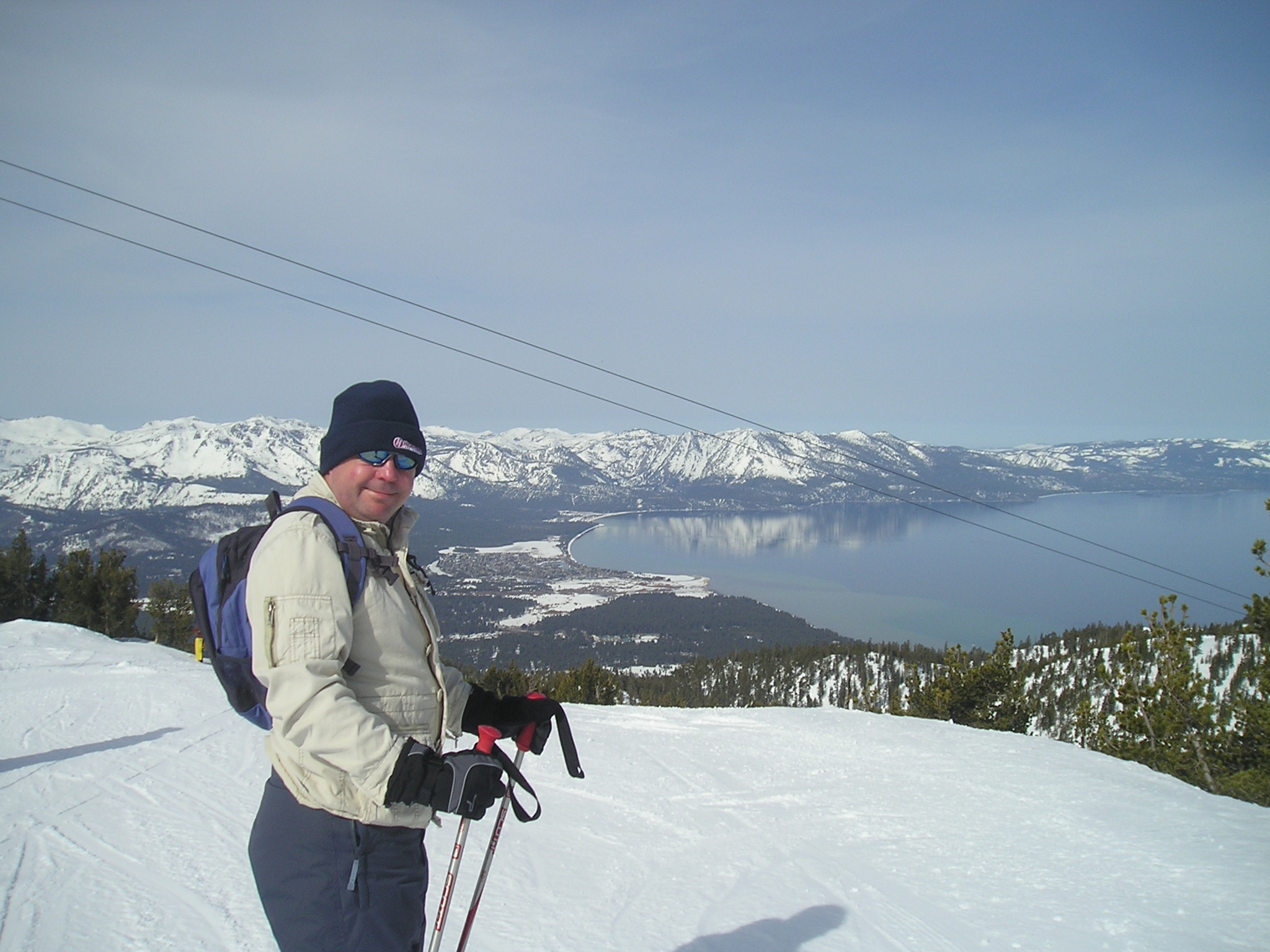
Aside from the above topics, my other serious interests are walking, skiing, baseball (a fan from afar of the San Francisco Giants), association football (a life long fan of Gillingham), music (principally folk, blues, country and West Coast rock borne of the original Summer of Love in 1967), going to the theatre and eating out.

I feel extremely grateful to have the health and energy to pursue all of those interests, as I am also for the support and encouragement of my wonderful wife Janet whom I married in Vegas on Halloween 2009 after 27 years together (that makes it 31 now!).


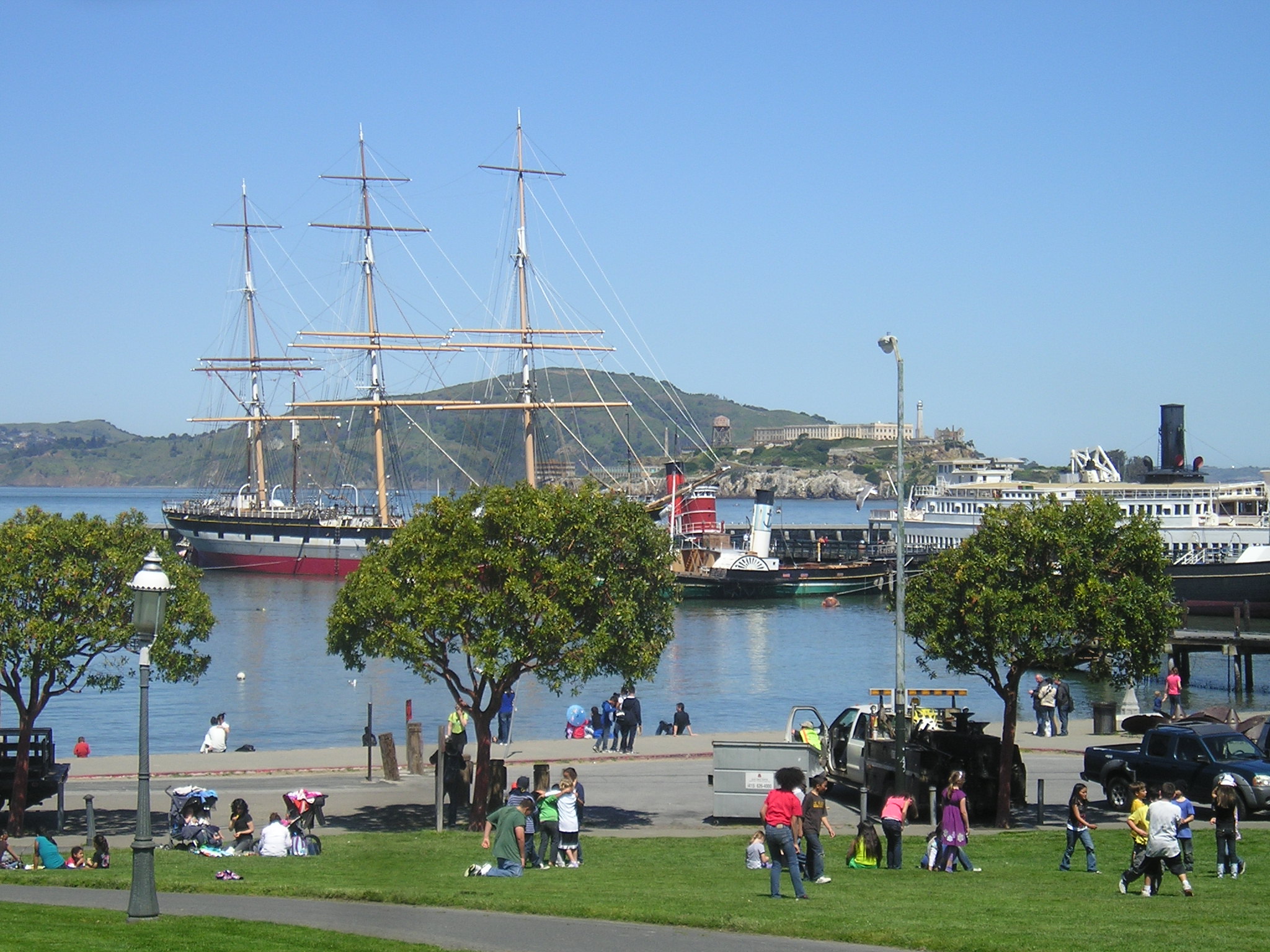
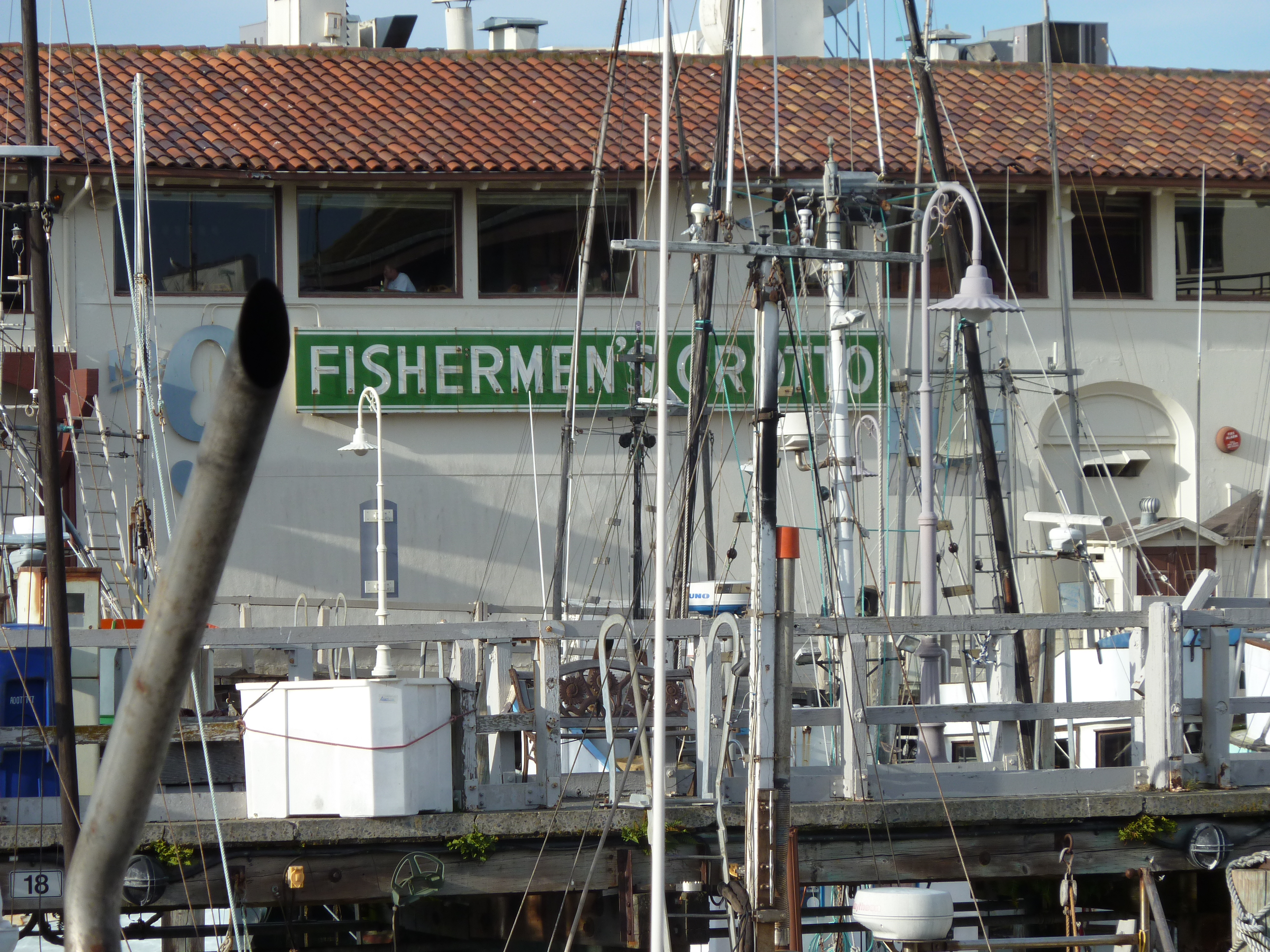
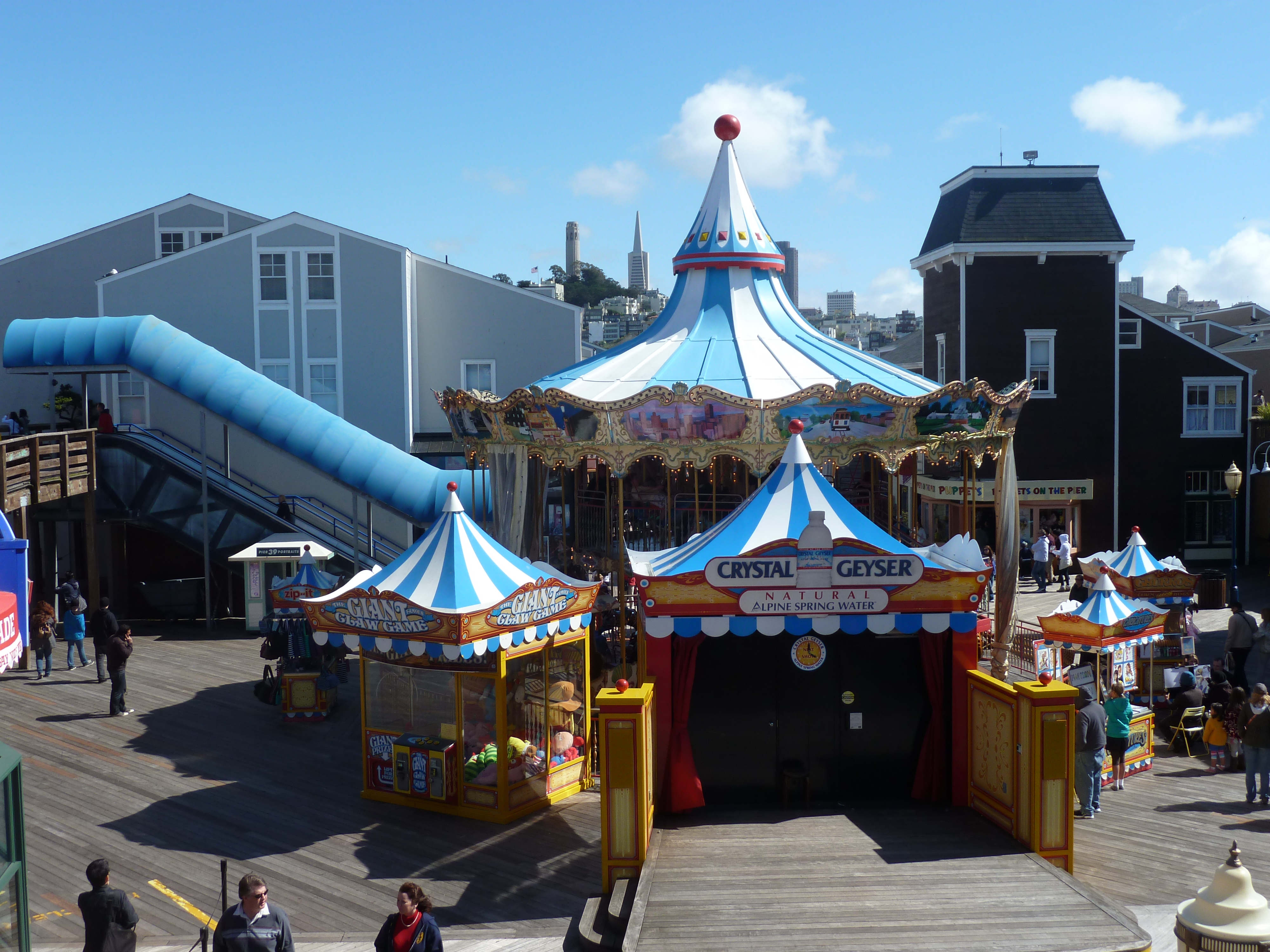
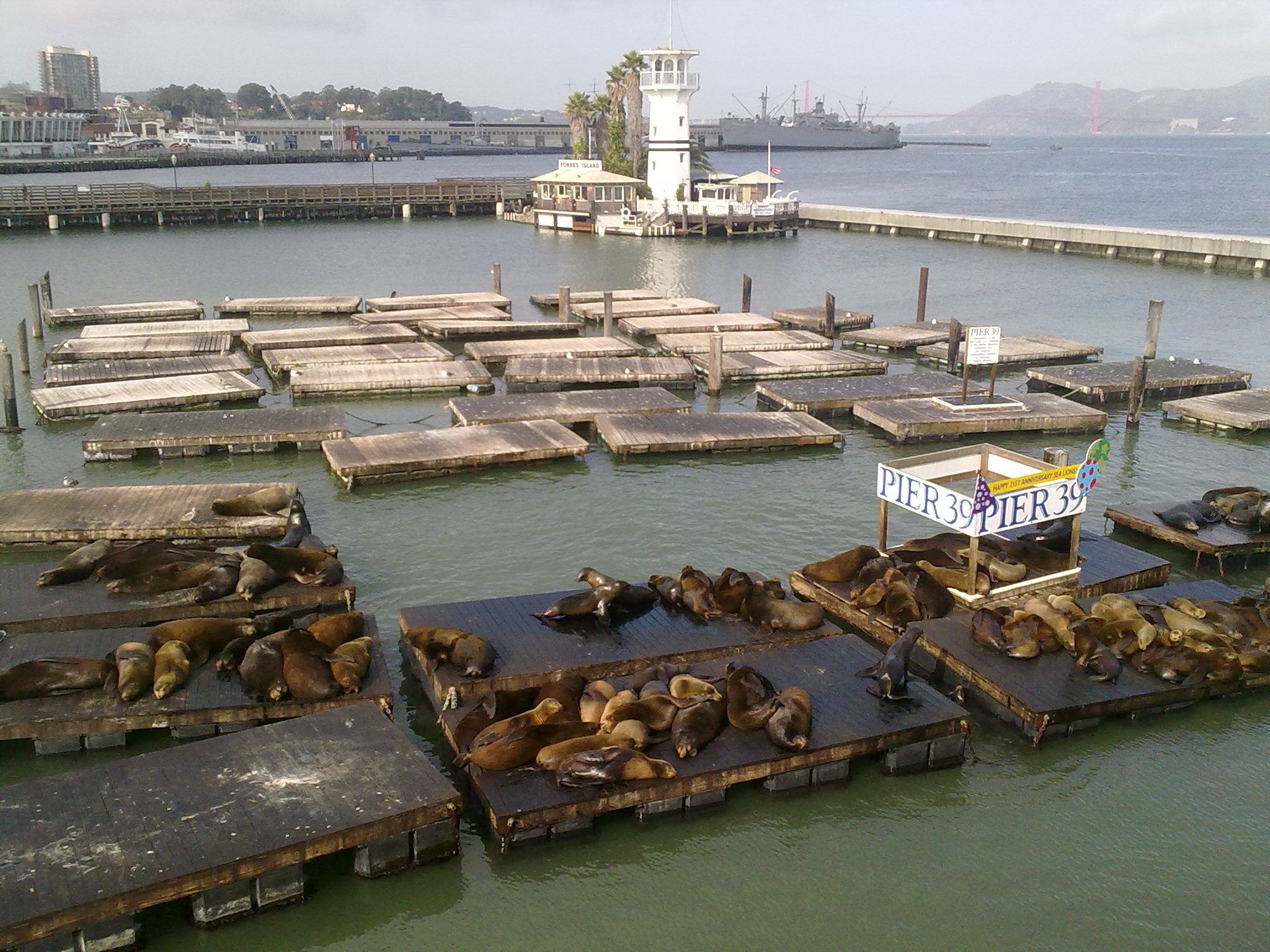
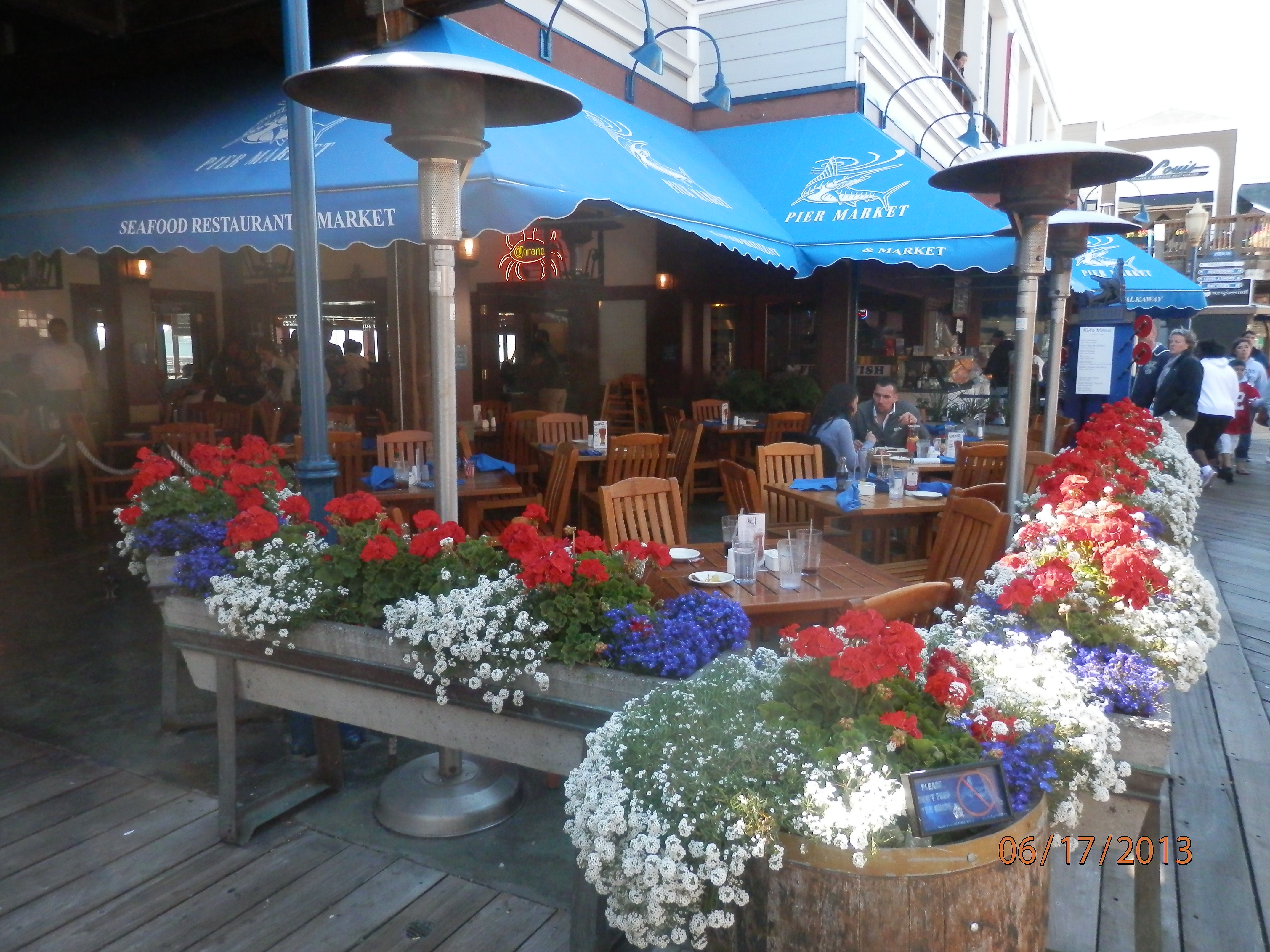
There are many people, not least those who write guide books aimed at the more discerning visitors, who sneer at the simple pleasures to be gained on the northern edge of the bay. And I’ll confess that Fisherman’s Wharf and, in particular, Pier 39, are not my favourite spots in San Francisco. However, on a brisk, bright spring day, there is little to beat a stroll along the waterfront, sharing in the festive atmosphere.

The following photos feature some of the most attractive sights, including Hyde Street Pier, one of the best and cheapest ways of spending a couple of hours in the city.

P1000387

P1000086

P1000060

OLYMPUS DIGITAL CAMERA

P1000388

P1020013

P1020011

P1000395

013

P1000391

OLYMPUS DIGITAL CAMERA

OLYMPUS DIGITAL CAMERA


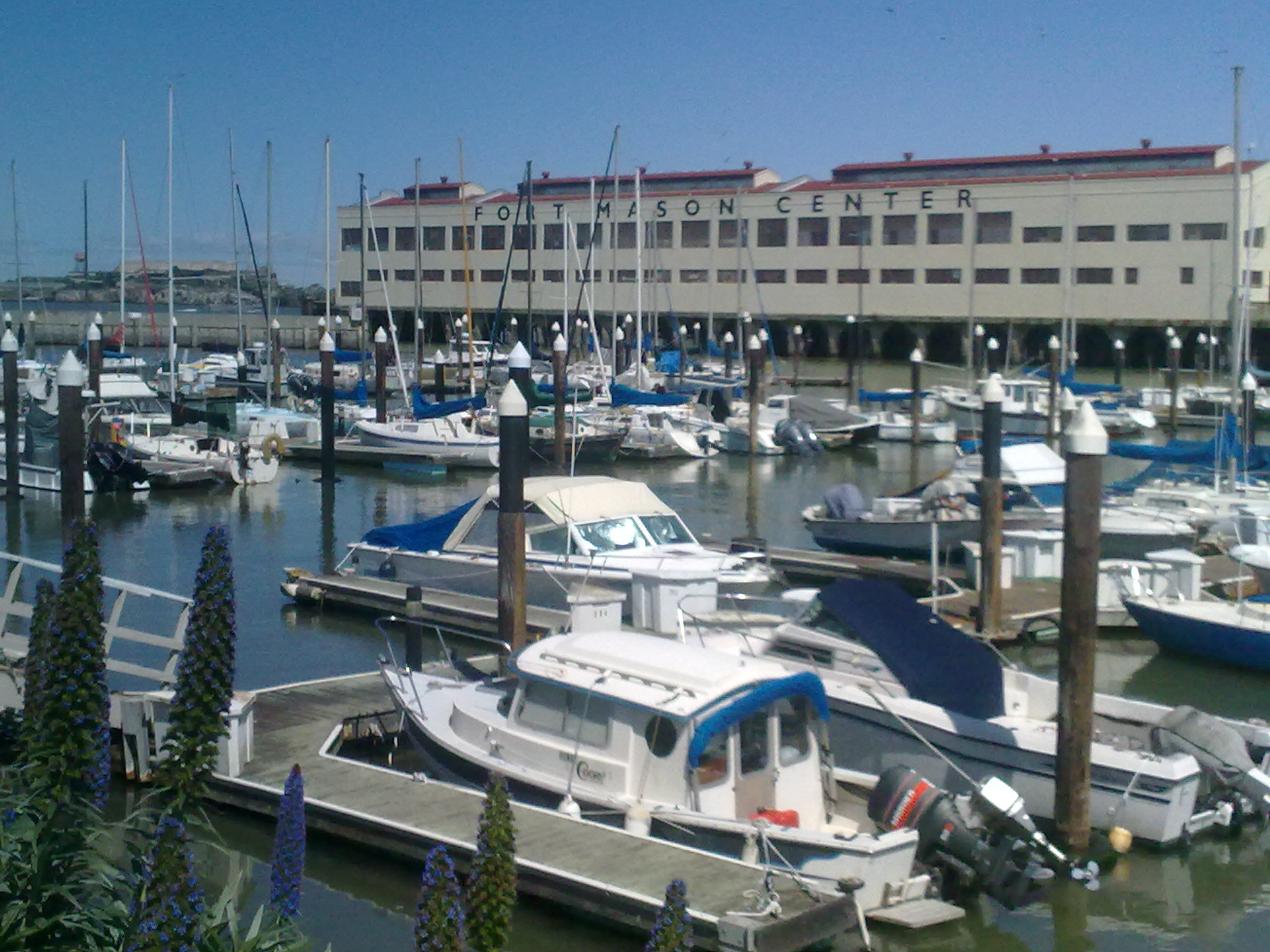
Despite its proximity to tourist traps such as Fisherman’s Wharf and Ghirardelli Square, the former United States army post of Fort Mason, is a bit of a hidden gem as far as non-residents are concerned. But it repays an hour or two of anyone’s time. Its historic buildings include art galleries, museums, an excellent café cum second hand bookshop and one of the best vegetarian restaurants in the country, Greens. The views across the Marina to the Golden Gate Bridge and back towards Alcatraz are marvellous. I hope the photographs below entice any readers who have not visited the site to include that on their next itinerary.

P1000291

242

245

P1000290

P1000293

P1000294


Brilliant post about a great San Francisco tradition. And wonderful to see Wavy Gravy – last and most venerable of the Pranksters – in such fine fettle.


Like many visitors I first encountered the Cliff House on a sightseeing tour of San Francisco in October 1995, calling in after the obligatory orientation stop at Twin Peaks.  We had little more than half an hour there, just enough time to peruse the jewellery stalls on the pavement outside, buy a postcard or a packet of Californian seeds in the gift shop and, most importantly, avail ourselves of the washrooms.

We spied an enticing restaurant (there are two of course, but weren’t able even to fit in a coffee.  The tour guide will probably have outlined the exotic history of the three different buildings that had stood on the site, including the Christmas Day fire of 1894, the majestic Sutro Baths and amusement park, the atmospheric remnants of which can now only be seen.  But the history lesson will have passed most of us by, anxious as we were to move on to the more dazzling attractions of the Golden Gate Bridge and Fisherman’s Wharf.

Eighteen years and nine trips later, it has become a ritual for us to have brunch here on the first morning of each visit to the city. Sometimes by car, and on other occasions by MUNI bus, we ride out through the Inner and Outer Richmond neighbourhoods, excitedly counting down, or rather up, the numbers of the avenues. We sweep past Golden Gate Park on our left whilst craning our necks for tantalising views of the bay – and the great bridge – to the right as we pray for the interminable procession of traffic lights to be on our side.

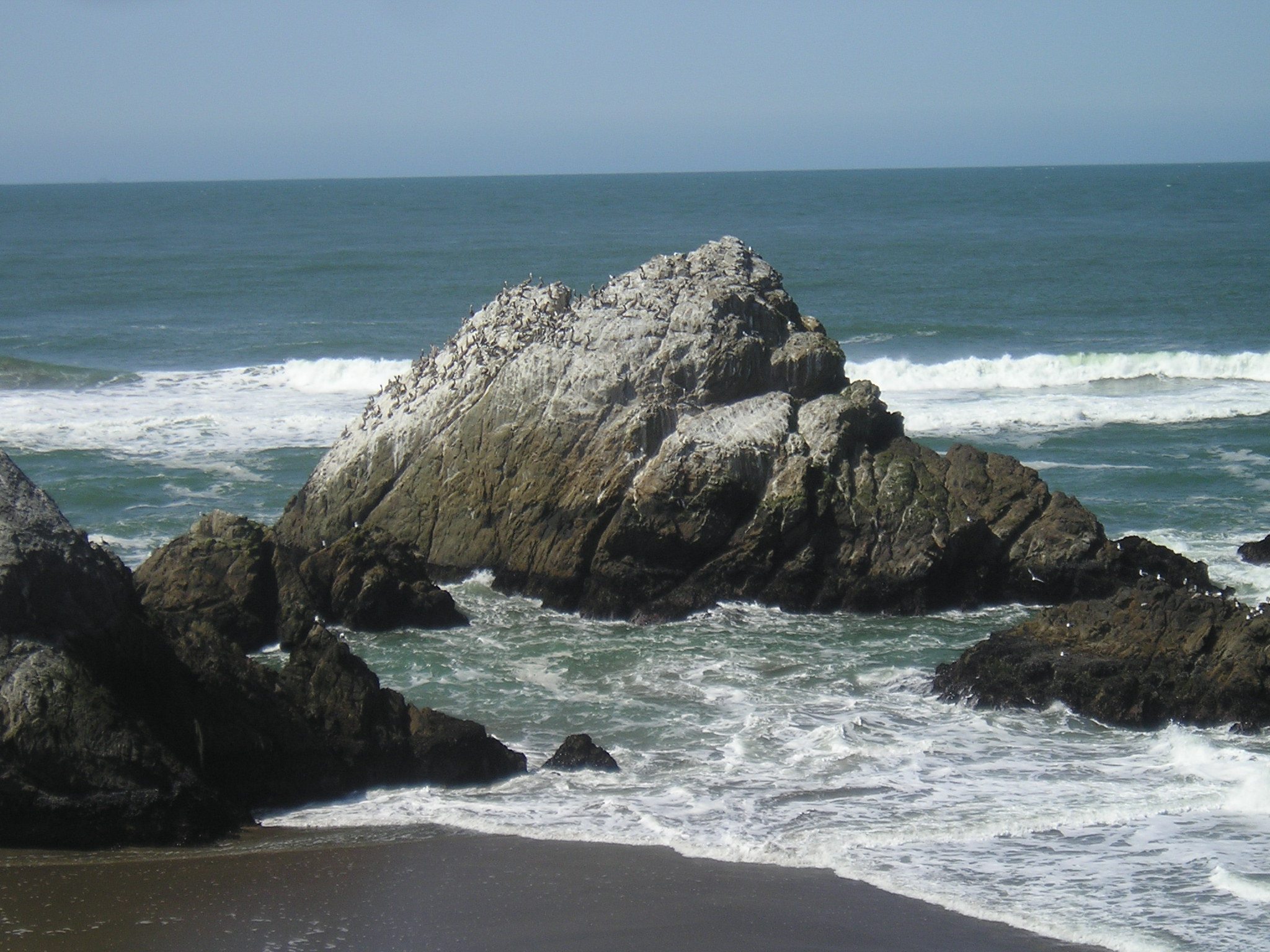
We park up behind the wall separating the Great Highway from Ocean Beach and walk towards the Cliff House, hoping that the line for the bistro on the ground floor is not too long.  Being told – as we always seem to be – that we have around a half hour wait, we venture outside to marvel at both the bird life on Seal Rock and the engineering masterpiece that is the Camera Obscura.

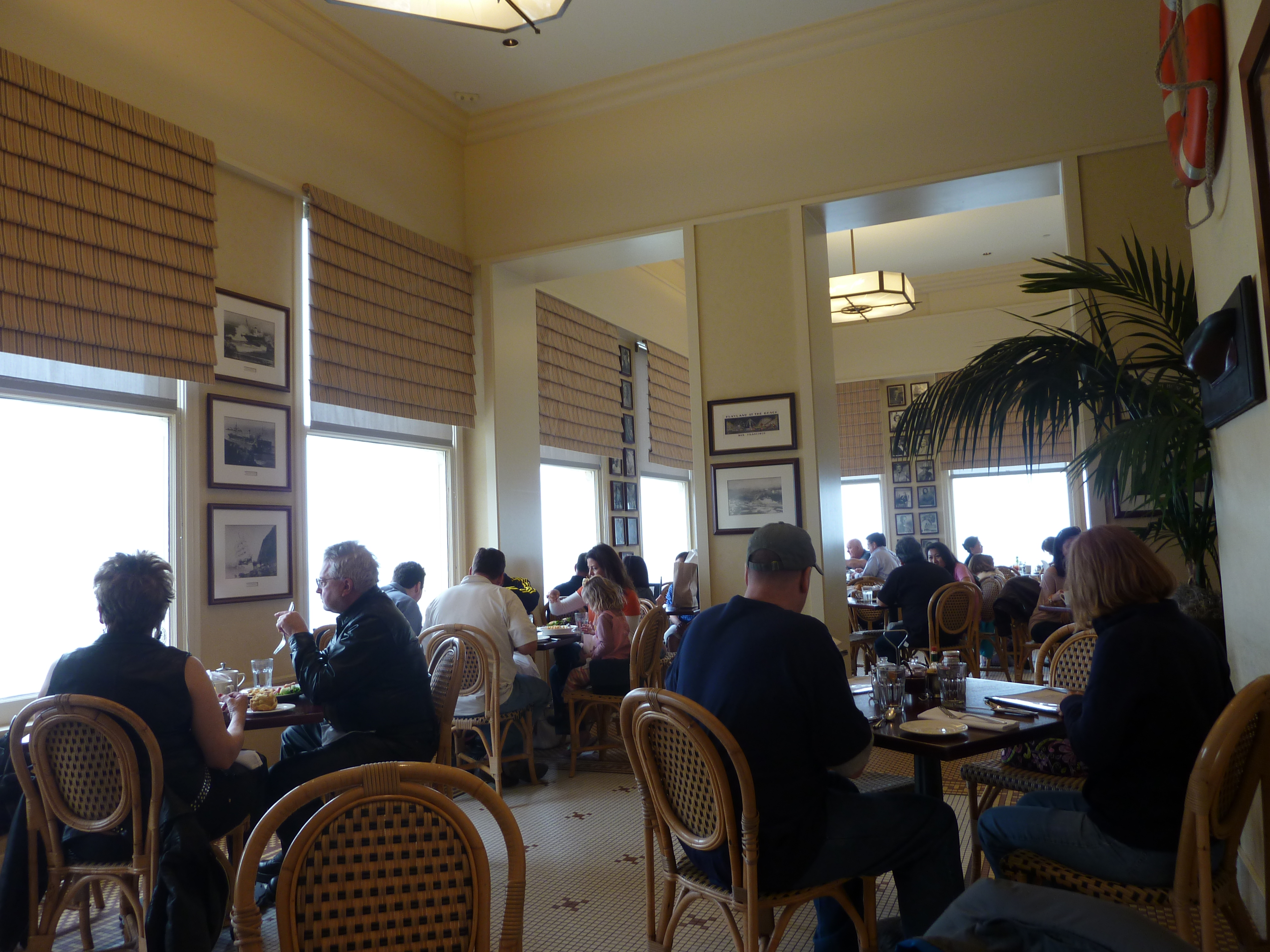
On returning to the restaurant, we are escorted by a cheerful waiter to a table at one of the large picture windows, permitting either views of Seal Rock and the vast Pacific Ocean beyond, or of the long, bullet straight shoreline towards Pacifica, Half Moon Bay, Santa Cruz and all points south.  Golden Gate Park, with the Dutch Windmill signposting its coastal entrance, sits half a mile away whispering its hidden delights.

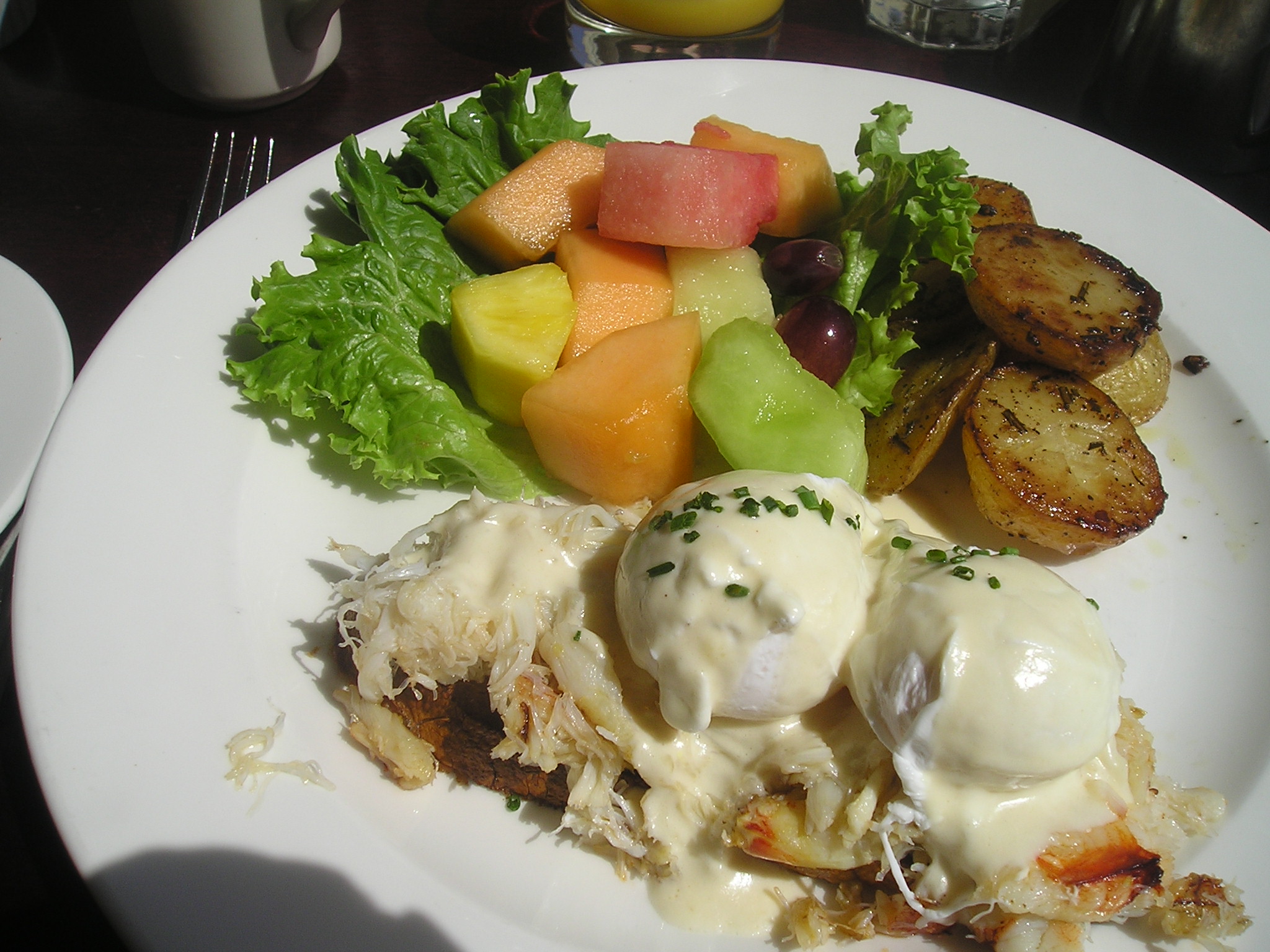
We are given ice cold water and divine warm rolls while we scan the menu, though we hardly need it as our order is always Crab Eggs Benedict for myself and Eggs San Francisco for my wife, accompanied by fried potatoes (not fries), onions and peppers, melon pieces, grapes and salad, juice and unlimited coffee. Heaven!

That’s the moment!

It is only now that we feel truly “home” again – with that meal, that view, that hum of civilised conversation that pervades the dining room. The next week, fortnight or, in our upcoming vacation, month, is laid out before us like a procession of Christmas Days, with lavish presents and sumptuous food and drink on every one of them.

As we leave the Cliff House to walk off the meal on the beach or the cliff tops of Land’s End, the next tour bus pulls up and disgorges its occupants, chattering of Chinatown, Pier 39 and Macy’s, all to be ticked off by lunchtime, to the washrooms, gift shop and jewellery stalls.  Perhaps some of them at least will remember that short comfort stop next time they visit the City and decide to inspect the plain looking building by the sea a little more closely.

But I hope it’s not too many, as we would not want our wait for a table to be any more than that customary half an hour would we?

P1020193


Another of the most serene and civilised spots in San Francisco is the Japanese Tea Garden in the heart of Golden Gate Park. It is at this time of year that it is seen at its loveliest as I hope the photographs below demonstrate.

OLYMPUS DIGITAL CAMERA

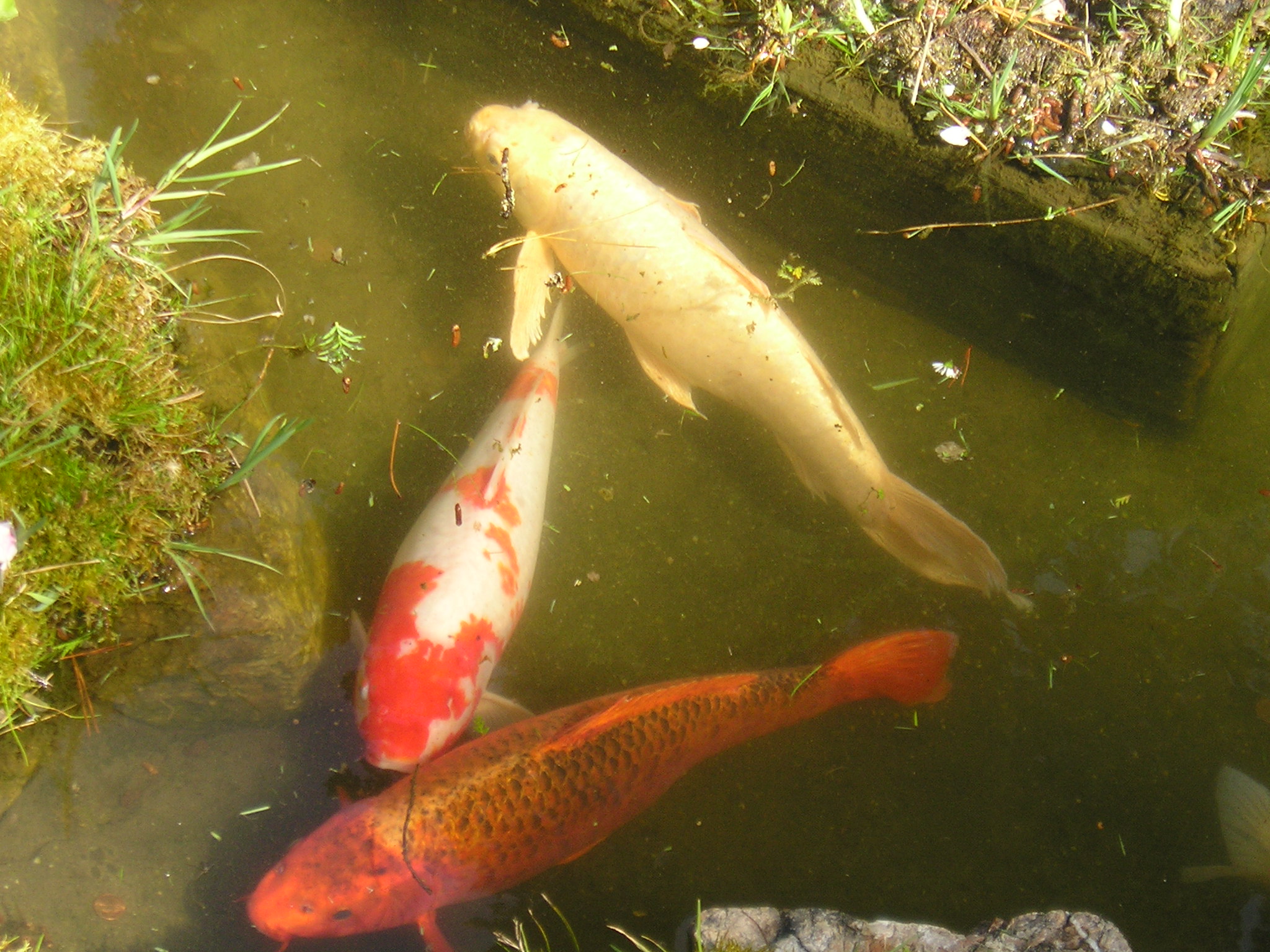
For just $7, or $5 if you are fortunate enough to be a resident, you can walk among the cherry blossom trees, cross stone bridges and marvel at both the pagodas and koi ponds. And for the children – and those just young at heart – you can attempt to negotiate the arched drum bridge.

OLYMPUS DIGITAL CAMERA

The tea house is a delightful spot for a light lunch or mid-afternoon snack, serving a variety of Japanese teas, soup, sandwiches, cheesecake and, of course, fortune cookies.

OLYMPUS DIGITAL CAMERA

OLYMPUS DIGITAL CAMERA

OLYMPUS DIGITAL CAMERA

OLYMPUS DIGITAL CAMERA

P1000616


With a little over two months to my tenth trip to San Francisco, I am revisiting, and where appropriate, updating a handful of my articles on the city I fell in love with from afar in 1967 and in person 28 years later.

If I were forced to name the place I would most like to spend a couple of rainy hours, the Ferry Building would appear very close to the top of the list.

It was on 13th July 1898 that the first ferryboat and its passengers pulled into what was then called “The Union Depot and Ferry House”. At the height of its glory in the nineteen thirties, more than 50 million passengers passed through it each year.

Despite two major earthquakes and the construction of both the San Francisco – Oakland Bay and Golden Gate Bridges, not forgetting a hideous double-decker freeway along the Embarcadero, the latter thankfully demolished after the second of those earthquakes, the building with its 235 foot high clock tower inspired by the moorish belltower in Seville, has not only survived but become one of the most popular attractions in the City.

Once the City’s principal transportation hub and beautifully restored between 2003 and 2007, it is now home not only to two storeys of premium office space, but also a permanent gallery of stalls selling locally produced fresh fruit and vegetables, cheeses, wines, meats, flowers, chocolate and pastries, as well as one of a kind gift items, many related to the kitchen and garden.

An outstanding farmer’s market takes over the plaza on Tuesdays, Thursdays, and especially Saturdays, when celebrated chefs from around the City demonstrate their skills to locals and tourists alike. Several appealing restaurants and cafés complete the scene.

Located along the Embarcadero at the foot of Market Street, it is now one of only a handful of landmarks that I make a point of visiting on every trip to the City, however short. Ten days in April didn’t yield a single cable car ride or journey over the Golden Gate Bridge, but it did include two trips to the Ferry Building, one on the way back from a spending spree at the ballpark (in fact, it is a perfect resting spot if you are making the bracing but arduous hike on a blustery day from AT & T Park to Fisherman’s Wharf, or vice versa).

Its role as a ferry port may have diminished (it now caters only for a handful of local services), and cruise ships may soon be getting their own spanking new terminal, but the building remains at the heart of the City’s transportation system with MUNI (Metro) and BART lines criss-crossing here, and the cranky, lovable F Streetcars rattling by.

Whilst there might be other excellent, if admittedly less expensive, farmer’s markets and wholefood stores around town, the Ferry Building might just be the best. Where else can you pick up those last minute snapper fillets, fresh vegetables, rustic loaves, Californian wines and cheeses, and even pig’s cheeks, to take back to your apartment in Noe Valley or the Sunset? And the visit alone, especially if you tarry awhile and experience everything it has to offer, is worth the journey alone.

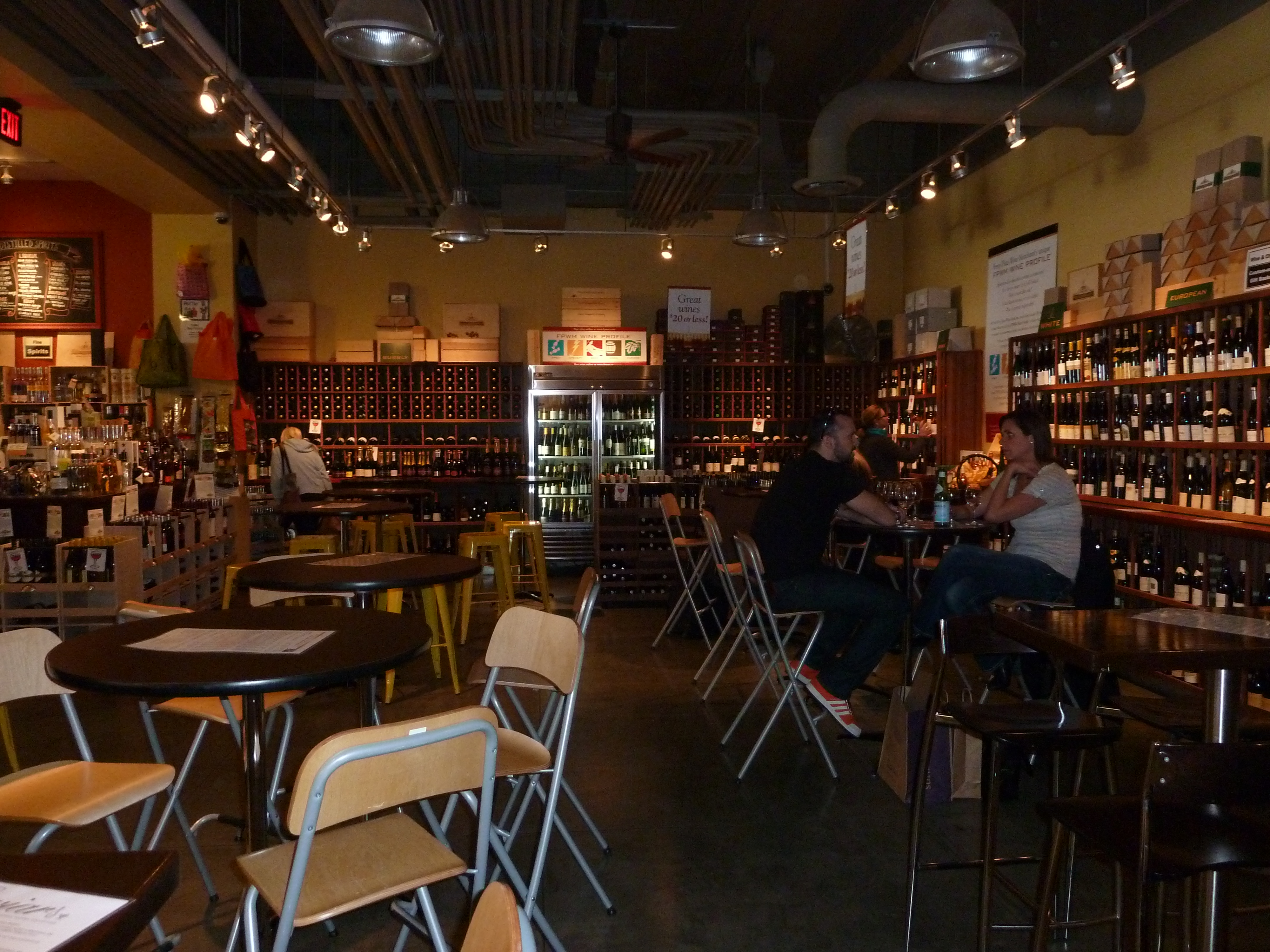
Slip into the Ferry Plaza Wine Merchants , share a carafe or two of Napa or Sonoma wine, or indulge in one of the special tasting “flights” where you can sample half a dozen wines at once (I would caution, however, that if you are of a nervous disposition, it comes with a lot of (different shaped) glasses, and whilst it looks pretty, the potential for disaster is considerable). What better to accompany it than a tasty cheese board? And you may stumble upon one of the regular lectures on wine or even meet the individual who made the wine you are drinking, as has happened to me!

If the Giants happen to be playing on the live televisions, so much the better, just order another carafe. And don’t forget to pick up a couple of bottles before you leave.

With the closure of the large Border’s and Barnes and Noble bookstores at Union Square and Fisherman’s Wharf respectively in recent years, it is heartening also to find the excellent Book Passage in the building. It may be small but it stocks an impressive selection of books on San Francisco and the Bay Area in particular. Pick up a book and a cup of Peet’s (coffee) from the adjoining cafe, grab a seat outside and “waste” an hour enjoying the bay views.

San Francisco Chronicle columnist Herb Caen called it “a famous city’s most famous landmark”, adding that the “waterfront without the Ferry Tower would be like a birthday cake without a candle”.

It is hard to disagree.