Feeds:
Posts
Comments

Posts Tagged ‘California’


It was midday and the stores on Haight Street were drowsily coming to life under a warming sun. A gaggle of skateboarders, ageing “heads”, dogs and guitars waited at the lights at Stanyan to cross over to Hippie Hill for an afternoon of music, marijuana and merriment.

We had just enjoyed a sumptuous lunch of chicken pesto, Greek chicken wraps and hummus plate at the Blue Front Café, (sadly, one of the many eateries that has subsequently closed), and were entering a brightly coloured establishment which had historically divested us of our holiday dollars more than any other over the previous two decades.

As we planted ourselves in the rear of the store to look for any new tie-dye shirts from Liquid Blue, the silence was broken by a chirpy Californian female voice.

“Hey, you guys, let me explain the layout in here for you. At this end you will find the Grateful Dead t-shirts, organised by size, while over here are my own designs…….”

It was clear that the woman was going to continue with this well-rehearsed speech for some time, and, of course, she was only trying to be helpful. But I have an aversion to being what I perceive as “stalked” in stores by staff when all I want to do is look for myself and ask questions if I have a need.

So, I interrupted her rather abruptly – for which I have since apologised on many occasions – explaining that for nearly twenty years we had been rummaging through her colourful stock, and left laden with t-shirts, dresses, badges, stickers and other paraphernalia.

Rather than being deterred by my rude riposte, she squealed at the news, thanking us for our custom (not service – that is generally reserved for the military) and asking us where we were from, a perfectly reasonable icebreaker if one were really needed. I explained that we were from England, that I had revered the Dead since the late sixties and had visited the store many times before. This triggered a discussion about our mutual love for the music and the city.

I mentioned that we were heading for the Great American Music Hall that evening to see Dark Star Orchestra, the band formed in Chicago that had been replicating entire Dead shows since 1997. Alicia, as she was called, was thrilled to hear and said “we’re going too, do you wanna hang out?” By “we” she had included her partner, Jerry (no, not that one) who was, at the time, the long term owner of the store.

Despite the presumption (at least to British ears) in the question we instantly accepted the offer, and as we left with Casey Jones and Alice in Wonderland tees, arranged to meet in the line outside the venue at 6pm.

Disembarking the 47 Muni, rather uncharitably dubbed by my wife the “stinky bus”, at Van Ness and O’Farrell, we strode excitedly along the two blocks to join a mercifully short line at the venue. Dead concerts past were recalled as the air reeked of pot and a lone, long haired man patrolled the street with a barely legible, but at least grammatically correct, “I need a miracle” message scrawled on a scrap of cardboard with a Sharpie.

Alicia and Jerry joined us ten minutes later and we made our way to the upper floor where we had booked tables, allowing a prime position leaning on the railing that overlooked the stage below. We could not have had a better view as we christened our new tie-dye outfits. The ticket price had included a meal from a limited menu. With Californian and English choices on offer, we all opted for the latter – fish and chips (the American version of several small fish pieces rather than the single, larger British version).

This was the second time we had seen Dark Star Orchestra, the first having been at the House of Blues in Las Vegas on the eve of my sixtieth birthday two years earlier, when they had played a show from the early nineties which my wife had struggled to embrace, leading her to abandon the show midway through the second set halfway through a characteristically lengthy Eyes of the World jam in favour of the penny slot machines on the Mandalay Bay casino floor. 

She had still not, at this stage, been fully converted to the Dead’s music, despite the fact that I had tried for thirty years to convince her of their greatness. She did, however, enjoy many of the earlier, shorter songs like Sugar Magnolia, Uncle John’s Band, Box of Rain and her favourite, Bertha.

I had been hoping that, being in San Francisco, they might play a Fillmore (West) concert on this evening, perhaps even from the run featured on the Live Dead album from 1969. And that, with some minor adaptations, is exactly what we got. I was beside myself, and my wife was happy too.

Mid way through the first set they announced that they were being joined by a special guest – Grateful Dead rhythm guitarist Bob Weir! He jammed with the band on St. Stephen and sang one of his signature cowboy songs, Me and My Uncle. The following year Bob similarly “gate crashed” Steve Earle’s set at Hardly Strictly Bluegrass in 2016. And more than a decade later, during which he had headlined Dead and Company, Wolf Brothers and countless other musical projects, and at the age of seventy eight, he shows little sign of putting himself out to pasture.

Sam Cutler, former manager of both the Dead and the Rolling Stones, spoke to the audience between sets when, naturally, I bought a t-shirt from the merchandise table, an item of clothing I reprised to lead guitarist Jeff Matson’s delight at the band’s concert at Shepherd’s Bush Empire in London in September 2022.

The concert continued past midnight. It had been a special evening, we had bonded with Alicia and Jerry, forging a friendship that continued to flourish and which led to us staying at their home with them in Petaluma on a number of occasions, attending concerts, Giants and 49ers games and meals together as well as them (separately) visiting the UK and all of us, including their two children, Aiden (Alicia’s by a previous marriage) and Ely (their own son) meeting up subsequently in Chicago.

As the Covid-19 pandemic caused a hiatus in our physical connection, we met up on Zoom on a weekly basis as they prepared to go for a morning cycle and we cooked our Sunday dinner! We even danced to favourite Dead songs when the conversation, as it did rarely, lagged.

The story of our relationship has subsequently taken several dramatic and unexpected turns, which I will address on another occasion.

Read Full Post »


Many of our trips to San Francisco have coincided (intentionally) with the free Hardly Strictly Bluegrass festival in Golden Gate Park over the first, invariably warm, weekend of October.

There have been a number of high spots over recent years with regular performances in particular from Steve Earle (with a guest appearance from Bob Weir of the Grateful Dead), Emmylou Harris (who traditionally closes the festival), Jack Casady and Jorma Kaukonen, guitar gods from Jefferson Airplane, the Neville Brothers, John Prine, Robert Plant, the Blind Boys of Alabama and Moonalice who performed a set of songs penned by the then recently deceased Robert Hunter, principal lyricist for the Grateful Dead.

The atmosphere could not be further from the corporate, money-driven ethos of Glastonbury and similar events and fitting that San Francisco where, along with other Californian venues, the concept of free outdoor rock festivals effectively originated in the late sixties.

But the highlight for me came in 2019 with Judy Collins. But before that I need to take you back twelve months to San Rafael in Marin County. A store owner friend of mine in Folkestone asked if I could deliver a note to Phil Lesh, the former Grateful Dead bass player, at his performance/dining venue at Terrapin Crossroads (sadly now closed, though the music lives on).

Not only was I able to deliver the note, which stated that she had adored him since the Europe ’72 tour, successfully but I also had the opportunity of a few minutes chat with the great man, who signed a postcard of his own for me to pass on to her on my return.

So pleased was my friend that I had succeeded in achieving a task that might not unreasonably have been perceived as unlikely – after all, Phil didn’t rap with random British guys in his bar every day – that she set me an even more challenging task twelve months later.

It appears that she had been as besotted with Judy Collins’s music for more than half a century as she had been with Phil Lesh’s music over the same period of time. So she asked me to deliver a letter from her to Judy on the afternoon that she was performing.

Now walking across a barroom floor to request a quick chat with a music superstar is a piece of cake compared to gaining access to another legendary artist in the middle of one of the world’s largest parks and when there are tens of thousands of other people in close proximity.

The afternoon arrived, and as the appointed time for Judy’s set approached, I gingerly made my way to the front of the stage – there did not appear to be an obvious place to go “backstage” – I was accosted, firmly but politely, by a burly African-American gentleman who may have been thinking I was getting a little too close.

I explained my predicament – which, even to my own mind, seemed a bit odd. He listened carefully and took the letter from me without making any promises. I did not hold out much hope for a positive response, but around five minutes later he returned in a similarly measured way and informed me that “Miss Collins has received the note”.

My joy would have been unconfined had Judy referred to it whilst she was on stage, but she did not. She did, however, sing Both Sides Now to me – well, me and many others – on my birthday.

Read Full Post »


In 1999, after a decade skiing in Austria, Italy and France, my wife and I decided to switch from Europe to the United States for our winter sports “fix”. We chose the beautiful resort of Heavenly on the south shore of Lake Tahoe – and had skied there ever since.

20190405_141234

Aside from the size of the skiing area (it is the fifth largest on the North American continent), it had the added bonus of being only a three hour drive to San Francisco. Our skiing holidays therefore became a twin break affair – up to a week in Tahoe, followed by a week or more in the City by the Bay.  On some occasions we even threw in Las Vegas, San Diego or Los Angeles.

20190407_103337

Over the course of those two decades we had discussed the possibility of skiing elsewhere. We had always wanted to visit Vancouver in British Columbia, which again could be combined with a trip to San Francisco, so Banff and Whistler became strong candidates. We also researched Vail and Breckenridge in Colorado.

20190407_103344

But every time it came to the final decision, we stuck with Heavenly for a number of reasons – the scenic beauty, snowfall records, size and accessibility of skiing area and the proximity to the Californian coast. We usually stayed on or very close to Stateline, the physical border between California and Nevada, where playing in the casinos (admittedly only the penny slots) became an integral part of our apres-ski experience.

20190407_102952

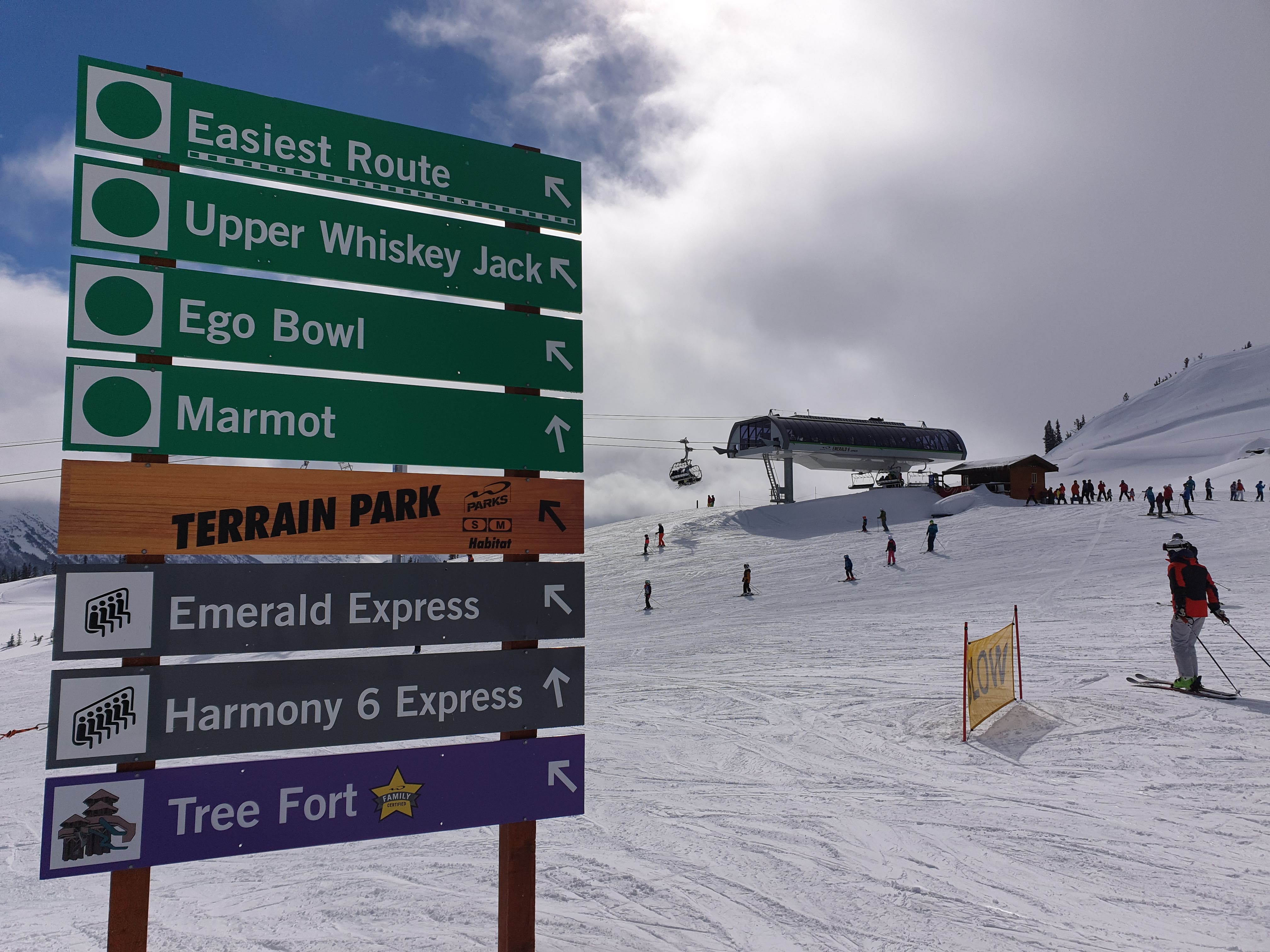
But this year we finally took the plunge and abandoned Heavenly for Whistler, not least because it had become prohibitive to stay for any length of time in San Francisco (which we would still visit in the autumn). The decision had been made easier by the recent relocation of English friends, who had originally emigrated from North Kent in 2007, from Ontario to British Columbia. If we were to visit them, which we were keen to do, it made sense to find a ski resort in the “neighbourhood”.

20190409_111323

We didn’t make this decision lightly. We knew virtually every inch of the Heavenly ski area and were very comfortable with the environment, whereas Whistler, the largest resort on the continent by some margin, was an unknown quantity. Both the village and terrain were completely unfamiliar to us. Furthermore, the weather forecast for our week’s stay was discouraging, including a fair amount of rain, our least favourite skiing conditions.

20190408_103554

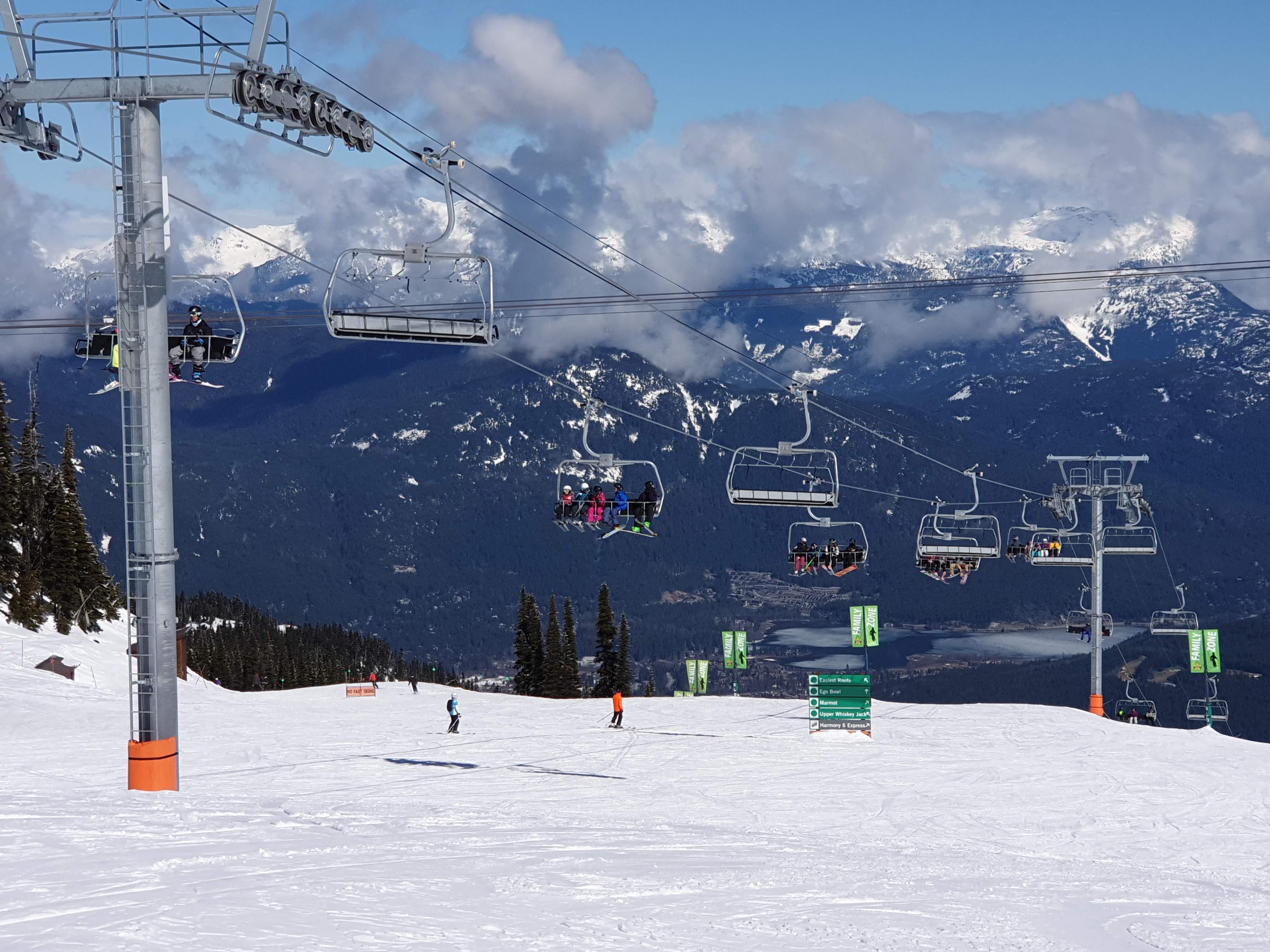
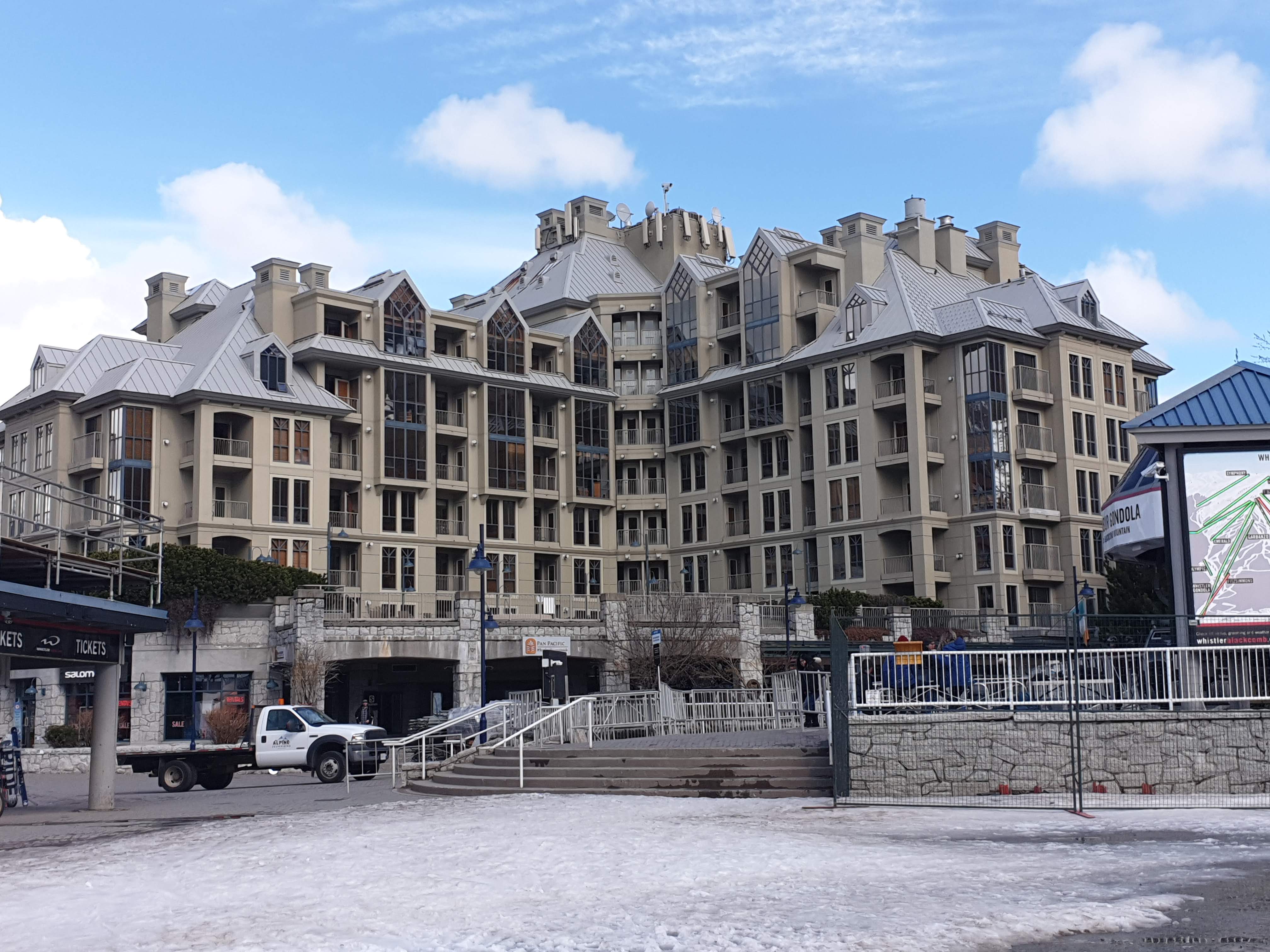
So it was with a degree of trepidation that we stepped off the Skylinx shuttle bus after an overnight stop in Vancouver on the third day of April and settled in our Airbnb on the edge of the village centre.  We had already determined that we would use the first day to acclimatise ourselves with the place, collect our pre-ordered lift passes, skis and boots and stock our apartment with provisions from the local grocery.

20190408_103559

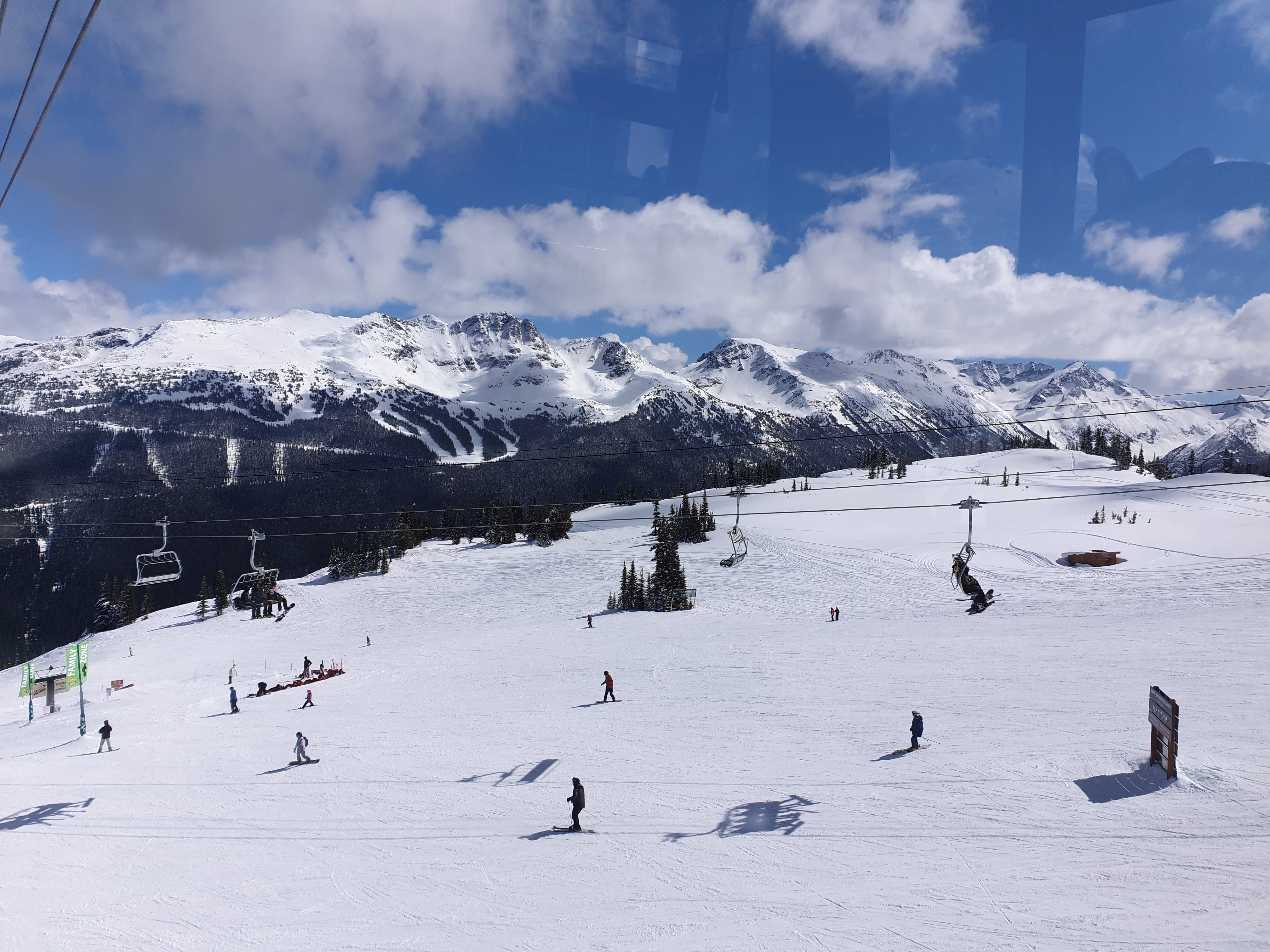
We had purchased a four day lift pass to span the six days we were staying in the resort. So it was the second of those days before we queued up at the base of the Whistler Village Gondola shortly before 10 o’clock on Friday morning.

20190408_132830

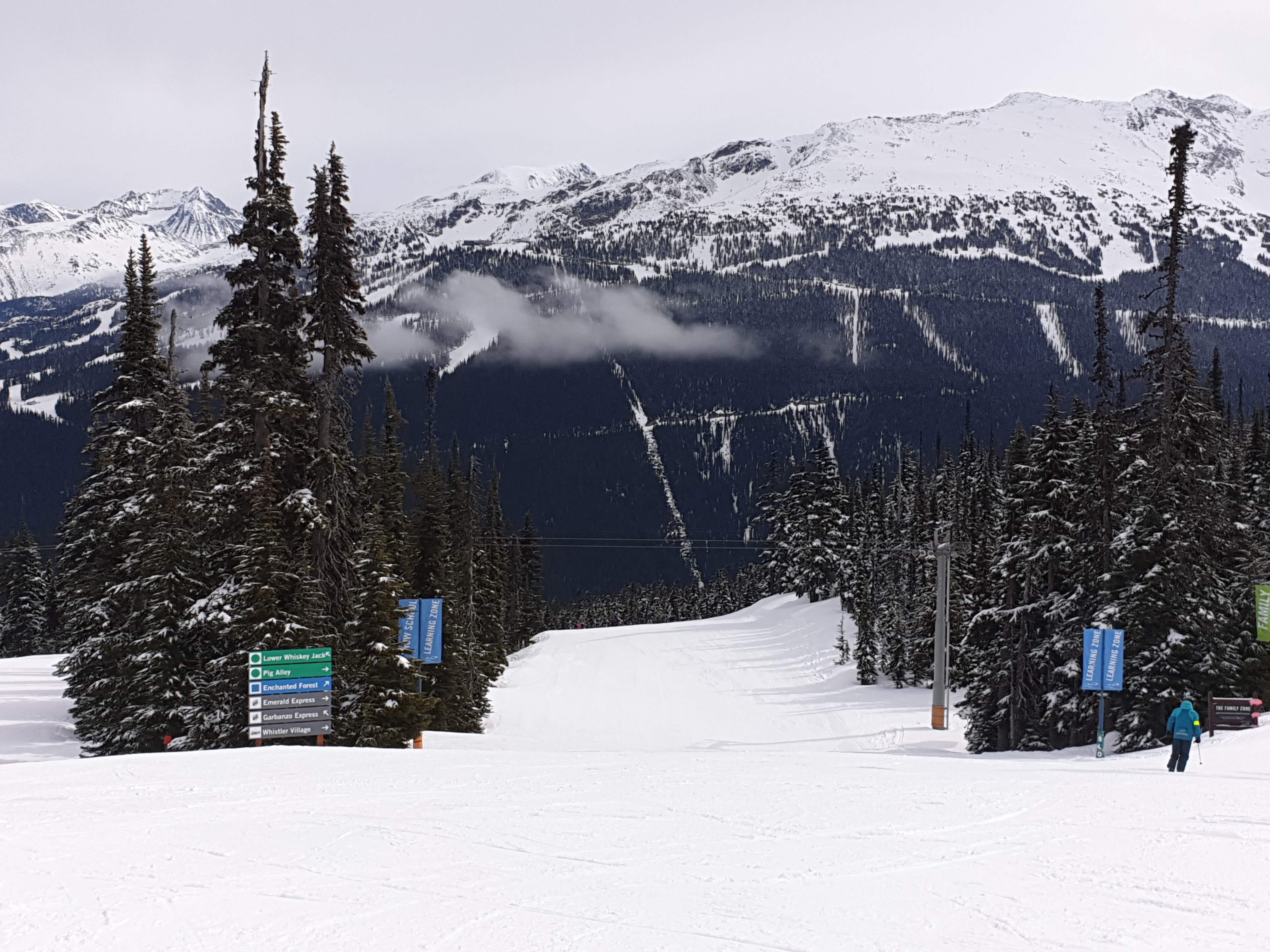
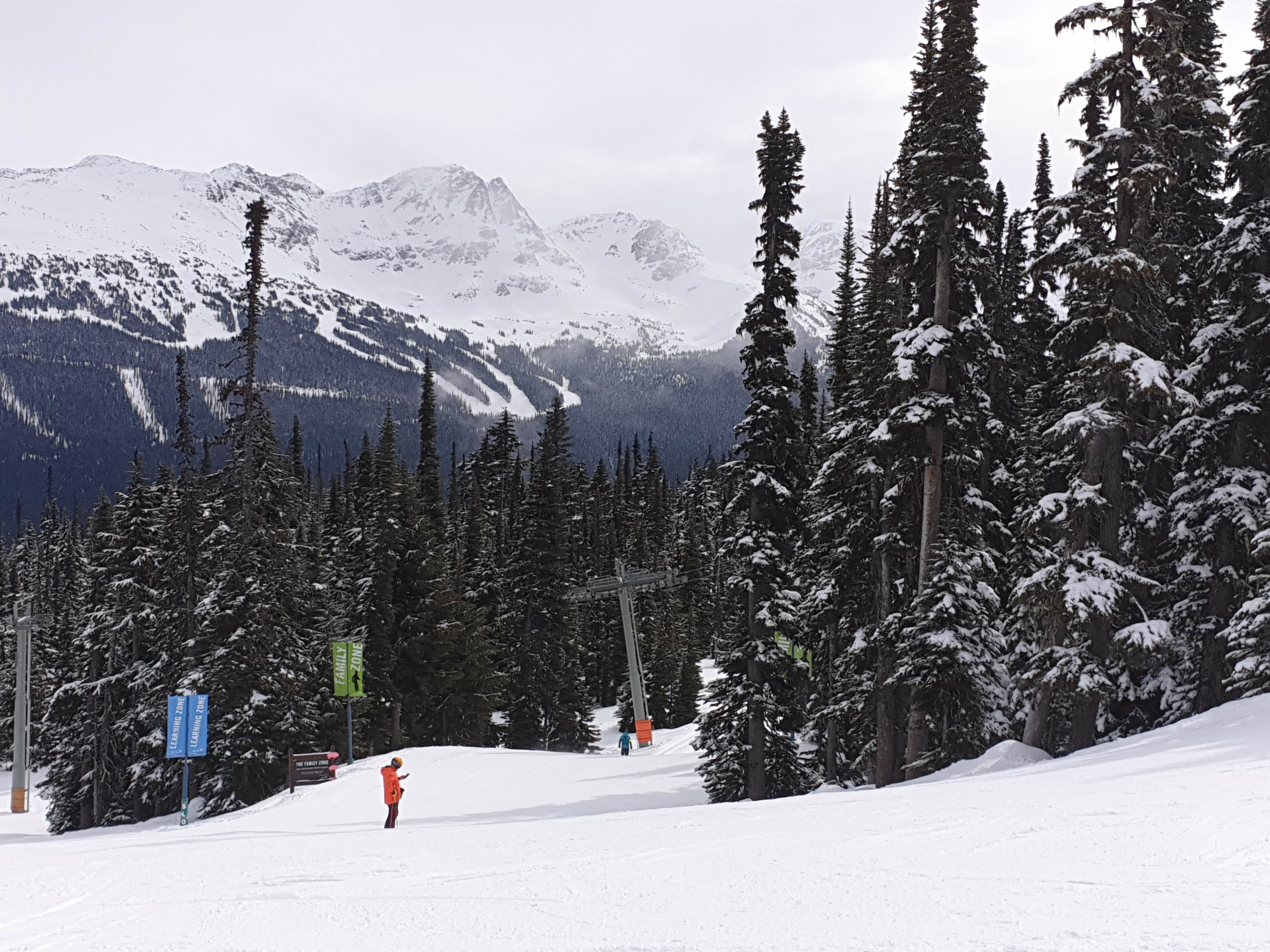
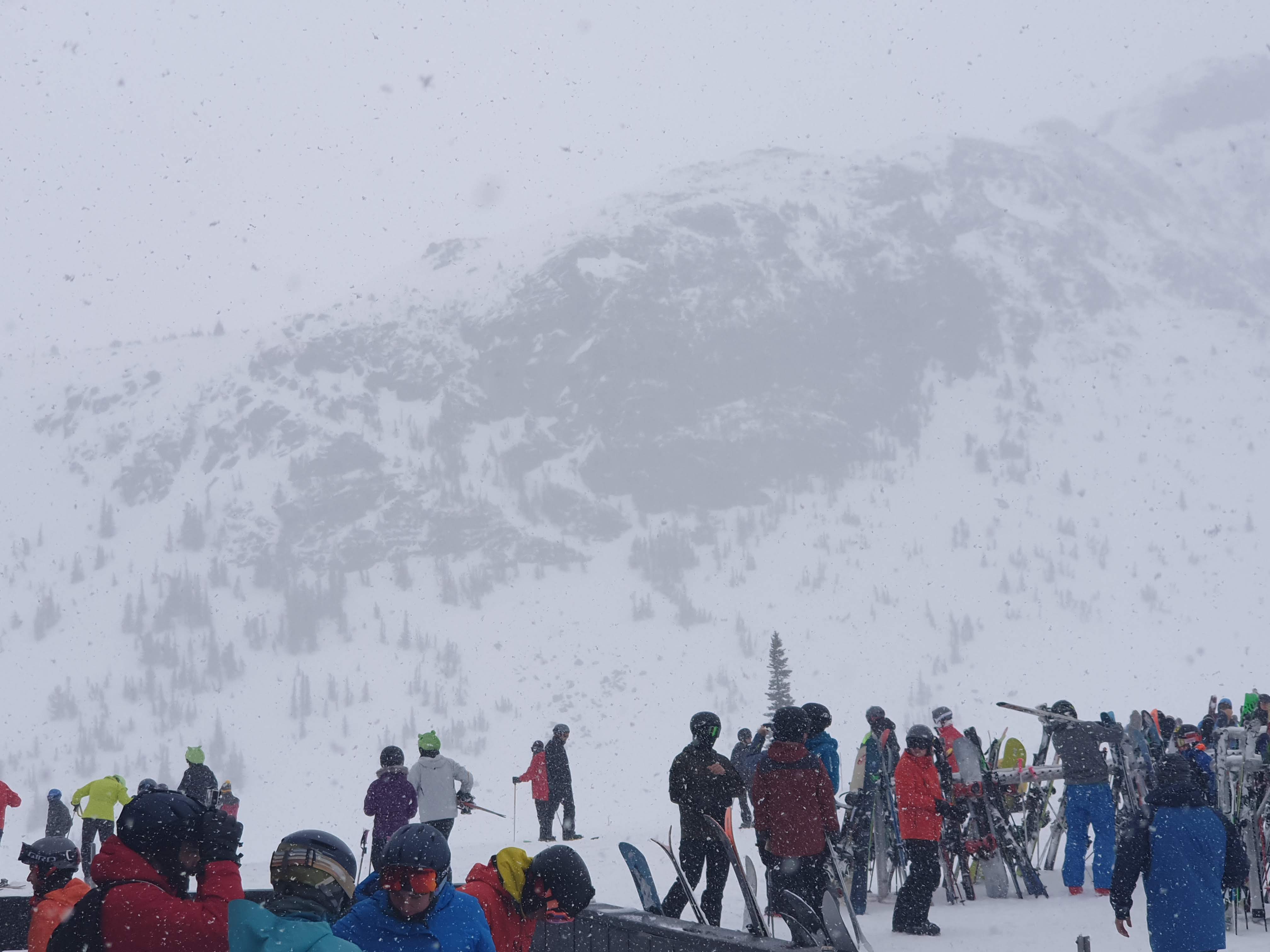
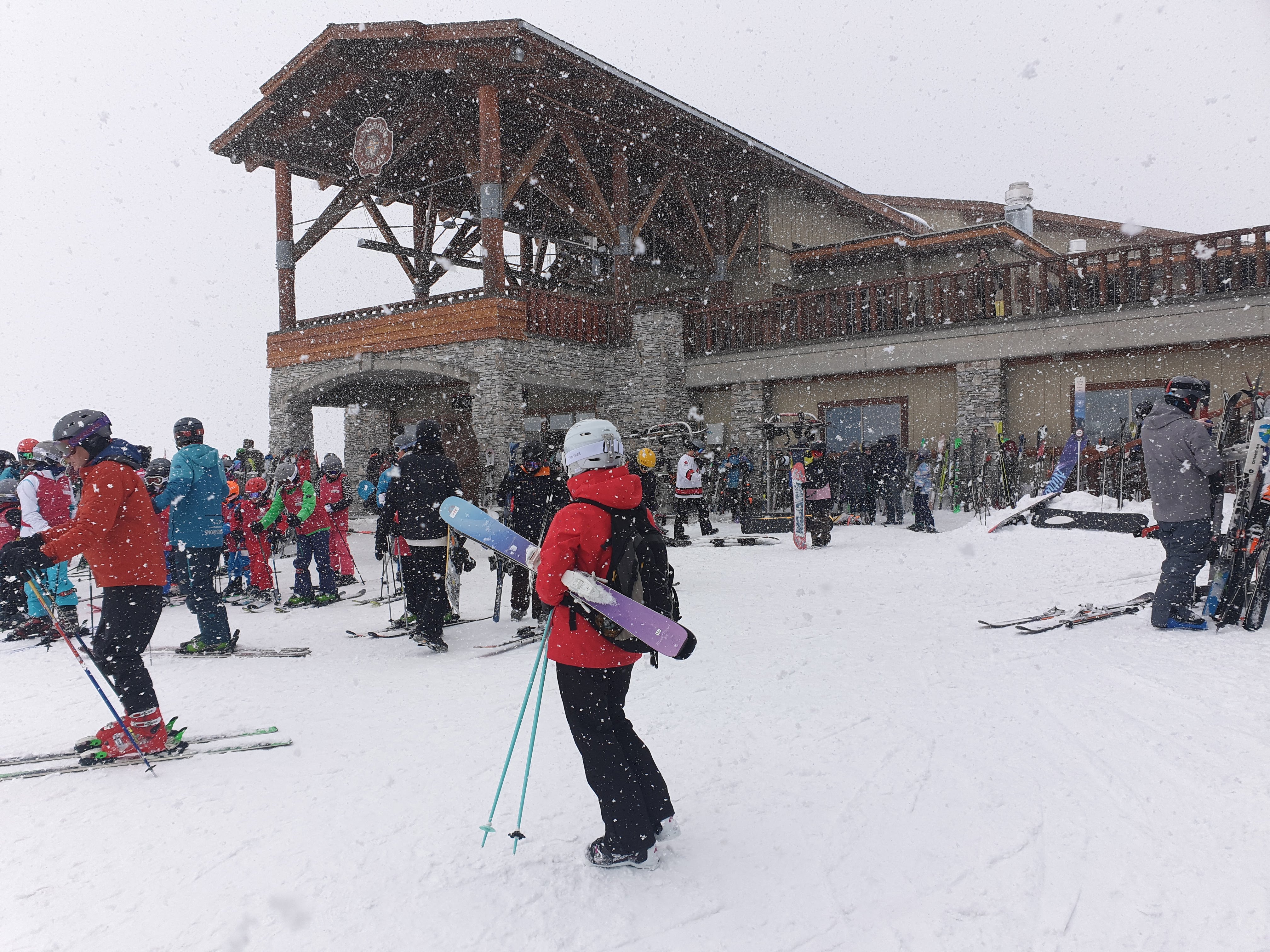
Unfortunately, the weather lived up to the forecast – cloudy and misty with alternate rain and snow showers. As a result, we did not venture too far from the area at the top of the mountain on that first day. Poor visibility, unfamiliarity with the terrain and first day nerves contributed to my falling twice on the first run, though after an early morning tantrum, things improved before the persistent wet snow drove us back down the mountain.

20190408_134903

The day took a turn for the better when we wandered into the araxi restaurant for ten Reid Island oysters, prepared by Nigel, and a cool glass of Okanagan Pinos Gris. Technically, this was a happy Hour deal, though the resulting bill argued otherwise.

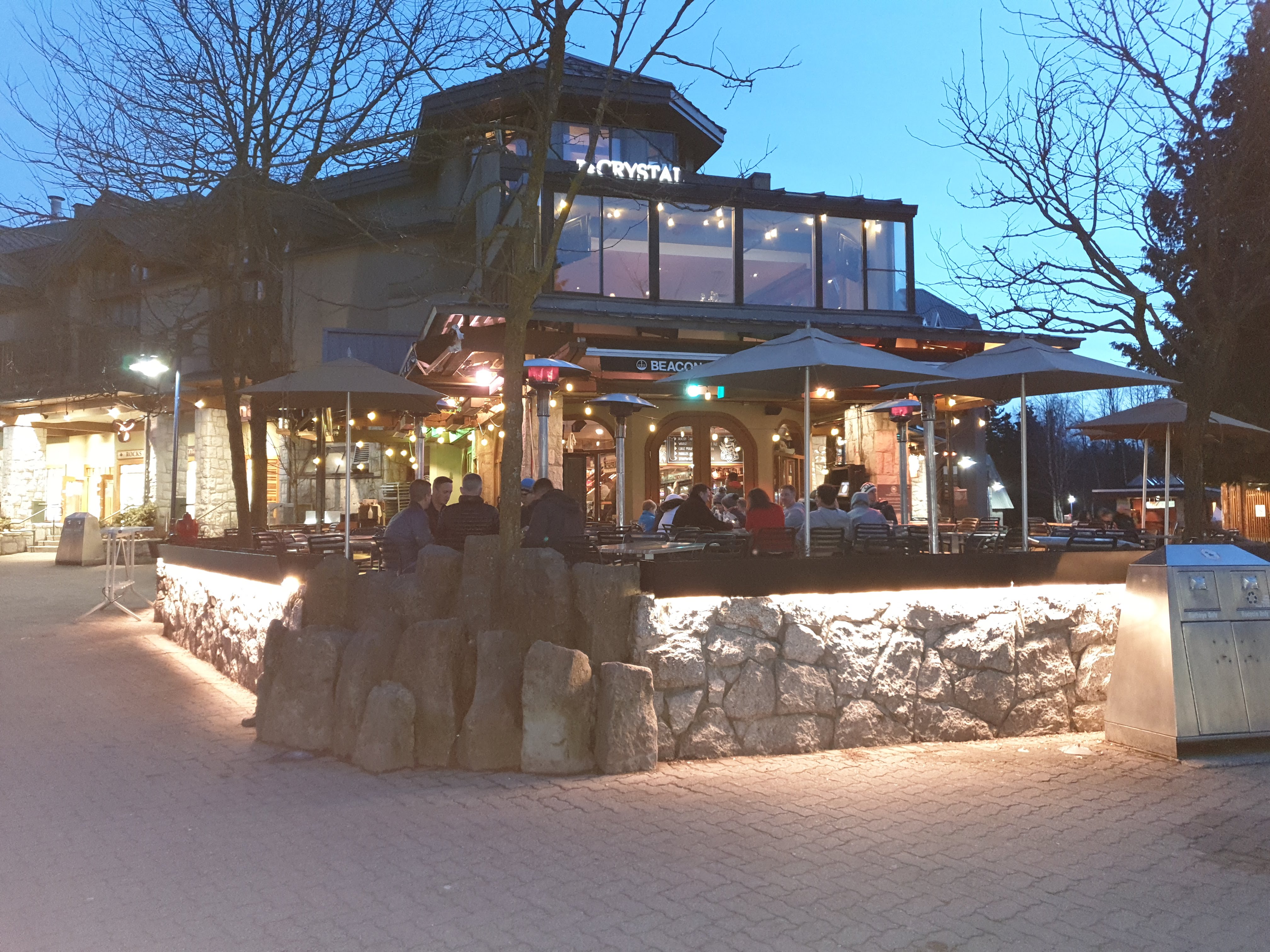
As much as we loved eating out, the cost of doing so had increasingly forced us to eat in our apartment on recent trips. But on this occasion, we had an excellent meal at the Beacon Pub and Eatery in the village square.

20190404_201553

With three days left on our lift pass, we had to make a decision as to which days to ski. Our final two days in Whistler had consistently promised the best weather, so we were committed to those. The forecast for both Saturday and Sunday was horrible, with the latter day marginally better. Our original plan of two days on, one off and then two days on needed revision, leaving us skiing for the final three days straight.

20190408_103554

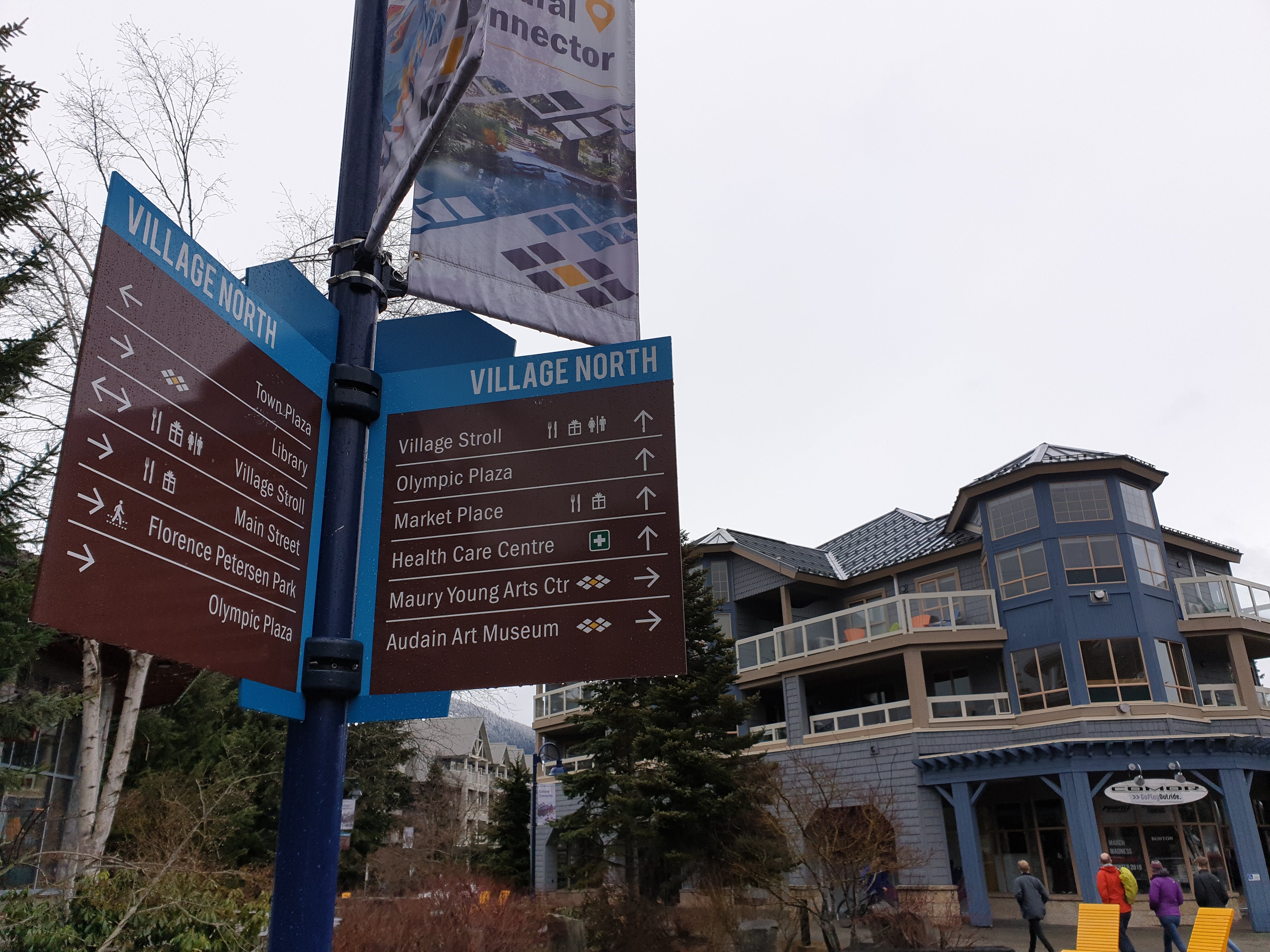
Our judgement was vindicated as, even in the village, it rained all day. It did not, however,  deter us strolling around all afternoon, hopping in and out of the attractive coffee houses and gift shops.

20190406_135445

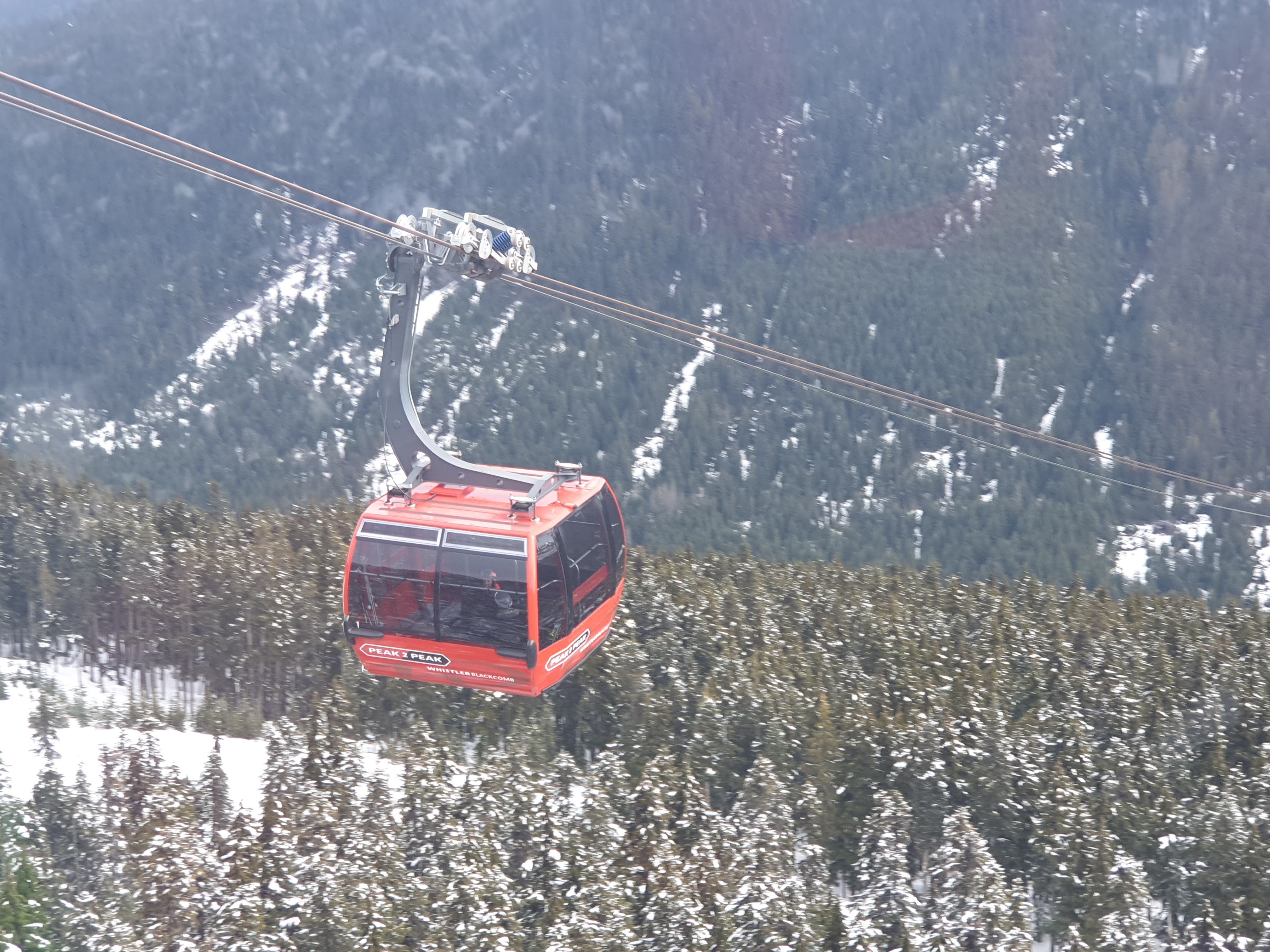
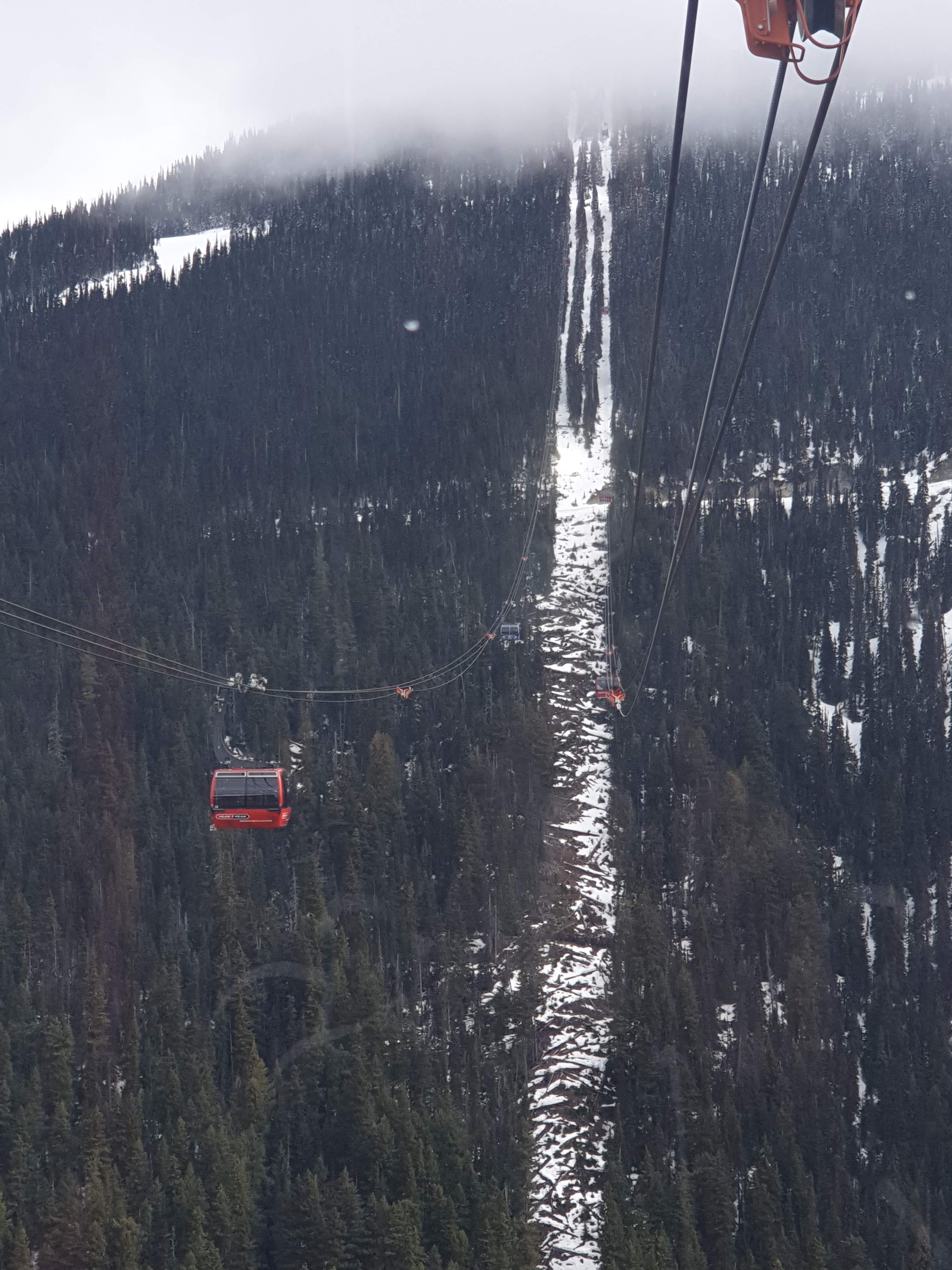
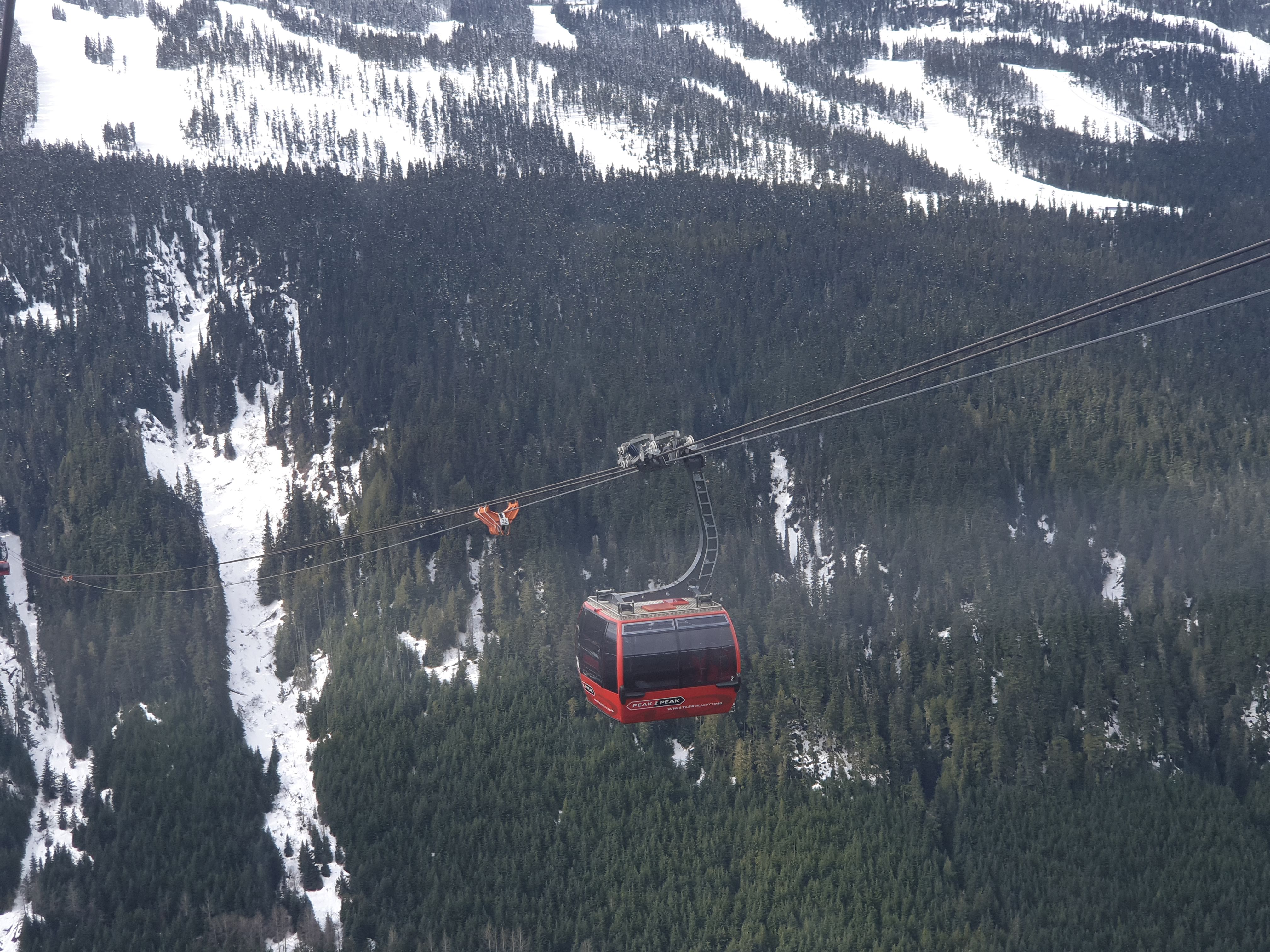
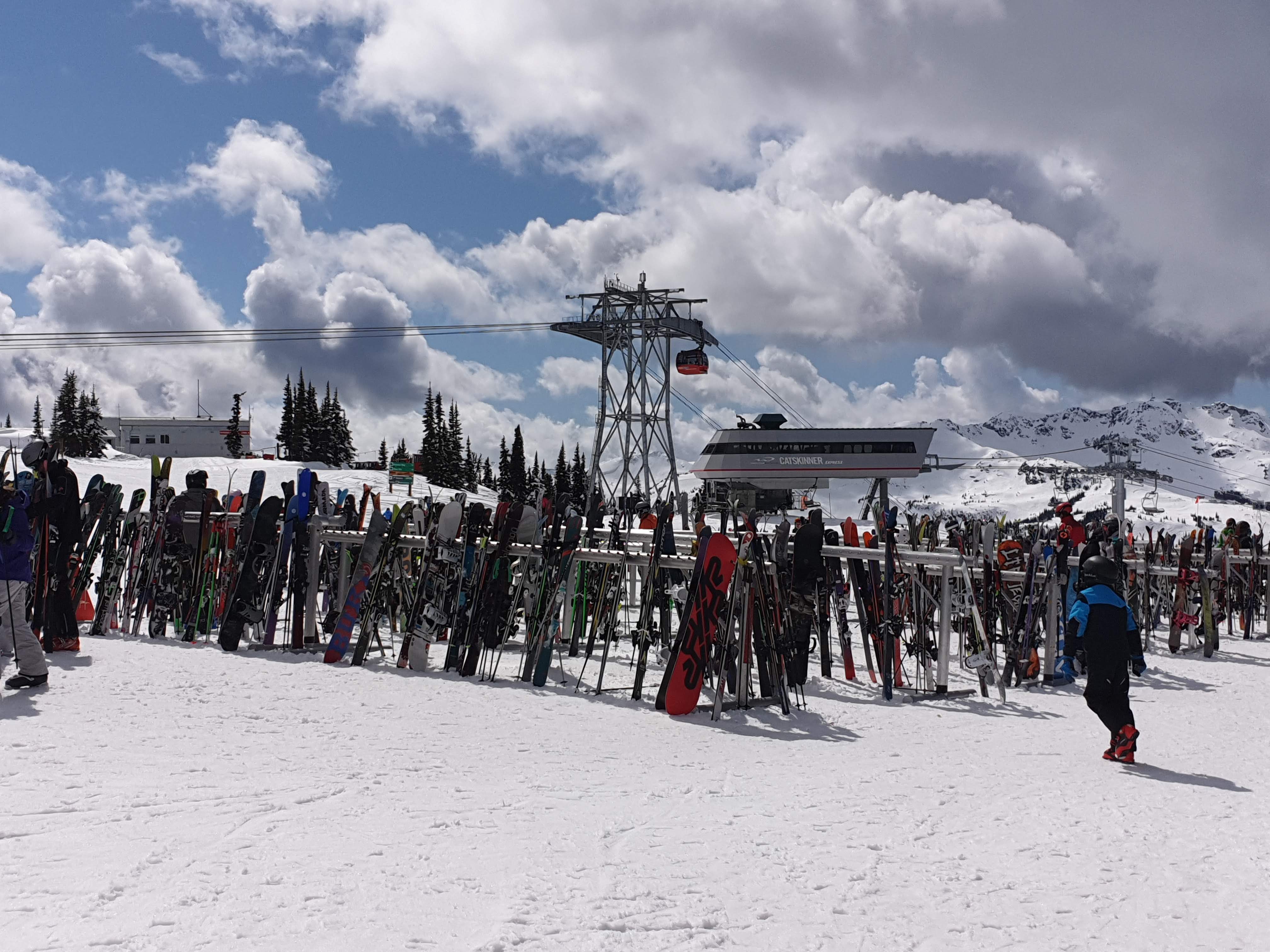
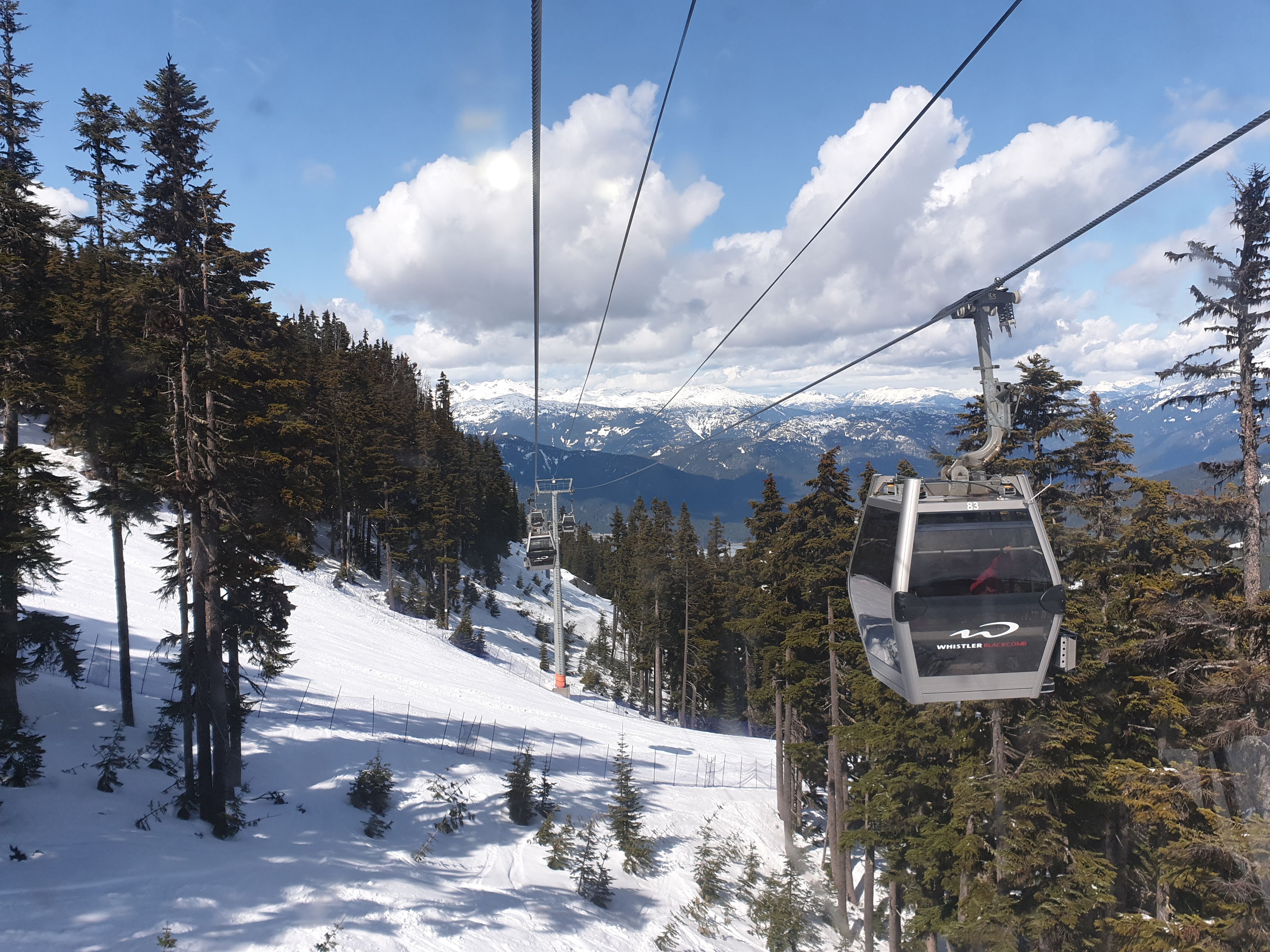
Although, in part due to the inclement weather, we had been unadventurous on our first two days on the mountain, we did not want to leave Whistler without taking the awesome and, some might claim, frightening, PEAK 2 PEAK gondola, which had been invisible on our first few days, over to the Blackcomb skiing area.

20190408_105628

After a few runs around the top of Whistler, we took the tram on our outward journey between the two largest lift terminals in the world. Although we were not deterred by the prospect of travelling in one of the glass-bottomed cabins, we eschewed the wait and took the first available one.

20190408_105902

At this point, I could bore you with lengthy statistics about the PEAK  2 PEAK Gondola, but I will confine it to a few:

  • the “longest unsupported span between two cable car towers” 3.024 kilometres (1.88 miles);
  • the “highest cable car above ground” 436 metres (1430.45 feet); and
  • completes the longest continuous lift system in the world.

Inspired by the ski lifts in Switzerland, at its highest point, it soars 5,280 vertical feet from the valley bottom.

20190408_110101

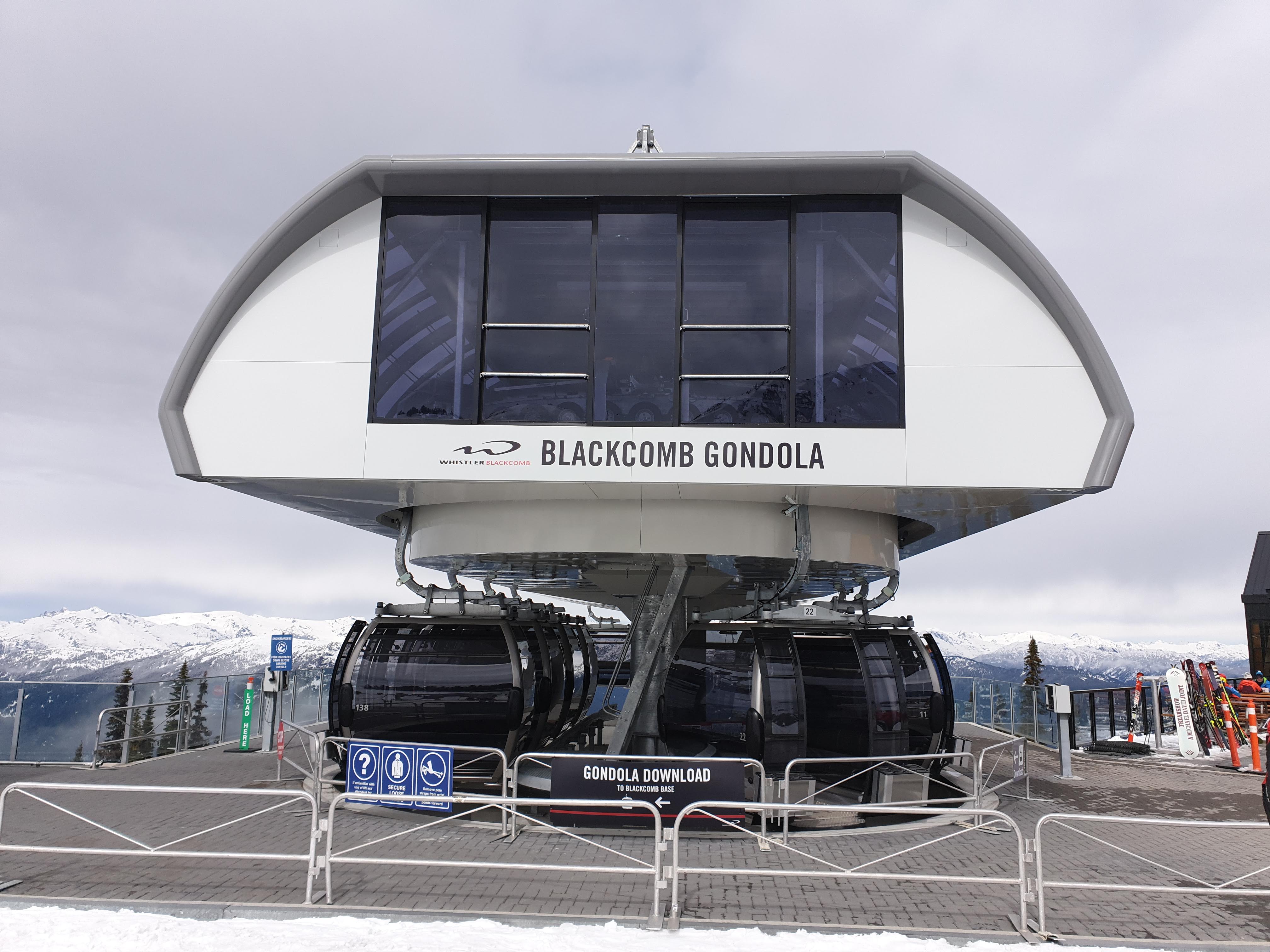
After lunch in the Roundhouse Lodge at the top of the Whistler Village Gondola on the first two days, we ate at the Rendezvous restaurant alongside the top of the Blackcomb Gondola on the last two, whilst exploring several trails around the peak.

20190408_110802

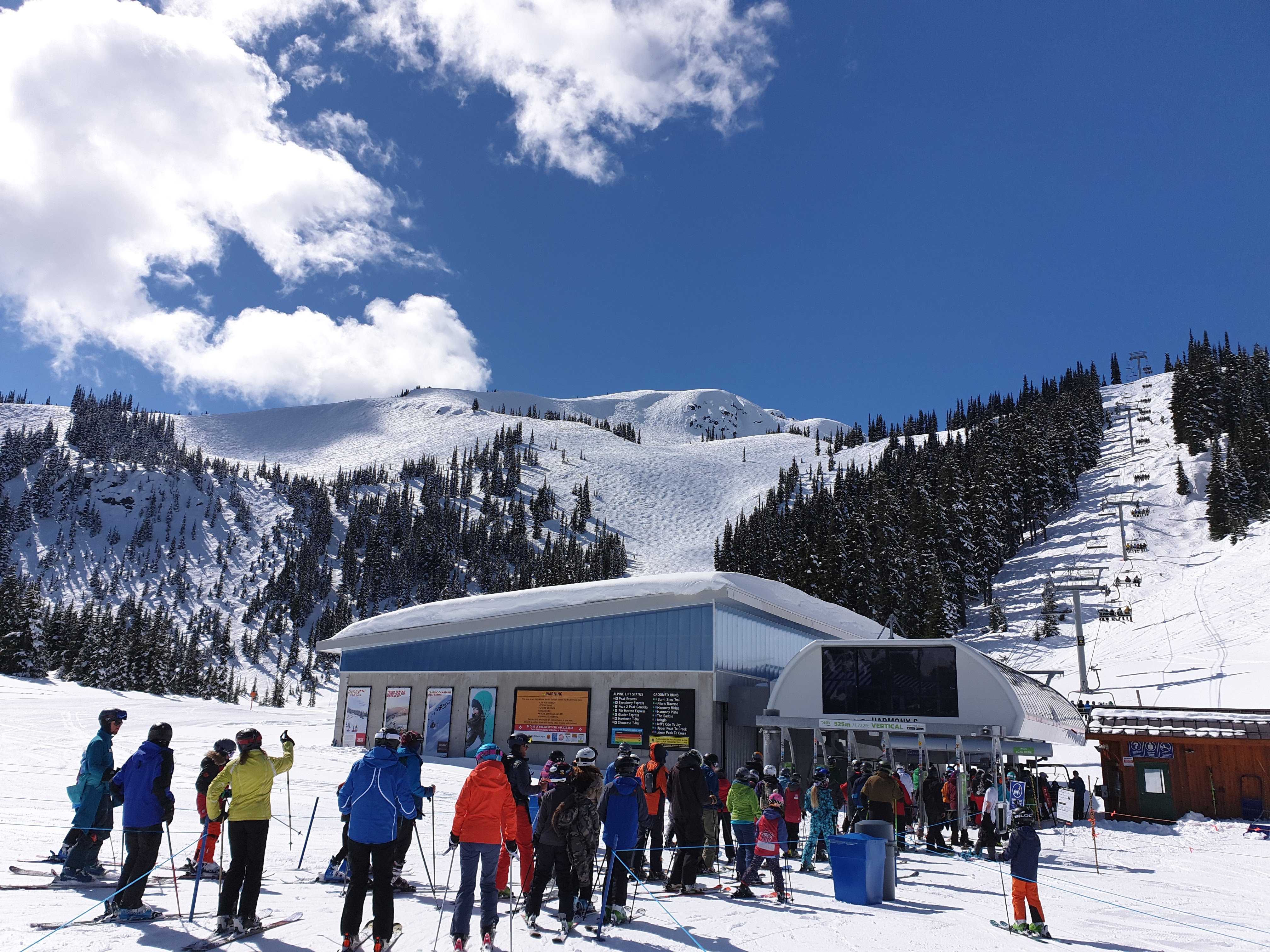
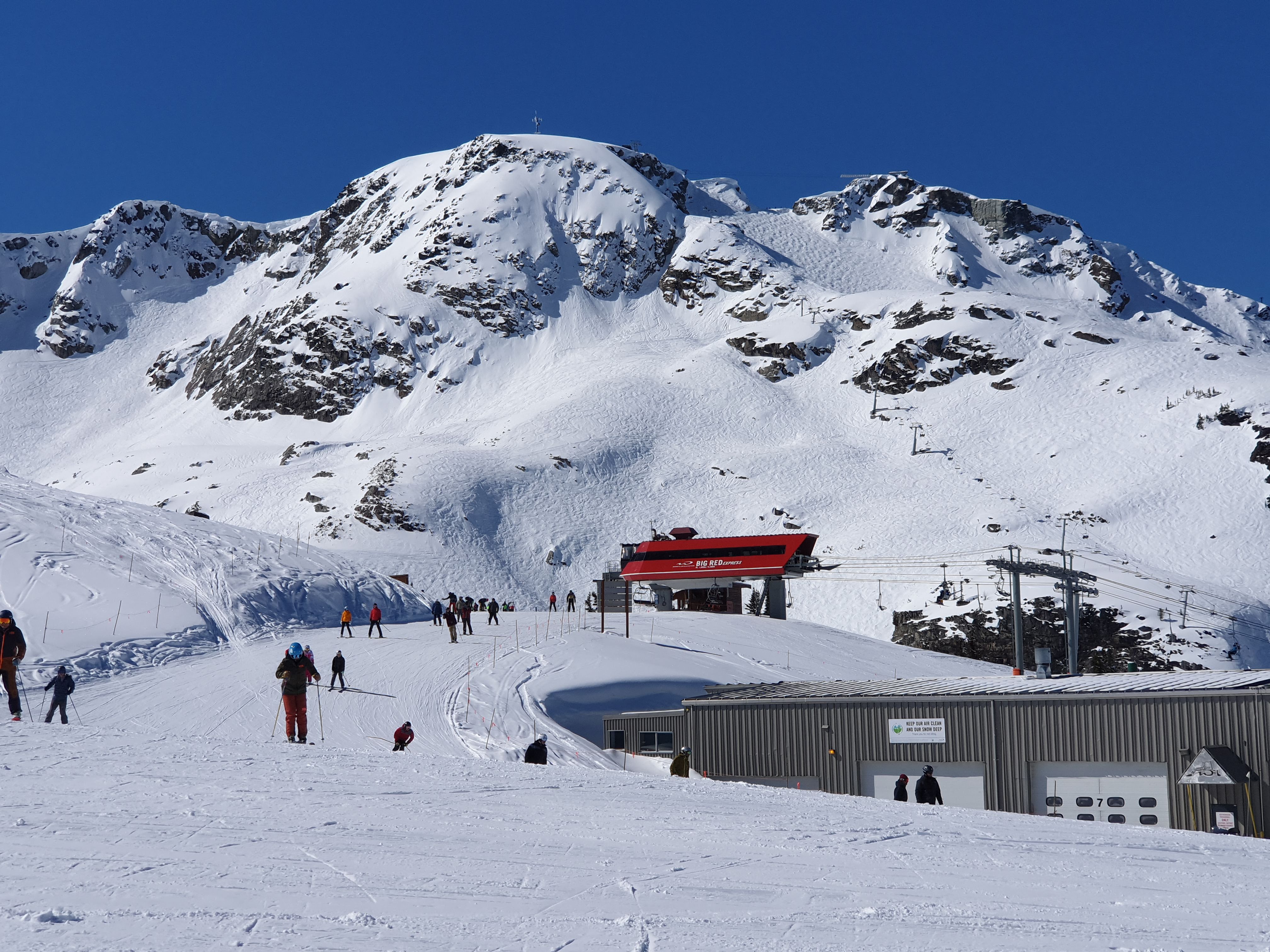
Once more, the weather forecast had lived up to expectations, and the conditions on Monday and Tuesday, especially Tuesday, were benign with sunshine replacing the periodic precipitation that had blighted our first couple of days. My skiing improved proportionately, though I still wasn’t wholly comfortable with the unfamiliar surroundings.

20190409_113926

Skiing is an expensive pursuit, and I think it is not unreasonable to claim that we might not have had the full value for our outlay, certainly during the first two days when we were still acclimatising ourselves to the vast terrain under wet, gloomy skies. But by Tuesday afternoon, with a deep blue sky and warm sun beaming down upon us, life was good.

20190409_121013

20190409_132229

So what was our overall verdict? We liked the village of Whistler – it had a lively, friendly atmosphere and boasted some good bars and restaurants. It was likely to be even more boisterous over the coming weekend as preparations were underway for the hosting of the World Ski and Snowboard Festival. We were a little disappointed, however, that its relatively low elevation meant that it rarely saw snow on the ground.

20190406_140932

20190404_124844

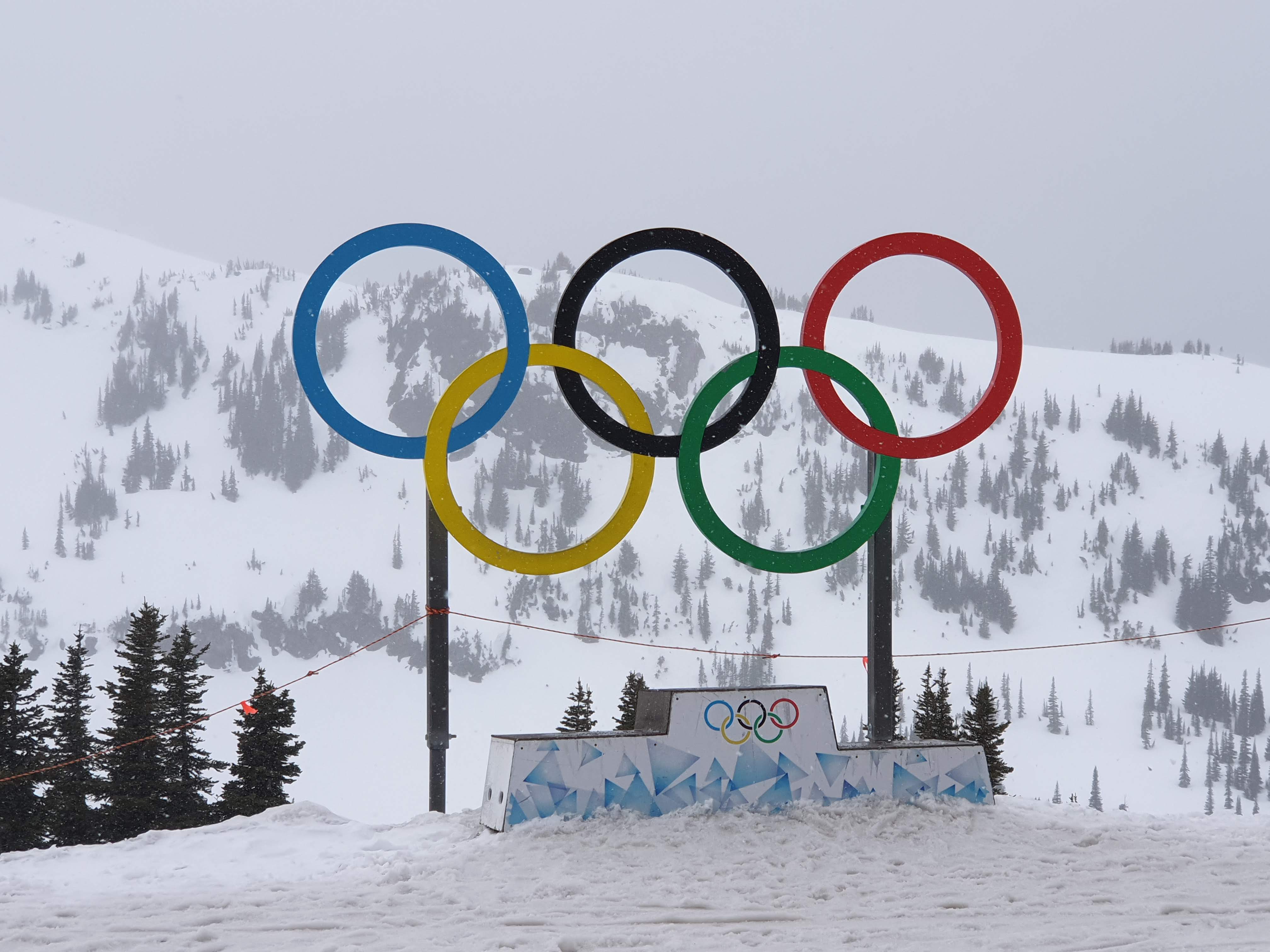
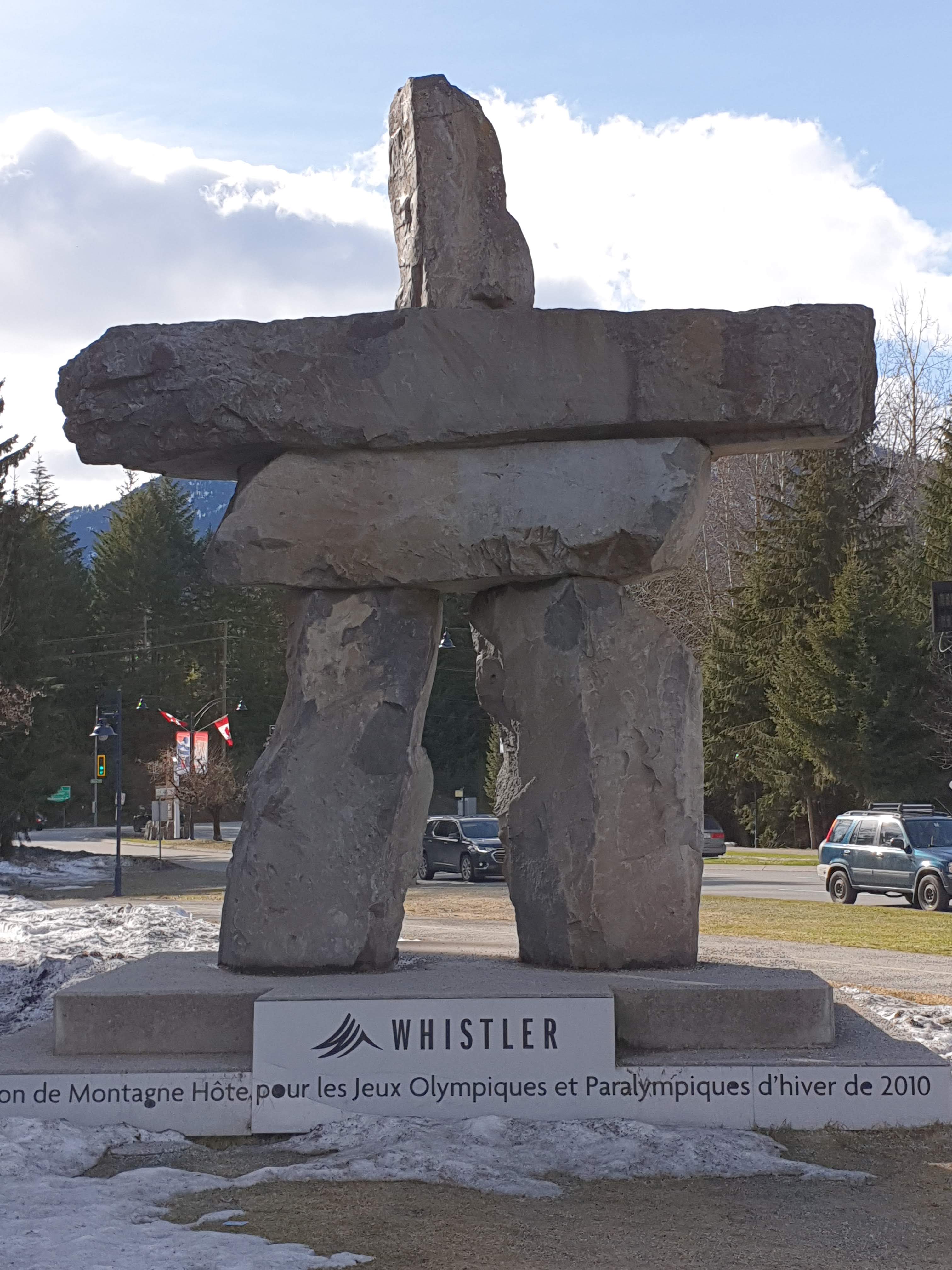
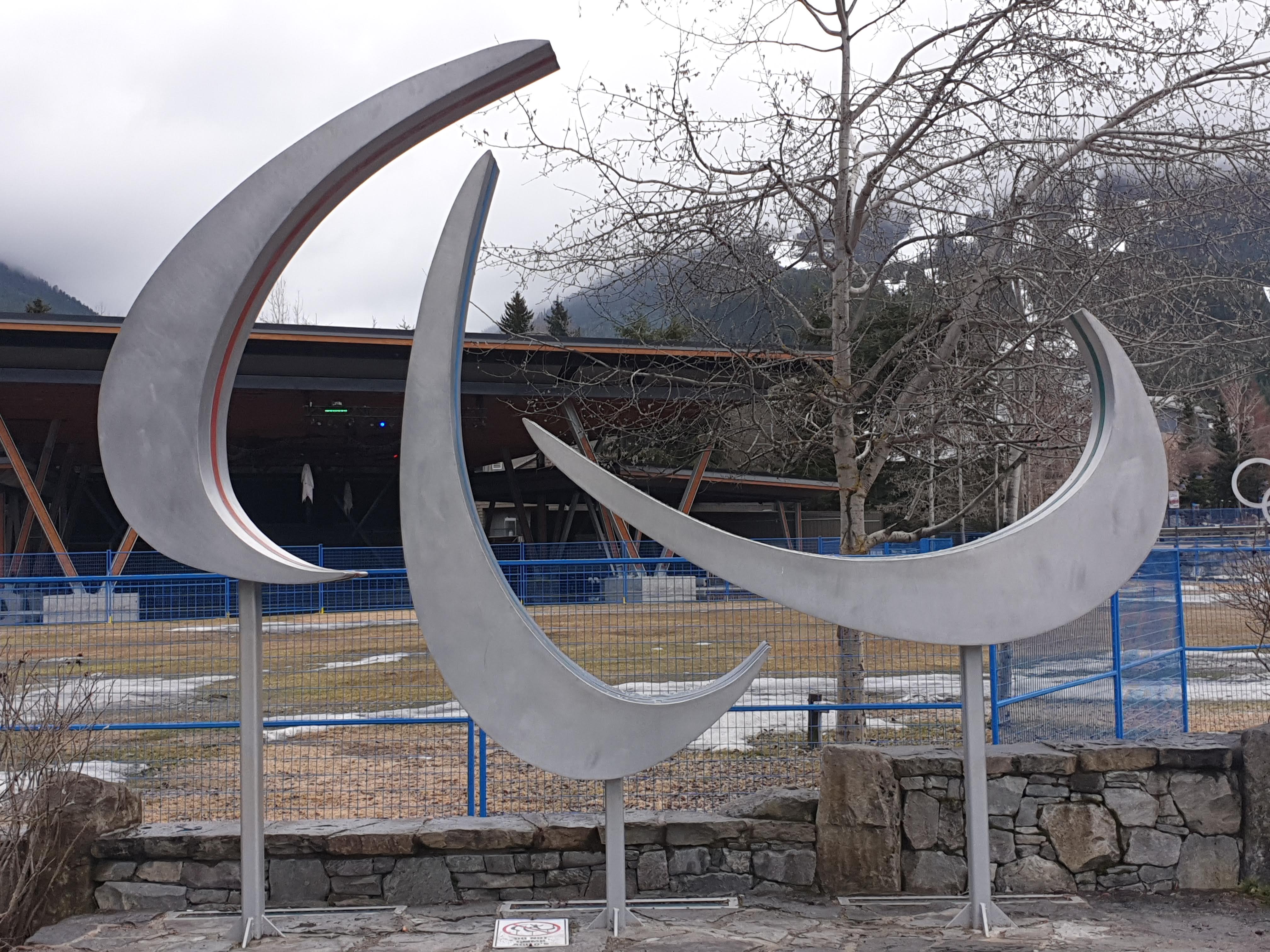
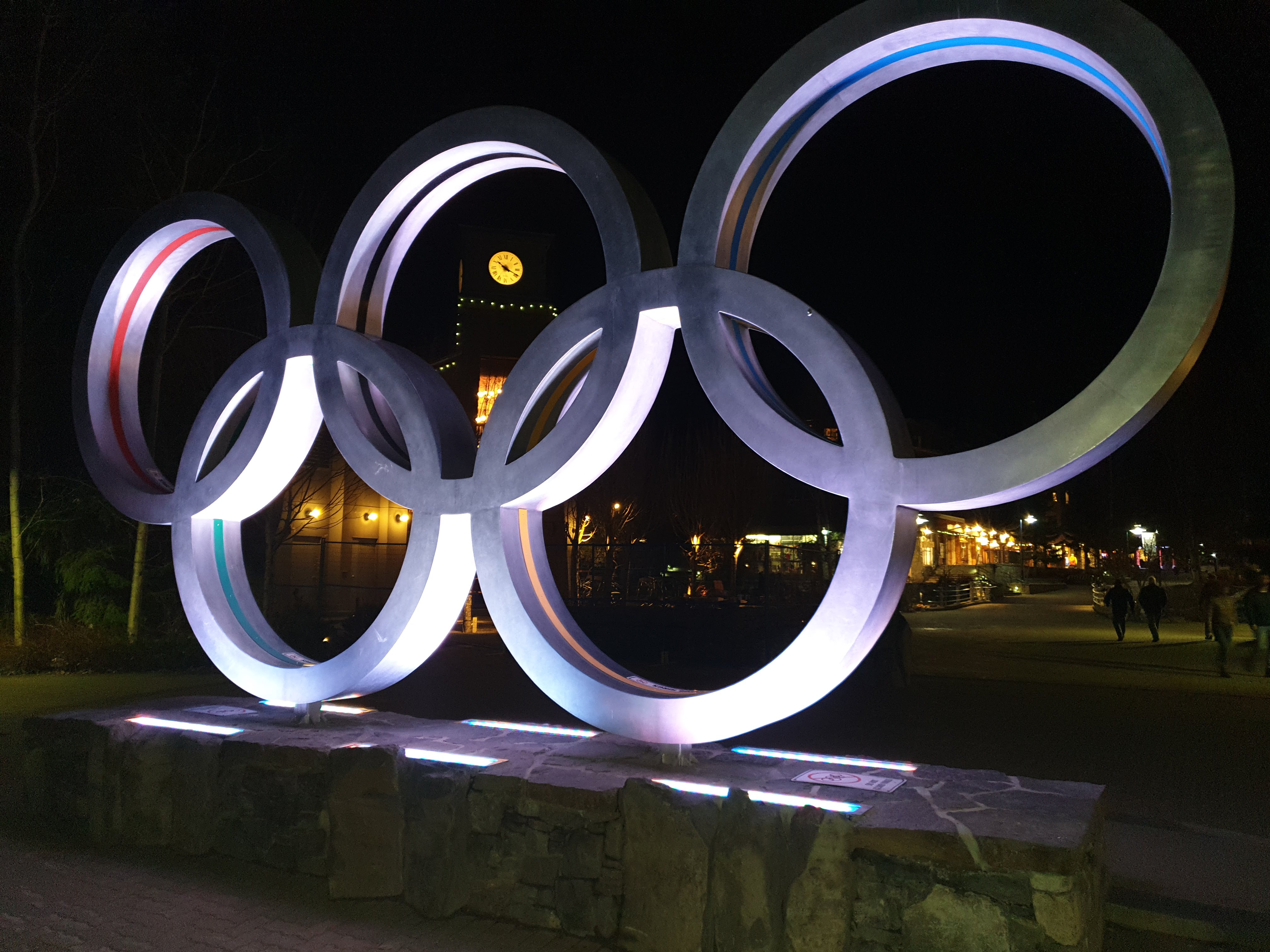
It was clear too that the village was extremely proud of its performance as host to the 2010 Winter Olympics and Paralympics Games, with impressive monuments dotted around town and on the mountain.

20190404_162320

20190408_160011

20190409_211931

And we would certainly ski there again – there are still large parts of the terrain we have still to explore – provided the weather plays ball!

But we missed Heavenly – the lake views, the familiar trails, the mountain restaurants, even the casino bars and the drive up from San Francisco.

20190409_110853

The major lesson we learnt, however, from this adventure was that we had to get fit before skiing in future – irrespective of whether we were in Heavenly, Whistler or Avoriaz or La Thuile in Europe. Although we never caught our breath as we had often done in the much higher resort of Heavenly, we ached more each morning and found it generally more tiring than it had been before. Age may have been a factor, but weight was a greater one. In the past, we had always spent the first couple of months of a new year aiming to lose weight and get relatively fit. We hadn’t this year – and it showed.

20190409_143038

Ageing and aching are an unavoidable fact of life, but at least we can do our best to minimise their impact if we shed a stone or two and exercise more in those crucial months before we set foot on the slopes again.


Read Full Post »


The “Egg Master” himself, Chuck, was in control of the kitchen at our bed and breakfast on our second morning. After a refreshing bowl of grapefruit he delivered a consummate omelette with sausages, rounded off (literally) with delicious homemade scones.

The weather, if a few degrees cooler than yesterday, was equally glorious. There was not a cloud in the sky, perfect for a day at the zoo. We were staying nearly an hour’s walk from its home in Forest Park, and, at that time of day, Uber prices were prohibitive, so we decided to take the car.

One of the best features of the zoo is that it is entirely free, based on a public subsidy from a cultural tax district. However, it is $15 to park close to the entrance, so we drove around for a few minutes until we found a suitable parking spot on the road.

On our arrival, we had a pleasant five minute chat about both our road trip so far and life back in the UK with a charming greeter named Bonnie. But it was other personnel that we were more interested in engaging with, and we finally prised ourselves away.

20181011_113842

Recently voted Best Zoo and America’s Top Free Attraction, St. Louis Zoo is recognised as one of the world’s leading zoos in animal management, research, conservation, and education.  After it was established in 1910, new exhibits, areas and buildings were added through the decades to improve care of the animals, the range of animals and habitats shown, as well as education and interpretation.
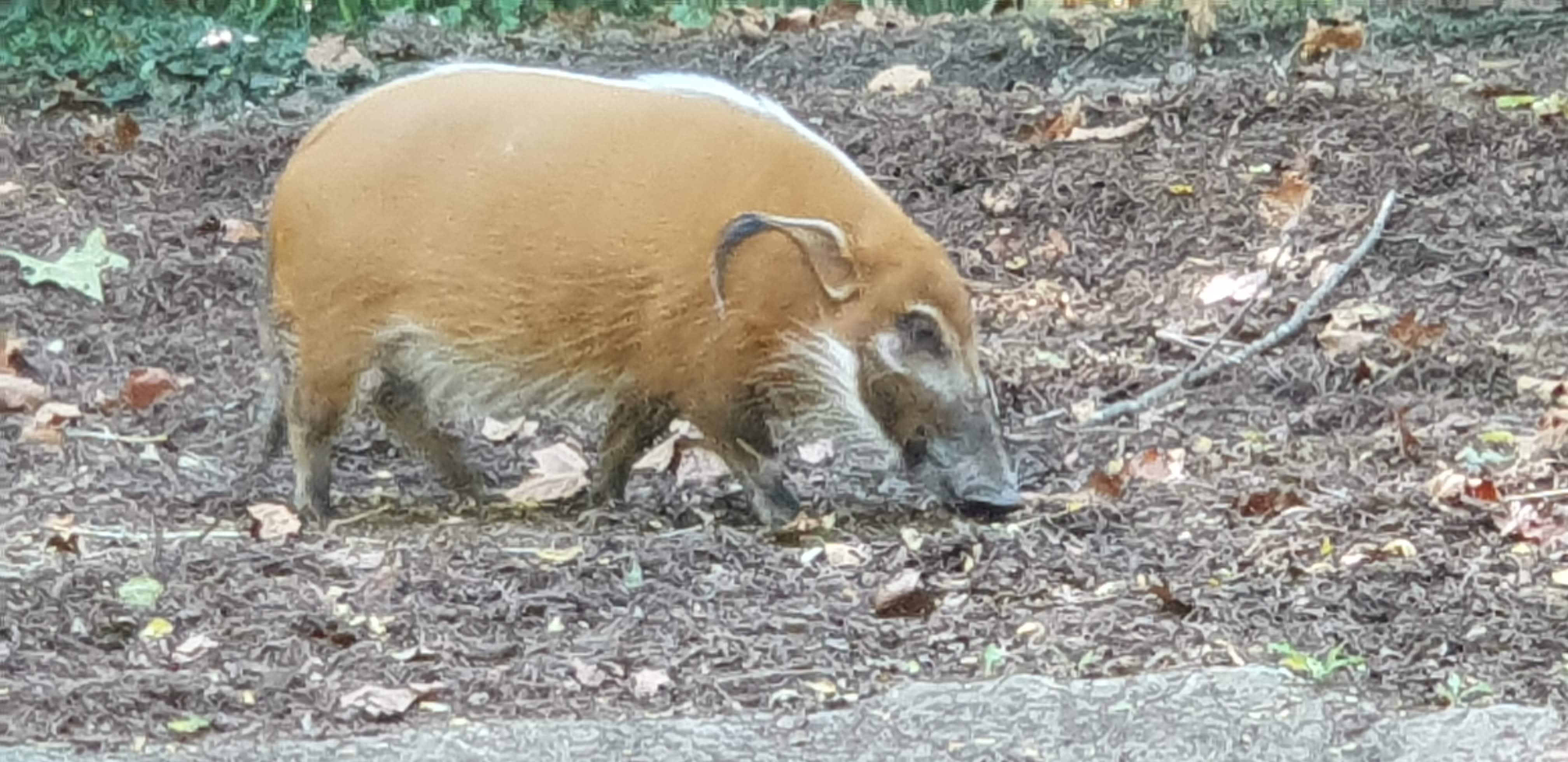
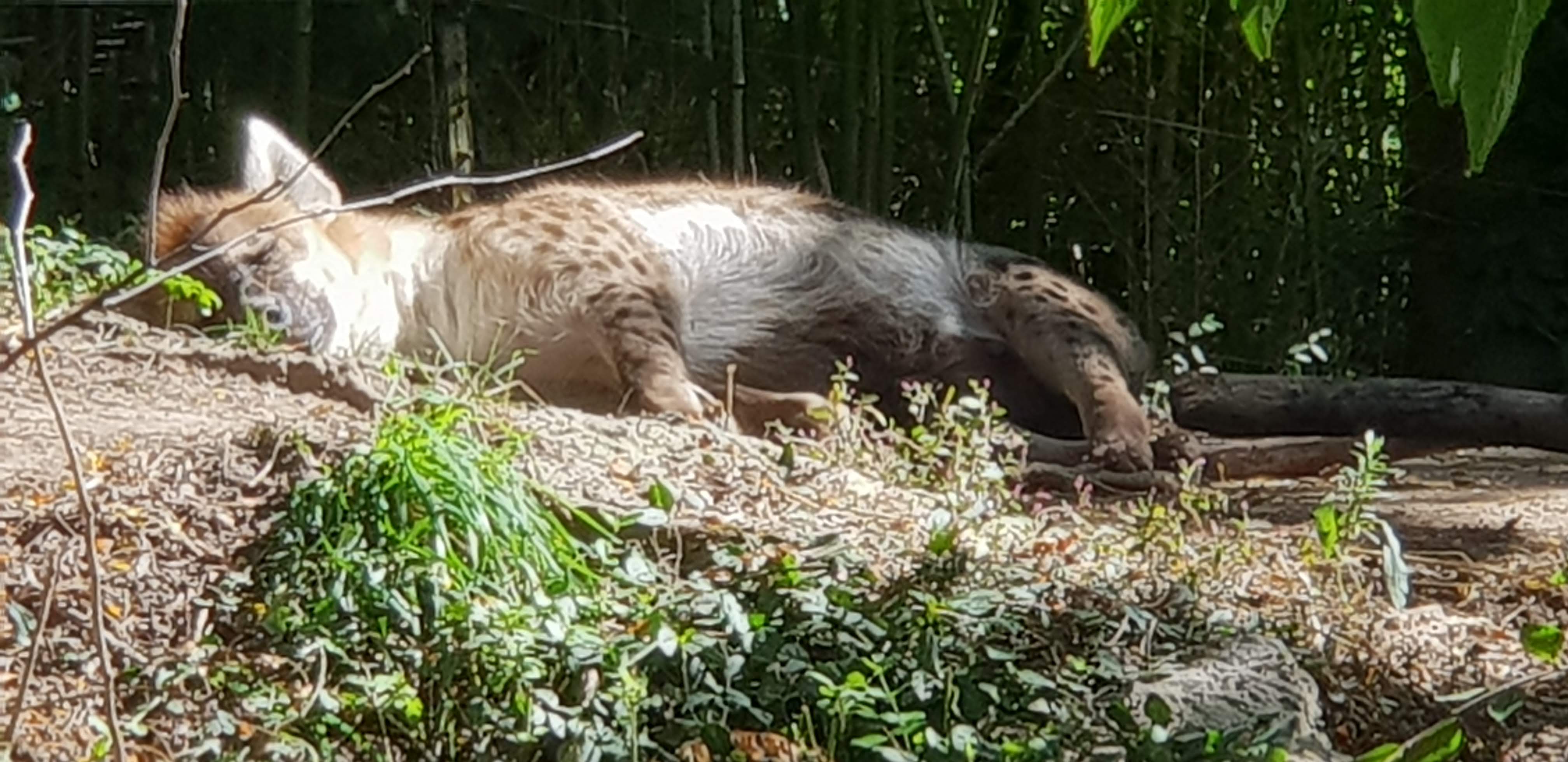
Around three million visitors a year now enjoy more than 16,000 animals in the Zoo’s care, many of them rare and endangered (the animals that is, not the visitors).

20181011_111319

The zoo is structured around seven discrete areas, namely River’s Edge, Discovery Corner, Lakeside Crossing, The Wild, Historic Hill, Red Rocks and the recently opened Grizzly Ridge. There are fourteen eating and dining options dotted around the park as well as eight places to shop.

20181011_120604

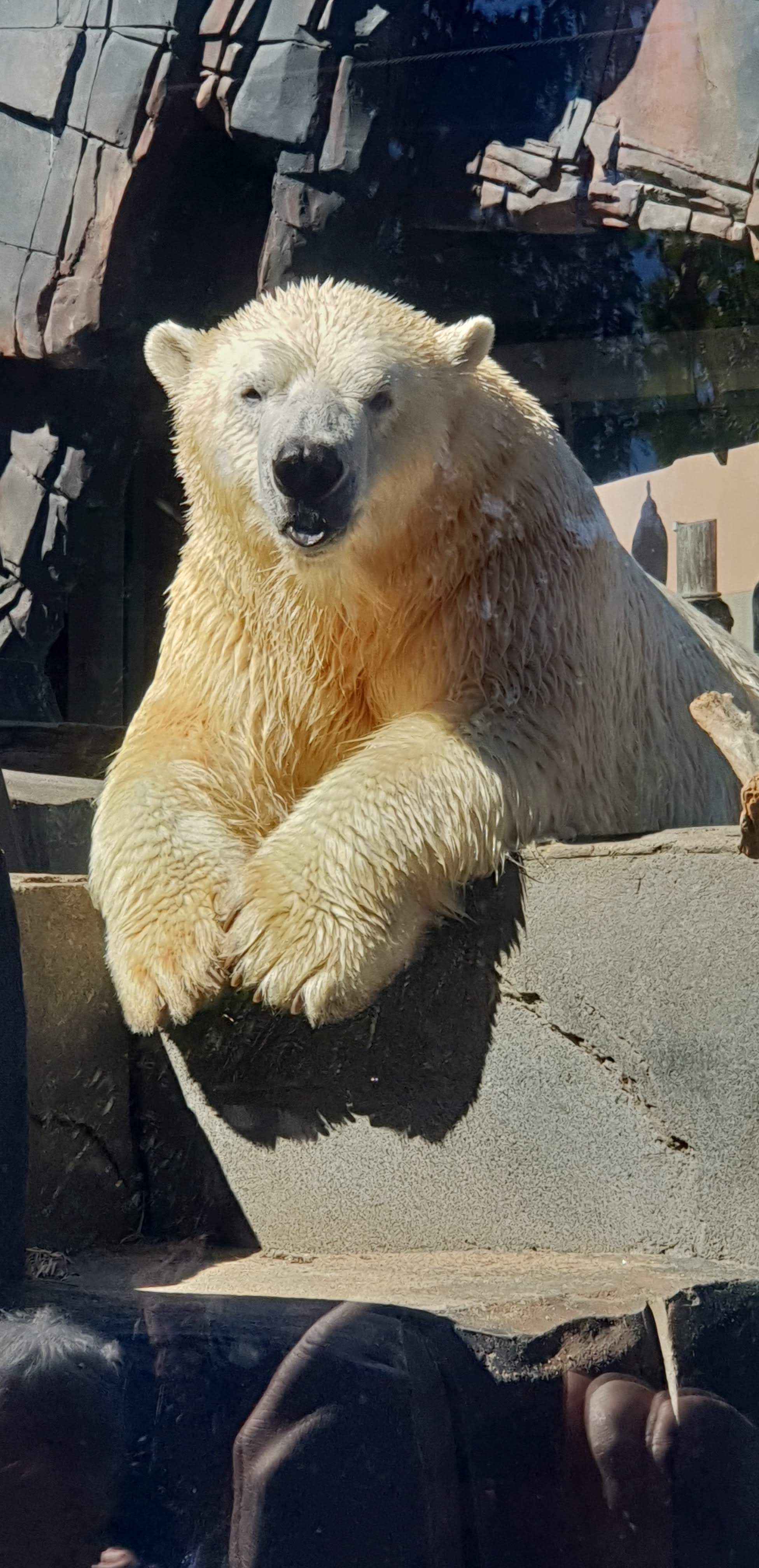
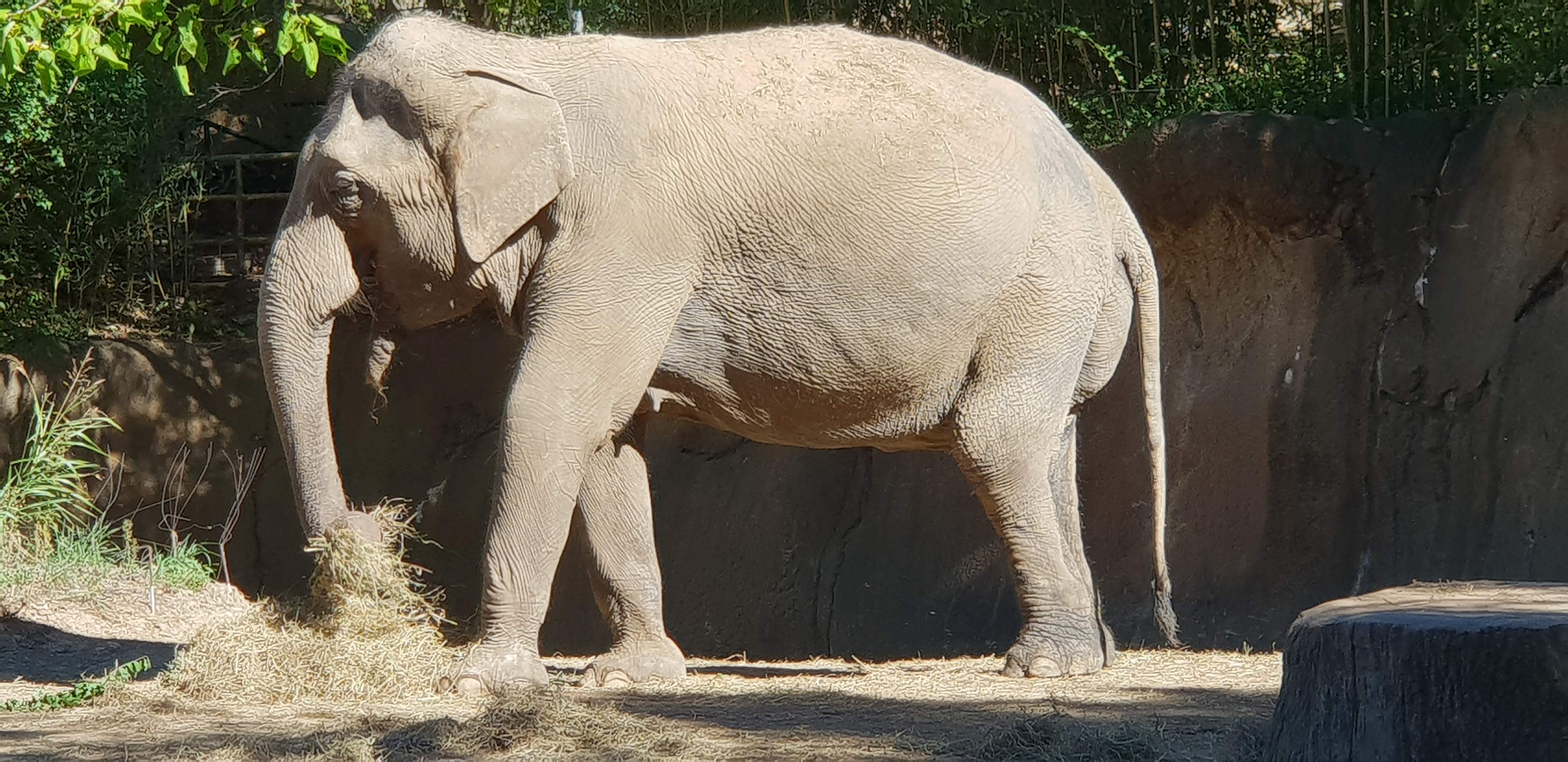
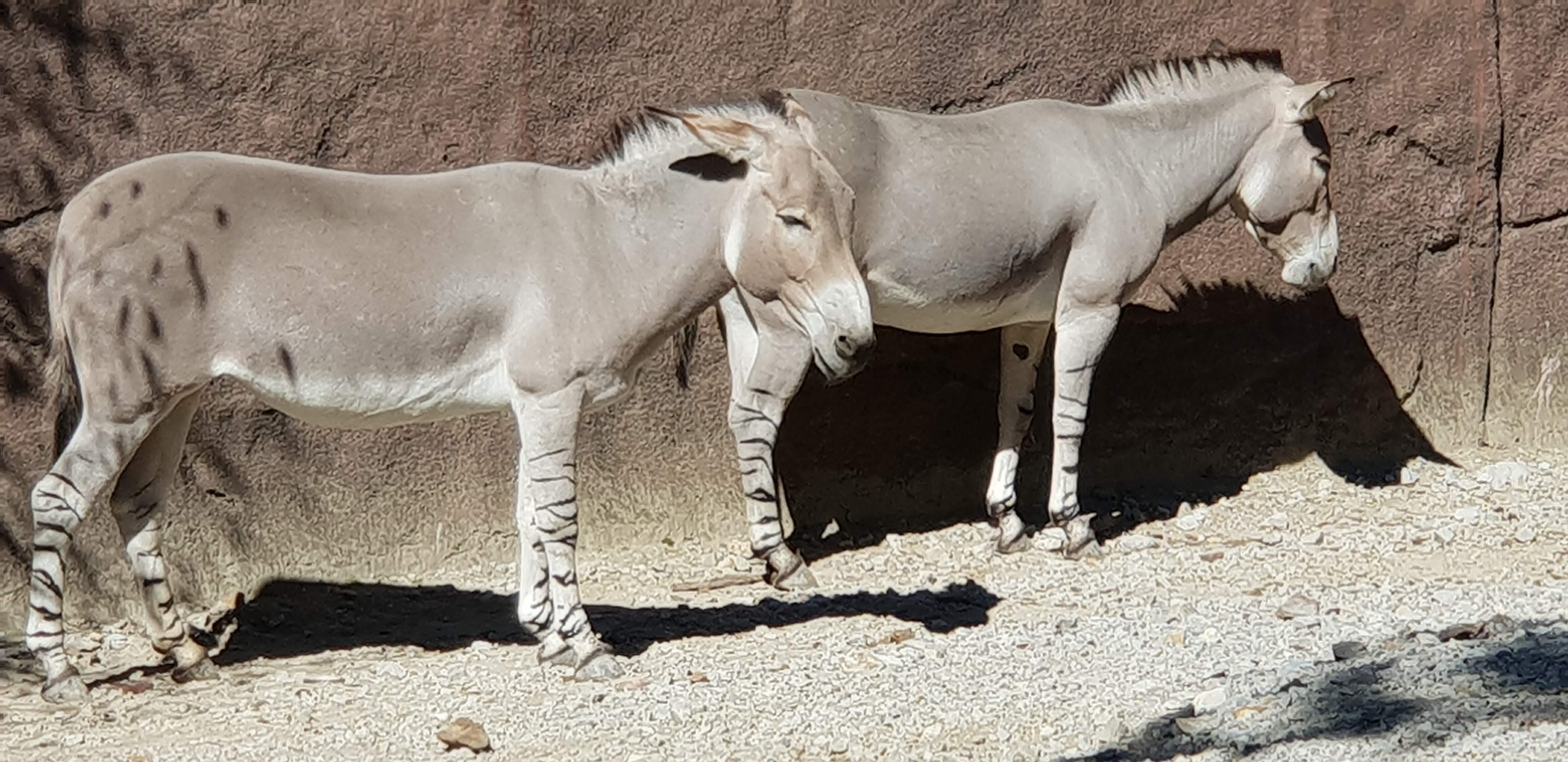
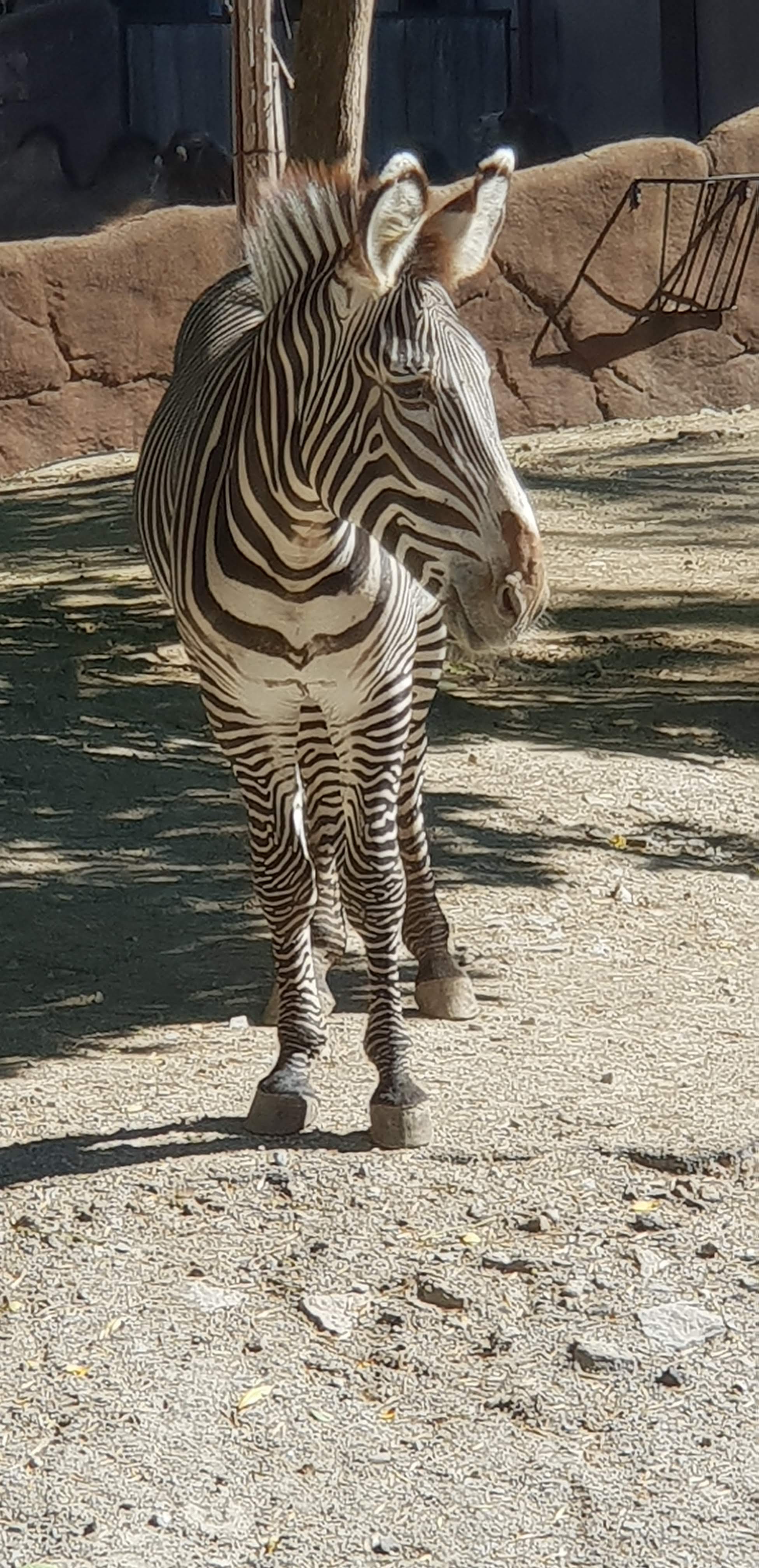
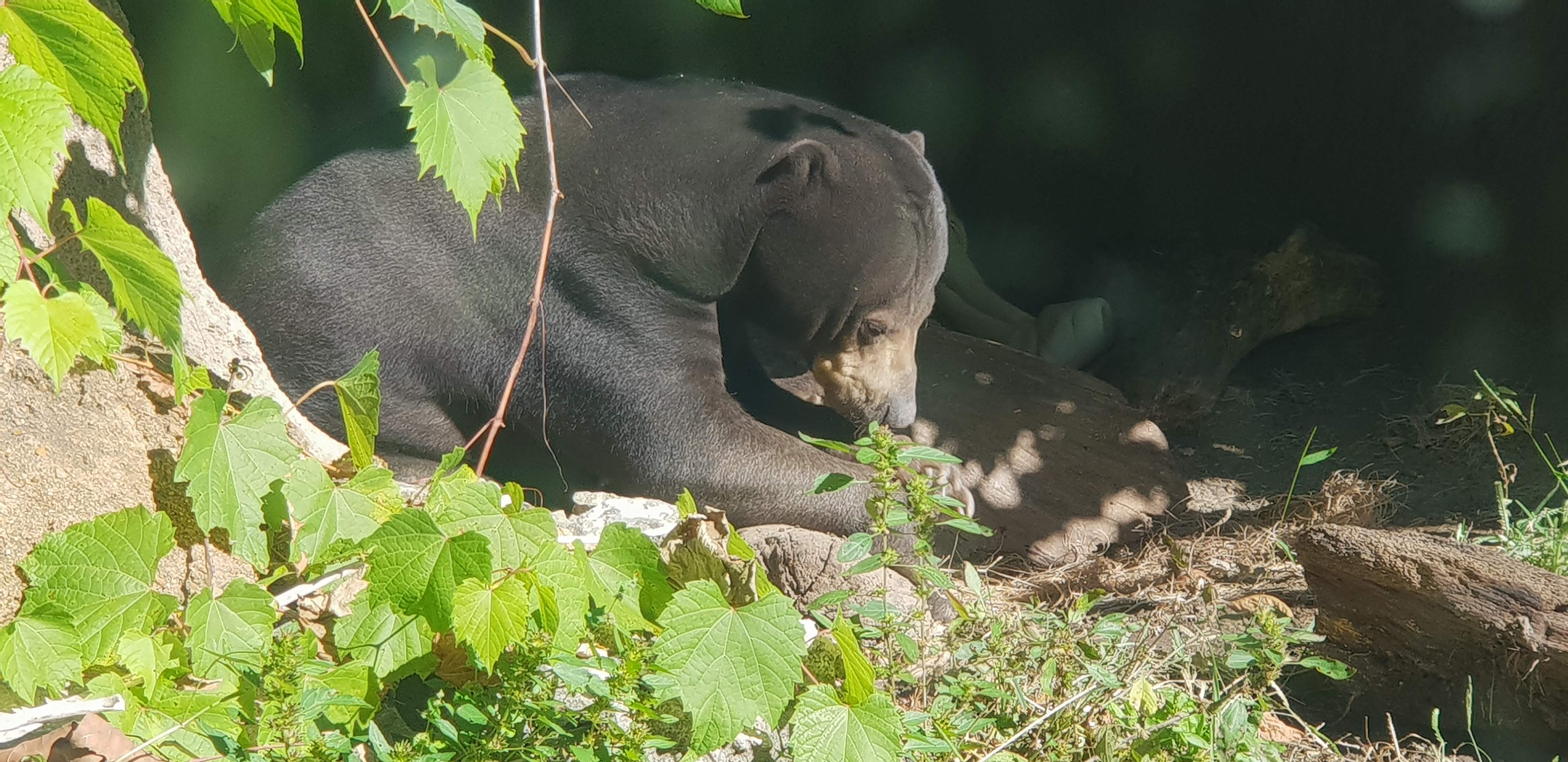
We were immediately struck by just how welcoming and contented the animals appeared. We were accustomed, for example, to watching polar bears pacing backwards and forwards in a seemingly agitated state, rather than sitting comfortably and “smiling” into visitors’ cameras.

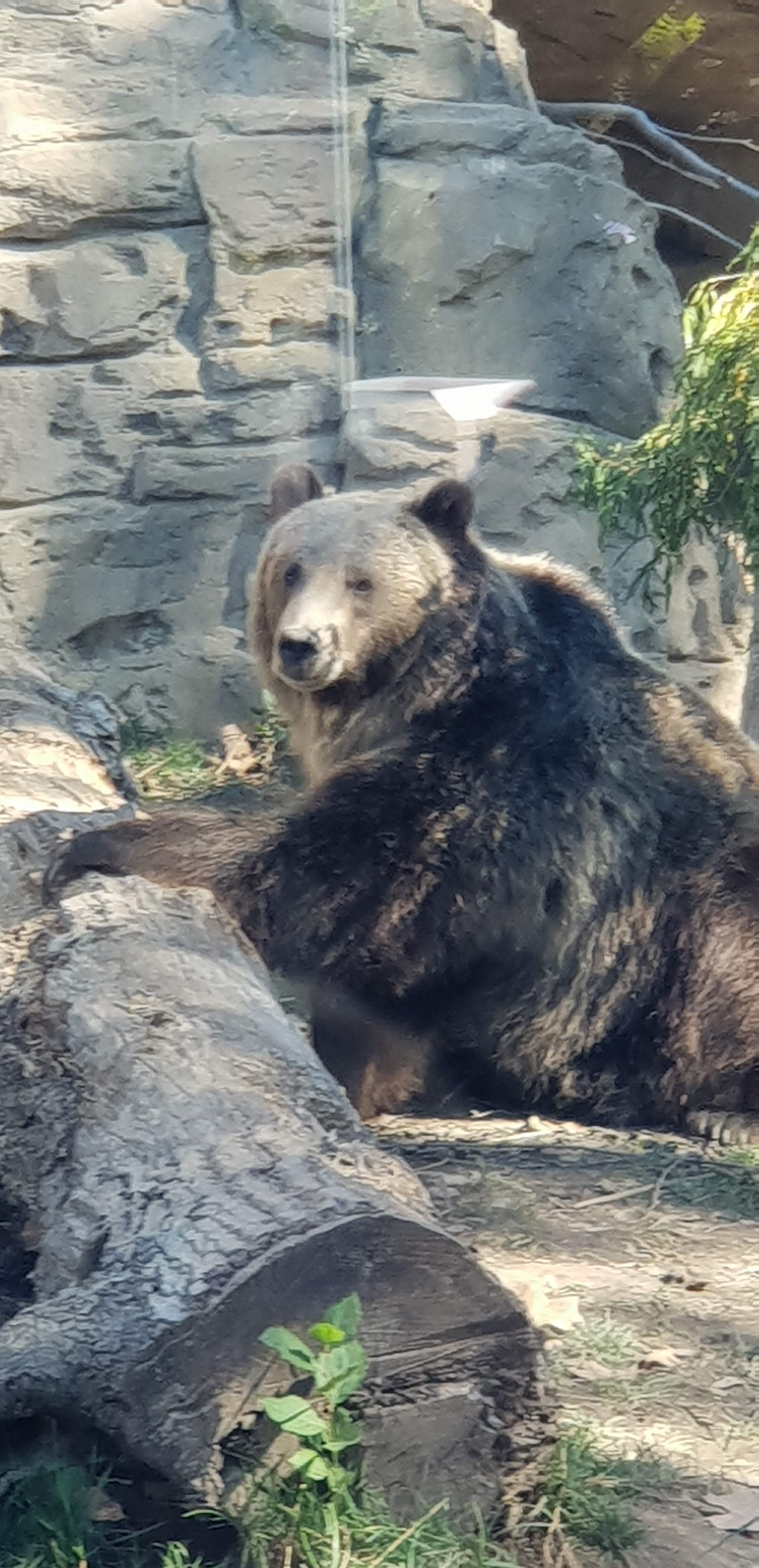
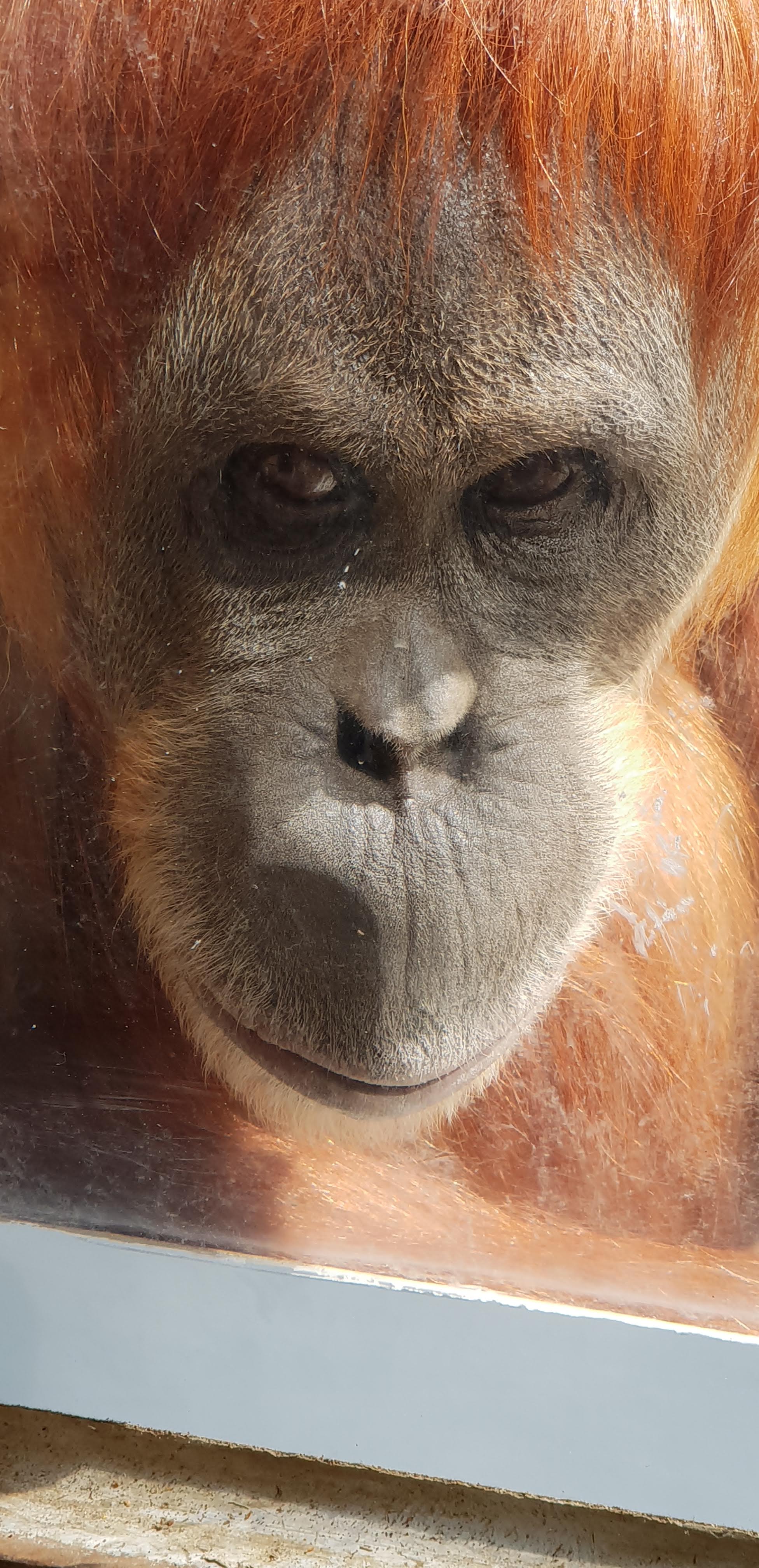
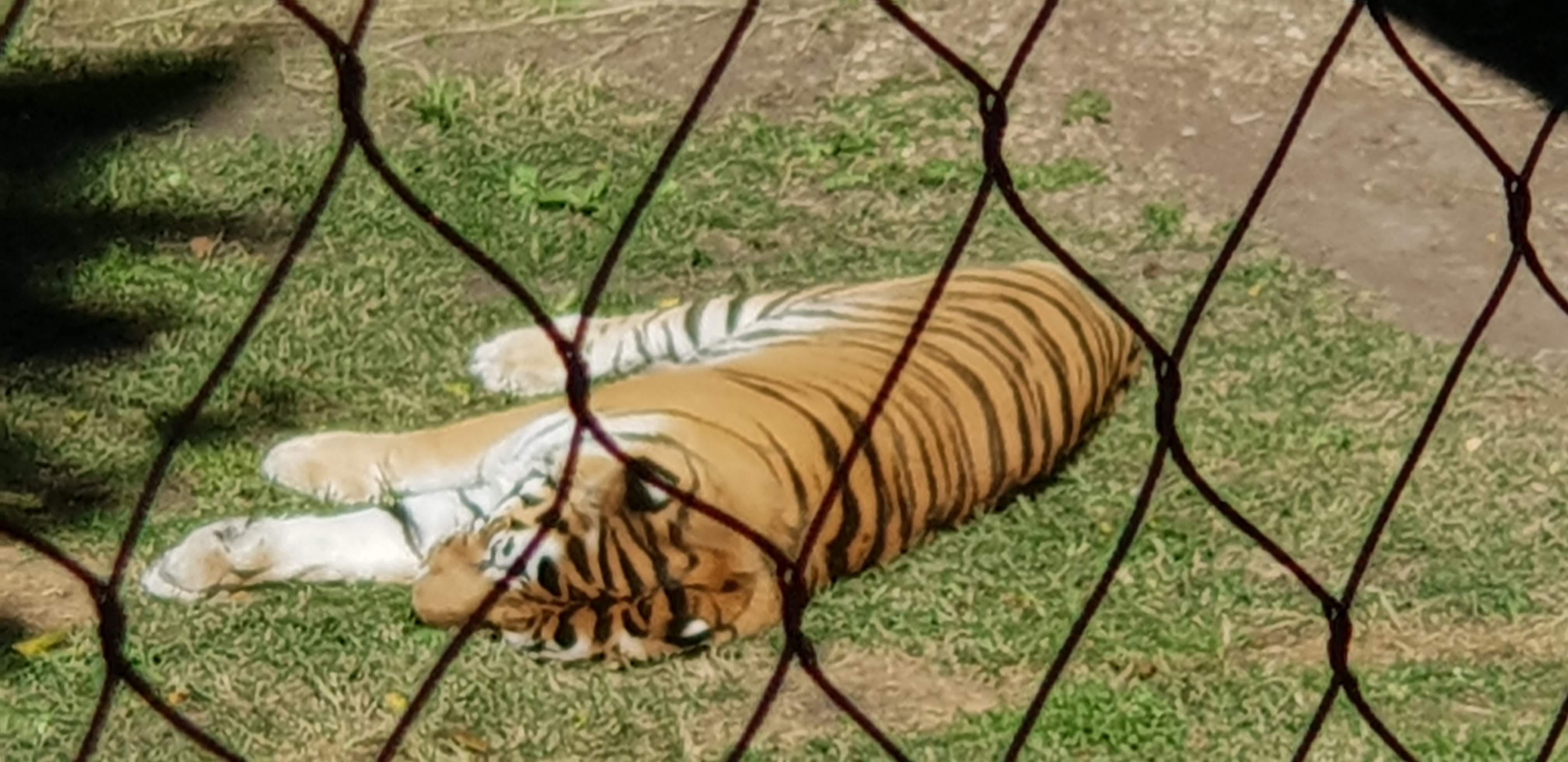
Most of the residents, with the customary exception of the big cats who were sleeping and/or hiding, seemed only too happy to pose for photographs.

20181011_112325

20181011_142413

20181011_125100

20181011_122449


20181011_141255


20181011_143202

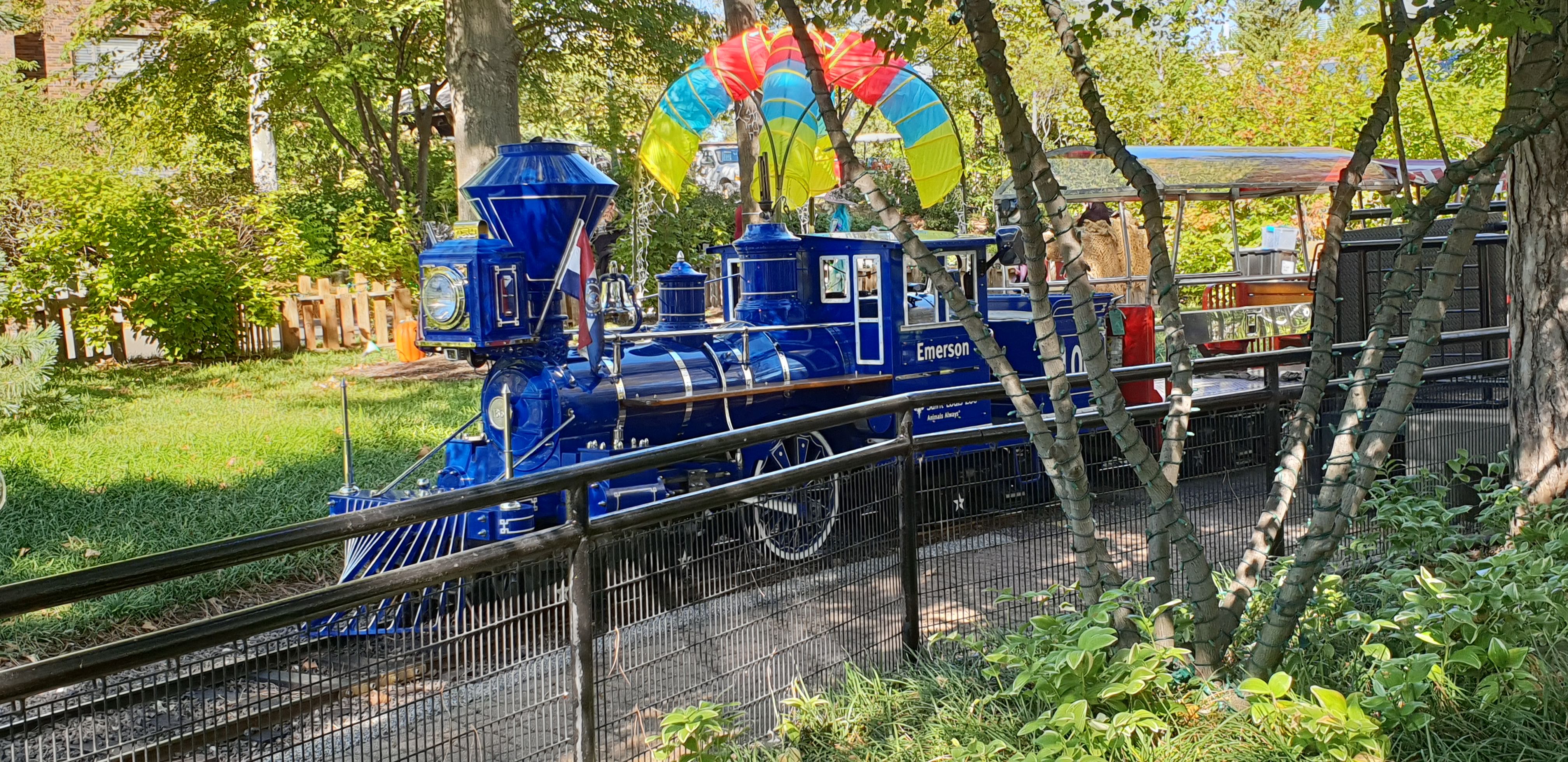
A delightful feature, especially for the children, is the two foot narrow gauge Emerson Zooline Railroad with passenger trains pulled by locomotives that encircle the zoo, stopping at the more popular attractions.

I spent the whole day chasing it around the park, trying to get a decent picture. Finally, I managed to capture these shots!

20181011_144842

20181011_144856.jpg

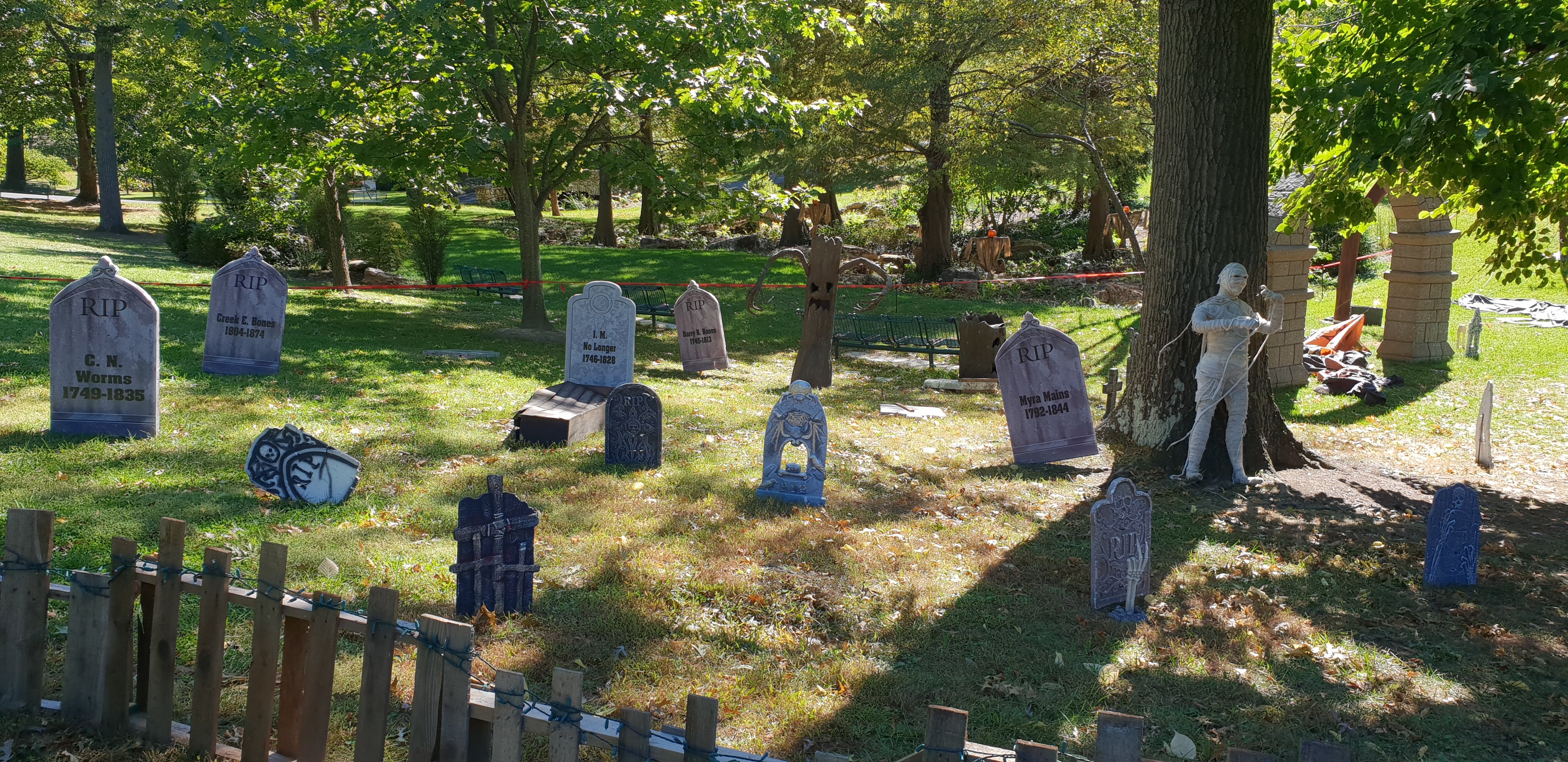
With Halloween less than a month away, there were many scary and ghoulish exhibits either already set up or in the process of being built throughout the park.

20181011_115822

20181011_135744


There is a ongoing debate over which is the better zoo – St. Louis or San Diego. We had visited the California park in 2006, and the passing of time renders comparison difficult. I seem to recall that San Diego appeared bigger and busier, but, if pressed, I would argue that St. Louis was a pleasanter day out, especially as the animals had been so accommodating.

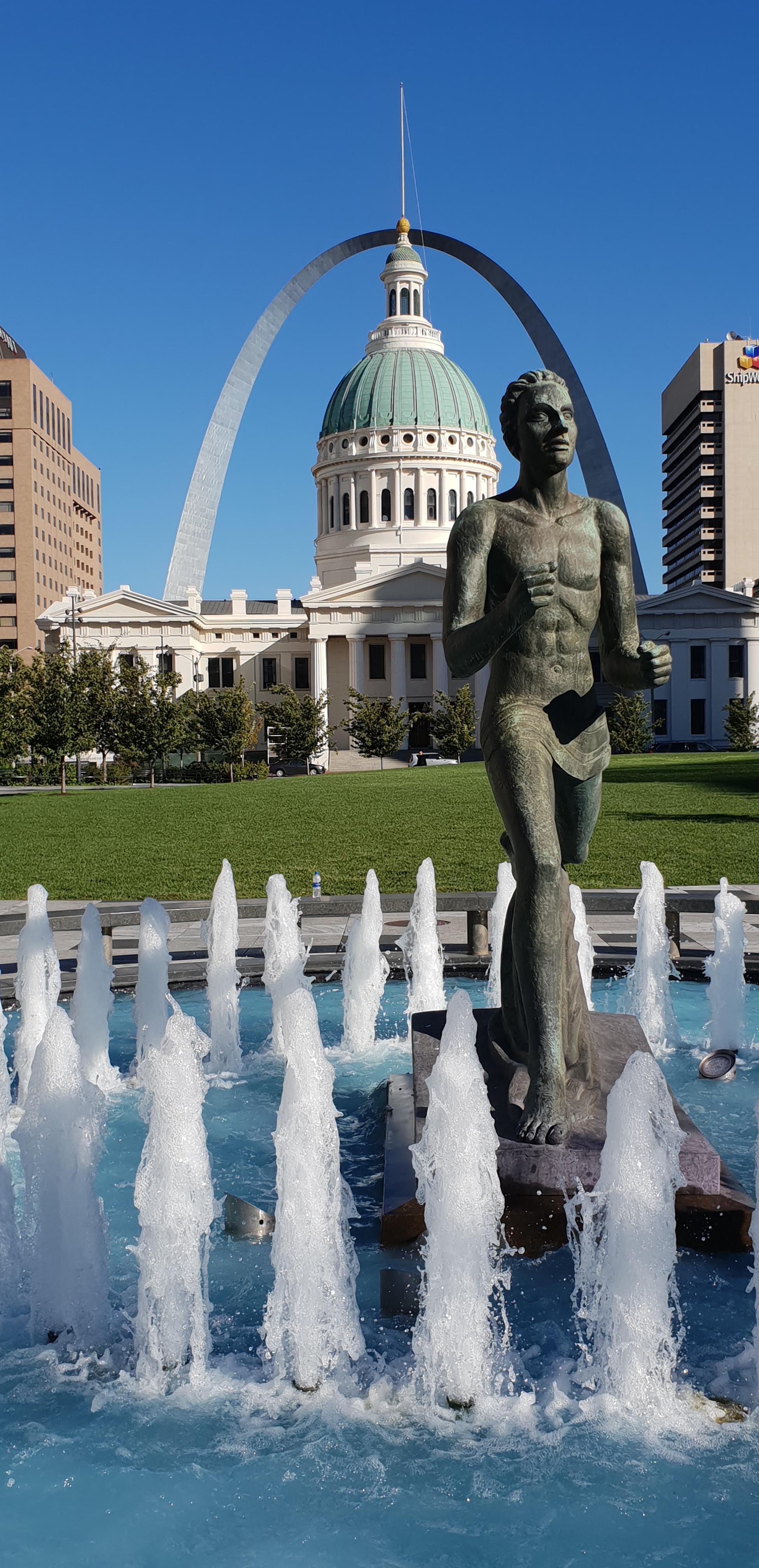
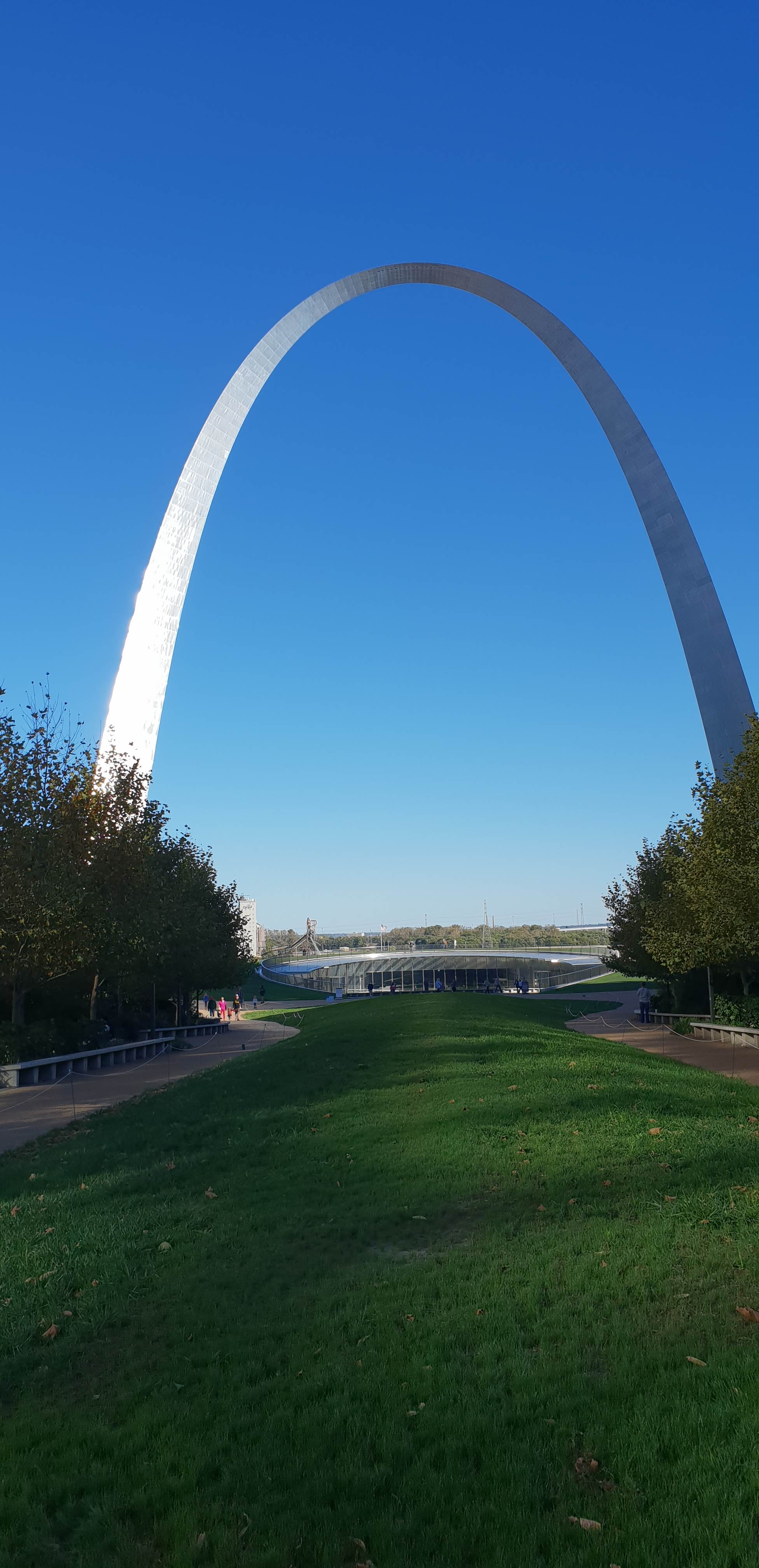
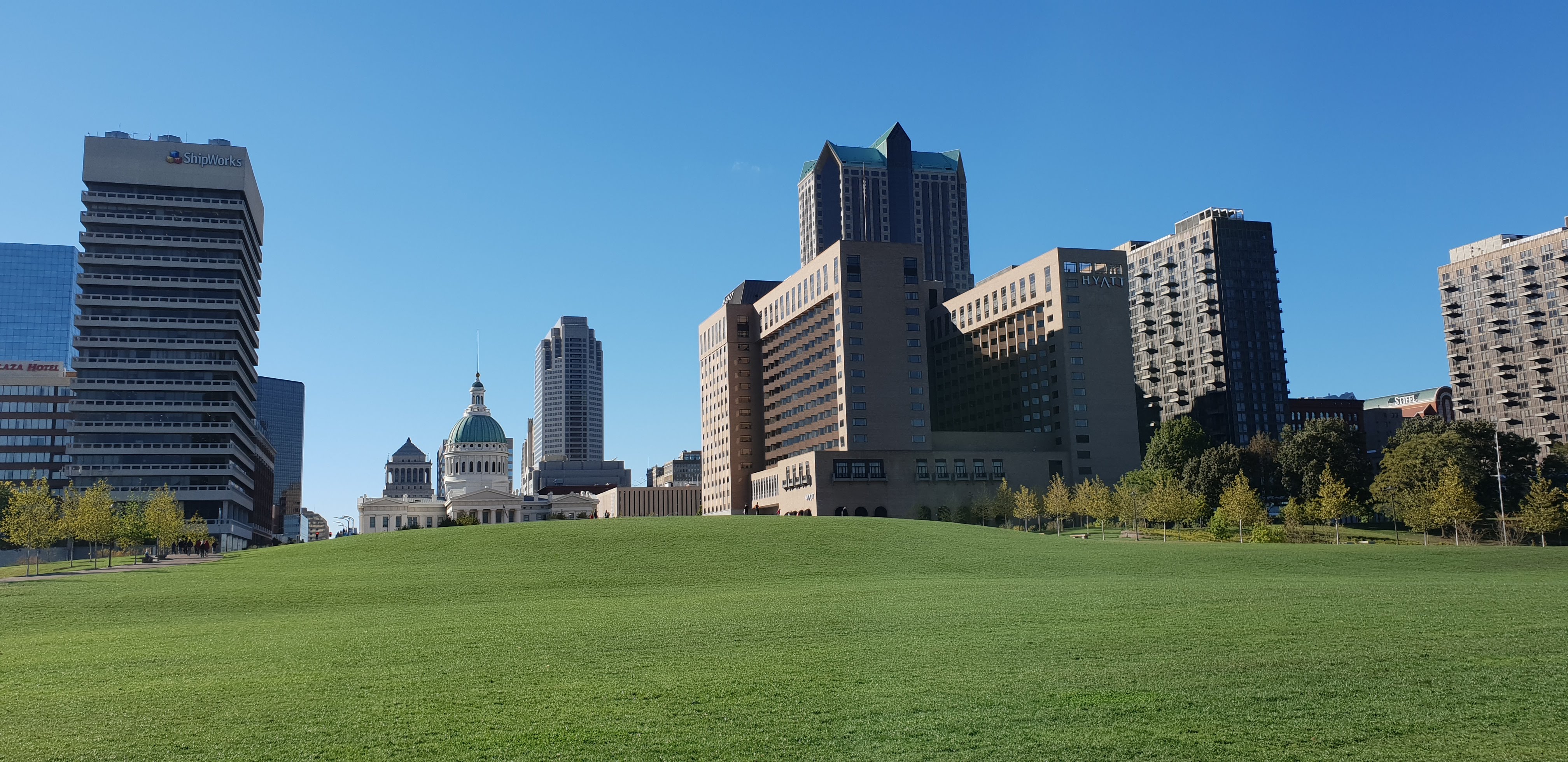
It was now time to hop in the car and drive downtown to take those photographs of the Gateway Arch while the weather was still beautiful.

I had already planned to take a photo of the Old Courthouse with the Arch as backdrop, but I hadn’t noticed the fountain and statue before, which, I think, made the image even more spectacular.

20181011_154755

20181011_161608

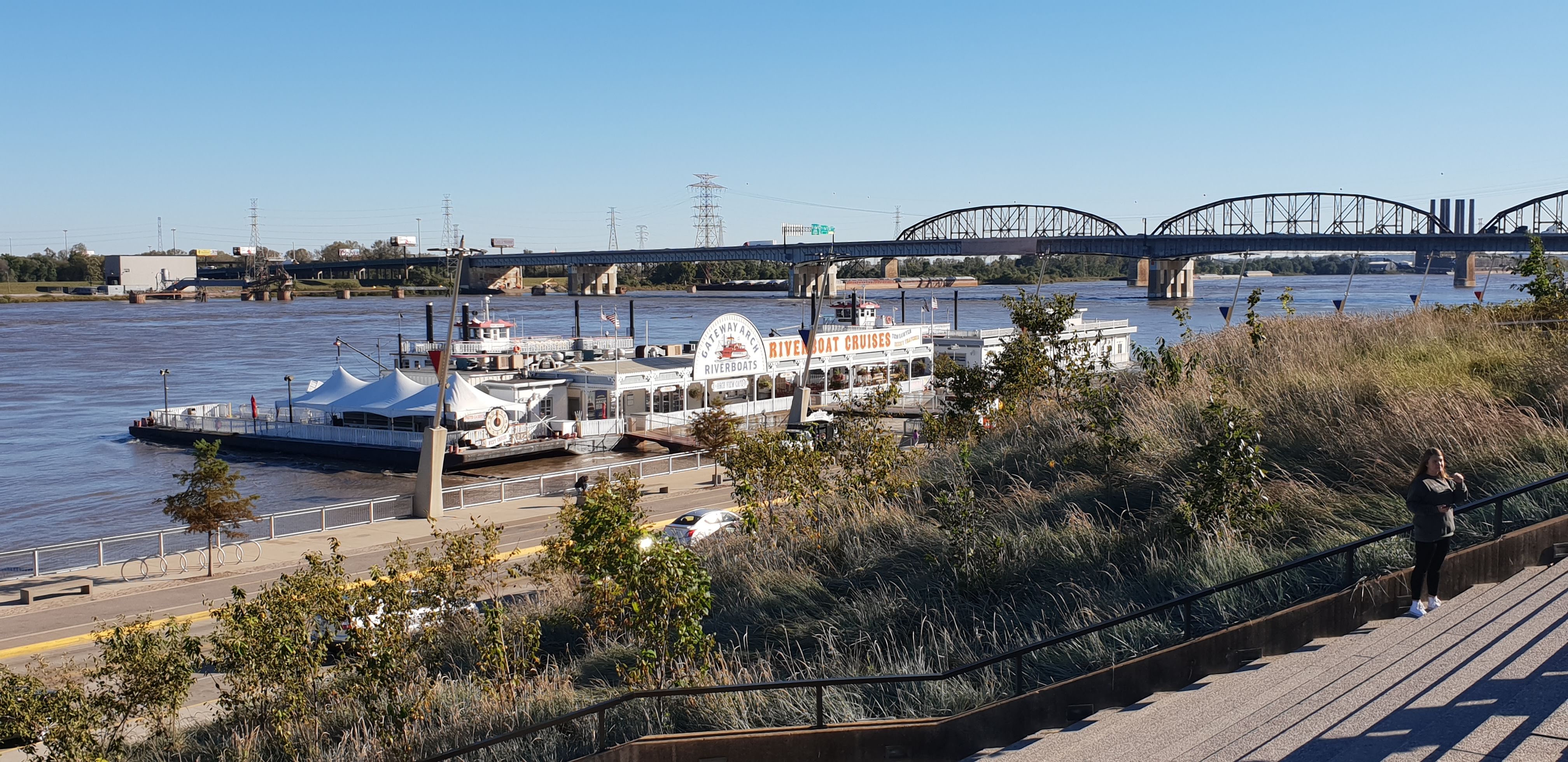
It was too late to take a riverboat ride on the Mississippi.

20181011_160732

20181011_160628

It was our last night, and we wanted to eat locally. There were a number of restaurants on South Grand Boulevard, around a twenty minute walk from our B & B. We set off with the intention of dining at a popular Italian restaurant, Gian-Tony’s, but we were not enamoured of its interior from outside.

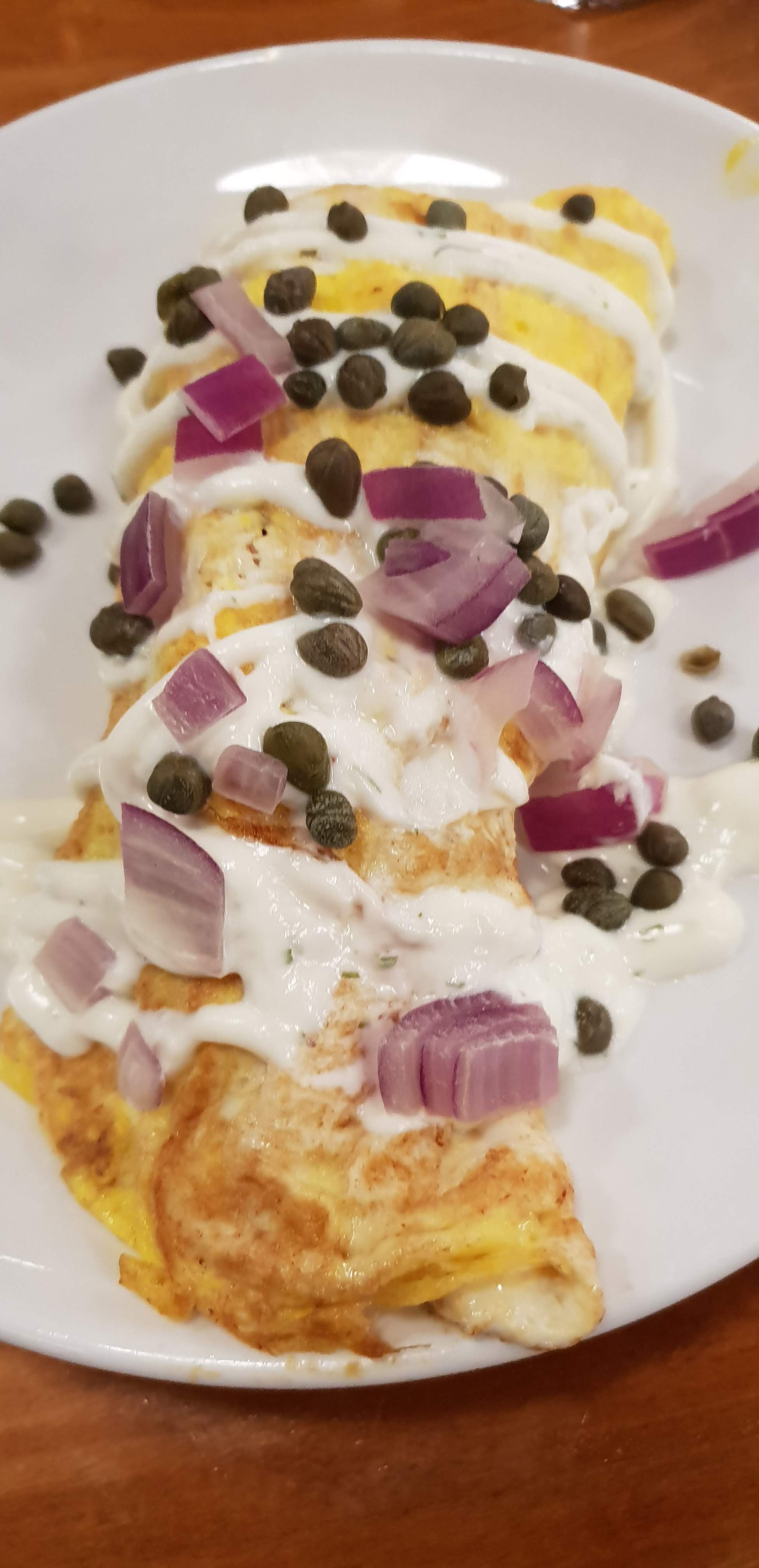
After a fruitless ten minutes peering through other windows, we came across Rooster. A modern brunch spot of some repute, the menu was perhaps a little limited for a last night meal, but, after a lengthy wait, we did enjoy our salmon savoury crepe and   chicken and goat’s cheese salad respectively.

20181011_210045

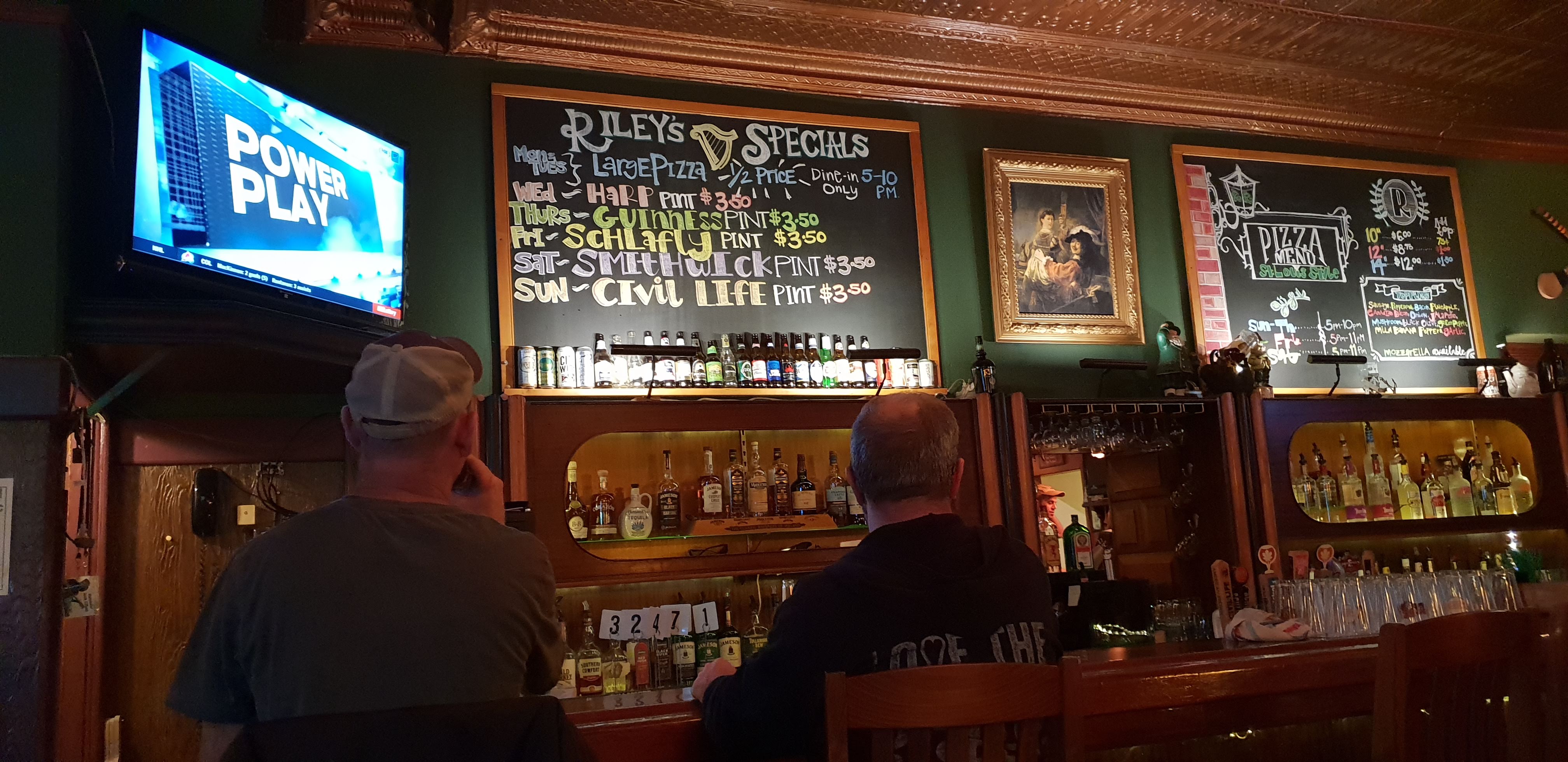
On our way back to the B & B, we fell fortuitously into Riley’s Pub on Arsenal Street where the gin and tonics were not $12, not $10, not even $5 but $3!!! Needless to say, we had more than the planned one.

20181011_221343

Apart from our last night and Chuck’s next culinary masterpiece at breakfast, our St. Louis adventure was over – at least for now.

As with the previous cities, we had only scratched the surface of its appeal. Yes, we had climbed the Arch, roamed around the wonderful zoo and explored the City Museum. But we had not seen any of the other fine museums, taken a tour of the ballpark or the blues museum, or tackled the shops and restaurants of the Delmar Loop neighbourhood, regarded as one of the most vibrant streets in the country.

So we will certainly be back!

But first, there was a glass of port and Stephen Colbert to contend with.

Read Full Post »


The idea for this trip came thirteen years ago when I bought the book entitled The Blues Highway: A Travel and Music Book by Richard Knight.

But then, as we were on the point of booking the trip, Hurricane Katrina battered New Orleans, the planned starting point for the trip. We resolved then that we would wait to do it when life in the city had returned to some semblance of normality.

In 2012, we did finally embark on a road trip, but in a very different part of the country – the National Parks of the South West, covering the states of Utah, Colorado, Arizona and New Mexico.

Setting off from Las Vegas, our expedition took in Zion National Park, Bryce Canyon, Lake Powell, Monument Valley, Arches National Park and the Grand Canyon, followed by a sizeable detour through New Mexico, visiting Santa Fe, Albuquerque and iconic locations on Route 66 such as Winslow, Arizona (“Standin’ on a Corner”) and Gallup, New Mexico before returning to Vegas.

Numerous trips to San Francisco, Tahoe, Vegas as well as the North East (of the U.S, not England!) followed, as the Southern states, other than Florida, failed to seduce us sufficiently into venturing in their direction. Maybe their racist past (and present), Christian fundamentalism and gun culture all have had something to do with it. Moreover, the scene from Easy Rider where the main protagonists get short shrift in a southern diner still haunts me, and the song by Folkestone band, the Transients, entitled They Don’t Like Hippies in Baton Rouge, only serves to exacerbate the anxiety.
But now, with mid-term elections looming and the divisions in America widening, we have chosen this moment to plunge ourselves into the belly of Trumpsylvania, though a Californian friend’s recent assertion that we were essentially visiting “blue cities in red states” is a comforting and far from innacurate one.

So what is the attraction of this particular itinerary that has stubbornly refused to disappear from our vacation radar?

The Blues Highway, essentially Highway 61, runs, for the most part alongside the mighty Mississippi, from New Orleans  to Chicago and traces the migration of many African Americans from the Deep South to the Northern cities following the Civil War and Reconstruction.

Equally, it charts (sic) the development of the major music genres for which we are so much indebted to the United States for, principally the blues and gospel (Mississippi delta, Memphis, St Louis and Chicago), but also jazz (New Orleans), cajun and zydeco (Lafayette), country (Nashville) and soul (Memphis again, and not forgetting Elvis!).

After an initial overnight stay in Newark, New Jersey (flights from the UK being so much cheaper), we fly to the “Big Easy” for four nights before hitting the road with single overnight stays in Lafayette, Vicksburg and Clarksdale. A three night residence in Memphis follows before we head east to Nashville for four nights, arriving on the eve of my birthday.

From “Music City” we cross country back to the main road for three nights in St Louis, followed by a night in Peoria before arriving in the “Windy City” for another four nights, when we are hoping to be joined for a couple of nights by friends from San Francisco. Two nights in New York City conclude the trip before we catch our return flight from Newark.

The trip has the added bonus of introducing us to seven new states – Louisiana, Mississippi, Tennessee, Missouri and Illinois with brief detours through Kentucky and Arkansas. The prospect of experiencing new cultures, historic tours and spectacular scenery is, of course, exciting, but it is the music that is the driving force of the trip. Clubs, bars, museums and street musicians will, therefore, be the major focus of the next three weeks.

And we must not forget the other star of the show – the road itself.

Little thrills the blood more than the thought of exploring this amazing country by car with the radio blaring out the music style that reflects the landscape you are travelling through at the time. I am sure it will reveal some entertaining adventures as this blog grows over the coming weeks.

So let’s get on with the show!

See y’all later!


Read Full Post »


We had not skied Heavenly since 2011, although we had visited in both of the intervening years.

In 2012, a planned three day break slotted between visits to San Francisco coincided with both of us contracting flu and being physically too weak to ski. And last June, logs, pipes and assorted wooden debris were all that lay on the mountain.

And for much of this winter the signs were ominous.

The guaranteed snow levels normally associated with Tahoe, and Heavenly in particular, had failed to materialise. Every day since Christmas, we scoured the webcams and weather forecasts, only to discover that many of the lifts and trails remained closed and the famed snow making operation was being pressed into overdrive.

We have always skied late in the season in the expectation that a) the snow would be plentiful and b) spring sunshine would dominate. So when we heard when we arrived in San Francisco at the beginning of the week that the long awaited snowfall would be pulling into town at the same time as us, and staying for the duration, we had mixed feelings.

OLYMPUS DIGITAL CAMERA

But we have been incredibly lucky.

We had purchased a four day lift pass, taking the Saturday off when the worst (or best depending upon your point of view) of the storms was projected to arrive.

OLYMPUS DIGITAL CAMERA

And it worked to perfection.

Although, with the exception of our final day, sun was in short supply, the wind that often affects resort operations, closing the higher lifts and restricting the capacity of skiers and riders to travel between the Nevada and California sides, was equally ineffective.

OLYMPUS DIGITAL CAMERA

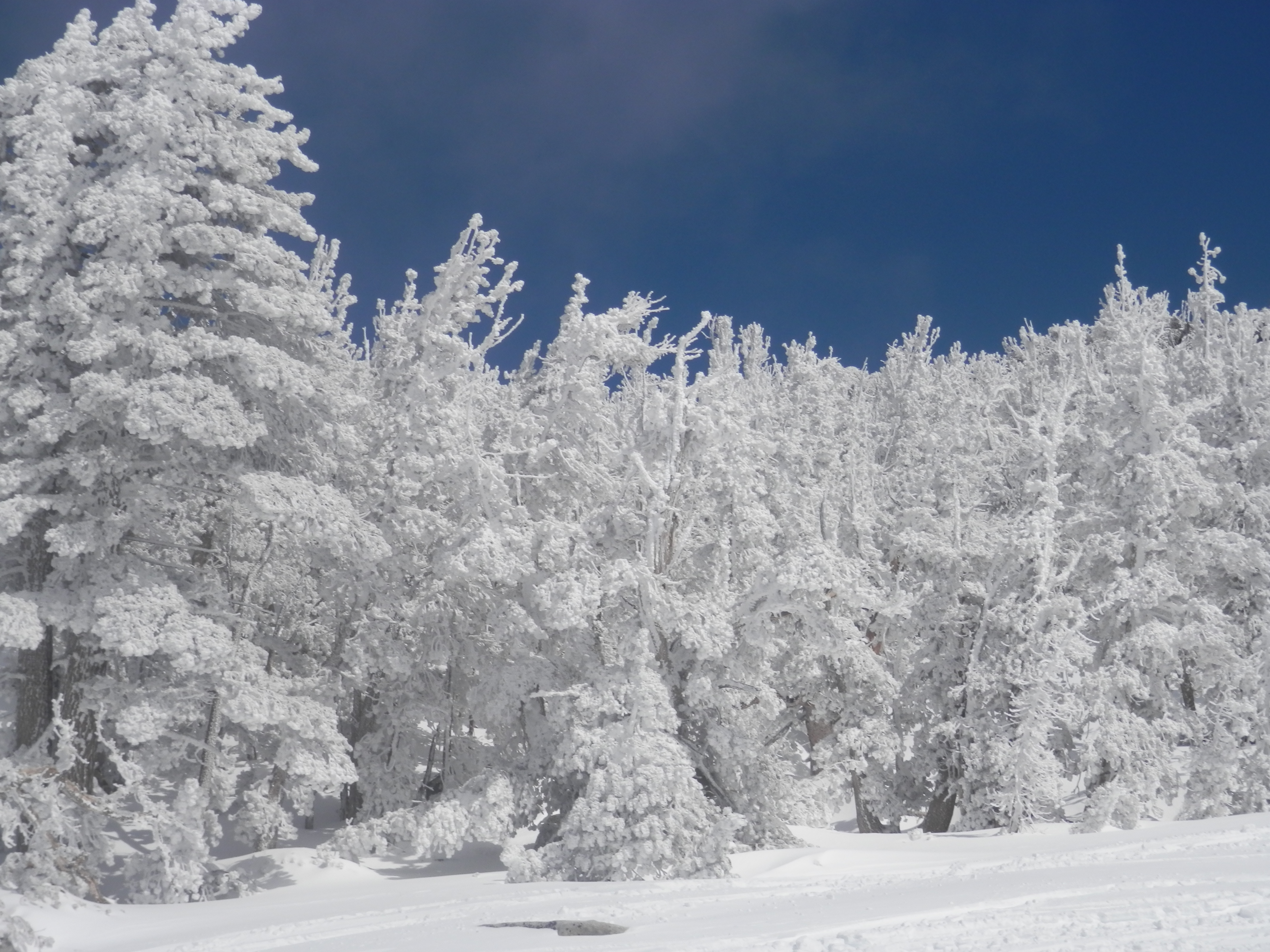
The intermittent gloom and smattering of snow flurries of the first couple of days enabled just to take some satisfyingly moody photographs.

OLYMPUS DIGITAL CAMERA

We were able to ski virtually the entire mountain over the four days. Only on the first day were we prevented from cruising both states, being confined to the California side due to the closure of the Tamarack chair. This was welcome, however, as we tend to spend more time on the longer trails in Nevada. With the Sky Express chair leading to the highest point in the resort open, we were allowed to spend time on our favourite trail, Ridge, which arguably provides the best views of the lake, and the High Five trail that we had not skied before.

OLYMPUS DIGITAL CAMERA

We also managed morning hot chocolate stops and lunch breaks at all the major mountain lodges – California, Tamarack (pictured), East Peak, Sky Deck and Stagecoach – that were open.

OLYMPUS DIGITAL CAMERA

OLYMPUS DIGITAL CAMERA

OLYMPUS DIGITAL CAMERA

My only regret?

Not having the presence of mind to reach for the camera as Janet struggled to get to her feet, having fallen on the Galaxy trail only minutes after she had joyfully proclaimed ONE NIL when I had suffered a similar indignity.

Ah well, you can’t have it all.

We may not have seen the last of the snow as we look set to grapple with the next big storm on our return to San Francisco tomorrow.


Read Full Post »


It is funny how it is only after I return from a visit to San Francisco that I start to ponder, even worry, about the prospect of a major earthquake hitting the city.

OLYMPUS DIGITAL CAMERA

I have recently been reading A Crack In the Edge of the World: America and the Great California Earthquake of 1906 by British born but recently naturalised American, Simon Winchester, a magnificent exploration of the origins, development and aftermath of the magnitude 8.25 Earthquake and ensuing Fire that hit the city on 18th April of that year, and it set me to thinking what is increasingly fascinating me from afar.

Aside from his narrative skill, Winchester, as befits a masters graduate in geology from Oxford, is perfectly placed to explain the scientific basis for earthquakes. Irrespective of how imperfectly I understand that science, his voice is authoritative, and this paragraph in particular sends a chilling message to all those living on the San Andreas Fault, and especially in the city by the bay:

It is not a question of whether a big earthquake will occur, nor even a question of precisely where it will hit. There will be a quake, it will be considerable, it will be somewhere in the vicinity of San Francisco, it will more than likely affect the San Andreas Fault or one of its cadet branches – and it will take place, most probably before 2032. The only true unknown is the precise year, month, day and time.

The U.S. Geological Society actually issued a formal forecast in 2003. Sometime before 2032 , along one of the seven fault systems that belong to the San Andreas cluster, and which cut their way through the Bay Area, there is a machine-computed probability of 62 per cent that an earthquake with a magnitude of 6.7 or greater will strike. There will be damage and casualties “on an impressive scale”.

All those communities, not least the major city in the area, have comprehensive plans for dealing with every type of disaster, as well as providing detailed guidelines for those “authorized to know what their duties and responsibilities are in the event of the most statistically likely major disaster that is anticipated in the region – and that is a very, very large earthquake”.

And, of course, since the Loma Prieta earthquake of 1989 that, amongst its other effects, caused part of the upper deck of the Bay Bridge to collapse onto the lower and much of the Marina district to be destroyed, many buildings have been checked and reinforced to enable them to stand a chance when the next “big one” arrives.

That is all reassuring I’m sure. But I wonder how far the citizens of San Francisco are truly geared up to cope when it comes. I suppose if the authorities kept hammering on about it it would instill a pervading sense of paranoia that would do nobody any good. But I have rarely seen or heard any references to the subject during my trips to the city. Having said that, it has not even crossed my mind whilst staying there – though I am becoming increasingly fascinated both by the historical context and the future potential for calamity.

So does it concern me that my beloved city could be seriously damaged any moment? Of course.

Does it deter me from visiting it often, and, hopefully, more than before, in the future? Not at all.

Is there just a small part of me that hopes I am there when it happens? I think there might be (many witnesses of the 1906 quake recorded their excitement at being part of a major historical catastrophe, and more still posed for photographs amid the ruins even as their homes disintegrated).

But do I wish it? Of course not.

I know that I have a number of readers who would be directly affected by an earthquake. Do they think about it at all? Do they worry about it? Are they confident that they would know what to do if such a disaster struck?

It would be interesting to know. Answers at the bottom of this post please.

Read Full Post »