Feeds:
Posts
Comments

Posts Tagged ‘Folkestone’


That may not strictly be true.

But it’s how it should work out.

The majority of my summer holidays between the ages of ten and eighteen (when I became too cool to hang on to my parents’ swimsuit tails) were spent in the once fashionable seaside resort of Folkestone in Kent, a seagull’s glide along the coast from the fabled White Cliffs of Dover.

Although there was only one small, inevitably packed, patch of sandy beach along its largely pebble and shingle seafront, the magnificent Rotunda amusement arcade, fringed by fairground rides, putting green,  boating lake and swimming pool, kept a young boy and his cousins handsomely entertained for two weeks every August.

OLYMPUS DIGITAL CAMERA

Just occasionally, the vacation coincided with cricket at the Cheriton Ground where the county team hosted opponents from what appeared then to be exotic, distant places named Derbyshire and Northamptonshire.  My parents would install me in the stand around 10am and go off to do whatever it was they did while, equipped with sandwiches, suncream and scorebook, I drooled over the godlike exploits of Cowdrey, Knott and Underwood. The sun always seemed to shine and Kent always seemed to win, though I’m not convinced that the history books would corroborate either assertion.

But I don’t care – I was in Heaven.

In the absence of cricket I could be found staggering around the bracing pitch and putt golf course on the windswept cliffs overlooking the small but bustling harbour, where saucers of fresh cockles and whelks were in abundant supply. If the cliff top links seemed too challenging, a round of crazy golf could be had on The Stade, the narrow strip of land between harbour and sandy beach. The family that ran our bed and breakfast, who went by what, to a ten year old in 1963 (and probably one in 2016 too), was the hysterically funny name of Clutterbuck, owned the shop at the beach end.

OLYMPUS DIGITAL CAMERA

Finally, there was a daily ferry service to Boulogne-sur-Mer in Northern France, where I spent my first day abroad. Unfortunately, my recollections of a youthful life on the ocean wave have more to do with leaning over the side of the boat than tucking into a full English breakfast in the café. It was a few more years, therefore, before I could indulge in what became lifelong passions for Brie and Roquefort cheese and French wine.

Folkestone may not have enjoyed the cheeky, “kiss me quick” ambience of Margate or Southend, but I loved its quieter, more refined atmosphere. My parents even spoke on occasion of retiring to the resort but, sadly, it never happened – and with my father’s recent death, never will. I’m comforted, however, by the thought that the last break they shared together was in their favourite location.

And now my wife and I have, or will soon have, means, motive and opportunity to live that dream ourselves. We have been frequent visitors to Folkestone and the neighbouring Kentish seaside towns of Margate, Ramsgate, Broadstairs, Deal and Whitstable in recent years, and enjoy each one for its particular attractions and atmosphere.

OLYMPUS DIGITAL CAMERA

When it became apparent that my father’s life might be approaching its end, I asked her which resort she would like to make her home should circumstances one day permit. To my surprise and delight she replied, without hesitation, “Folkestone”.

So now we have the small task of selling two homes in Medway and buying a property on the coast. It is a slightly daunting, but undeniably, exciting prospect. It might be fanciful to think that, by mid to late summer, we will be opening our curtains and shouting “bonjour” to our French neighbours across the English channel every morning.

But it won’t be for want of trying – even foreign holidays this year might need to take a back seat.

So, apart from the obvious charms that childhood still weaves, what is it that lures us to Folkestone?

OLYMPUS DIGITAL CAMERA

After all, the past forty years have seen the town, in common with many other resorts around the British coastline, decline dramatically as a holiday destination as people took advantage of greater leisure time and resources to travel further afield. The rotunda and surrounding attractions were demolished, the lively, cobbled Old High Street that winds up to the modern town centre fell into disrepair and many of the businesses dependent upon holidaymakers closed.

image

Gone were many of the shops selling postcards, beach balls and buckets and spades. Gone were the traditional tea rooms and fish and chip restaurants. And gone was the shop with the big picture window at the top of the Old High Street through which children and adults alike gaped in awe at sticks of Folkestone rock being made.

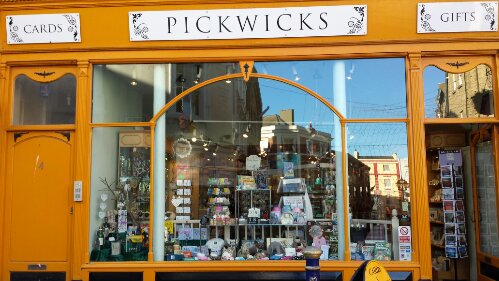
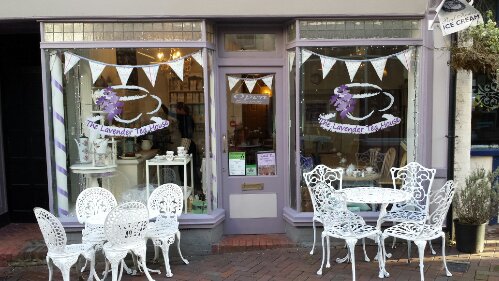
But, with extensive investment, there have been signs in recent years that Folkestone is beginning to stir again. The Old High Street has undergone a makeover. One of a kind gift shops, artisanal food stores and galleries, and attractive restaurants have emerged, along with a burgeoning artistic community.

OLYMPUS DIGITAL CAMERA

There may no longer be any cross-channel services, and the former harbour railway station may, for now, remains overgrown with weeds, but the town’s accessibility from London and the rest of the county has been enhanced by the arrival of a high speed rail service. And, of course, it is home to the Channel Tunnel and the swiftest escape to the continent.

OLYMPUS DIGITAL CAMERA

The East Cliff beach has been re-branded Sunny Sands and is as rammed with humanity as ever on a warm day. There are few better places to play beach cricket when the tide is out.

OLYMPUS DIGITAL CAMERA

And, last summer, the Harbour Arm, after years of abandonment, re-opened for several weekends with music, food and drink decorating its bracing promenade, providing “new” thrilling vistas back across the harbour. Currently closed for the winter, it is scheduled to resurface full time in May 2016.

OLYMPUS DIGITAL CAMERA

OLYMPUS DIGITAL CAMERA

Our permanent residence could not have been better timed.

The jewel in Folkestone’s crown remains the Leas, once described as “indisputably the finest marine promenade in the world”, a wide clifftop walk with well tended flower beds and glorious views across the channel. Imposing old hotels speak of the resort’s former glory, no more so than the Grand and Metropole, though some are now holiday apartments. The Leas Cliff Hall is a popular stopping off point for musicians and comedians on tour. I will never forget a long and hilarious night with Frankie Howerd there back in the late sixties.

image

On a clear day, you can almost pick out individual buildings on the French coast as you head towards the charming neighbouring resorts of Sandgate and Hythe with its access to the world class attractions of Port Lympne Wild Animal Park and the Romney, Hythe and Dymchurch Railway, still the smallest regular light rail system in the world and as thrilling a ride more than a half a century later than the first. At the end of the line, you arrive at Dungeness on the tip of Romney Marsh with its end of the world atmosphere, where the abundant birdlife shares the shingle with two nuclear power stations .

OLYMPUS DIGITAL CAMERA

Despite the loss of the ferry service and crazy golf course, as well as the diminution in the fishing trade, the pretty little harbour and adjoining Stade with its seafood stalls still retain some of the atmosphere that first captivated me fifty years ago.

OLYMPUS DIGITAL CAMERA

The Guardian newspaper recognised the efforts being made to enhance Folkestone’s appeal by rating it among the world’s best holiday destinations to visit in 2014. Many, especially those who have not visited in recent years, will snigger or even guffaw at the idea, but the town is showing signs that it has a future.

We might even put you up while you visit!

Now, if they could only rebuild the Rotunda and resume playing first class county cricket there ………….

OLYMPUS DIGITAL CAMERA


(more…)

Read Full Post »


With the exception of a couple of years in County Cork, all my summer holidays between the ages of 10 and 18 were spent in and around the once fashionable seaside resort of Folkestone in Kent, on the southeastern coast of England, a handful of miles from the fabled White Cliffs of Dover.

Although there was only one small, and invariably packed,  patch of sandy beach along its lengthy seafront (most was pebble and shingle), the magnificent Rotunda amusement arcade, fringed by fairground rides, putting green and boating lake, kept this young boy and his cousins handsomely entertained for two weeks.

And if, in the unlikely event we got bored, there was county cricket at the Cheriton and a testing pitch and putt golf course on the windswept cliffs overlooking the small but bustling harbour, where plates of fresh cockles and whelks were in abundant supply. Finally, there was a daily ferry service to Boulogne in Northern France, though my recollections of a youthful life on the ocean wave have more to do with leaning over the side of the boat than tucking into a full English breakfast in the café.

Folkestone may not have enjoyed the cheeky, “kiss me quick” ambience of Margate or Southend, but I loved its quieter, more refined atmosphere, and have much affection for it still. My parents even spoke on occasion of retiring to the resort but, sadly, it never happened.

The past forty years have seen the town, in common with many other resorts around the British coastline, decline dramatically as a holiday destination as people have taken advantage of greater leisure time and resources to travel further afield. The rotunda and surrounding attractions have been demolished, the lively, cobbled Old High Street that winds up to the modern town centre fallen into disrepair and many of the businesses dependent upon holidaymakers closed.

Gone are the shops selling postcards, beach balls and buckets and spades. Gone are the traditional tea rooms and fish and chip restaurants. And gone is the shop with the big picture window through which children and adults alike gaped in awe at sticks of Folkestone rock being made.

image

But there are signs that Folkestone is beginning to stir again. The Old High Street has undergone a makeover. One of a kind gift shops, artisanal food stores and galleries have emerged in recent years, along with a burgeoning artistic community. A handful of attractive restaurants have sprung up around town and extensive investment has been forthcoming. There may no longer be any cross-channel services, but the town’s accessibility from London and the rest of Kent has been enhanced by the arrival of a high speed rail service.

image

image

image

The jewel in Folkestone’s crown remains the Leas, once described as “indisputably the finest marine promenade in the world”, a wide clifftop walk with well tended flower beds and glorious views across the channel. On a clear day, you can almost pick out individual buildings on the French coast as you head towards the neighbouring resort of Sandgate.   Imposing old hotels speak of the resort’s former glory, no more so than the Grand and Metropole, though some are now holiday apartments.

image

Despite the loss of the ferry service and crazy golf course, as well as the diminution in the fishing trade, the pretty little harbour and adjoining Stade with its seafood stalls still retain some of the atmosphere that first captivated me fifty years ago.

OLYMPUS DIGITAL CAMERA

The arrival of the Turner Contemporary, projected rebirth of Dreamland and high profile exposure on television have given Margate a disproportionate amount of attention in recent years. And that really ought to bear fruit in time. Broadstairs and Whitstable, with their attraction for more affluent Londoners, are already bucking the trend of decline.

But the Guardian newspaper’s recent rating of Folkestone as one of the world’s best holiday destinations in 2014 may serve to redress the balance somewhat. Those heady days of the past will never return, but Folkestone is showing signs that it may have a future.

Now, if they could only rebuild the Rotunda and resume playing county cricket there ………….


(more…)

Read Full Post »


One of the iconic images of the great British seaside holiday of the fifties and sixties is of happy families playing beach cricket.  Everyone joined in, playing with child-size bats, balls and stumps that reduced fathers who fancied themselves as Dexter or Sobers to the same level of competence as their seven year old sons, non-sporting wives and even the family dog (when they were still allowed on the beach between May and September).

Sadly, the advent of the foreign package holiday, breakdown in traditional family structures and expansion of leisure pursuits, all contrived to render such a scene virtually obsolete.  Over the past weekend, therefore, I embarked upon a one man (at least for now) campaign to revive this venerable but floundering tradition, pitching up on Ramsgate Main Sands with my wife at 2pm on Sunday for an impromptu game. 

I say impromptu because my planning had left something to be desired – a brief glance at the tide times beforehand would have revealed that this was the worst time of the day to start.  Nevertheless, after 20 minutes inspecting the fast diminishing slither of sand along the bay, I found a strip that was marginally more playable than the Rose Bowl.  It quickly became clear, however, that if the game was to be remotely watchable, or attract other participants, it was pointless bowling anything other than full tosses because once the ball had pitched, it was firmly plugged into the sand.

Pudding-like wicket aside, it proved a batsman’s paradise as the leg side boundary shortened sharply with the onrushing scum brown tide, ensuring that the merest of flicks resulted in a four or six.  That said, the smacking of  my extra cover drives against the sea wall was more satisfying.  Frank Keating once wrote that Ian Botham played a net “as if he is on Weston-super-Mare beach and the tide is coming in fast”.  I’d like to think that if you substituted Broadstairs for Weston, that might accurately describe my batting on this day. 

Public interest was negligible, evidenced by a succession of families, oblivious of the sacred nature of my work, plodding across the wicket at regular intervals.  It reminded me of my primary school football pitch which had a public footpath running diagonally across it, constantly trodden by young mothers with prams during vital matches against our bitter rivals from the adjoining parishes of Luton, Delce and Arden.  Understandably, dribbling was a skill particularly valued at Glencoe Road.  

But back to the summer game.  

Human indifference was not mirrored in the behaviour of the indigenous bird population. An improbable infield of seagulls occupying short square leg, silly mid on, mid wicket and mid on loitered, more, I suspect, in anticipation of the next tasty titbit thrown up by the thrashing waves than hovering in hope of a bat pad.  Eventually, with the wicket completely submerged, the players were forced to dash from the square to the nearest ice cream van.

Undaunted, I resumed my missionary work on Monday with a game on the much larger and more suitable Viking Bay beach in Broadstairs.  Low tide was scheduled for 2.04pm but, conscious that the tide came in a lot quicker than it went out, I decided that play should get underway an hour earlier.

An early inspection of prospective wickets revealed not only a soft, dune-like sand texture inconducive to a meaningful contest, but also an unmanageable abundance of people, deckchairs, windbreaks and bouncy castles, along with the ubiquitous volleyball court, populated by hordes of young latin youths, led me to cancel plans to play there.  However, we rounded the bend at the end of the beach to enter Louisa Bay which, a full hour before the scheduled start of play,  sported a vast expanse of dark, compacted sand and only sporadic handfuls of spectators scattered around what would serve as the boundary. 

My anticipation was heightened by the sight of  TWO sets of wickets already pitched further along the beach.  This was promising.  Our game got  underway and soon acted as a magnet for every bored child on the beach.  Questions such as “can I play?” and “can my brother / sister join in?” (only the absence of the suffix “mister” reminded me I had not been transported back to 1960) were music to my ears as I suddenly found I was setting fields for TEN kids and having to remember in what order they all batted and bowled to avoid arguments. The majority exuded more willing than competence, all wanting to field at mid wicket for some unaccountable reason, but uncomplainingly hared after every ball, regardless of how far and in what direction it had been despatched.  Falling into a rock pool or getting entangled in the profusion of seaweed were no barriers to their enthusiasm.

On a more serious note, it was heartening to learn that you could still play an innocent game in public with a group of children that you had never met before, without being accused of wanting to take salacious photographs of, or interfere with, them.  In fact, the parents seemed content to allow them to play, even the mother who was called upon to console her ten year old when he retired hurt after being hit on the left thigh by one of my rising 80mph inswingers.

The only poignant moment arose when one small boy advised me, with evident pride, and in hushed tones, that the reason his brother was scoring so freely with quasi-classical strokeplay and bowling off a run up that started just to the left of the Goodwin Sands, was because “he PLAYS cricket”.

The game lasted nearly three hours, interrupted only by obligatory lunch and tea intervals, dictated more by my need for regular rest than by the tyranny of the clock.  Each succeeding resumption of play appeared to draw even more players until the insistent tide washed the wicket away. 

So beach cricket is alive and flourishing in the cradle of the game, not quite the High Weald, but still in God’s own county.  Next stop on the campaign trail is likely to be the East Cliff Sands in Folkestone, a firm wicket similar to the one played on today, though that  may have to wait until later in the summer.

Read Full Post »

« Newer Posts