Feeds:
Posts
Comments

Posts Tagged ‘Great War’


My upcoming poetry book, “Dust in my Cappuccino” is a collection of thirty two poems inspired by the coastal town of Folkestone in the south east corner of England. In order to provide some context to the poems for those readers unfamiliar with the town, I have written a short history of the town. This will feature as the introduction to the collection when it is published next month.

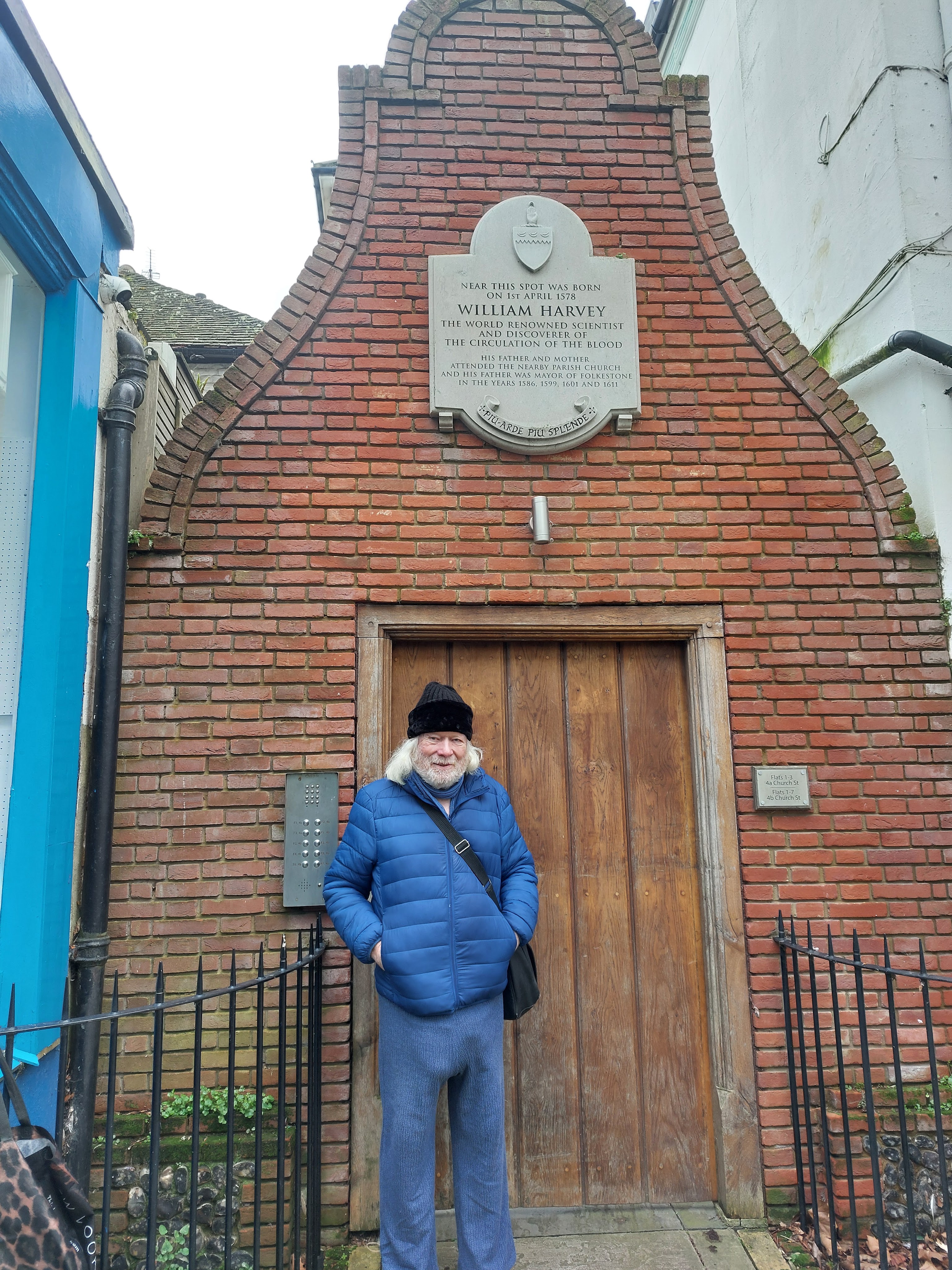
Located on the south east coast of England, a handful of miles from the famed White Cliffs, and only twenty two miles from continental Europe, Folkestone has had a long, varied history, boasting both Bronze and Iron Age settlements and a prominent Roman Villa, sadly now perilously close to the cliff erosion that has always afflicted this coastline.

Descended from the the Anglo-Saxon Kings of Kent, Eanswythe, a devout young princess, founded a nunnery in the town in the seventh century AD, and was subsequently made a saint. Her bones, discovered in the parish church by workmen in 1885, were radiocarbon tested and confirmed in 2020, and the church is now becoming a growing site of pilgrimage.

For a thousand years, Folkestone was a modest fishing village and, for most of that time, as a limb of the Cinque Port of Dover, also a busy trading port. Smuggling was a not insignificant business from the eighteenth century too. But it was the coming of the railway and associated cross-channel ferry industry from 1843, and the construction in later decades of grand hotels and white stuccoed family homes, notably in the West End, that contributed to its rise as a fashionable resort that attracted royalty, artists and writers in addition to the Victorian and Edwardian middle class. Much of this development was conceived, funded and overseen by the Earl of Radnor, who still owns land in the town and surrounding area.

The “golden age” that began around 1880 arguably came to a sudden halt with the outbreak of the Great War, which had a profound effect on Folkestone. It became a major port of embarkation for the Western Front, and the final sight of England for millions of troops, many of whom will have marched from the neighbouring Shorncliffe army camp. The bombing of Tontine Street in 1917 brought about the highest number of British civilian dead as a result of an air raid during the war up until that point.

The inter war years saw a revival, with Folkestone exploiting its natural beauty – the Channel views, rolling hills, delightful parks and gardens – by marketing itself as “Fashionable” and “Spacious and Gracious”. Moreover, its popularity as a resort was enhanced by the Earl of Radnor’s “foreshore development” that included the building of the Rotunda, the largest unsupported concrete dome in Europe, swimming pool and boating lake, supplementing the existing Victoria Pier, switchback railway and the 1885 Leas water lift.

The town suffered heavy bombardment during the Second World War, destroying much of the harbour, but recovered as a seaside destination during the fifties and early sixties, which is when my Folkestone story began. The Rotunda, quaint, steep Old High Street with the revered Rock and Joke shops and the popular ferry route to Boulogne-sur-mer, kept the visitors coming and the locals entertained.

But, like so many other UK coastal resorts, it suffered a deep decline as the advent of cheap air fares, duty free and longer annual leave allowance, led to an escape to resorts where the sun was twenty degrees warmer and the beer ten degrees colder. Many of the much loved attractions and hotels closed, were demolished and converted into flats, and trade in the town slumped. Although the cross-channel ferry industry stopped at the turn of the century, Folkestone has retained its role as a point of departure to the continent with the opening of the Channel Tunnel in 1994.

The new Millennium brought a revival, aided by the philanthropy of former Saga owner, Sir Roger De Haan, who renovated and refurbished many of the buildings in the old town, offering the properties to creatives, provided education and sporting facilities (the latest of which the world’s first multi-storey skatepark), and restored and remodelled the derelict harbour area. The construction of up to a thousand apartments along the shoreline between the Leas Lift (currently closed) and the Harbour Arm is also now underway.

Since 2008, the Folkestone Triennial has showcased new works from established British and International artists, around half of each remain in the town once the exhibition is over. There are now around ninety such pieces placed outdoors around town.  

De Haan’s influence and the arrival of the high speed rail link (only fifty four minutes from London) in 2007, has proved a happy marriage in rendering Folkestone more accessible. Comparatively cheap (but rising) house prices, the advantages of living by the sea, a vibrant dining scene and improving facilities, not least for children, have all led to a growing relocation of people, many of them young families, predominantly from London.

My love affair with Folkestone began at the age of ten when I was brought by my parents from my hometown of Rochester, forty-five miles away on the North Kent coast, on the first of a succession of summer holidays to the town. It was my mother’s admitted but modest pretensions to social mobility which led to the choice of Folkestone rather than the traditional “bucket and spade” resorts such as Herne Bay, Margate or Broadstairs.

Once I left home and moved around the country for study or work, visits became much less frequent, though I always retained my affection for the town. In fact, my parents long harboured the desire of retiring to Folkestone (on their last holiday together they had stayed in the Grand Burstin Hotel at the harbour), but with my mother’s relatively early passing, it never materialised. But their groundwork was not done in vain, as when the opportunity arose in 2016, my wife and I had no hesitation in moving here.

I have gathered together thirty two of my poems inspired by Folkestone, in which many of the themes and events I have outlined above are referenced and explored. One particular challenge has been whether to present them in a systematic way, for example, chronology, geography or subject matter, but ultimately, they are laid before you in an essentially random form, at least superficially.

Read Full Post »


A day like any other –

In the middle of a war.

Except it isn’t.

Anticipation is high as 

Mabel and Gertie Bowbrick,

And devoted mother, Nellie,

Wait patiently in line

Outside Stokes greengrocers

On teeming Tontine Street,

For a special delivery

Of scarce fruit and vegetables

Later that afternoon.

At twenty minutes past six,

With darkening clouds 

Concealing surprise,

What sounds like gunfire 

Is heard from the direction of 

Shorncliffe Army Camp.

“It’s just training manoeuvres, 

It happens all the time”,

The general consensus

Among an unconcerned crowd,

Comforted that Blighty 

Remains up for the fight.

Until two minutes later

When the lengthening queue

Is obliterated by single bomb, 

Casually hurled from 

A passing Gotha plane.

Frederick and Arthur Stokes,

And their family

Perish on the spot,

Along with Mabel and Gertie 

And many of their neighbours.

Sixty one slain in total, 

The youngest three months old, 

Thirty six more lives snuffed out

Before the final toll is known

Nearly eight years later,

When valiant, much loved Nellie

Draws her last breath in the 

Royal Victoria Hospital,

Half a mile from the scene.

No rationing of potatoes as planned,

But rather a rationing of civilian lives,

Lost in a line of innocence and hope.

Today, flanked by brewery tap

And greasy spoon,

A small, pale blue plaque,

Sometimes adorned 

With a spray of flowers,

Stands by a bare, open patch,

Where tenacious weeds 

Thrust through shards of slate.

Read Full Post »


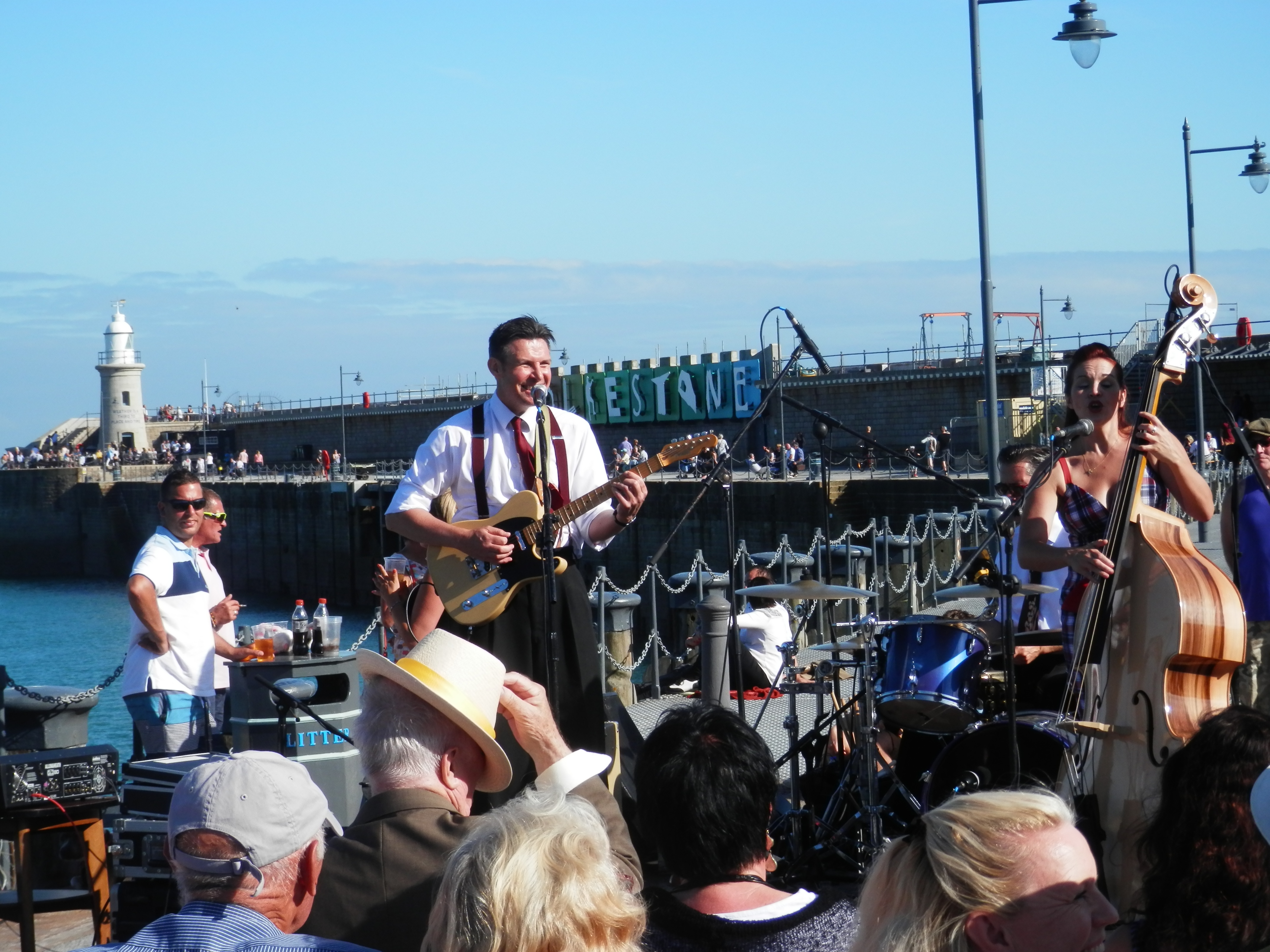
This is where east meets west,
Dover Road and Augusta Gardens;
Where DFLs mix with Folky born and breds,
Cold war adjourned for one warm afternoon.

Tram Road traffic crawls and curls
Around a heaving Harbour Street,
Affording passengers an extended view
Of much loved, yet loathed, Grand Burstin.

A brisk breeze, cooling the searing sun,
Sweeps champagne flutes to a watery end
In the chastening Channel spray
That laps the lighthouse;
Proof that, sometimes, weather
Can be a first to place and time.

Sinatra’s call to Come Fly with Me
Gives way to the eclectic sounds
That entertain the growing queues
For Sole Kitchen and Hog and Hop.
While the Native Oyster Band
Has the crowds singing and swaying,
Kadialy Kouyate’s kora mesmerises,
Bringing the authentic sounds of
New Orleans and Senegal to
This English coastal paradise.

Children build bricks to knock them down,
Dash between Baba Ji and Pick Up Pintxos
Or search for the iron man in the water,
(Don’t worry, kids, he will be back!).


But if the heat and tumult are too much
And it is peace you pine for,
Retire inside to the Mole Cafe
For a mug of strong, hot tea
And a chocolate swiss roll,
Reminders of a quieter,
Yet more violent, time.

Tomorrow, normal service will be resumed;
DFLs will become RTLs
(Work it out!);
The Arm will be handed back
To anglers, cormorants and
A few unsuspecting souls,
Drenched by crashing waves
Cascading over the Folkestone sign.

But is this the lull before the storm?
Eden before the Fall?
Will those blissful views across
To ancient East Cliff and to Sunny Sands
Be there to inspire us still
In three, or five, or ten, years?

Or will the thunder of pick and drill
Drown out those of bass and drum?

Read Full Post »


I first met Martin at the T20 Quarter-Final between Leicestershire and Kent at Grace Road in 2011. This was to be the venue for the inaugural meeting of the Kent Reform Group whose stated aims were to bring greater transparency and accountability to the county club than was felt to be evident at the time.

I arrived first and parked myself at an empty table in the corner of the bar. I was shortly followed by Graham Holland, senior civil servant, former Mayor and prospective Kent County Cricket Club committee member. Graham and I exchanged pleasantries over a glass of sauvignon blanc while we awaited the arrival of the other two core members of the group.

After a quarter of an hour, the double doors swung open to reveal a tall, imposing figure dressed in a green and blue striped blazer with matching tie on a salmon coloured shirt, red slacks, scrubbed brown brogues and a boater sporting the black and Kentish grey colours of the Band of Brothers Cricket Club. He carried over his shoulder a faded brown leather satchel that looked at any moment about to spill its hefty contents. A crumpled packet of cigarettes protruded from the top pocket of the blazer. The only thing that would have completed this curiously Western scene (the meagre population of the bar to a man and woman had turned in his direction), would have been for the stranger to brandish a brace of six shooters from his hip.

Martin Moseling was in the building!

Graham introduced us and we got down to business, though not before Martin had dropped the satchel to the floor and sent the first of what seemed dozens of text messages to the fourth member of the group who had decided at the last minute to remain in Kent.

Throughout that ultimately depressing afternoon, in which Kent contrived to throw away a winning position in intermittent drizzle, he paced up and down replaying every boundary and dismissal by text with the absent colleague watching the game on TV back in his Wealden retreat.

OLYMPUS DIGITAL CAMERA

OLYMPUS DIGITAL CAMERA

We met occasionally at cricket over the next twelve months, standing and chatting aimlessly on the Old Dover Road banking or in the Chiesman pavilion for hours on end, only partly conscious of the performance of the “flannelled fools” out in the middle. With that heavy, faded satchel still hanging from one shoulder, Martin would hold court, offering a wealth of historical and technical insights on the game while a growing audience of his peers nodded sagely in response.

It became clear that, despite our political and social differences – he revered Margaret Thatcher and was at home at hunt balls, whereas my political hero was Dennis Skinner and I was more comfortable in tie-dye at a Grateful Dead concert – we still had a lot in common, notably a mutual affection for Kent cricketing history and the “Golden Age” immediately before the Great War in particular. But there was something else we shared, an ambition that had been unfulfilled for more than half a century – that of writing at least one book and getting it published.

But the 2012 season ended and we went our separate ways.

Until, on one dank, dismal December morning, he rang me to ask whether I was interested in writing a book with him on Kent’s 1913 County Championship winning side to commemorate the upcoming centenary. My response – something along the lines of “yeah, why not” – was hardly enthusiastic, but enough for us to spend the next hour scoping out structure, style and themes. We were off and running before my customary eleven o’clock coffee break.

P1020307

What had we let ourselves in for? It is difficult enough to write a book on one’s own, but to do it with someone else whom they still barely knew and who lived a hundred and twenty miles away, and had, as we soon discovered, a different writing style, would surely be impossible. But, having agreed a workable division of labour at the outset, we spent the next six months working separately on different chapters and sending drafts to each other before picking up the telephone and painstakingly working through every letter and punctuation mark. We didn’t always see eye to eye, of course – he was over fond of words like “rather” and “somewhat” and I drove him to distraction with my obsession with punctuation – but the system worked.

We spoke many times a day. Martin invariably initiated the discussions, telephoning to urge me to peruse a new draft chapter or an alteration in the design that he had been working on during the night while I was asleep! In fact, he often rang at the most inconvenient times, either just before I was leaving the house or about to cook my wife’s dinner. It became a standing joke between us, rather like the one my wife and I shared when we listened to our daily answerphone messages and heard the immortal phrase “hello Tony, it’s Martin, give me a call”.

We met only three times over that period, twice when I travelled down to the Cotswolds for a couple of days each time and when we made a joint visit to the MCC library at Lord’s from which we witnessed a spectacular snow blizzard envelopping the hallowed ground. I also visited the principal libraries around the county to research the newspapers of the day. This provided us with a great deal of reportage to supplement the official scorecards for each game that were available on the Cricinfo website. But the feature of the published book that received the most plaudits were the contemporary photographs, many of which had not seen the light of day since that fateful final full season before the Great War, that he had sourced from both his own impressive collection and other publications. His contacts in the game, not least in his adopted county of Gloucestershire, provided many priceless images too.  

OLYMPUS DIGITAL CAMERA

OLYMPUS DIGITAL CAMERA

Had he not been so persistent, we may never have finished the book. I am eternally grateful to him for not only coming up with the idea but motivating me along the way when my natural indolence took hold (and I like to think I did the same for him).

With the demise of the Kent Reform Group in early 2012, it was clear that the county club was not going to trust offers of assistance or criticism from individuals or members’ groups for the foreseeable future. However, by quiet diplomacy and patient relationship building, Martin was able to extract a number of concessions over the next three years, for example in overturning a ban on fans bringing even a modest amount of alcohol into the grounds for forty over games.

His legacy, however, will be the pivotal role he played in the establishment of the Kent Cricket Heritage Trust. Firstly, virtually single-handedly, he persuaded the Club of the value of creating a trust to protect and promote its proud heritage, and then drove through the implementation. His stunning timeline of the Great War which was displayed in the Chiesman Pavilion during the 2014 Canterbury Week, and the photographic montages of two historic run chases against Gloucestershire and Lancashire, were praised widely. Both were produced at his own expense. He also gave of his own time in keeping a watching eye on cricket auctions around the country, identifying items that the Club might be interested in purchasing.

P1020276

The fact that the Kent Cricket Heritage Trust is now established, and there are visible signs around the ground of its work, notably the new display cases in the Chiesman Pavilion, is largely attributable to Martin.

Any doubts that the Club might not have fully appreciated his contribution were quickly dispelled when they flew the official flag (white horse on red background) at half mast at the St Lawrence Ground on the day following his death. I cannot recall this being done for someone who neither played in the first XI (and oh how he wished he could have), nor served on the committee before. Martin would have been humbled and hugely proud of such a gesture.

As testimonials since his untimely passing have illustrated, he was admired and respected for his detailed knowledge of cricketing history, especially during the era covered by A-Half Forgotten Triumph. 

He had a patrician but nonetheless kindly demeanour which gave his utterances on the game an almost Swanton-like character, an impression reinforced by a build that resembled in later years that of the former journalist and president of the county club.

P1000936

As “Kentish Exile” he was prolific and authoritative. It was his opinion that many of his fellow posters looked for first on all cricketing issues for a combination of insider understanding and common sense. His style was measured, urbane and often sprayed with references and quotes from history, literature and music. It was this that led one wag from Chatham on the Old Dover Road seating at Canterbury one afternoon to declaim:

That Kentish Exile, ‘e’s a bit upmarket ‘e is.

Martin’s reaction to this statement when I relayed it to him that evening was a customary chuckle. I think he was rather flattered.

Despite his achievements – he was a fine horseman, golfer and guitar player, amongst other talents I may not have discovered in the short time I knew him, in addition to being a good enough cricketer to play not only for the MCC for many years, but also the Band of Brothers, Cross Arrows and a variety of teams in Gloucestershire – he was essentially a modest man. Few of his cricketing acquaintances will be aware that he maintained a blog – entitled A Cricket Sort of Chap: A sideways look at all kinds of cricket but especially the cricket of Kent – in which he brought his wit, wisdom and experience to bear on cricketing issues as diverse as being taken to the Bat and Ball Ground in Gravesend as a small boy by his father, the history of round arm bowling and a series of articles on Kevin Pieterson. I urged him constantly to notify his fellow Kent followers when he had published a new piece, but he preferred to manage it for his own amusement.

I’m afraid I’ve now let the cat out of the bag, but I’m sure he would forgive me as the articles are as good examples of cricket writing as you would find anywhere today,  and cry out to be be read by a wider audience.

OLYMPUS DIGITAL CAMERA

OLYMPUS DIGITAL CAMERA

We had spoken of collaborating again in the future and mulled over the worth of writing reappraisals of the life and career of three of the most influential figures of Kent cricket – Frank Woolley, Les Ames and Lord Harris. But I wanted to take a break from cricket writing, not sharing his all-consuming passion for the sport. Before his illness cruelly began to affect his capacity to concentrate, he was working on a book about James Seymour, one of the powerful top order in Kent’s first period of glory. During the writing of our book he had met with the Seymour family who had kindly made a voluminous scrapbook of cuttings, photographs and scorecards available to him. He spoke enthusiastically too of writing a book about the seasons in which Kent finished second in the County Championship (of which there are too many).

On the all too rare days that we watched Kent play together (Martin tended, understandably, to visit the Midlands away grounds more than Kent), he was invariably accompanied by his beloved flat coated retriever, Bear, who he had had for nearly nine years (“the best friend I could ever want”). Bear sadly died in February of last year when Martin wrote “I do not know what I will do without him”. Shortly after, however, he acquired Bear’s nephew, Alfie, and was still in the process of breaking him in and preparing to introduce him to the world of cricket in the near future.

He was immensely proud of his son and daughter, and the successful careers they had carved out for each other, and despite the rapid deterioration in his health, it must have been a joyous occasion to have Emma and Mark and his grandchildren all together at his home.

It is difficult to know how to finish this piece other than to say that I accounted him a friend, not only for his rich well of cricketing anecdotes and knowledge, but also for his wise counsel (something others commented upon in the days following his death). He was not just “a cricket sort of chap”, but someone whose intelligence, humour and understanding ranged across every imaginable subject. He even helped me to make (some) sense of the San Francisco rental market!

But I’ll leave the final words to the man himself:

I have become resigned to the fact that Kent cricket was always in my blood. Although the past few years have been endlessly frustrating, they have also been rewarding. Friendships made within cricket are necessarily transitory but they are enduring. I have re-established contact with people I played with and against 30/40 years ago and I have made new friends. The really great thing about it is that those friends share my love of the greatest game of all – cricket and, in particular, the love of the cricket of the county of Kent.

OLYMPUS DIGITAL CAMERA

OLYMPUS DIGITAL CAMERA

Read Full Post »


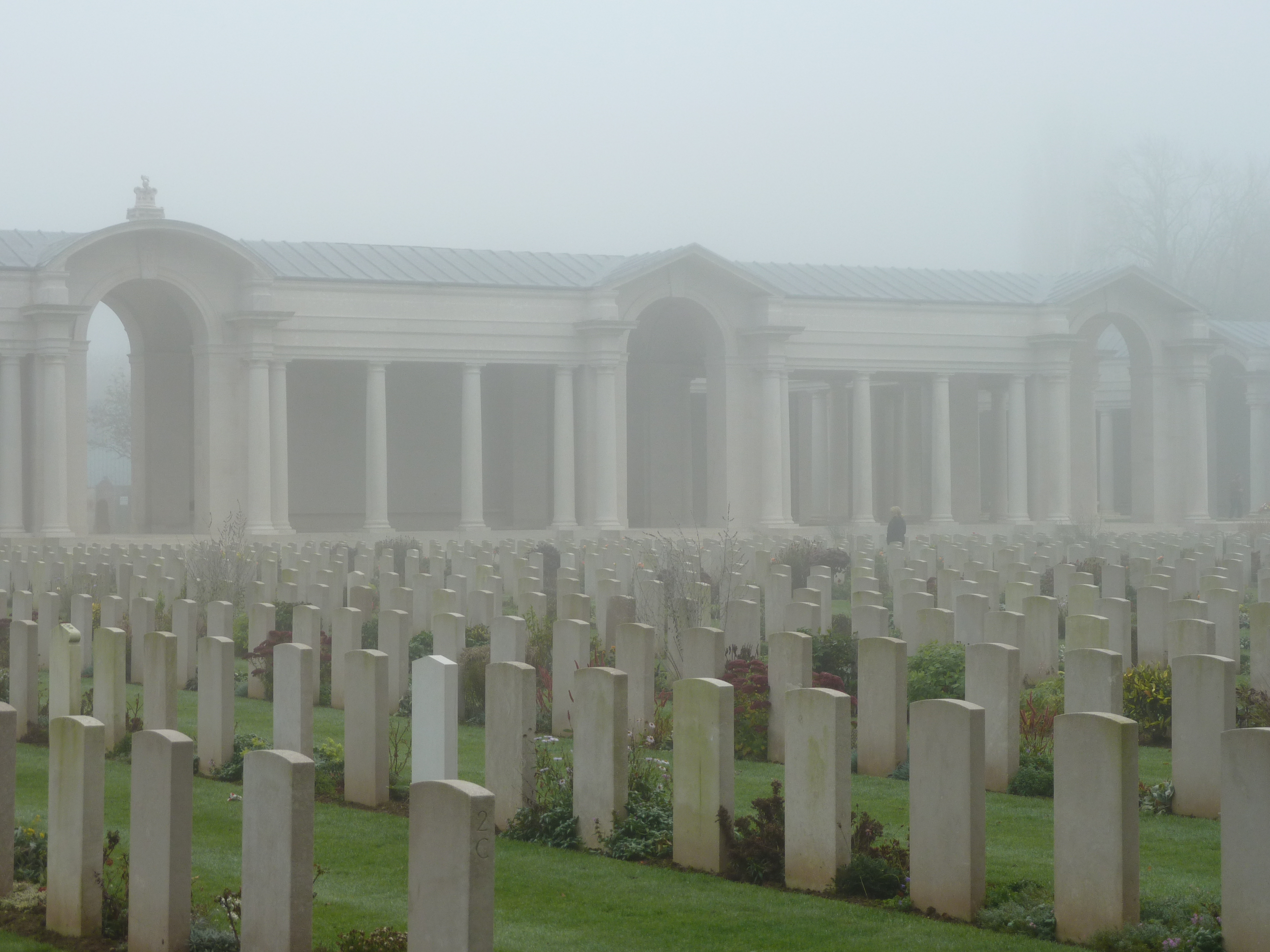
A clear, crisp November morning in Northern France has given way to a chill pall of fog and drizzle.  A young, slim French mother guides her three, maybe four, year old daughter around a muddy field full of stone and flowers.  They hold hands, but, occasionally, the small girl cannot contain her curiosity and runs to a rosebush that catches her eye.

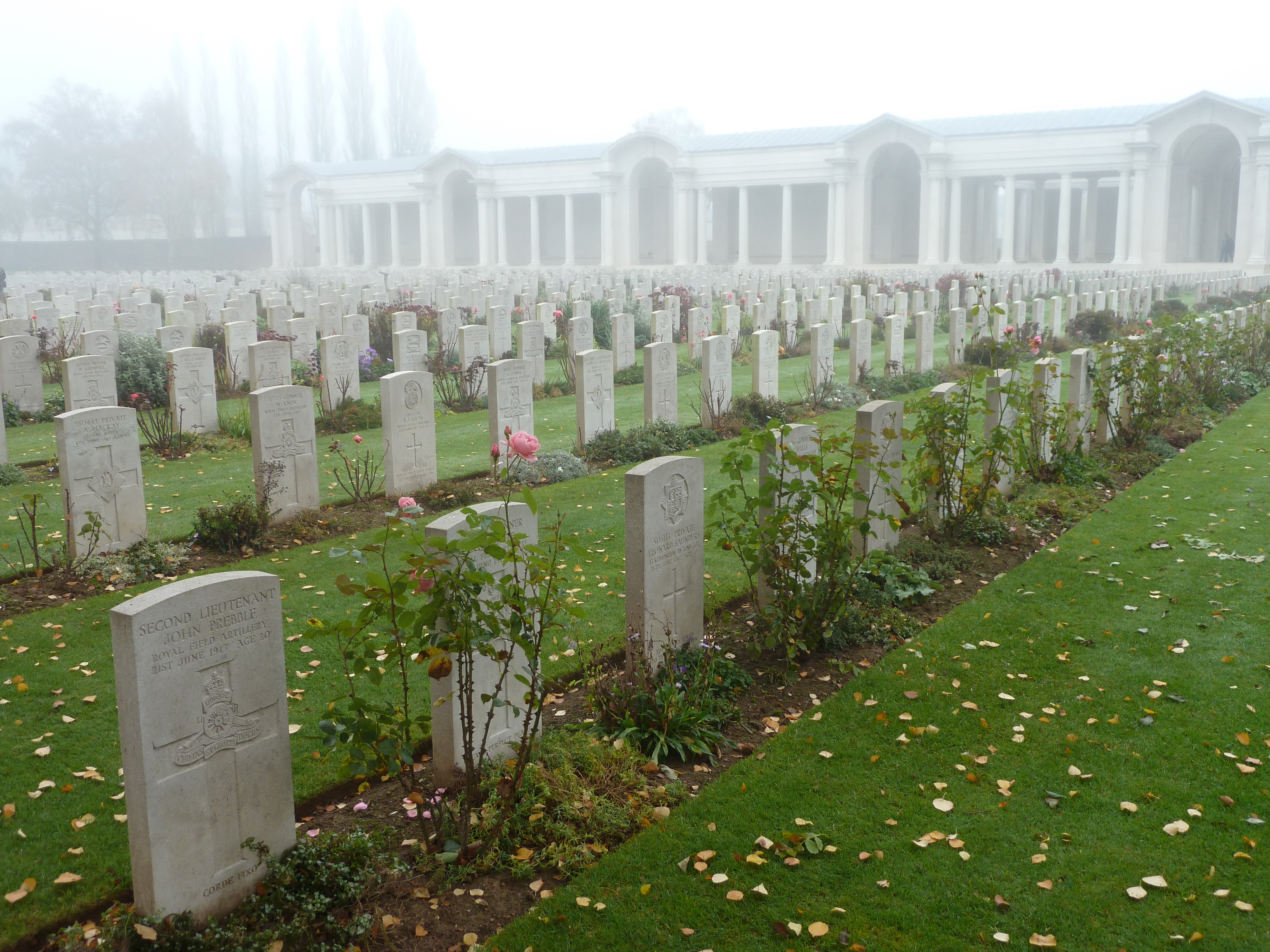
This is no family Sunday morning stroll, however.  It is Remembrance Day and they are walking among the 2,681 burials of the men from the UK and Commonwealth, slain during the Great War of nearly a century ago.  A large white memorial, which forms the entrance point for the cemetery, commemorates on its walls 34,785 forces of the UK, South Africa and New Zealand, with no known grave, who died in the Arras sector between the spring of 1916 and August 1918, many of whom killed in the Battle of Arras during April and May 1917.

The Arras Memorial and Faubourg d’Amiens Cemetery is the first world war battlefield that I have visited, despite passing dozens over the years and, each time, blithely proclaiming that “we must visit” some one day.  Well, that day has arrived.  But, even then, this two mile pilgrimage from the centre of Arras on a morning more suited to the month of November than any others have been so far this year, was not planned.  The weekend away with friends had been booked four months ago and the timing determined purely on our respective availabilities.  It is only in recent days that I have felt drawn towards the location at which Siegfried Sassoon placed Harry and Jack in his poem called The General, of which more later.

Aside from the nationalities I have already referred to, there is a separate plot for 17 Germans. That might be understandable, but then there is one, Max Klemt, who died on 15th February 1917 (his age is not known), who is placed in the middle of row upon row of the British fallen.  There are so many unanswered questions and forgotten stories in this place.

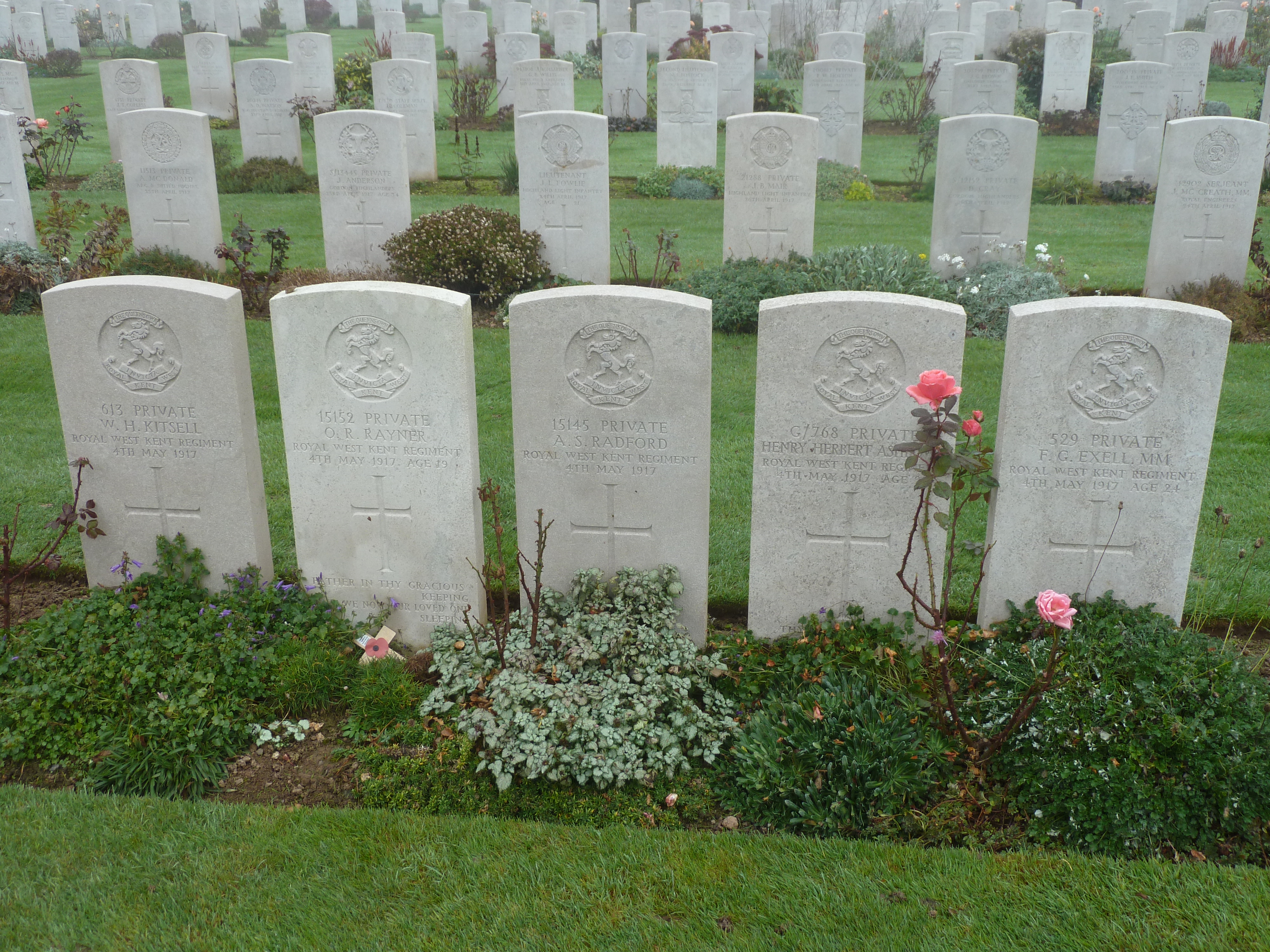
Each stone provides the information, where known, about the name, rank, regiment and date of death of the individual.  The most telling fact, however, is age.  Whilst there are a number of men who died in their thirties, even forties, the large majority were untimely ripped from the world between the ages of 18 and 25.  I am moved especially by one group of stones, placed closer together than any others in the cemetery, that hold the graves of five privates in the Queen’s Own Royal West Kent Regiment, none of whom lived past 24.  Another comrade, equally mysteriously, stands a little apart from the others. They must have been as close friends in life as they are physically close in death.

I scour the walls of the memorial for sight of my family name in vain.  I have no reason to believe that I would have come across it, and am thankful in a sense that I have not – I would hope to have prepared myself first.  But then again I am desperately disappointed.  This place plays havoc with your emotions.

Although I am haunted by the names and especially ages of those laid out before me in neat rows in this sodden field that tests the impermeability of my new boots, Harry and Jack in that Sassoon poem seem more real, and their fate captures my overriding emotion, not of worthless grief, though that is strong enough, but of anger and contempt for the politicians and officers that bullied and hoodwinked such men to their early deaths:

“Good morning, good morning” the General said

when we met last week on our way to the line.

Now the soldiers he smiled at are most of ‘em dead,

and we’re cursing his staff for incompetent swine.

“He’s a cheery old card,” grunted Harry to Jack

as they slogged up to Arras with rifle and pack.

But he did for them both by his plan of attack.

I suddenly remember the mother and daughter and look around for them.  But they have slipped away.  I ponder what their story might have been.  Were they, perhaps, the descendants of a teenage “tommy” and a local girl? I cannot think what other reason might have brought them to this grim, dank scene this morning. I hope that they have returned to a warm, welcoming home, an ordinary, everyday event that we take for granted but which was snatched from those young men with whom we have shared this space over the past hour.

But I have stayed here, at least for today, long enough.  Having had no breakfast, the call of lunch is insistent.  And we have a 70 mile drive back to the shuttle terminal this afternoon before returning to our lives of comfort and plenty.

Already, my thoughts turn to my next visit to one of the battlefields of Northern France and Belgium. We will certainly not pass one by so casually in the future.

Read Full Post »