Feeds:
Posts
Comments

Posts Tagged ‘herb caen’


Ask any visitor to San Francisco what was the most distinctive local foodstuff they tasted during their stay and they are likely to reply “sourdough bread”.  They may not have liked it because it is an acquired taste, but they will  certainly have tried it, if only in the form of a bowl containing clam chowder or, for the more adventurous, the Bread Bowl Scrambler of eggs, bacon, cheddar, onions and bell peppers.

Isidore Boudin (pronounced “boo-Deen), member of a French immigrant family of master bakers from Burgundy, founded the bakery, making the “Original San Francisco Sourdough Bread” in 1849 at the height of the Gold Rush.  It remains one of the oldest businesses in the city and still bears his name, despite having been, for much of the last 70 years, in the ownership of the Giraudo family.
P1000391

The original bakery, a tiny olde world affair, stood at 319 Dupont Street (now Grant Avenuein what was a raucous North Beach district during the Gold Rush.  Its unique flavour comes from a wild yeast that is found only in  San Francisco’s foggy climate, making it a truly local product.  Indeed, in 1970, a Federal study isolated a previously unidentified microorganism named “Lactobacillus Sanfrancisco”, proving, as Jay Hansen claimed in his book, The Other Guide to San Francisco, that “you can take the sourdough out of San Francisco, but you can’t take the San Francisco out of the sourdough”. This would account for the fact that, although sourdough is becoming increasingly accessible in Farmer’s Markets in the UK, it tastes nothing like the “real thing”.

Boudin perfected his recipe by combining his family’s traditional French baking methods with the “sour” or tangy dough taste beloved of the gold miners, to produce, in the company’s words, the “signature dark-gold, crunchy crust, soft chewy center and distinctive flavor”.

His secret lay in using the “mother dough” as a natural starter and allowing the bread to rise and “sour” at its own speed.  Even when caked yeast became the industry norm, he continued to use his slow method of leavening the bread with the mother dough.

When he died in 1887, his wife of 14 years, Louise, with the support of their four children, especially daughter Lucie, ran the business successfully for 23 years, moving twice, in 1890 to 815 Broadway and then in 1906 to its present 10th Avenue and Geary Boulevard location in the Inner Richmond district.

Louise’s greatest triumph was in rescuing the mother dough during the 1906 Earthquake and Fire by mobilising the family to carry it in buckets of ice to Golden Gate Park where they baked bread over open fires.  This ensured that they always kept a portion of the mother dough to mix for the next day’s bread. A formidable woman, she earned the title of the “social leader of the French colony”.e starter-yeast-bacteria culture that Isidore developed back in the 1840s.  At the start of the mixing process, a piece of the mother dough is combined with flour, water and salt, divided into batches and shaped into loaves, which are refrigerated for 24 hours.  The loaves are placed in a proof – or steam – box to rise.  They are then scored, or slit, and baked in a 400 degree oven.

Despite the advent of mechanisation and modern baking methods, the company has steadfastly refused to use fats, sugars, preservatives, or dough conditioners, insisting that only natural ingredients be used.

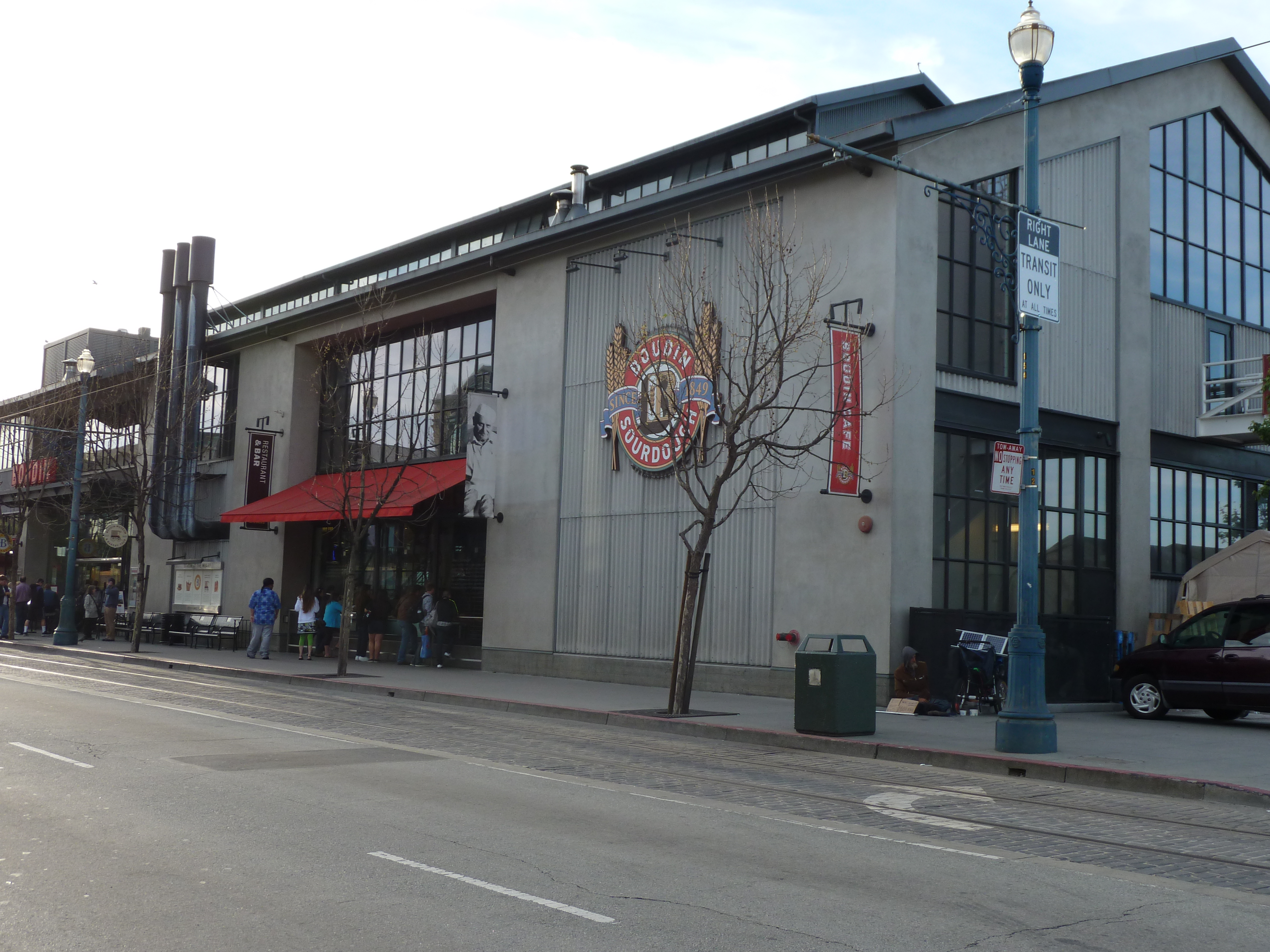
Recent visitors will be familiar with the half  block long flagship store on Jefferson Street on Fisherman’s Wharf  which opened in 2005.  Within its  26,000 square feet of space are an espresso bar, bistro, full service restaurant and private dining room, Bakers Hall market, museum and 5,000 foot demonstration bakery where the dough is mixed on a platform 20 feet above the ground floor, then tossed to the bakers below.   Passers-by are able to watch this spectacle through the 30 foot observation window fronting the bakery or, more excitingly, from a catwalk suspended directly over the bakery. Nearly 3,000 loaves are produced daily for sale in the adjoining café and shop.
P1000390

The museum upstairs chronicles the history of sourdough bread on a 28 foot timelinefocusing on the history of San Francisco through the eyes of bakers. Numerous artefacts associated with the baking process are also on display, including an antique baking wagon used to deliver bread, a replica of Louise’s desk and a carving of the founder himself.

In total, around 20,000 loaves are sold every day in the San Francisco area.  In addition to the 20 different flavours used, loaves are sculpted into numerous exotic shapes on request, including crabs, turtles, alligators, turkeys, pumpkins, shamrocks, snowmen and cable cars.  Boudin now has around 30 other bakeries in California, including one at  at Disney’s California Adventure Park which includes the hour long attraction The Bakery Tour.

I intimated at the beginning of this piece that the “Original San Francisco Sourdough Bread” is an acquired taste.  In 1990 city residents voted Boudin their favourite San Francisco bread.  Herb Caen claimed in the San Francisco Chronicle that “Fresh cracked crab with Boudin’s round “dark bake” sourdough and a well-chilled bottle of California Chardonnay is still the quintessential S.F. meal”.

Well, I’d like to raise a glass to that and say both “Merci” and “Santé” to Monsieur  Boudin!

Read Full Post »


With a little over two months to my tenth trip to San Francisco, I am revisiting, and where appropriate, updating a handful of my articles on the city I fell in love with from afar in 1967 and in person 28 years later.

If I were forced to name the place I would most like to spend a couple of rainy hours, the Ferry Building would appear very close to the top of the list.

It was on 13th July 1898 that the first ferryboat and its passengers pulled into what was then called “The Union Depot and Ferry House”. At the height of its glory in the nineteen thirties, more than 50 million passengers passed through it each year.

Despite two major earthquakes and the construction of both the San Francisco – Oakland Bay and Golden Gate Bridges, not forgetting a hideous double-decker freeway along the Embarcadero, the latter thankfully demolished after the second of those earthquakes, the building with its 235 foot high clock tower inspired by the moorish belltower in Seville, has not only survived but become one of the most popular attractions in the City.

Once the City’s principal transportation hub and beautifully restored between 2003 and 2007, it is now home not only to two storeys of premium office space, but also a permanent gallery of stalls selling locally produced fresh fruit and vegetables, cheeses, wines, meats, flowers, chocolate and pastries, as well as one of a kind gift items, many related to the kitchen and garden.

An outstanding farmer’s market takes over the plaza on Tuesdays, Thursdays, and especially Saturdays, when celebrated chefs from around the City demonstrate their skills to locals and tourists alike. Several appealing restaurants and cafés complete the scene.

Located along the Embarcadero at the foot of Market Street, it is now one of only a handful of landmarks that I make a point of visiting on every trip to the City, however short. Ten days in April didn’t yield a single cable car ride or journey over the Golden Gate Bridge, but it did include two trips to the Ferry Building, one on the way back from a spending spree at the ballpark (in fact, it is a perfect resting spot if you are making the bracing but arduous hike on a blustery day from AT & T Park to Fisherman’s Wharf, or vice versa).

Its role as a ferry port may have diminished (it now caters only for a handful of local services), and cruise ships may soon be getting their own spanking new terminal, but the building remains at the heart of the City’s transportation system with MUNI (Metro) and BART lines criss-crossing here, and the cranky, lovable F Streetcars rattling by.

Whilst there might be other excellent, if admittedly less expensive, farmer’s markets and wholefood stores around town, the Ferry Building might just be the best. Where else can you pick up those last minute snapper fillets, fresh vegetables, rustic loaves, Californian wines and cheeses, and even pig’s cheeks, to take back to your apartment in Noe Valley or the Sunset? And the visit alone, especially if you tarry awhile and experience everything it has to offer, is worth the journey alone.

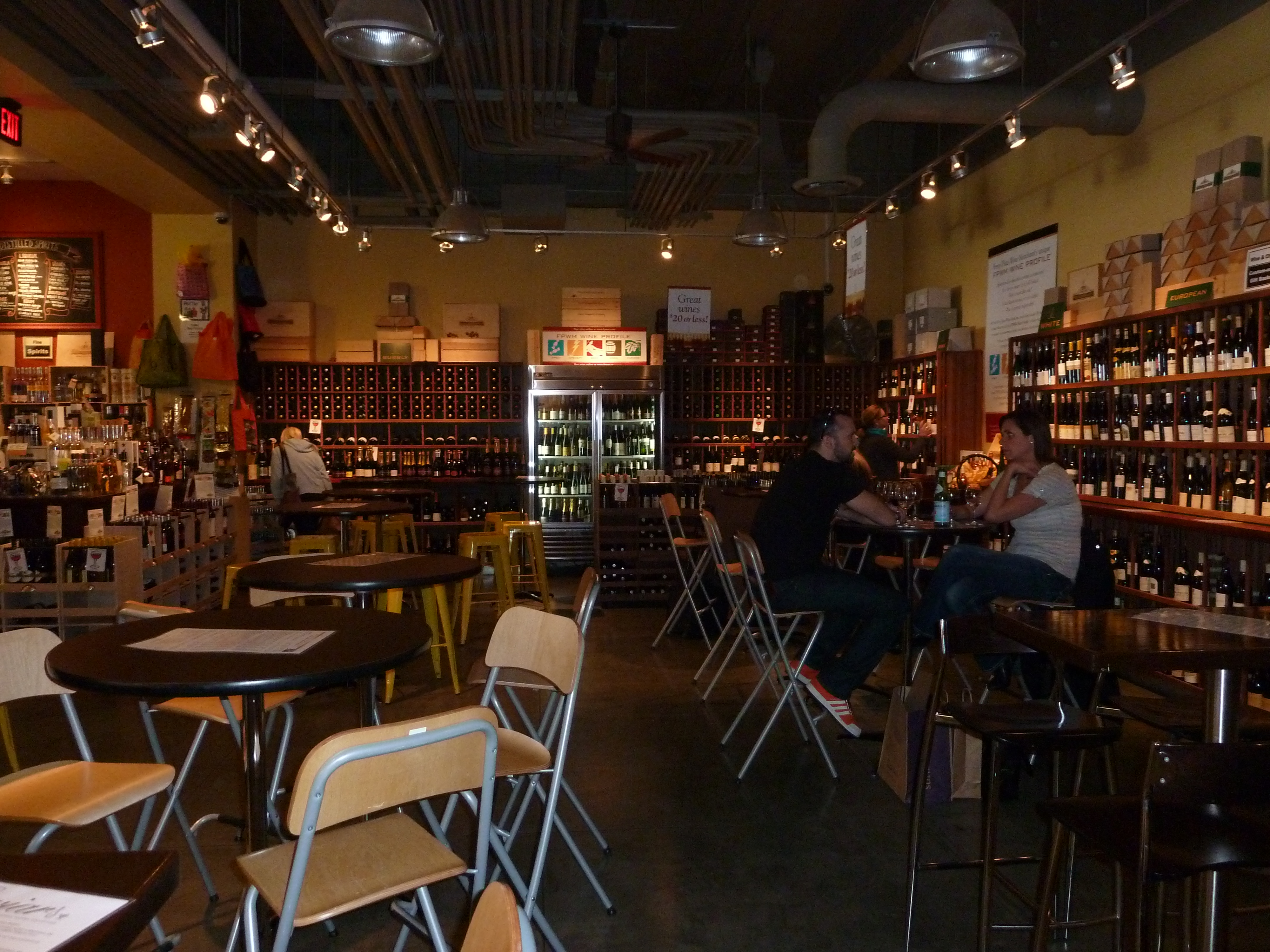
Slip into the Ferry Plaza Wine Merchants , share a carafe or two of Napa or Sonoma wine, or indulge in one of the special tasting “flights” where you can sample half a dozen wines at once (I would caution, however, that if you are of a nervous disposition, it comes with a lot of (different shaped) glasses, and whilst it looks pretty, the potential for disaster is considerable). What better to accompany it than a tasty cheese board? And you may stumble upon one of the regular lectures on wine or even meet the individual who made the wine you are drinking, as has happened to me!

If the Giants happen to be playing on the live televisions, so much the better, just order another carafe. And don’t forget to pick up a couple of bottles before you leave.

With the closure of the large Border’s and Barnes and Noble bookstores at Union Square and Fisherman’s Wharf respectively in recent years, it is heartening also to find the excellent Book Passage in the building. It may be small but it stocks an impressive selection of books on San Francisco and the Bay Area in particular. Pick up a book and a cup of Peet’s (coffee) from the adjoining cafe, grab a seat outside and “waste” an hour enjoying the bay views.

San Francisco Chronicle columnist Herb Caen called it “a famous city’s most famous landmark”, adding that the “waterfront without the Ferry Tower would be like a birthday cake without a candle”.

It is hard to disagree.

Read Full Post »


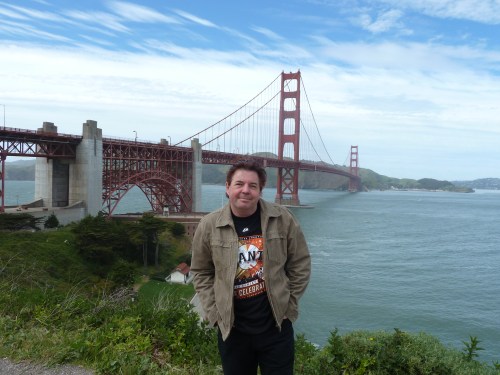
Anyone with the merest acquaintance with this blog will observe a strong bias towards the city of San Francisco in it. If the heading of “A Golden Gate State of Mind” and accompanying photograph did not immediately give it away, the preponderance of posts on the city certainly will.

So what, you ask, is the attraction of what San Francisco based Beat poet Lawrence Ferlinghetti called “this far-out city on the left side of the world” to a cricket loving, warm beer drinking Englishman?

Well, that is a very good question (I do wish you hadn’t asked it).  It’s not sufficient to say it is because I “love” it.  After all, there are many things that I love – my wife, my father, my football team, my favourite rock band, skiing, fish and chips, and the BBC Breakfast presenter, Susanna Reid (I’d be grateful if you didn’t tell my wife about that one) – the list goes on.

But “love” – like “great” – is an overused – or rather over abused – word today. In fact, I may have proved this conclusively in the preceding paragraph. Everyone will have places that they “love”, whether it be Paris, Rio de Janeiro, New York or even Leysdown-on-Sea. Few of us would deny “loving” their favourite holiday haunts, particularly if they return to them time and again.

So I think you deserve a more substantial explanation than that. After all, it took me nearly 43 years to finally feast my hungry eyes on the Golden Gate Bridge and Alcatraz, even though I had venerated the city from afar for nearly three decades before that. So what do I find so special about it now?

Before I answer it – and I’m not prevaricating, honest – I think it is worth considering what it is about a place that makes us become attached to it. After all, isn’t it nothing more nor less than a collection of natural features and man-made buildings?

I suppose that many of us, including myself, claim that we “love” the place in which we were born and / or raised. It is this emotional attachment, linked to childhood memories, that, I believe, is the crucial factor here. And the acknowledgement of that attachment may not manifest itself without the aid of age and distance.

“Absence makes the heart grow fonder” and “there’s no place like home” may be cliches but they still have a sturdy ring of truth. James Joyce – that incomparable chronicler of place – could not, as he himself admitted, have written so profoundly or entertainingly about Dublin had he stayed there instead of leaving it to work and live in Trieste, Zurich and Paris.

My last post (www.tonyquarrington.wordpress.com/2012/02/08/walking-with-our-mutual-friend/) conveys my affection for my own home town of Rochester in Kent, and an earlier one (www.tonyquarrington.wordpress.com/2011/10/03/to-my-home-county/) describes the pride I have in being a Man of Kent, a grateful product of its rich embrace of coast and countryside.

So our attachment to place begins, as with so many of our passions, with our childhood experiences.

But I digress. We’re not in Kent(as) anymore, Toto. You want to read about why I “love” San Francisco. Well, I presume you still do or you would have given up by now. So here goes.

I could cite the stunning beauty of the bay and its glittering “bracelet of bridges”, the gorgeous skies, the cute, clanking cable cars, the abundance of fresh seafood in its classy restaurants, the diversity of its music and theatre scene, the richness of its ethnic neighbourhoods, the thrilling exploits of the Giants and 49ers, and, of course, its renowned tolerance and reputation as a haven for the otherwise discarded and disaffected – all of these are part of it.

However, thousands of other visitors have been equally captivated by most, if not all, of these qualities. It is not for nothing that many leave their heart in San Francisco.  But their “love” is invariably on loan, perhaps until the next trip or another geographical gigolo snatches their affection. Mine is permanent, organic, forever.  

So what is it about this place that has lured this individual into spending what time he can’t reside in it dreaming and writing about it?  Why has this place gotten hold of my heart” where other cities I delight in visiting, such as Venice, Florence, Barcelona, Dublin and New York have not? And why, with relatively little time left, and  just as I am about to resolve to go somewhere else, does it sing its siren (or is that sea lion) songs to me, steering my boat back into the dock of the bay?

For much of my life it was a platonic, long distance affair.  It started with the Summer of Love (1967) when San Francisco snared the imagination of many people across the globe, including one 14 year old English schoolboy an entire continent and ocean away. Intrigued by the love and peace mantra, he was inspired by Scott McKenzie and the Flowerpot Men to commit fashion suicide by wearing paisley shirts and, on at least one occasion, flowers (almost certainly plastic) in his hair, to football matches that year – fortunately, it pre-dated the skinhead era or he may not have been given such an easy ride!

Three years later, the music of the Bay Area, in the form of the Grateful Dead, Jefferson Airplane and Quicksilver Messenger Service began to fill my head. “Everyone’s favourite city” had become the epicentre of my cultural universe. However, another two and a half decades passed before I set foot on San Francisco’s ever shifting soil.

And, for me, Haight-Ashbury, from whence that dazzling music came, still represents, more than any other location in the city, MY San Francisco, and where I gravitate to on every trip, however short. Free concerts by the Dead on flat bed trucks in the Panhandle and Golden Gate Park, tie-dye shirts and the pungent waft of marijuana smoke remain enduring images of that time.

And there is just enough of that atmosphere – at stores like Positively Haight Street, Haight-Ashbury T-shirts and Pipe Dreams, as well as Sami Sunchild’s Red Victorian (www.tonyquarrington.wordpress.com/2012/01/06/great-san-franciscan-characters-14-sami-sunchild/) – to keep me enthused as I saunter down Haight Street today.

That is not to say that other parts – the Tenderloin and Civic Center no less than the trendy neighbourhoods and tourist honeypots – are not equally “real” embodiments of the modern city, all too real some might say. Though I embrace them all, the Haight remains the heart of my San Franciscan experience. Its only failing is that it does not aford bay views!  Or does it? I really must check on my next trip!

Another earlier post (www.tonyquarrington.wordpress.com/2011/10/27/my-san-francisco-top-ten/) summarises those parts of the city that captivate me most, so I will not bore you by repeating them here.

It’s not just the physical sights and sounds that appeal, but the literature (Armistead Maupin, Jack Kerouac, Ferlinghetti, Dashiel Hammett, Jack London) and history (the Barbary Coast, the earthquake and Great Fire, the cultural movements of the fifties and sixties) that fascinate me too.  And has there been a better chronicler of a city anywhere than Herb Caen(www.tonyquarrington.wordpress.com/2011/02/07/great-san-franciscan-characters-6-herb-caen/), renowned columnist of the San Francisco Chronicle?

Indeed, it was Caen who wrote half a century ago in one of his many ruminations on what made a San Franciscan:

I don’t think that place of origin or number of years on the scene have anything to do with it really. There are newcomers who become San Franciscans overnight – delighted with and interested in the city’s traditions and history. They can see the Ferry Building for what it represents (not for what it is), they are fascinated with the sagas of Sharons, Ralstons, Floods and Crockers, they savor the uniqueness of cable car and foghorn. By the same token, I know natives who will never be San Franciscans if they outlive Methusalah. To them a cable car is a traffic obstruction, the fog is something that keeps them from getting a tan, and Los Angeles is where they really know how to Get Things Done.

I like to think that I fit into Caen’s San Francisco “newcomer” category, though I’ll settle for being the “sophisticated tourist” who is “charmed and fascinated” by the city.

I have used the word “home” in a number of features on San Francisco, and that, I think, is the key here. That is not to say that it replaces the town in which I was born and raised – though, equally, it might – but rather that the city engenders those same feelings, not just of comfort and security but also of confidence and pride that allows me to engage with it on all levels. Venice and New York do not. Nor even does “dear, dirty Dublin”, despite my Irish ancestry.

Back where we started then.

And my wife and I have deliberately fostered this feeling in recent years where, by staying in apartments in different neighbourhoods – Hayes Valley and North of the Panhandle, and for our upcoming (ninth) visit, Noe Valley – we aim to “live like locals”, whilst continuing to take in the traditional tourist sights too (our stays are still too short to omit them, even if we wanted to). It is another of San Francisco’s virtues that we can do both.

How many of us can say that anywhere, at least beyond the place in which we live, that we can call it “home”?

Do you have any place that exercises that same grip on you?

I’ll end with Herb Caen again:

thank God or Allah or whoever it was that blessed this small, special, annoying, irresistible place at the tip of a peninsula and the end of the world.

Read Full Post »

« Newer Posts