Feeds:
Posts
Comments

Posts Tagged ‘Kent’


With the exception of a couple of years in County Cork, all my summer holidays between the ages of 10 and 18 were spent in and around the once fashionable seaside resort of Folkestone in Kent, on the southeastern coast of England, a handful of miles from the fabled White Cliffs of Dover.

Although there was only one small, and invariably packed,  patch of sandy beach along its lengthy seafront (most was pebble and shingle), the magnificent Rotunda amusement arcade, fringed by fairground rides, putting green and boating lake, kept this young boy and his cousins handsomely entertained for two weeks.

And if, in the unlikely event we got bored, there was county cricket at the Cheriton and a testing pitch and putt golf course on the windswept cliffs overlooking the small but bustling harbour, where plates of fresh cockles and whelks were in abundant supply. Finally, there was a daily ferry service to Boulogne in Northern France, though my recollections of a youthful life on the ocean wave have more to do with leaning over the side of the boat than tucking into a full English breakfast in the café.

Folkestone may not have enjoyed the cheeky, “kiss me quick” ambience of Margate or Southend, but I loved its quieter, more refined atmosphere, and have much affection for it still. My parents even spoke on occasion of retiring to the resort but, sadly, it never happened.

OLYMPUS DIGITAL CAMERA

The past forty years have seen the town, in common with many other resorts around the British coastline, decline dramatically as a holiday destination as people have taken advantage of greater leisure time and resources to travel further afield. The rotunda and surrounding attractions have been demolished, the lively, cobbled Old High Street that winds up to the modern town centre fallen into disrepair and many of the businesses dependent upon holidaymakers closed.

Gone are the shops selling postcards, beach balls and buckets and spades. Gone are the traditional tea rooms and fish and chip restaurants. And gone is the shop with the big picture window through which children and adults alike gaped in awe at sticks of Folkestone rock being made.

image

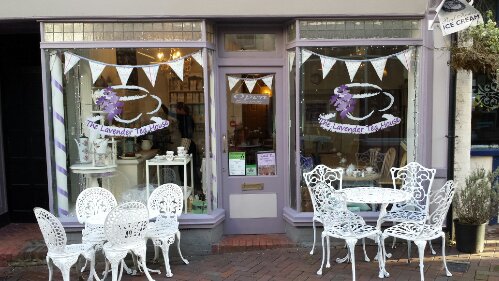
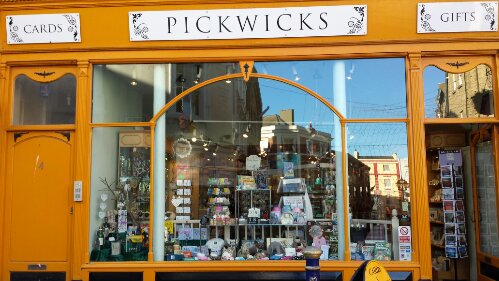
But there are signs that Folkestone is beginning to stir again. The Old High Street has undergone a makeover. One of a kind gift shops, artisanal food stores and galleries have emerged in recent years, along with a burgeoning artistic community. A handful of attractive restaurants have sprung up around town and extensive investment has been forthcoming. There may no longer be any cross-channel services, but the town’s accessibility from London and the rest of Kent has been enhanced by the arrival of a high speed rail service.

image

image

image

The jewel in Folkestone’s crown remains the Leas, once described as “indisputably the finest marine promenade in the world”, a wide clifftop walk with well tended flower beds and glorious views across the channel. On a clear day, you can almost pick out individual buildings on the French coast as you head towards the neighbouring resort of Sandgate.   Imposing old hotels speak of the resort’s former glory, no more so than the Grand and Metropole, though some are now holiday apartments.

image

Despite the loss of the ferry service and crazy golf course, as well as the diminution in the fishing trade, the pretty little harbour and adjoining Stade with its seafood stalls still retain some of the atmosphere that first captivated me fifty years ago.

OLYMPUS DIGITAL CAMERA

The arrival of the Turner Contemporary, projected rebirth of Dreamland and high profile exposure on television have given Margate a disproportionate amount of attention in recent years. And that really ought to bear fruit in time. Broadstairs and Whitstable, with their attraction for more affluent Londoners, are already bucking the trend of decline.

But the Guardian newspaper’s recent rating of Folkestone as one of the world’s best holiday destinations in 2014 may serve to redress the balance somewhat. Those heady days of the past will never return, but Folkestone is showing signs that it may have a future.

Now, if they could only rebuild the Rotunda and resume playing county cricket there ………….


(more…)

Read Full Post »


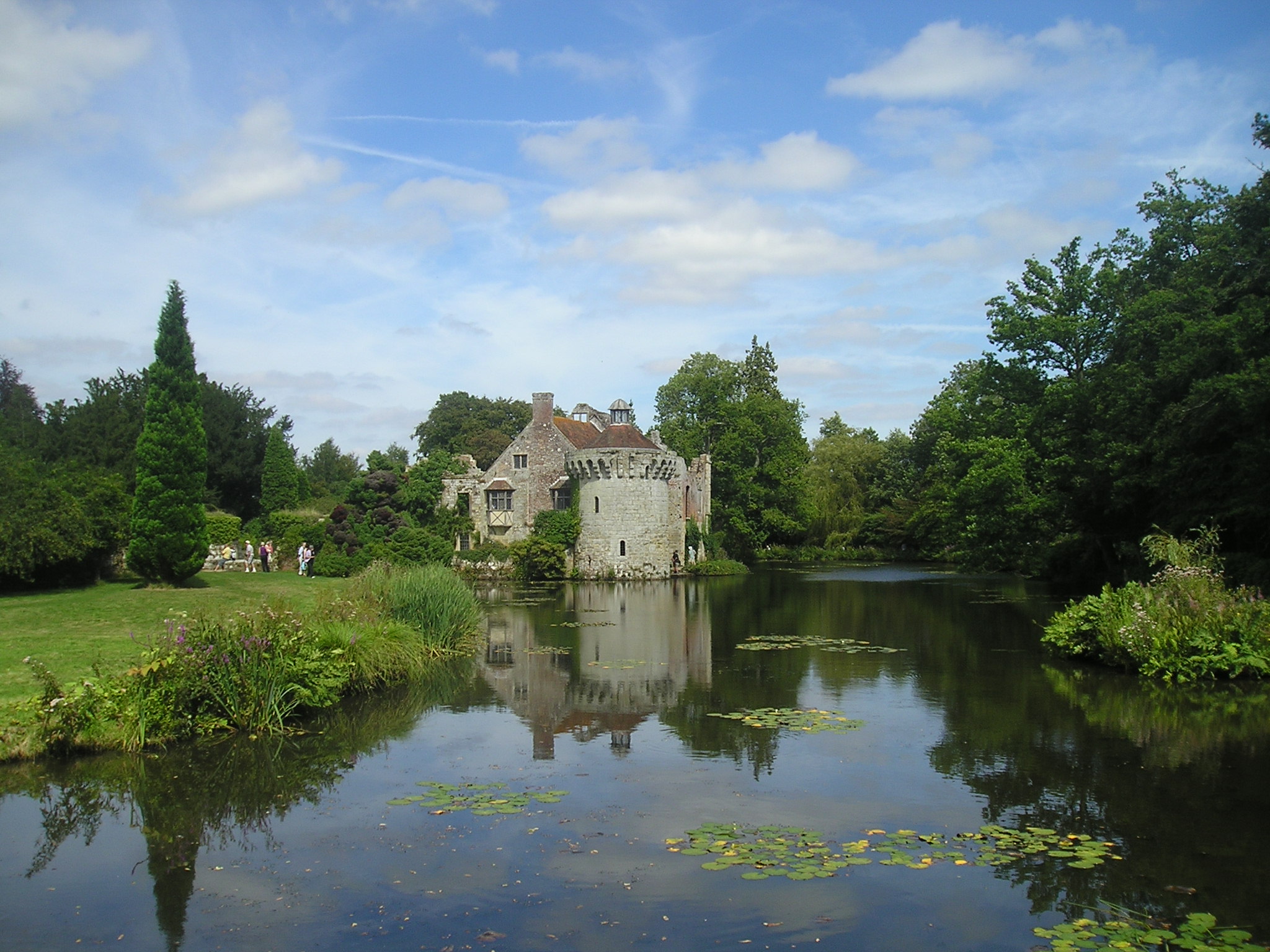
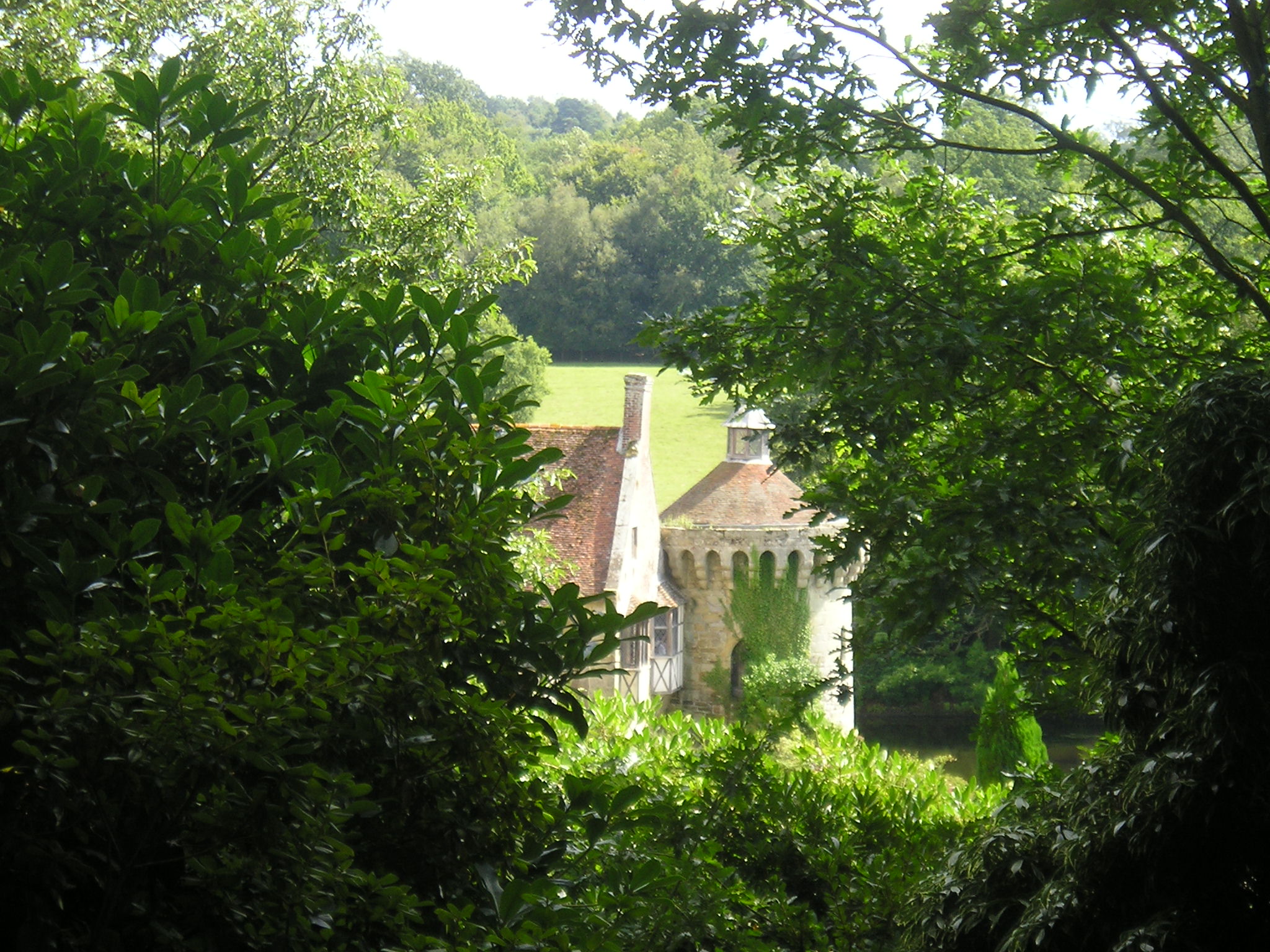
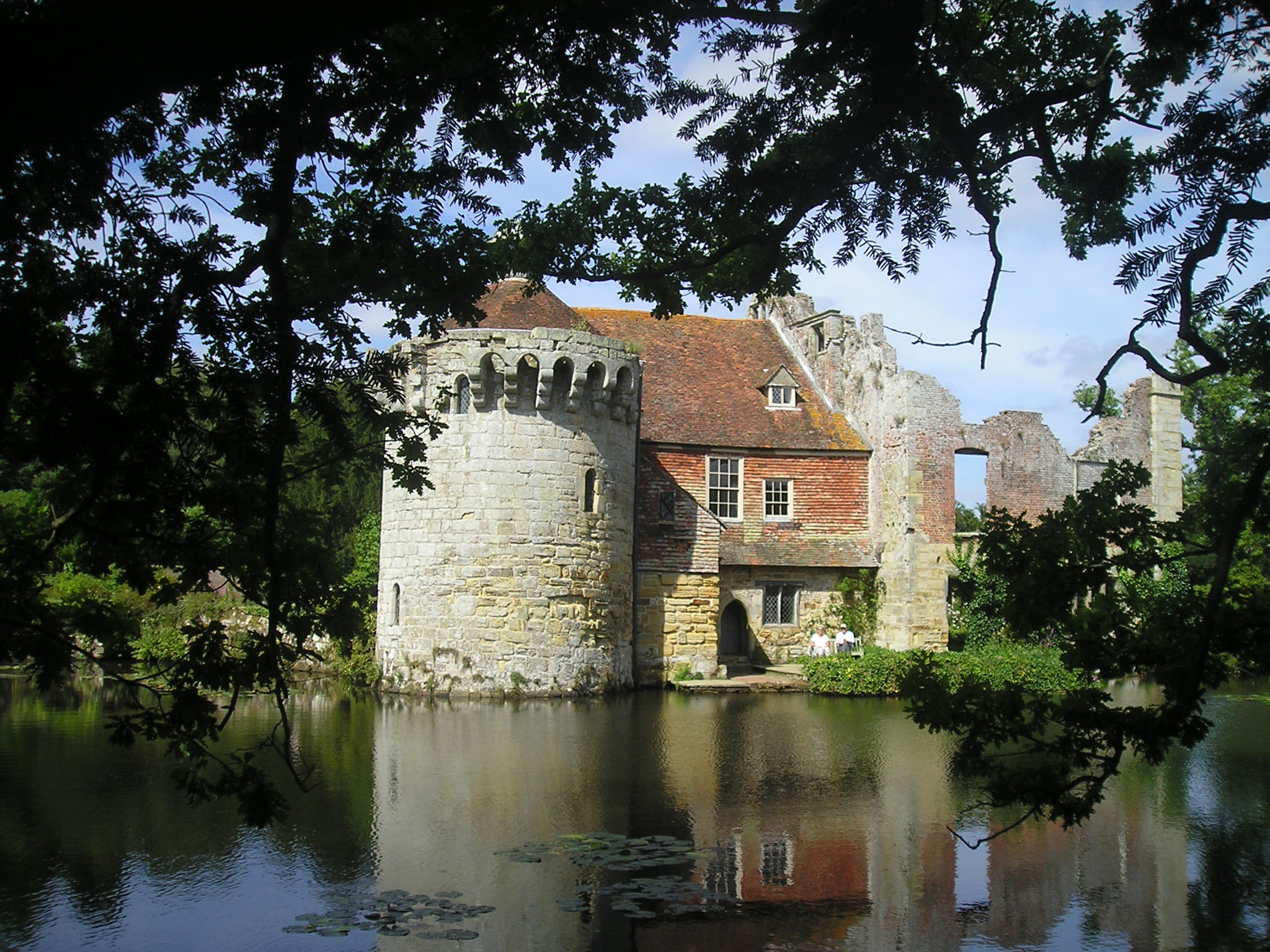
My home county of Kent has some of the finest castles and country houses in Britain. But my personal favourite is Scotney Castle near Lamberhurst on the Sussex border, a privately owned property for more than 600 years before it was bequeathed to the National Trust in 1970. The moated manor house’s ruins, with the small, lily-pad strewn lake caressing its walls, are the epitome of English romanticism.

I hope you agree.

OLYMPUS DIGITAL CAMERA

OLYMPUS DIGITAL CAMERA

OLYMPUS DIGITAL CAMERA

OLYMPUS DIGITAL CAMERA

OLYMPUS DIGITAL CAMERA

OLYMPUS DIGITAL CAMERA

Read Full Post »


Born in October 1952 on the day tea rationing ended in Britain (good timing that, given my mother’s obsession – and subsequently mine – with the brew) and, as an only child, I enjoyed a happy childhood, revolving mainly around football and cricket.  I had the good fortune of growing up during the sixties, the music of which provided a thrilling soundtrack to my that period.

I attained a BA (Honours) in English and European Literature at Essex University, writing my dissertation on the novel At Swim-Two-Birds by Irish novelist and journalist Flann O’Brien.  This was followed by studying towards an MA in Anglo-Irish Literature at Leeds, majoring on James Joyce, Samuel Beckett and W.B.Yeats, including writing a treatise on the novels of Patrick Kavanagh (The Green Fool and Tarry Flynn).

OLYMPUS DIGITAL CAMERA

Eventually, I exchanged academia – via portering in a major department store and “making” sultana cookies and other exotic (for the time) biscuits – for the last refuge of the modern scoundrel and joined the UK civil service in March 1980.  I subsequently spent 29 years in the Department for Work and Pensions and its many antecedents, latterly in human resources and diversity before poaching early retirement in March 2009.

OLYMPUS DIGITAL CAMERA

My interest in the subject led me to undertake a Level 3 BTEC Advanced Certificate in Travel and Tourism via home learning.  I completed the course in December 2010, achieving a Distinction in all three elements – understanding the travel and tourism industry, tourist destinations and tour operations.  My ambition now is to concentrate on writing and, hopefully, to publish on a regular basis.  I have been focusing principally on my passions of San Francisco, cricket and travel, though I am not able to resist on pontificating on life in general from time to time.

OLYMPUS DIGITAL CAMERA

This blog has now been active for nearly two and a half years. But I want to do more than that. At present, I am in the final throes of co-writing a book on the centenary of Kent County Cricket Club’s fourth County Championship title in eight years, and future writing projects include a series of short stories based in San Francisco and an expansion of our U.S. road trip diary of September / October last year.

P1020029

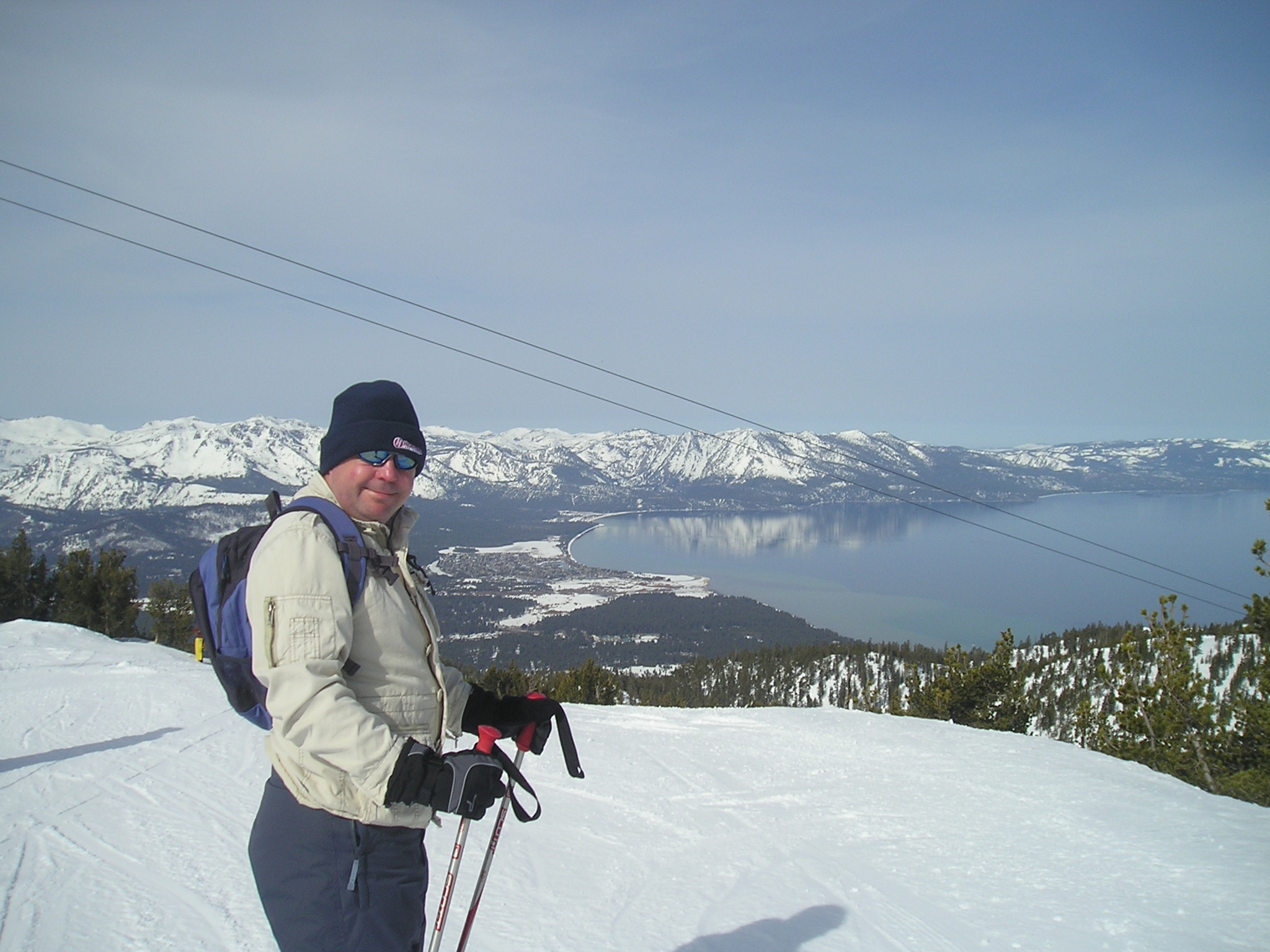
Aside from the above topics, my other serious interests are walking, skiing, baseball (a fan from afar of the San Francisco Giants), association football (a life long fan of Gillingham), music (principally folk, blues, country and West Coast rock borne of the original Summer of Love in 1967), going to the theatre and eating out.

I feel extremely grateful to have the health and energy to pursue all of those interests, as I am also for the support and encouragement of my wonderful wife Janet whom I married in Vegas on Halloween 2009 after 27 years together (that makes it 31 now!).

Read Full Post »


It is 10am on a bright, brisk market day morning in March in a town in the south of England.  I order a decaffeinated skinny latté from an eager young man in the one cafe that does not reek of grease, and take a seat outside.

On his way out to me the trainee barista trips over a discarded beer can and spills the coffee over the pavement.  He apologises and returns to mop it up, but fails to offer me another cup, and then is visibly irritated when, wholly unreasonably, I request a fresh one. That said, he brings a prompt replacement, seasoned with a further apology.

From the doubtful comfort of my three and a half legged plastic chair I scan the establishments around me – “Nails Palace – Professional Nail Care for Ladies and Gentlemen”, “Cash Generator – the Buy, Sell and Loan Store”, “Tanning Heaven”, “Tattoo xxxxxx Ltd”, “Cheques Cashed”, “We buy Gold – any Condition”, “Residential lettings”, “Betfred” bookmakers and the “Community Store”, run by the Salvation Army and offering “Heart to God, Hand to Man”.

“Eel Pie Island”, which specialises in  all day breakfasts, announces itself in large, yellow lettering to be a “Caf’e” (I doubt the apostrophe police saw that one coming). Upstairs is a dental surgery which, somehow, seems appropriate.

The “Hot 4 U Pizza, Chicken and Kebab” shop is closed, victim of too much competition in the fast food field, proof that you can have too much of a good thing. Breakfast for those not crammed into McDonald’s consists of sausage and bacon rolls and fresh cream puffs. Obesity seems a badge of honour.

The traditional gentleman’s barber shop is missing his iconic red and white striped pole. Nothing for the weekend here.

The local pub is also boarded up. A ragged, handwritten paper sign flaps in the light breeze. Somebody has inserted an “i” between the words “to” and “let”.

The compensation culture is in full swing. The frontage of the “Claim Shop” is emblazoned with a huge sign proclaiming “have you been involved in an ACCIDENT or suffered an INJURY through no fault of your own!!!”.

A council street cleaner fights a losing battle with bottles, cans, and food packaging, strewn over benches and pavement.  On the opposite side of the road a modern day Steptoe proceeds in stiff but stately fashion along the pedestrianised street, peering professionally in all directions for unwanted morsels.

The air reverberates in a veritable Babel. English is spoken, or rather shouted, liberally infused with swear words, but it is no more heard than is Polish, Russian, Arabic, Turkish or Punjabi.

Young gap-toothed men wearing baseball caps or hoods and gripping cans of super strength, but astonishingly cheap, lager, swagger past, trailed by tattooed teenage mothers already carrying their next child, barking at their toddlers who are committing the heinous crime of  being  ……………….. children.

As the weather is uncommonly mild, plain white vests, accompanied by sometimes matching sweat pants, appear to be the dress code of choice, at least for the men. Whilst this might be an attractive look on a young man with taut muscles in the right places, it does not sit well with balding, unshaven, middle aged men, stomachs bursting from a diet of gassy beer and burgers. Bare arms are bedecked with body art depicting snakes, eagles and pseudo-oriental slogans.

Their Staffordshire bull terriers, acquired for menace, encircle each other, doing nothing more threatening than sniffing at each other’s private parts.

And yet, I am observed quizzically, even suspiciously, by passers-by with my fancy coffee, book for reading and, especially, notebook and pen desperately trying to capture the vivid images around me.

The young mums congregate outside Gregg’s and Iceland to share a cigarette, compare frilly pram and buggy decorations and show off the clothes they have just bought for Bailey and Madison in Primark. As the conversation turns to X Factor and piercings, their progeny become increasingly testy, provoking screeching admonitions to “shut up…… now”.

Shoppers seek bargains in the many charity shops, notably Scope, Cancer Research, Oxfam, British Heart Foundation and Demelza (for children in hospice care), but the upstart 97p conv£nience store has recently closed, sent packing by the more established and cavernous 99p emporium.

In the bustling market the stalls selling inexpensive imitation leather jackets, shell suits and sweatshirts are doing a good trade.  Following close behind are those offering household goods and toys, jewelry, watches, mobile phones, rugs and carpets, curtains, handbags, purses and luggage – the selling point in every category being cheapness.

Country crooners from the fifties dominate the airwaves from the two stalls specialising in CDs and DVDs. A local driving school and the RAC try to rein in passers by, but most people here do not drive. Surrounded by fast food outlets, the centrally positioned greengrocer is still highly popular, as is the plant stall.

The meat wagon man is not so successful despite his saucy entreaties to “come on girls, don’t be shy, give my lovely meat a try”. A further invitation to feel his pork loins goes similarly unheeded. Despite his impressive discounts, a middle aged couple try to barter with him to no avail – another sale lost.

An octogenarian sea dog (this is a naval town, after all), dressed in a tweed jacket and waistcoat that displays several medals, shuffles past pushing a shopping trolley. Woe betide anyone who gets in his way, for a wheezy verbal volley and a clip from his walking stick will befall them. He sports a flourishing white beard reminiscent of Uncle Albert’s in the TV sitcom, Only Fools and Horses.

A slowly warming sun glints through the trees as I drain my latté and head for The Works in the hope of picking up a bargain book to add to the already overstocked shelves at home.

Florence this is not. Nor is it Bath or Edinburgh. But it is a area of contrasts. Despite having some of the worst school exam results in the country it boasts four universities, and the local sports centre has been refurbished and rebranded as an Olympic training venue.

If the picture I have portrayed here only depicts one side of that, it is because that is what I see on this March Monday morning.

And, as someone infinitely more eloquent than I said “it’s alright ma – it’s life and life only”.

Read Full Post »


Recently my wife and I did some house sitting for friends. It had been a welcome short break for us too – leaving our three bedroom terraced house in town for a spacious five bedroom detached cottage deep in the Kent countryside, with ten acres of land and nothing on the horizon but trees and the occasional oast house.

Our duties had not only been confined to the “country pile”, but a minor menagerie too. Firstly, we were asked to attend to the needs “on demand” of the family cat, a deaf, sixteen year old with the onset of dementia and the personality of an East End mobster. Then there was the cacophonous collection of ducks, moorhens and pheasants that hung out together around the pond, and the mass of birdlife, including woodpeckers, assorted tits and finches, wood pigeons, thrushes and others at their feeding station.

And finally, there were two shetland ponies, one palomino and the other chestnut, whom, for the first 24 hours, we were responsible for steering into their stables in the evening and out of them into the field the next morning.

Originally, we had been expected to look after the elderly black labrador dog too, but she had been unwell of late and travelled away with her owners. Disappointing though this development was, it did allow us to walk a lot further, which we took full advantage of.

But let’s return to the cat. We were told to feed him “when he whines”. That sounds easy – until you discover that he whines at least once an hour as he stands over a dish that, a short while ago, was gleaming with cat food, steamed with such delicacies as tuna, salmon and sardine. Periodic bowls of prawns completed his exotic, and clearly delicious, diet.

Once replete, his “demand” then extended to standing by the back door, insisting, in steadily increasing volume (remember, he is deaf), that, despite the fact that he could use the cat flap designed for the purpose is located in the front door, he be let out via that route (only to return by the cat flap, of course).

His life appears to be a constant cycle of eating and sleeping – which he did for hours on end, usually curled up by the side of the sitting room T.V.  Just occasionally, he would ordain that he be stroked for a few moments, but not for long enough to engender sentimentality or diminish his street credibility. And, after all, we needed to know our place.

Now, I know his alternately independent and needy manner is only his cat nature, but it was the way in which he articulated the latter that was particularly alarming, and not a little scary. Dependent, I presume, upon his level of dissatisfaction at being ignored when he “whines”, he has an extraordinary range of sounds, from the traditional miaow, to a cute, lamb-like bleat, a remarkably human conversational tone and, ultimately, a hair-raising growl – the last usually doing the trick (crikey, where’s his food?).

Despite repeated staring competitions, and raised voices on either side, I’d like to think that, by the end of the weekend, whilst not becoming great friends, we had at least arrived at a tenuous understanding, though which of us was David Cameron and which Boris Johnson, I would not presume to guess.

And then there were the ponies. As their stables had already been “mucked out”, and their food and water prepared, our duties on the first evening were merely to guide them from the field into their respective stables, with the reverse operation the following morning. Now I’ll confess that we were not a little anxious about this.

Would they – especially as were strangers – take this opportunity to make a run for it when that gate was opened at 5.30pm? Or would they attack us, annoyed that they had been obliged to wait so long for their evening meal (despite the fact that they had each eaten a ton of grass during the day)? Or, perhaps, even worse, and I acknowledge that this would have been the least likely scenario, would they refuse to budge at all?

So we prepared very carefully for the ordeal.

Gate to outside world and freedom firmly closed?

Check.

Stable doors open to receive residents?

Check.

Route to compost heap cut off by strategically placed wheelbarrow (and male human of advancing years)?

Check.

Here goes – gate to field opened.

What happened there?

Within two seconds, and in a whirl of dried mud, hay and galloping hooves, they were ensconced in their respective stables, muzzles in their buckets of feed, hay and apples, oblivious to our concern as we picked ourselves up from the stony path.

For details of the following morning’s similar stampede, just read the foregoing account in reverse order.

Piece of cake then – or, perhaps, bowl of hay might be a more suitable metaphor.

The entertainment provided by the animals aside, it was a glorious weekend with warm spring sunshine throughout.

Fine weather helps of course, but these few days have confirmed that country life agrees with me. The only sounds were delightfully natural ones – the ducks greeting the dawn which, unfortunately, for some, appears to have broken at 2am, the diversity of birdsong, the calling of woodpeckers across the valley, and even the whinnying and kicking from the stables as the ponies became impatient to be released from their overnight custody.

As I finish this piece a pheasant scoots across the meadow in a hilarious audition for the role of the roadrunner in the re-creation of the Looney Tunes and Merrie Melodies cartoons. A squirrel clambers clumsily onto a bird feeder, only to be ganged up on by a crowd of coal tits. I will, however, gloss over the shenanigans in the vicinity of the pond where three male mallards chase and ultimately pin down a single female. Spring has undoubtedly sprung.

I would write more but I can hear the cat whining again.

Read Full Post »


Anyone with the merest acquaintance with this blog will observe a strong bias towards the city of San Francisco in it. If the heading of “A Golden Gate State of Mind” and accompanying photograph did not immediately give it away, the preponderance of posts on the city certainly will.

So what, you ask, is the attraction of what San Francisco based Beat poet Lawrence Ferlinghetti called “this far-out city on the left side of the world” to a cricket loving, warm beer drinking Englishman?

Well, that is a very good question (I do wish you hadn’t asked it).  It’s not sufficient to say it is because I “love” it.  After all, there are many things that I love – my wife, my father, my football team, my favourite rock band, skiing, fish and chips, and the BBC Breakfast presenter, Susanna Reid (I’d be grateful if you didn’t tell my wife about that one) – the list goes on.

But “love” – like “great” – is an overused – or rather over abused – word today. In fact, I may have proved this conclusively in the preceding paragraph. Everyone will have places that they “love”, whether it be Paris, Rio de Janeiro, New York or even Leysdown-on-Sea. Few of us would deny “loving” their favourite holiday haunts, particularly if they return to them time and again.

So I think you deserve a more substantial explanation than that. After all, it took me nearly 43 years to finally feast my hungry eyes on the Golden Gate Bridge and Alcatraz, even though I had venerated the city from afar for nearly three decades before that. So what do I find so special about it now?
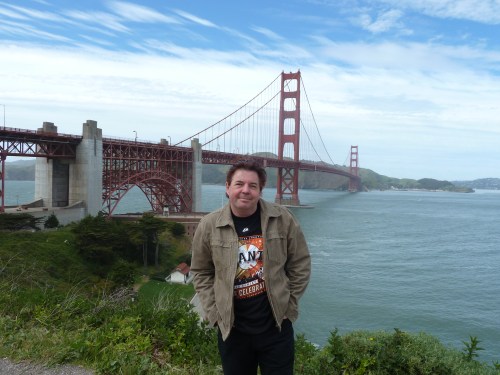
Before I answer it – and I’m not prevaricating, honest – I think it is worth considering what it is about a place that makes us become attached to it. After all, isn’t it nothing more nor less than a collection of natural features and man-made buildings?

I suppose that many of us, including myself, claim that we “love” the place in which we were born and / or raised. It is this emotional attachment, linked to childhood memories, that, I believe, is the crucial factor here. And the acknowledgement of that attachment may not manifest itself without the aid of age and distance.

“Absence makes the heart grow fonder” and “there’s no place like home” may be cliches but they still have a sturdy ring of truth. James Joyce – that incomparable chronicler of place – could not, as he himself admitted, have written so profoundly or entertainingly about Dublin had he stayed there instead of leaving it to work and live in Trieste, Zurich and Paris.

My last post (www.tonyquarrington.wordpress.com/2012/02/08/walking-with-our-mutual-friend/) conveys my affection for my own home town of Rochester in Kent, and an earlier one (www.tonyquarrington.wordpress.com/2011/10/03/to-my-home-county/) describes the pride I have in being a Man of Kent, a grateful product of its rich embrace of coast and countryside.

So our attachment to place begins, as with so many of our passions, with our childhood experiences.

But I digress. We’re not in Kent(as) anymore, Toto. You want to read about why I “love” San Francisco. Well, I presume you still do or you would have given up by now. So here goes.

I could cite the stunning beauty of the bay and its glittering “bracelet of bridges”, the gorgeous skies, the cute, clanking cable cars, the abundance of fresh seafood in its classy restaurants, the diversity of its music and theatre scene, the richness of its ethnic neighbourhoods, the thrilling exploits of the Giants and 49ers, and, of course, its renowned tolerance and reputation as a haven for the otherwise discarded and disaffected – all of these are part of it.

However, thousands of other visitors have been equally captivated by most, if not all, of these qualities. It is not for nothing that many leave their heart in San Francisco.  But their “love” is invariably on loan, perhaps until the next trip or another geographical gigolo snatches their affection. Mine is permanent, organic, forever.  

So what is it about this place that has lured this individual into spending what time he can’t reside in it dreaming and writing about it?  Why has this place gotten hold of my heart” where other cities I delight in visiting, such as Venice, Florence, Barcelona, Dublin and New York have not? And why, with relatively little time left, and  just as I am about to resolve to go somewhere else, does it sing its siren (or is that sea lion) songs to me, steering my boat back into the dock of the bay?

For much of my life it was a platonic, long distance affair.  It started with the Summer of Love (1967) when San Francisco snared the imagination of many people across the globe, including one 14 year old English schoolboy an entire continent and ocean away. Intrigued by the love and peace mantra, he was inspired by Scott McKenzie and the Flowerpot Men to commit fashion suicide by wearing paisley shirts and, on at least one occasion, flowers (almost certainly plastic) in his hair, to football matches that year – fortunately, it pre-dated the skinhead era or he may not have been given such an easy ride!

Three years later, the music of the Bay Area, in the form of the Grateful Dead, Jefferson Airplane and Quicksilver Messenger Service began to fill my head. “Everyone’s favourite city” had become the epicentre of my cultural universe. However, another two and a half decades passed before I set foot on San Francisco’s ever shifting soil.

And, for me, Haight-Ashbury, from whence that dazzling music came, still represents, more than any other location in the city, MY San Francisco, and where I gravitate to on every trip, however short. Free concerts by the Dead on flat bed trucks in the Panhandle and Golden Gate Park, tie-dye shirts and the pungent waft of marijuana smoke remain enduring images of that time.

And there is just enough of that atmosphere – at stores like Positively Haight Street, Haight-Ashbury T-shirts and Pipe Dreams, as well as Sami Sunchild’s Red Victorian (www.tonyquarrington.wordpress.com/2012/01/06/great-san-franciscan-characters-14-sami-sunchild/) – to keep me enthused as I saunter down Haight Street today.

That is not to say that other parts – the Tenderloin and Civic Center no less than the trendy neighbourhoods and tourist honeypots – are not equally “real” embodiments of the modern city, all too real some might say. Though I embrace them all, the Haight remains the heart of my San Franciscan experience. Its only failing is that it does not aford bay views!  Or does it? I really must check on my next trip!

Another earlier post (www.tonyquarrington.wordpress.com/2011/10/27/my-san-francisco-top-ten/) summarises those parts of the city that captivate me most, so I will not bore you by repeating them here.

It’s not just the physical sights and sounds that appeal, but the literature (Armistead Maupin, Jack Kerouac, Ferlinghetti, Dashiel Hammett, Jack London) and history (the Barbary Coast, the earthquake and Great Fire, the cultural movements of the fifties and sixties) that fascinate me too.  And has there been a better chronicler of a city anywhere than Herb Caen(www.tonyquarrington.wordpress.com/2011/02/07/great-san-franciscan-characters-6-herb-caen/), renowned columnist of the San Francisco Chronicle?

Indeed, it was Caen who wrote half a century ago in one of his many ruminations on what made a San Franciscan:

I don’t think that place of origin or number of years on the scene have anything to do with it really. There are newcomers who become San Franciscans overnight – delighted with and interested in the city’s traditions and history. They can see the Ferry Building for what it represents (not for what it is), they are fascinated with the sagas of Sharons, Ralstons, Floods and Crockers, they savor the uniqueness of cable car and foghorn. By the same token, I know natives who will never be San Franciscans if they outlive Methusalah. To them a cable car is a traffic obstruction, the fog is something that keeps them from getting a tan, and Los Angeles is where they really know how to Get Things Done.

I like to think that I fit into Caen’s San Francisco “newcomer” category, though I’ll settle for being the “sophisticated tourist” who is “charmed and fascinated” by the city.

I have used the word “home” in a number of features on San Francisco, and that, I think, is the key here. That is not to say that it replaces the town in which I was born and raised – though, equally, it might – but rather that the city engenders those same feelings, not just of comfort and security but also of confidence and pride that allows me to engage with it on all levels. Venice and New York do not. Nor even does “dear, dirty Dublin”, despite my Irish ancestry.

Back where we started then.

And my wife and I have deliberately fostered this feeling in recent years where, by staying in apartments in different neighbourhoods – Hayes Valley and North of the Panhandle, and for our upcoming (ninth) visit, Noe Valley – we aim to “live like locals”, whilst continuing to take in the traditional tourist sights too (our stays are still too short to omit them, even if we wanted to). It is another of San Francisco’s virtues that we can do both.

How many of us can say that anywhere, at least beyond the place in which we live, that we can call it “home”?

Do you have any place that exercises that same grip on you?

I’ll end with Herb Caen again:

thank God or Allah or whoever it was that blessed this small, special, annoying, irresistible place at the tip of a peninsula and the end of the world.

Read Full Post »


You may be familiar with Mr Jingle’s assessment of Kent in The Pickwick Papers: “Kent, sir – everybody knows Kent – apples, cherries, hops and women”. Although the abundance of the first three may have been diminished in recent times (being a happily married man I could not possibly comment on the fourth), this still holds true to a great extent.

An alternative definition that I would subscribe to might be “coast, countryside and cricket”.  It is certainly a triumvirate of glories that make me a proud product of its soil. That pride has been rather dented over the summer months with the dismal displays, both on and off the pitch, of the county cricket club. The cradle of the game, home to some of its greatest ever players and with a tradition of playing cavalier cricket in front of large festival crowds in beautiful surroundings, now reduced to a laughing stock in the cricketing world.

Rising debts, the result of a succession of poor financial decisions, a stalled ground redevelopment programme at its Canterbury headquarters, poor communications with its members and supporters and woeful performances on the field leaving the team second bottom in the county championship, all combined to make the season one of the worst in the modern Club’s distinguished 141 year history.

And in the past few days, the coach and two of the senior batsmen have all departed, leaving the team desperately short of both numbers and experience. With doubts remaining too over whether the player of the season will get the new contract that he deserves, that situation is likely to get worse before it gets better.

But in the past week, I have sought solace in some of the county’s many other delights – country walks through the full to bursting apple orchards of haunted Pluckley and the beechwoods and meadows of handsome Harrietsham, a stroll among the bookshops in civilised Tunbridge Wells, and Kentish beer and seafood at the Broadstairs Food Festival, overlooking the packed beach of Viking Bay, basking in the baking October heat and looking like a scene out of the nineteen fifities.

Though I currently live in the “compost heap” of the “Garden of England”, I am no more than an hour and a half, by car, bus or train, from any of its attractions – the castles of Hever, Scotney, Leeds and Rochester, the gardens of Sissinghurst and Emmetts, splendid houses like Groombridge Place, Finchcocks and Knole and what J.M.W Turner called the “loveliest skies in Europe” along the Thanet coast. Throw in two world class animal parks dedicated to conservation, the White Cliffs of Dover, otherworldly Romney Marsh, the rolling North Downs and atmospheric Wealden woodland – the list goes on (my apologies to any favourites of yours that I have missed out).

I count myself lucky in having been born, educated and, after a brief but largely loveless affair with other parts of England, lived in this wonderful county. I’ve been equally fortunate to have grown up hearing and reading  of the exploits of Woolley, Ames and Freeman and watching Cowdrey, Knott and Underwood in their pomp.

But whilst the experience of the cricket, at least at the professional level, has sunk in the past couple of years, there are still those other two features, and much more, to fall back on in the coming months.

Read Full Post »


The great German philosopher Nietzsche said it induced all truly great thoughts, Dickens felt it was the only thing that prevented him from exploding and perishing, and Ellen DeGeneres said her grandmother had taken it up at the age of 60 and now, at 93, nobody “knew where the hell she was”!  Moreover, it can boast almost two and a half million “likes” on Facebook.

If you haven’t already guessed, it is walking – simple, old-fashioned, placing of one foot in front of the other, the “first thing an infant wants to do and the last thing an old person wants to give up”.  It is the  most perfect form of exercise – health giving, stress busting, sociable and sustainable.   It is no longer the sole preserve of gaggles of retired teachers and postmistresses hiking from pub to pub, though organised Ramblers trips remain popular, but it has increasingly become the focus for major fund-raising events (witness the many “walks for life” around the globe), and many couples and families view it as a key part of their social life.

It may surprise readers who cannot buy their daily paper from the corner shop without getting into the car that walking is by far the most popular outdoor recreation in the UK – the proliferation of guide books on the shelves of your local WH Smith store is striking evidence.  Even in the home of the enemy  – the internal combustion engine – the number of walking trips has more than doubled, from 18 billion to 42.5 billion, in the last 20 years.

Over the past couple of years my wife and I have, armed with one of those guide books, increasingly devoted our Sundays to a countryside or coastal walk of between five and ten miles in Kent.  Lovely scenery – oast houses, meadow flowers, orchards and hedgerows –   accompanied by birdsong and captivating glimpses of wildlife, all richly compensate for the occasional hardships of mud, barbed wire fences and impossibly steep stiles. A visit to a local hostelry or tea rooms, either en route or at the end of the walk, completes the perfect afternoon. 

Yesterday was a case in point when, setting off from Frittenden church, we took a seven mile walk in the surrounding countryside, the mid point of which was the National Trust owned Sissinghurst Castle, the former home of writer Vita Sackville-West.  Here we sat outside the newly refurbished Granary restaurant with a coffee and a scone before taking a stroll around the acclaimed gardens, designed by Sackville-West herself, and then resuming our adventure. 

No walk would be complete without at least one unplanned detour, adding to the challenge and provoking a temporary raising of voices whilst the map is turned every which way and the book’s author is cursed for his imprecise use of the language.  But we haven’t got completely lost yet!

Walking in the countryside also provides the perfect environment in which, free from the noisy distractions of TV, neighbours and traffic, we can chat calmly and clearly about our plans –  the decisions to get married after 27 years and for me to take early retirement were both made on a cold February afternoon in a muddy field halfway between Shoreham and Otford!

Cynics will accuse me of over-romanticising the subject, of portraying a rural idyll that no longer exists (if it ever did), to which I plead not guilty.  Walking is the perfect antidote to today’s rushing, thoughtless world and an refuge, if only a temporary one, from its bombardment. 

On a more pragmatic level, it supplements the more frenetic gym regime and helps to prepare us both physically and mentally for the challenge of those lung bursting San Francisco hills and Lake Tahoe ski trails!

So, if you haven’t already, try it!  Approach it with an open mind and you might just find it’s the perfect workout and therapy.

Read Full Post »

« Newer Posts