Feeds:
Posts
Comments

Posts Tagged ‘Kingsnorth Gardens’


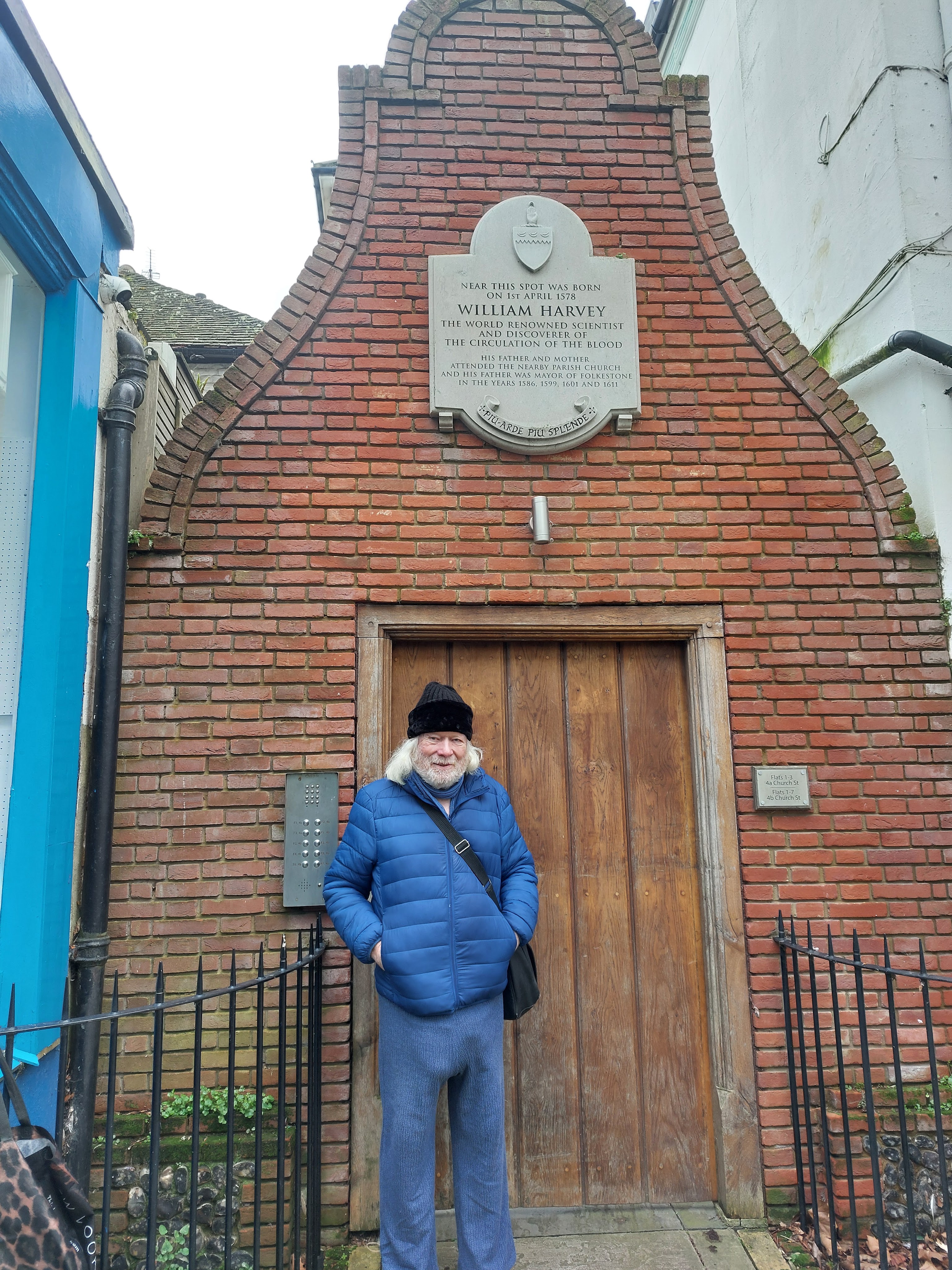
One of the most familiar figures in Folkestone town centre, with a shock of white hair sprouting out of his hat, and a bag of papers on his arm, is an octogenarian Irishman who reluctantly moved here in 1963 and never left.

The first time I met this man was shortly after I moved to the town in late 2016. I had decided to offer walking tours and was anxious to consult as many people as possible, not only to assess the interest in the project but also to tap into the experience of those who had previously done this.

The name that kept coming up as the best person to speak to was Eamonn Rooney, whom I was already aware of through buying some of his books on the history of the town.

But there was one snag – he was not the easiest person to track down as he was not on social media. But I managed to find him in his favourite coffee shop where he went every morning. He was sat in a corner of the restaurant with mug, pen, paper and books spread across the table.

And now, almost a decade later, I sat down with him again, in that very same cafe, on the eve of his 82nd birthday, to chat with him about his long association with Folkestone.

Born in Newry in 1944, spanning the counties of Armagh and Down, Eamonn was an average but lazy student. It was the influence of Mr O’Neill, his English teacher, and Mr McCourt, his Art teacher, that encouraged him to take his studies more seriously, though he was later told he “would never amount to anything” by the nuns who ran the school he attended in Belfast.

It was his parents who brought the name of Folkestone to his attention. So, in the spring of 1963, he took a trip, only intending to stay for a short while.

On arriving at Folkestone Central he was struck by the flower displays on roundabouts (after all, it was “Floral Folkestone”). He was impressed with The Leas (a “pleasant surprise”) and Kingsnorth Gardens (still a “hidden gem”).

His first encounter with a Folkestone “celebrity” occurred in the photocopy shop opposite Grace Hill Library. He started talking to American actress, singer (she starred in the long-running rock musical “Hair”), and mother of Mick Jagger’s son, Karis, Marsha Hunt, who was sending a fax (remember those?) to the USA. She said that she would never be able to remember his name, so christened him the “History Man”, and thereafter referred to him as that whenever they met, usually at the supermarket or Metropole jazz club.

On the recommendation of his brother who had just been demobbed from Shorncliffe, he took a summer job, but it was as a bus conductor that he first established himself in the town, and for which he is still fondly remembered. His route for 8 years primarily covered Cheriton, Morehall and the bus station and, as a result, the rest of the town remained largely an unknown quantity for him.

Time to buy a street map!

He had been told that Folkestone was primarily a Victorian town, so had “written off” the Bayle and the Old High Street as places of interest. But one day he met the watermills and windmills expert, C.P.Davies, whom he regards reverentially to this day as the preeminent local historian, who told him that there was “a lot of history” in Folkestone with a (buried) Roman Villa, significant Anglo-Saxon heritage, not to mention an extensive military history.

That was the moment when the “History Man” discovered his holy grail, starting a decades long love affair with the Heritage Room on the first floor of the Grace Hill Library. Eamonn was devastated when Davies retired shortly afterwards.

He also fondly remembers Amanda Oates of Shepway District Council who was responsible for organising events at the Lower Leas park Amphitheatre. Since she left, the facility has been sadly neglected.

The history research was all well and good, but he still had to earn a living. After being rejected by several Park Farm factories he was offered a job at FWM Plastics, followed by Silver Spring and Portex, for whom he worked for 15 years. It was during this time there that his writing career began with articles in the company’s Blue Line magazine and then the Portex and Folkestone camera clubs. And in 1985 he founded the local history society with Charles Whitney (chair), Alan Taylor and Peter Bamford.

In the early nineties, he took a three day a week job at the much lamented Martello No.3 visitor centre with an evening security role in the Leas Cliff Hall, followed by a winter job at the seafront car park. Between 1989 and 1996 he not only performed the role of town greeter but also delivered tours on behalf of the New Folkestone Society.

But it was in 1995 that the role for which most people remember him presented itself. Shepway Council had a vacancy at the Leas Lift, a position for which Eamonn’s undoubted customer facing skills made him ideally suited. When the council relinquished the lift in 2009, he was approached by the Folkestone Estate to take responsibility through a management agreement (CIC). With Terry Begent agreeing to handle all the business affairs, they formed a “dream team” until the lift closed in 2017, and it is a matter of great sadness to Eamonn that it remains closed (though, we hope, not for much longer).

Eamonn has more stories from his time as a tour guide than I have space for. One I particularly like is when he showed an American party into the British Lion pub, and as they were leaving, was asked “hey, buddy, aren’t we going to have what you Brits call a swift half before we go”? After the obligatory few drinks, Eamonn began to thank the group for joining the tour when the same guest enquired “hey, aren’t you going to finish the tour?”. Which, of course, like any self-respecting guide, he did.  

Eamonn finds it remarkable that the young teenager who left Northern Ireland with no immediate prospects should meet an array of prominent individuals in his adopted town over the next sixty years. In addition to Marsha Hunt, these included Lord Radnor himself at his Wiltshire castle, Eastenders actress, Michelle Collins, whom he met at a BBC Wales interview, and Prince Harry at the opening of the Step Short Arch on the centenary of the outbreak if the Great War on 4th August 2014.

Eamonn has utilised his research to publish many books and pamphlets on Folkestone’s history, both on his own and in collaboration with others, notably Alan Taylor and Terry Begent. Asked which he was most proud of, he cited the history of the Belgian refugees at the outbreak of the Great War and the illustrations and text he provided for   

John Rice’s Folkestone: A Photographic Record.

And the next? Probably Stuart Folkestone.

Whatever it might be, I for one will be buying it.

Happy Birthday Eamonn, may you have any more!
Read Full Post »


Rare town of Radnor and Rotunda,
Rowland’s rock shop and remembrance;
Even on this cold February morning
You have the power to enchant;
Strange Cargo’s Luckiest Place on Earth
Is not confined to the Central station.
Newly planted winter flowers,
Primrose and snowdrop, cyclamen and crocus,
Defy the bitter wind and freezing hail
On stately Leas and Kingsnorth Gardens.

Mouldering Martello wall,
Bonaparte’s mighty adversary,
Squints out across the grey blue sea,
Searching for our Cap Griz Nezbour;
While the cliffs, slowly, surreptitiously
Slide into the stirring sea below,
Where foreign fossil hunters trip
Among the seaweed and precarious rocks,
Exposed by low tide’s obligatory return.

Opening Day still six weeks ahead, the
Harbour Arm remains a magical spot;
“Gormley” winks across the harbour entrance
At doughty mermaid on dog-filled Sunny Sands;
Cormorants, gulls and a solitary fisherman,
Usurping the space where chairs and tables
For champagne drinkers will soon occupy,
Complete this noiseless, bracing scene.

Pieces of art, products of a reimagined town,
Embellish our streets and promenades,
Making honorary Folkestone folk of
Tuttofuoco, Coley and Tracey Emin,
Wallinger, Ruth Ewan and Yoko Ono.
The Living Advent Calendar and Pride,
Triennial, Charivari and Book Festival,
All further proof of energy and wit
That far exceeds its scale and reputation.

Food town no less than Art town,
Bridge breakfasts, Brew freakshakes,
And Beano’s griddled sandwiches
Tantalise my morning tastebuds;
While Marley’s and the Cliffe, Rocksalt and Shayda’s,
Bloom’s, Luben’s, El Diamante and Conchita’s,
To name but just a tempting few,
Contend for my evening custom.

More than half a century your admirer,
Even through the tired, toiling times;
Recently reunited in joy and wonder,
I feel blessed to account you now my lover.

Read Full Post »


That may not strictly be true.

But it’s how it should work out.

The majority of my summer holidays between the ages of ten and eighteen (when I became too cool to hang on to my parents’ swimsuit tails) were spent in the once fashionable seaside resort of Folkestone in Kent, a seagull’s glide along the coast from the fabled White Cliffs of Dover.

Although there was only one small, inevitably packed, patch of sandy beach along its largely pebble and shingle seafront, the magnificent Rotunda amusement arcade, fringed by fairground rides, putting green,  boating lake and swimming pool, kept a young boy and his cousins handsomely entertained for two weeks every August.

OLYMPUS DIGITAL CAMERA

Just occasionally, the vacation coincided with cricket at the Cheriton Ground where the county team hosted opponents from what appeared then to be exotic, distant places named Derbyshire and Northamptonshire.  My parents would install me in the stand around 10am and go off to do whatever it was they did while, equipped with sandwiches, suncream and scorebook, I drooled over the godlike exploits of Cowdrey, Knott and Underwood. The sun always seemed to shine and Kent always seemed to win, though I’m not convinced that the history books would corroborate either assertion.

But I don’t care – I was in Heaven.

In the absence of cricket I could be found staggering around the bracing pitch and putt golf course on the windswept cliffs overlooking the small but bustling harbour, where saucers of fresh cockles and whelks were in abundant supply. If the cliff top links seemed too challenging, a round of crazy golf could be had on The Stade, the narrow strip of land between harbour and sandy beach. The family that ran our bed and breakfast, who went by what, to a ten year old in 1963 (and probably one in 2016 too), was the hysterically funny name of Clutterbuck, owned the shop at the beach end.

OLYMPUS DIGITAL CAMERA

Finally, there was a daily ferry service to Boulogne-sur-Mer in Northern France, where I spent my first day abroad. Unfortunately, my recollections of a youthful life on the ocean wave have more to do with leaning over the side of the boat than tucking into a full English breakfast in the café. It was a few more years, therefore, before I could indulge in what became lifelong passions for Brie and Roquefort cheese and French wine.

Folkestone may not have enjoyed the cheeky, “kiss me quick” ambience of Margate or Southend, but I loved its quieter, more refined atmosphere. My parents even spoke on occasion of retiring to the resort but, sadly, it never happened – and with my father’s recent death, never will. I’m comforted, however, by the thought that the last break they shared together was in their favourite location.

And now my wife and I have, or will soon have, means, motive and opportunity to live that dream ourselves. We have been frequent visitors to Folkestone and the neighbouring Kentish seaside towns of Margate, Ramsgate, Broadstairs, Deal and Whitstable in recent years, and enjoy each one for its particular attractions and atmosphere.

OLYMPUS DIGITAL CAMERA

When it became apparent that my father’s life might be approaching its end, I asked her which resort she would like to make her home should circumstances one day permit. To my surprise and delight she replied, without hesitation, “Folkestone”.

So now we have the small task of selling two homes in Medway and buying a property on the coast. It is a slightly daunting, but undeniably, exciting prospect. It might be fanciful to think that, by mid to late summer, we will be opening our curtains and shouting “bonjour” to our French neighbours across the English channel every morning.

But it won’t be for want of trying – even foreign holidays this year might need to take a back seat.

So, apart from the obvious charms that childhood still weaves, what is it that lures us to Folkestone?

OLYMPUS DIGITAL CAMERA

After all, the past forty years have seen the town, in common with many other resorts around the British coastline, decline dramatically as a holiday destination as people took advantage of greater leisure time and resources to travel further afield. The rotunda and surrounding attractions were demolished, the lively, cobbled Old High Street that winds up to the modern town centre fell into disrepair and many of the businesses dependent upon holidaymakers closed.

image

Gone were many of the shops selling postcards, beach balls and buckets and spades. Gone were the traditional tea rooms and fish and chip restaurants. And gone was the shop with the big picture window at the top of the Old High Street through which children and adults alike gaped in awe at sticks of Folkestone rock being made.

But, with extensive investment, there have been signs in recent years that Folkestone is beginning to stir again. The Old High Street has undergone a makeover. One of a kind gift shops, artisanal food stores and galleries, and attractive restaurants have emerged, along with a burgeoning artistic community.

OLYMPUS DIGITAL CAMERA

There may no longer be any cross-channel services, and the former harbour railway station may, for now, remains overgrown with weeds, but the town’s accessibility from London and the rest of the county has been enhanced by the arrival of a high speed rail service. And, of course, it is home to the Channel Tunnel and the swiftest escape to the continent.

OLYMPUS DIGITAL CAMERA

The East Cliff beach has been re-branded Sunny Sands and is as rammed with humanity as ever on a warm day. There are few better places to play beach cricket when the tide is out.

OLYMPUS DIGITAL CAMERA

And, last summer, the Harbour Arm, after years of abandonment, re-opened for several weekends with music, food and drink decorating its bracing promenade, providing “new” thrilling vistas back across the harbour. Currently closed for the winter, it is scheduled to resurface full time in May 2016.

OLYMPUS DIGITAL CAMERA

OLYMPUS DIGITAL CAMERA

Our permanent residence could not have been better timed.

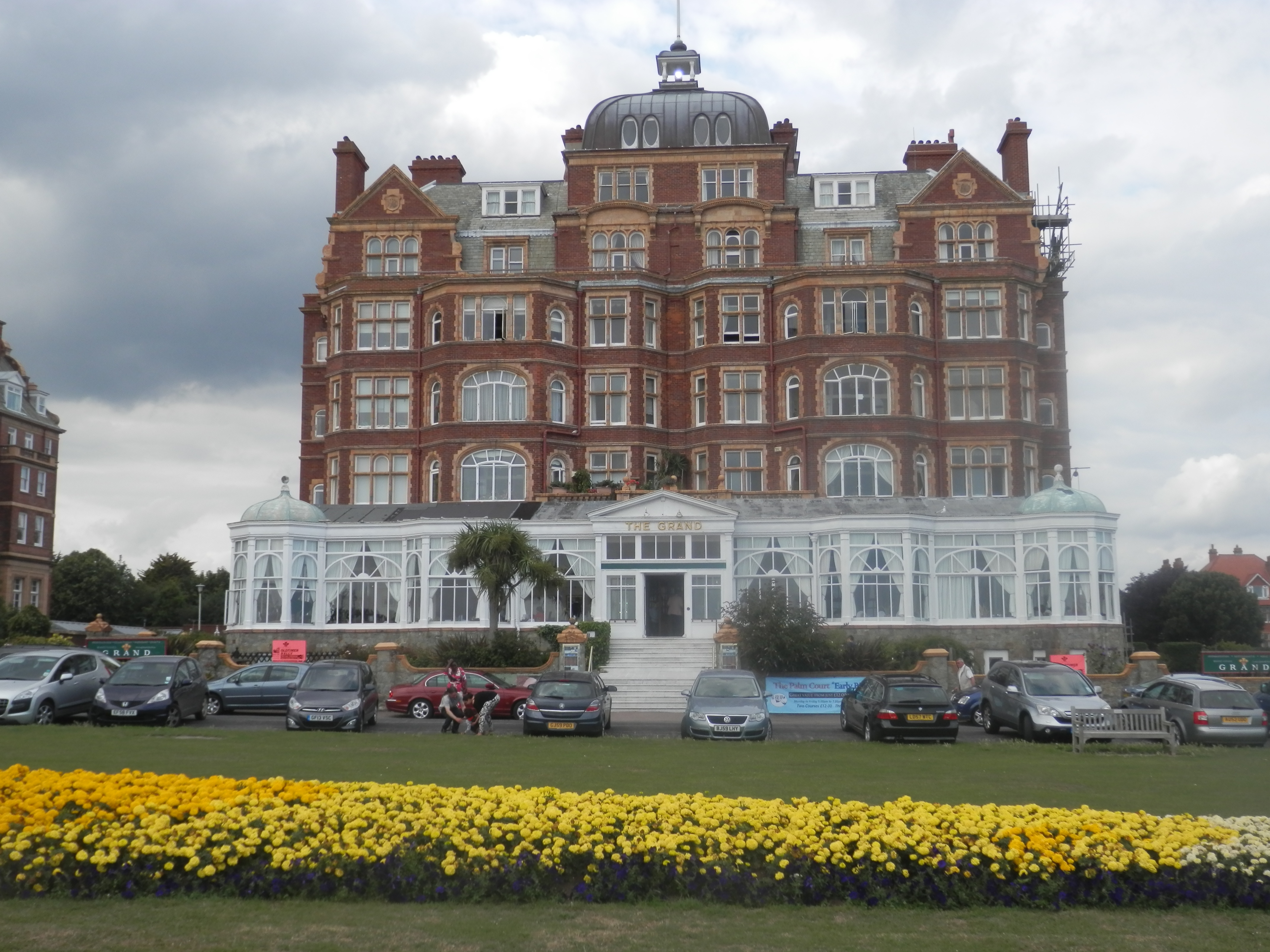
The jewel in Folkestone’s crown remains the Leas, once described as “indisputably the finest marine promenade in the world”, a wide clifftop walk with well tended flower beds and glorious views across the channel. Imposing old hotels speak of the resort’s former glory, no more so than the Grand and Metropole, though some are now holiday apartments. The Leas Cliff Hall is a popular stopping off point for musicians and comedians on tour. I will never forget a long and hilarious night with Frankie Howerd there back in the late sixties.

image

On a clear day, you can almost pick out individual buildings on the French coast as you head towards the charming neighbouring resorts of Sandgate and Hythe with its access to the world class attractions of Port Lympne Wild Animal Park and the Romney, Hythe and Dymchurch Railway, still the smallest regular light rail system in the world and as thrilling a ride more than a half a century later than the first. At the end of the line, you arrive at Dungeness on the tip of Romney Marsh with its end of the world atmosphere, where the abundant birdlife shares the shingle with two nuclear power stations .

OLYMPUS DIGITAL CAMERA

Despite the loss of the ferry service and crazy golf course, as well as the diminution in the fishing trade, the pretty little harbour and adjoining Stade with its seafood stalls still retain some of the atmosphere that first captivated me fifty years ago.

OLYMPUS DIGITAL CAMERA

The Guardian newspaper recognised the efforts being made to enhance Folkestone’s appeal by rating it among the world’s best holiday destinations to visit in 2014. Many, especially those who have not visited in recent years, will snigger or even guffaw at the idea, but the town is showing signs that it has a future.

We might even put you up while you visit!

Now, if they could only rebuild the Rotunda and resume playing first class county cricket there ………….

OLYMPUS DIGITAL CAMERA


(more…)

Read Full Post »