It was midday and the stores on Haight Street were drowsily coming to life under a warming sun. A gaggle of skateboarders, ageing “heads”, dogs and guitars waited at the lights at Stanyan to cross over to Hippie Hill for an afternoon of music, marijuana and merriment.
We had just enjoyed a sumptuous lunch of chicken pesto, Greek chicken wraps and hummus plate at the Blue Front Café, (sadly, one of the many eateries that has subsequently closed), and were entering a brightly coloured establishment which had historically divested us of our holiday dollars more than any other over the previous two decades.
As we planted ourselves in the rear of the store to look for any new tie-dye shirts from Liquid Blue, the silence was broken by a chirpy Californian female voice.
“Hey, you guys, let me explain the layout in here for you. At this end you will find the Grateful Dead t-shirts, organised by size, while over here are my own designs…….”
It was clear that the woman was going to continue with this well-rehearsed speech for some time, and, of course, she was only trying to be helpful. But I have an aversion to being what I perceive as “stalked” in stores by staff when all I want to do is look for myself and ask questions if I have a need.
So, I interrupted her rather abruptly – for which I have since apologised on many occasions – explaining that for nearly twenty years we had been rummaging through her colourful stock, and left laden with t-shirts, dresses, badges, stickers and other paraphernalia.
Rather than being deterred by my rude riposte, she squealed at the news, thanking us for our custom (not service – that is generally reserved for the military) and asking us where we were from, a perfectly reasonable icebreaker if one were really needed. I explained that we were from England, that I had revered the Dead since the late sixties and had visited the store many times before. This triggered a discussion about our mutual love for the music and the city.
I mentioned that we were heading for the Great American Music Hall that evening to see Dark Star Orchestra, the band formed in Chicago that had been replicating entire Dead shows since 1997. Alicia, as she was called, was thrilled to hear and said “we’re going too, do you wanna hang out?” By “we” she had included her partner, Jerry (no, not that one) who was, at the time, the long term owner of the store.
Despite the presumption (at least to British ears) in the question we instantly accepted the offer, and as we left with Casey Jones and Alice in Wonderland tees, arranged to meet in the line outside the venue at 6pm.
Disembarking the 47 Muni, rather uncharitably dubbed by my wife the “stinky bus”, at Van Ness and O’Farrell, we strode excitedly along the two blocks to join a mercifully short line at the venue. Dead concerts past were recalled as the air reeked of pot and a lone, long haired man patrolled the street with a barely legible, but at least grammatically correct, “I need a miracle” message scrawled on a scrap of cardboard with a Sharpie.
Alicia and Jerry joined us ten minutes later and we made our way to the upper floor where we had booked tables, allowing a prime position leaning on the railing that overlooked the stage below. We could not have had a better view as we christened our new tie-dye outfits. The ticket price had included a meal from a limited menu. With Californian and English choices on offer, we all opted for the latter – fish and chips (the American version of several small fish pieces rather than the single, larger British version).
This was the second time we had seen Dark Star Orchestra, the first having been at the House of Blues in Las Vegas on the eve of my sixtieth birthday two years earlier, when they had played a show from the early nineties which my wife had struggled to embrace, leading her to abandon the show midway through the second set halfway through a characteristically lengthy Eyes of the World jam in favour of the penny slot machines on the Mandalay Bay casino floor.
She had still not, at this stage, been fully converted to the Dead’s music, despite the fact that I had tried for thirty years to convince her of their greatness. She did, however, enjoy many of the earlier, shorter songs like Sugar Magnolia, Uncle John’s Band, Box of Rain and her favourite, Bertha.
I had been hoping that, being in San Francisco, they might play a Fillmore (West) concert on this evening, perhaps even from the run featured on the Live Dead album from 1969. And that, with some minor adaptations, is exactly what we got. I was beside myself, and my wife was happy too.
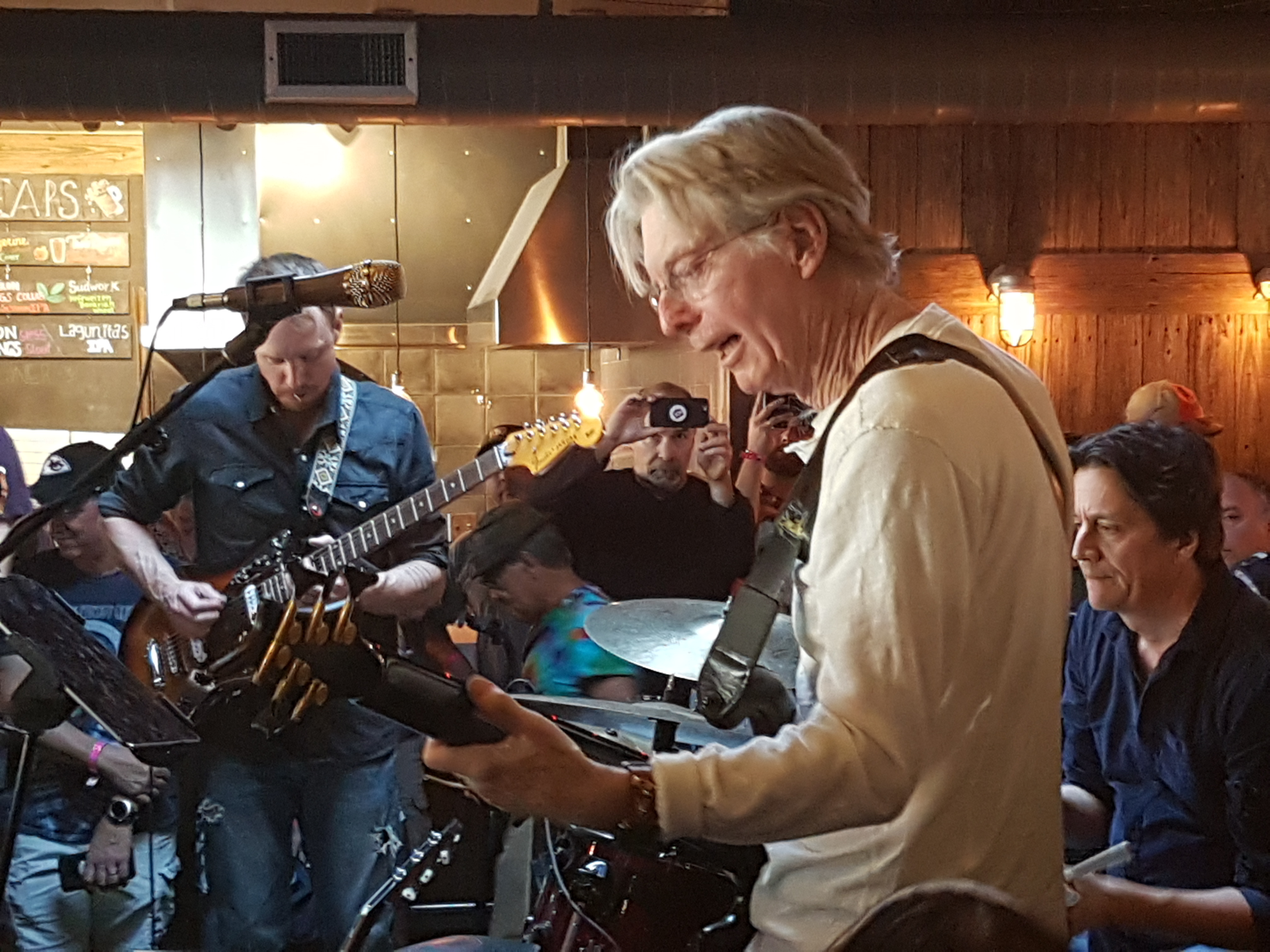
Mid way through the first set they announced that they were being joined by a special guest – Grateful Dead rhythm guitarist Bob Weir! He jammed with the band on St. Stephen and sang one of his signature cowboy songs, Me and My Uncle. The following year Bob similarly “gate crashed” Steve Earle’s set at Hardly Strictly Bluegrass in 2016. And more than a decade later, during which he had headlined Dead and Company, Wolf Brothers and countless other musical projects, and at the age of seventy eight, he shows little sign of putting himself out to pasture.
Sam Cutler, former manager of both the Dead and the Rolling Stones, spoke to the audience between sets when, naturally, I bought a t-shirt from the merchandise table, an item of clothing I reprised to lead guitarist Jeff Matson’s delight at the band’s concert at Shepherd’s Bush Empire in London in September 2022.
The concert continued past midnight. It had been a special evening, we had bonded with Alicia and Jerry, forging a friendship that continued to flourish and which led to us staying at their home with them in Petaluma on a number of occasions, attending concerts, Giants and 49ers games and meals together as well as them (separately) visiting the UK and all of us, including their two children, Aiden (Alicia’s by a previous marriage) and Ely (their own son) meeting up subsequently in Chicago.
As the Covid-19 pandemic caused a hiatus in our physical connection, we met up on Zoom on a weekly basis as they prepared to go for a morning cycle and we cooked our Sunday dinner! We even danced to favourite Dead songs when the conversation, as it did rarely, lagged.
The story of our relationship has subsequently taken several dramatic and unexpected turns, which I will address on another occasion.
Now I trust that many readers, notably those of a certain age and transatlantic disposition, will recall that Scott McKenzie was the singer who advised the world in 1967 that, if they were going to San Francisco, they should “be sure to wear some flowers in their hair”. That song alone had a searing impact on an impressionable fourteen year old boy living five and a half thousand miles away.
But Alan Whicker?
In appearance, with his English grammar school upbringing, clipped accent, Saville Row suit, slicked back hair, thick-set glasses and brisk moustache, he was the antithesis of the young people flocking to the Haight-Ashbury neighbourhood at the time.
Whicker was an English journalist and broadcaster who forged a career spanning nearly sixty years until his death in 2013. His finest work was Whicker’s World which he presented for thirty years, travelling the world and commenting in an inimitable ironic fashion on society, and interviewing many prominent figures of the time, including the Sultan of Brunei, reputedly the richest man in the world at the time, the Haitian dictator, “Papa Doc” Duvalier and numerous high profile actors and aristocrats.
His stiff upper-lip style made him the affectionate butt of many comedians, none more memorably than the Monty Python team who delivered a sketch entitled Whicker’s Island, in which a succession of Whickers would walk on and off the screen uttering in his customary hushed tones, the catchphrase “here on Whicker’s Island”.
On 9th September 1967, the day that Big Brother and the Holding Company and the Byrds headlined at the Family Dog and Fillmore Auditorium, two of the emerging and competing concert venues in San Francisco, Whicker broadcast a programme on the BBC entitled Love Generation. The episode was groundbreaking not least for the fact that it showed scenes of drug taking, despite the corporation’s “horror” of the practice, for the first time on British television, notably in 710 Ashbury, the Grateful Dead house (Phil Lesh and Bob Weir figured prominently). In the light of the recent Mick Jagger drug bust, it was put out very late at night. Among the individuals invited to expound their hippie ideals, emerging music promoter, Chet Helms, outlined his plans for taking music and light show “happenings” to London.
It was an incisive, literate and surprisingly sympathetic piece in which Whicker spoke over footage of the large influx of youth who had hitchhiked from every state to “Hashbury”:
In the States, pot is going middle class and spreading like prohibition liquor as more and more citizens get zonked out of their minds. The drug culture enters the blood stream of American life. Like it or not, we’re living in the stoned age.
Later he was to lament that the:
Summer of Love was a short outburst of happiness that lasted only a few months. When I returned a year later the flowers and the innocence had died.
I was, like the thousands of young people that sought escape from the drabness of middle America, inspired by the message of “tune in, turn on, drop out”, though I hadn’t the means of joining the tribes.
The broadcast also gave my first experience of the Grateful Dead in performance with a beardless Jerry Garcia taking the lead on the Golden Road (to Unlimited Devotion). A song title was never more apt.
News bulletins featured scenes of Gray Line tour buses crawling down Haight Street with bemused middle aged, provincial passengers staring at the carnival on the street.
And then there was Scott McKenzie.
Another character with a splendid upper lip growth, it was his song, full title San Francisco (Be Sure to Wear Some Flowers in Your Hair), which topped the charts in the UK but not (quite) the US, that so enthralled that fourteen year old boy in what was, despite the emergence of “swinging London”, still a monochrome etched country.
I took to decorating my Beatle mop with an occasional fresh daisy or buttercup. I commandeered my mother’s chocolate and purple paisley print blouse to wear to the home games of my local football team, guaranteeing that I would be bullied as mercilessly on a Saturday afternoon on the terraces as I was already being five days a week at school.
But I didn’t care.
I was a hippie.
My home grown musical diet of the Beatles, Rolling Stones, Kinks and a dozen other pop groups began to be supplemented by the weird, thrilling sounds of San Francisco. But it would still be another three years before I could get my hands on the music of the Dead, Jefferson Airplane and Quicksilver Messenger Service (thank you Keith Mason wherever you are), and before I could justifiably claim to be aboard the bus – the magic, not tourist, version.
During those same three years, I became increasingly fascinated by American culture and society. My political awakening was borne more out of opposition to the Vietnam War and support for the blacks in the Deep South, and students at Berkeley and Kent State than with the Rhodesian question or devaluation of the pound in Britain. I chose American history as one of my “A levels” at school and later studied American literature at university.
Underpinning all this was the music – my adoration for the San Franciscan bands was extended to embrace the country and folk rock idioms of Joni Mitchell, Neil Young, the Eagles and, of course, Dylan. I devoured every American film I could, especially those with a counter cultural bias like Easy Rider, Two-Lane Blacktop and Alice’s Restaurant, and read George Jackson, Angela Carter and Tom Wolfe.
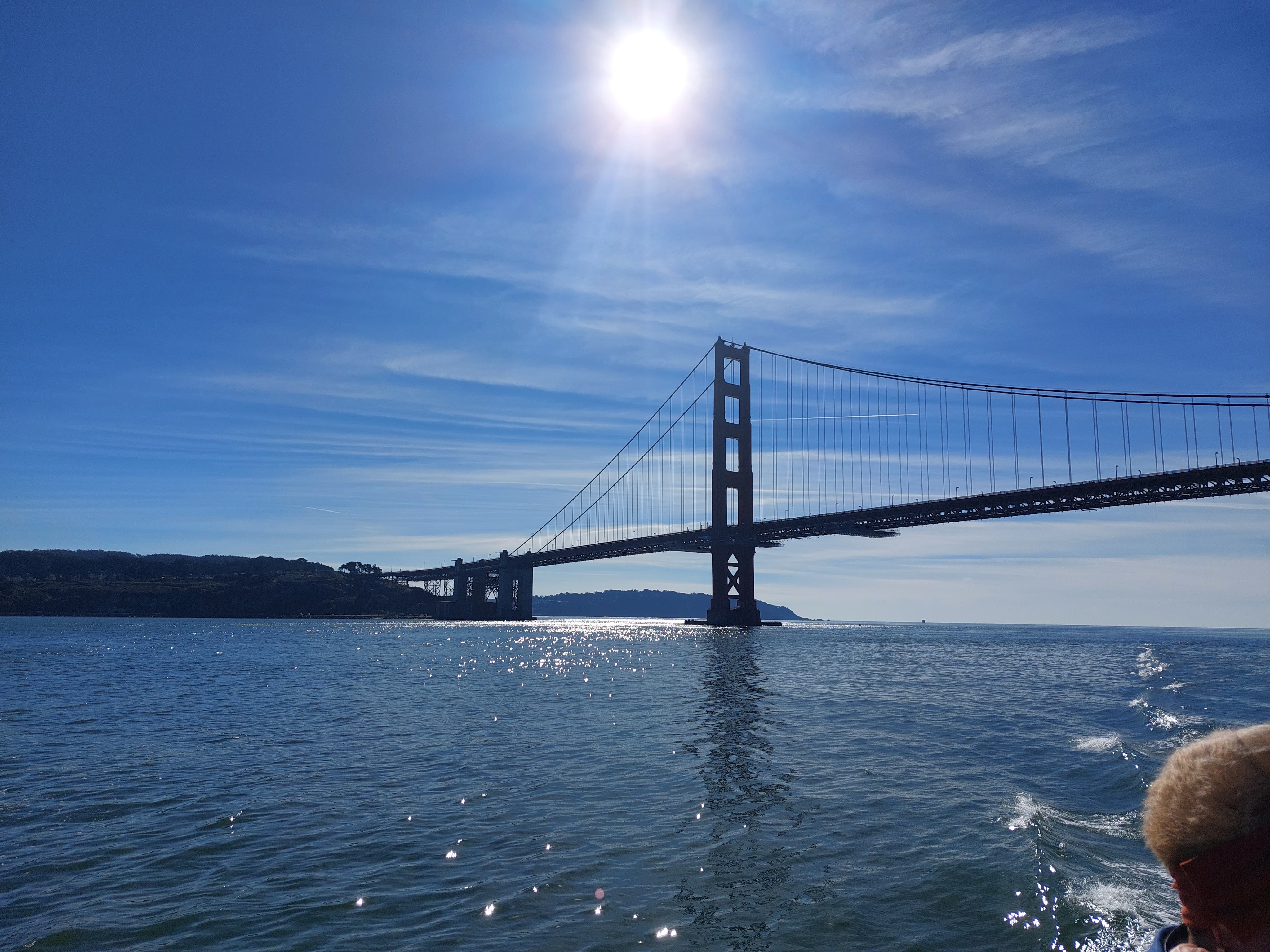
Those enthusiasms have endured to this day, though it would take me another quarter of a century before I first gazed adoringly on the Golden Gate Bridge or strolled down the street that had been the epicentre of my cultural life for so long.


 Tony Quarrington