Feeds:
Posts
Comments

Posts Tagged ‘San Francisco-Oakland Bay Bridge’


With a little over two months to my tenth trip to San Francisco, I am revisiting, and where appropriate, updating a handful of my articles on the city I fell in love with from afar in 1967 and in person 28 years later.

If I were forced to name the place I would most like to spend a couple of rainy hours, the Ferry Building would appear very close to the top of the list.

It was on 13th July 1898 that the first ferryboat and its passengers pulled into what was then called “The Union Depot and Ferry House”. At the height of its glory in the nineteen thirties, more than 50 million passengers passed through it each year.

Despite two major earthquakes and the construction of both the San Francisco – Oakland Bay and Golden Gate Bridges, not forgetting a hideous double-decker freeway along the Embarcadero, the latter thankfully demolished after the second of those earthquakes, the building with its 235 foot high clock tower inspired by the moorish belltower in Seville, has not only survived but become one of the most popular attractions in the City.

Once the City’s principal transportation hub and beautifully restored between 2003 and 2007, it is now home not only to two storeys of premium office space, but also a permanent gallery of stalls selling locally produced fresh fruit and vegetables, cheeses, wines, meats, flowers, chocolate and pastries, as well as one of a kind gift items, many related to the kitchen and garden.

An outstanding farmer’s market takes over the plaza on Tuesdays, Thursdays, and especially Saturdays, when celebrated chefs from around the City demonstrate their skills to locals and tourists alike. Several appealing restaurants and cafés complete the scene.

Located along the Embarcadero at the foot of Market Street, it is now one of only a handful of landmarks that I make a point of visiting on every trip to the City, however short. Ten days in April didn’t yield a single cable car ride or journey over the Golden Gate Bridge, but it did include two trips to the Ferry Building, one on the way back from a spending spree at the ballpark (in fact, it is a perfect resting spot if you are making the bracing but arduous hike on a blustery day from AT & T Park to Fisherman’s Wharf, or vice versa).

Its role as a ferry port may have diminished (it now caters only for a handful of local services), and cruise ships may soon be getting their own spanking new terminal, but the building remains at the heart of the City’s transportation system with MUNI (Metro) and BART lines criss-crossing here, and the cranky, lovable F Streetcars rattling by.

Whilst there might be other excellent, if admittedly less expensive, farmer’s markets and wholefood stores around town, the Ferry Building might just be the best. Where else can you pick up those last minute snapper fillets, fresh vegetables, rustic loaves, Californian wines and cheeses, and even pig’s cheeks, to take back to your apartment in Noe Valley or the Sunset? And the visit alone, especially if you tarry awhile and experience everything it has to offer, is worth the journey alone.
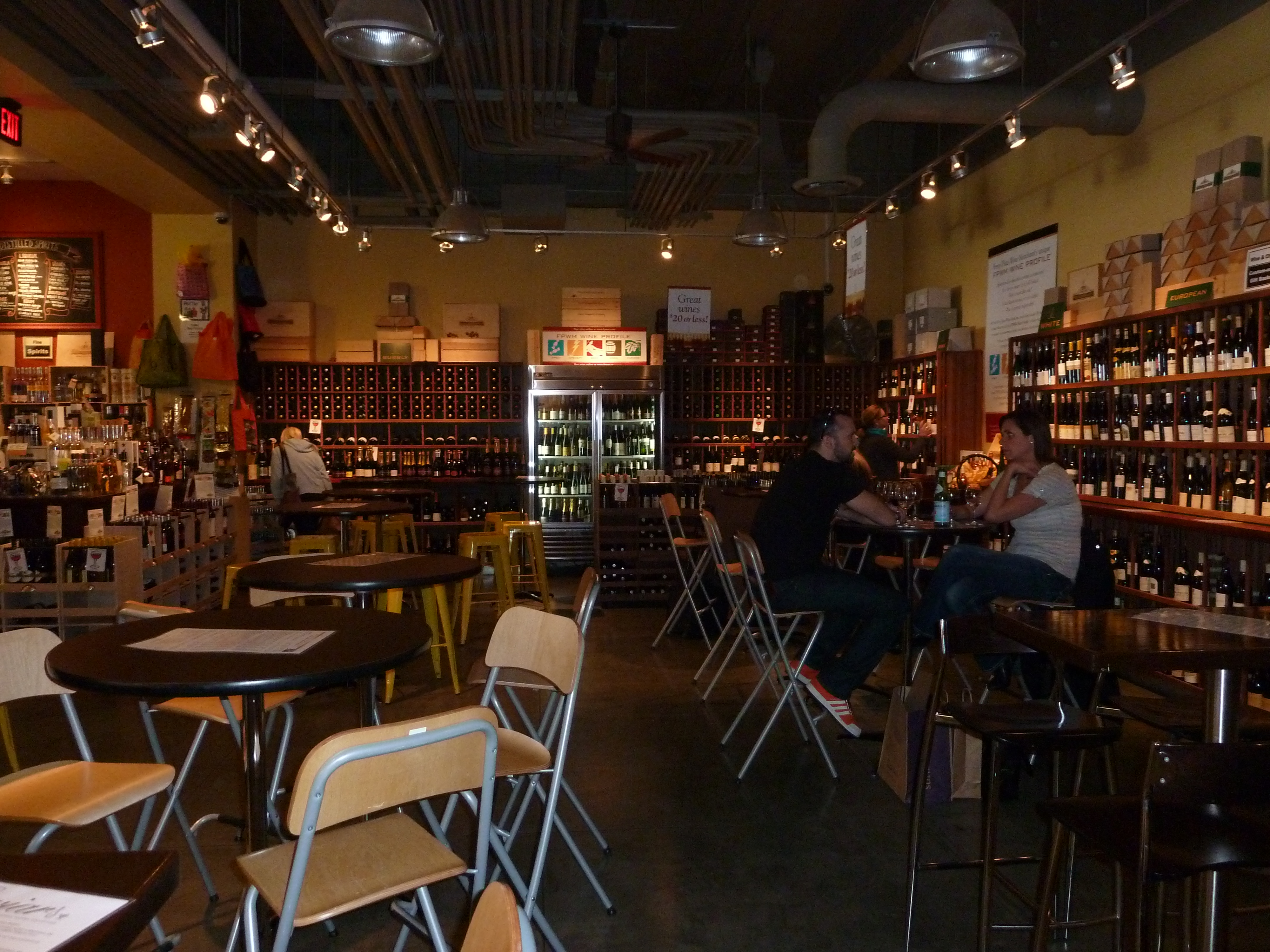
Slip into the Ferry Plaza Wine Merchants , share a carafe or two of Napa or Sonoma wine, or indulge in one of the special tasting “flights” where you can sample half a dozen wines at once (I would caution, however, that if you are of a nervous disposition, it comes with a lot of (different shaped) glasses, and whilst it looks pretty, the potential for disaster is considerable). What better to accompany it than a tasty cheese board? And you may stumble upon one of the regular lectures on wine or even meet the individual who made the wine you are drinking, as has happened to me!

If the Giants happen to be playing on the live televisions, so much the better, just order another carafe. And don’t forget to pick up a couple of bottles before you leave.

With the closure of the large Border’s and Barnes and Noble bookstores at Union Square and Fisherman’s Wharf respectively in recent years, it is heartening also to find the excellent Book Passage in the building. It may be small but it stocks an impressive selection of books on San Francisco and the Bay Area in particular. Pick up a book and a cup of Peet’s (coffee) from the adjoining cafe, grab a seat outside and “waste” an hour enjoying the bay views.

San Francisco Chronicle columnist Herb Caen called it “a famous city’s most famous landmark”, adding that the “waterfront without the Ferry Tower would be like a birthday cake without a candle”.

It is hard to disagree.

Read Full Post »


Charming, charismatic, successful businessman and whorehouse owner, “Sunny Jim” Rolph was the longest serving mayor in San Francisco history.

He was born to British parents in the city on 23rd August 1869 and educated in the Mission District where he  also lived in adult life in a large mansion at the corner of San Jose and 25th Streets.  After jobs as a newsboy, clerk and messenger he entered the shipping business in 1900, forming a partnership with George Hind.  For the next ten years he served as President of two banks, one of which he established, as well as founding the Rolph Shipping Company and James Rolph Company.  He also directed the Ship Owners and Merchants Tugboat Company and the San Francisco Chamber of Commerce.

Prior to his country’s entry into the First World War he supplied coal and ships to the Allied Countries.  With an estimated wealth of $5 million he bought a ranch west of Stanford University.  It is reported that the Department of Public Works made all the improvements to the ranch at the taxpayers’ expense, not the last time his appropriation of public funds for his own personal gain was mooted.

In 1911 Rolph was encouraged to run for Mayor against the incumbent P.H. McCarthy who had failed to curb the corruption that was rife in the city.  Following a six week campaign categorised by egg throwing, fist fights and police riots, he won comfortably.

His first major project was the construction of the 1915 Panama-Pacific International Exposition, designed not only to celebrate the opening of the Panama Canal but, equally importantly, to showcase the remarkable renaissance of San Francisco after the 1906 earthquake.  It was  during the latter that he he had earned the gratitude of the city by, as head of a relief committee, delivering water and supplies with his horse and wagon.

Image:rulclas1$governor-jim-rolph-1931.jpg

He opened the Exposition by, pied piper style, leading 150,000  followers down Van Ness Avenue and Lombard Street to the Fairgrounds, now the Marina District.  The profits from the highly successful event were used to build the Civic Auditorium.

As Mayor, he personally oversaw the construction of City Hall, and on the day it was dedicated in 1915, climbed the golden dome, “beamed at the astonished faces below”, and ran up the American flag.

His nickname derived from his relentlessly cheerful, gregarious disposition.  With a theme song entitled “There Are Smiles That Make You Happy” he paraded about town in, alternately a stovepipe silk or derby hat, dapper black suit with a flower, usually a carnation, in the buttonhole, smiling and “pressing the flesh” of the city’s residents as if he were on a continuous election campaign trail. He would often pick up pedestrians on his way to City Hall and drive them to their destination.  He was known as the “Mayor of All the People”, relating to people of all races, religions and political parties.  He even invited Communist protestors into his office for a chat.

He had time for everyone as he “popped up” at just about every public event, seeing it as a photo opportunity to promote himself.  His role was primarily as the charming figurehead for city government, leaving the day to day running of his administration (which bored him), including several major public works projects such as the Bay Bridge, Hetch Hetchy water system, which supplies most of the city’s water,  and San Francisco Airport, to trusted colleagues.

Rolph’s affable manner and the spectacular but costly festivities he arranged to celebrate major political events may have endeared him to the man in the street, but he presided over a “lawless, debauched city”in which “gambling and prostituion thrived”.  Moreover, he contributed personally towards this by owning the Pleasure Palace, an “entertainment hideout”at 21st Street and Sanchez on Liberty Hill.  It is hardly surprising, therefore, that he made only half-hearted attempts to clean up the city.  This, along with his lax stance on enforcing Prohibition, may have partly accounted for his four re-elections and nineteen years in office.

His flamboyant image extended to appearances in several films, notably the 1915 documentary Mabel and Fatty Viewing the World’s Fair at San Francisco, directed by Fatty Arbuckle and the short, Hello Frisco.

Rolph’s drinking and alleged affair with movie star, Anita Page, however, scarred his final term in office.  He missed meetings at City Hall and drivers would be despatched to find him. When he did turn up he appeared drunk and patently unwell.

He was elected the 27th Governor of California from 6th January 1931 when he resigned as San Francisco Mayor.  However, the advent of the Great Depression and the budgetary constraints that that inevitably imposed upon the State, had serious personal and political consequences.  Moreover, laregly as a result of his shenanigans over a previous gubernatorial campaign, his contract to build three new ships for the Federal Government was cancelled and he was banned from selling ships to foreign governments, accelerating his financial ruin.

His political inadequacies were also regularly exposed, provoking a recall movement against him within two years of taking office.  His tenure was dogged by controversy, not least when he publicly praised the citizens of San Jose, whilst promising to pardon anyone involved, following the November 1933 lynching of the confessed murderers of Brooke Hart, the son of a wealthy local merchant.  He was thereafter known as “Governor Lynch”.

As he fell into serious debt his health failed, although he continued to make personal appearances against medical advice.  Following a number of heart attacks he died on 2nd June 1934 at Riverside Farm, Santa Clara County.  He was brought home to lie in state in the City Hall rotunda.

Notwithstanding his many flaws, Rolph’s popularity in his home town was unquestioned. and illustrated in the decision to name the San Francisco-Oakland Bay Bridge, that had begun to be built under his stewardship, the “James “Sunny Jim” Rolph Bridge”.

Finally, I am particularly indebted for much of the detail in this article to the historical essay on Rolph written by Daniel Steven Crofts.


Read Full Post »

« Newer Posts