Feeds:
Posts
Comments

Posts Tagged ‘San Francisco’


Another of the most serene and civilised spots in San Francisco is the Japanese Tea Garden in the heart of Golden Gate Park. It is at this time of year that it is seen at its loveliest as I hope the photographs below demonstrate.

OLYMPUS DIGITAL CAMERA

For just $7, or $5 if you are fortunate enough to be a resident, you can walk among the cherry blossom trees, cross stone bridges and marvel at both the pagodas and koi ponds. And for the children – and those just young at heart – you can attempt to negotiate the arched drum bridge.

OLYMPUS DIGITAL CAMERA

The tea house is a delightful spot for a light lunch or mid-afternoon snack, serving a variety of Japanese teas, soup, sandwiches, cheesecake and, of course, fortune cookies.

OLYMPUS DIGITAL CAMERA

OLYMPUS DIGITAL CAMERA

OLYMPUS DIGITAL CAMERA

OLYMPUS DIGITAL CAMERA

P1000616


Read Full Post »


With a little over two months to my tenth trip to San Francisco, I am revisiting, and where appropriate, updating a handful of my articles on the city I fell in love with from afar in 1967 and in person 28 years later.

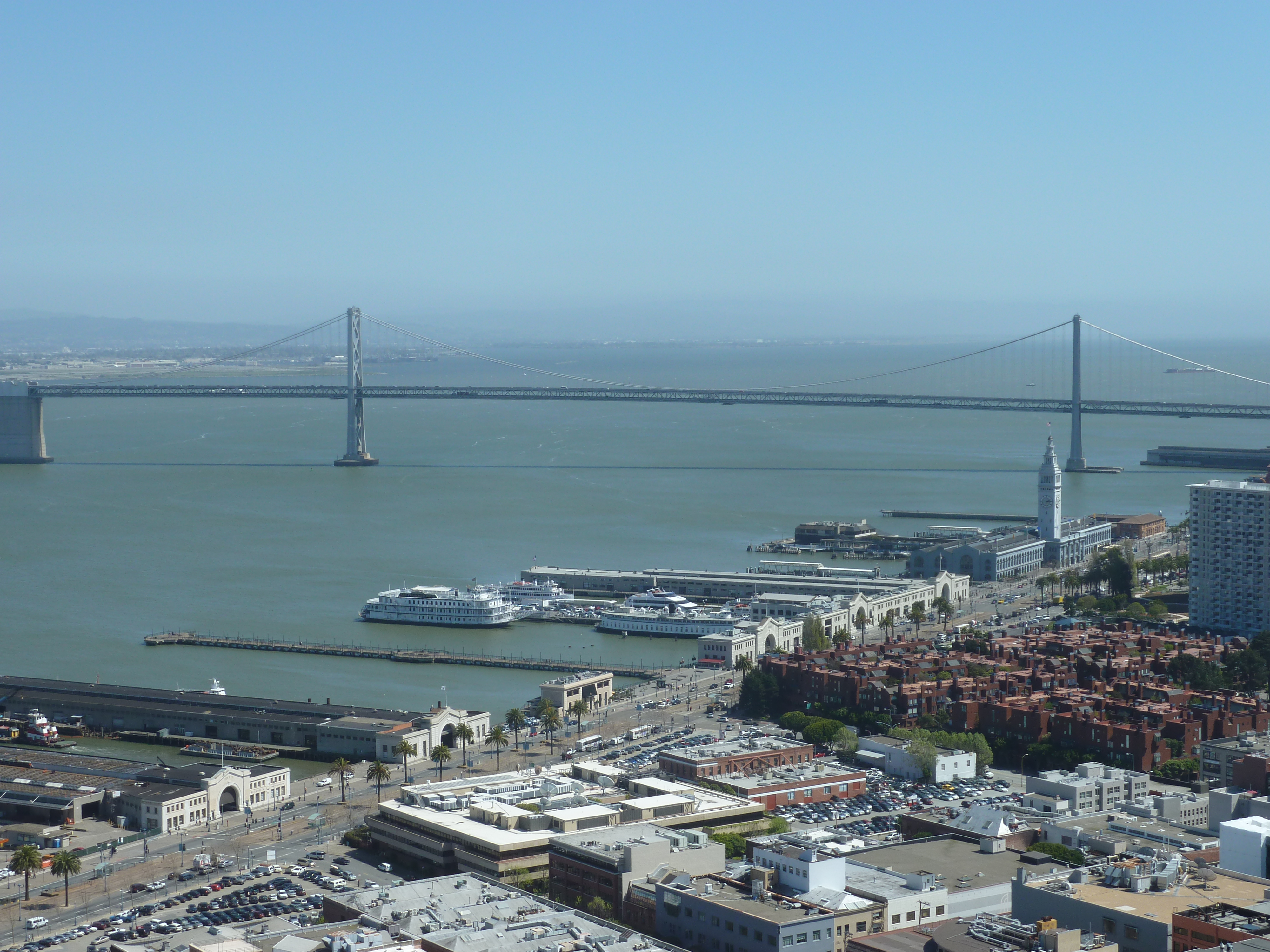
If I were forced to name the place I would most like to spend a couple of rainy hours, the Ferry Building would appear very close to the top of the list.

It was on 13th July 1898 that the first ferryboat and its passengers pulled into what was then called “The Union Depot and Ferry House”. At the height of its glory in the nineteen thirties, more than 50 million passengers passed through it each year.

Despite two major earthquakes and the construction of both the San Francisco – Oakland Bay and Golden Gate Bridges, not forgetting a hideous double-decker freeway along the Embarcadero, the latter thankfully demolished after the second of those earthquakes, the building with its 235 foot high clock tower inspired by the moorish belltower in Seville, has not only survived but become one of the most popular attractions in the City.

Once the City’s principal transportation hub and beautifully restored between 2003 and 2007, it is now home not only to two storeys of premium office space, but also a permanent gallery of stalls selling locally produced fresh fruit and vegetables, cheeses, wines, meats, flowers, chocolate and pastries, as well as one of a kind gift items, many related to the kitchen and garden.

An outstanding farmer’s market takes over the plaza on Tuesdays, Thursdays, and especially Saturdays, when celebrated chefs from around the City demonstrate their skills to locals and tourists alike. Several appealing restaurants and cafés complete the scene.

Located along the Embarcadero at the foot of Market Street, it is now one of only a handful of landmarks that I make a point of visiting on every trip to the City, however short. Ten days in April didn’t yield a single cable car ride or journey over the Golden Gate Bridge, but it did include two trips to the Ferry Building, one on the way back from a spending spree at the ballpark (in fact, it is a perfect resting spot if you are making the bracing but arduous hike on a blustery day from AT & T Park to Fisherman’s Wharf, or vice versa).

Its role as a ferry port may have diminished (it now caters only for a handful of local services), and cruise ships may soon be getting their own spanking new terminal, but the building remains at the heart of the City’s transportation system with MUNI (Metro) and BART lines criss-crossing here, and the cranky, lovable F Streetcars rattling by.

Whilst there might be other excellent, if admittedly less expensive, farmer’s markets and wholefood stores around town, the Ferry Building might just be the best. Where else can you pick up those last minute snapper fillets, fresh vegetables, rustic loaves, Californian wines and cheeses, and even pig’s cheeks, to take back to your apartment in Noe Valley or the Sunset? And the visit alone, especially if you tarry awhile and experience everything it has to offer, is worth the journey alone.

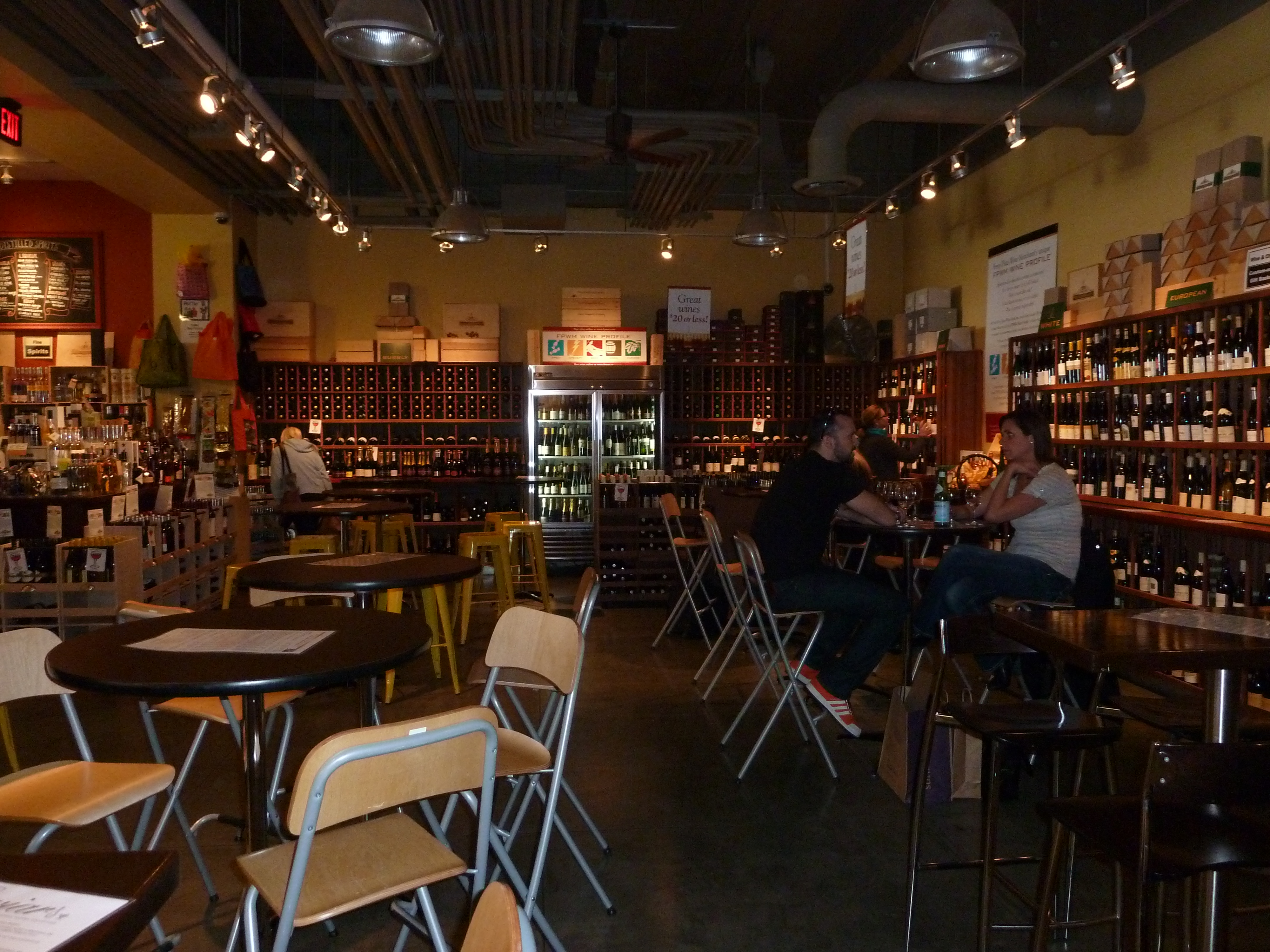
Slip into the Ferry Plaza Wine Merchants , share a carafe or two of Napa or Sonoma wine, or indulge in one of the special tasting “flights” where you can sample half a dozen wines at once (I would caution, however, that if you are of a nervous disposition, it comes with a lot of (different shaped) glasses, and whilst it looks pretty, the potential for disaster is considerable). What better to accompany it than a tasty cheese board? And you may stumble upon one of the regular lectures on wine or even meet the individual who made the wine you are drinking, as has happened to me!

If the Giants happen to be playing on the live televisions, so much the better, just order another carafe. And don’t forget to pick up a couple of bottles before you leave.

With the closure of the large Border’s and Barnes and Noble bookstores at Union Square and Fisherman’s Wharf respectively in recent years, it is heartening also to find the excellent Book Passage in the building. It may be small but it stocks an impressive selection of books on San Francisco and the Bay Area in particular. Pick up a book and a cup of Peet’s (coffee) from the adjoining cafe, grab a seat outside and “waste” an hour enjoying the bay views.

San Francisco Chronicle columnist Herb Caen called it “a famous city’s most famous landmark”, adding that the “waterfront without the Ferry Tower would be like a birthday cake without a candle”.

It is hard to disagree.

Read Full Post »


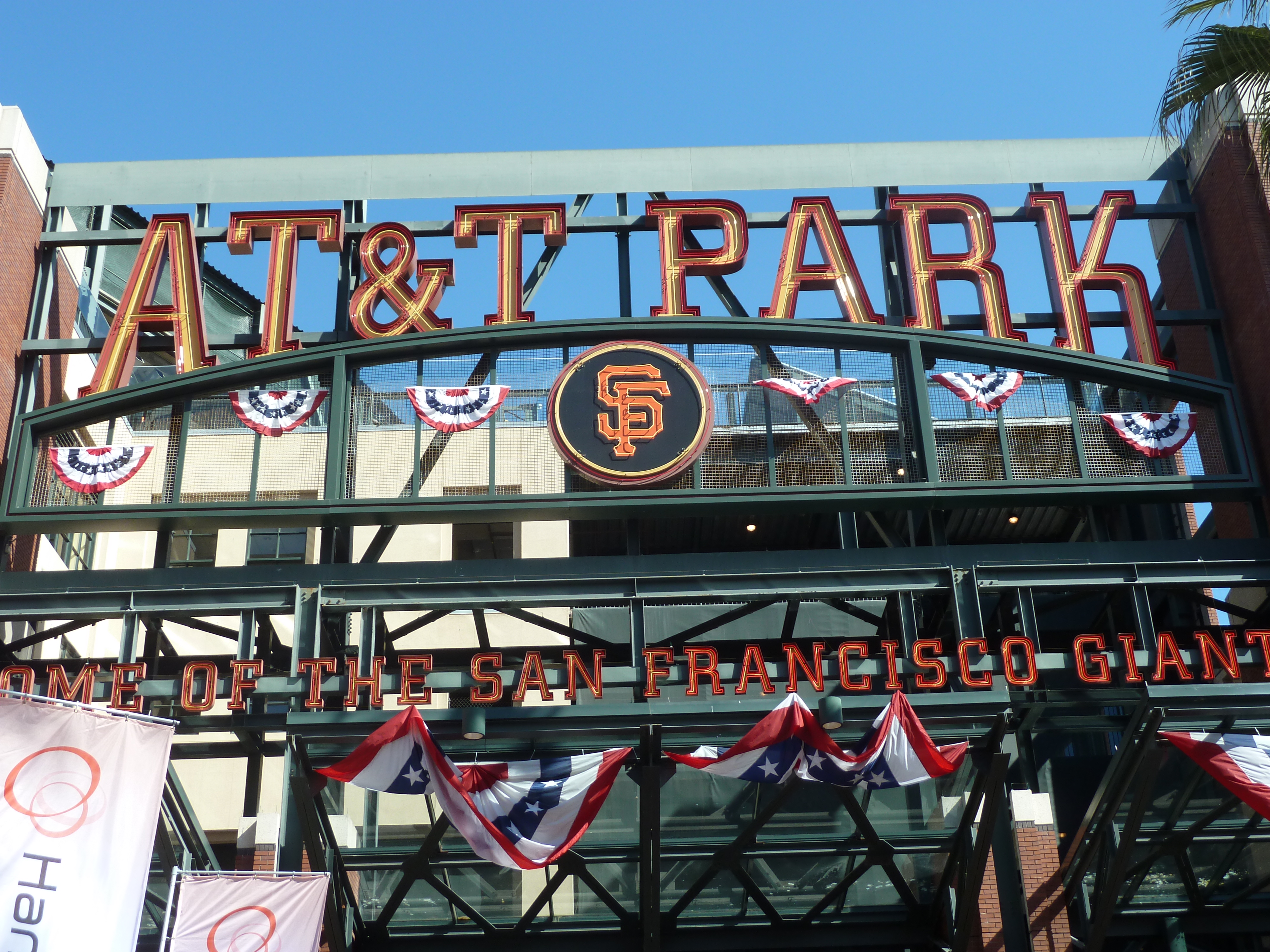
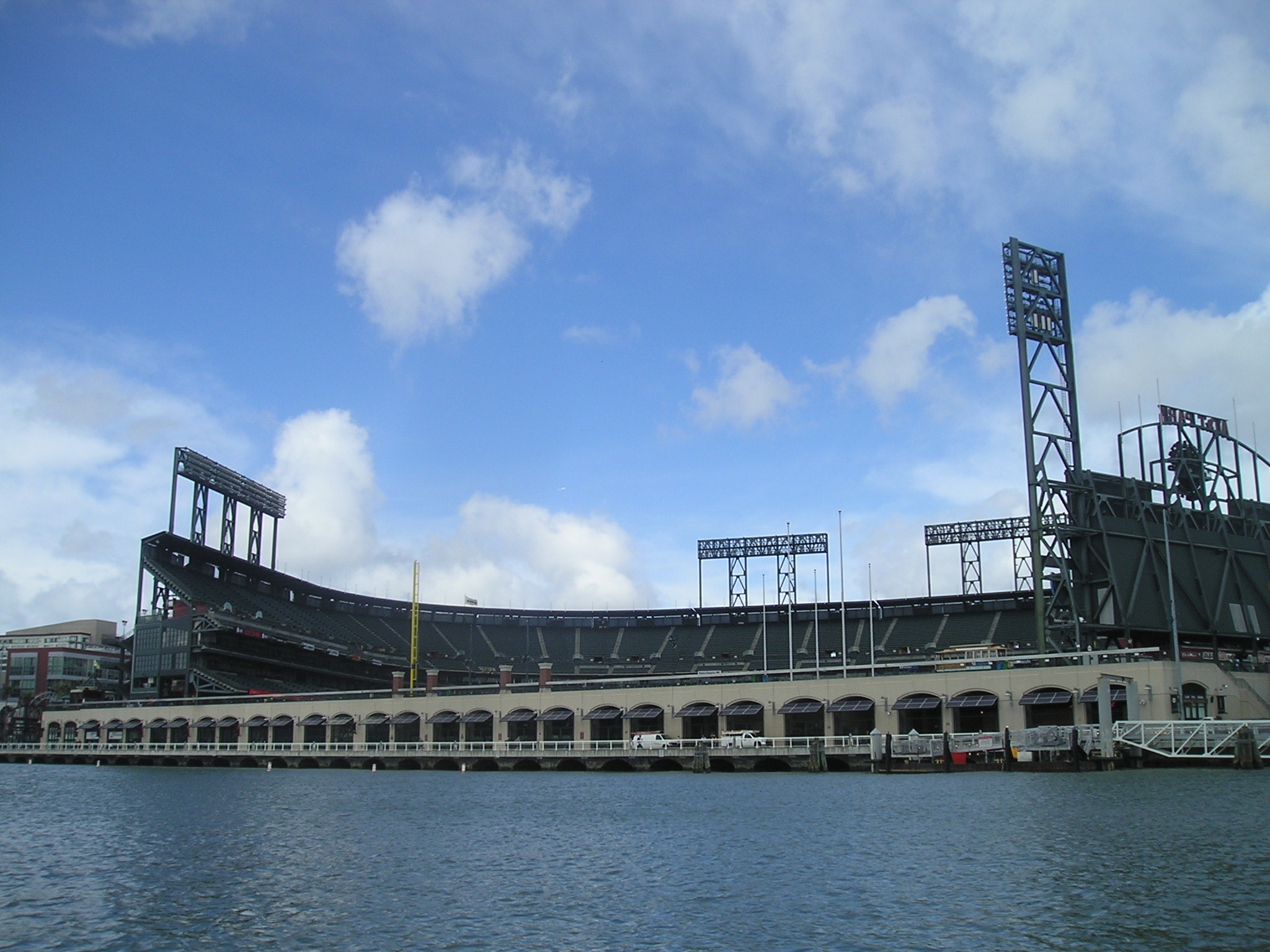
With the 2013 Opening Day a heartbeat away, it seemed as good a time as any to showcase some of my photos of the World Champions’ home. These were taken during the official tour of AT & T Park on in April 2010 and the opening home game against the Pittsburgh Pirates last year.

P1020035

Is there a better setting for a sports stadium anywhere in the States?

P1020038

Three hours to the first pitch. Go Zito!

P1020040

P1020052

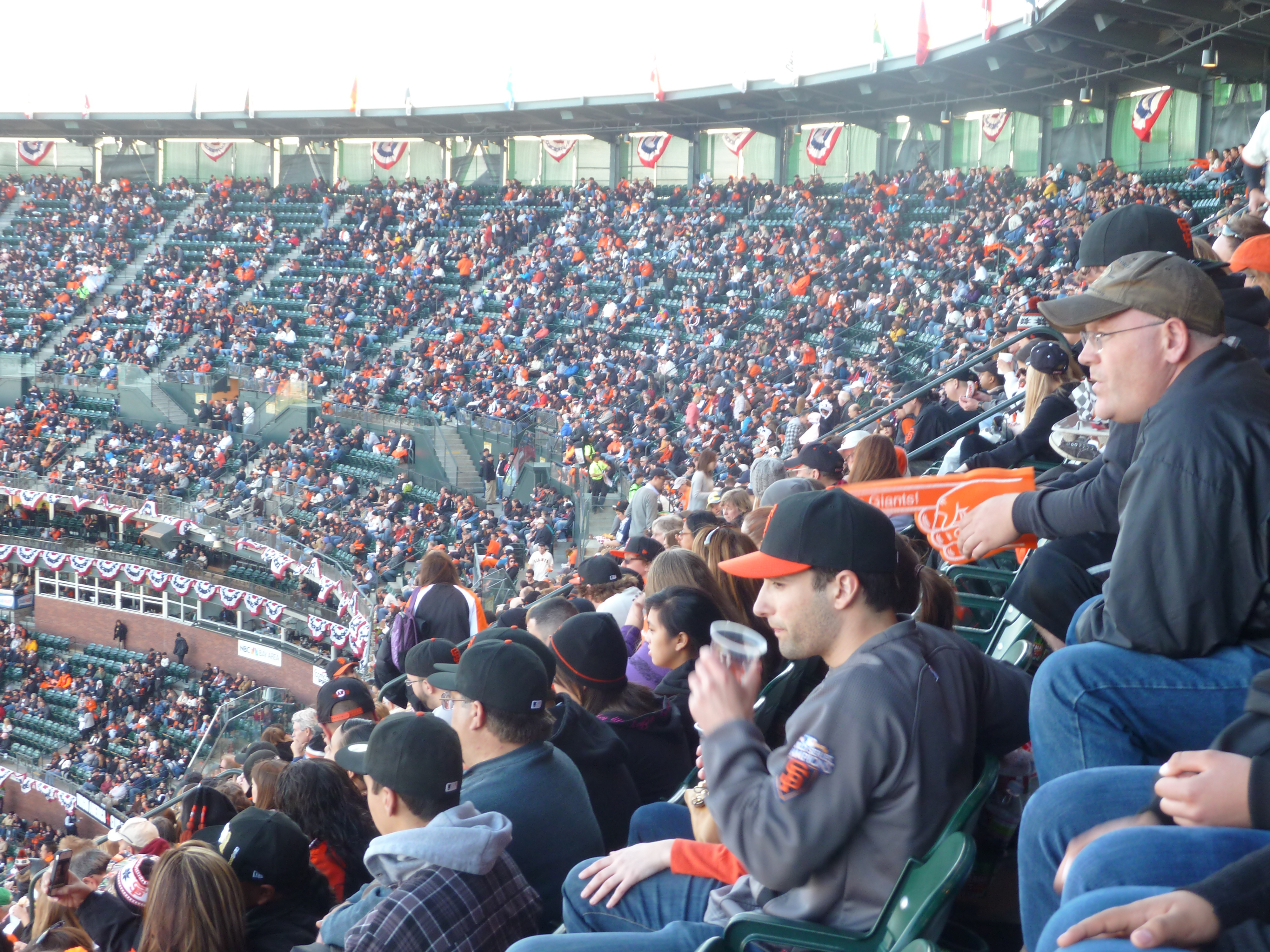
Filling up – yet another full house taking shape.

OLYMPUS DIGITAL CAMERA

P1020051

OLYMPUS DIGITAL CAMERA

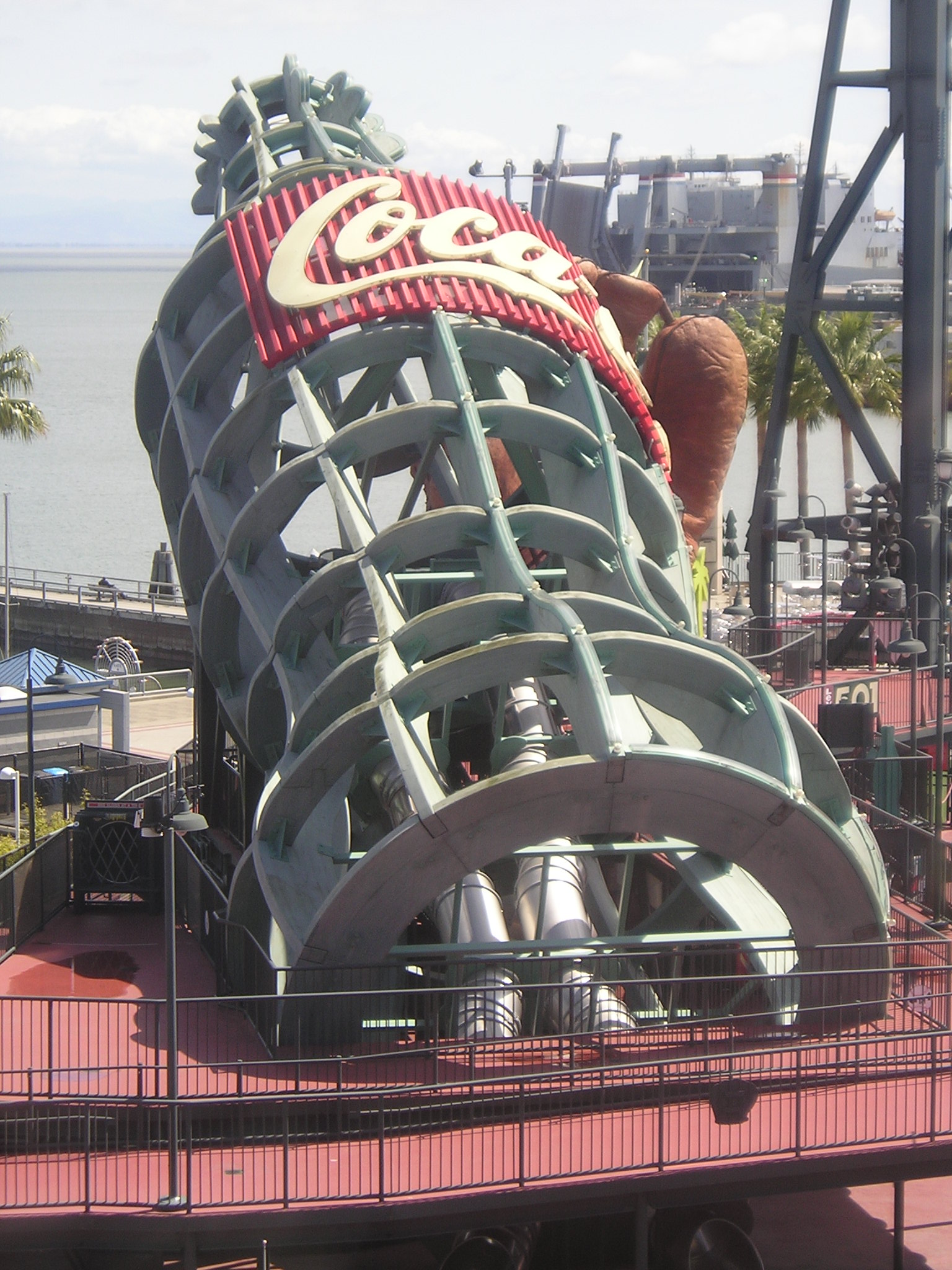
So disappointing to learn that I’m too old to ride the slides inside the Coke bottle!

OLYMPUS DIGITAL CAMERA

Or play in this miniature ballpark! I think even I could hit a home run here!

OLYMPUS DIGITAL CAMERA

Taken from the “Ride the Duck” tour – audio deliberately omitted.

P1020056

The eventual World Series MVP starts the season how he means to go on.

Read Full Post »


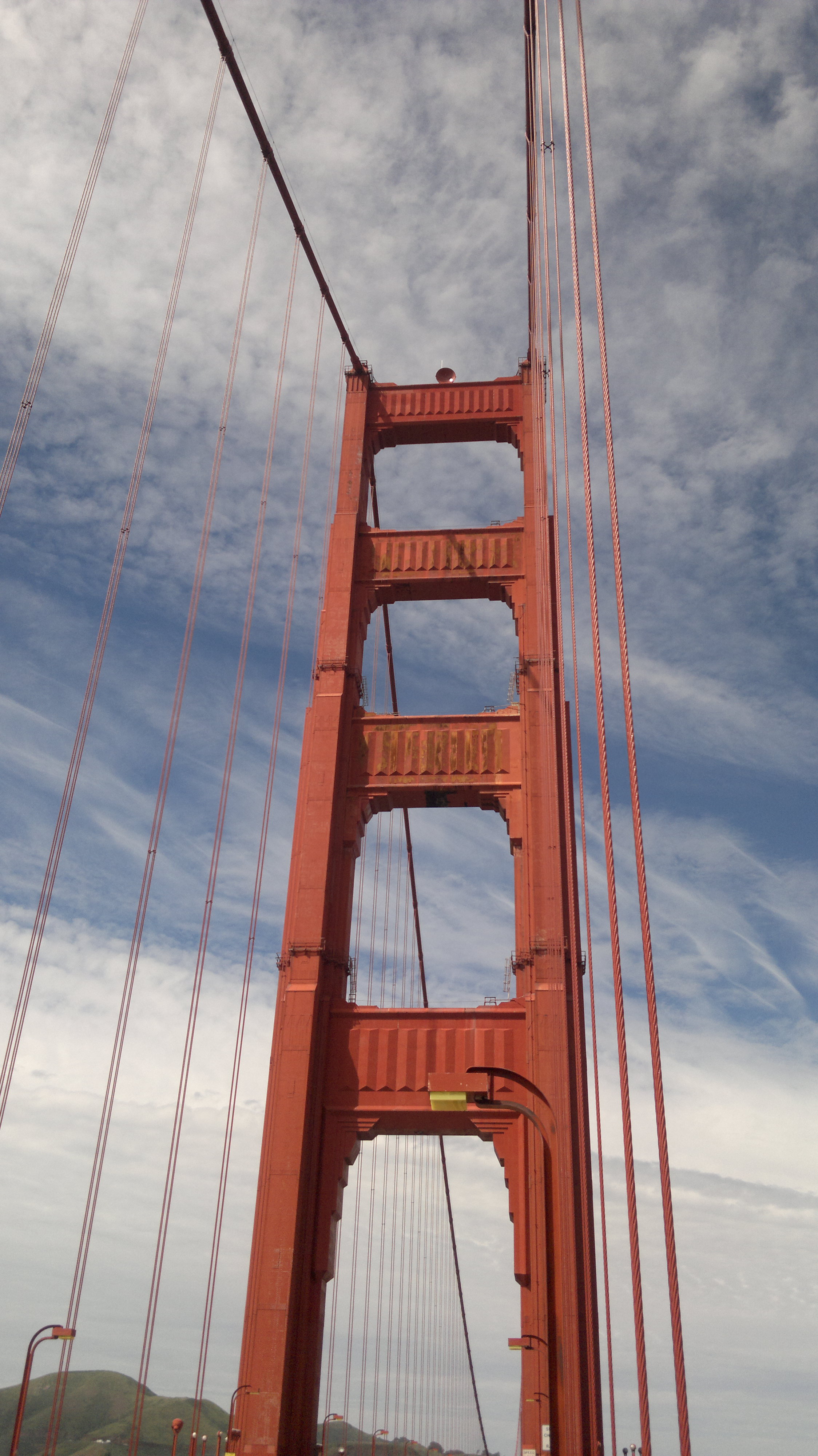
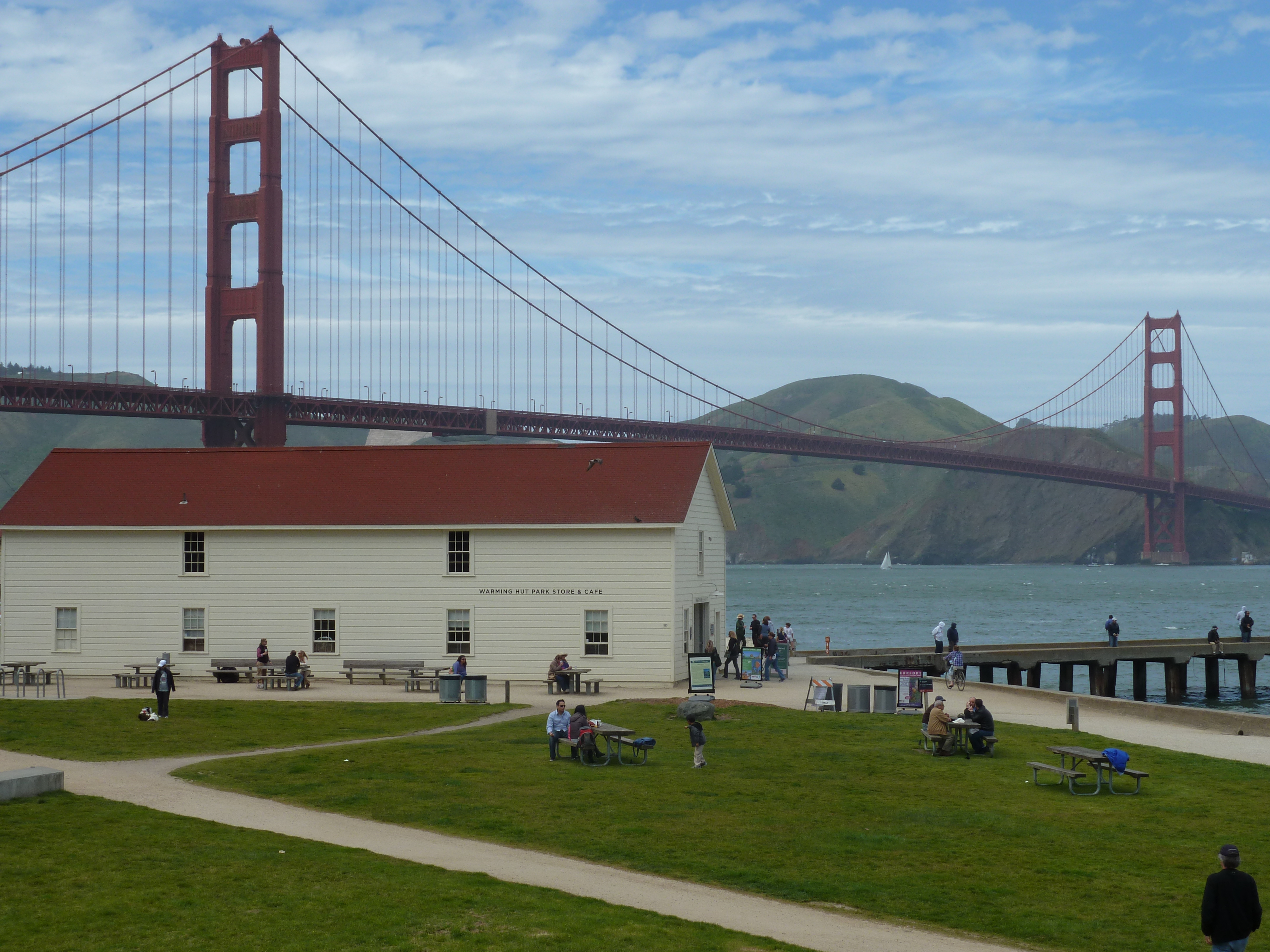
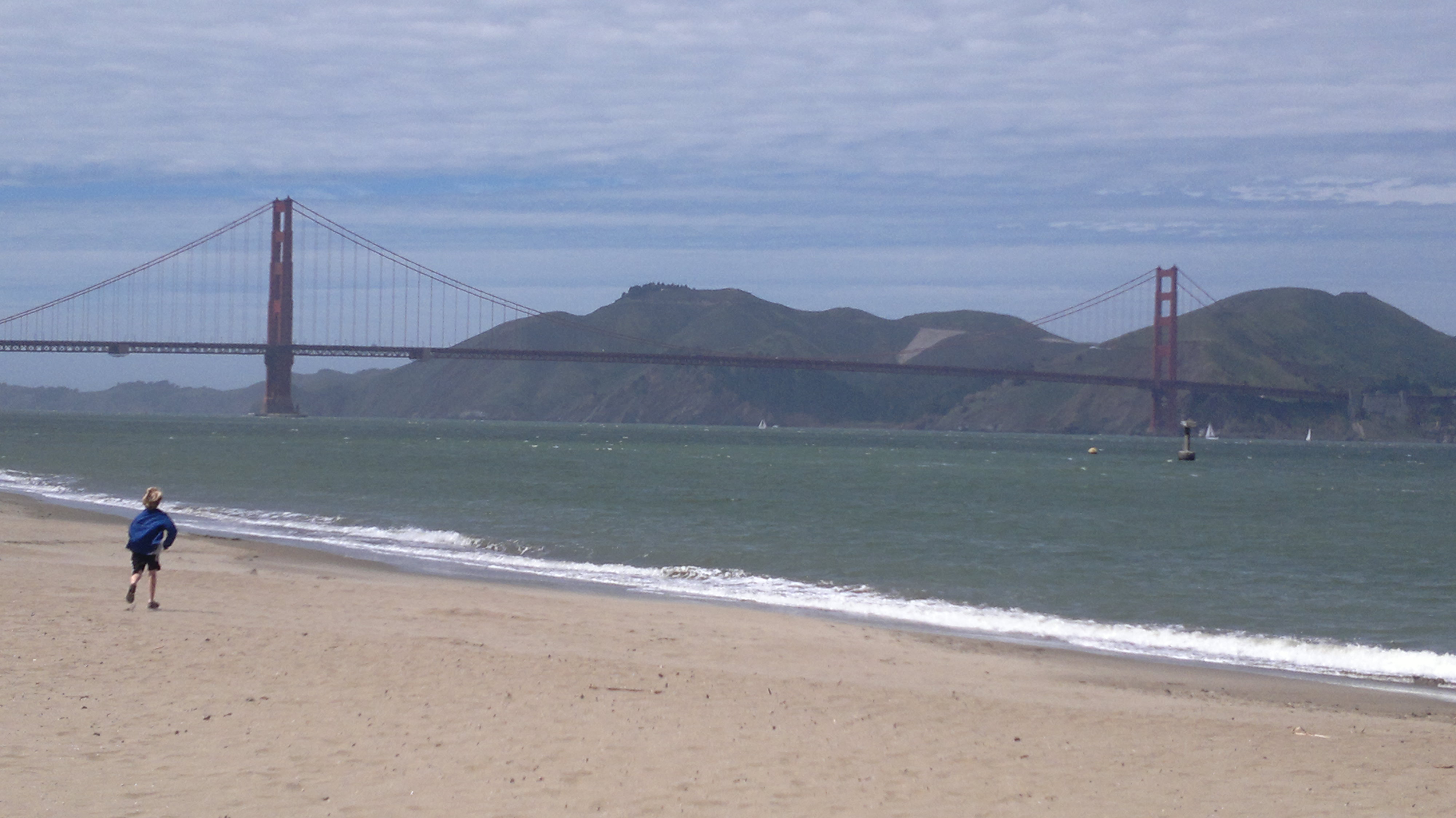
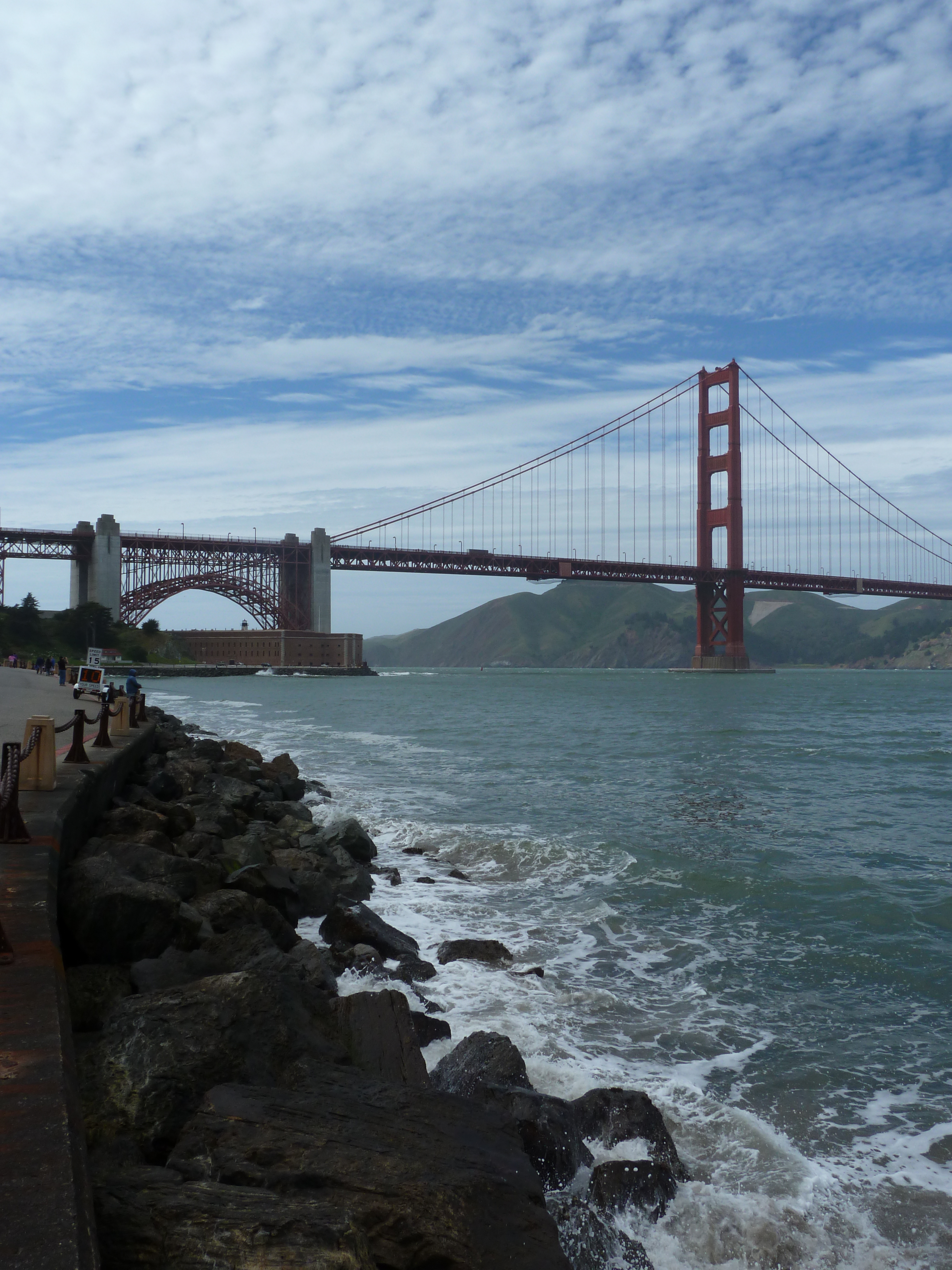
Though many people – including my wife – prefer the Oakland Bay Bridge, this remains the most iconic image of San Francisco. And that is reflected in the number of photos I have taken of it from various angles over the years.

Here is a selection of those I am most fond of. Some are familiar images, others perhaps less so.

OLYMPUS DIGITAL CAMERA

From the Marin Headlands with Sutro Tower

in the distance and the City to the left

315

I was walking, not driving, when I took this!

OLYMPUS DIGITAL CAMERA

From Land’s End after a hearty brunch at the Cliff House!

P1000326

“The Warming Hut” – does what it says on the tin

P1000321

Peeking from behind the “Warming Hut” 

OLYMPUS DIGITAL CAMERA

Where the tourists get taken

305

Nearly there! From Crissy Field Beach

P1000332

Towards Fort Point

OLYMPUS DIGITAL CAMERA

Going under

P1000366

Looks pretty sturdy to me

P1000359

But it’s still the No. 1 “suicide bridge” in the world


Read Full Post »


Pending the imminent return of full-blown articles on aspects of San Francisco, I am posting a series of photo blogs on different neighbourhoods. The first subject is Coit Tower, perched atop Telegraph Hill with wonderful views of the “necklace of bridges, Alcatraz and the bay on one side, and North Beach and the Financial District on the other. And there is another treat inside – the marvellous murals produced under the New Deal in the thirties.

P1000438

P1000471

P1000454

P1000455 

P1000459

P1000450

P1000447

P1000468

P1000461

P1000476

P1000444

If you want to learn more about the woman whose generous bequest funded this much loved San Francisco attractions, read my article at:

http://www.tonyquarrington.wordpress.com/2012/06/11/lillian-coit-san-francisco-knickerbocker-glory/

Read Full Post »


Any visitor to San Francisco who still hankers for the Summer of Love might seek some solace in the Red Victorian bed and breakfast on Haight Street, between Belvedere and Cole.

The Jefferson Hotel, as it was  originally known, was opened in 1904 as a resting place for visitors to the newly opened Golden Gate Park, but had its name changed to Jeffrey-Haight in that momentous year of 1967.

Ten years later it was bought by a 52 year old Washington state born doctor in Transformational Art and Societal Change, Sami Sunchild, who immediately set about painting its façade red with 9 other trim colours and renaming it the Red Victorian (though the building is Edwardian of course). Her aim since then has been for the “Red Vic” to embody the ideals that, if only briefly, pervaded the Haight a decade before her arrival – peace, concern for the environment, a sense of community and social justice.

From here Sunchild runs her myriad operations – the non-profit making Peaceful World Foundation, the Peaceful World Center, the Peaceful World Café, the Living Peace Museum and the Peace Arts Gallery, which contains her own bright and colourful artwork in the form of t-shirts, postcards, posters, peace buttons and mugs, available for purchase in the adjoining gift shop.

Every Sunday morning, from 9.00 to 10.30, or as long as its participants want it to last, Sunchild holds “World Conversations” or “conversation cafés”, which “bring people together to talk about topics that matter in their own lives and in the world as a whole”. These are seen as an “opportunity for San Franciscans and travelers alike to get together and share stories of our lives and the lessons we’ve learned, make new friendships and engage in open dialogue”.

In addition to these semi-formal events, guests are encouraged to engage in conversation with the owner and each other over breakfast, whilst passers by are welcome to “drop in” for a chat at any time.

Sunchild, who has travelled extensively, including the Polynesian Islands and much of Europe and North Africa, hopes through her work to build “a global network of travelers and conversationalists committed to doing good for the world and each other”.

Back in the sixties the rooms in the hotel served as “crash pads”, containing Indian bedspreads and other hippie paraphenalia, and accommodated as many occupants as could be crammed in! Using what she calls “Transformational Interior Design”, which enhances the consciousness of her guests, Sunchild has restored it to the state where it now boasts 18 guest rooms, each of which has been designed and decorated by her with an specific theme, such as the Japanese Tea Garden, Flower Child, Redwood Forest and, of course, the Summer of Love (complete with Grateful Dead posters!).

Internet reviews of the Red Vic reveal that Sunchild’s enterprise excites strong emotions.  Many celebrate it for its living embodiment of the hippie ideals espoused in the time when Jerry Garcia, Janis Joplin and Grace Slick were residents of the area.  Staff are universally regarded as friendly and helpful, and words such as “quirky”, “quaint”, “funky” and “eccentric” are regularly uttered with a smile by visitors and residents alike.

Others complain, however, about a dark, dreary, rundown feel, and lament the lack of private bathrooms in most of the rooms, though those that there are, both private and shared, are beautifully decorated.  Radios, TVs, refrigerators and ice machines, staples of a more conventional modern hotel, are conspicuous by their absence.  Wireless connection can also be unreliable. And the verdict on the food and drink available in the café is similarly mixed.

On my previous visit (preparing this article has refuelled my desire to go again on my upcoming trip), I found the people welcoming, if, perhaps, a little earnest, and  the coffee and vegetarian sandwiches wholesome.

So if you want to get a glimpse, warts and all, of what it might have been like to stay in the neighbourhood in those “heady” days, this is as close as you are likely to come in modern day San Francisco.  Moreover, if you want to understand what makes a historic part of the city tick, a visit to Sami Sunchild’s Red Victorian is essential.

And when you do, pay heed to the words of Sunchild’s When you travel:

When you travel take peacemaking, friendship, learning, and listening as your sacred, God given duty. Refuse to carry with you an empty head or an empty heart. Give thanks for every human encounter,  every bird, animal, every plant that shares this gorgeous planet. Thank them, talk to them, nourish them. Let no greed or selfish thoughts distract you. Let no anger, anxiety, or bitterness accompany you.

Travel unencumbered by too much stuff or by too many pre-conceived ideas. Enter every new encounter with gratitude for another opportunity to learn and listen. To be the happiest and best travel ambassador on earth.

Affirm the natural ability to balance out the injustices of the world. Know that hate crimes will cease when we listen to each other, when selfishness and envy are replaced with compassion and even enemies become friends. Hold in you mind a vision of a peaceful world where travelers are the sowers and seeds of joy!

This message emanates from one of the more than 50 Peace Posters that Sunchild has designed and created and which can be found at www.peacearts.com .

Finally, I am extremely grateful that Sami has taken the time and trouble to proofread this post and given her personal blessing to its contents.

Read Full Post »


Our first full day in San Francisco and there was much to look forward to, including brunch at the Cliff House and our fifth trip to Steve Silver’s Beach Blanket Babylon in the evening, he timing of both dictated by tradition and designed to orientate us quickly back into life in the city.

After a comfortable night’s sleep in our new apartment in the North of the Panhandle, we woke to gentle but steady March rain that left large pools at the bottom of the wooden steps leading down from the kitchen to the shared back garden.  The forecast, however, was for it to clear later in the morning to leave a cloudy but dry afternoon and evening.

The Cliff House at Ocean Beach was just a straight ten to fifteen minute drive along Fulton Street to the Pacific Ocean. We passed a verdant Golden Gate Park on our left, whilst on our right, we caught tantalising glimpses of the towers of the glorious Golden Gate Bridge looming over the dense foliage of the Presidio.

We parked several hundred yards short of the Cliff House to enable us to take in the bracing appetite-inducing air for a few minutes before we entered the bistro.  The ocean presented a turbulent picture with a swift succession of high rolling waves chasing away anyone brave or foolhardy enough to venture too close to it.

The scene was, however, still a busy one – joggers passing in either direction at varying speeds;  people , like us, strolling contentedly in a wind ravaged state of dishevelment; but most of all, dogs everywhere bathing in the freedom and exhilaration of exploring the endless expanse of beach.  We must have seen a dozen different species, from caped miniature poodles and chihuahuas and enigmatic huskies to slavering rottweilers. It is claimed that there are more dogs than babies in San Francisco, and on a morning like this, you would not doubt it.

We felt as if we were committing an act of animal cruelty by not having one of our own to exercise.  Momentarily, I contemplated hiring one for the week because, after all, this is San Francisco and anything is possible.  But pets are not allowed in the apartment – probably just as well.

We had a twenty minute wait for our table, allowing us the opportunity to check on upcoming events such as the Wednesday prix fixe dinner and jazz evenings, and look in the gift shop.  As ever we both ordered Eggs San Francisco (two poached eggs and crab on toasted sourdough bread with roasted potatoes and fruit), accompanied by the establishment’s signature warm rolls – delicious.

Feeling replete we took another longer walk in the adolescent sunshine along the beach towards the south, inspecting the periodic bonfire pits on the beach.  Crossing the Great Highway for the return to our car, we called in at the Beach Chalet to marvel at the fabulous Lucien Labaudt frescoes depicting everyday life in the thirties in the city. The brewery and restaurant on the first floor apparently have outstanding views of the ocean, a fact we need to verify before much longer.

We abandoned our planned food shopping trip as we needed time to get ready for the evening (and for me to finish my previous blog post).  The mild, partly cloudy late afternoon weather encouraged us to take the long walk to Club Fugazi in North Beach for the early evening performance of Beach Blanket Babylon.  The near hour and a half  journey took in some of the less salubrious parts of the city (Fillmore and Civic Center) before turning off Market Street to snake through Grant in the heart of Chinatown.

Sadly and inevitably, there was no shortage of vagrants around the Civic Center vicinity, though we experienced no intimidating panhandling.  I did purchase a copy of Street Sheet from a man who bore an uncanny resemblance to the queen in Snow White and the Seven Dwarfs when she dresses as a witch and tempts Snow White with a poisoned apple.  He even sported the hunch back and hood.  But he was very friendly and appreciative of my $2 donation.

For the uninitiated, the Street Sheet is a magazine that has been published by the Coalition on Homelessness since 1989, and is designed to provide information and support programmes for homeless people in the city.  The philosophy is not dissimilar to that of The Big Issue in the UK, in providing its vendors with the opportunity to earn money for food, shelter and other necessities.

We joined an already lengthy line outside Club Fugazi around fifty minutes before showtime.  I collected our tickets from will call (box office) and joined Janet in the queue.  We were surrounded by a dozen boisterous ladies of a certain age in varying states of drunkenness attending the show as part of a bachelorette party.  Whilst we didn’t begrudge them their fun, we couldn’t help but hope that their seats were in a different part of the auditorium.

Our prayers were answered as they lurched off to the area close to the stage on the ground floor whilst we were escorted to our seats in the center balcony – our preferred area to watch the show.  Arming ourselves with a bottle of Woodbridge White Zinfandel and a large packet of pretzels we were ready to support  Snow White in her worldwide search for a prince. No sign of the queen this time – which is just as well as Snow White had a hard enough (or not as the case may be) time without her.

Once again, Beach Blanket Babylon delivered.  Although we had only been twelve months before, there was still a lot of new content along with the familiar staples.  The highlight for me was when San Francisco Giants baseball stars Buster Posey, Tim Lincecum and Brian Wilson (no, not the real ones) burst onto the stage holding the World Series trophy and singing We Are the Champions. Her Majesty the Queen’s appalled put down of the upcoming wedding of Prince William and Kate Middleton was hilarious and a typical Beach Blanket Babylon satirical slant on a subject often treated too reverently, no more so than in the States.

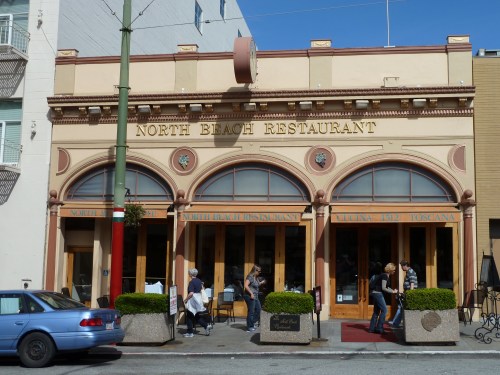
We had decided that we would try the North Beach Restaurant for dinner for the first time, provided we could gain entry (we hadn’t booked).  The restaurant looked very busy, but on presenting ourselves at the front desk, we were whisked to the only free table for two, adjacent to the kitchen.  That may not sound the most appealing location, and it was rather cramped, but Janet found it fascinating, catching regular momentary glimpses of the frenzy behind the scenes action as the front of house staff crashed through the doors leading in and out of the kitchen.

But what of the food and service?  This was traditional Italian fine dining at its best.  My linguine with porcini mushrooms and scallops was outstanding, as was Janet’s seafood risotto – even surpassing the excellent meals we had enjoyed at the Riva Grill in South Lake Tahoe a few days before.  And our waiter was suave, attentive and witty – well, Italian.

I had wanted to visit The Beat Museum on Broadway for some time, so as the night was still young (10pm), we called in.  The museum itself had already closed for the day, but we spent some time perusing the bookshelves and other fascinating memorabilia, and I bought a couple of books I had not seen before, one the 700 page Hippie Dictionary –  A Cultural Encyclopedia of the 1960s and 1970s by John Bassett McCleary and The Beats – A Graphic History.

After a canter past the fleshpots of Broadway, we sought refuge in Vesuvio’s bar on Jack Kerouac Boulevard – yes, another first night tradition.  Once more we succeeded in claiming the only two seats available, at the bar.  After a couple of drinks we walked down Montgomery through the Financial District before boarding a number 5 MUNI bus at Market to transport us back to the apartment.

It had been a long day but a satisfying one. We were truly “at home” again in our favourite city.

Read Full Post »


San Francisco can claim more than its share of personalities who have changed the course of society and popular culture, and Carol Ann Doda ranks high on that list.

She was born on 29 August 1937 in Solano County, California, and grew up in Napa.  Her parents divorced when she was three. She dropped out of school and became a cocktail waitress and lounge entertainer at aged 14.

Described as a “lovely, busty and curvaceous blonde bombshell” she achieved fame, or notoriety depending upon your point of view, on 19 June 1964 at the Condor Club at the corner of Broadway and Columbus in North Beachby dancing in a topless swimsuit, the first recognised entertainer of the era to do so, and spawning similar exhibitionism across the country. In fact, within 48 hours, the neighbouring bars had also gone topless, and at one point, 28 clubs along the Broadway strip were advertising bare-breasted dancers.

Her act, which she performed twelve times nightly, “began with a grand piano lowered from the ceiling by hydraulic motors;  Doda would be atop the piano dancing.  She descended from a hole in the ceiling.  She go-go danced the Swim to a rock and roll combo headed by Bobby Freeman as her piano settled on the stage.  From the waist up Doda emulated aquatic movements like the Australian crawl.  She also performed the Twist, the Frug and the Watusi“, all dances familiar to those of us growing up in the sixties.

She later spent $20,000 on enhancing her bust size from 34B to 44DD through a total of 44 (“just a coincidence” she said) direct silicone injections (now illegal because the plastic tends to migrate), earning her breasts the nickname of “the new Twin Peaks of San Francisco”.  She had them insured for $1.5 million with Lloyd’s of London, but never had recourse to claim on it. In his 1968 book, The Pump House Gang, Tom Wolfe referred to them as “two incredible mammiform protrusions, no mere pliable mass of feminine tissues and fats there but living arterial sculpture – viscera spigot – great blown-up aureate morning glories”.

Such was her popularity that delegates from the 1964 Republican National Convention flocked to see her and, four years later, she was given a film role as Sally Silicone in Head, created by Jack Nicholson and Bob Rafelson, and featuring The Monkees.  She appeared in another six films. The U.S.S. Kittyhawk aircraft carrier named her Pinup Girl of the Year and she even received a Business Person of the Year award from Harvard.

Doda created a further seismic impact in the entertainment industry on 3 September 1969 by dancing completely naked at the Condor, though she was obliged to reinstate the bottom part of her costume in 1972 after the California alcoholic beverages commission prohibited nude dancing in establishments that served alcohol.

She explained that “even in liberal San Francisco, what I did was technically a crime. The cops raided. The owner and I ended up in the slammer. I was back slamming on stage in two shakes of a stripper’s tail”.

In an interview with the San Francisco Chronicle in October 2011 Doda stated that she only caused a scandal “about a year and a half after I started, because the cops came in and said no more bottomless unless  you move the tables back 5 feet. I had to explain to the people we can’t do bottomless and topless because the health department folks are afraid our pubic hairs will jump into your drinks”.

As a witness during the trial of two completely naked dancers at the pink pussy Kat in Orangevale, California, arrested for “indecent exposure and lewd and dissolute conduct”, she performed to live song and dance numbers and a 17 minute movie entitled Guru You, at the Chuck Landis Largo Club in Sunset Boulevard, Los Angeles, which was set up as a temporary courtroom. Cross-examined by a deputy district attorney, Carol, dressed in a red miniskirt with blue piping and beige boots, explained that her act, rather than being pornographic in itself, represented a a satire on it, “to show people the humourous side of sex”.

She also became a spokesperson for Channel 36, now known as KGSC-TV, in San Jose when, filmed from the waist up and wearing clothes, she’d intone “you’re watching the perfect 36” (there was no channel 44 at the time).

Doda returned to dancing at the Condor three times a night in 1982, at the age of 45, performing to blues, ragtime and rock ‘n’ roll, dressed “in a gold gown, traditional elbow-length gloves, and a diaphanous-wraparound.  Her clothing was removed until she wore only a G-string and the wraparound.  In the final portion she was attired in only the wraparound.  Her small body looked slimmer without clothes which was emphasised by the dwarfing effect of her breasts”.

Despite the notoriety she earned by being the first dancer to break the topless / bottomless taboos in the U.S., her act was rarely regarded as sleazy.  As she herself said: “I always just wanted to give people a good time, have fun.  Nothing really dirty – just fun”.

Larry Inla, who spent most of 1966 playing in a band called Stark Naked and the Car Thieves at the Galaxy, a couple of blocks from the Condor, reiterates this point, recalling that, thanks in no small part (sic) to Carol, “it was a fantastic place at an incredible time” and that the “ambience was more naughty-but-nice, in a sophisticated European city kind of way, not a sleazy, dirty kind of way”.

Retiring from stripping later in her mid forties (“you can’t go on stripping forever”), she formed her own rock band, the Lucky Stiffs, with whom she played for several years.

Doda now runs the highly respectable “Carol Doda’s Champagne and Lace Lingerie Boutique” in a pretty courtyard at 1850 Union Street in Cow Hollow, which she opened after San Francisco Chronicle columnist, Herb Caen, who was a clear fan, announced in the paper that she was going to do so. She specialises in “plus” sizes and waits on customers personally. She takes particular pride in being recommended by Macy’s, Nordstrom, Sacs, Neiman-Marcus and bridal stores who can’t cater for larger sizes.

Well into the new millennium, she has continued to put ten years of voice training to good effect by singing, whilst fully clothed, club standards like All of Me  at a variety of North Beach clubs, including Amante’s and Enrico’s Supper Club. In late 2011, at the age of 74, she was still performing at Gino and Carlo’s Bar on Green Street in North Beach, where she had been for around twelve years.

And finally, in a city with high foodie credentials, she has been truly immortalised in having a gourmet hamburger named after her at Bill’s Place at 2315 Clement at 24th in the Outer Richmond! Unsurprisingly, it consists of “two third of a pound plus hamburger patties served side by side on a sesame seed bun, each patty topped with an olive and full garnish on the side”.

Read Full Post »


It is funny how it is only after I return from a visit to San Francisco that I start to ponder, even worry, about the prospect of a major earthquake hitting the city.

OLYMPUS DIGITAL CAMERA

I have recently been reading A Crack In the Edge of the World: America and the Great California Earthquake of 1906 by British born but recently naturalised American, Simon Winchester, a magnificent exploration of the origins, development and aftermath of the magnitude 8.25 Earthquake and ensuing Fire that hit the city on 18th April of that year, and it set me to thinking what is increasingly fascinating me from afar.

Aside from his narrative skill, Winchester, as befits a masters graduate in geology from Oxford, is perfectly placed to explain the scientific basis for earthquakes. Irrespective of how imperfectly I understand that science, his voice is authoritative, and this paragraph in particular sends a chilling message to all those living on the San Andreas Fault, and especially in the city by the bay:

It is not a question of whether a big earthquake will occur, nor even a question of precisely where it will hit. There will be a quake, it will be considerable, it will be somewhere in the vicinity of San Francisco, it will more than likely affect the San Andreas Fault or one of its cadet branches – and it will take place, most probably before 2032. The only true unknown is the precise year, month, day and time.

The U.S. Geological Society actually issued a formal forecast in 2003. Sometime before 2032 , along one of the seven fault systems that belong to the San Andreas cluster, and which cut their way through the Bay Area, there is a machine-computed probability of 62 per cent that an earthquake with a magnitude of 6.7 or greater will strike. There will be damage and casualties “on an impressive scale”.

All those communities, not least the major city in the area, have comprehensive plans for dealing with every type of disaster, as well as providing detailed guidelines for those “authorized to know what their duties and responsibilities are in the event of the most statistically likely major disaster that is anticipated in the region – and that is a very, very large earthquake”.

And, of course, since the Loma Prieta earthquake of 1989 that, amongst its other effects, caused part of the upper deck of the Bay Bridge to collapse onto the lower and much of the Marina district to be destroyed, many buildings have been checked and reinforced to enable them to stand a chance when the next “big one” arrives.

That is all reassuring I’m sure. But I wonder how far the citizens of San Francisco are truly geared up to cope when it comes. I suppose if the authorities kept hammering on about it it would instill a pervading sense of paranoia that would do nobody any good. But I have rarely seen or heard any references to the subject during my trips to the city. Having said that, it has not even crossed my mind whilst staying there – though I am becoming increasingly fascinated both by the historical context and the future potential for calamity.

So does it concern me that my beloved city could be seriously damaged any moment? Of course.

Does it deter me from visiting it often, and, hopefully, more than before, in the future? Not at all.

Is there just a small part of me that hopes I am there when it happens? I think there might be (many witnesses of the 1906 quake recorded their excitement at being part of a major historical catastrophe, and more still posed for photographs amid the ruins even as their homes disintegrated).

But do I wish it? Of course not.

I know that I have a number of readers who would be directly affected by an earthquake. Do they think about it at all? Do they worry about it? Are they confident that they would know what to do if such a disaster struck?

It would be interesting to know. Answers at the bottom of this post please.

Read Full Post »


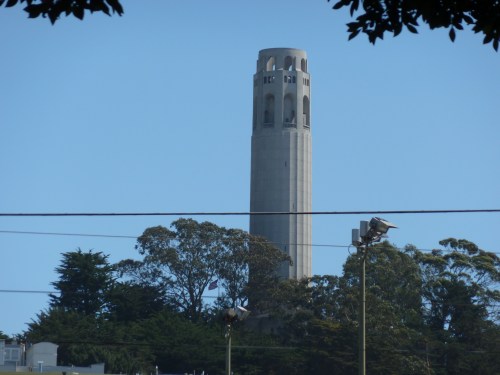
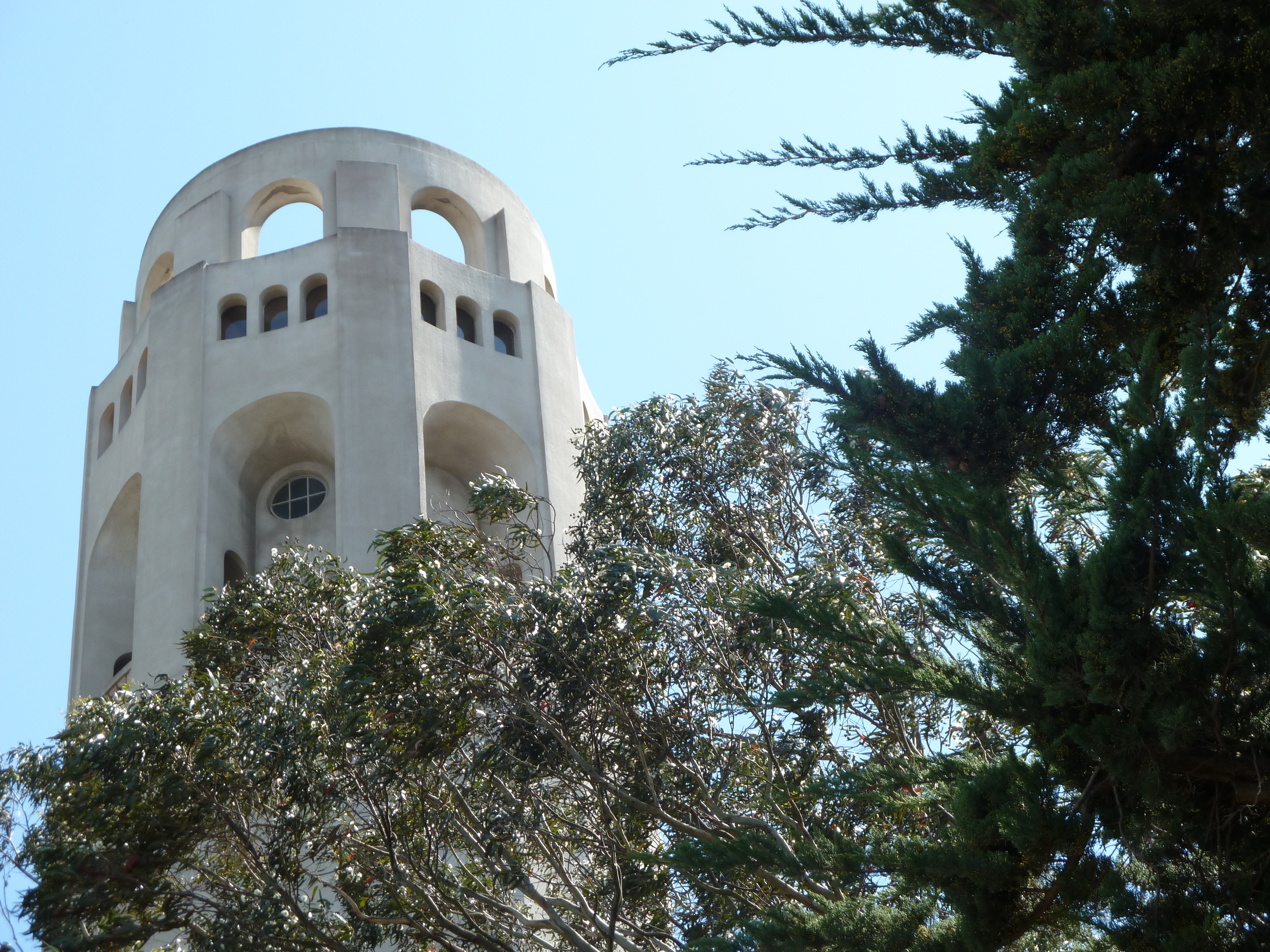
One of the most distinctive landmarks on the San Franciscan horizon, visible from most of the eastern half of the city, is 210 foot high Coit Tower on top of Telegraph Hill.

This is the story of the eccentric woman whose lifelong dedication to the city’s firefighters culminated in bequeathing a third of her fortune for its construction.

Lillian Hitchcock was born on 23 August 1843 at West Point, New York, the only child of Martha and Dr Charles M Hitchcock, a distinguished army surgeon, who had operated on the leg of Colonel Jefferson Davis. She moved with her parents to San Francisco in 1851.

Two days before Christmas that year she was rescued from the upper floor of the hotel in which she and her father were staying. Thanks to the firefighters from Knickerbocker Engine Company No.5. she was unharmed, fuelling a lifetime’s devotion to the same crew in their red shirts and war-like helmets.

This was in an era when fire carriages were designed to be pulled by hand. Firefighters lined up along a rope and pulled, like tug-of-war teams, in order to haul their engine to the fire. They would often be in competition with other companies to get to the blaze first. Such was the case when “Lillie” first saw her opportunity to repay “her men” for saving her when she was only eight years old.

Seven years after that event, the pretty, tomboyish 15 year old was walking home from school when she spied an underhanded Knickerbocker Engine Company No. 5 falling behind the Manhattan No. 2 and Howard No. 3 companies in responding to a fire call on Telegraph Hill.

Intelligent and quick-witted, Lillie hurled her school books to the ground nd rushed to help, finding a vacant position on the rope and calling out to other bystanders to help get the engine up the hill.  Largely through her intervention, No.5 was the first to the fire.

Frederick J. Bowlen, Battalion Chief of the San Francisco Fire Department (SFFD), wrote that it “was the story of Jeanne d’Arc at Orleans, The Maid of Saragossa and the Molly Pitcher of Revolutionary fame all over again” as she “exerted her feeble strength and began to pull, at the same time turning her flushed face to the bystanders and calling “Come on you men! Everybody pull and we’ll beat ‘em!”

From then Lillie became the Knickerbocker Engine Company No.5 mascot and honorary firefighter, swinging into action at the sound of every bell. She was elected an honorary member of the company on 3 October 1863, making her the only woman in the US to belong to a volunteer fire station. Her energy and speed were the envy of even the fittest of firemen. She rode frequently with No. 5, especially in street parades and other celebrations, bedecked in flowers and flags.

She wore a diamond-studded fireman’s badge reading “No.5” for the remainder of her life, started signing her name with a 5 after it, and even had its emblem embroidered on her bedsheets (some have suggested her undergarments too!). If a fireman fell ill she would sit with him in his sickroom, and provide floral tributes for the families of those who died.

By the age of 18 she was the “undisputed belle” of San Francisco according to Chief Bowlen.

Stories abound about her eccentric lifestyle. She was believed to have been engaged at one point to two men, wearing their engagement rings on alternate days. But she had resolved to marry wealthy easterner Howard Coit, a caller at the San Francisco Stock and Bond Exchange. Even after they had tied the knot in 1868, she continued to attend firemen’s balls and played poker with the men who nicknamed her “Firebell Lil”? She smoked cigars and wore trousers long before it was socially acceptable for women to do so, gaining her access to men-only establishments in North Beach. She is reputed even to have shaved her head to make the wigs fit better.

Her position in polite society did not prevent her from following her heart and dashing from parties and weddings in her barouche at the call of the doleful clang of a fire engine. Embarassing though this was for her respectable husband, she was generally regarded as an amiable eccentric and ladies either ignored or humoured her.

She was an “accomplished singer, dancer and guitarist” and enjoyed fine food, dining often at the famous French restaurant The Poodle Dog. She also kept her own recipe book.

Like her North Carolina mother, she was a southern sympathiser during the Civil War, spending the early war years there before moving to Paris where she became a notable figure at the court of Napoleon III, on one occasion marching into a prestigious masked ball dressed head to toe as a firefighter. She also travelled extensively in the east, particularly India, where she befriended the Maharaj.

But the lure of her adopted city, and in particularly its firefighters, was too much and she always returned to it, often bringing with her gifts from her regal contacts, notably rare gems, objets d’art and souvenirs.

Her long-suffering husband died in 1885, leaving a $250,000 estate. This was the trigger for Lillie to return to her wilder days, accompanying five men on an overnight camping trip and disguising herself as a man in order to lurk around the grubbiest dives at the waterfront.

Anxious to witness a prize fight she arranged for a pair of boxers to perform for her in her suite in the grand and elegant Palace Hotel in which she spent much of her later years. After she had the room cleared of furniture and breakables, the two men stripped and begun to pummel each other. Lillie watched this perched on a plush chair atop a table. After several rounds, and as the men had hit each other to a virtual standstill, the referee pleaded that the match be declared a draw, to which Lille retorted they should continue until a “bloody knockout”. The Boston Globe hailed the event as “pioneering a new way of life for women” but the New York Globe was appalled, labelling it a “staggering shock”.

In 1904 a distant cousin, angered by her refusal to let him manage her financial affairs, broke into her room whilst she was entertaining a Major McClurry with the intention of killing her. McClurry stepped in and saved Lillie but was injured and died of his wounds. With the scandal still fresh, she left San Francisco and spent the last two decades of her life abroad.

She inherited a further $60,000 and property from her grandfather.

She died on 22 July 1929 at the Dante Sanatorium in San Francisco, bequeathing the city $118,000 (estimates vary from $100,000 to $125,000) to “be expended in an appropriate manner for the purpose of adding to the beauty of the city I have always loved”.

After lengthy deliberation, during which two of its members resigned on the grounds that Lillie had actually hated towers, the Coit Advisory Committee used the funds to build Coit Tower on the site of the first west coast telegraph 5 years later.  In addition, it also erected the statue of three firefighters, one carrying a woman in his arms, that Lillie had commissioned herself, in Washington Square Park.  It is this statue that she had intended should be the one to adorn Telegraph Hill.     

Because of the association with Lillie, the shape of the tower is generally, and not unreasonably, felt to resemble a fire nozzle.  However, Arthur Brown Jnr, who also designed City Hall, refuted this suggestion. Other theories, including one not unrelated to her affection for the men she rode with, have been postulated, but none of these are any more plausible.

She remains the unofficial patron saint of all firefighters in San Francisco to this day.

Read Full Post »

« Newer Posts - Older Posts »