Feeds:
Posts
Comments

Posts Tagged ‘seaside’


I explained in my last post (in what appears now to have been a different archaeological period) why my wife and I had decided to move to the Kent coast, specifically my childhood summer playground of Folkestone.

( http://www.tonyquarrington.wordpress.com/2016/01/11/it-was-always-folkestone/ ) .

Well, two house sales, one flat purchase and much frustration and spasmodic heartache later, we descended upon the town a fortnight ago. And every night over the dinner table we interrogate each other as to why we hadn’t done this many years before.

But, of course, there were a number of viable reasons (or were they excuses?) – proximity to ageing parents, financial constraints borne of a meaty mortgage and an almost bank-busting propensity to go on expensive holidays, particularly to the west coast of the U.S.A, or maybe it was just unwarranted caution.

But there is no value in dwelling on those now.

It is the future that matters.

And the future is Folkestone.

OLYMPUS DIGITAL CAMERA

We might have settled into our new apartment a month or so earlier had our sellers – now, let’s put this kindly – not taken a more relaxed approach to moving than us. Firstly, they refused to let the estate agents have a set of keys, insisting that they show prospective buyers around their property. Their prerogative, of course, and they did afford us nearly an hour of their time on two occasions, making us tea and establishing a strong personal rapport (we thought).

However, the fact that they engineered a seven week gap between those two viewings and prevented the surveyor from examining the apartment for a further month, explained by a combination of work commitments and regular retreats to their holiday home in France, proved immensely frustrating and stressful as progress on the sale of our house in Gillingham proceeded smoothly.

OLYMPUS DIGITAL CAMERA

Moreover, half way through the process, and completely out of the blue, their solicitor delivered an ultimatum to us, insisting that we pay a non-refundable deposit of 1% within 24 hours or they would pull out and place the property back on the market. Disaster was only averted through by the estate agent persuading them that fairness dictated that they put up a similar deposit. An open-ended exclusivity agreement sealed the deal, barring subsequent major catastrophe.

We had viewed eight other properties in the West End of town, none of which remotely matched up in terms of visual appeal, character or size. Once we had seen the property and submitted an offer at the asking price within five minutes of leaving it, we were determined that it would be ours. We even took a significant financial hit following the survey on our own house to secure it.

And the physical move was not without its difficulties either. Firstly, despite valiant and agonising attempts to reduce my book collection before the move, enriching the minds of the populace of the Medway Towns into the bargain, there were still a huge number of heavy boxes of books for the removal men, not only to load onto their van at our former house, but to carry up forty one steps to our apartment in the sky at the other end. We may not have taken much in the way of furniture and white goods, planning to buy long overdue new items on arrival, but this was still a challenging task for them in addition to the ninety mile round trip.

They were brilliant by the way.

OLYMPUS DIGITAL CAMERA

We have already bought a new washing machine (to replace the one that had served us so well for twenty years) and our first king size bed, incurring the wrath, in the process, of two teams of delivery men doomed to lug them up those aforementioned stairs. I know it’s their job, but I felt a little guilty as I witnessed the grunts and groans that accompanied the manipulation of the items round and over the bannister at each level.

I dread what expletives might reverberate around the building when a new oven, fridge/freezer and wardrobe are delivered in the coming weeks!

But – let’s be fair – they have it easy.

Because, at least in the case of furniture, they don’t have to assemble the blighters!

The manufacturer’s instructions for the bed stated that it would take two people an hour and a half to accomplish.

Yeah right!

Now, I’m arguably the least competent do-it-yourself person  on the planet, though my wife, having been brought up by a handyman father and two equally proficient brothers, has some aptitude (and, miraculously, managed to translate the nineteen pages of obtuse drawings into a workable plan).

I may never have been more impressed by her than on that day.

My contribution, such as it was, was to supply the occasional burst of brute strength.

So how long did it take us?

Only the seven hours!

Usain Bolt could have run the hundred metres 2,520 times in the time it took us to put that  together!

But it was worth it, even if there is still a niggling worry as we lay our heads down at night that it’s going to collapse beneath us.

By the way, the washing machine is working well. It even seems to know when the clothes haven’t quite dried and takes it upon itself to add a few minutes to the cycle. Modern technology eh?

OLYMPUS DIGITAL CAMERA

Well, at least we were able to slump in front of the television after our mammoth Saturday morning/afternoon ordeal.

Wrong!

Despite assertions before the move that our Virgin Media services would be installed within a few days of our landing in Folkestone, we will have had to wait three weeks before we have an operational landline, broadband or TV in the apartment. Consequently, we have not seen a single minute of the Olympics or the start of the Premier League season – oh, and I must not forget the soaps (my wife instructed me to include that). That said, we have caught up with a lot of movies and television series on DVD that we have not seen for years, or, in some cases, not even taken the outer sleeve off!

Telephone access is not a problem as we have mobile phones, but obtaining meaningful Wifi access (other than on said devices) has necessitated expensive daily trips to the coffee shops of Folkestone (I’m on my second flat white of the morning in Costa Coffee as I write this).

I would not wish any of the above to give you the impression that we are regretting the decision to move.

Far from it.

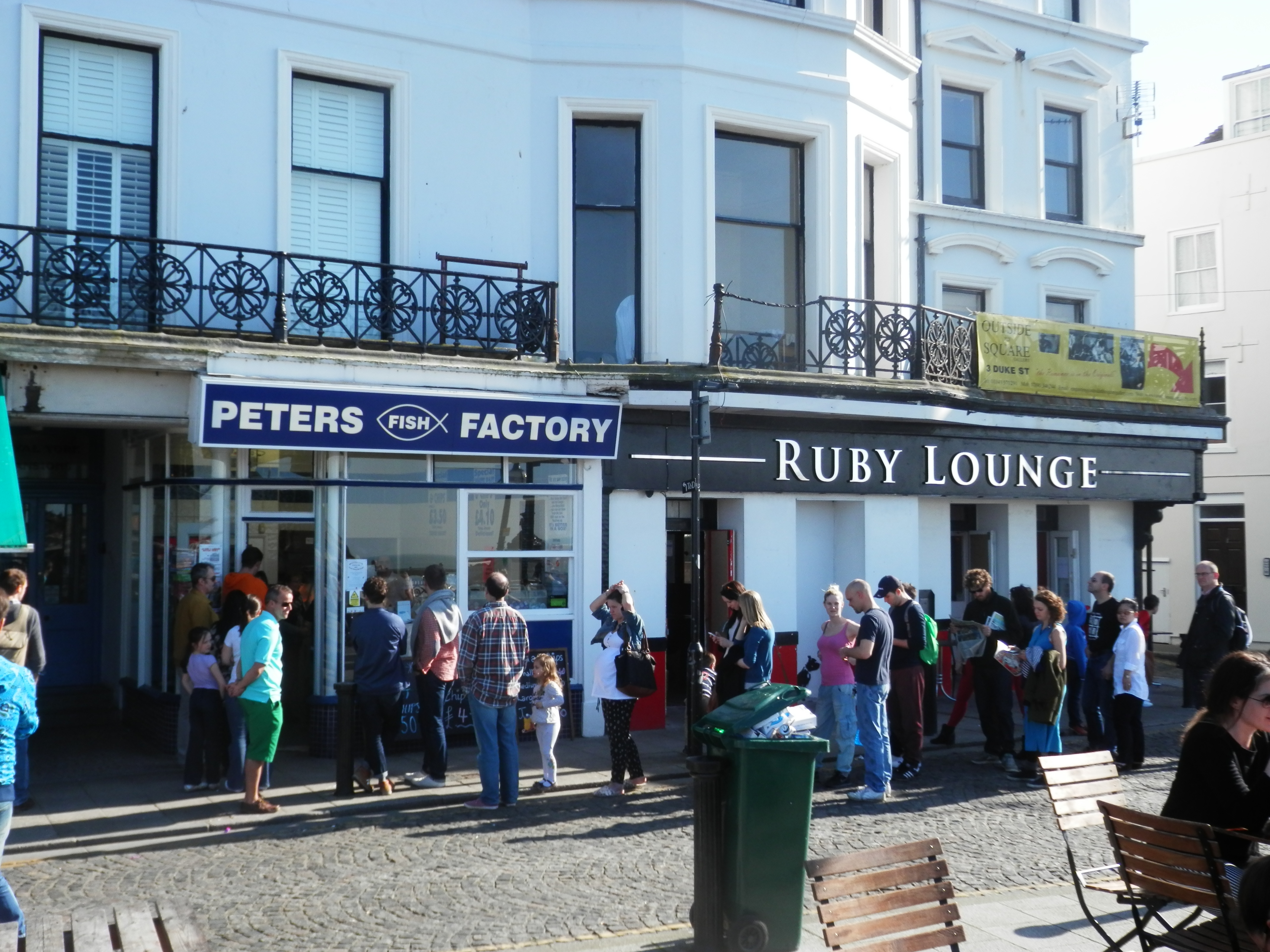
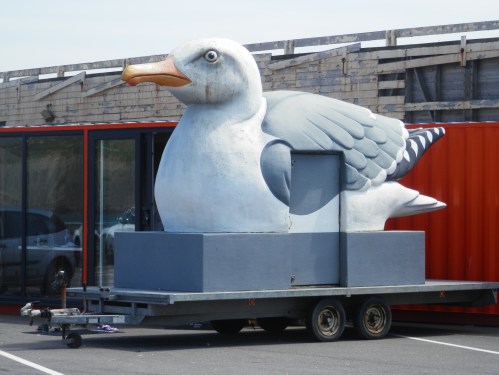
The glorious skies, near constant sunshine (so far), even the noisy but necessary birdlife have all been a joy, and Bob’s and Chummy’s at the harbour, Rocksalt, Copper and Spices, Django’s, the Lighthouse Champagne Bar at the end of the Harbour Arm, the GrandSteep Street coffee house and others have all benefited from our custom over the past fortnight.

A significant added and unexpected bonus has been my wife’s transfer from Chatham to Folkestone, converting a round trip drive of more than two hours into a ten minute walk to her new office.

We had planned to head out west in late September for a few weeks. This was diluted to a week in Italy as the exchange rate plummeted following the EU referendum (I refuse to use THAT word). Now, we have decided to stay at “home” and acclimatise ourselves to our new surroundings. After all, there is a sense that we are still on holiday and staying in somebody else’s apartment, but I’m sure that will recede as autumn and winter approach (or will it?).

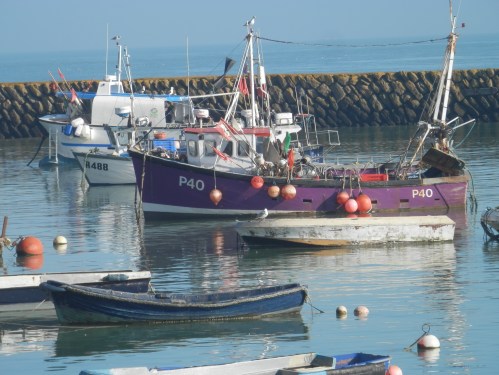
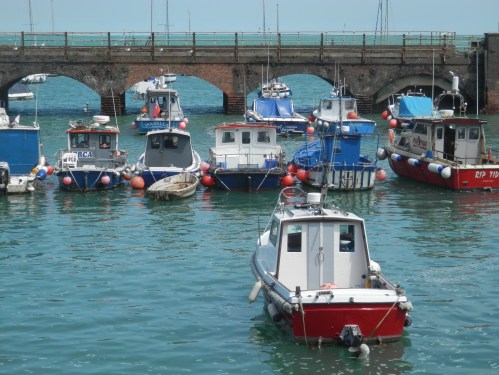
But when I can gaze upon views like those below every day I feel blessed, and any temporary and trivial hardships, before, during and after the move, simply fade away (unlike love).

OLYMPUS DIGITAL CAMERA


OLYMPUS DIGITAL CAMERA

OLYMPUS DIGITAL CAMERA

OLYMPUS DIGITAL CAMERA


OLYMPUS DIGITAL CAMERA


Read Full Post »


Margate, on the north eastern tip of the Isle of Thanet in Kent, sixty four miles east of London, epitomises the rise and fall of the English coastal resort.  A booming seaside town in its Victorian heyday, and still hugely popular as recently as the nineteen sixties, it declined into decay and dilapidation in the past quarter of a century. But now it is slowly emerging from the ashes with an ambitious regeneration programme designed to re-position the resort as an artistic and heritage destination.

OLYMPUS DIGITAL CAMERA

Turner Contemporary

It was the association, during the eighteenth century, of seawater with good health due to its spa qualities that sparked an interest in the coastal resorts around Britain. Initially a fishing town, and a haven for smugglers, Margate capitalised on the growing passion for “taking the cure” in the sea by constructing, as early as 1805, bathing machines that allowed ladies to enter the water from its beautiful sandy beaches with the utmost modesty.

OLYMPUS DIGITAL CAMERA

The Main Sands (during Quad Bike show)

Growth, however, was slow in the early decades because it took several hours to travel from London to the town and the cost was prohibitive for the average worker   Moreover, accommodation provision was negligible. This all changed in the nineteenth century.  Firstly, steamboat services reduced the cost and time of travel from London, with a discrete service operating to Margate by 1820.  Grain hoys unloading their cargo at London docks would return to the town “laden with passengers”.  Piers were built, initially to provide landing stages, but they soon became the places to be seen.

OLYMPUS DIGITAL CAMERA

The Harbour Arm

The expansion of the railway network, along with the enactment of the Bank Holiday Act in 1871, put the resort within the reach of working class Londoners.  For those who could afford a longer stay than the customary day trip, guest houses began to emerge, often in impressive Georgian and Victorian houses.  Margate was invariably in the forefront of innovation and convenience for the holidaymaker, not least in being the first resort to provide deckchairs on its attractive, sandy beaches in 1898.

OLYMPUS DIGITAL CAMERA

Fine, sandy beaches abound

With improved transport links, fine sandy beaches and a carefree atmosphere, Margate was a highly popular holiday destination during Victorian times, welcoming, by 1879, between 16,000 and 24,000 people every day during the summer.  Its popularity endured beyond the two world wars and well into the third quarter of the next century.  Day trippers, often on works or club outings, would stream off the trains and coaches from the capital for a “day on the sands, donkey rides, cockle and whelk stalls, fish and chips, Punch and Judy and amusement arcades”.

OLYMPUS DIGITAL CAMERA

Queues for fish and chips are long all day

Tracey Emin, a Margate native and impassioned champion of the resort, speaks lovingly of her upbringing in the town, and recalls, in the late sixties and seventies, visiting the “Lido – a giant art deco half-moon pool with an array of diving boards”, and listening to Tony Savage playing the organ while “old ladies dance together to Tea for Two”.  Thousands of striped deckchairs adorned the golden sands and the “Golden Mile would be a siege of people walking eight-deep with candyfloss and kiss-me-quick hats”.

Every day from May to September was “full of golden sunshine and beautiful emerald green seas”.  Carnivals, talent shows, bathing beauty contests, puppet theatres thrived and the Winter Gardens and Theatre Royal welcomed the major music hall and, more latterly, TV stars of the day.

The jewel in the crown  was the fifteen acre Dreamland Amusement Park.  The site was formally opened in 1920 when, inspired by Coney Island, the mile long Scenic Railway wooden rollercoaster was unveiled, carrying half a million passengers in its first year alone.  Other rides followed and the site was augmented, partly with investment from Butlins, by the construction of a huge ballroom, cinema, pleasure gardens, ice rink, zoo and Big Wheel.

OLYMPUS DIGITAL CAMERA

Improving refreshment facilities

Purchased in 1981 it became Bembom Brothers White Knuckle Theme Park, reverting to the Dreamland name in 1990, and, with the addition of a number of “high tech” rides, it was one of the top ten most visited tourist attractions in the UK.

OLYMPUS DIGITAL CAMERA

Once it lived up to its name………maybe again?

But a lethal combination of longer paid holidays, inexpensive package tours to Spain and, more latterly, the rise of low cost airlines, spelt the end of the halcyon days of the domestic seaside resort.  British tourists could now afford to travel abroad where sunshine was guaranteed and the cost of living was often cheaper.

Margate was especially badly hit by the dash to the Med. As fewer visitors stepped off the trains, much of the Victorian infrastructure – piers, sundecks and Grade II listed buildings – were blown up or left to rack and ruin. Natural disasters also put paid to much loved icons, with the 123 year old pier perishing during a violent storm in 1978.

OLYMPUS DIGITAL CAMERA

Sunday lunchtime outside one of its many pubs

Many of the large guesthouses, of which the town was once proud, were split up into bedsits, others became care homes or social housing, inhabited by asylum seekers, refugees and the elderly, placed there by local authorities from as far afield as London.

As the number of visitors dried up, local industry declined, resulting in abnormally high levels of unemployment and social deprivation for the region with the accompanying increase in crime.

OLYMPUS DIGITAL CAMERA

Only the sign remains

The sale of Dreamland in 1996 led to many of the rides, including the Big Wheel, being removed to other parks or sold off.  In 2003 the new owners announced that the park would close and the land sold for retail and commercial use.  Its closure came two years later, sold for a fraction of its real value. Around a third of the Scenic Railway, now Grade II listed and the second oldest in the world, was severely damaged in an arson attack in April 2008.  Despite having its Listed building status upgraded to Grade II* (buildings of special architectural or historic interest) the Dreamland Cinema also closed in 2007, replaced, inevitably, by an out of town multiplex cinema.

Even the famed Main Sands progressively lost their glamour.  The only remaining donkey ride licence holder in the resort gave up his licence in 2008, signalling the end of a service that had thrilled small children for more than two centuries. And as recently as June 2010 year businesses complained that the “stench of rotting seaweed” on the seafront “driving away tourists”.

OLYMPUS DIGITAL CAMERA

Looking back towards town from the harbour arm

To compound the frustration for Margate, its neighbours Broadstairs and Whitstable , have both enjoyed a renaissance in recent years, trading primarily on their respective Victorian and “foodie” identities.  That said, the typical visitor to those resorts was always a little more sophisticated than the traditional working class visitor to Margate.

In order to remain a viable tourist destination, the challenge for Margate is to enhance and, where necessary, revamp the unique and appealing parts of its product to meet changing tastes.  If it can develop new attractions and facilities that satisfy the modern holidaymaker, as well as entice customers craving a lost past, then even better, especially in a period of austerity.

OLYMPUS DIGITAL CAMERA

Heaven for every child from ages 2 to 102

And despite its recent troubles Margate still has outstanding natural features that ought to be marketed to the hilt.  The beaches are excellent, in particular the lovely sweeping curve of the Main Sands, which has consistently achieved Blue Flag status, though controversially and, it is anticipated, temporarily, it was removed in August 2010.

Moreover, despite their current shabbiness, many of the remaining Georgian and Victorian houses along the seafront have an air of gentility that, with careful renovation, could light up the promenade again.  And the Old Town, with its narrow lanes and streets, also exudes a charm that could be better promoted to attract the missing tourists, though the preponderance of boarded up shop fronts makes it hard for the visitor to look beyond the current down at heel atmosphere.

OLYMPUS DIGITAL CAMERA OLYMPUS DIGITAL CAMERA OLYMPUS DIGITAL CAMERA

Scenes from the  burgeoning artistic quarter

There are two major developments, part of a wider regeneration project, which might just put the town back among those premier seaside resorts such as Blackpool and Bournemouth that have successfully ridden the storm. Dreamland is Margate’s core, talismanic built attraction.

There is now hope for its future.  Rejecting the previous owners’ desire for it to become a retail and commercial site, local people and Government have secured its continued use as a leisure facility. The aim is to redevelop it as the world’s first amusement park of historic rides and attractions, the centrepiece of which will be a renovated and restored Scenic Railway.

OLYMPUS DIGITAL CAMERA

Another of the lovely beaches

Some vintage rides have already been donated, including many of the unique rides from the defunct Pleasureland Southport amusement park such as the 1940s Catapillar Ride, King Solomons Mines rollercoaster, workings from the Ghost Train and River Caves and Hall of Mirrors. The Junior Whip from Blackpool Pleasure Beach and the now-demolished water chute at Rhyl are also destined for new homes on the North Kent coast. The success of Dreamland’s new incarnation when it opens will be fundamental to the town’s financial and spiritual well being.

OLYMPUS DIGITAL CAMERA

Main Sands with artistic quarter in background

Art and culture stand alongside heritage at the heart of Margate’s regeneration plans.  Conceived as a new twist on its tourist offer the £17.4 million Turner Contemporary art gallery is located in a plot of land adjacent to the harbour.  It is already having the same positive impact as the Tate Gallery in St Ives in Cornwall has had.

OLYMPUS DIGITAL CAMERA

Turner Contemporary watches over the fishing boats

J.M.W. Turner said that Margate had the “loveliest skies in Europe”, and painted more than  a hundred  scenes to prove his point.  The controversial gallery named in his honour plans to exhibit work from a variety of artists, including that of Tracey Emin.  The gallery is designed not only to attract high paying visitors but also to reduce the town’s reliance on the summer season by providing year round exhibitions.

OLYMPUS DIGITAL CAMERA

The evidence for Turner’s claim

Margate has endured spectacular growth, maturity and depressing decline over the past two hundred years.  Restoring it to its former glory will be a daunting task but, through the planned marriage of art and heritage, spiced with nostalgia and allied to its wonderful natural assets, it deserves to succeed.

And on a glittering March afternoon like that on which I wrote this piece, there are fewer finer places to be.

Read Full Post »


With the exception of a couple of years in County Cork, all my summer holidays between the ages of 10 and 18 were spent in and around the once fashionable seaside resort of Folkestone in Kent, on the southeastern coast of England, a handful of miles from the fabled White Cliffs of Dover.

Although there was only one small, and invariably packed,  patch of sandy beach along its lengthy seafront (most was pebble and shingle), the magnificent Rotunda amusement arcade, fringed by fairground rides, putting green and boating lake, kept this young boy and his cousins handsomely entertained for two weeks.

And if, in the unlikely event we got bored, there was county cricket at the Cheriton and a testing pitch and putt golf course on the windswept cliffs overlooking the small but bustling harbour, where plates of fresh cockles and whelks were in abundant supply. Finally, there was a daily ferry service to Boulogne in Northern France, though my recollections of a youthful life on the ocean wave have more to do with leaning over the side of the boat than tucking into a full English breakfast in the café.

Folkestone may not have enjoyed the cheeky, “kiss me quick” ambience of Margate or Southend, but I loved its quieter, more refined atmosphere, and have much affection for it still. My parents even spoke on occasion of retiring to the resort but, sadly, it never happened.

OLYMPUS DIGITAL CAMERA

The past forty years have seen the town, in common with many other resorts around the British coastline, decline dramatically as a holiday destination as people have taken advantage of greater leisure time and resources to travel further afield. The rotunda and surrounding attractions have been demolished, the lively, cobbled Old High Street that winds up to the modern town centre fallen into disrepair and many of the businesses dependent upon holidaymakers closed.

Gone are the shops selling postcards, beach balls and buckets and spades. Gone are the traditional tea rooms and fish and chip restaurants. And gone is the shop with the big picture window through which children and adults alike gaped in awe at sticks of Folkestone rock being made.

image

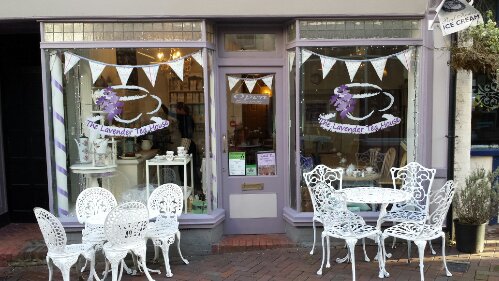
But there are signs that Folkestone is beginning to stir again. The Old High Street has undergone a makeover. One of a kind gift shops, artisanal food stores and galleries have emerged in recent years, along with a burgeoning artistic community. A handful of attractive restaurants have sprung up around town and extensive investment has been forthcoming. There may no longer be any cross-channel services, but the town’s accessibility from London and the rest of Kent has been enhanced by the arrival of a high speed rail service.

image

image

image

The jewel in Folkestone’s crown remains the Leas, once described as “indisputably the finest marine promenade in the world”, a wide clifftop walk with well tended flower beds and glorious views across the channel. On a clear day, you can almost pick out individual buildings on the French coast as you head towards the neighbouring resort of Sandgate.   Imposing old hotels speak of the resort’s former glory, no more so than the Grand and Metropole, though some are now holiday apartments.

image

Despite the loss of the ferry service and crazy golf course, as well as the diminution in the fishing trade, the pretty little harbour and adjoining Stade with its seafood stalls still retain some of the atmosphere that first captivated me fifty years ago.

OLYMPUS DIGITAL CAMERA

The arrival of the Turner Contemporary, projected rebirth of Dreamland and high profile exposure on television have given Margate a disproportionate amount of attention in recent years. And that really ought to bear fruit in time. Broadstairs and Whitstable, with their attraction for more affluent Londoners, are already bucking the trend of decline.

But the Guardian newspaper’s recent rating of Folkestone as one of the world’s best holiday destinations in 2014 may serve to redress the balance somewhat. Those heady days of the past will never return, but Folkestone is showing signs that it may have a future.

Now, if they could only rebuild the Rotunda and resume playing county cricket there ………….


(more…)

Read Full Post »

« Newer Posts