Feeds:
Posts
Comments

Posts Tagged ‘Tony Quarrington’


We had been warned that high quality dining options were severely limited in Hurricane, Utah. Moreover, it was likely to prove difficult to obtain an alcoholic drink – beer possibly, but certainly not wine.

And those warnings were sadly endorsed over the next few evenings.

It all began when we went out to dinner on our first night. Having consulted TripAdvisor and selected its number one restaurant, a pizzeria in a cinema complex around a mile away, we were feeling optimistic. Armed with the respective street numbers we set off in our search for the cinema.

We found this easily enough – but no sign of any pizza restaurant. We walked a little further and then around the whole area, all to no avail. It was only when we returned to the motel and read the fulsome TripAdvisor reviews a little more carefully, that we discovered that it was only a mobile street wagon that set up stall during daylight hours (and even then not on a Wednesday)!

We headed off back in the direction of the motel, only mildly disappointed because we had spotted an attractive looking restaurant called Barista’s on the way down. And by the time we had been sat at our table and started to read the hundreds of  alleged customer testimonials claiming that the pizza and ice cream, along with many other items on the menu, were the best on the planet, we had struck lucky in adversity.

I like to think that I am reasonably streetwise, and do not often get hoodwinked by confidence tricks (I’ve conveniently forgotten the guy on Fisherman’s Wharf in San Francisco who screwed ten bucks out for me for “cleaning” my boots), but this proved to be one of my dumbest moves.

The teenage waitress in shorts who clearly wanted to be anywhere else took our drink order. Conscious already that wine was out of the question, we asked what beer they had. With a huge sigh the girl said “St. Pauli” in a “take it or leave it” manner, so St. Pauli it had to be. Now, although I didn’t articulate it immediately, I was familiar with this German brew and suspected that it might be non-alcoholic. After the girl had yanked the bottles out of the fridge and slapped them down on the table, and we had taken our first sips (it was too unpleasant to gulp), we knew it.

The food, whilst not inedible, also fell way short of the absurd praise scrawled over every inch of wall space (the staff must have had great fun fabricating that piece of fiction). My miniscule portion of fish and chips was delivered in a cereal bowl and Janet’s enchiladas came with no accompaniment whatsoever – not a hint of beans, rice or sour cream. The “service” remained surly and peremptory. Indeed, I think it might have been the first time I had eaten in America without being asked continually during the meal by the server whether the food was acceptable.

To add insult to injury, on reading both TripAdvisor and Yelp reviews back in the motel, we read a lengthy litany of furious, even vicious comments about the food, beer and staff attitude. And yet it had looked so appealing from outside. The words book, judge and cover sprung to mind.

We consoled ourselves by purchasing  a six pack of beer in the local gas station, though even this was of low strength (Bud Light, Coors Light and the like).

This was not, however, why I got to sleep so easily that night. I can thank the account of Joseph Smith’s revelation in the Book Of Mormon for that.

Having exhausted the full extent of Hurricane’s gourmet offerings on that first evening, we played safe on the following night by buying in a Domino’s pizza, washed down again by insipid beer.

We were no more successful in hunting down a bottle of wine to have with our evening meal on the following two nights in Panguitch. Raids on assorted supermarkets and gas stations proved equally futile. Only the dining room in the lodge at Bryce Canyon proffered a wine list, but, of course, that was at lunchtime and we were about to embark upon a prodigious hiking expedition that afternoon.

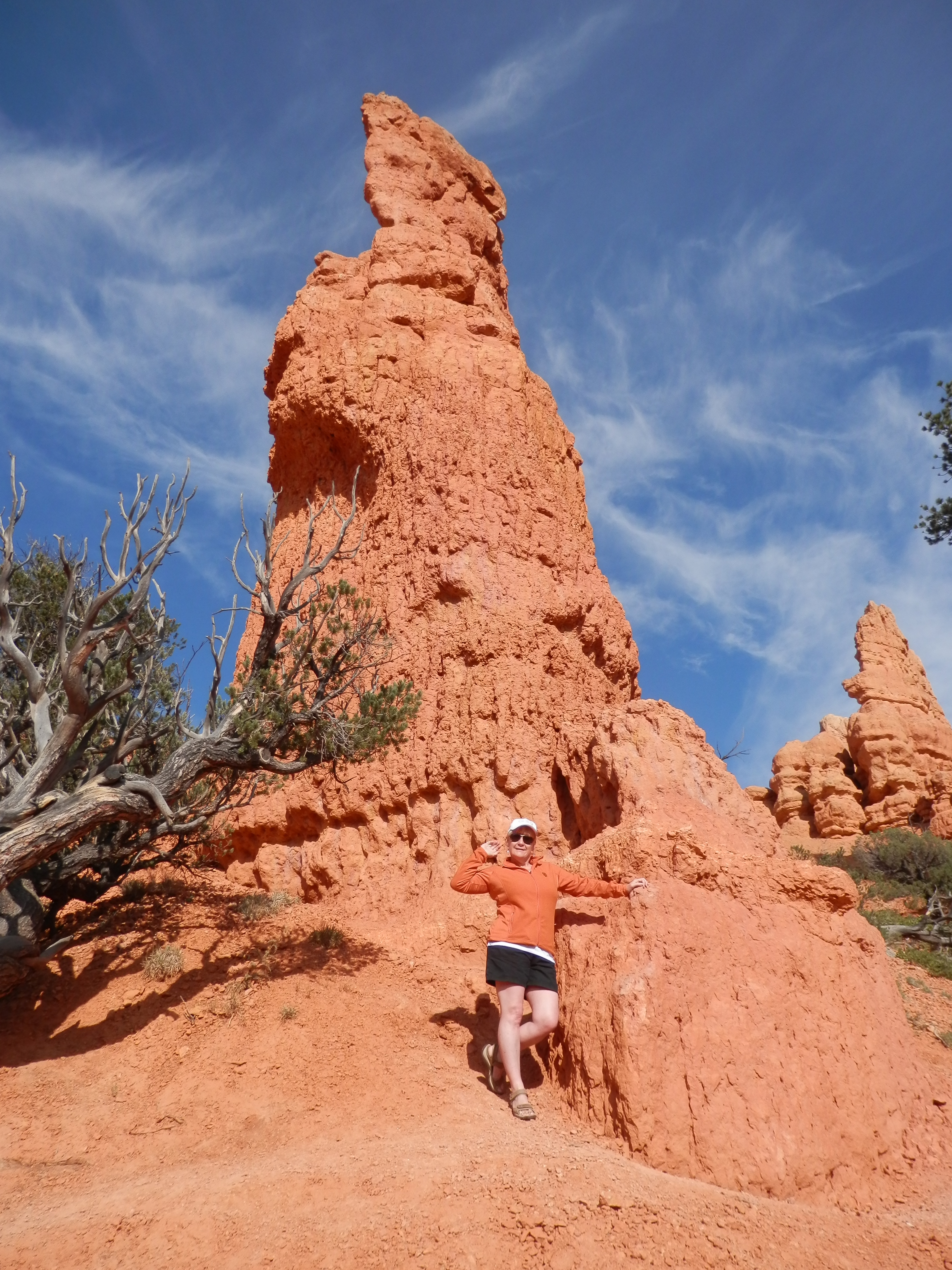
Whilst our stay in Utah was, in all other respects, wonderful, with visits to Zion and Bryce Canyon National Parks, Cedar Breaks National Monument, Red Canyon and Pink Coral Sand Dunes Park, our first swing into Arizona meant one thing above all other. No, not Lake Powell or the Grand Canyon but an opportunity to partake of one of the most civilised pursuits available to humankind – consuming a glass of wine.

Having got that off my chest, it is time to return to the true hero of this diary – the road.

And the journey between Hurricane and Panguitch had some interesting moments.

Read Full Post »


Firstly, apologies to Brigham Young for the deliberate misquote, but it seemed as apt a title as any for the drive from Las Vegas to Hurricane, Utah where we were to spend the first two nights of our road trip.

It got off to an electrifying start …………………….. with a lie-in and a spa bath. Making the most our deluxe room in Mandalay Bay, I was also able to complete the first post of my road trip blog.

We checked out at the latest possible time and collected the car from valet parking, when the guy who delivered it to us unaccountably disappeared before I was able to make his day by dispensing my customary $2 gratuity. Within a couple of minutes we were on the I-15 north in the direction of Salt Lake City (401 miles). It was already very warm and sunny, with temperatures forecast to tickle 100.

Locating a country music station on the car radio proved more difficult than anticipated, and after rejecting around 20 stations, spewing out everything from hip hop to power ballads, the comforting tones of Kenny Chesney took over. We had landed on 955 FM Vegas Country KWNR and life was good.

The landscape quickly gave the impression that a race of furious giants had ripped up and stamped upon it at some time in the distant past, leaving a jumble of cliffs, hillocks and mounds of varying sizes and colours.

We passed through the Moapa Indian Reservation and alongside the Valley of Fire State Park and Lake Mead National Recreation Area before arriving, 85 miles and 70 minutes after setting off, at the town of Mesquite, Nevada.

We cruised through the main street in search of a suitable lunchtime dining option. The signs were gloomy until we spotted Peggy Sue’s 50s Style Family Diner.  Dave Gorman, the English comedian, whose book Unchained America recounted his mission to cross the USA “from sea to shining sea” without paying even a cent to “the man”, would have been proud of us. This was the sort of place you should eat at on the classic road trip.

And Peggy Sue’s was indeed a classic. We were greeted with Laurel and Hardy on the TV at the end of the restaurant and Roy Orbison on the jukebox. The walls were liberally adorned with photographs of movie stars (Marilyn Monroe and James Dean amongst them) and Elvis (obviously), US flags (equally naturally), 45rpm discs, vintage Coca-Cola bottles and metal advertisement signs.

In addition to the customary condiment containers, and in the unlikely event that conversation should slacken in the few short minutes before your order arrived, each table had a series of books on it by Ben Goode, amongst which were  How to Cope when you are surrounded by IDIOTS…….Or if you are one, How to Share a Bad Attitude and The Fine Art of Worrying. They, and many others, could be purchased at the till for a measly $7.99 each.

The waitress was loud (in a good way), enthusiastic and attentive, which set me wondering, not for the first time, why her British counterpart invariably demonstrated the opposite characteristics. And then it occurred to me – why not sack all restaurant waiting staff in the UK and replace them with the London 2012 Games Makers? Moreover, they could work for free – there’s one you hadn’t thought of, Mr Cameron. In fact, the idea could be replicated in other industries.

Shortly after we resumed our journey, we were joined by the Virgin River which wended its muddy way through the steep cliffs on either side.

It is often said that beautiful American roads are too often scarred by huge, garish billboards, but, advertisements for fast food joints, motels and politicians aside,  the prize for the daftest sign today must have been the one that advised us to “Watch for Rocks” The entire landscape comprised rocks of various shades of red, orange and brown!

As we entered Utah where, according to the welcome sign on the state line, our life was about to be “elevated”, we lost an hour (moving from Pacific to Mountain time) but gained a degree (it was 99 now).

We stopped for coffee in St. George, an attractive and civilised town with two bookshops (always a good sign for me) and many public art works, including lovely bronze statues scattered around the main square where gleeful children  froliced through water features.

St. George is home to the dazzlingly white Mormon Temple , the only Latter Day Saints temple completed during Brigham Young’s lifetime, giving it a special place in the Mormon world. We decided not to visit, partly on the advice of our guidebook which advised that non-Mormons were not permitted to enter, but also that any caller to the adjoining visitor center was as likely to leave on a two year mission to Mozambique as be sold a guidebook.

Besides, this particular pasty-faced Brit would rather escape the heavy hundred degree heat for the comfort of the air conditioning in the car.

We left I-15 at junction 9 and took the road leading to Zion National Park. After nine miles we arrived at the Travelodge in Hurricane where we would be staying for the next two nights.

Our unusual dining experiences there will have to wait for the next article.

Read Full Post »


“Road Trip” – is there another phrase that better exemplifies the heart of the American experience? Apple pie perhaps? Have a nice day? Manifest destiny? No, none of those come close to capturing the same sense of freedom and adventure that is synonymous with the American Dream.

Well, dear reader, as you are a valued friend, I am inviting you to join my wife and I on our very own road trip of the American southwest over the next three weeks. Come with us as we criss-cross five states (Nevada, Utah, Colorado, Arizona and New Mexico) and three time zones.

We’ll hear the siren song  of the slots in Vegas casinos, listen to the mournful wail of country music radio as we glide the endless highways, and gasp at massive, multi-coloured incisions in the earth’s surface.

We’ll meet peoples from the rich diversity of American culture, including Mormons and Native Americans.

We’ll take juddering jeep trips with Indian guides into the heart of their reservation where we will purchase Navajo and Zuni jewellery.

We’ll stand at the only point on the North American continent where four states intersect, and have our photo taken like the dutiful tourists (I prefer the word travellers) we are.

We’ll eat at authentic cantinas and  tacquerias and sleep in beds where once slumbered the the Hollywood stars of yesteryear.

We’ll even find ourselves standing on a corner in Winslow, Arizona, waiting, or at least I will, for a girl in a flat bed Ford to slow down and take a look at me.

The itinerary?

I write this in our hotel (Mandalay Bay) room where we spent last night after a tortuous 15 hours on a Virgin Atlantic plane and equally frustrating wait in line for the car hire. But a fine meal and live swing band in The House of Blues, followed by a solid night’s sleep, has us ready for the road this morning.

Today we drive to Hurricane, Utah for two nights, the base for our exploration of Zion National Park. We then move on to Panguitch, Utah, close to Bryce Canyon for a further two nights. Staying at Page, Arizona for another two nights will enable us to visit Lake Powell and Glen and Antelope Canyons.

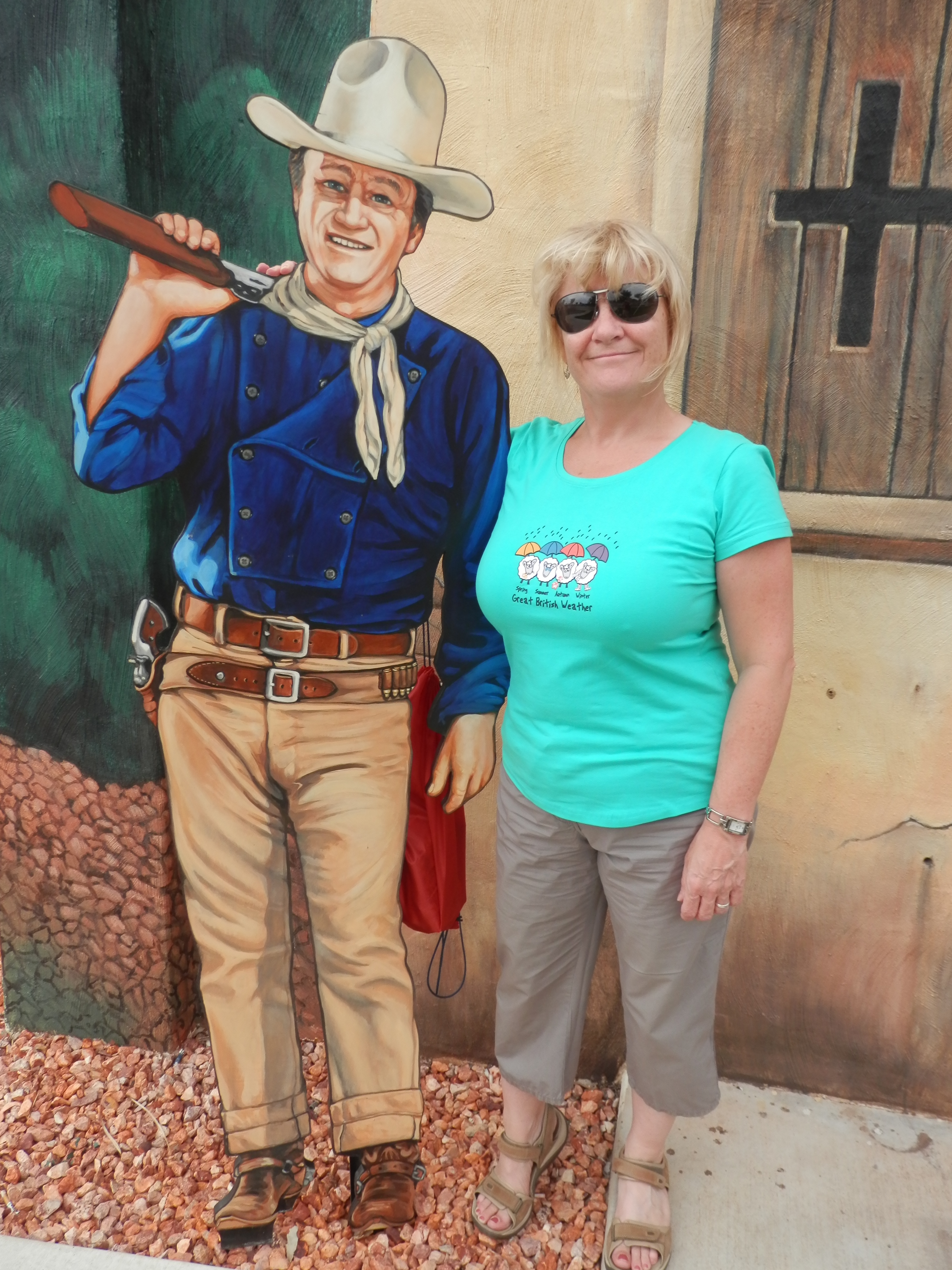
The highlight will be our trip to Monument Valley in the heart of the Navajo Nation, iconic location of so many westerns directed by John Ford and starring John Wayne.  A stay in Kayenta, Arizona that night will predate two nights in Moab, Utah, our base for Arches and Canyonlands national parks.

On the premise that we will be “red rocked out” by then, and that our hiking boots might have earned a rest, we will wind down a little at this roughly mid point. The sightseeing will become more leisurely as we move on to Durango, Colorado and then into New Mexico for stays in Santa Fe (two nights), Albuquerque and Gallup before driving Route 66 to Flagstaff, Arizona.

A two night stop there in which we will “pop over” to Sedona and the long drive back to Vegas, sixteen days after we left it, for the final four nights, the second of which will be my sixtieth birthday.

The rigours of the road will dictate whether we might take short detours to Los Alamos, New Mexico and the Mesa Verde National Monument.

Sounds fun?

So jump in the back seat of the car, tip your hat over your face, but not before grabbing a couple of Buds (or rather Sierra Nevada or Anchor Steam beers), kick off your cowboy boots, sing along to Hank Williams and Toby Keith, and enjoy the ride. It’ll be a blast!

Time to head out on the highway.

Read Full Post »


It was the longest of fortnights, it was the shortest of fortnights.

In witnessing the most exhilarating public event of my life, I, along with millions of others, was enraptured by, and became not a little knowledgeable about, previously obscure and disregarded sports like taekwondo, dressage, beach volleyball and BMX racing (I still draw the line at synchronised swimming), fuelled by the BBC’s all-embracing coverage.

But now they are over, gone as quickly as they arrived. What do I do now between the hours of 9am and midnight? Where are the rowing coxless pairs heats, 58kg weightlifting semi-finals and 50m rifle 3 position shooting final when you need them, and not just because they passed the time but because they inspired and enthralled us?

But let’s not dwell on my post-Games melancholia just yet.

Apologies in advance to my international readers – this is an unashamedly GB-centric piece, and merely passing reference to the prodigious feats of Usain Bolt, Michael Phelps, Missy Franklin, Oscar Pistorius, David Rudisha and many others does not diminish their extraordinary achievements.

It really all started on the first Wednesday (day 5) when my wife and I, intrigued but ticketless, decided to travel to Stratford and spend the evening at the Westfield shopping centre adjacent to the Olympic Park. As I had left the house, Helen Glover and Heather Stanning had just won Team GB’s first and, what seemed at the time, long overdue, gold medal in the women’s rowing pair.

Delivered in time by an efficient public transport system that belied the anxiety expressed by the IOC in the bidding process, I was able to marvel at the big screen with hundreds of others as the hugely popular Tour de France winner Bradley Wiggins doubled the tally in the men’s individual cycling time trial at Hampton Court.

The Olympic Stadium, home to the sometimes eccentric but always chest-swelling Opening Ceremony five days previously, was not to re-open for another 72 hours when the track and field athletics were scheduled to start. But the aquatics centre and other venues in the park were already providing thrilling action. The atmosphere in the adjoining mall was correspondingly electrifying.

The immediate impression on stepping off the high speed train at Stratford International was that there was a giant party going on, to which the whole world had been invited – after all, isn’t that what the Olympics is meant to be?

Athletes, coaches, officials, military personnel, volunteers, spectators and shoppers mingled in a festive, friendly atmosphere that would have disarmed the most hardened cynic.

Over there are two athletes dressed in Eritrean track suits with bulging carrier bags from River Island and John Lewis. Outside the Waitrose supermarket a soldier shares a joke with a couple of young Brazilian girls (beach volleyball competitors maybe?). And everywhere the “happy, shiny” Volunteers in their pink and purple outfits are directing pedestrian traffic and dispensing unlimited advice and bonhomie.

Everyone is smiling (the smile, along with the tears, becomes an abiding memory of the Games). There is not a hint of the stressed undercurrent that haunts busy shopping centres at any other time.

Is this Great Britain I ask myself? Is this the country that many of its own citizens said couldn’t be trusted to organise the biggest of all peacetime projects? Is this the city with the broken transport system? Are these the people notorious for being unwelcoming to visitors?

Not any more, at least for these two weeks.

And it just got better and better.

Yes, and I cried as much, nay probably more, than anybody at the swift procession of triumph and heartbreak assailing our TV screens, and not just those of the British participants. I will never forget the sight of Sarah Attar, the first Saudi Arabian woman ever to appear in the Games, lying crumpled on the track after pulling her hamstring immediately after springing from the blocks in her 100m hurdles heat.

Nor can I dismiss from my thoughts the sight of the exhausted and distressed Zac Purchase, virtually having to be carried out of the boat by his partner, Mark Hunter, after just missing out on the gold to Denmark in the lightweight men’s double sculls.

Most poignant of all were the interviews with competitors who, having put their lives on hold for the past four years for this “once in a lifetime opportunity” (the most frequently uttered quote of the Games), performed miserably when they arrived at the very moment that was meant to validate all that hard work and sacrifice.  Whilst British triple jumper Phillips Idowu may be the most high profile casualty, there were many others who failed to get out of their heats or, perhaps most criminally of all, did not achieve their personal best on the biggest stage.

Of the 65 GB medal winners, which were my favourites? A difficult choice but here, with apologies in particular to Sir Chris Hoy, the scary Ben Ainslie, the not so scary Jessica Ennis, the Brownlee brothers and, well, everybody else who captured gold, silver or bronze, are my top five:

1. Mo Farah, the Somali born Muslim who came to London at the age of eight, and through sheer hard work and sacrifice, was taken to the hearts of his adopted country and became on successive Saturday evenings, one of its greatest ever athletes;

2. Nicola Adams, the first ever Olympic woman’s boxing gold medallist, who said at the start of her campaign that she only wanted to make her mum proud, and having won, was going to celebrate with a trip to Nando’s;

3. Double gold cyclist, Laura Trott, whose infectious, post-race interviews (“I can’t believe this is happening….I’m just a 10 year old kid”) were as joyful as her performances were thrilling;

4. Jade Jones, our youngest gold medallist, in the women’s 57kg category of taekwondo who described her victory as “bonkers”- she could kick my head in any day; and

5. Bradley Wiggins – after his heroics in the Tour de France, striking of the Olympic bell in the Opening Ceremony and handsome time trial victory, “Sir Brad” became a bit of a forgotten man during the last ten days of the Games as new British heroes emerged. He probably preferred it that way as it would have allowed him to continue getting “blind drunk”. His feats can never be underestimated though, and he remains, for me, the brightest star of Britain’s glorious sporting summer.

TV moment of the Games? It has to be the interview with previously mild-mannered, even diffident British Finn class sailor Ben Ainslie. Aiming for his fourth Olympic Gold he lost to his Danish rival, Jonas Hagh-Christensen in the first six (of ten) races. In that sixth race the Dane, along with Dutchman, Pieter-Jan Postma, alleged that Ainslie had hit a mark whilst turning round it, thereby incurring a penalty. Ainslie felt obliged to repeat the manoeuvre, causing him to lose vaulable time, though he was unconvinced that he had committed the offense.

When interviewed about this afterwards, a clearly incensed Ainslie stated that he was “seriously unhappy” about this and that “they’ve made a big mistake, they’ve made me angry and you don’t want to make me angry”. I felt afeard even from the other side of the television screen. It reminded me of John McEnroe in his pomp when his public outbursts appeared to drive him to perform still better. Needless to say, Ainslie collected his fourth gold and the reward of carrying the GB flag at the Closing Ceremony.

One other hero – London.

Never was Samuel Johnson’s famous phrase that “when a man (or woman) is tired of London, he is tired of life; for there is in London all that life can afford” more apt. All that life could afford was present in this past fortnight.

Lord Coe recounted at the post-Games press conference that Jacques Rogge, President of the IOC, had advised him that if he exploited just 10% of London’s heritage in designing the venues, it would be spectacular. And spectacular it was.

I now offer a public apology to whoever took the decision to block off from the public a large chunk of Greenwich Park a year ago in order to prepare the site for the equestrian events. It was worth it. The most dramatic blend of action and backdrop was the sight of the show jumpers negotiating the “Moon” fence with the spendour of Greenwich’s maritime buildings in the immediate foreground and Canary Wharf and adjoining buildings in the background. Pure genius.

Only this could have beaten the volleyball arena in Horse Guard’s Parade, with the Whitehall rooftops and the London Eye enjoying birds eye views of the scantily attired athletes, into the silver medal position.

If there is a single word that defined these Games, and which my personal roll of honour above exemplifies, it is diversity or, if you prefer, inclusivity.

Tory MP Adam Burley called the opening ceremony “leftie multi-cultural crap”. As novelist Tony Parsons put it, “this was a rotten fortnight to be a bigot” as British athletes of black, white and mixed ethnic origin, of different religions, and from every corner of the nation, won medals. Burley’s angst will be intensified still further when the disabled Olympians take to the stage later this month.

I wrote this piece, not only as a counterpoint to the two articles published on the eve of the Games, but to provide some measure of catharsis or, in the modern vernacular, closure. But as I surround myself with commemorative brochures and newspaper reviews and look forward to the DVDs to come, I don’t want it to end, though I know it must.

The sceptic in me has re-entered the room, bragging that the spirit of generosity and celebration so overflowing in the past fortnight will soon be swept aside in arguments between politicians about the funding of sport in schools, surliness between strangers on the creaking tube, rail and bus network and a return to the national pastime of moaning.

Well, maybe, but we will always have London 2012.

I had intended to write also about that all-important issue of legacy, but I will leave it to others better qualified. Besides, I think I have occupied your time long enough.

All I will say is that I pray that these Games form not only the trigger to greater participation in the unifying and health-giving pursuit of sport in schools, clubs and throughout society (sustaining GB’s success in future Games), but that they act as a springboard to delivering the much-needed regeneration of eastern London that has been so trumpeted by politicians and adminstrators.

The true success of the Games, and its implications for the future of Britain, will be determined over a much longer timescale than a fortnight. And we face harsh economic times that might quickly remove the shine on those glorious medals.

But I will never forget the spectacle and the atmosphere, the way London 2012 made me feel good about my country, my fellow citizens, those inspirational athletes and the city I have lived and worked in for much of my life. Nothing will change that.

And let’s not forget – the Paralympics are returning home on 29th August and they are already scheduled to be the best supported in history. And I have two of the 600,000 tickets alone that have been purchased since the Opening Ceremony, enabling me to sample that extraordinary atmosphere in the Olympic Stadium!

Let’s replicate that feel-good atmosphere and celebrate a movement that, perhaps more than its big brother, exemplifies the Olympic ideals.

And finally, I’ll return to my previous article entitled Let the Games Begin when I concluded by stating that I would be “sparing a thought too for the friends and families of those who perished on 7 July 2005”.

I’d like now to finish with a quote from Dr Ian Harte who treated victims of the bombings that day:

I saw the worst of mankind that morning, and now I’m into this and I’ve seen the best.

Read Full Post »


If you have had the good fortune (sic) to read my previous article entitled “My Olympic Journey”, you will have gathered that my passion for the Games has waned over time. In fact, I didn’t watch a single minute of the XXIX Olympiad in Beijing in 2008, when Great Britain garnered its second highest medal tally – 47 – in the modern era.

Yet, three years earlier, at around a quarter to one on Wednesday 6 July 2005 to be exact, I had stood in the middle of Trafalgar Square with hundreds of office and shop workers, and a group of mildly bewildered Italian schoolgirls in matching pink and purple backpacks, and witnessed the fateful and surprising words of President Jacques Rogge, speaking from the organisation’s 117th session in Singapore: “The International Olympic Committee has the honour of announcing the games of the 30th Olympiad in 2012 are awarded to the city of……..London”.

The detonation of delight following that agonising, reality TV show-like pause was all the more exhilarating for the fact that it had been widely expected by that stage that Paris, in its third attempt at securing the ultimate gig, had snapped the winning tape in a photo finish ahead of London.

Of course, the elation of that afternoon was brutally crushed within a mere twenty hours when news started filtering through about explosions on underground trains between Liverpool Street and Aldgate, King’s Cross and Russell Square, at Edgware Road, Old Street and Moorgate, and at Tavistock Square on the number 30 bus travelling from Marble Arch to Hackney Wick.

My tube train was halted in the tunnel between Westminster and St. James’s Park for around twenty minutes, occasioning angry mutterings from fellow commuters accustomed to signal failures and emergency track repairs. It was only after we were released into an eerily quiet daylight that we discovered that the Aldgate blast had been on one of the trains directly in front of us.

As manager of the director of a government department human resources’ office, the remainder of my day was spent trying to account – to both statistically minded management and anxious friends and families – for the hundred or so staff expected in the office that day. Thankfully, nobody was lost.

However, others had not been so lucky. The prospect of the Olympic Games in this suddenly terrorised city, seven years and 52 lives away, vanished as quickly as it had been acclaimed.

And, irrespective of the tragic events of that day, that was always likely to be the case, at least for the ordinary citizen not involved in the planning and preparation. But it did not need such carnage to convince those of us living and working in London to realise that.

Beijing came and went and still my interest was not ignited. It was only in 2010 when I began research on a 2,200 word paper for my travel and tourism qualification on the state of preparedness of the public transport system, that I began to allow myself positive thoughts again about what the Games itself and, most importantly, their legacy might be for both the east end of London and the country as a whole.

From that date, I have kept a keener and better informed eye on developments. Moreover, I have been fortunate enough, living so close to the capital, to watch the Olympic Park and its stadia take shape and feel the sense of pride and excitement growing in the area around it.

Now, us Brits are a cynical lot, and we love to moan, which, given that one of our most familiar phrases is “mustn’t grumble”, is rather ironic (the capacity for which is also part of our national psyche). And I claim my share of that not particularly attractive character trait, but, in respect of the Olympics in the incomparable city of London, where I have been blessed to spend so much of my life, including living there for eight years, I feel it is time to celebrate rather than snipe.

That doesn’t stop me smirking, raising my eyebrows and shaking my head when I read the stories of the firm handed vast sums of money to ensure the Games were safe and secure, failing to recruit anywhere near enough staff and having to be bailed out by the armed forces, or of lengthy queues at immigration at Heathrow Airport and threats of strikes (thankfully now averted) by the very same staff operating those desks. Or of the closure of the vital M4 motorway route into the city, of taxi drivers protesting at the installation of Olympic road lanes and coach drivers getting lost en route from Heathrow Airport to Stratford.

All of these are ammunition for the soulless and negative people determined to see the Games fail. And yes, the cost has exceeded the original budget threefold, those we voted for (or rather didn’t) will make as much political capital as possible out of any successes – and watch for repeated attempts to “bury bad news”, and the dead hand of corporate sponsorship will be all pervasive. But these, sadly, are inevitable consequences of the staging of any modern global event.

And all this against a backdrop of one of the wettest summers on record.

However, what has struck me most in recent weeks – and I know this is a cliché – is the manner in which ordinary people, from all corners of the island, have embraced the spirit of the Olympics, as symbolised in the joyous and exhilarating torch relay. The sight of the torch adorning such iconic landmarks as the London Eye, Snowdonia, Forth Road Bridge and even scooting through the Hampton Court Maze, has been humbling and inspirational. I am even astonished that my teeth no longer grate when I hear the words “it is the opportunity of a lifetime”, because, after all, it is, isn’t it?

And whilst a good proportion of the screaming, mobile phone camera toting, followers (and runners) have been children, whipped, no doubt, into a frenzy by media, parents and teachers alike, that really doesn’t matter.

Anyway, isn’t that the point? If nothing else, the Games are about instilling a passion for sport, healthy living and pride in one’s community in the coming generations, and howsoever that has been generated, the genuine, not engineered, enthusiasm of thousands of young people throughout the nation that we have witnessed can only be heartening.

Moreover, I was struck by what rapper Dizzee Rascal, whose music is very popular amongst teenagers but leaves me cold, perhaps because I emigrated from teenagedom some while ago, had to say in an interview with the BBC last night. He hails from the area adjacent to the Olympic Park and many of his childhood friends still live in the vicinity. Although some still harboured mistrust towards the authorities, he declared that the reaction was generally a positive and optimistic one, and saw a new hope emerging in the community.

That is, of course, the huge challenge that now faces those responsible for delivering the Olympic legacy in that and other deprived parts of the capital in particular. This really must not fail.

The cynics will argue that the Games are a complete waste of money, a classic instance of bread and circuses, deflecting the brainwashed masses from the reality of a country in double-dip recession and a government devising social policies that would have made the Thatcher cabinet blush.

I don’t belittle those claims, and will not lose sight of the domestic political context within which the Games are being played out, but I believe that it is now time to get behind the event, the volunteers, the athletes, London, the country, and especially those young people whose futures are so dependent upon their success.

So will I go?

I had not applied for any tickets, and although there are still some available, primarily for the football (which I have always had difficulty accepting as an Olympic sport), I will need a lottery win this weekend to allow me to purchase any now.

But there are, of course, the Paralympic Games in a few weeks, with tickets still available both for the Olympic Park experience and some sports. Securing some is now a priority.

I will be sparing a thought too for the friends and families of those who perished on 7 July 2005.

Let the Games begin.

Read Full Post »


Now before you think that my Olympic medal winning exploits had passed you by, let me clarify at the outset that I haven’t even attended a Games, let alone competed in one, but cynically entitled this piece as I have to grab your hopefully more than fleeting attention. This is an account of my evolving connection with the Olympics over the past half century.

As I start this article the official website ( http://www.london2012.com ) informs me that it is one day, twelve hours and seventeen minutes to go to the Opening Ceremony of the XXX Olympiad in London, the precise details of which, including the identity of the individual lighting the Olympic cauldron, remain a surprisingly well guarded secret.

I leapt from the blocks at the Rome games of 1960, or rather sat on the living room floor with my legs, and, due to my proximity to the new but tiny black and white television, eyes, crossed, cheering on Great Britain’s two gold medallists, Anita Lonsbrough in the women’s 200 metres breaststroke and the diminutive Don Thompson, waddling hilariously for 50 kilometres in sunglasses and mum made white hat.

Great Britain doubled its gold medal tally in Tokyo in 1964 with victories for Ann Packer in the women’s 800 metres (whom of a certain age could forget David Coleman’s hysterical television commentary as she took the lead in the home straight and broke the world record?), Lynn Davies and Mary Rand in the men’s and women’s long jump respectively, and Ken Matthews in the shorter form (20 kilometres) waddle. The glory was accentuated by the fact that the television had grown a couple of inches in the intervening four years.

Don’t worry – this article is not a list of British gold medal winners over the last 50 years, but rather an account of how the Games have, or, on occasions, not, touched my life at various stages.

What is interesting about my childhood Games watching is that, bedtime regime permitting, I watched all of it, not just the glamorous events like the men’s 100 metres, pole vault and high jump (well ok, the 100 metres then), but everything – from fencing and water polo to weightlifting and graeco-roman wrestling.

And I loved it! There was never a chance that a British competitor would stalk the podium in the majority of sports, but it was the Olympics, the original “greatest show on earth” and it was on television! My only reservations at the time, as a prepubescent and then fully pubescent boy in the sixties, were that neither synchronised swimming nor  beach volleyball had been invented as Olympic sports for another 20 and 30 years respectively.

(one day, eleven hours and thiry six minutes).

It was the athletes from behind the iron curtain, particularly the Soviet Union, that fascinated me most. Perhaps it was their exotic names (the brilliant ice dance pairing of Lyudmila Belousova and Oleg Protopopov still raise a juvenile titter), or the fact that we knew so little about their society, or the allegations that most of their women were actually men, or the suggestion that they took performance-enhancing drugs, or that they received massive state sponsorship (there was still an expectation that competitors should be amateur) Or it may just have been because they were so bloody good.

The most notorious case was that of the Press sisters, Tamara (shot put gold in 1960 and 1964 and discus gold in 1964) and Irina (80 metres hurdles gold in 1960 and modern pentathlon gold in 1964), who were effectively hounded from the Games after Tokyo in the wake of persistent Western mockery and, more pertinently, the introduction of gender testing in 1966. They never took the test and their sudden disappearance was explained by Soviet officials as enforced retirement in the Ukraine to care for their ailing mother (or was that father?).

Before I move on, I must make it clear that, in the interests of political correctness and indeed accuracy, many of the most attractive women from that era bore the bibs of eastern European nations.

(one day, seven hours and fourteen minutes).

Leaving home and going to university in the Moscow Olympics year of 1972 put a virtual end to my slavish scrutiny of the Games, as I discovered other interests, or rather enjoyed the opportunity of exploiting those interests to the full. I will leave it to you to consider what they might have been.

As those interests, as well as responsibilities, expanded over the next thirty years, I became much more selective in what I watched, focusing largely on the track and field events.  The rivalry of Sebastian, now Lord, Coe and Steve Ovett over 800 and 1500 metres in the Moscow and Los Angeles Games of 1980 and 1984, probably stands out, not least because it sparked endless arguments between my mother, who adored the smarmy, former Loughborough University graduate Coe, and myself, who cheered on the Brighton bruiser, Ovett.

Memories of summer Games over that period centre on remarkable individual performances. The most notable for me included the four times gold medal winner at 200 metres (Atlanta 1996), 400 metres (Atlanta and Sydney 2000) and 4 x 400 metres relay (Barcelona 1992), Michael Johnson, pole vaulter Sergey Bubka, who, despite ten world championship golds, won just a single Olympic title in Seoul in 1988, Mark Spitz’s seven swimming golds in Munich in 1972 and Nadia Comaneci who, at the age of 14, won three gymnastic golds in Montreal in 1976 (and a further two in Moscow four years later). There are many others but these are my particular favourites.

(one day, three hours and twenty seven minutes).

But let’s not forget the Brits who have momentarily captured the imagination of this increasingly wearied Olympic follower –  (Sir) Steve Redgrave’s extraordinary five rowing gold medals, almost matched by (Sir) Matthew Pinsent’s four, Linford Christie becoming the oldest 100 metres champion in Barcelona in 1992, the hockey team that won gold at Seoul in 1988 and (my mother’s influence here), Torvill and Dean’s sublime ice dance routine to Ravel’s Bolero in Sarajevo in 1984. But, for me, the greatest achievement is that of Kent girl (Dame) Kelly Holmes who won double gold in Athens in 2004 (800m and 1500m) at the age of 34 and after years of injury heartache in major championships.

(one day, one hour and eighteen minutes).

With my discovery of skiing in the late eighties, I became more interested in the Winter Olympics over the next few years, modelling my own technique on that of Purmin Zurbriggen, downhill champion in Calgary in 1988, and Alberto Tomba, winner of slalom and giant slalom in both Calgary and, four years later, Albertville. If you’re wondering, the “modelling” extended no further than being able to stand upright on two skis.

They are my fondest memories of a truly global spectacle. My feelings about the only Olympics to be hosted in my country in my lifetime can be found in the following article entitled “Let the Games Begin”.

(eleven hours and forty two minutes).

Read Full Post »


San Francisco can claim more than its share of personalities who have changed the course of society and popular culture, and Carol Ann Doda ranks high on that list.

She was born on 29 August 1937 in Solano County, California, and grew up in Napa.  Her parents divorced when she was three. She dropped out of school and became a cocktail waitress and lounge entertainer at aged 14.

Described as a “lovely, busty and curvaceous blonde bombshell” she achieved fame, or notoriety depending upon your point of view, on 19 June 1964 at the Condor Club at the corner of Broadway and Columbus in North Beachby dancing in a topless swimsuit, the first recognised entertainer of the era to do so, and spawning similar exhibitionism across the country. In fact, within 48 hours, the neighbouring bars had also gone topless, and at one point, 28 clubs along the Broadway strip were advertising bare-breasted dancers.

Her act, which she performed twelve times nightly, “began with a grand piano lowered from the ceiling by hydraulic motors;  Doda would be atop the piano dancing.  She descended from a hole in the ceiling.  She go-go danced the Swim to a rock and roll combo headed by Bobby Freeman as her piano settled on the stage.  From the waist up Doda emulated aquatic movements like the Australian crawl.  She also performed the Twist, the Frug and the Watusi“, all dances familiar to those of us growing up in the sixties.

She later spent $20,000 on enhancing her bust size from 34B to 44DD through a total of 44 (“just a coincidence” she said) direct silicone injections (now illegal because the plastic tends to migrate), earning her breasts the nickname of “the new Twin Peaks of San Francisco”.  She had them insured for $1.5 million with Lloyd’s of London, but never had recourse to claim on it. In his 1968 book, The Pump House Gang, Tom Wolfe referred to them as “two incredible mammiform protrusions, no mere pliable mass of feminine tissues and fats there but living arterial sculpture – viscera spigot – great blown-up aureate morning glories”.

Such was her popularity that delegates from the 1964 Republican National Convention flocked to see her and, four years later, she was given a film role as Sally Silicone in Head, created by Jack Nicholson and Bob Rafelson, and featuring The Monkees.  She appeared in another six films. The U.S.S. Kittyhawk aircraft carrier named her Pinup Girl of the Year and she even received a Business Person of the Year award from Harvard.

Doda created a further seismic impact in the entertainment industry on 3 September 1969 by dancing completely naked at the Condor, though she was obliged to reinstate the bottom part of her costume in 1972 after the California alcoholic beverages commission prohibited nude dancing in establishments that served alcohol.

She explained that “even in liberal San Francisco, what I did was technically a crime. The cops raided. The owner and I ended up in the slammer. I was back slamming on stage in two shakes of a stripper’s tail”.

In an interview with the San Francisco Chronicle in October 2011 Doda stated that she only caused a scandal “about a year and a half after I started, because the cops came in and said no more bottomless unless  you move the tables back 5 feet. I had to explain to the people we can’t do bottomless and topless because the health department folks are afraid our pubic hairs will jump into your drinks”.

As a witness during the trial of two completely naked dancers at the pink pussy Kat in Orangevale, California, arrested for “indecent exposure and lewd and dissolute conduct”, she performed to live song and dance numbers and a 17 minute movie entitled Guru You, at the Chuck Landis Largo Club in Sunset Boulevard, Los Angeles, which was set up as a temporary courtroom. Cross-examined by a deputy district attorney, Carol, dressed in a red miniskirt with blue piping and beige boots, explained that her act, rather than being pornographic in itself, represented a a satire on it, “to show people the humourous side of sex”.

She also became a spokesperson for Channel 36, now known as KGSC-TV, in San Jose when, filmed from the waist up and wearing clothes, she’d intone “you’re watching the perfect 36” (there was no channel 44 at the time).

Doda returned to dancing at the Condor three times a night in 1982, at the age of 45, performing to blues, ragtime and rock ‘n’ roll, dressed “in a gold gown, traditional elbow-length gloves, and a diaphanous-wraparound.  Her clothing was removed until she wore only a G-string and the wraparound.  In the final portion she was attired in only the wraparound.  Her small body looked slimmer without clothes which was emphasised by the dwarfing effect of her breasts”.

Despite the notoriety she earned by being the first dancer to break the topless / bottomless taboos in the U.S., her act was rarely regarded as sleazy.  As she herself said: “I always just wanted to give people a good time, have fun.  Nothing really dirty – just fun”.

Larry Inla, who spent most of 1966 playing in a band called Stark Naked and the Car Thieves at the Galaxy, a couple of blocks from the Condor, reiterates this point, recalling that, thanks in no small part (sic) to Carol, “it was a fantastic place at an incredible time” and that the “ambience was more naughty-but-nice, in a sophisticated European city kind of way, not a sleazy, dirty kind of way”.

Retiring from stripping later in her mid forties (“you can’t go on stripping forever”), she formed her own rock band, the Lucky Stiffs, with whom she played for several years.

Doda now runs the highly respectable “Carol Doda’s Champagne and Lace Lingerie Boutique” in a pretty courtyard at 1850 Union Street in Cow Hollow, which she opened after San Francisco Chronicle columnist, Herb Caen, who was a clear fan, announced in the paper that she was going to do so. She specialises in “plus” sizes and waits on customers personally. She takes particular pride in being recommended by Macy’s, Nordstrom, Sacs, Neiman-Marcus and bridal stores who can’t cater for larger sizes.

Well into the new millennium, she has continued to put ten years of voice training to good effect by singing, whilst fully clothed, club standards like All of Me  at a variety of North Beach clubs, including Amante’s and Enrico’s Supper Club. In late 2011, at the age of 74, she was still performing at Gino and Carlo’s Bar on Green Street in North Beach, where she had been for around twelve years.

And finally, in a city with high foodie credentials, she has been truly immortalised in having a gourmet hamburger named after her at Bill’s Place at 2315 Clement at 24th in the Outer Richmond! Unsurprisingly, it consists of “two third of a pound plus hamburger patties served side by side on a sesame seed bun, each patty topped with an olive and full garnish on the side”.

Read Full Post »


One of several writing magazines to which I subscribe, Writer’s Forum, has a regular feature on the inside back cover entitled Where I Write, in which established authors describe the space in which they do most of their work. This month’s (August!) edition also contains a longer article headed Room to Write in which eight writers explain where they escape to write, and whether they regard such a place as a “necessity or a luxury”.

Amongst the “offices” cited by the respondents are specially designed, sound proofed studies, pergolas, sheds, beach huts, inglenook fireplaces and even the corner of the kitchen table. The accompaniment of dogs and music figure high in judgements of what aids creativity.

As I am never likely to be invited to contribute to such a feature, I thought I would take this opportunity to inflict my own preferences on you.

Firstly, there is no single place where I do all, or even the bulk of, my “writing”. The absence of a settled location in my house means I have to take my chances where I can.

Despite being from a generation reared on pen/pencil and paper, I tend to compose directly onto a computer, although I do, as the scribbling sages advise, have a notebook and pen (and now smartphone) with me at all times to capture those rare and precious moments of inspiration.

In no particular order here are my regular writing locations:

The front (second) bedroom before the purchase, three years ago, of my laptop, and last year, my netbook, the fact that our single desktop PC resided here meant that this was the most common venue for my work. The fact, however, that it overlooks the road at the front of the house, and that there is a TV in it (and, of course, a bed!), all play to my innate inattentiveness, so it was hardly ideal. And then, for some unaccountable reason, guests staying in the room started to complain when they found me hunched over the desk at three o’clock in the morning with one finger stuck to the “delete” button on the keyboard.

The kitchen / diner – plenty of space, the most suitable table in the house and my most prized books almost within touching distance, but the insidious presence of yet more TVs in both the conservatory and living room, and all that food intoning “eat me” from fridge, freezer and cupboards alike make this far too distracting, though less so towards the end of the week when I feel as if I am auditioning for the role of Old Mother Hubbard.

(Pause for the fifth cup of tea of the day).
The (south facing) garden – a nice idea in the summer (if and when it arrives), but the glare of the sun, my recently acquired susceptibility to hay fever, and the noise of the neighbours’ children (or rather their fishwife of a mother), render it inconducive to concentration.  There is a brick shed at the end of the garden, but I doubt that the mice, spiders and triffids would be too enthusiastic about sharing their home with me on a regular basis.

The train – despite having cashed in my chips at the commuter casino three years ago, I still make a number of train journeys, principally to London and back. At around an hour they are useful for planning writing exercises, and if the compartment is relatively quiet (no loud mouth Blackberry users confusing it for their office or shopping parties discussing last night’s soap story lines), I might just be able to write something worthwhile. The main drawback, however, is what I call the “Meopham triangle”, a 20 minute stretch of the journey when my broadband signal tends to wander off.

The library – all the local libraries provide a healthy number of computers for people to use, primarily, it would seem, for job search and social networking. This alone, for my part, demonstrates that they continue to add value to the community. Although time on the PCs is limited to an hour at a time and no more than two hours per day, the additional provision of quiet study areas enables me to use my netbook there too. Those with (cheap) coffee machines get an extra point – which leads me to what, in many respects, are my favourite places to compose……

Cafés and Coffee shops (is there a distinction?) – there is something about the environment that lends itself to both thinking and writing, and that is not just the smell of fresh coffee or the availability of free wifi and (not so free) cake. Perhaps it is the steady procession of customers, inadvertently, in their demeanour or conversation, offering up ideas for characters, situations or thought trails. Inconveniently, however, you are usually obliged to buy coffee, which can be expensive.  If it could stay hot for longer than 15 minutes this would be the ideal place – maximum time, minimum cost. The only solution is to buy a frappé, frappuccino or cooler (depending on your vendor of choice) – I can make a medium sized version last a couple of hours.

Having seen what I have written above it is interesting to note that I appear to prefer, and get more written, out of the house – in a library or café – than in it. I think that reinforces my belief that there is a clear need to separate home from writing, though as some writers have claimed, that can be achieved in the physical space that constitutes that home. In the final analysis, I suppose it is, as the article in Writer’s Forum concludes, a matter of “finding your own space, whatever and wherever it is, where you feel comfortable and are the most productive”.

The dream of a discreet study, either in the house itself or in its grounds, and surrounded by all my books, lives on.

For the record. I have written parts of this article in a variety of places, including the kitchen, conservatory (with the fishwife in fine voice next door), on the 16.52 train from London Victoria to Ramsgate and Dover Priory and in my hairdresser’s waiting area.

Read Full Post »


It is funny how it is only after I return from a visit to San Francisco that I start to ponder, even worry, about the prospect of a major earthquake hitting the city.

OLYMPUS DIGITAL CAMERA

I have recently been reading A Crack In the Edge of the World: America and the Great California Earthquake of 1906 by British born but recently naturalised American, Simon Winchester, a magnificent exploration of the origins, development and aftermath of the magnitude 8.25 Earthquake and ensuing Fire that hit the city on 18th April of that year, and it set me to thinking what is increasingly fascinating me from afar.

Aside from his narrative skill, Winchester, as befits a masters graduate in geology from Oxford, is perfectly placed to explain the scientific basis for earthquakes. Irrespective of how imperfectly I understand that science, his voice is authoritative, and this paragraph in particular sends a chilling message to all those living on the San Andreas Fault, and especially in the city by the bay:

It is not a question of whether a big earthquake will occur, nor even a question of precisely where it will hit. There will be a quake, it will be considerable, it will be somewhere in the vicinity of San Francisco, it will more than likely affect the San Andreas Fault or one of its cadet branches – and it will take place, most probably before 2032. The only true unknown is the precise year, month, day and time.

The U.S. Geological Society actually issued a formal forecast in 2003. Sometime before 2032 , along one of the seven fault systems that belong to the San Andreas cluster, and which cut their way through the Bay Area, there is a machine-computed probability of 62 per cent that an earthquake with a magnitude of 6.7 or greater will strike. There will be damage and casualties “on an impressive scale”.

All those communities, not least the major city in the area, have comprehensive plans for dealing with every type of disaster, as well as providing detailed guidelines for those “authorized to know what their duties and responsibilities are in the event of the most statistically likely major disaster that is anticipated in the region – and that is a very, very large earthquake”.

And, of course, since the Loma Prieta earthquake of 1989 that, amongst its other effects, caused part of the upper deck of the Bay Bridge to collapse onto the lower and much of the Marina district to be destroyed, many buildings have been checked and reinforced to enable them to stand a chance when the next “big one” arrives.

That is all reassuring I’m sure. But I wonder how far the citizens of San Francisco are truly geared up to cope when it comes. I suppose if the authorities kept hammering on about it it would instill a pervading sense of paranoia that would do nobody any good. But I have rarely seen or heard any references to the subject during my trips to the city. Having said that, it has not even crossed my mind whilst staying there – though I am becoming increasingly fascinated both by the historical context and the future potential for calamity.

So does it concern me that my beloved city could be seriously damaged any moment? Of course.

Does it deter me from visiting it often, and, hopefully, more than before, in the future? Not at all.

Is there just a small part of me that hopes I am there when it happens? I think there might be (many witnesses of the 1906 quake recorded their excitement at being part of a major historical catastrophe, and more still posed for photographs amid the ruins even as their homes disintegrated).

But do I wish it? Of course not.

I know that I have a number of readers who would be directly affected by an earthquake. Do they think about it at all? Do they worry about it? Are they confident that they would know what to do if such a disaster struck?

It would be interesting to know. Answers at the bottom of this post please.

Read Full Post »
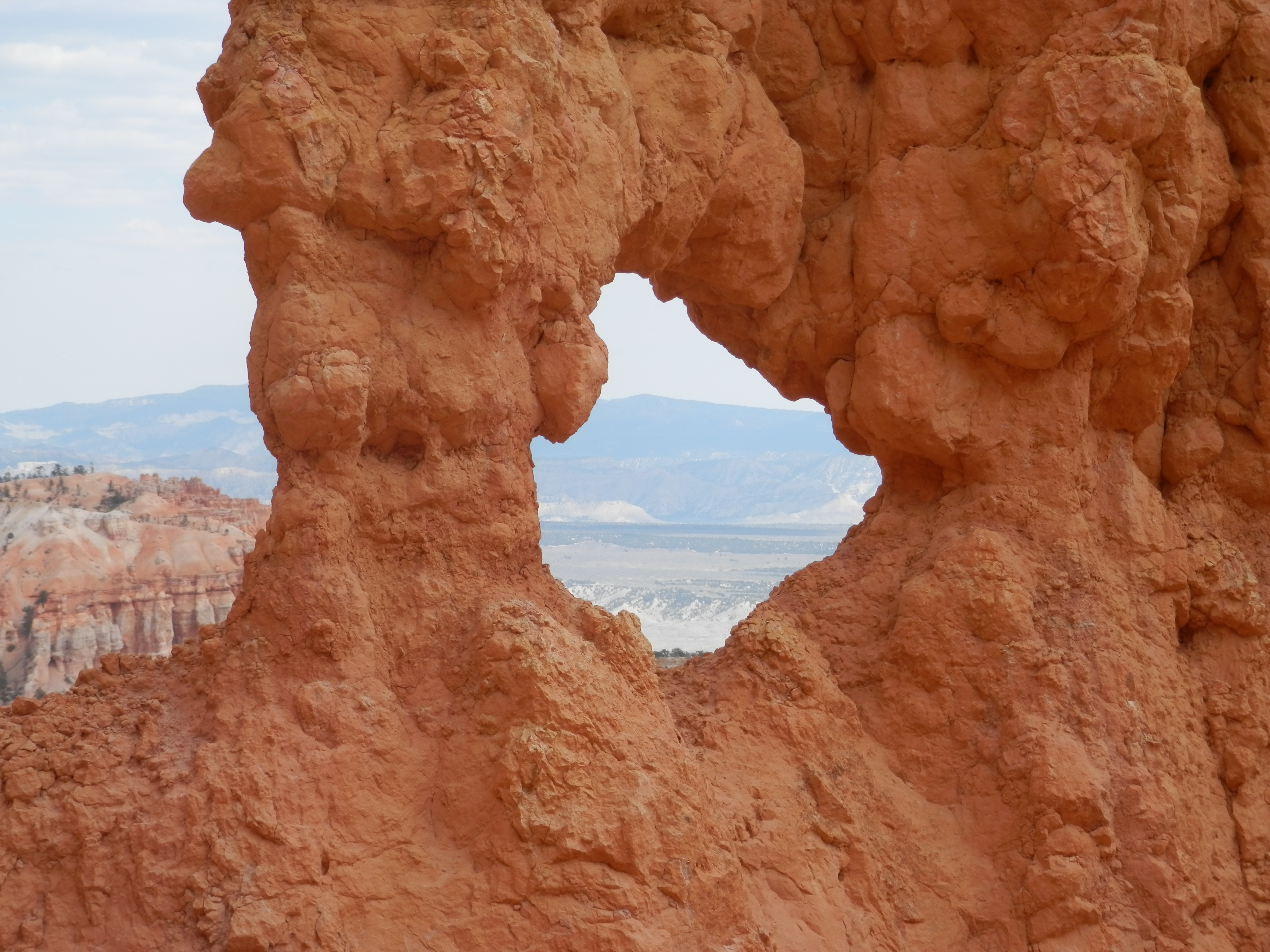

One of the most distinctive landmarks on the San Franciscan horizon, visible from most of the eastern half of the city, is 210 foot high Coit Tower on top of Telegraph Hill.

This is the story of the eccentric woman whose lifelong dedication to the city’s firefighters culminated in bequeathing a third of her fortune for its construction.

Lillian Hitchcock was born on 23 August 1843 at West Point, New York, the only child of Martha and Dr Charles M Hitchcock, a distinguished army surgeon, who had operated on the leg of Colonel Jefferson Davis. She moved with her parents to San Francisco in 1851.

Two days before Christmas that year she was rescued from the upper floor of the hotel in which she and her father were staying. Thanks to the firefighters from Knickerbocker Engine Company No.5. she was unharmed, fuelling a lifetime’s devotion to the same crew in their red shirts and war-like helmets.

This was in an era when fire carriages were designed to be pulled by hand. Firefighters lined up along a rope and pulled, like tug-of-war teams, in order to haul their engine to the fire. They would often be in competition with other companies to get to the blaze first. Such was the case when “Lillie” first saw her opportunity to repay “her men” for saving her when she was only eight years old.

Seven years after that event, the pretty, tomboyish 15 year old was walking home from school when she spied an underhanded Knickerbocker Engine Company No. 5 falling behind the Manhattan No. 2 and Howard No. 3 companies in responding to a fire call on Telegraph Hill.

Intelligent and quick-witted, Lillie hurled her school books to the ground nd rushed to help, finding a vacant position on the rope and calling out to other bystanders to help get the engine up the hill.  Largely through her intervention, No.5 was the first to the fire.

Frederick J. Bowlen, Battalion Chief of the San Francisco Fire Department (SFFD), wrote that it “was the story of Jeanne d’Arc at Orleans, The Maid of Saragossa and the Molly Pitcher of Revolutionary fame all over again” as she “exerted her feeble strength and began to pull, at the same time turning her flushed face to the bystanders and calling “Come on you men! Everybody pull and we’ll beat ‘em!”

From then Lillie became the Knickerbocker Engine Company No.5 mascot and honorary firefighter, swinging into action at the sound of every bell. She was elected an honorary member of the company on 3 October 1863, making her the only woman in the US to belong to a volunteer fire station. Her energy and speed were the envy of even the fittest of firemen. She rode frequently with No. 5, especially in street parades and other celebrations, bedecked in flowers and flags.

She wore a diamond-studded fireman’s badge reading “No.5” for the remainder of her life, started signing her name with a 5 after it, and even had its emblem embroidered on her bedsheets (some have suggested her undergarments too!). If a fireman fell ill she would sit with him in his sickroom, and provide floral tributes for the families of those who died.

By the age of 18 she was the “undisputed belle” of San Francisco according to Chief Bowlen.

Stories abound about her eccentric lifestyle. She was believed to have been engaged at one point to two men, wearing their engagement rings on alternate days. But she had resolved to marry wealthy easterner Howard Coit, a caller at the San Francisco Stock and Bond Exchange. Even after they had tied the knot in 1868, she continued to attend firemen’s balls and played poker with the men who nicknamed her “Firebell Lil”? She smoked cigars and wore trousers long before it was socially acceptable for women to do so, gaining her access to men-only establishments in North Beach. She is reputed even to have shaved her head to make the wigs fit better.

Her position in polite society did not prevent her from following her heart and dashing from parties and weddings in her barouche at the call of the doleful clang of a fire engine. Embarassing though this was for her respectable husband, she was generally regarded as an amiable eccentric and ladies either ignored or humoured her.

She was an “accomplished singer, dancer and guitarist” and enjoyed fine food, dining often at the famous French restaurant The Poodle Dog. She also kept her own recipe book.

Like her North Carolina mother, she was a southern sympathiser during the Civil War, spending the early war years there before moving to Paris where she became a notable figure at the court of Napoleon III, on one occasion marching into a prestigious masked ball dressed head to toe as a firefighter. She also travelled extensively in the east, particularly India, where she befriended the Maharaj.

But the lure of her adopted city, and in particularly its firefighters, was too much and she always returned to it, often bringing with her gifts from her regal contacts, notably rare gems, objets d’art and souvenirs.

Her long-suffering husband died in 1885, leaving a $250,000 estate. This was the trigger for Lillie to return to her wilder days, accompanying five men on an overnight camping trip and disguising herself as a man in order to lurk around the grubbiest dives at the waterfront.

Anxious to witness a prize fight she arranged for a pair of boxers to perform for her in her suite in the grand and elegant Palace Hotel in which she spent much of her later years. After she had the room cleared of furniture and breakables, the two men stripped and begun to pummel each other. Lillie watched this perched on a plush chair atop a table. After several rounds, and as the men had hit each other to a virtual standstill, the referee pleaded that the match be declared a draw, to which Lille retorted they should continue until a “bloody knockout”. The Boston Globe hailed the event as “pioneering a new way of life for women” but the New York Globe was appalled, labelling it a “staggering shock”.

In 1904 a distant cousin, angered by her refusal to let him manage her financial affairs, broke into her room whilst she was entertaining a Major McClurry with the intention of killing her. McClurry stepped in and saved Lillie but was injured and died of his wounds. With the scandal still fresh, she left San Francisco and spent the last two decades of her life abroad.

She inherited a further $60,000 and property from her grandfather.

She died on 22 July 1929 at the Dante Sanatorium in San Francisco, bequeathing the city $118,000 (estimates vary from $100,000 to $125,000) to “be expended in an appropriate manner for the purpose of adding to the beauty of the city I have always loved”.

After lengthy deliberation, during which two of its members resigned on the grounds that Lillie had actually hated towers, the Coit Advisory Committee used the funds to build Coit Tower on the site of the first west coast telegraph 5 years later.  In addition, it also erected the statue of three firefighters, one carrying a woman in his arms, that Lillie had commissioned herself, in Washington Square Park.  It is this statue that she had intended should be the one to adorn Telegraph Hill.     

Because of the association with Lillie, the shape of the tower is generally, and not unreasonably, felt to resemble a fire nozzle.  However, Arthur Brown Jnr, who also designed City Hall, refuted this suggestion. Other theories, including one not unrelated to her affection for the men she rode with, have been postulated, but none of these are any more plausible.

She remains the unofficial patron saint of all firefighters in San Francisco to this day.

Read Full Post »
« Newer Posts - Older Posts »