A clear, crisp November morning in Northern France has given way to a chill pall of fog and drizzle. A young, slim French mother guides her three, maybe four, year old daughter around a muddy field full of stone and flowers. They hold hands, but, occasionally, the small girl cannot contain her curiosity and runs to a rosebush that catches her eye.
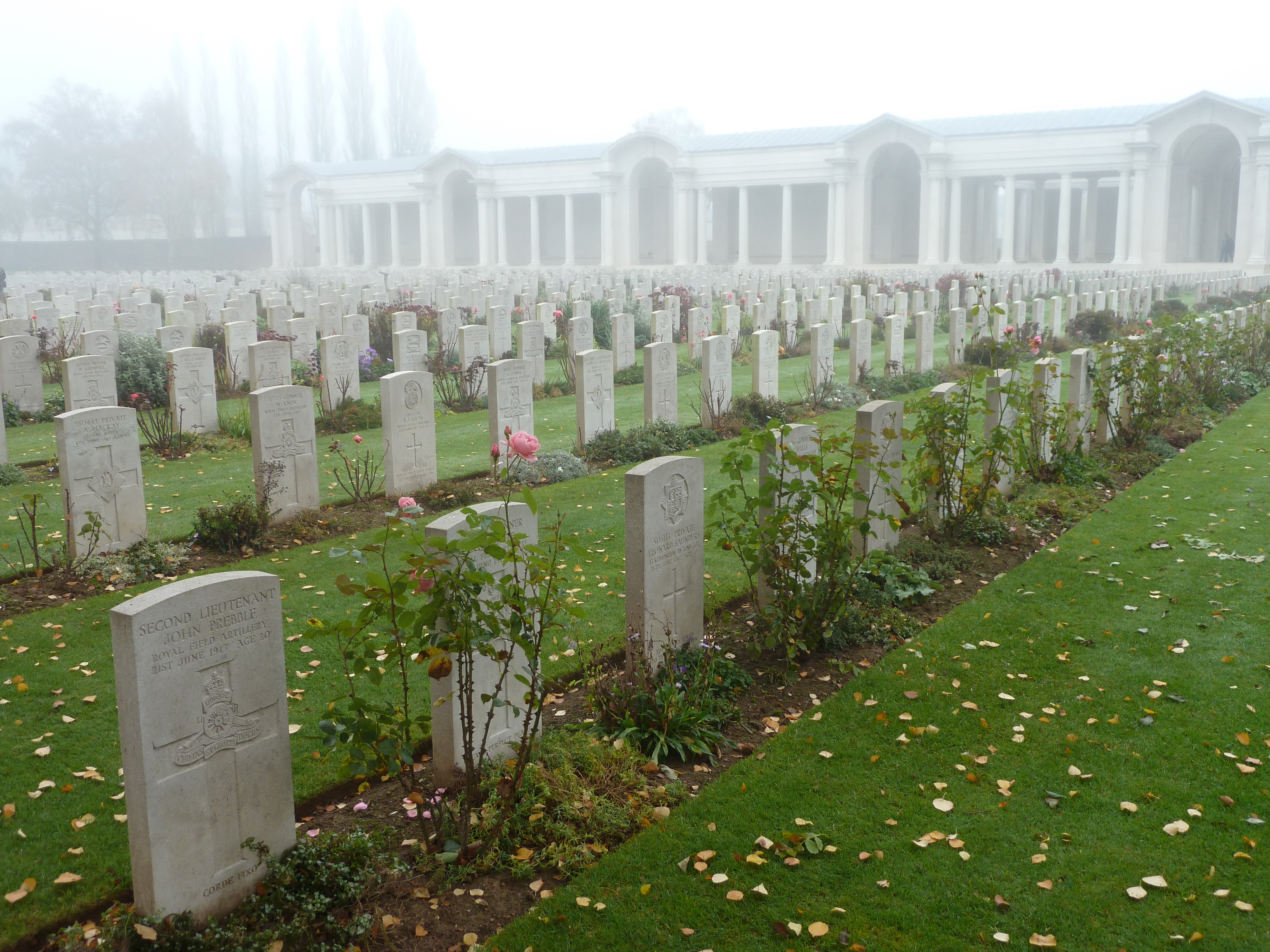
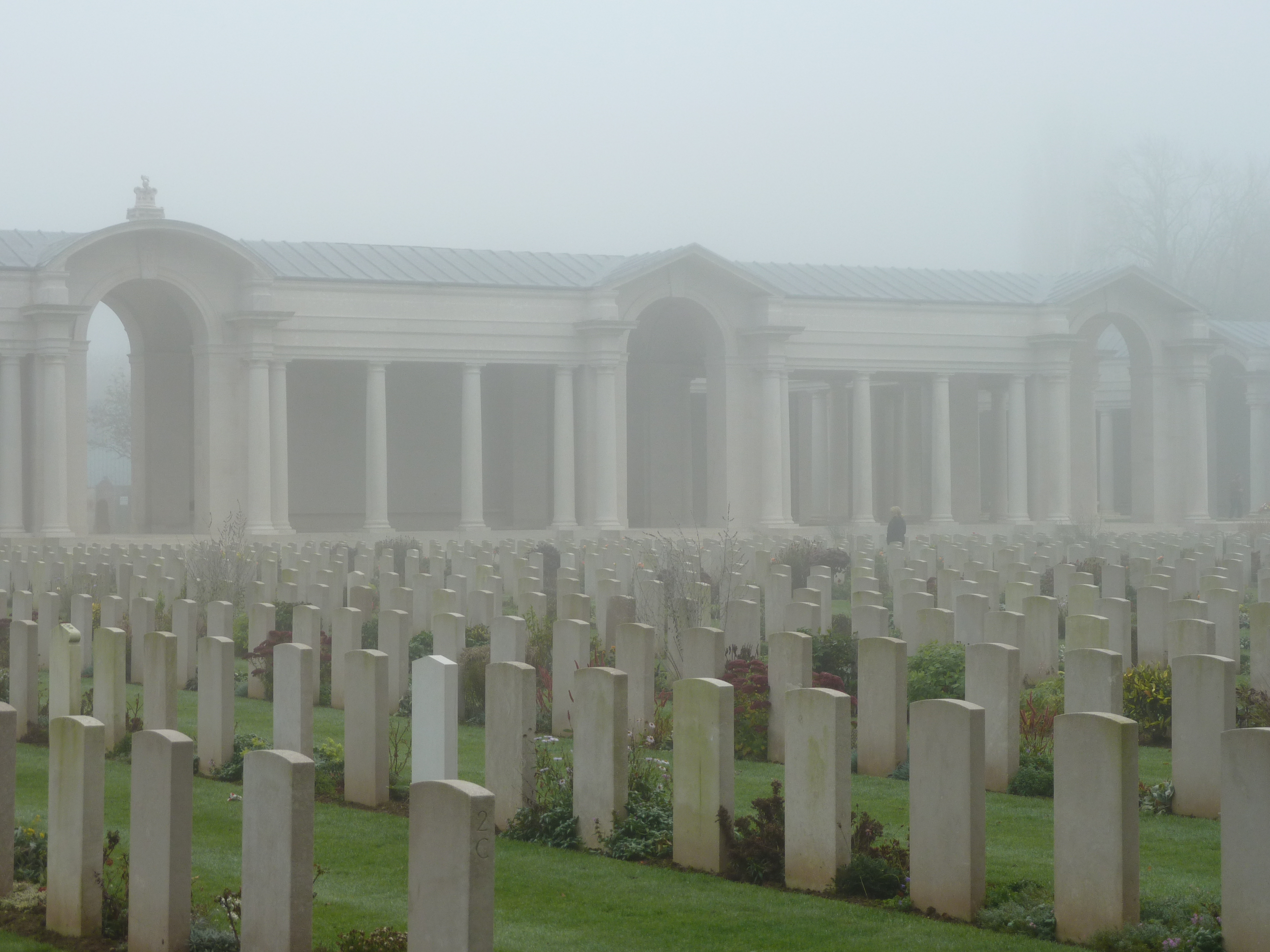
This is no family Sunday morning stroll, however. It is Remembrance Day and they are walking among the 2,681 burials of the men from the UK and Commonwealth, slain during the Great War of nearly a century ago. A large white memorial, which forms the entrance point for the cemetery, commemorates on its walls 34,785 forces of the UK, South Africa and New Zealand, with no known grave, who died in the Arras sector between the spring of 1916 and August 1918, many of whom killed in the Battle of Arras during April and May 1917.

The Arras Memorial and Faubourg d’Amiens Cemetery is the first world war battlefield that I have visited, despite passing dozens over the years and, each time, blithely proclaiming that “we must visit” some one day. Well, that day has arrived. But, even then, this two mile pilgrimage from the centre of Arras on a morning more suited to the month of November than any others have been so far this year, was not planned. The weekend away with friends had been booked four months ago and the timing determined purely on our respective availabilities. It is only in recent days that I have felt drawn towards the location at which Siegfried Sassoon placed Harry and Jack in his poem called The General, of which more later.

Aside from the nationalities I have already referred to, there is a separate plot for 17 Germans. That might be understandable, but then there is one, Max Klemt, who died on 15th February 1917 (his age is not known), who is placed in the middle of row upon row of the British fallen. There are so many unanswered questions and forgotten stories in this place.
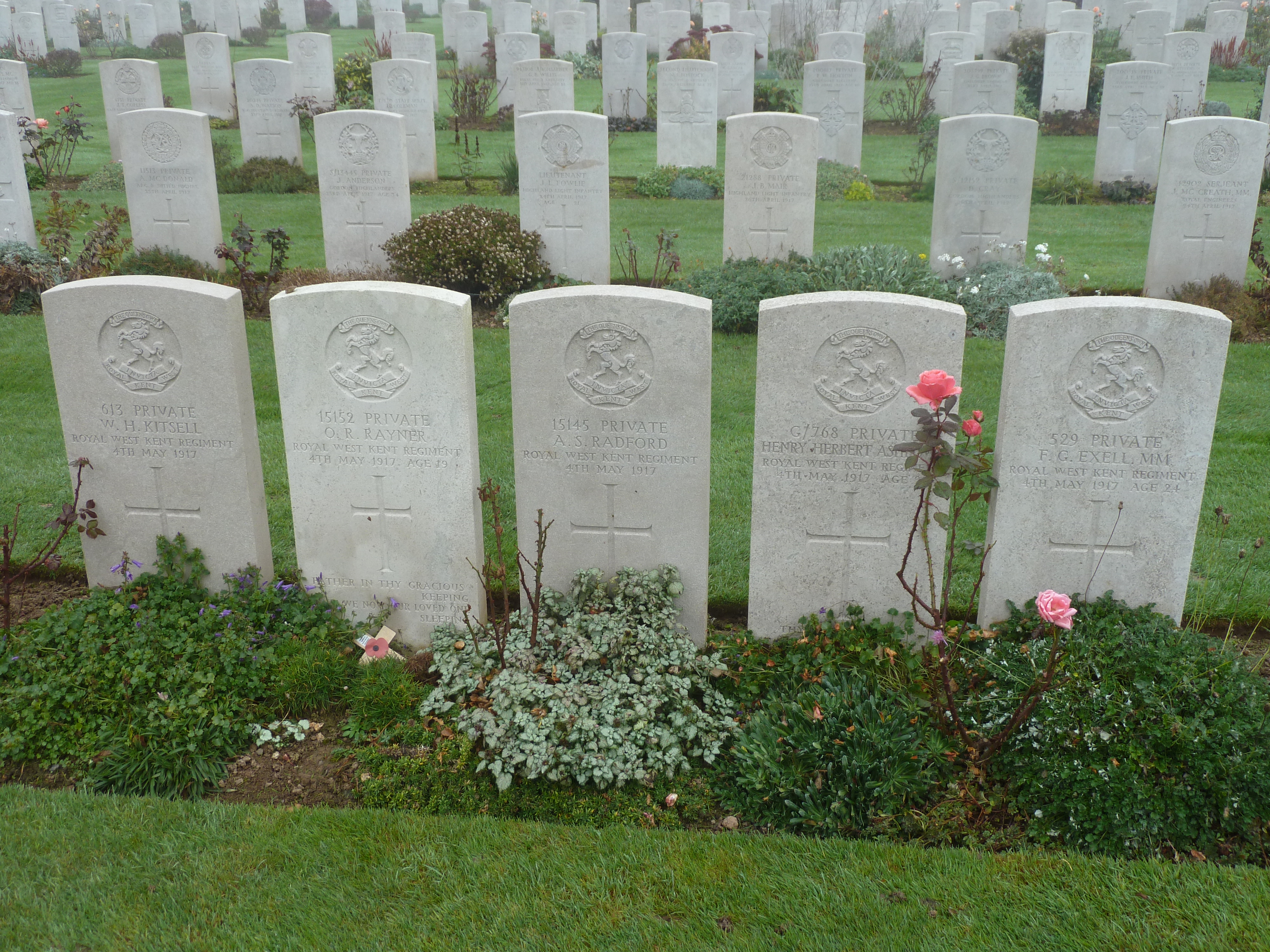
Each stone provides the information, where known, about the name, rank, regiment and date of death of the individual. The most telling fact, however, is age. Whilst there are a number of men who died in their thirties, even forties, the large majority were untimely ripped from the world between the ages of 18 and 25. I am moved especially by one group of stones, placed closer together than any others in the cemetery, that hold the graves of five privates in the Queen’s Own Royal West Kent Regiment, none of whom lived past 24. Another comrade, equally mysteriously, stands a little apart from the others. They must have been as close friends in life as they are physically close in death.

I scour the walls of the memorial for sight of my family name in vain. I have no reason to believe that I would have come across it, and am thankful in a sense that I have not – I would hope to have prepared myself first. But then again I am desperately disappointed. This place plays havoc with your emotions.
Although I am haunted by the names and especially ages of those laid out before me in neat rows in this sodden field that tests the impermeability of my new boots, Harry and Jack in that Sassoon poem seem more real, and their fate captures my overriding emotion, not of worthless grief, though that is strong enough, but of anger and contempt for the politicians and officers that bullied and hoodwinked such men to their early deaths:
“Good morning, good morning” the General said
when we met last week on our way to the line.
Now the soldiers he smiled at are most of ‘em dead,
and we’re cursing his staff for incompetent swine.
“He’s a cheery old card,” grunted Harry to Jack
as they slogged up to Arras with rifle and pack.
But he did for them both by his plan of attack.
I suddenly remember the mother and daughter and look around for them. But they have slipped away. I ponder what their story might have been. Were they, perhaps, the descendants of a teenage “tommy” and a local girl? I cannot think what other reason might have brought them to this grim, dank scene this morning. I hope that they have returned to a warm, welcoming home, an ordinary, everyday event that we take for granted but which was snatched from those young men with whom we have shared this space over the past hour.

But I have stayed here, at least for today, long enough. Having had no breakfast, the call of lunch is insistent. And we have a 70 mile drive back to the shuttle terminal this afternoon before returning to our lives of comfort and plenty.
Already, my thoughts turn to my next visit to one of the battlefields of Northern France and Belgium. We will certainly not pass one by so casually in the future.

Read Full Post »



 Tony Quarrington