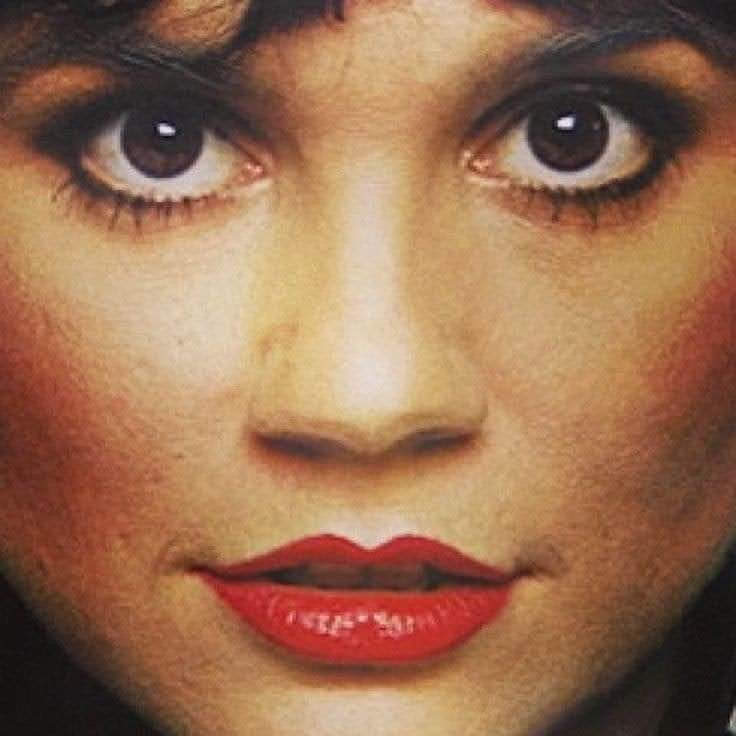
It was a raw September afternoon in York as Covid-19 restrictions began to ease. Scouting for a warm coffee shop my attention was drawn to a familiar face in the Shambles Market. And there she was, in the front of a jam packed cardboard box of vinyl records calling to me across the years, her impossibly big brown eyes pinning me momentarily to the spot.
But first, a short history lesson.
As a proud baby boomer born in the early fifties, my music buying activity began with “singles” (45rpm), followed in my late teens with “long playing” vinyl (33rpm) records. With the advances in technology over the next thirty years, I “progressed”, like many of my contemporaries, to cassette tapes, courtesy of the then revolutionary Sony Walkman, and then compact discs (CDs).
The bulk of my vinyl collection (did we refer to it as “vinyl” then?) was voraciously snaffled up by predatory dealers lurking at boot fairs on Sunday mornings. Selling a box full of classic sixties and seventies albums was as much a thrill for me (in retrospect, a short-sighted one) as it was to the wily buyer.
A single box, containing an eclectic range of rock, folk and classical titles, remained, consigned to a succession of lofts as we moved home three times. The only purchases I made for the next twenty years were CDs, and the turntable gathered dust before being discarded altogether.
I had succumbed to the prevailing mantra that CDs offered a cleaner, more precise and, therefore, satisfying, sound. Even the vinyl comeback in the early years of the new millennium failed to convince me to abandon this approach.
The reason was primarily a matter of cost. I was not in a position to pay £30 for a new 180g pressing of an album I had bought fifty years previously for thirty shillings (£1.50!). And then there was the outlay that would be required on a new turntable to consider.
But as vinyl collection became increasingly fashionable again, I found myself pawing through boxes in the growing number of independent record shops and market stalls, joining in the arcane and, to some tastes, boring, conversations among boomers like myself that accompanied the pursuit.
But the likelihood of my leaving with an LP under my arm remained a slim one.
Until our eyes met as dusk descended over the Shambles Market.
I think it’s time I revealed the identity of the person whose eyes so transfixed me and drove me to a fateful decision.
None other than Linda Ronstadt, not only the most beautiful, but also the most versatile (country rock, Hispanic ballads, American standards, opera, the list goes on) singer of her generation. I was unable to resist buying her eponymous album (readers lacking a soul might suggest that I would have been better just cutting up the outer sleeve and framing it).
It still took a lengthy sermon from the guy manning the stall in the market to cement my conversion. Jackson Browne’s For Everyman and Van Morrison’s Hard Nose the Highway , each at an affordable price, sealed the deal. Within a week I had introduced them to a new, attractive yet moderately priced turntable.
And then the fun started……with a twist.
Cost continued to be a major factor in my purchasing strategy. But there was an even more important criterion – I would not, with occasional exceptions, buy an album that post dated the time I had previously stopped collecting vinyl.
To date, I have bought a little over a hundred albums in the four years since my Yorkshire epiphany, some “new” but the majority second hand from independent stores, fairs and market stalls, online retailers and charity shops, ranging in price from £1.99 to £35, most in the lower price range. I have rejected others if they looked as if they were damaged. Very few have disappointed.
I have striven to resist becoming a vinyl bore but there is no question in my mind that it has a warmth and spirit that is largely absent from the more clinical, “perfect” alternatives. Some surface noise only adds to the enhanced atmosphere.
And I have overcome my propensity to whinge whenever I have to get up every twenty minutes to turn the disc over!
It was midday and the stores on Haight Street were drowsily coming to life under a warming sun. A gaggle of skateboarders, ageing “heads”, dogs and guitars waited at the lights at Stanyan to cross over to Hippie Hill for an afternoon of music, marijuana and merriment.
We had just enjoyed a sumptuous lunch of chicken pesto, Greek chicken wraps and hummus plate at the Blue Front Café, (sadly, one of the many eateries that has subsequently closed), and were entering a brightly coloured establishment which had historically divested us of our holiday dollars more than any other over the previous two decades.
As we planted ourselves in the rear of the store to look for any new tie-dye shirts from Liquid Blue, the silence was broken by a chirpy Californian female voice.
“Hey, you guys, let me explain the layout in here for you. At this end you will find the Grateful Dead t-shirts, organised by size, while over here are my own designs…….”
It was clear that the woman was going to continue with this well-rehearsed speech for some time, and, of course, she was only trying to be helpful. But I have an aversion to being what I perceive as “stalked” in stores by staff when all I want to do is look for myself and ask questions if I have a need.
So, I interrupted her rather abruptly – for which I have since apologised on many occasions – explaining that for nearly twenty years we had been rummaging through her colourful stock, and left laden with t-shirts, dresses, badges, stickers and other paraphernalia.
Rather than being deterred by my rude riposte, she squealed at the news, thanking us for our custom (not service – that is generally reserved for the military) and asking us where we were from, a perfectly reasonable icebreaker if one were really needed. I explained that we were from England, that I had revered the Dead since the late sixties and had visited the store many times before. This triggered a discussion about our mutual love for the music and the city.
I mentioned that we were heading for the Great American Music Hall that evening to see Dark Star Orchestra, the band formed in Chicago that had been replicating entire Dead shows since 1997. Alicia, as she was called, was thrilled to hear and said “we’re going too, do you wanna hang out?” By “we” she had included her partner, Jerry (no, not that one) who was, at the time, the long term owner of the store.
Despite the presumption (at least to British ears) in the question we instantly accepted the offer, and as we left with Casey Jones and Alice in Wonderland tees, arranged to meet in the line outside the venue at 6pm.
Disembarking the 47 Muni, rather uncharitably dubbed by my wife the “stinky bus”, at Van Ness and O’Farrell, we strode excitedly along the two blocks to join a mercifully short line at the venue. Dead concerts past were recalled as the air reeked of pot and a lone, long haired man patrolled the street with a barely legible, but at least grammatically correct, “I need a miracle” message scrawled on a scrap of cardboard with a Sharpie.
Alicia and Jerry joined us ten minutes later and we made our way to the upper floor where we had booked tables, allowing a prime position leaning on the railing that overlooked the stage below. We could not have had a better view as we christened our new tie-dye outfits. The ticket price had included a meal from a limited menu. With Californian and English choices on offer, we all opted for the latter – fish and chips (the American version of several small fish pieces rather than the single, larger British version).
This was the second time we had seen Dark Star Orchestra, the first having been at the House of Blues in Las Vegas on the eve of my sixtieth birthday two years earlier, when they had played a show from the early nineties which my wife had struggled to embrace, leading her to abandon the show midway through the second set halfway through a characteristically lengthy Eyes of the World jam in favour of the penny slot machines on the Mandalay Bay casino floor.
She had still not, at this stage, been fully converted to the Dead’s music, despite the fact that I had tried for thirty years to convince her of their greatness. She did, however, enjoy many of the earlier, shorter songs like Sugar Magnolia, Uncle John’s Band, Box of Rain and her favourite, Bertha.
I had been hoping that, being in San Francisco, they might play a Fillmore (West) concert on this evening, perhaps even from the run featured on the Live Dead album from 1969. And that, with some minor adaptations, is exactly what we got. I was beside myself, and my wife was happy too.
Mid way through the first set they announced that they were being joined by a special guest – Grateful Dead rhythm guitarist Bob Weir! He jammed with the band on St. Stephen and sang one of his signature cowboy songs, Me and My Uncle. The following year Bob similarly “gate crashed” Steve Earle’s set at Hardly Strictly Bluegrass in 2016. And more than a decade later, during which he had headlined Dead and Company, Wolf Brothers and countless other musical projects, and at the age of seventy eight, he shows little sign of putting himself out to pasture.
Sam Cutler, former manager of both the Dead and the Rolling Stones, spoke to the audience between sets when, naturally, I bought a t-shirt from the merchandise table, an item of clothing I reprised to lead guitarist Jeff Matson’s delight at the band’s concert at Shepherd’s Bush Empire in London in September 2022.
The concert continued past midnight. It had been a special evening, we had bonded with Alicia and Jerry, forging a friendship that continued to flourish and which led to us staying at their home with them in Petaluma on a number of occasions, attending concerts, Giants and 49ers games and meals together as well as them (separately) visiting the UK and all of us, including their two children, Aiden (Alicia’s by a previous marriage) and Ely (their own son) meeting up subsequently in Chicago.
As the Covid-19 pandemic caused a hiatus in our physical connection, we met up on Zoom on a weekly basis as they prepared to go for a morning cycle and we cooked our Sunday dinner! We even danced to favourite Dead songs when the conversation, as it did rarely, lagged.
The story of our relationship has subsequently taken several dramatic and unexpected turns, which I will address on another occasion.
Many of our trips to San Francisco have coincided (intentionally) with the free Hardly Strictly Bluegrass festival in Golden Gate Park over the first, invariably warm, weekend of October.
There have been a number of high spots over recent years with regular performances in particular from Steve Earle (with a guest appearance from Bob Weir of the Grateful Dead), Emmylou Harris (who traditionally closes the festival), Jack Casady and Jorma Kaukonen, guitar gods from Jefferson Airplane, the Neville Brothers, John Prine, Robert Plant, the Blind Boys of Alabama and Moonalice who performed a set of songs penned by the then recently deceased Robert Hunter, principal lyricist for the Grateful Dead.
The atmosphere could not be further from the corporate, money-driven ethos of Glastonbury and similar events and fitting that San Francisco where, along with other Californian venues, the concept of free outdoor rock festivals effectively originated in the late sixties.
But the highlight for me came in 2019 with Judy Collins. But before that I need to take you back twelve months to San Rafael in Marin County. A store owner friend of mine in Folkestone asked if I could deliver a note to Phil Lesh, the former Grateful Dead bass player, at his performance/dining venue at Terrapin Crossroads (sadly now closed, though the music lives on).
Not only was I able to deliver the note, which stated that she had adored him since the Europe ’72 tour, successfully but I also had the opportunity of a few minutes chat with the great man, who signed a postcard of his own for me to pass on to her on my return.
So pleased was my friend that I had succeeded in achieving a task that might not unreasonably have been perceived as unlikely – after all, Phil didn’t rap with random British guys in his bar every day – that she set me an even more challenging task twelve months later.
It appears that she had been as besotted with Judy Collins’s music for more than half a century as she had been with Phil Lesh’s music over the same period of time. So she asked me to deliver a letter from her to Judy on the afternoon that she was performing.
Now walking across a barroom floor to request a quick chat with a music superstar is a piece of cake compared to gaining access to another legendary artist in the middle of one of the world’s largest parks and when there are tens of thousands of other people in close proximity.
The afternoon arrived, and as the appointed time for Judy’s set approached, I gingerly made my way to the front of the stage – there did not appear to be an obvious place to go “backstage” – I was accosted, firmly but politely, by a burly African-American gentleman who may have been thinking I was getting a little too close.
I explained my predicament – which, even to my own mind, seemed a bit odd. He listened carefully and took the letter from me without making any promises. I did not hold out much hope for a positive response, but around five minutes later he returned in a similarly measured way and informed me that “Miss Collins has received the note”.
My joy would have been unconfined had Judy referred to it whilst she was on stage, but she did not. She did, however, sing Both Sides Now to me – well, me and many others – on my birthday.
St Charles Place or posh Pall Mall,
Vermont Avenue or Euston Road?
Pancakes and waffles or Eggs Royale?
Depends I guess on your own post code.
Kentucky Avenue or The Strand,
Park Place apartments or Park Lane?
Theatre on Broadway or West End?
Luxury living or fancy hotel chain?
Reading Road or Kings Cross Station,
Ventnor Avenue or Coventry Street?
Which is the pride of their home nation?
I’d wager they both smell just as sweet.
Atlantic Avenue or Leicester Square,
Marvin Gardens or Piccadilly?
Would you wish to shop here or there?
Or am I being just plain silly?
The game’s the same either side of the pond
Full of guile and cunning, and just plain greed,
Which is why I am hopeless and cannot respond,
I much prefer Scrabble I have to concede.
I am pleased to announce that my first collection of poetry, Tickled by the Turning Tide: The Folkestone Poems will be published on 6th April 2023.
When I was first taken on holiday by my parents to Folkestone at the age of ten, I could never have thought that, more than half a century later, I would not only return to the town to live but be publishing a book of poetry inspired by it.
All thirty three verses reflect my adopted coastal home, covering key moments in the town’s history, from its fishing heritage to its role as a port of embarkation for war, and from its period as a fashionable seaside resort, which welcomed royalty and writers, to its decline and subsequent regeneration as an art and dining destination.
I also explore aspects of modern living in a town that is changing rapidly.
Since I moved here with my wife in 2016, I have not only written and performed my poetry in a variety of locations, including coffee houses, bars and even on the steep, cobbled Old High Street, but also created and run a successful series of literary evenings, initially as a lockdown solution but still going strong after three years, and delivered award winning walking tours of the local area.
The official launch will take place at Folklore on Tuesday 11th April 2023 at 7pm, at which I will be signing copies and reading a handful of the poems.
I will also be delivering more readings at the Steep Street Coffee House on Thursday 4th May in the coming weeks in addition to running walking tours on 22nd and 26th April to promote the collection.
The book will retail at £10.99 in the UK (USA £12.99) but, for the first two months, I will be offering it at the discount price of £8. For those living in and around Folkestone, I will be happy to deliver or arrange collection. I will also be delighted to sign the book (for those wanting its value to diminish immediately!).
It will also be available for sale from 1st May at the Folkestone Bookshop, Town Hall/Musuem, Steep Street Coffee House and The Great British Shop on the Old High Street. I am currently negotiating with other outlets to do the same. If you have any questions in the meantime or wish to purchase a copy once it is available, please either message me on one of my social media platforms or email me at tonyquarrington@msn.com.
Ever since I started my walking tours in 2017, I had wanted to combine my passion for literature with Folkestone and Sandgate’s rich tradition of welcoming eminent writers by visiting the locations they lived in and frequented. The temporary respite in pandemic lockdown restrictions allowed me to scratch that itch in September 2020.
One of the prerequisites of a good tour is to be blessed with fine weather, and this was the case today. An added bonus was the fact that most of the guests already knew each other, which with their mutual love of literature, contributed to a relaxed and enthusiastic atmosphere.
The number of guests was restricted due to the prevalence of the “rule of six”, though we did stretch the definition to mean six guests plus the tour guide, a minor infraction at a time when the beach and coastal park were regularly inundated with large groups of visitors.
Meeting at the Step Short Arch on the eastern end of The Leas, pride of place for the first reading went to a Nobel Prize winner, Samuel Beckett. The Irish writer’s connection to Folkestone might not be well known to many residents, but in 1961 he had stayed at the Bristol Hotel, since demolished and replaced by No. 1 The Leas, as a condition of getting married to his long term lover, Suzanne Dechevaux-Dumesnil.
I will spare the reader every precise detail of the itinerary, other than to report that we visited more than a dozen locations. These included The Bayle, Old High Street, Folkestone Harbour, Sunny Sands, Mermaid Beach, the Riviera and Radnor Cliff, returning to the Leas, with the final reading from Wilfred Owen at the Metropole. The recently opened Lift Cafe provided a welcome refreshment stop around half way through the tour.
At each location I read an extract from a writer linked to it. In addition to Beckett, the following were represented – H.G. Wells, Charles Dickens, Wilfred Owen, Carol Ann Duffy, Thomas Ingoldsby, Jocelyn Brooke and Henry Williamson. I even slipped in a handful of my own Folkestone inspired poems, though I envisage that the inclusion of more noted authors on subsequent tours will mean a reduced role for my efforts.
It was a huge success, lasting four hours (with the aforementioned pitstop), concluding with a drink outside Keppel’s. As an additional souvenir of the day, I provided everyone with a printed booklet, entitled A Sort of Confusing Brilliance (a quote from Kipps by H.G. Wells), containing all the readings and biographical information.
A second tour was promptly planned for October, but it fell foul to awful weather, and any chance of an alternative date was scuppered by the subsequent lockdown. But, in 2021 it will become part of the standard package of tours.