Feeds:
Posts
Comments

Archive for the ‘Literature’ Category


Talk given to the Folkestone is a Library: The Power of Reading Together” event at the Quarterhouse in Folkestone on Thursday 7th May 2026.

Thank you, Sophie and the team for inviting me to talk this evening. I am thrilled to be associated with this exciting project.

I had contemplated showing a series of slides, but after 30 years of delivering Powerpoint and similar presentations, I thought I would stick to just talking to my subject this evening.

After all, if the King can talk for 37 minutes without visual aids, I’m sure I can manage 10.

………………………………….

I moved to Folkestone (not quite from London) almost 10 years ago and have watched its reputation as a major arts destination grow exponentially.

But I have always felt that literature was the poor relation in the local creative scene, despite the outstanding work done by Poets’ Corner, Write by the Sea and many other groups and individuals.

I started the walks in 2017, focusing initially on The Leas, Creative Quarter and the Harbour and Seafront.

In the following years I added tours of the East Cliff, West End, Bayle, Sandgate and even the Town Centre (as part of the Levelling Up initiative) as well as those themed on Art, Literature and the town’s rock and roll heritage.

I should take this opportunity to put in a plug for the next free rock and roll tour this coming Saturday as part of the Music in May programme. Join me at 10.30am in Noel’s Yard aka Market Square for 2 hours exploring the blue plaques, Wall of Fame and reliving concerts and other events related to those.

………………………………..

But back to the literary tours.

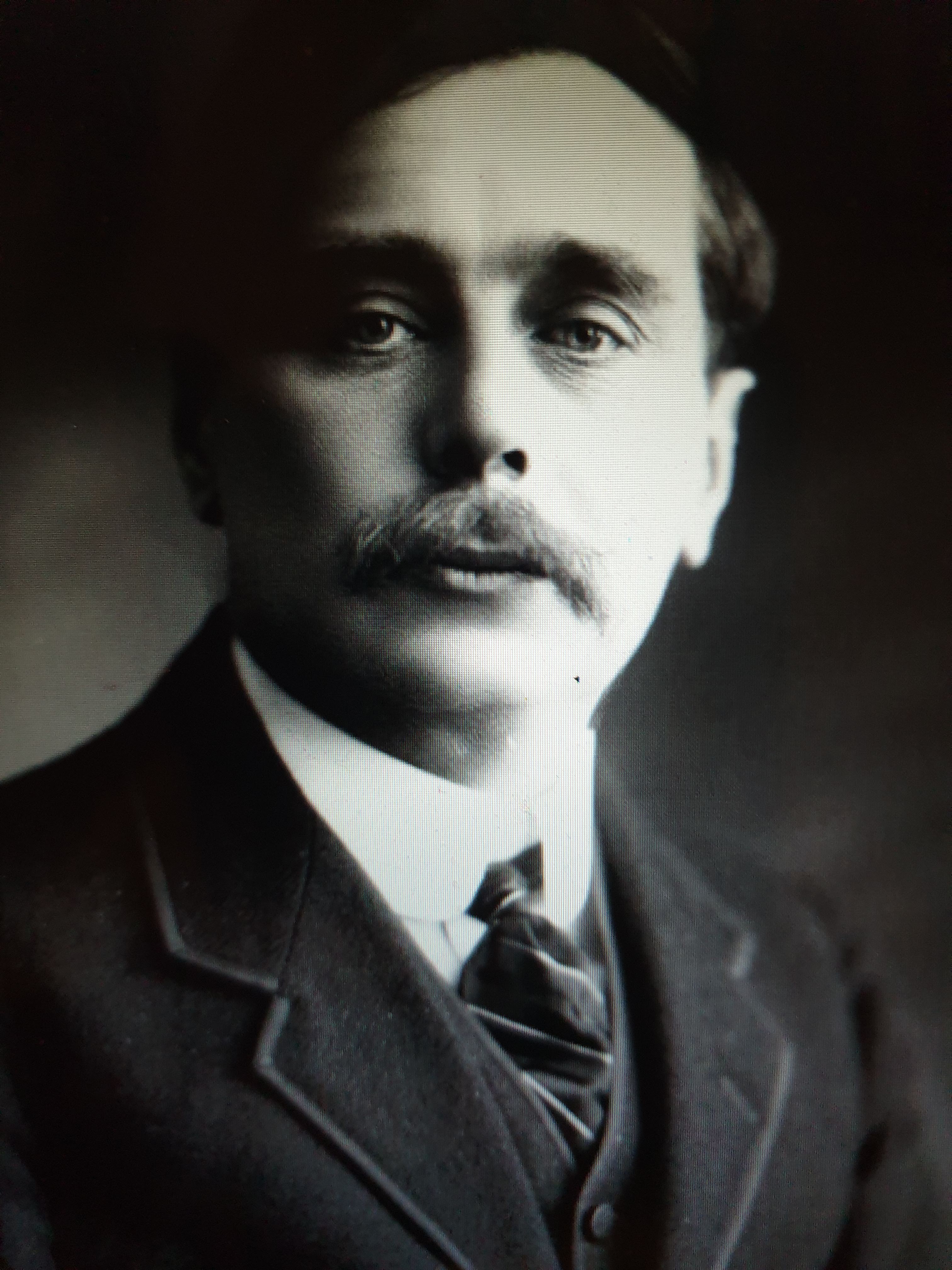
Prior to researching Folkestone’s literary history, I was certainly conscious of H.G. Wells’ close connection to the area, and being from Rochester, of Dickens’s affinity with the town (far greater I might add then Broadstairs with whom he is more often linked), but little else.

I subsequently learnt that not only has Folkestone been the birthplace of a host of writers, but for the past 183 years since the coming of the railway, it has welcomed many others en route to and from the Continent, some of whom have left their observations on the town.

On the tours you will encounter both.

………………………………

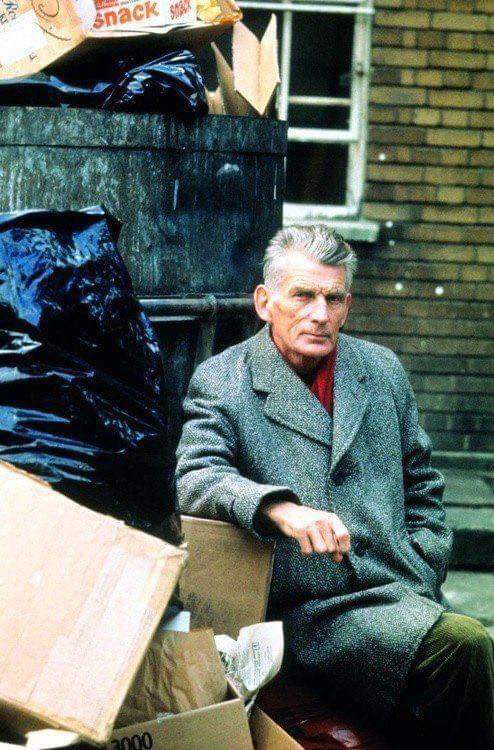
I didn’t realise, for instance, that one of my favourite writers, a Nobel Prize winner no less as well as the only one ever to play first class cricket, actually spent 2 weeks here in 1961. I suspect many of you know to whom I’m referring – but if you don’t, I’m not going to tell you now – you’ll need to come on a tour!

………………………………

So, what do the tours entail?

We meet at the Step Short Arch and weave our way through the town via Albion Villas, the parish church, the Bayle, Old High Street, Harbour and Harbour Station and along the seafront to the Zig Zag Path where we return to the Leas.

If nobody is looking, we might also sneak a peek at the Road of Remembrance! And if you have the stamina, we can walk through to Sandgate, where Wells lived for almost a decade, before returning to the starting point.

Along the route, we make regular stops where I read relevant extracts from writers associated with that particular location. The latest author count is 12, though I am always looking for additional material.

The reopening of the library, at least at its temporary home, in Sandgate Road on 26th of this month, will be a great help in that process.

………………………………..

The tours take around three hours (more like four hours if we extend it via Sandgate), with a short break or two included, and cost just £10 per person.

Whilst I will be running many other tours over the summer, I have set aside a series of dates, initially in May and June, which are listed in a pack of handouts you can collect later this evening.

I have also negotiated a free tour for Creative Folkestone members on 12th June.

………………………………….

I’ll leave you with 3 short quotes that I cover on the tours to provide you with some flavour of what they entail.

The first is from Charles Dickens and describes the impact of the tides on Folkestone Harbour, and I think you’ll agree, he could have written it today.

I should first explain that Dickens christened Folkestone Pavilionstone in honour of the Royal Pavilion Hotel, which stood on the site now occupied by the Grand Burstin.

I wonder if, a hundred years or now, a famous writer will christen Folkestone “Burstinstone” in their work!

Dickens wrote: “We are a tidal harbour at Pavilionstone. At low water, we are a heap of mud, with an empty channel in it where a couple of men in big boots always shovel and scoop: with what exact object, I am unable to say.

At that time, all the stranded fishing-boats turn over on their sides, as if they were dead marine monsters; the colliers and other shipping stick disconsolate to the mud; the steamers look as if their white chimneys would never smoke more, and their red paddles never turn again, the green sea-slime and weed upon the rough stones at the entrance, seem records of obsolete high tides never more to flow; the flagstaff-halyards droop; the very little wooden lighthouse shrinks in the idle glare of the sun.

But, the moment the tide begins to make, the Pavilionstone Harbour begins to revive. It feels the breeze of the rising water before the water comes, and begins to flutter and stir. When the little shallow waves creep in, barely overlapping one another, the vanes at the mastheads wake, and become agitated. As the tide rises, the fishing-boats get into good spirits and dance, the flagstaff hoists a bright red flag, the steamboat smokes, cranes creak, horses and carriages dangle in the air, stray passengers and luggage appear.”

And it goes on.

…………………………………….

The second comes from Kipps. the novel by H.G. Wells which references many locations in Folkestone and beyond. This particular piece describes Kipps’ exciting Sunday exploits:

“On Sundays he was obliged to go to church once, and commonly he went twice, for there was nothing else to do. He sat in the free seats at the back; he was too shy to sing, and not always clever enough to keep his place in the Prayer-book, and he rarely listened to the sermon.

In the intervals between services he walked about Folkestone with an air of looking for something. Folkestone was not so interesting on Sundays as on week-days, because the shops were shut; but on the other hand, there was a sort of confusing brilliance along the front of The Leas in the afternoon…….

He would sometimes walk up and down The Leas between twenty and thirty times after supper, desiring much the courage to speak to some other person in the multitude similarly employed. Almost invariably he ended his Sunday footsore”.

…………………………………….

The final extract is from the late Robert Morley, actor and raconteur, who is likely to be more familiar to those in the room, like myself, of a certain age.

Morley spent much of his childhood in Folkestone due to ill health where he was constantly wheeled around in his sailor suit in a bath chair.

He claimed that “if there’s one thing young people lack today….it is Folkestone standards. It may well be what’s wrong with the country. No child brought up as I was in Folkestone and Kensington Gardens ever felt the need of a psychiatrist”.

……………………………………

Thank you.
Read Full Post »


I was recently asked by a local magazine a series of questions about my poetry, its provenance and future plans. This is a transcript of the “interview”.

Can you remember your earliest interaction with poetry?

I suppose, like most children, nursery rhymes would have been the first poems that I engaged with. And then, as I progressed through primary and grammar school, I was exposed to Shakespeare, Wordsworth and the “classic” English poets. 

When did you realise that you not only had the talent and skill to be a successful poet but that you wanted to pursue a career in poetry?

That is making a big assumption! But, like most adolescent boys, I wrote soppy “love” poetry that, fortunately, has not survived! 

To readers who may not have heard you before, how would you describe your poetry?

I subscribe to Leonardo da Vinci’s claim that “simplicty is the greatest sophistication”, so don’t try to over cook the imagery or make the poems too wordy and obscure. I still, on occasions, like to use rhyme and traditional metre, whereas so much of modern poetry is now free verse (which I also do). If there is one goal I try to obtain in an individual poem, it is the creation of a mood, at atmosphere – show not tell I suppose. 

If you could pick the three most memorable moments in your career, what would they be and why?

I did write a three volume “novel” at the age of seven based upon the Tommy Steele song, “Little White Bull”. I am equally proud of the book on Kent cricket I co-wrote ten years ago which was very well received. But, aside from the adolescent stuff, it is only really since I retired from work and moved to Folkestone that I was inspired to write poetry regularly. There was a significant increase in my output during the first Covid-19 lockdown when I was producing a poem a day for several months. Some of those verses feature in my collection, Tickled by the Turning Tide: The Folkestone Poems, which was published only a week ago on 7th April. 

You are both stranded on a desert island and can only take one book with you, what book are you choosing and why?

As with the radio programme, I am assuming that I can take a complete works of Shakespeare as well? That is an almost impossible question to answer, and my view might change, dependent upon my mood on a particular day. But I will say – today – Ulysses by James Joyce for its radical approach to the novel but especially its humour and evocation of a place (as my Folkestone poetry testifies, it is a sense of place that often appeals to me).

What do you enjoy most about living in Folkestone and do you have any particular favourite go-to spots in the town?

How long is this piece meant to be?! Being by the sea, with all its benefits, has to be the most important factor, though Folkestone’s creative vibe has helped inspire my own work. And then there is the dining scene – one of my poems is entitled I Sit in Coffee Shops, and that pretty much sums up my everyday life! I could recommend so many places, but Marley’s, Django’s, Folklore (where I had my recent book launch) and Steep Street Coffee House are probably my top four, though there are several others that meet different needs at different times.

Has living in Folkestone and being by to the sea helped inspire any of your poems?

Clearly!

Given the past 36 months and the evolving digital world, what are your thoughts on the current status of poetry, will it still have a future in say 40, 50 years’ time and will it need to adapt to survive?

Judging by the growing attendances at the local Poets’ Corner, Folkestone group, the town’s poetry scene seems to be thriving. Whilst I found that Covid gave my poetry a significant boost, providing me with a mechanism by which I could come to terms with what was happening, I know that others were completely floored and could, or wanted, not to write anything. I believe we have now moved out of that depression and many, maybe even more, people are writing again. Poetry has been with us for thousands of years, and I expect it to continue to have a role in attempting to make sense of the world and articulating it in a thought-provoking and – important for these days – manageable way. 

Do you have any upcoming books that readers should look out for?

I have already mentioned the Folkestone poetry book, which is available online through all the major retailers and also being sold on my behalf in a several outlets throughout the town.  The best way at present to get your hands on a copy – and a signed one at that – is direct from me by messaging me on my Facebook pages or email at tonyquarrington@msn.com.

Do you have a future vision of what you would like to achieve over the next 5-10 years?

Absolutely – I have several projects on the go. For the past twelve years I have been putting together a book about my love for San Francisco, and with the immediate Folkestone project completed now, I can return to that. Since I moved to the town I have been keen to produce a modern tourist guide, based upon my walking tours that I have been delivering for the past six years. And with an Italian holiday on the horizon, I am hoping to write a travel diary, hopefully in poetic form. And possibly a second volume of poetry!

Read Full Post »


I am pleased to announce that my first collection of poetry, Tickled by the Turning Tide: The Folkestone Poems will be published on 6th April 2023.

When I was first taken on holiday by my parents to Folkestone at the age of ten, I could never have thought that, more than half a century later, I would not only return to the town to live but be publishing a book of poetry inspired by it.

All thirty three verses reflect my adopted coastal home, covering key moments in the town’s history, from its fishing heritage to its role as a port of embarkation for war, and from its period as a fashionable seaside resort, which welcomed royalty and writers, to its decline and subsequent regeneration as an art and dining destination.

I also explore aspects of modern living in a town that is changing rapidly.

Since I moved here with my wife in 2016, I have not only written and performed my poetry in a variety of locations, including coffee houses, bars and even on the steep, cobbled Old High Street, but also created and run a successful series of literary evenings, initially as a lockdown solution but still going strong after three years, and delivered award winning walking tours of the local area.

The official launch will take place at Folklore on Tuesday 11th April 2023 at 7pm, at which I will be signing copies and reading a handful of the poems.

I will also be delivering more readings at the Steep Street Coffee House on Thursday 4th May in the coming weeks in addition to running walking tours on 22nd and 26th April to promote the collection.

The book will retail at £10.99 in the UK (USA £12.99) but, for the first two months, I will be offering it at the discount price of £8. For those living in and around Folkestone, I will be happy to deliver or arrange collection. I will also be delighted to sign the book (for those wanting its value to diminish immediately!).

It will also be available for sale from 1st May  at the Folkestone Bookshop, Town Hall/Musuem, Steep Street Coffee House and The Great British Shop on the Old High Street. I am currently negotiating with other outlets to do the same. If you have any questions in the meantime or wish to purchase a copy once it is available, please either message me on one of my social media platforms or email me at tonyquarrington@msn.com.

Read Full Post »


Ever since I started my walking tours in 2017, I had wanted to combine my passion for  literature with Folkestone and Sandgate’s rich tradition of welcoming eminent writers by visiting the locations they lived in and frequented. The temporary respite in pandemic lockdown restrictions allowed me to scratch that itch in September 2020.

One of the prerequisites of a good tour is to be blessed with fine weather, and this was the case today. An added bonus was the fact that most of the guests already knew each other, which with their mutual love of literature, contributed to a relaxed and enthusiastic atmosphere.

The number of guests was restricted due to the prevalence of the “rule of six”, though we did stretch the definition to mean six guests plus the tour guide, a minor infraction at a time when the beach and coastal park were regularly inundated with large groups of visitors. 

Meeting at the Step Short Arch on the eastern end of The Leas, pride of place for the first reading went to a Nobel Prize winner, Samuel Beckett. The Irish writer’s connection to Folkestone might not be well known to many residents, but in 1961 he had stayed at the Bristol Hotel, since demolished and replaced by No. 1 The Leas, as a condition of getting married to his long term lover, Suzanne Dechevaux-Dumesnil. 

I will spare the reader every precise detail of the itinerary, other than to report that we visited more than a dozen locations. These included The Bayle, Old High Street, Folkestone Harbour, Sunny Sands, Mermaid Beach, the Riviera and Radnor Cliff, returning to the Leas, with the final reading from Wilfred Owen at the Metropole. The recently opened Lift Cafe provided a welcome refreshment stop around half way through the tour.

At each location I read an extract from a writer linked to it. In addition to Beckett, the following were represented – H.G. Wells, Charles Dickens, Wilfred Owen, Carol Ann Duffy, Thomas Ingoldsby, Jocelyn Brooke and Henry Williamson. I even slipped in a handful of my own Folkestone inspired poems, though I envisage that the inclusion of more noted authors on subsequent tours will mean a reduced role for my efforts. 

It was a huge success, lasting four hours (with the aforementioned pitstop), concluding with a drink outside Keppel’s. As an additional souvenir of the day, I provided everyone with a printed booklet, entitled A Sort of Confusing Brilliance (a quote from Kipps by H.G. Wells), containing all the readings and biographical information. 

A second tour was promptly planned for October, but it fell foul to awful weather, and any chance of an alternative date was scuppered by the subsequent lockdown. But, in 2021 it will become part of the standard package of tours.

Read Full Post »


As children, we develop strong affinities with certain characters from the books we read, sometimes because we can relate to their experiences, but more often because they fire our young imaginations. For me, it started, understandably, with Alice, Pooh and the Famous Five, but, in my teenage years, I graduated onto Hamlet, Pip, Elizabeth Bennett, Heathcliff, Leopold Bloom, Huck Finn and many others.

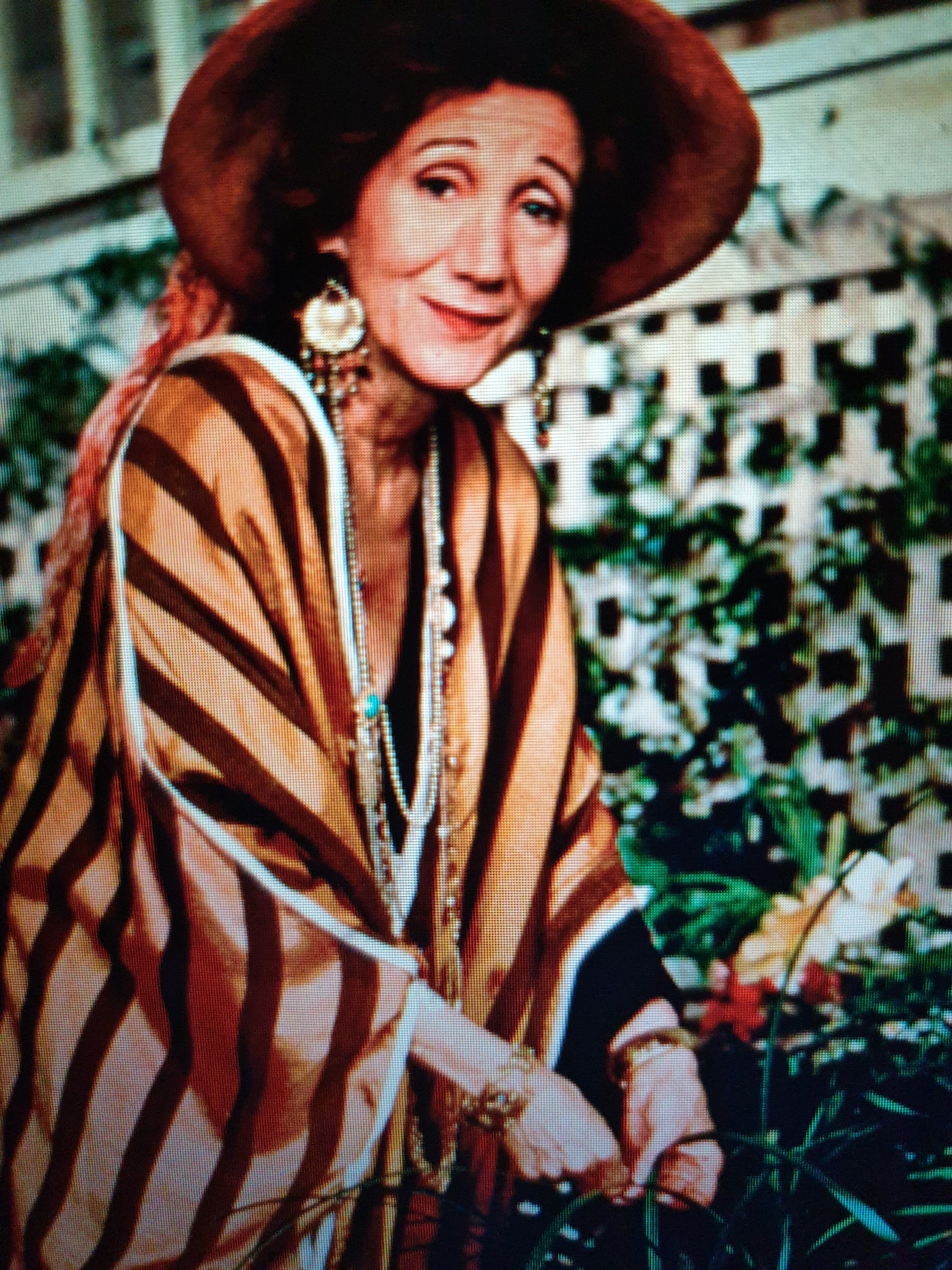
But it was later in life, when I discovered the Tales of the City series of books by Armistead Maupin, that I met the most attractive and extraordinary character of them all – Anna Madrigal, the green fingered-transgender landlady of the “crumbling, ivy-entwined relic” called  28 Barbary Lane on Russian Hill in San Francisco.  Her courage, warmth and humour (and taping of joints onto new tenants’ doors) have inspired and delighted in equal measure ever since.

The stakes were high, therefore, when I first saw the Channel 4 TV series. Could any actress possibly play this woman? I was surely destined to be disappointed.

I needn’t have worried. The glorious Olympia Dukakis, due to be awarded with her Hollywood Walk of Fame star as I write this, was born to play her.

With the ninth book of the series, The Days of Anna Madrigal, scheduled for release later this year, it seems a good time to ponder some of the most memorable statements from the great lady. Here goes:


1

Mrs Madrigal smiled. There was something a little careworn about her face, but she was really quite lovely, Mary Ann decided. ‘Do you have any objection to pets?’ asked the new tenant.

‘Dear……I have no objection to anything’.


2

‘Help yourself to a joint, dear, and don’t bother to pass it around. I loathe that soggy communal business. I mean, if you’re going to be degenerate, you might as well be a lady about it, don’t you think?’

3

Mine’s (her favourite year) 1987,’ said Mrs Madrigal. ‘I’ll be sixty-five or so….I can collect social security and stash away enough cash to buy a small Greek island.’ She twirled a lock of hair around her forefinger and smiled faintly. ‘Actually, I’d settle for a small Greek.’

4

He felt a surge of recklessness. ‘What would you say?’

‘About what?’

‘The end. Your last words. If you could choose.’

The woman studied his face for a moment. Then she said: ‘ How about…”Oh, shit!”‘

5

‘Some people drink to forget,’ said Mrs Madrigal, basking in the sun of her courtyard. ‘Personally, I smoke to remember.’

6

‘How can Anna Madrigal be an anagram for Andy Ramsey?’

‘It’s not.’

‘But you said….’

‘I said it was an anagram. I didn’t say what for.’

‘Then what is it?’

‘My dear boy,’ said the landlady, lighting a joint at last, ‘you are talking to a Woman of Mystery!’

7

‘Oh Mona, we’re all damned fools! Some of us just have more fun with it than others. Loosen up, dear! Don’t be so afraid to cry…or laugh, for that matter. Laugh all you want and cry all you want and whistle at pretty men in the street and to hell with anybody who thinks you’re a damned fool!’ She lifted the wineglass in a toast to the younger woman. ‘I love you dear. And that makes you free to do anything.’

8

‘I can’t trust you.’

‘Yes, you can. I was a weasel of a man, but I’m one helluva nice woman.’

9

‘Girl? gasped Mona.’ ‘You’re a woman!’

Mrs Madrigal shook her head. ‘You’re a woman, dear. I’m a girl. And proud of it.’

Mona smiled. ‘My own goddamn father…a sexist!

‘My darling daughter,’ said Mrs Madrigal, ‘transsexuals can never  be sexists!’

‘Then…you’re a transsexist!’

The landlady leaned over and kissed Mona on the cheek. ‘Forgive me, won’t you? I’m terribly old-fashioned.’

10

She was sixty now, for heaven’s sake……Sixty. Up close, the number was not nearly so foreboding as it had once been afar. It had a kind of plump symmetry to it in fact, like a ripe Gouda or a comfy old hassock.

She chuckled at her own similes. Is that what she had come to? An old cheese? A piece of furniture?

She didn’t care, really. She was Anna Madrigal, a self-made woman, and there was no one else in the world exactly like her.

11

She tugged his earlobe affectionately. ‘I want what’s best for my children.’

A long pause, and then: ‘I didn’t know I was still part of the family.’

The landlady chuckled. ‘Listen, dear…when you get this old lady, you get her for life.’

12

The landlady knelt and plucked a weed from the garden. ‘ Sounds to me like you’re matchmaking. I thought that was my job around here.’

Mary Ann giggled. ‘If I find anybody good for him, I’ll make sure you approve first.’

‘You do that,’ said Mrs Madrigal.

13

Mrs Madrigal took it all in stride, but drew a deep breath when Mary Ann had finished.

‘Well, I must say….you’ve outdone yourself this time.’

Mary Ann ducked her eyes. ‘Do you think I was wrong?’

‘You know better than that.’

‘What?’

‘I don’t do absolutions, dear.’ She reached for Mary Ann’s hand and squeezed it. ‘But I’m glad you told me.’

14

‘Hey,’ he blurted, ‘you should grow your fingernails long.’

Now on her hands and knees, Mrs Madrigal looked up at him. ‘Why is that, dear?’

‘You know, like those housewives in Humboldt County. Works much better than tweezers, they say.’

She handled this clumsy inanity with her usual grace.

‘Ah yes, I see what you mean.’ Falling silent again, she searched until she found the tweezers, then stood up and brushed her hands on her skirt. ‘I tried that once….growing my nails long.’ She caught her breath and shook her head. ‘I wasn’t man enough for it.’

The last time we saw Anna was at the end of Mary Ann in Autumn – a frail old lady who cannot trust herself to pour a cup of coffee, a stroke survivor who puffs (admittedly “demurely”) on nothing more risqué than a vaporizer. But she still plays girlishly with her wayward hair and wears garish kimonos, and  is able to dispense sage advice to her “family”.

I almost hesitate to open that next book when it arrives.

Read Full Post »