Feeds:
Posts
Comments

Posts Tagged ‘Charles Dickens’


A biting breeze and thin drizzle denote December’s inevitable but uninvited return. Twilight descends on the ancient churchyard.

Never has the phrase “quiet as the grave” seemed more apt. 

As I pause to tie my bootlaces by the Town Cross, venue for the making of mayors for many centuries, my body shudders as a young woman brushes past me, the hem of her blue dress grazing the grass border, and her white headpiece fluttering in the wind. She carries provisions – bread, leeks and a small flagon of beer – for the poor in a round wicker basket, forswearing another potentially lucrative tryst with a Northumbrian nobleman, orchestrated by her frustrated father.

Her head bowed, she whispers “Good evening, sir, God be with you”. Before I can frame an intelligible response, she disappears behind the west window.  

Composing myself as best I can in the circumstances, I shamble on past the crumbling tombs, narrowly avoiding a collision with a rat, scurrying across my path to the sanctuary of the lopsided lychgate leading into Church Street. The Pullman pub is empty, save for a few flickering candles and a lone member of bar staff deep in conversation with his mobile phone. 

The lanterns of Rendezvous Street are unusually dim, and the restaurants are sparsely populated. 

The stillness is unnerving, but strangely thrilling.

I turn into the narrow, twisting, rain drenched street that slides down towards the harbour.

Many months have elapsed since chaotic, cacophonous Charivari had snaked up that old thoroughfare, all drums and whistles and cymbals, and other less conventional instruments. More recently, the ground had groaned beneath the burden of polished, red-laced “Doc” Martens, worn by follicly challenged pilgrims lumbering towards Gillespie’s and The Ship for an afternoon of Special Brew, and worship at the altars of Prince Buster and The Specials.

I am alone.

But am I?

The fog in my brain mirrors the slowly enveloping mist approaching from the bottom of the hill. Images of times past in this salty, saintly town start to consume my thoughts. 

Nothing is quite what it seems.

My longing for one last lingering look at the dazzling, daily alchemy conjured up in the rock shop near the top of the street Dickens christened a “crippled ladder” is soon answered. The heady, fashionable aromas of craft beer and Nicaraguan coffee cannot compete with the memory of the sickly sweet perfume radiating from that beloved spot, where, nose squashed against the glass, a small boy gasped in awe at the thick, long sticks of heaven being rolled.

“Let me in at the front, Michael, you’ve been stood there for ages”, pleads his tearful younger sister, Anna, her view obscured by the taller girl stood in front of her.

“Have they started giving out the bags of broken bits yet?”, another boy bellows from further back in the crowd.

A sudden, excited scrum confirms his suspicion as I catch an intoxicating whiff of granulated sugar.

It was often claimed that if Rowlands were to shut its doors for good, Folkestone would die; a prediction, thankfully, since proven dramatically wrong, 

I stumble into Steep Street Coffee House for cake and cappuccino, a combination that never fails to comfort. I am their last customer of the day and the staff, without being obtrusive, are cleaning up around me. The self-styled Folkestone Poet has vacated his customary sales pitch across the cobbles at Big Boys Burger, his heavy overcoat and leather balaclava no longer a match for the diminishing temperatures. 

I pass by Marley’s – or what I thought was Marley’s. From a dark upstairs room, redolent of patchouli and cigarette smoke, a loud, piercing jukebox exhorts me to “go to San Francisco” a seductive reminder of the original Summer of Love on such a bleak winter’s evening.

Two young men in afghan coats, and a messy profusion of facial hair, are huddled at the foot of the crippling, crumbling Bayle Steps. 

“Hey man, how’s it going?”

“Far out, whatcha doing’ tonight?”

“Going’ to Archies. The Lonely Ones are playing”.

Nice. I hear there’s some hot Swedish chicks in town too”.

“That’s settled then, Archie’s it is”. 

“Yeah, and I could kill for one of his salami rolls right now”.

I start to follow them through the door, only to find that the closer I get, the scene dissolves in the moist air, and I am left once more outside Marley’s rather than the Acropolis

The piercing cold slices through my flimsy denim jacket and hastens my progress to the bottom of the street. Everything is still again as I try to rationalise the scenes I have encountered in the past half an hour. 

I cross a deserted Tram Road car park and pass under the arch by Ovenden’s old forge into the empty fish market, tiptoeing around the grimy puddles that tend to settle there, whether it has rained or not. 

A solitary gull plods apologetically past, pining for Spring and the reopening of Chummy’s and Bob’s seafood stalls, when it will again be afforded means, motive and opportunity to ambush tourists for their fish and chips and tubs of whelks.

Pausing outside The Shell Shop, I appear to have stepped into an earlier time again. Men in cloth caps and heavy, seaweed encrusted boots trudge up the slipway opposite, lobster pots and herring nets half empty after an exhausting and disheartening shift. They slap their meagre catch on the floor of Fish Shed One, light cigarettes and congregate in whispered conversation.

‘Darkie” Fagg, “Cottage” Featherbe and “Lobby” Spearpoint are leaning on the railing and reminiscing about better days, while Old Ned Saunders, retired these ten years, is mending the sprat nets for a “free” pint or two in The Oddfellows Arms later this evening. 

On The Stade, wives and daughters juggle the demanding tasks of cleaning fish and supervising the smaller, and not so clean, children. 

Observing this picture, it is difficult to gauge which gender had the tougher life.

Meanwhile, grubby, barefoot young boys, oblivious to the dedication and drudgery of their elders all around them, chalk stumps on the wall of Clouts Alley.

“I’ll be Jack “Obbs, you can be Clarrie Grimmett. I’ll ‘it you into the “arbour, every time, just you see” brags nine year old Harry Sharp.

But with his first delivery, Clarrie, better known about these parts as Edmund, and, later years, “La La”, Taylor, traps Jack in front of his wicket and appeals for leg before.

“Owzat! Got you with me flipper, pom”.

A heated dispute follows, culminating in the great English batsman hurling his bat against the wall and storming off in the direction of Redman’s boat builders.

His mother, ankle deep in half gutted dogfish and three scruffy toddlers, calls: 

“Harry, your tea is ready. And find your brother before you come in”.

“Five more minutes, mum. I’ve got to bowl Don Bradman out first. it won’t take long”.

“Five more minutes, my arse – you’ve got thirty seconds. This tea won’t wait. If you don’t get to the table soon, the other kids will have your share”

A case of bad mum stopped play.

As this scene of family harmony evaporates, I hear, from across the harbour, a sergeant major’s earsplitting admonition to “Step Short”  to a long procession of uniformed men stomping down the slope from the Leas above.

The rhythmic sound of boots on concrete is accompanied by raucous renditions of Pack up Your Troubles in Your Old Kit Bag and It’s a Long Way to Tipperary, as the soldiers march to the waiting ships that will take them to the Western Front.

But there is one last treat before their sombre adventure begins.

Inside the harbour station waiting room, two formidable middle aged women adjust their pinafores and rearrange any curls that have slipped beneath their flower bestrewn boaters. They inspect the massive urns containing the last hot, strong tea most of these men will ever drink.

“Come on boys, form a straight line, you don’t have long, you know”, Flora Jeffrey cries out with a tinge of regret in her voice, while her sister Margaret cuts thin slices of trench cake and bread pudding to complete what, for many of these condemned men, will be their last meal.  

“And don’t forget to sign the visitors’ book before you do”.

“All right, all right, you sound like me muvver – nag, nag, nag”, one private who claims to be twenty one but looks barely sixteen, retorts, as he lurches towards Margaret and slurs:

“Give us a kiss”.

But before he can perfect this unwise manouevre, a grizzled veteran of Mafeking and Ladysmith yanks him back by his collar and barks:

“Show the ladies some respect, young ’un’. You ain’t in the playground now, y’know”.

“Sorry, old timer, I didn’t mean nuffin’ by it, it was just a bit of fun”.

Flora chuckles: “You got off lightly there, my boy, that’s nothing to what Margaret would have done to you if you’d got any nearer!”.

An outpouring of communal hilarity is unleashed, and the embarrassed teenager slinks back into the anonymity of the crowd.

I separate from the excited, but fearful, throng with the final strains of Keep the Home Fires Burning ringing in my ears, and join the boardwalk that connects the station with the base of the thirty year old water lift along the beach to the west. 

But I have hardly stepped foot on the old railway sleepers before finding myself in the midst of a large conglomeration of buildings, including a swimming pool, boating lake and fairground rides.

As I try to take all this in, a crew cut kid in knitted cardigan and khaki shorts can be seen rushing into a huge, dimpled dome that is destined to be his whole world for the next two weeks. He will never tire of rolling a penny for plastic motor cars or shooting a steel ball into a hole for packets of mints.

His father and mother, the latter clutching a wad of what appear to be tickets, frown as they dismount from the blue plastic seats they have occupied for the past two hours, where they had been subjected to an increasingly annoying loop of “legs eleven”, “two little ducks, twenty two” and “two fat ladies’ eighty eight”. 

The boy drags himself from the penny pusher slot machine and scampers towards them in a frenzy of excitement.

“How many wins did you get, mum?”.

“Eight”.

His heart sinks. “Oh no, that big cuddly monkey on the bottom shelf is nine wins. Can you play some more games and win it for me?”.

“We don’t have time, darling; besides dad and I want that nice set of tea trays that are eight wins. They will be just perfect for our TV dinners when we get home”.

“Boring”. 

Feeling betrayed and despondent, the boy skulks off in the direction of the Runaway Coaster.

But he is soon appeased by a promise to go to his favourite fish and chip restaurant in Tontine Street for tea.

Intermittent drizzle and mist has given way to steady rain and a thickening gloom. Hungry and shivering, I resolve to return home. 

Christmas lights bestride the street across the ragged rooftops, and retailers and restaurateurs contend for the accolade of best dressed window, though tonight there is nobody about to judge them. 

Apart from the echo of my boots upon the sodden cobbles, silence is restored.

Until I reach Archie’s.

From that same gloomy upstairs window from whence the Flowerpot Men had serenaded me two hours – and a hundred and fifty years – earlier, the Small Faces remind me that:

“It’s all too beautiful”. 

After the battering my senses have taken this evening, I remain to be convinced of the veracity of this hypothesis.

So I try, for the second time, to gain access to the old haunt of hippies and radicals.

As I take my first hesitant steps in its direction, fully expecting to find myself in Marley’s again, the doors open of their own accord and I am permitted to enter.

And there, waiting to greet me, is the original owner, Mickey Argegrou, who is anxious to introduce me to his special guests for the night. 

To my astonishment, St Eanswythe is here. The modest blue and white garments she had been wearing during our perfunctory encounter in the churchyard earlier have been replaced by brightly coloured, patterned flower dress and matching peaked hat. She is sampling her first ever cup of coffee and, judging by the uncharacteristic grimace that quickly follows, she is unlikely to order a second. Water from her own spring and the occasional small goblet of mead will remain her preferred tipples. 

With the final troop ship of the day, Engadine, set sail for Boulogne, and the Mole Cafe consequently closed, the indomitable Jeffrey sisters have swapped their pinafores for elegant three quarter length dresses. They appear to be conducting a taste test of Mickey’s famed rum babas, comparing them in the process with their revered fruit cake.   

John Brickell, still in his overalls and safety cap, is here too. He has disappointed his vast army of young fans by holding back the remnants of today’s rock rolling, handing the broken bits around to the grateful regulars, who find them a perfect accompaniment to their cocktails. 

And Harry Sharp, grown in the past hour into a handsome young man, but still smarting from his first ball duck at the Clouts Alley Oval, is feeding the jukebox, while Old Ned Saunders, released from his net repairing duties, though not separated from his favourite fisherman’s jumper, for the evening, is leading a communal sing along to the latest tune selected by Harry:

“Those were the days, my friend”.

After the scenes I have witnessed this evening, I am inclined to agree. 
Read Full Post »


Ever since I started my walking tours in 2017, I had wanted to combine my passion for  literature with Folkestone and Sandgate’s rich tradition of welcoming eminent writers by visiting the locations they lived in and frequented. The temporary respite in pandemic lockdown restrictions allowed me to scratch that itch in September 2020.

One of the prerequisites of a good tour is to be blessed with fine weather, and this was the case today. An added bonus was the fact that most of the guests already knew each other, which with their mutual love of literature, contributed to a relaxed and enthusiastic atmosphere.

The number of guests was restricted due to the prevalence of the “rule of six”, though we did stretch the definition to mean six guests plus the tour guide, a minor infraction at a time when the beach and coastal park were regularly inundated with large groups of visitors. 

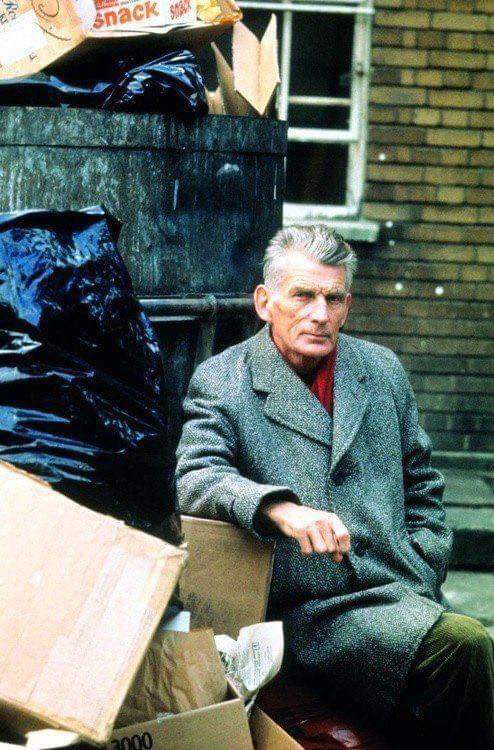
Meeting at the Step Short Arch on the eastern end of The Leas, pride of place for the first reading went to a Nobel Prize winner, Samuel Beckett. The Irish writer’s connection to Folkestone might not be well known to many residents, but in 1961 he had stayed at the Bristol Hotel, since demolished and replaced by No. 1 The Leas, as a condition of getting married to his long term lover, Suzanne Dechevaux-Dumesnil. 

I will spare the reader every precise detail of the itinerary, other than to report that we visited more than a dozen locations. These included The Bayle, Old High Street, Folkestone Harbour, Sunny Sands, Mermaid Beach, the Riviera and Radnor Cliff, returning to the Leas, with the final reading from Wilfred Owen at the Metropole. The recently opened Lift Cafe provided a welcome refreshment stop around half way through the tour.

At each location I read an extract from a writer linked to it. In addition to Beckett, the following were represented – H.G. Wells, Charles Dickens, Wilfred Owen, Carol Ann Duffy, Thomas Ingoldsby, Jocelyn Brooke and Henry Williamson. I even slipped in a handful of my own Folkestone inspired poems, though I envisage that the inclusion of more noted authors on subsequent tours will mean a reduced role for my efforts. 

It was a huge success, lasting four hours (with the aforementioned pitstop), concluding with a drink outside Keppel’s. As an additional souvenir of the day, I provided everyone with a printed booklet, entitled A Sort of Confusing Brilliance (a quote from Kipps by H.G. Wells), containing all the readings and biographical information. 

A second tour was promptly planned for October, but it fell foul to awful weather, and any chance of an alternative date was scuppered by the subsequent lockdown. But, in 2021 it will become part of the standard package of tours.

Read Full Post »


Consigned to cold cobbles and
An orange plastic table and chair,
I wait for the coveted inside spot;
Anything will do – armchair, table with chalks,
It need not even be my favourite window seat,
I can work my way towards that
If I stay here long enough;
Watching for the slightest movement inside,
Indicating an imminent departure,
I must still keep my eyes peeled for
Later arrivals spying my space,
I am comforted, however, in the knowledge
That the staff have my back in this.

I kill the time in earnest debate
With a passing trader over whether
He should shave his beard off or not,
Twin enemies of bare patch and grey
Are sowing doubt in his anguished mind.

At least the unremitting building work
On the winding street the non-PC Dickens
Dubbed the “crippled ladder”,
Is quelled for a short blissful spell;
And I can hear the Four Tops and Marvin Gaye
Providing a soulful accompaniment
To the constant musical chairs inside.

My small cappuccino emerges in time
To warm my gloveless hands and heart,
And fend prospective boarders off at the pass
Before they dare to claim my appointed place,
Wedged between counter and disabled loo;

A large family hovers and dithers with door ajar
Over whether to wait their turn, or seek out
Alternative, but never better, coffee shops;
An impassioned argument ensues on whether
The apple crumble cake with plum compote
Is sufficient enticement to make them stay.

It is.

Errol Brown croons of his belief in miracles,
And following my brief captivity on the street,
I am now inclined to agree with him.

Another stand of lemon, almond and polenta cake,
Today’s obligatory and luscious vegan option,
Is borne on high from the kitchen downstairs,
Like a triumphant Roman emperor,
Before the plebeian hordes salivating below.

A small, blonde girl in blue denim dungarees
Sits transfixed by Peppa Pig on her iPad,
While mum ransacks more than her rightful share
Of chocolate orange cake meant for her daughter;
And a chihuahua named Molly plants itself
On the only available chair.

But then, suddenly and with no warning,
The once overcrowded interior
Thins out mysteriously;
I can only speculate that the departing hordes
Are all rushing for the Love Train
That the joyous O’Jays now sing about
Above the diminishing chatter.

But a new batch of shivering hordes
Are soon shuffling through the half open door
To take their places in the lengthening queue.
The warm, cozy, civilised atmosphere,
Delays my planned perambulation
Of the gloomy, abandoned harbour.
So I order a second small cappuccino
And that last slice of…………
Blueberry and walnut cake!

Read Full Post »


A biting breeze and thin drizzle
Denote December’s arrival,
As twilight descends on the
Twisting, narrow street
Once one of Dickens’s daily haunts.

Many months have passed since
Crazy, cacophonous Charivari
Had snaked up that old thoroughfare;
And the ground had groaned
Beneath the weight of red-laced “Doc” Martens,
Worn by pilgrims strutting towards the
Grand Burstin or Gillespie’s
For an afternoon of Special Brew
To the sounds of The Selecter,
Prince Buster and The Specials.


I turn into that quiet, twinkling lane
And long for one last lingering look
At the dazzling, daily alchemy
Conjured up in Rowland’s Rock Shop.

The aroma of craft beer
Wafting from Kipps’ Alehouse
Cannot compete with the memory
Of the sickly sweet perfume
Pervading Rowland’s, where
Once I gaped in awe at the
Thick, long sticks of heaven being rolled,
A bag of broken bits
A highlight of my annual holiday.

It was often claimed that if it
Were to shut its doors for good,
Folkestone would die.
A prediction, thankfully,

Since proven dramatically wrong,


OLYMPUS DIGITAL CAMERA


I stumble into Steep Street Coffee House
For flat white, cake, warmth and inspiration.
The self-styled Folkestone Poet
Has vacated his customary sales pitch
Across the way at Big Boys Burger,
His heavy overcoat and leather balaclava
No more a match for declining temperatures.

The bitter cold slices through my flimsy jacket
And hastens my progress down the hill,
But not without momentary glances
On either side at steepling steps
To ancient Bayle and modern Tontine Street.


wp-image-1747716960jpg.jpg


I cross into the empty fish market,
Tiptoeing around the grimy puddles
That appear to assemble here
Whether it has rained or not.

A solitary gull plods apologetically past,
Pining for Spring and the reopening
Of Chummy’s, Bob’s and La’s,
When it can return to terrorising tourists
For fish and chips and tubs of whelks.

Back at the foot of the winding street,
Christmas lights flutter into action
As children huddle excitedly
Outside Blooms for tonight’s instalment
Of the Living Advent Calendar,
Jewel in the crown of
Folkestone’s festive year.

Apart from the echo of my boots
Upon the cobbles,
Silence is restored
As I drag my freezing bones
Back up the hill.

But………..
As I turn the corner
At the top
I stop.

Was that really
A childlike squeal I heard?
And did I just catch
A whiff of granulated sugar?

Read Full Post »


If ever I need a respite from the hubbub of Folkestone town centre, there is no better area to take cover in than The Bayle. Bordering the Harbour via the Parade Steps, the Creative Quarter by Bayle Street and Sandgate Road at the end of pretty Church Street, it provides a welcome haven of peace and quiet.

Just off the beaten track, it is largely undiscovered by all but locals.

Today, I am accessing it from the recently refurbished Parade Steps that run from Harbour Street, alongside Gillespies bar at the True Briton.

Folkestone has more than its share of crippling paths and stairways, not least the Metropole Steps and Zigzag Path that link the main beach from The Leas, but the hundred or more steps that need to be negotiated here match the most difficult. Their saving grace is that they do afford the intrepid climber fantastic views of the harbour and the Channel beyond when, as is essential, they pause for a breather at each level.

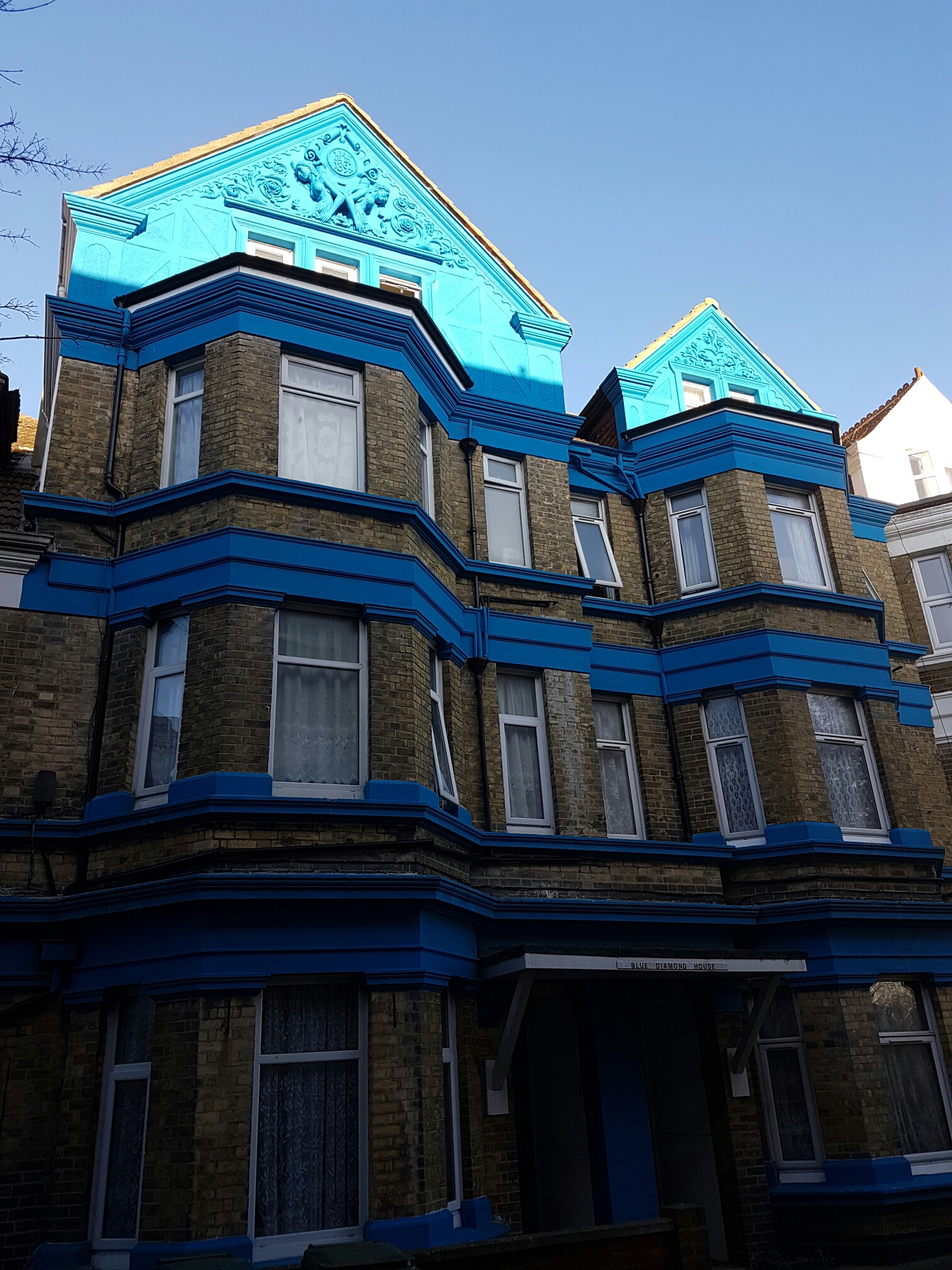
At the top you encounter not only Shangri-La, now discredited as a wartime German spy centre, but also fine multi-occupancy buildings like Blue Diamond House on Bayle Street.

Eschewing the Bail Steps, that lead back down to the Old High Street, I turn left at the friendly Guildhall pub onto The Bayle itself.  Within a hundred yards I come across the Bayle Pond Gardens, lovingly maintained by the residents’ association.

The pond is home to another of the Folkestone Artworks found scattered around the town. One of Tracey Emin’s collection of “baby things”, a bedraggled, brightly coloured mitten, is attached to the railings that encase the pond.

Properties, a mix of attractive brick and weatherboarded cottages and modern apartment blocks, are sought after and, as this recent house hunter can attest, relatively expensive.

Moreover, the significance of this part of town was recognised when number 5 Bayle Street was chosen to launch the fabulous Folkestone Living Advent Calendar programme on 1st December last and, fifteen days later, the Dance Easy / Folkestone Yoga studio at number 19 took its turn in the festivities.

In addition to the already mentioned Guildhall pub, this compact area also boasts Folkestone’s oldest watering hole, the British Lion, reputedly built no later than 1500, and Charles Dickens’s local when he stayed at nearby 3, Albion Villas.

Recovered remains from archaeological digs have revealed that the area was occupied in the late Iron Age and Roman periods, but it was not until the seventh century AD that Folkestone gained its most celebrated citizen.

The daughter of King Eadbald, St. Eanswythe, an intelligent, wilful and devout young woman, rejected numerous Anglo-Saxon suitors and opted for the religious life by establishing a small nunnery and dedicating herself and other women to prayer and service of the poor. On her death in 640, her tomb became the object of prayer and pilgrimage and her relics were sought after and venerated. She was made a saint almost immediately.

Standing between bare winter trees and amidst battered headstones, the current Church of St Mary and St Eanswythe, built upon a twelfth century original, is a lovely, tranquil space.

There are several routes in and out of the churchyard. My personal favourite is to walk through the internal gate, along the path (which starts on Priory Gardens) back to the War Memorial, taking in glorious views of the Channel above the rooftops of Marine Parade.

I’ll leave my favourite rock band (again) to encapsulate how I feel about The Bayle:

Don’t tell me this town ain’t got no heart

You just gotta poke around.

Read Full Post »


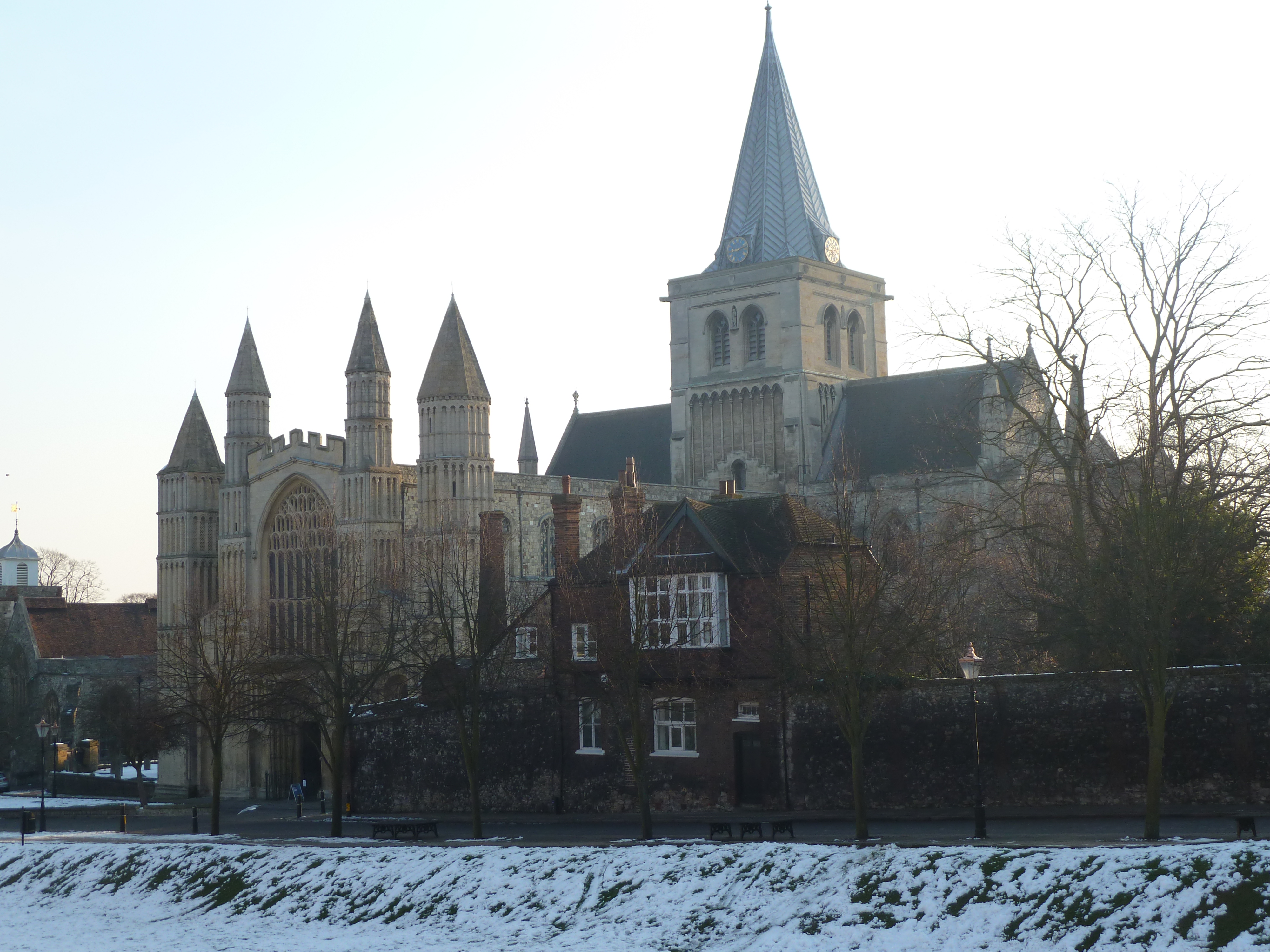
There are many reasons why I am grateful to have been born and educated in Rochester, notably the imposing castle keep, atmospheric cathedral and the close association with Charles Dickens.

The town also hosts a series of festivals and concerts throughout the year within its ancient high street and environs. Whilst the Dickens Festival, held on the weekend after the late May holiday is the oldest and biggest, it is the Sweeps Festival over the May Day weekend that I look forward to the most.

OLYMPUS DIGITAL CAMERA

For three days the town reverberates to the sound of accordions, bells, fiddles, clattering clogs and crunching sticks in one of the largest May Day celebrations in the UK.

But why sweeps?

Well, Dickens is again the inspiration for this extravaganza of music, dance and street theatre.  May Day was the one day’s holiday a year for chimney sweeps  or “boys” in Victorian England, and the novelist highlighted their plight.

The festivities actually begin earlier – at 5.32am on 1st May to be precise.  At the picnic site near Bluebell Hill, the principal road between Chatham / Rochester and Maidstone, the slumbering Jack-in-the-Green is brought back to life by sweeps, Morris Men and anyone else dedicated or foolhardy enough to rise at such an early hour.

OLYMPUS DIGITAL CAMERA

Back in Rochester, the narrow and sleepy high street stirs at around 11 o’clock each morning as shops and stall holders prepare their pitches against a backdrop of  Morris sides jingling into position for their first dance. Many of the pubs host live folk acts too. As you walk from one end of the street to the other you will hear snatches from every strand of the folk tradition.

OLYMPUS DIGITAL CAMERA

Already impassable to vehicular traffic, the street soon becomes clogged (pun intended) with human onlookers, some regular devotees but many others, local residents making their annual pilgrimage to gawp at the strange people from eight to eighty dressed in waistcoats adorned with badges, hats, handkerchiefs, bells and carrying the obligatory personalised beer mug (usually pewter).

OLYMPUS DIGITAL CAMERA

The 2014 Festival, blessed with the fine weather that can make or break such an outdoors event in spring in England, was the 35th since the tradition was revived. More than sixty “sides” from as far afield as Nottingham and Warwickshire performed the full gamut of Morris dances – Cotswold, Border, North West Clog and Black Face.

Kent was understandably well represented with, among others, festival favourites such as Bishop Gundulfs, Kits Coty and the Loose Women. Less traditional forms of dance, notably Gothic (the Screeming Banshees) and Sand (the Fabulous Fezheads), provided added spice.

OLYMPUS DIGITAL CAMERA

The entertainment was not confined to the crowded high street. The War Memorial was home to “Busker’s Corner” and stages behind the City Wall bar and on Boley Hill leading up to the Castle allowed further opportunities for singers. The car park adjacent to the castle moat was abuzz with enthusiasts trawling through the treasures in the record and musical instrument tents.

OLYMPUS DIGITAL CAMERA

The main stage in front of the Castle was permanently in use with a succession of folk acts, and the gardens contained a food, drink and lifestyle fair, children’s fun fair and a number of other craft marquees.

OLYMPUS DIGITAL CAMERA

OLYMPUS DIGITAL CAMERA

OLYMPUS DIGITAL CAMERA

Back in the high street again, the music – and the drinking – never stopped.

OLYMPUS DIGITAL CAMERA

And the dances – and fashion  – got weirder.

OLYMPUS DIGITAL CAMERA

OLYMPUS DIGITAL CAMERA

It had barely been a fortnight since, empty and depressed, I’d left San Francisco. But there can have been few better tonics than a day at the Rochester Sweeps Festival, which was rounded off by a fine concert from the original English folk-rock band, Fairport Convention that evening at Chatham’s Central Theatre.

Moreover, it heralded the start of the English summer – light evenings, more festivals, cricket, seaside trips.

And even the prospect of some warm sunshine.

Now that’s not something San Francisco can guarantee is it?

Read Full Post »


What better way to spend the 200th anniversary of the birth of Charles Dickens than to stroll the streets of the town in which he enjoyed both his formative years and the last 14 years of his life, and from which he drew the inspiration for many of his finest characters and works, including The Pickwick Papers, Great Expectations and The Mystery of Edwin Drood.

Rochester in Kent also happens to be the town in which I was born and educated, and remains no more than a 10 minute drive or train journey away. It is less than three days since the first snowfall of the winter, and whilst the relatively mild temperatures since have provoked a slow thaw, this morning had dawned bitterly cold and foggy.

But as I disembark from a London bound train at 7.50am, the sky is brightening and the sun is making a brave effort to combat the cold. Across the street the Medway Little Theatre’s production of The Inimitable Dickens all this week is the first indication of the connection between the area and our greatest novelist. But it was not always so.

When I attended Sir Joseph Williamson’s Mathematical School in what was then still a city (its status has subsequently been forfeited due to a shocking oversight by the local authority), the crucial impact of tourism on the local economy was not as well appreciated and, aside from the societies dedicated to celebrating his works, the relationship was little exploited.

Dickens based the fictional town of Cloisterham in his final, unfinished novel, The Mystery of Edwin Drood, on Rochester and, as I turn into the high street this morning, I am minded that he wrote “So silent are the streets of Cloisterham”, and remarked also on its “oppressive respectability”. But a steady procession of pedestrians – commuters heading for the station in one direction and King’s School pupils shuffling towards the Cathedral precincts in the other – creates an impression of bustle.

As the bitter chill takes hold, I am gratified to see that the Rochester Coffee Company, a fine, modern cafe with art and TVs on its walls and comfortable leather sofas and chairs, is open. It currently stands opposite  Eastgate House, ” a venerable brick edifice” built in the reign of the first Elizabeth. The owner explains to me that she is moving to larger premises opposite the War Memorial in the Cathedral precincts in a couple of weeks. It is heartening to learn that an independent coffee shop is doing so well.

I pass a municipal car park, skirted by a fragment of roman wall, the only remains of the school that was already over a century old when Dickens first walked this street with his father in 1817, and which had the pleasure of my company 150 years later. The presence of snow reminds me of my, depending on your point of view, most glorious, or nefarious, performance at school when I earned a Saturday morning detention, and instant hero status, for lobbing snowballs at the Latin teacher.

The Dickens influence is everywhere in the names of retail and refreshment outlets – Peggotty’s Parlour, Mrs Bumble’s Tea Rooms, Oliver’s Wine and Cocktail Bar, Topes Resturant, A Taste of Two Cities (Indian), Dickens House Wine Emporium, Copperfield’s (antiques), Pips of Rochester (greengrocers), Little Dorrit (retro clothing and accessories), Ebeneezers (gift shop) and Sweet Expectations. And I am sure I may have missed one or two.

One of Rochester’s great servants and benefactors is the splendidly named Sir Cloudesley Shovell, Admiral of the Fleet and MP from 1695 until his death in 1707, but there is no reminder of that name as the dawn mist has now completely disappeared to reveal a brilliant, pale blue sky with a glaring if tepid sun. With so few people around this is the perfect time to wander around the environs of the Castle and Cathedral to take photographs.

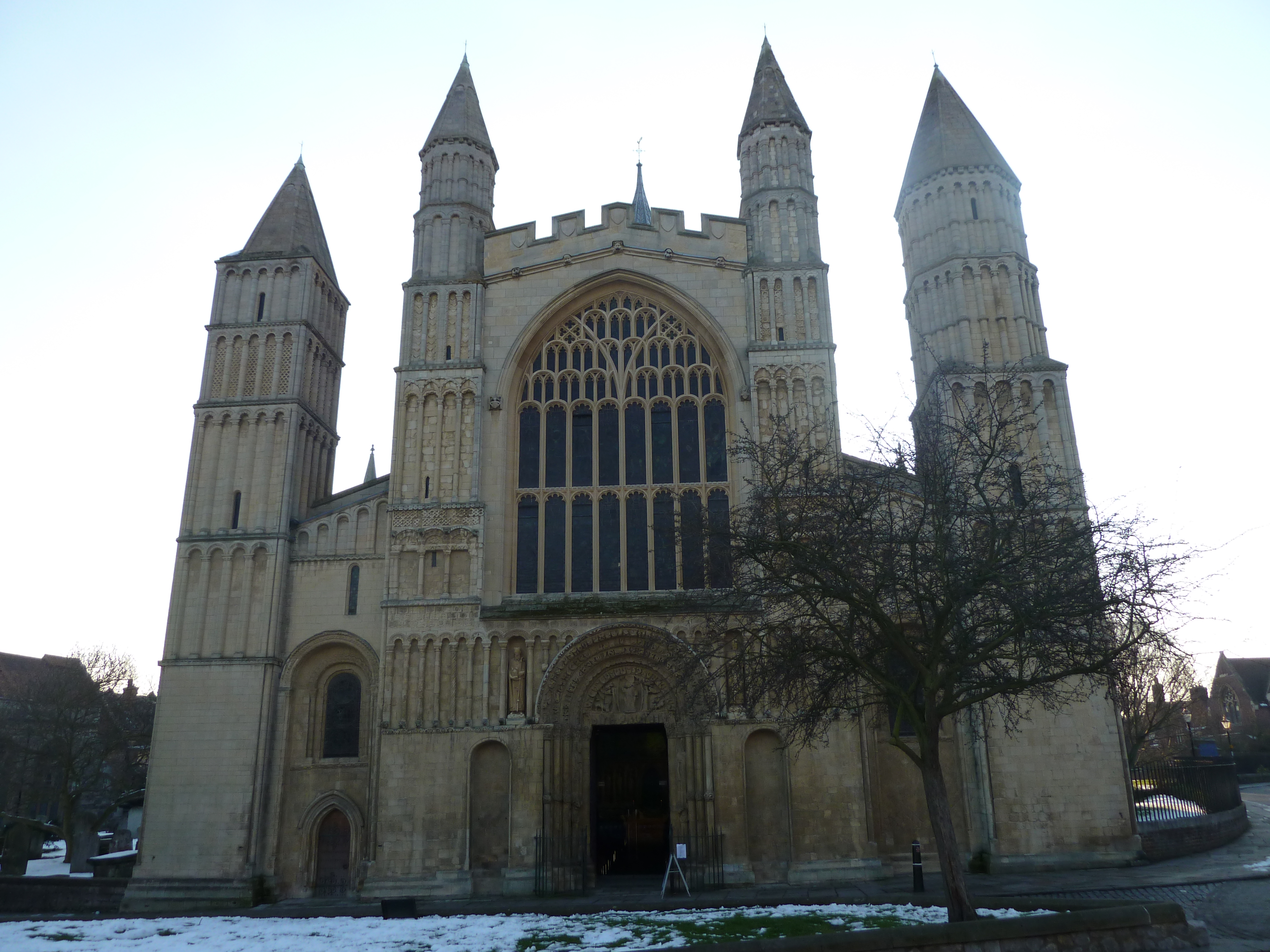
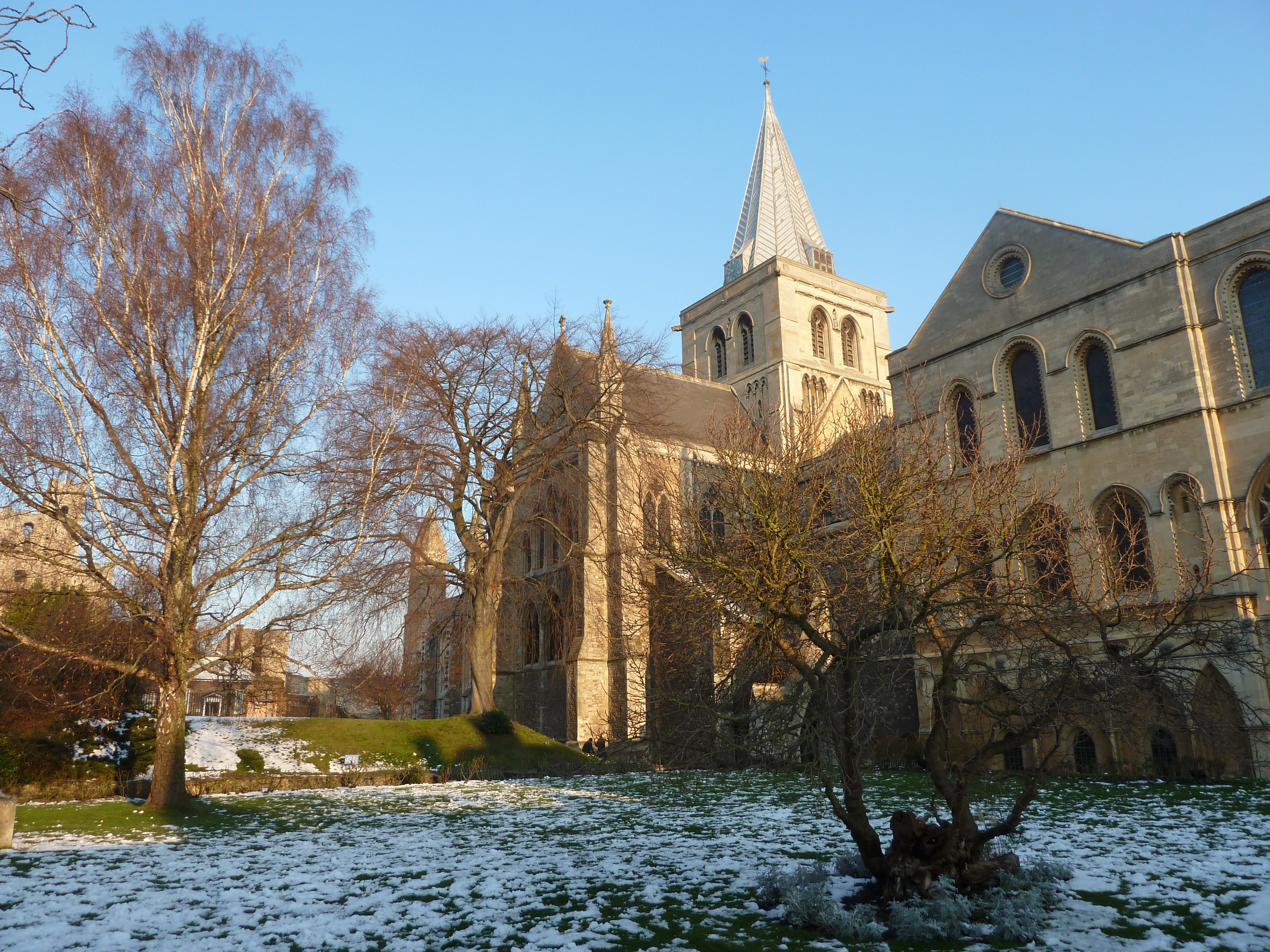
It is difficult to take a bad picture of either of these magnificent buildings (though you may think differently). The Cathedral, second oldest in England (AD604), and the Norman keep have stared, sometimes smiled, at each other for more than a thousand years, and look at their loveliest in this light. King’s School preparatory boys, complete with matching grey blazers, shorts and boaters are being marched into the former for morning service, whilst their elder brethren amble into the array of school premises adjacent to it.

The Castle Gardens are deserted, apart from myself and a couple with a brown and white spaniel spraying snow everywhere in his excitement at being let loose. Walking back through The Vines I stop to admire Restoration House, inspiration for Miss Havisham’s Satis House in Great Expectations and the “finest pre-Civil War town house in England” according to Simon Jenkins.

A gloveless hour spent pointing the camera has removed virtually all feeling from my fingers, so it is time to warm up. A mid-morning pot of tea and toasted teacake are, therefore, taken in Peggoty’s Parlour, a traditional English tea rooms overlooking the High Street, with Dickens art on every wall. It doesn’t take long before I get into conversation with several other afficionados of the author on the benefits to the area of having such a famous son. I discover that one of them was the organiser of the inaugural Dickens Festival (when the town was still a city) in 1981.

The narrow high street is becoming busier as the morning wears on. My first sighting of a film crew occurs opposite the award-winning Visitor Centre where BBC South East Today is setting up. ITV Meridian is also here. Parties of animated French schoolchildren are being led around by guides in Dickensian costume. One is now standing outside the Six Poor Travellers’ House, the one with the “queer old door” that inspired one of Dickens’ shorter stories. Another group can be seen wriggling up Two Post Alley for a tour of the Cathedral and Castle Gardens.

A number of events are being held in the area to commemorate the bicentenary. Eastgate House is the venue for many of these, starting today at 11am with an exhibition on Dickens’ connections with Medway and a display of his autographs. In addition, merchandise – notebooks, pictures, keyrings and fridge magnets – can be purchased to pay for the restoration of the Swiss Chalet, where Dickens wrote his later novels. It was once domiciled in the grounds of Gad’s Hill, but now resides in the gardens of Eastgate House, though is in a state of disrepair. There is a raffle too for a lock of the writer’s hair and portrait.

After a short delay to accommodate BBC Radio Kent and other media groups, 50 of us are escorted up creaking stairs for a reading of the storming of the Bastille from A Tale of Two Cities. There are further readings during the week, including Wackford Squeers in full flow in Dotheboys Hall from Nicholas Nickleby, David’s journey to Dover to meet Aunt Betsey Trotwood in David Copperfield and Pip’s first meeting with the convict, Magwitch, in Great Expectations.

Shortly after lunch at Tony Lorenzo’s (a cafe, unusually in this Dickens obsessed place, named after the owner rather than one of the author’s characters), the fast sinking temperature deters me from venturing into Chatham for “readings, anecdotes and memorials and the laying of flowers to remember members of the Dickens family” in St Mary’s Church in Chatham. And, after all, as the birthday boy said: “Every traveller has a home of his own, and he learns to appreciate it from his wandering”.

In conclusion, an understandably low key but civilised celebration for the great author in his spiritual home. But there will be many more events later in the year, notably at the ever-popular Dickens Festival, commemorating its own 32nd anniversary in June, and Dickensian Christmas at the beginning of December.

Read Full Post »


You may be familiar with Mr Jingle’s assessment of Kent in The Pickwick Papers: “Kent, sir – everybody knows Kent – apples, cherries, hops and women”. Although the abundance of the first three may have been diminished in recent times (being a happily married man I could not possibly comment on the fourth), this still holds true to a great extent.

An alternative definition that I would subscribe to might be “coast, countryside and cricket”.  It is certainly a triumvirate of glories that make me a proud product of its soil. That pride has been rather dented over the summer months with the dismal displays, both on and off the pitch, of the county cricket club. The cradle of the game, home to some of its greatest ever players and with a tradition of playing cavalier cricket in front of large festival crowds in beautiful surroundings, now reduced to a laughing stock in the cricketing world.

Rising debts, the result of a succession of poor financial decisions, a stalled ground redevelopment programme at its Canterbury headquarters, poor communications with its members and supporters and woeful performances on the field leaving the team second bottom in the county championship, all combined to make the season one of the worst in the modern Club’s distinguished 141 year history.

And in the past few days, the coach and two of the senior batsmen have all departed, leaving the team desperately short of both numbers and experience. With doubts remaining too over whether the player of the season will get the new contract that he deserves, that situation is likely to get worse before it gets better.

But in the past week, I have sought solace in some of the county’s many other delights – country walks through the full to bursting apple orchards of haunted Pluckley and the beechwoods and meadows of handsome Harrietsham, a stroll among the bookshops in civilised Tunbridge Wells, and Kentish beer and seafood at the Broadstairs Food Festival, overlooking the packed beach of Viking Bay, basking in the baking October heat and looking like a scene out of the nineteen fifities.

Though I currently live in the “compost heap” of the “Garden of England”, I am no more than an hour and a half, by car, bus or train, from any of its attractions – the castles of Hever, Scotney, Leeds and Rochester, the gardens of Sissinghurst and Emmetts, splendid houses like Groombridge Place, Finchcocks and Knole and what J.M.W Turner called the “loveliest skies in Europe” along the Thanet coast. Throw in two world class animal parks dedicated to conservation, the White Cliffs of Dover, otherworldly Romney Marsh, the rolling North Downs and atmospheric Wealden woodland – the list goes on (my apologies to any favourites of yours that I have missed out).

I count myself lucky in having been born, educated and, after a brief but largely loveless affair with other parts of England, lived in this wonderful county. I’ve been equally fortunate to have grown up hearing and reading  of the exploits of Woolley, Ames and Freeman and watching Cowdrey, Knott and Underwood in their pomp.

But whilst the experience of the cricket, at least at the professional level, has sunk in the past couple of years, there are still those other two features, and much more, to fall back on in the coming months.

Read Full Post »