Feeds:
Posts
Comments

Posts Tagged ‘Grateful Dead’


I blame it, of course, on Scott McKenzie.

And Alan Whicker.

Now I trust that many readers, notably those of a certain age and transatlantic disposition, will recall that Scott McKenzie was the singer who advised the world in 1967 that, if they were going to San Francisco, they should “be sure to wear some flowers in their hair”. That song alone had a searing impact on an impressionable fourteen year old boy living five and a half thousand miles away.

But Alan Whicker?

In appearance, with his English grammar school upbringing, clipped accent, Saville Row suit, slicked back hair, thick-set glasses and brisk moustache, he was the antithesis of the young people flocking to the Haight-Ashbury neighbourhood at the time.

Whicker was an English journalist and broadcaster who forged a career spanning nearly sixty years until his death in 2013. His finest work was Whicker’s World which he presented for thirty years, travelling the world and commenting in an inimitable ironic fashion on society, and interviewing many prominent figures of the time, including the Sultan of Brunei, reputedly the richest man in the world at the time, the Haitian dictator, “Papa Doc” Duvalier and numerous high profile actors and aristocrats.

His stiff upper-lip style made him the affectionate butt of many comedians, none more memorably than the Monty Python team who delivered a sketch entitled Whicker’s Island, in which a succession of Whickers would walk on and off the screen uttering in his customary hushed tones, the catchphrase “here on Whicker’s Island”.

On 9th September 1967, the day that Big Brother and the Holding Company and the Byrds headlined at the Family Dog and Fillmore Auditorium, two of the emerging and competing concert venues in San Francisco,  Whicker broadcast a programme on the BBC entitled Love Generation. The episode was groundbreaking not least for the fact that it showed scenes of drug taking, despite the corporation’s “horror” of the practice, for the first time on British television, notably in 710 Ashbury, the Grateful Dead house (Phil Lesh and Bob Weir figured prominently). In the light of the recent Mick Jagger drug bust, it was put out very late at night. Among the individuals invited to expound their hippie ideals, emerging music promoter, Chet Helms, outlined his plans for taking music and light show “happenings” to London.

It was an incisive, literate and surprisingly sympathetic piece in which Whicker spoke over footage of the large influx of youth who had hitchhiked from every state to “Hashbury”:

In the States, pot is going middle class and spreading like prohibition liquor as more and more citizens   get zonked out of their minds. The drug culture enters the blood stream of American life. Like it or not, we’re living in the stoned age.

Later he was to lament that the:

Summer of Love was a short outburst of happiness that lasted only a few months. When I returned a year later the flowers and the innocence had died.

I was, like the thousands of young people that sought escape from the drabness of middle America, inspired by the message of “tune in, turn on, drop out”, though I hadn’t the means of joining the tribes.

The broadcast also gave my first experience of the Grateful Dead in performance with a beardless Jerry Garcia taking the lead on the Golden Road (to Unlimited Devotion). A song title was never more apt.

News bulletins featured scenes of Gray Line tour buses crawling down Haight Street with bemused middle aged, provincial passengers staring at the carnival on the street.

And then there was Scott McKenzie.

Another character with a splendid upper lip growth, it was his song, full title San Francisco (Be Sure to Wear Some Flowers in Your Hair), which topped the charts in the UK but not (quite) the US, that so enthralled that fourteen year old boy in what was, despite the emergence of “swinging London”, still a monochrome etched country.

I took to decorating my Beatle mop with an occasional fresh daisy or buttercup. I commandeered my mother’s chocolate and purple paisley print blouse to wear to the home games of my local football team, guaranteeing that I would be bullied as mercilessly on a Saturday afternoon on the terraces as I was already being five days a week at school.

But I didn’t care.

I was a hippie.

My home grown musical diet of the Beatles, Rolling Stones, Kinks and a dozen other pop groups began to be supplemented by the weird, thrilling sounds of San Francisco. But it would still be another three years before I could get my hands on the music of the  Dead, Jefferson Airplane and Quicksilver Messenger Service (thank you Keith Mason wherever you are), and before I could justifiably claim to be aboard the bus – the magic, not tourist, version.

During those same three years, I became increasingly fascinated by American culture and society. My political awakening was borne more out of opposition to the Vietnam War and support for the blacks in the Deep South, and students at Berkeley and Kent State than with the Rhodesian question or devaluation of the pound in Britain. I chose American history as one of my “A levels” at school and later studied American literature at university.

Underpinning all this was the music – my adoration for the San Franciscan bands was extended to embrace the country and folk rock idioms of Joni Mitchell, Neil Young, the Eagles and, of course, Dylan. I devoured every American film I could, especially those with a counter cultural bias like Easy Rider, Two-Lane Blacktop and Alice’s Restaurant, and read George Jackson, Angela Carter and Tom Wolfe.

Those enthusiasms have endured to this day, though it would take me another quarter of a century before I first gazed adoringly on the Golden Gate Bridge or strolled down the street that had been the epicentre of my cultural life for so long.

But that is another story.

Read Full Post »


This is the third in a series of articles about the writing of my new book: Smiling on a Cloudy Day: An Englishman’s Love Affair with San Francisco. The previous posts were:

http://www.tonyquarrington.wordpress.com/2013/08/07/the-next-book/

http://www.tonyquarrington.wordpress.com/2014/07/07/smiling-on-a-cloudy-day/

The dates of those posts might already indicate that progress has not been as swift as I would have liked. There are a variety of reasons for this, not least my father’s fluctuating health over the past eighteen months and a recent, but now concluded, return to paid employment.

It is a similar story with the blogging – only sixteen posts, admittedly some of them quite long, since returning from San Francisco in April last year, compared to almost double that number in the preceding nine months.

But that is now in the past, and I am determined to publish the book this year. Indeed, I have been working on a draft for many months.

One illustration of progress is that dozens of disparate sheets of paper scattered over various surfaces have now been incorporated into a smart folder in which that working draft is now housed (see below). True to type, inspiration has been sought in the attachment of Grateful Dead and Giants logos.

OLYMPUS DIGITAL CAMERA

Part travel diary, part guide book, part history and part analysis of modern city life from the perspective of a regular foreign visitor, Smiling on a Cloudy Day follows the adventures of my wife and I during a month in early summer (if June in San Francisco can ever be considered summer). You will be able to follow us as we explore many of the most popular, and some less well-known, sights, chuckle and groan in equal measure at the antics of fellow passengers on public transportation, ramble round our adopted neighbourhood of Bernal Heights, and endure extreme temperatures at AT & T Park while still believing that the Giants will avert the run of dismal defeats that have coincided with our attendance.

Unsurprisingly, food and drink will feature strongly, and there will be plenty of music too at festivals and concert halls.

I intend to press on with the draft over the next four months before our next pilgrimage to the City in May. Those two weeks will feel as much a research trip as a vacation as I attempt to clarify facts and solidify themes.

Irrespective of whether I publish digitally or in print (though I remain inclined towards the former method), I plan to do so in advance of my second trip, this time for a full month in September/October.

I will continue to supply periodic updates and brief extracts on my blog in an effort to whet readers’ appetites as the book develops.

But if you would now excuse me, I need to get on with writing it.

Read Full Post »


I’ll confess that I’ve never really – until recently – looked after my teeth, so I have been remarkably lucky that they have given me little trouble in adult life.

Apart from one occasion.

An occasion that I had, for reasons you might just understand when you have read my story, erased from my conscious memory until a separate incident in our San Francisco apartment one morning last year brought it back.

Sourdough bread and I had always been on the best of terms, but we fell out when I crunched into a slice of peanut butter on toast with, in hindsight, unwise vigour and cracked an upper molar. Mild and temporary discomfort followed, along with anxiety that I might be compelled to part with many hundreds of dollars at either the Noe Valley Family and Cosmetic Dentistry or Aesthetic Dentistry of Noe Valley premises. For somebody already unnerved by the sight of a drill, those names did not appear especially welcoming. Travel insurance seemed little consolation in such circumstances.

But, in a day or two, I had virtually forgotten about the incident, apart from constantly prodding and licking the gap that had been created, much to my wife’s annoyance.

But it did bring back to me a previous visit to the dentist more than thirty years previously.

So, in a craven endeavour to solicit your sympathy rather than contempt for my inattention to aural health over many years, I will briefly relive that experience with you.

It was a baking Friday afternoon in the summer of 1981 in Tulse Hill, south-east London, less than two miles away from the riots that raged on the streets of Brixton. On learning that all four of my wisdom teeth were forcing themselves through at crooked angles, I was persuaded that they should be extracted before they caused too much trouble. In an uncharacteristic outbreak of physical courage I had also opted to have them removed at the surgery under local anaesthetic, rather than a general one in hospital.

My dentist, Mr Hall, was a tall, kindly, grey whiskered Trinidadian. He was due to retire in a few weeks, and this would be one of his last wisdom teeth extractions. He exuded all the calm and confidence that a timid patient about to entrust his entire mouth to could wish for.

“You have nothing to worry about, Mr Quarrington. I have done hundreds of these procedures”, he said as he flashed his own immaculate collection of teeth at me from above.

And after ten minutes of gentle coaxing two teeth had dutifully popped out.

He was right. There really was nothing to worry about. This was so much easier even than having a filling.

Why had all those so-called friends warned me about the procedure and recounted horror stories of losing the same teeth?

But wait a minute.

As one of my favourite rock lyricists wrote: “when life looks like easy street there is danger at your door.”

Three hours later I lay sprawling across the chair, my clothes disheveled and spattered with blood as Mr Hall beamed at me from the other end of the room and exclaimed:

“That was the most difficult wisdom teeth extraction I have ever done. But we made it, Mr Quarrington, we got those little blighters out in the end. You should feel very pleased with yourself”.

I felt many things at this time but pleased was not one of them. Exhausted, sore, tearful, relieved and perhaps even a little angry – but not pleased. I had lost count of the number of additional injections I had been subject to in that long, dark afternoon of the soul.

But Mr Hall could not conceal his own sense of triumph at having accomplished a task that had called for the use of every instrument in his bag of tricks, as well as some that would have belonged more in a factory housing heavy engineering than in the cool, antiseptic environment of a dentist’s surgery with Nat King Cole crooning lightly in the background.

Even the fact that he had been obliged to cancel a whole afternoon’s appointments, and sent his receptionist home half an hour earlier, failed to dampen his good humour. He was not, however, unmindful of my visible distress and insisted that I did not leave until I felt able to. I only lived a few hundred yards away and, although groggy, was able to get home without difficulty.

I don’t recall making a further appointment on my way out that day.

Nor one for some time afterwards.

What had begun as a natural anxiety about a straightfoward procedure had, in one traumatic afternoon, turned into a violent fear.

But I’m now back on the straight and narrow, though some of my teeth might not be able to claim the same.

And by the way, sourdough bread and I have long since reconciled in case you wondered.

Read Full Post »


In 1995 we were finally persuaded to avert our enraptured gaze from Italy (we had already been to Milan and Sicily that year), to make our first belated trip to San Francisco and, indeed, the United States.

As our tour bus rattled over the Bay Bridge on a balmy early October afternoon, Louis, pronounced Lewis, our chain smoking guide from Barcelona with a penchant for stand up comedy, took to his feet, but not before instructing the driver to press play on the cassette recorder and release the crackling strains of Tony Bennett upon us.

(The loveliness of Paris seems somehow sadly gay,

  the glory that is Rome is of another day)

These words were, however, indistinct on this occasion as they coincided with Louis loudly clearing his throat before uttering the two words that we had become accustomed to hear him preface every announcement with:

“Okey cokey”.

(I’ve been terribly alone and forgotten in Manhattan

I’m going home to my city by the Bay)

This was the cue for another, more violent attack of phlegm.

(To be where little cable cars climb halfway to the stars

The morning fog may chill the air, I don’t care)

That was the last we heard of Tony, at least for now, because Louis, larynx lubricated, was gearing up for a speech. He had an important message to impart to us before we were disgorged at our downtown hotel.

“You’ve all heard this song, haven’t you?”.

He couldn’t resist another, much more genteel, croak while fifty three passengers smiled and nodded in his direction.

“Well, it’s true. You WILL leave your heart in San Francisco”.

Emboldened by such an emphatic statement, he continued:

“We’ve been together on this bus now for twelve days and we have seen some incredible sights – the Grand Canyon, Yosemite, Las Vegas , the Hoover Dam and even Disneyland. But this city is the place that will capture your heart. I am telling you that when you leave in three days time, you will know exactly what Tony Bennett means”.

As his fans beamed in childlike anticipation, Louis made one final claim before reaching for his cigarettes:

“If you don’t, then Louis knows nothing”.

If the last twelve days had taught us anything, it was that this squat, swarthy man from Spain, who might have passed for either fifty or seventy years of age, knew a lot about everything. We were, therefore, inclined to trust him on this one.

With one final, hearty cough – and another “okey cokey” for good measurehe descended the steps of the coach, shook hands with the proprietor of the Best Western Canterbury Hotel and lit up while the driver helped us to locate our luggage.

(Your golden sun will shine for me).

And for me.

Louis was right.

Despite twelve days witnessing one jaw juddering attraction after another, which had also, bizarrely, included listening to the outcome of the O.J. Simpson trial on the pier at Santa Monica, San Francisco did not disappoint. Not everyone in our party was as thrilled by its charms, as complaints about the homelessness, dirt on the streets and crowded cable cars testified.

But I saw beyond this.

Of course, I was primed for love.

It had been one of the longest courtships from a distance in history.
We stayed three nights in the heart of the Tenderloin, which rendered the moans about aggressive panhandling and grime entirely believable, and crammed in just about every tourist hot spot we could:

  • Twin Peaks (for orientation);
  • Cliff House (for the washrooms inside and jewellery stalls outside, no time for brunch yet);
  • Golden Gate Bridge (for what we would learn later was the second best view – from Vista Point);
  • Pier 39 (for family presents and the sea lion show);
  • Fisherman’s Wharf (for the clam chowder and fleeces (only joking about the latter));
  • Ghirardelli Square (for the chocolate, what else);
  • Union Square (Lori’s Diner and the Gold Dust Lounge, though I’m told there were a few reputable stores there too);
  • North Beach (for the coffee and Italian ambiance);
  • Chinatown (for cheap gifts on Grant Avenue and unmentionable looking foodstuffs on Stockton Street), and
  • Alcatraz (or at least we would have if we had had the gumption to purchase tickets in advance).

We still contrived to fit in an afternoon on Haight Street to enable me to pay homage to Jerry Garcia, the Grateful Dead’s lead guitarist, who had died just eight weeks before. And, of course, we stood in line for hours at both the Powell and Hyde turnarounds to catch a ride on the cable cars, marvelled at the cars snaking down Lombard Street, had dinner in Chinatown, and on our last night at The Stinking Rose (I still feel sorry for the other passengers sitting within three rows of us on the flight home the next afternoon).

And the rest is, as any regular reader will know, history.

Read Full Post »


It’s near two hundred days since I slouched atop green Bernal Hill,

Dismissing the dogs drooling over my “Progressive Grounds” wrap.

OLYMPUS DIGITAL CAMERA

I watched with increasing heavy heart the planes fly towards SFO,

Doleful omens that my own flight home grew ever nearer. 

Now, finally, my next pilgrimage is as close as the last,

But it might as well be another two hundred years as days;

With the city again in the grip of World Series fever,

I yearn to bask beneath the evening city’s orange glow.

So much I miss about this cool, gorgeous, dirty, expensive place.

The soulful song of the foghorns out across the Golden Gate.

That heart stopping moment when you crest the hill at Hyde  

And pier, park and prison under a pristine sky come into view.

Community singing with Elvis and Snow White in Club Fugazi 

Before following Casady, Kerouac and Ginsberg to Vesuvio Cafe

Where I sit beneath James Joyce with a glass of Anchor Steam.

Bowing dutifully to Emperor Norton as he leads his latest star-struck

Subjects round the now scrubbed and polished Barbary Coast.

OLYMPUS DIGITAL CAMERA

Standing on stairways in Sunset and Bernal,

Gazing open-mouthed as Karl the Fog weaves his moody magic,

Slicing Golden Gate Bridge and Sutro Tower in half before 

Rendering them clear and whole again in a heartbeat.

Mouthing along to “O Mio Babbino Caro” 

While wrestling a ristretto at Caffe Trieste.  

Devouring warm, thickly buttered popovers by the Pacific

Among the toffs and tourists at the Cliff House.

OLYMPUS DIGITAL CAMERA

Scouring for the latest tie-dye tees in still heady Haight.

Getting through a minor novel on the F Streetcar as it

Clanks and clatters down Market and along Embarcadero.

Savouring the scents of jasmine and lemon on the backyard patio.

Marvelling at the Mission murals and their passion and exuberance

Reassures me this changing city still harbours an independent spirit.   

OLYMPUS DIGITAL CAMERA

Sharing stories of Dead concerts at Lyceum and Fillmore 

In the line for breakfast at Martha’s on Church,

Where the Blackpool boat tram glides past and waves

Its bunting at “Lovejoy’s” ladies taking tea and tiffin. 

Shovelling down “Gilroy’s” garlic fries at the ballpark before 

The circling seagulls, mindful of each innings slipping away,

Prepare to swoop to reclaim their birthright.

Watching a liquid sun decline over the serene lagoon 

Of the soon to be centurion Palace of Fine Arts,

What better resting place after the Lyon Street Steps descent?

 OLYMPUS DIGITAL CAMERA

And breathing a sigh of relief as the recycling police

Leave me alone for yet another week. 

These and many more images flood my brain.

But never mind.

For now at least, there’s more baseball torture to

Endure from afar in the dark of the night.

Read Full Post »


Readers of this blog will already be aware of my affection for the Haight Ashbury neighborhood of San Francisco. Several articles have been devoted to its history, architecture and culture.

Following my recent trip I have revisited my collection of photographs of the neighborhood. It started off as just a series of images but I have found it hard to resist commenting on a number of them in passing.

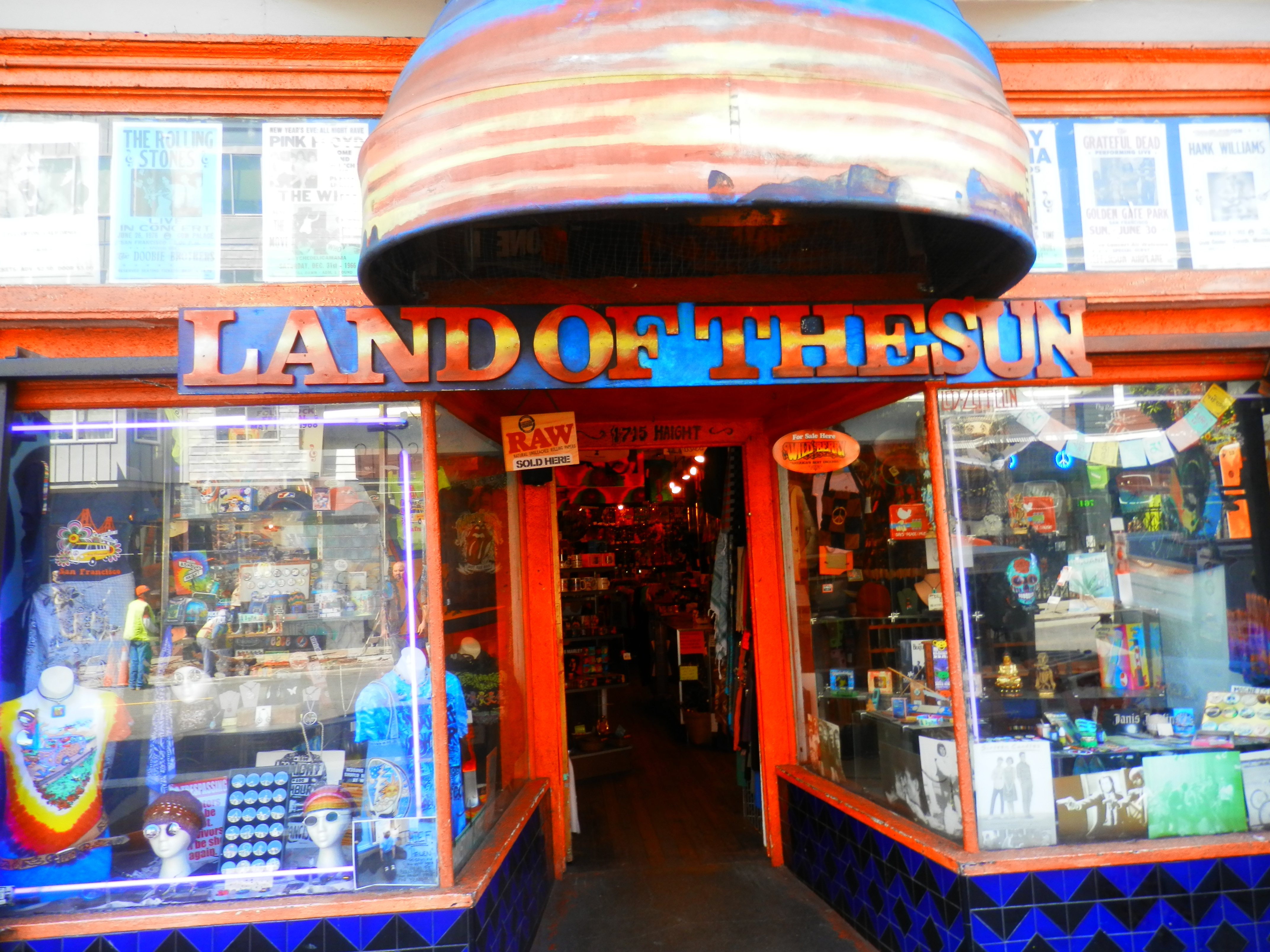
I will start with the store in which my vacation dollars and I are most easily parted – Land of the Sun, the  best place on Haight Street for tie-dye shirts and hippie paraphernalia such as jewelry, beads, throws and other household accessories.

OLYMPUS DIGITAL CAMERA

The other store in which I have often satisfied my craving for tie-dye is Haight Ashbury T-Shirts.  It might not be as enticing as Land of the Sun from the outside, but it is a great place to hang out in, even if it does mean you having to spend much of your time craning your neck to view the merchandise that occupies the entire ceiling space.

But it does have the added kudos of being sited at the iconic Haight  and Ashbury intersection (though not the definitive corner – that honor now goes to Ben & Jerry’s).

P1000633

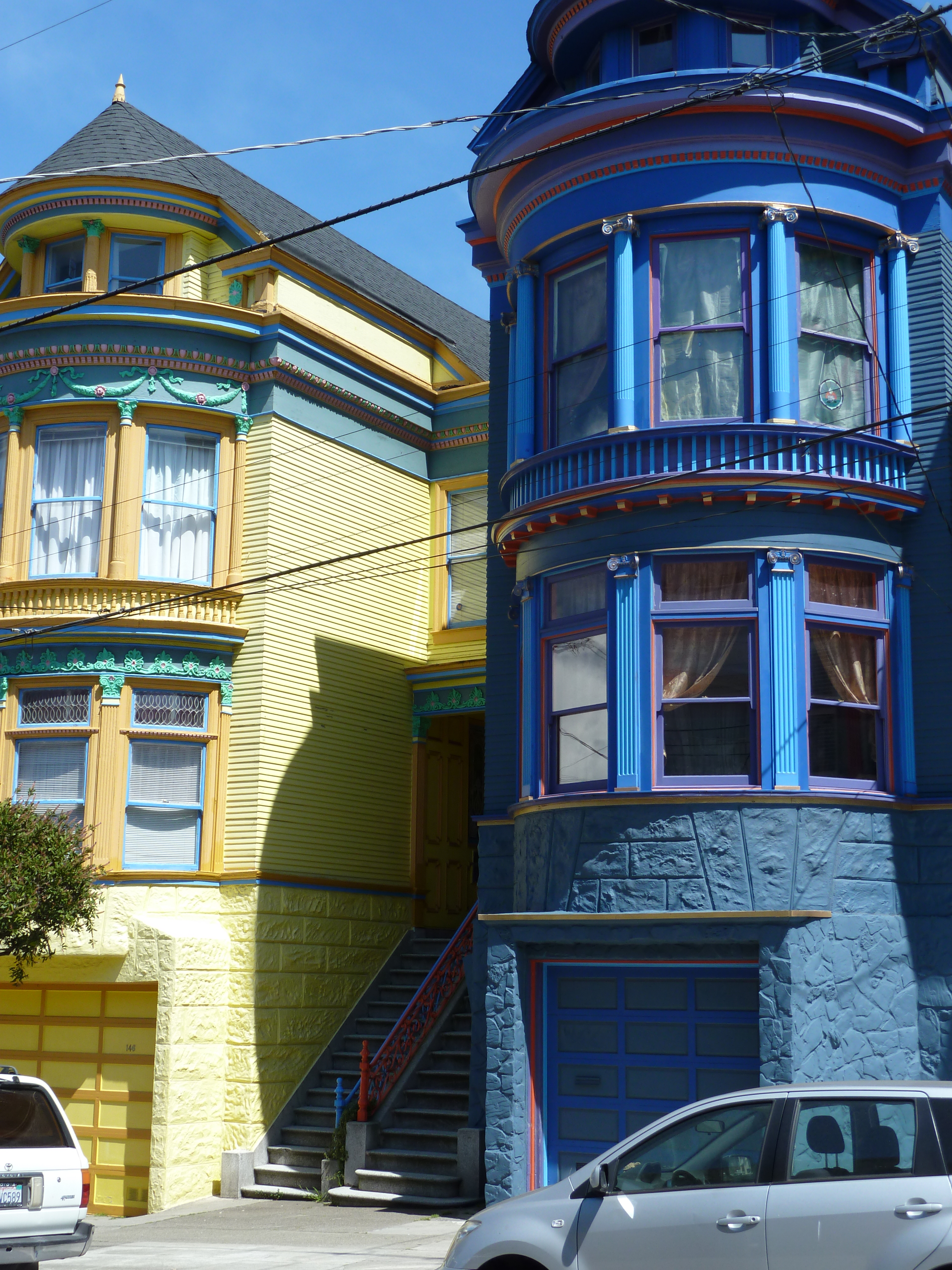
Haight-Ashbury is not just hippie clothing and smoke shops of course. It also boasts some of the finest Victorian architecture in the city, as illustrated by this fine pair of Queen Annes situated literally yards off the main drag.

P1000640

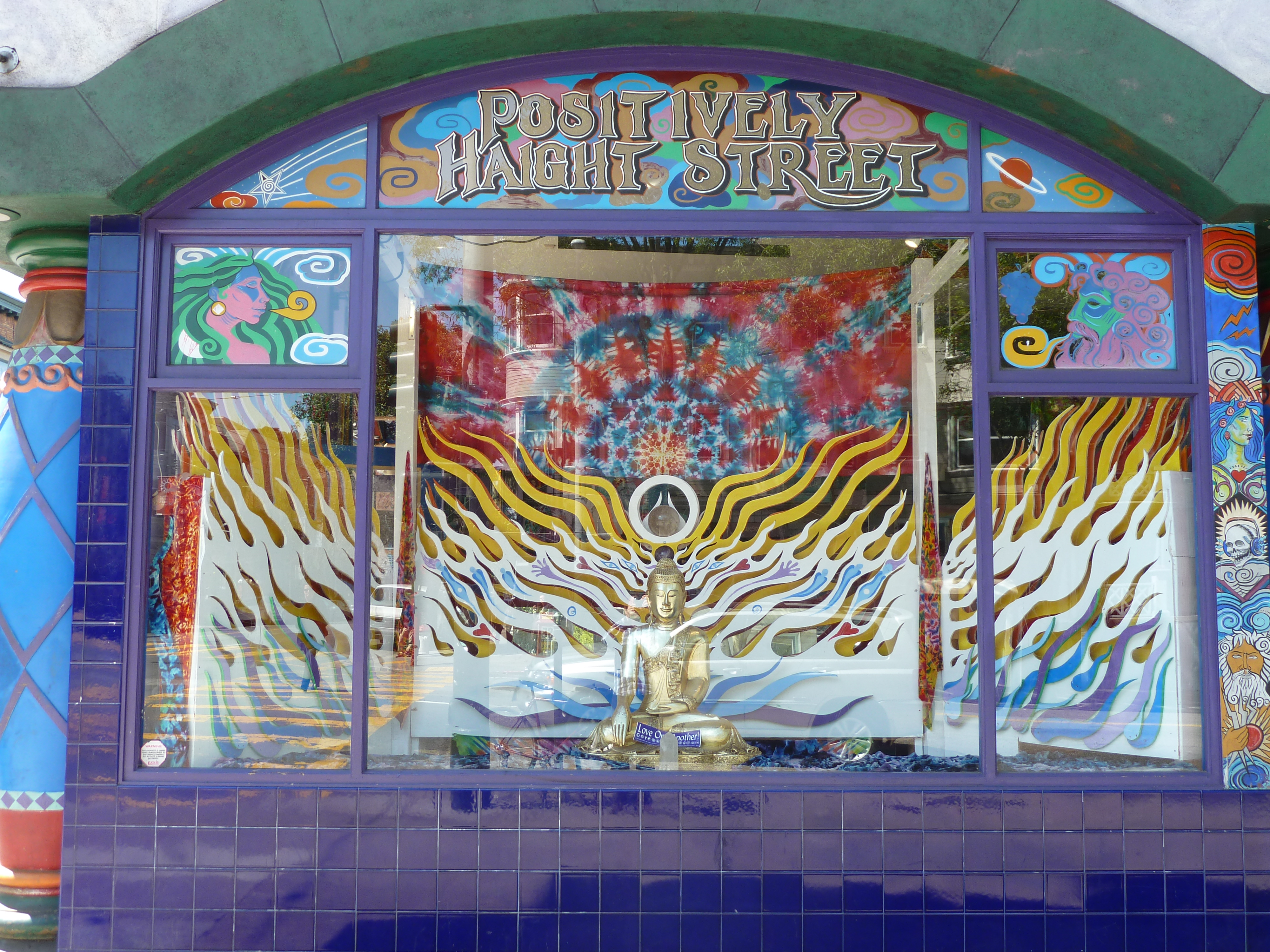
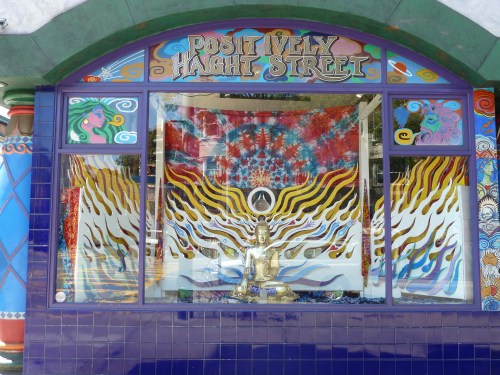
My first port of call on hitting the ‘hood was once Positively Haight Street, a wonderful hippie-oriented store with stunning facades.

P1000644

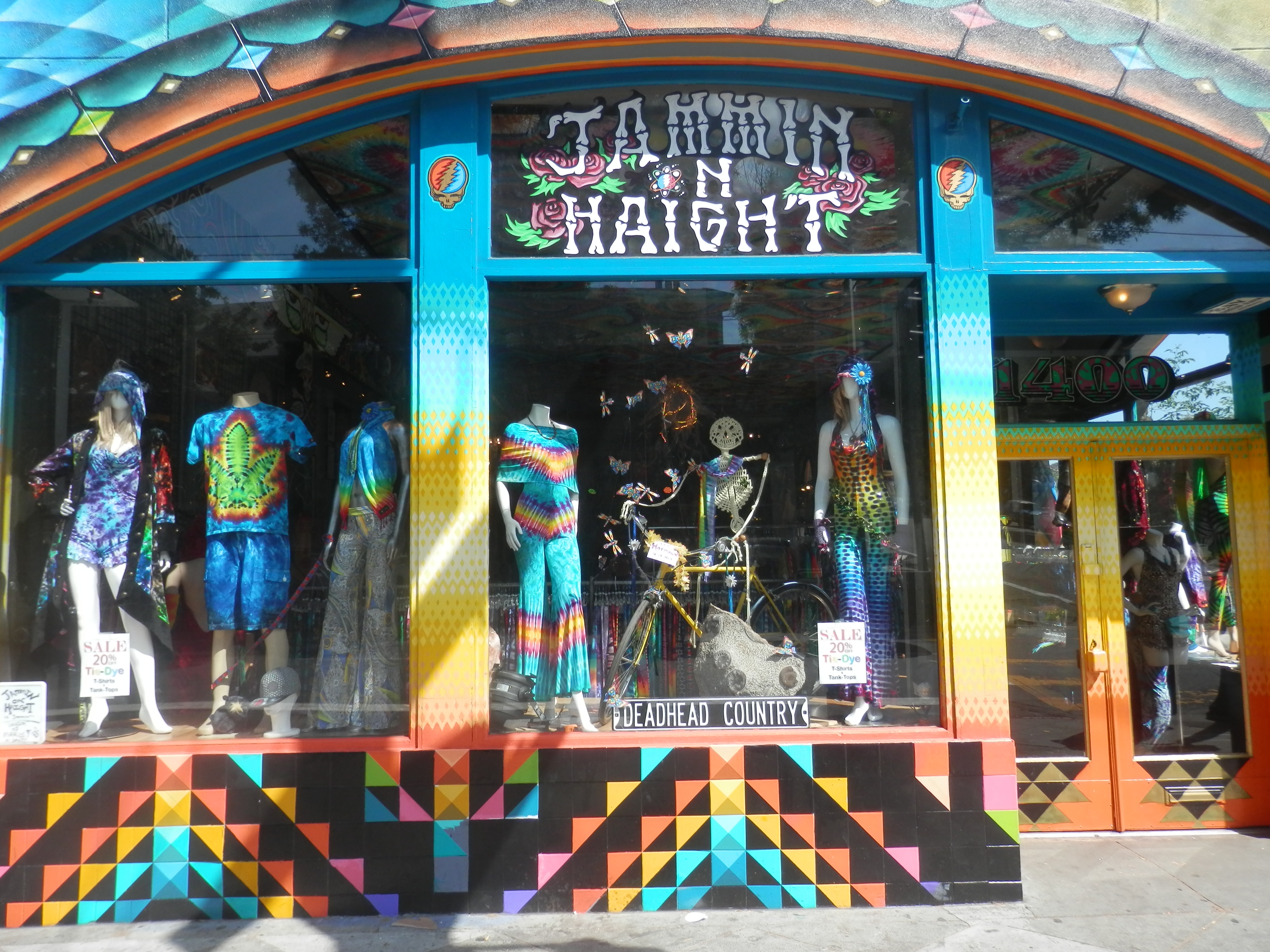
In June 2012, new owners opened Jammin on Haight on the same premises. Still dedicated to tie-dye fashion, it is undeniably a beautiful store but I haven’t yet quite warmed to it.  Much of the overtly Grateful Dead apparel and accessories – despite the sign in the window below – have gone (or do I have “two good eyes” but “still don’t see”?), and it exudes a more upmarket, well scrubbed vibe that I can’t readily relate to. The window displays, though sporting different designs, remain beautiful.

OLYMPUS DIGITAL CAMERA

OLYMPUS DIGITAL CAMERA

I once sang (I use the word advisedly) the Grateful Dead song, Ripple, with a young busker on that corner above. I often wonder whether he was still able to eat that evening.

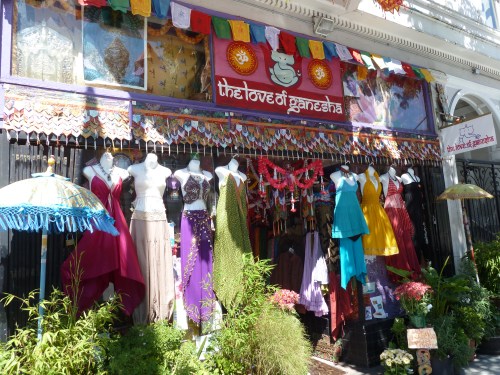
Though I have not had cause to visit these establishments much, here are some more colorful shopfronts.

P1000638

P1000643

P1000632

Although I’ve still not managed to beat the lines at the legendary Pork Store Café, the following have provided hearty sustenance over the years. And we will get to eat at Cha Cha Cha one day too!

OLYMPUS DIGITAL CAMERA

P1000636

Familiar and long gone (but not forgotten) look out on you every few yards along Haight Street.

OLYMPUS DIGITAL CAMERA

OLYMPUS DIGITAL CAMERA

P1020026

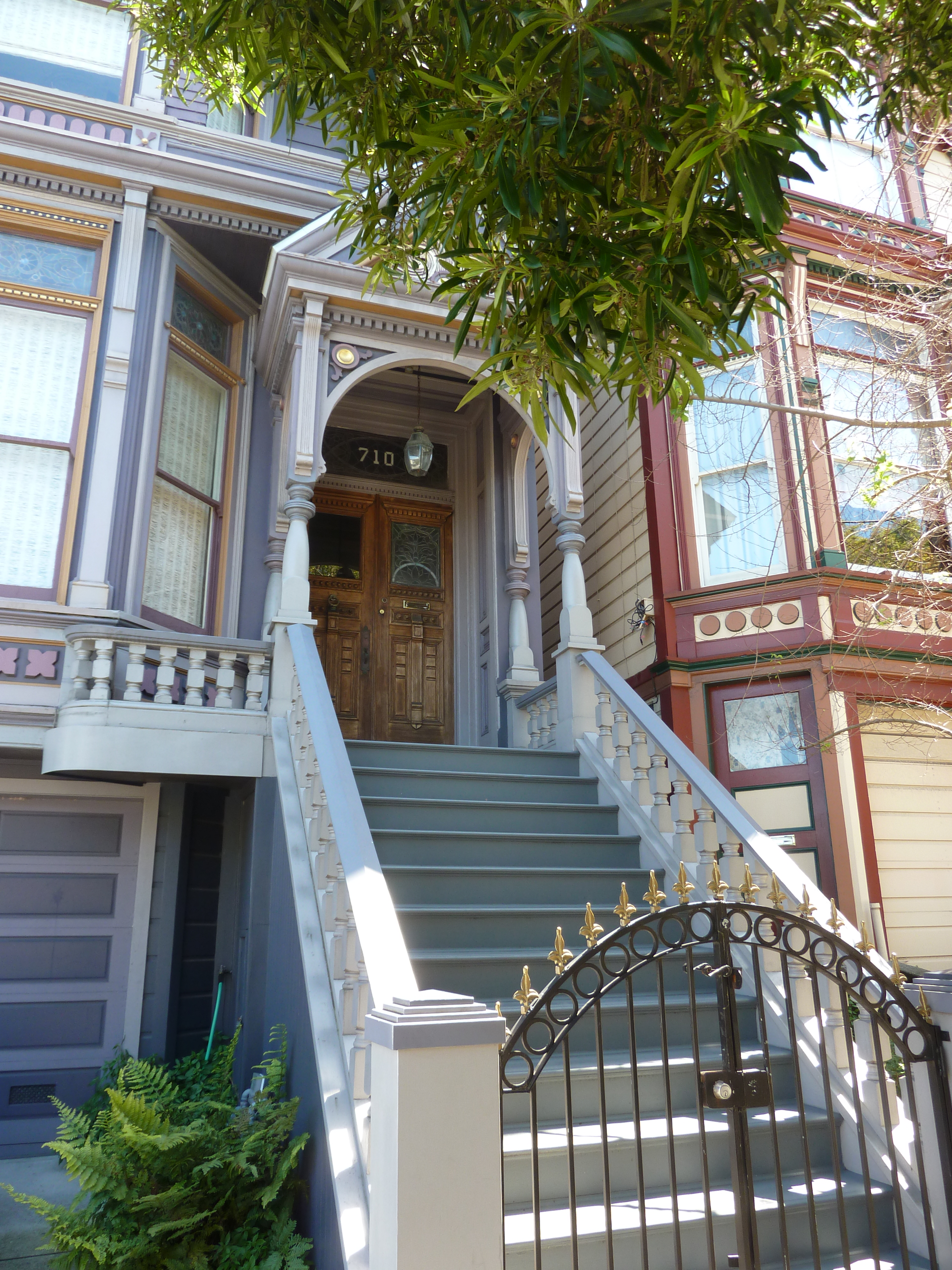
No photo gallery of the Haight would be complete without a full frontal view of 710 Ashbury, the Grateful Dead’s home between 1966 and 1968.

P1020023

Back to Positively Haight Street, once the retail king of the neighborhood for an unreconstituted Deadhead.

P1000645

With every visit to San Francisco I learn of the demise of more quality neighborhood bookstores. Even since my last trip less than a year ago, Badger Books in Bernal Heights and Phoenix Books in Noe Valley, the latter replaced by an inferior alternative, have closed. I was shocked also to find that Aardvaark Books on Church and Market had been remodeled as a secondhand store.

It is reassuring, therefore, to find that Booksmith on Haight Street appears to be flourishing. I continue to make my small contribution to its future.

OLYMPUS DIGITAL CAMERA

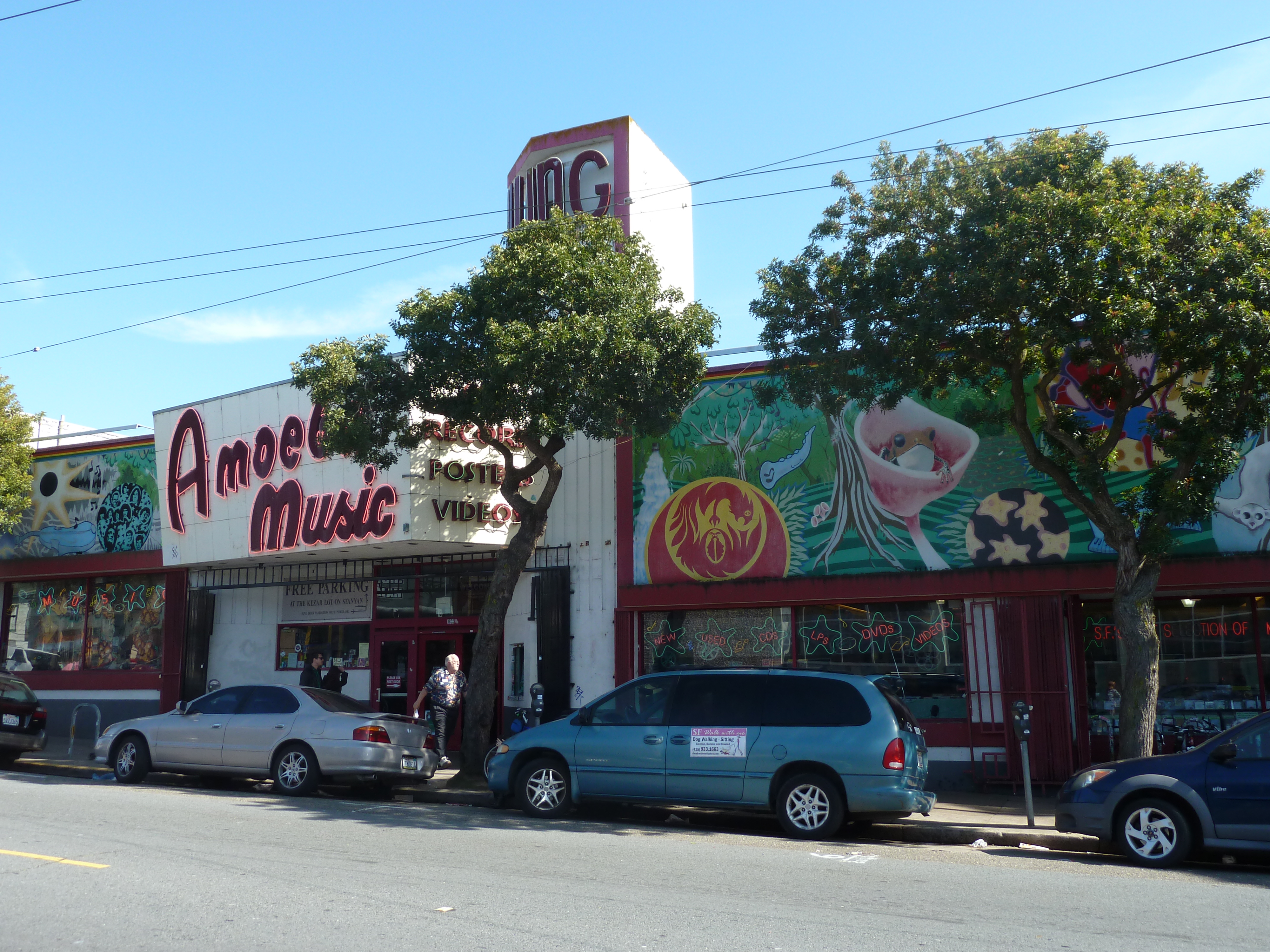
Curiuously, in view of my love for the music that originally flowed out of San Francisco music scene in the late sixties and early seventies, I have never got excited about the prospect of visiting the massive Amoeba Music.

It might just be the sheer scale of the place and the fact that it occupies a single floor that disconcerts me. I am, or rather was, accustomed to the stores (Virgin, Tower, HMV) back in the UK  that occupied several tiers which made it easier to find what you were looking for.

Or it may be the legacy of my first visit when I was told rather aggressively that I had to leave the small bag I was carrying at the entrance. I understand that theft may be an issue, but I form an aversion immediately to any establishment that tells me at the front door that I am not to be trusted. I may be naive but this struck me as especially disappointing  on the street where the concepts of love and peace were once so trumpeted.

I haven’t been confronted recently but I still find it difficult to cope with the size of, and lack of warmth in, the store. But that’s as much my problem as theirs. As it happens, I am not a great fan either of Rasputin Music which has recently been providing competition for Amoeba on the street.

P1020102

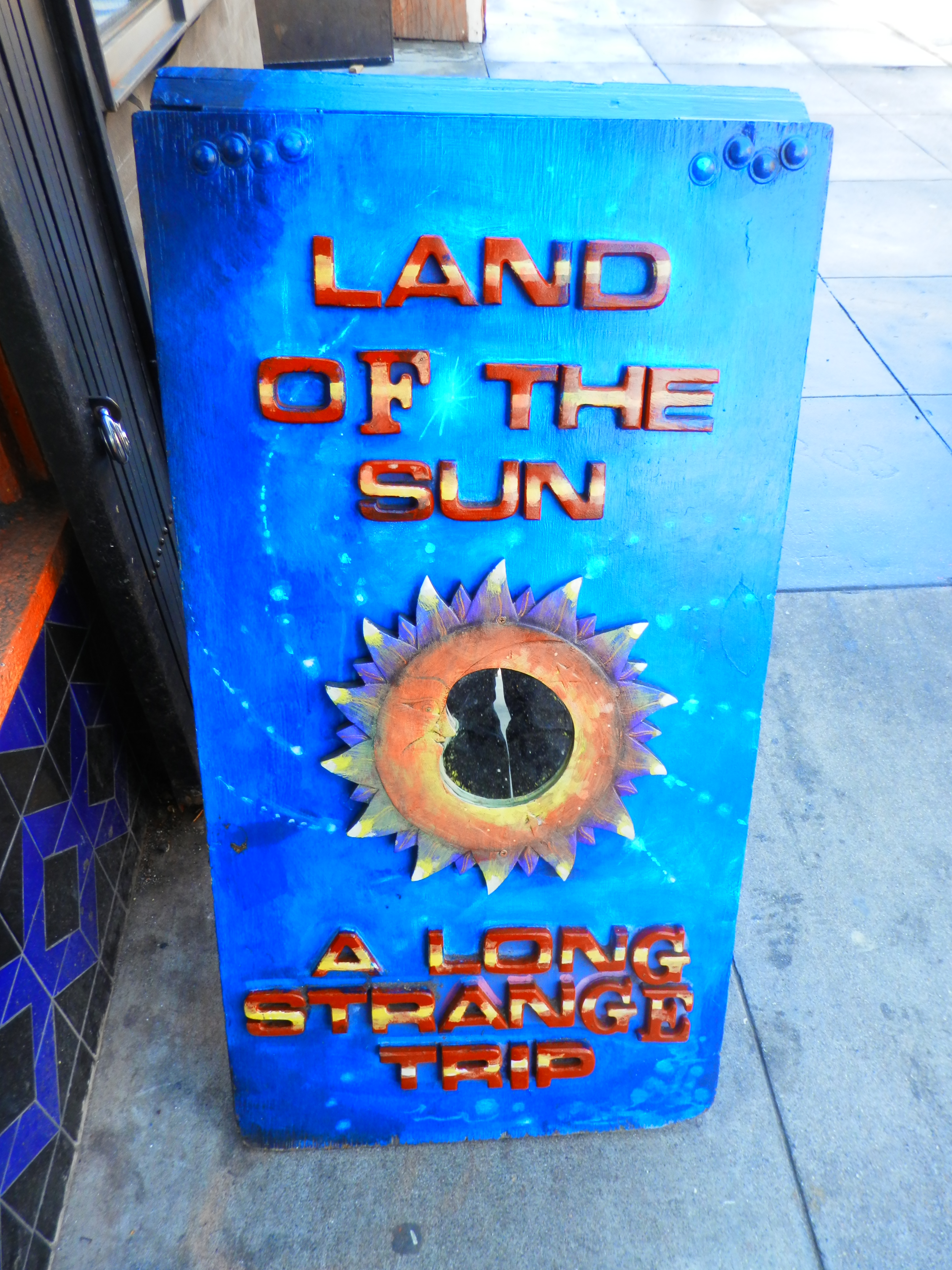
I will finish where I started – with the Land of the Sun store and its reference to the familiar Grateful Dead lyric from Truckin’ of “What a long strange trip it’s been”.

OLYMPUS DIGITAL CAMERA

There are many other places, events and photographs that I could have included, some of which I have paid tribute to in previous posts, but I am conscious that this post will already have tried your patience.

Many will accuse me of having a romanticized, tourist’s – or even dippy hippie’s – view of the modern day Haight, and claim that what echoes there are of the Summer of Love are slight and inauthentic; that, effectively, it is no more than an open air museum (the number of tour buses that still crawl along the street might reinforce that argument).

I don’t presume to know whether there is any vestige of truth in that or not. What I do know is that, amid the upscale stores and expensive accommodation (the Haight boasts more single millionaires (283) than any other San Francisco neighborhood), it still means something valuable and relevant for many people – those who lived through the sixties and those who are their grandchildren. You only need to walk the area during the annual street fair or 4/20 festivities to recognize that.

May the trip continue to be long and strange!


Read Full Post »


My wife observed the other day that she hadn’t seen me reading my Kindle lately. I’ll confess that I hadn’t realised this was the case, especially as I had been steadily adding books to it over recent weeks.

But she was right – I hadn’t sat down and read anything for any appreciable length of time since Christmas.

And that set me thinking.

What was the point, after years of agonising over the propriety of buying one in the first place, of not taking advantage of the opportunity it gave to read more widely and often? All I was doing was filling yet another bookcase – albeit a digital one – with more books I was unlikely to read (although I already owned some of them in print form).

And then I remembered that one of the prime motives for finally succumbing to the evil lure of the e-reader at all was to enable me to take all the books I “needed” on vacation without compromising my luggage allowance.

I had already been struggling with the dilemma of which guide to San Francisco I would take on our upcoming trip to the area, as well as which book I would take for leisure reading (not that I ever get beyond the first couple of chapters when I’m away, especially since now I devoted most “downtime” to my blog and other social networking).

So how might I resurrect the ailing appliance?

Well, it wasn’t much to look at for a start. The austere black cover I had bought for it, while practical and inexpensive, made it blend into the background in the office (a.k.a. the front bedroom). I’d effectively forgotten about it, except when I was browsing on Amazon.

I needed, therefore, to make it look as appealing as so many of the books I would be obliged to leave at home.

The dilemma was solved, however, by the simple addition of the last Grateful Dead sticker I had bought on Haight Street last June – cool, distinctive, colourful and exactly the right fit.

OLYMPUS DIGITAL CAMERA

Immediately, I wanted to delve inside and re-acquaint myself with my recent purchases.

A case of definitely judging an e-book by its cover.

Yes, the Complete Works of Shakespeare and the novels of Thomas Hardy were there as they should be. But, more importantly, the 2014 edition of San Francisco Not for Tourists and Gary Kamiya’s wonderful Cool Grey City of Love, and not forgetting Armistead Maupin’s latest and last Tales of the City novel, The Days of Anna Madrigal, were there waiting for me too.

So I am actually “good to go” (note how I am already slipping into the Californian vernacular) after all, although I hadn’t realised it.

An added bonus is that I had also loaded a couple of books that my wife might wish to read in the unlikely event that she should finish the supersized novel that she had already elected to weigh her hand luggage down with on the flight.

OLYMPUS DIGITAL CAMERA

So I’m now back into the groove of turning to my Grateful Dead infused e-reader when I have only a few minutes to spare – preparing the evening meal, sitting on a bus and even – no I won’t mention it – conducting business in the smallest room in the house (much more manageable than the Sunday Express my father used to disappear there with).

And with declining eyesight, how great to be able to increase the font size of what I am reading!

Now, where did I put the charger?

Read Full Post »


Many who have read my pieces on San Francisco will have concluded that Haight-Ashbury is my spiritual home, and they are probably right, principally because of the music that exploded out of there in the mid-sixties. But it is the cultural movement that pre-dated the hippies by a decade and more that most plays to my sensibilities.

The Beats, with their emphasis on free expression in literature, poetry, music, theatre and lifestyle (sex and drugs), were, whether they knew it or not at the time, the major inspiration for those young people in London and other urban areas in Britain who flocked to coffee bars and folk clubs in the late fifties and early sixties, just at the time that I was becoming aware of wider societal issues. Moreover, many of the rock stars that, a decade later, I worshipped, for example Jerry Garcia of the Grateful Dead and Jorma Kaukonen of the Jefferson Airplane, learnt their trade in the coffee houses of the Bay Area, heavily influenced by the events a few miles away.

Although the Beat Generation originally emerged in New York with the early works of Jack Kerouac, Allen Ginsberg and William S. Burroughs, it was San Francisco’s North Beach, the “Little Italy” neighbourhood nestling beneath Telegraph Hill and rubbing shoulders with bustling Chinatown, where it arguably took root.

And, although North Beach may not quite be the Italian enclave it was half a century ago, the influence of the Beats remains to this day. Certain landmarks are place of pilgrimage for both my generation and anyone who believes in free expression and alternative perspectives on the issues of the day.

My walk begins at my favourite San Francisco watering hole, Vesuvio, interestingly still called a café rather than a bar, and not just because it is where Neal Casady, inspiration for the character of Dean Moriarty in Kerouac’s classic Beat novel On The Road, first met the writer at a poetry reading in 1955.

OLYMPUS DIGITAL CAMERA

OLYMPUS DIGITAL CAMERA

OLYMPUS DIGITAL CAMERA

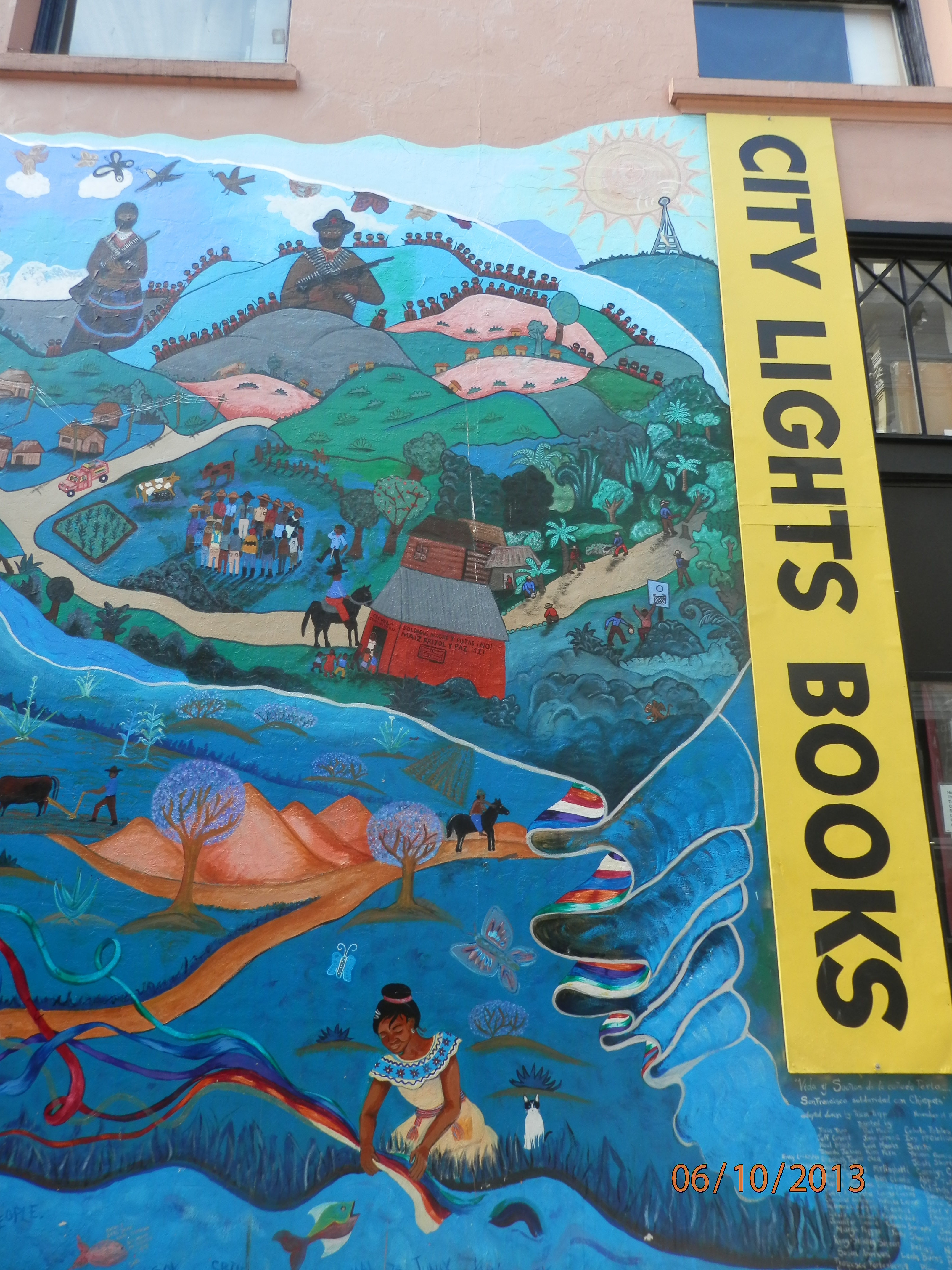
A few groggy steps across Jack Kerouac Alley stands one of America’s most famous and important bookstores, City Lights, which celebrates its sixtieth birthday this year. Lawrence Ferlinghetti, now 94 and San Francisco’s unofficial poet laureate, and Peter D. Martin, first opened its doors at around the time of the coronation of the new Queen, Elizabeth II, across the Atlantic.

OLYMPUS DIGITAL CAMERA

I never leave San Francisco without visiting the bookstore and coming away with at least one book. Many of the more interesting and challenging books on the city’s past, present and future are published by City Lights and they are not easy to get hold of elsewhere. Two and counting at present on this trip!

OLYMPUS DIGITAL CAMERA

With the addition of The Beat Museum on Broadway in 2003, the devotees’ experience of the area has been enriched still further. Aside from the fascinating exhibit in the museum itself, the adjoining shop sells an amazing collection of books, DVDs, posters, t shirts and other Beat memorabilia. Whilst I managed, at least on my previous visit, to resist the blandishments of a signed book by Wavy Gravy at $45 (but there’s still another trip), I still bought another. If distance makes visiting the museum itself out of the question, they run an excellent online store too.

OLYMPUS DIGITAL CAMERA

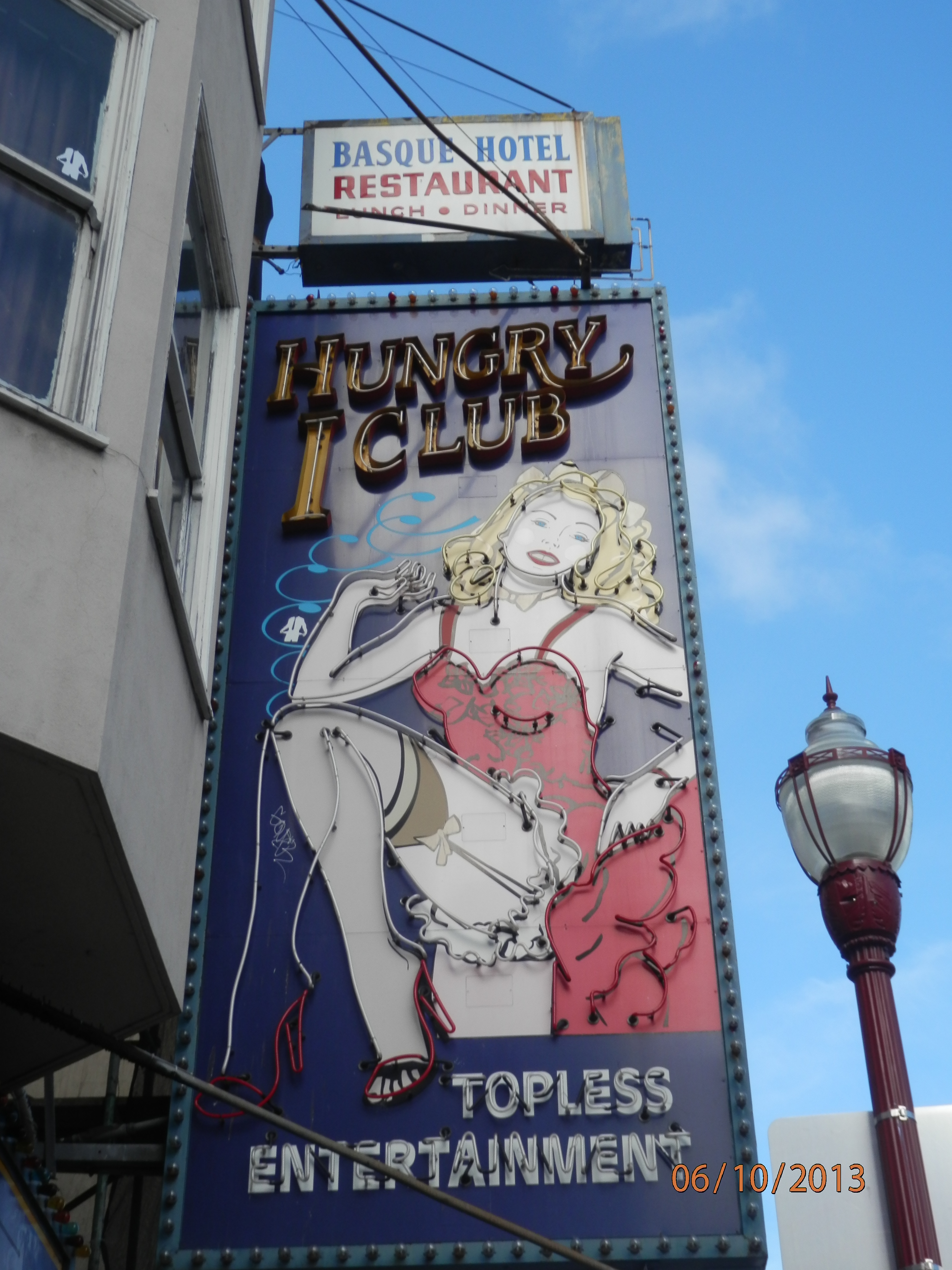
Although I am not qualified to say whether Broadway, which cuts across Columbus, has the same caché as it once had (though I think I do know the answer to that), there can be no question that the days of Lenny Bruce’s risqué comedy act at the hungry i and Carol Doda’s historic breast baring at the Condor are long past.

OLYMPUS DIGITAL CAMERA

P1020235

North Beach is still awash with coffee houses, many of which were haunts of unemployed writers and musicians in the heyday of the Beats. Café Trieste is perhaps the most prestigious with its live opera, oh so cool attitude and blisteringly strong espresso. Seats are hard to come by for all those reasons – well, at least inside! 

OLYMPUS DIGITAL CAMERA

I think it’s only fitting that we should finish back at Vesuvio – I hear that Bob Dylan has dropped in for an espresso.

And I’ll leave you with an image that describes the Beat’s relationship to polite society like no other.

OLYMPUS DIGITAL CAMERA

Read Full Post »


Any visitor to San Francisco who still hankers for the Summer of Love might seek some solace in the Red Victorian bed and breakfast on Haight Street, between Belvedere and Cole.

The Jefferson Hotel, as it was  originally known, was opened in 1904 as a resting place for visitors to the newly opened Golden Gate Park, but had its name changed to Jeffrey-Haight in that momentous year of 1967.

Ten years later it was bought by a 52 year old Washington state born doctor in Transformational Art and Societal Change, Sami Sunchild, who immediately set about painting its façade red with 9 other trim colours and renaming it the Red Victorian (though the building is Edwardian of course). Her aim since then has been for the “Red Vic” to embody the ideals that, if only briefly, pervaded the Haight a decade before her arrival – peace, concern for the environment, a sense of community and social justice.

From here Sunchild runs her myriad operations – the non-profit making Peaceful World Foundation, the Peaceful World Center, the Peaceful World Café, the Living Peace Museum and the Peace Arts Gallery, which contains her own bright and colourful artwork in the form of t-shirts, postcards, posters, peace buttons and mugs, available for purchase in the adjoining gift shop.

Every Sunday morning, from 9.00 to 10.30, or as long as its participants want it to last, Sunchild holds “World Conversations” or “conversation cafés”, which “bring people together to talk about topics that matter in their own lives and in the world as a whole”. These are seen as an “opportunity for San Franciscans and travelers alike to get together and share stories of our lives and the lessons we’ve learned, make new friendships and engage in open dialogue”.

In addition to these semi-formal events, guests are encouraged to engage in conversation with the owner and each other over breakfast, whilst passers by are welcome to “drop in” for a chat at any time.

Sunchild, who has travelled extensively, including the Polynesian Islands and much of Europe and North Africa, hopes through her work to build “a global network of travelers and conversationalists committed to doing good for the world and each other”.

Back in the sixties the rooms in the hotel served as “crash pads”, containing Indian bedspreads and other hippie paraphenalia, and accommodated as many occupants as could be crammed in! Using what she calls “Transformational Interior Design”, which enhances the consciousness of her guests, Sunchild has restored it to the state where it now boasts 18 guest rooms, each of which has been designed and decorated by her with an specific theme, such as the Japanese Tea Garden, Flower Child, Redwood Forest and, of course, the Summer of Love (complete with Grateful Dead posters!).

Internet reviews of the Red Vic reveal that Sunchild’s enterprise excites strong emotions.  Many celebrate it for its living embodiment of the hippie ideals espoused in the time when Jerry Garcia, Janis Joplin and Grace Slick were residents of the area.  Staff are universally regarded as friendly and helpful, and words such as “quirky”, “quaint”, “funky” and “eccentric” are regularly uttered with a smile by visitors and residents alike.

Others complain, however, about a dark, dreary, rundown feel, and lament the lack of private bathrooms in most of the rooms, though those that there are, both private and shared, are beautifully decorated.  Radios, TVs, refrigerators and ice machines, staples of a more conventional modern hotel, are conspicuous by their absence.  Wireless connection can also be unreliable. And the verdict on the food and drink available in the café is similarly mixed.

On my previous visit (preparing this article has refuelled my desire to go again on my upcoming trip), I found the people welcoming, if, perhaps, a little earnest, and  the coffee and vegetarian sandwiches wholesome.

So if you want to get a glimpse, warts and all, of what it might have been like to stay in the neighbourhood in those “heady” days, this is as close as you are likely to come in modern day San Francisco.  Moreover, if you want to understand what makes a historic part of the city tick, a visit to Sami Sunchild’s Red Victorian is essential.

And when you do, pay heed to the words of Sunchild’s When you travel:

When you travel take peacemaking, friendship, learning, and listening as your sacred, God given duty. Refuse to carry with you an empty head or an empty heart. Give thanks for every human encounter,  every bird, animal, every plant that shares this gorgeous planet. Thank them, talk to them, nourish them. Let no greed or selfish thoughts distract you. Let no anger, anxiety, or bitterness accompany you.

Travel unencumbered by too much stuff or by too many pre-conceived ideas. Enter every new encounter with gratitude for another opportunity to learn and listen. To be the happiest and best travel ambassador on earth.

Affirm the natural ability to balance out the injustices of the world. Know that hate crimes will cease when we listen to each other, when selfishness and envy are replaced with compassion and even enemies become friends. Hold in you mind a vision of a peaceful world where travelers are the sowers and seeds of joy!

This message emanates from one of the more than 50 Peace Posters that Sunchild has designed and created and which can be found at www.peacearts.com .

Finally, I am extremely grateful that Sami has taken the time and trouble to proofread this post and given her personal blessing to its contents.

Read Full Post »


We were stood on the corner of Waller and Stanyan, alongside the McDonald’s parking lot and opposite the historic Stanyan Park Hotel. It was 10.20 on a sunny if cool Saturday morning in April. The shops in Haight Street a block away were drowsily coming to life, and a gaggle of skateboarders and assorted “heads” were making their way over to Hippie Hill in Golden Gate Park to hang out for the day.

After ten years of inexplicable resistance, we had finally decided to give the Haight-Ashbury Flower Power Walking Tour a try. Having read our e-mail confirmation carefully we were confident that we were at the appointed meeting place. But the time was beginning to concern us. Whilst both our e-mail and the official website had expressly stated that the tour began at 10.30am, we had collected a leaflet the previous day quoting 9.30am.

As 10.25, 10.30 and 10.35 passed without anyone joining us, we began to speculate on what might have happened. Was it really a 9.30 start and we were horribly late? Had the tour been cancelled because we were the only participants (and if so why hadn’t we been informed)? Or was the guide merely delayed? I rang the telephone number quoted on the e mail with no success.

As frustration turned to irritation at 10.40, a balding, middle-aged man approached us and enquired whether we were on the tour. He had received a telephone call to say that the guide was running late due to a burst water main near her flat.  A Kentuckian, he was accompanied by his 20 year old daughter, as well as his son and his girlfriend, both of whom were studying at San Francisco State University.

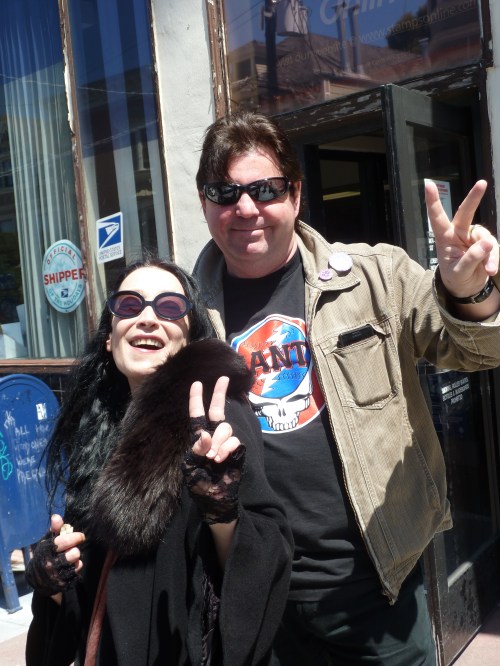
Five minutes later our ears were assailed by a cheery “good morning” emanating from behind us on Waller Street. On turning around we were greeted by a diminutive woman dressed from head to toe in black, apart from the psychedelic leggings flashing intermittently from beneath her huge coat, shuffling towards us. This was Izu, our guide for the next two and a half hours. My heart soared (I may have been alone in this reaction) – here was someone who had palpably lived and breathed the hippie dream in the sixties and, equally importantly, was still doing.  This was going to be fun – and I was not to be disappointed.

Having made her apologies, referring, not for the only time, to “hippie time”, she squealed with delight at the sight of my Grateful Dead “Steal Your Face” t-shirt. We were instant soul mates and, given my familiarity with the history and music of the era, she regularly sought my input, which, whilst being very gratifying personally, might have annoyed the remainder of the group who weren’t as well informed beforehand. The son’s girlfriend spent most of the morning hiding behind his back and when gently challenged on this by Izu, insisted that she was not feeling well. I’m not convinced she wasn’t just a tad intimidated by Izu’s earnest, energetic approach.

Izu’s credentials to conduct this tour were impeccable. She  had lived in the Haight for a month during the Summer of Love, and despite returning home to New York immediately thereafter, had been resident in the neighbourhood for many years.

One of her most endearing traits was that she had retained her broad New York accent which, incongruous though it might seem, gave an added charm and piquancy to her feast of anecdotes. I particularly delighted in her repeated pronounciation of Haight-Ashberry, proclaimed in a manner that could be heard from several blocks in any direction. 

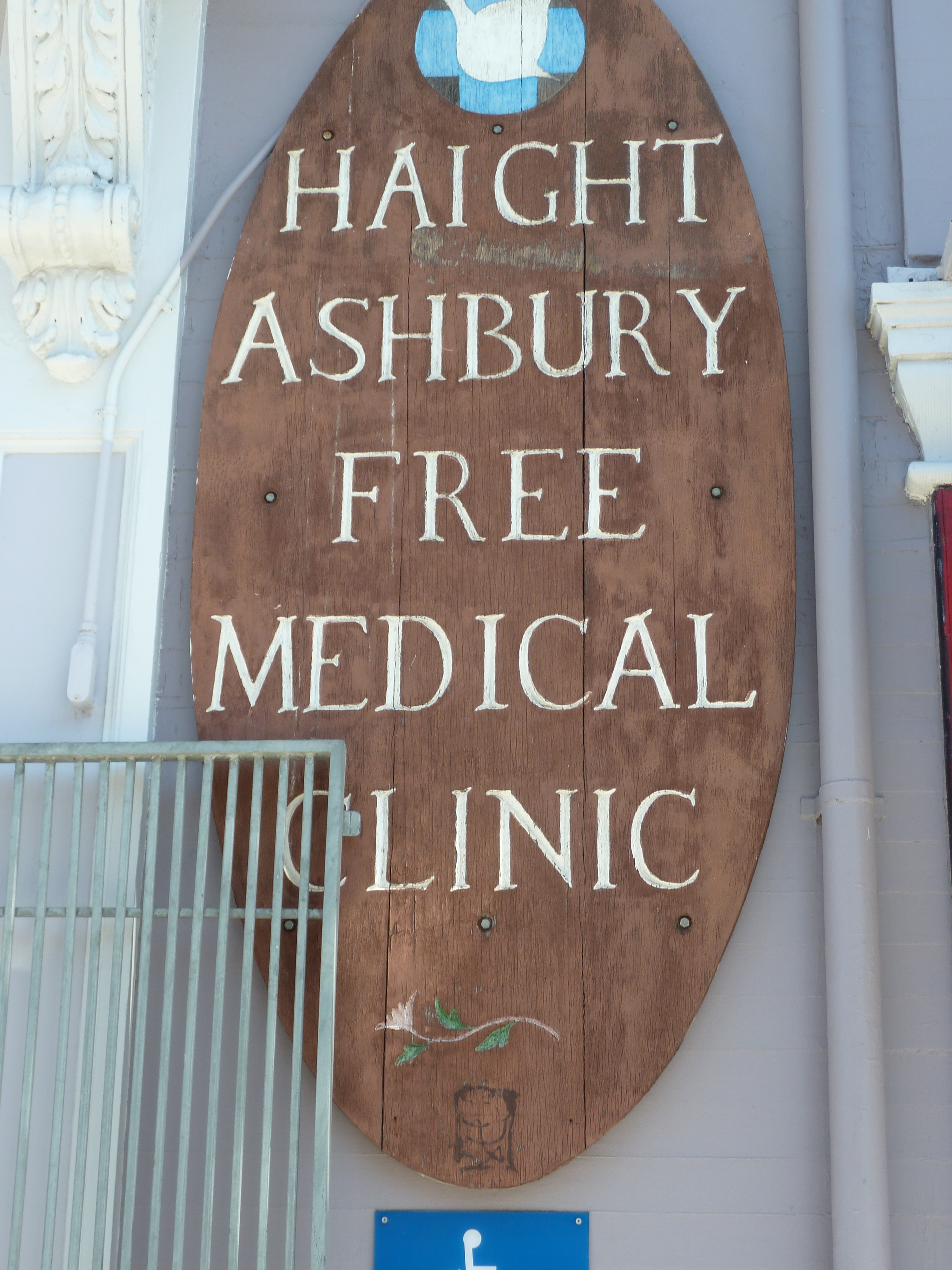
Armed with our free gift of a Haight-Ashbury Flower Power Walking Tour button badge we set off down Waller Street, pausing at the SFFD’s Fire Station 12 which, uniquely, carries the Grateful Dead “Steal Your Face” logo on its engines. We learned too about the Human Be-In, the influx of young people from all over the United States and the invaluable social service provided by both the Diggers and the Haight-Ashbury Free Medical Clinic.

Whilst we stopped at properties that had been lived in by such counterculture luminaries as Janis Joplin (several), Country Joe and the Fish and Jimi Hendrix, as well as Charles Manson, the highlight for me was the Grateful Dead house at 710 Ashbury. Now, I have stood outside this pad many times but, with Izu at my side, I didn’t feel as uncomfortable, as much of a stalker, as I had done before. It helped that Izu knew both the current tenants and their neighbours – well, actually, she appeared to know everybody in the vicinity! We barely passed a shop, café or homeless center without her stopping to hail its occupants.

Whilst I went along with every photo opportunity arranged by Izu, I did draw the line at taking one of the Haight-Ashbury sign – been there, done that, not cool. I think we fell out briefly at that point!

Many San Francisco walks are more like hikes, especially when they involve negotiating its unforbidding hills, but this one is leisurely and laid-back. We barely walked more than 100 yards before Izu asked us to gather round to listen to her stories, not only of the music scene but also the general history of the Haight. She was aided by a canvas shopping bag, from which she intermittently plucked vintage photographs.

The tour culminated in a visit to the recently opened Haight Ashbury Museum of Psychedelic Art and History, a center designed to showcase the arts, music and creativity of the era. Depending upon your point of view, it was either impossibly cluttered or incredibly comprehensive. Izu alerted us to historic posters, photographs and newspaper extracts from the hippie Haight.

The slogan of the museum is The Hippies Were Right!, a mantra repeated by Izu throughout the tour. As the (larger) badges extolling this theory illustrated, this relates to concern for the environment, emphasis on organic products, peace and love rather than war, sustainable housing and fuel efficiency, and, capping it all, “more fun and less unnecessary work”. I for one find it hard to argue with any of that.

The tour ended with heartfelt hugs outside the museum and clichéd, but utterly necessary, poses for the cameras.

In summary, this was a relaxing and thoroughly entertaining walk. In fact, the word “walk” doesn’t adequately describe it. It was a “show” in which Izu, in her inimitably animated, slightly wacky style, conveyed a vast amount of information and observation on both what was arguably the neighbourhood’s golden era and how those ideals are being implemented today.

Anyone who is deterred by the prospect of becoming preached at on the virtues of free love and rampant drug taking should really not be worried. Whilst Izu, inevitably, relates stories of excessive LSD, marijuana and heroin usage, she takes every opportunity to explain her vehement opposition to drugs. Nor does she gloss over the many unsavoury elements of the period.

So go with an open mind and you will be rewarded. But first listen to some live Grateful Dead or Jefferson Airplane whilst you are searching for that old kaftan, transfer a few flowers from your garden to your hair, throw on any piece of jewellery you can find, get on the bus and make your way up to the corner of Waller and Stanyan on a Tuesday or Saturday at 10.30am (yes, that’s 10.30am hippie time).

And remember…………….the Hippies Were Right!

Read Full Post »

« Newer Posts - Older Posts »