Feeds:
Posts
Comments

Archive for the ‘Books and reading’ Category


Talk given to the Folkestone is a Library: The Power of Reading Together” event at the Quarterhouse in Folkestone on Thursday 7th May 2026.

Thank you, Sophie and the team for inviting me to talk this evening. I am thrilled to be associated with this exciting project.

I had contemplated showing a series of slides, but after 30 years of delivering Powerpoint and similar presentations, I thought I would stick to just talking to my subject this evening.

After all, if the King can talk for 37 minutes without visual aids, I’m sure I can manage 10.

………………………………….

I moved to Folkestone (not quite from London) almost 10 years ago and have watched its reputation as a major arts destination grow exponentially.

But I have always felt that literature was the poor relation in the local creative scene, despite the outstanding work done by Poets’ Corner, Write by the Sea and many other groups and individuals.

I started the walks in 2017, focusing initially on The Leas, Creative Quarter and the Harbour and Seafront.

In the following years I added tours of the East Cliff, West End, Bayle, Sandgate and even the Town Centre (as part of the Levelling Up initiative) as well as those themed on Art, Literature and the town’s rock and roll heritage.

I should take this opportunity to put in a plug for the next free rock and roll tour this coming Saturday as part of the Music in May programme. Join me at 10.30am in Noel’s Yard aka Market Square for 2 hours exploring the blue plaques, Wall of Fame and reliving concerts and other events related to those.

………………………………..

But back to the literary tours.

Prior to researching Folkestone’s literary history, I was certainly conscious of H.G. Wells’ close connection to the area, and being from Rochester, of Dickens’s affinity with the town (far greater I might add then Broadstairs with whom he is more often linked), but little else.

I subsequently learnt that not only has Folkestone been the birthplace of a host of writers, but for the past 183 years since the coming of the railway, it has welcomed many others en route to and from the Continent, some of whom have left their observations on the town.

On the tours you will encounter both.

………………………………

I didn’t realise, for instance, that one of my favourite writers, a Nobel Prize winner no less as well as the only one ever to play first class cricket, actually spent 2 weeks here in 1961. I suspect many of you know to whom I’m referring – but if you don’t, I’m not going to tell you now – you’ll need to come on a tour!

………………………………

So, what do the tours entail?

We meet at the Step Short Arch and weave our way through the town via Albion Villas, the parish church, the Bayle, Old High Street, Harbour and Harbour Station and along the seafront to the Zig Zag Path where we return to the Leas.

If nobody is looking, we might also sneak a peek at the Road of Remembrance! And if you have the stamina, we can walk through to Sandgate, where Wells lived for almost a decade, before returning to the starting point.

Along the route, we make regular stops where I read relevant extracts from writers associated with that particular location. The latest author count is 12, though I am always looking for additional material.

The reopening of the library, at least at its temporary home, in Sandgate Road on 26th of this month, will be a great help in that process.

………………………………..

The tours take around three hours (more like four hours if we extend it via Sandgate), with a short break or two included, and cost just £10 per person.

Whilst I will be running many other tours over the summer, I have set aside a series of dates, initially in May and June, which are listed in a pack of handouts you can collect later this evening.

I have also negotiated a free tour for Creative Folkestone members on 12th June.

………………………………….

I’ll leave you with 3 short quotes that I cover on the tours to provide you with some flavour of what they entail.

The first is from Charles Dickens and describes the impact of the tides on Folkestone Harbour, and I think you’ll agree, he could have written it today.

I should first explain that Dickens christened Folkestone Pavilionstone in honour of the Royal Pavilion Hotel, which stood on the site now occupied by the Grand Burstin.

I wonder if, a hundred years or now, a famous writer will christen Folkestone “Burstinstone” in their work!

Dickens wrote: “We are a tidal harbour at Pavilionstone. At low water, we are a heap of mud, with an empty channel in it where a couple of men in big boots always shovel and scoop: with what exact object, I am unable to say.

At that time, all the stranded fishing-boats turn over on their sides, as if they were dead marine monsters; the colliers and other shipping stick disconsolate to the mud; the steamers look as if their white chimneys would never smoke more, and their red paddles never turn again, the green sea-slime and weed upon the rough stones at the entrance, seem records of obsolete high tides never more to flow; the flagstaff-halyards droop; the very little wooden lighthouse shrinks in the idle glare of the sun.

But, the moment the tide begins to make, the Pavilionstone Harbour begins to revive. It feels the breeze of the rising water before the water comes, and begins to flutter and stir. When the little shallow waves creep in, barely overlapping one another, the vanes at the mastheads wake, and become agitated. As the tide rises, the fishing-boats get into good spirits and dance, the flagstaff hoists a bright red flag, the steamboat smokes, cranes creak, horses and carriages dangle in the air, stray passengers and luggage appear.”

And it goes on.

…………………………………….

The second comes from Kipps. the novel by H.G. Wells which references many locations in Folkestone and beyond. This particular piece describes Kipps’ exciting Sunday exploits:

“On Sundays he was obliged to go to church once, and commonly he went twice, for there was nothing else to do. He sat in the free seats at the back; he was too shy to sing, and not always clever enough to keep his place in the Prayer-book, and he rarely listened to the sermon.

In the intervals between services he walked about Folkestone with an air of looking for something. Folkestone was not so interesting on Sundays as on week-days, because the shops were shut; but on the other hand, there was a sort of confusing brilliance along the front of The Leas in the afternoon…….

He would sometimes walk up and down The Leas between twenty and thirty times after supper, desiring much the courage to speak to some other person in the multitude similarly employed. Almost invariably he ended his Sunday footsore”.

…………………………………….

The final extract is from the late Robert Morley, actor and raconteur, who is likely to be more familiar to those in the room, like myself, of a certain age.

Morley spent much of his childhood in Folkestone due to ill health where he was constantly wheeled around in his sailor suit in a bath chair.

He claimed that “if there’s one thing young people lack today….it is Folkestone standards. It may well be what’s wrong with the country. No child brought up as I was in Folkestone and Kensington Gardens ever felt the need of a psychiatrist”.

……………………………………

Thank you.

Read Full Post »


This is a writer’s town.

Where, in quiet corners of coffee shops,

Caressing cake and cappuccino,

On new varnished cliff top benches, 

In tiny studio apartments,

And above galleries and gift shops,

Diligently, they polish their craft

In solitude and patient struggle.

Where, down the steep, unforgiving hill,

Past higgledy-piggledy buildings

That shelter the secrets of centuries,

Old men, like modern day gunslingers,

Shuffle with shabby, sagging satchels

Stuffed with story scraps and post-it notes,

Lassoed around their wrinkled necks.

Where restless waves wash over shingle,

Shifting the site of a billion pebbles,

And where small, redundant, fishing boats,

Their hulls rotting and history forgotten, 

Are nudged and tickled by the turning tide

And then left for dead as the sea sweeps back.

Where, on a mile long thoroughfare

Of lawn and flowers and grand hotels,

Echoes of genteel, whispered discourse

Float across the unremitting breeze,

And the plaintive cry of a seagull chick

Resonates across the ragged rooftops.

Where the solemn chimes of an ancient church

Dedicated to an Anglo-Saxon girl,

Ring out at dusk under Shelley’s pale moon,

And where cracked, crippling, steep steps

Unsettle the anxious wandering scribe

Searching seaward for that elusive line.

This is a writer’s town.ffee shops,

Caressing cake and cappuccino,

On new varnished cliff top benches, 

In tiny studio apartments,

And above galleries and gift shops,

Diligently, they polish their craft

In solitude and patient struggle.

Where, down the steep, unforgiving hill,

Past higgledy-piggledy buildings

That shelter the secrets of centuries,

Old men, like modern day gunslingers,

Shuffle with shabby, sagging satchels

Stuffed with story scraps and post-it notes,

Lassoed around their wrinkled necks.

Where restless waves wash over shingle,

Shifting the site of a billion pebbles,

And where small, redundant, fishing boats,

Their hulls rotting and history forgotten, 

Are nudged and tickled by the turning tide

And then left for dead as the sea sweeps back.

Where, on a mile long thoroughfare

Of lawn and flowers and grand hotels,

Echoes of genteel, whispered discourse

Float across the unremitting breeze,

And the plaintive cry of a seagull chick

Resonates across the ragged rooftops.

Where the solemn chimes of an ancient church

Dedicated to an Anglo-Saxon girl,

Ring out at dusk under Shelley’s pale moon,

And where cracked, crippling, steep steps

Unsettle the anxious wandering scribe

Searching seaward for that elusive line.

This is a writer’s town.

Read Full Post »


I was recently asked by a local magazine a series of questions about my poetry, its provenance and future plans. This is a transcript of the “interview”.

Can you remember your earliest interaction with poetry?

I suppose, like most children, nursery rhymes would have been the first poems that I engaged with. And then, as I progressed through primary and grammar school, I was exposed to Shakespeare, Wordsworth and the “classic” English poets. 

When did you realise that you not only had the talent and skill to be a successful poet but that you wanted to pursue a career in poetry?

That is making a big assumption! But, like most adolescent boys, I wrote soppy “love” poetry that, fortunately, has not survived! 

To readers who may not have heard you before, how would you describe your poetry?

I subscribe to Leonardo da Vinci’s claim that “simplicty is the greatest sophistication”, so don’t try to over cook the imagery or make the poems too wordy and obscure. I still, on occasions, like to use rhyme and traditional metre, whereas so much of modern poetry is now free verse (which I also do). If there is one goal I try to obtain in an individual poem, it is the creation of a mood, at atmosphere – show not tell I suppose. 

If you could pick the three most memorable moments in your career, what would they be and why?

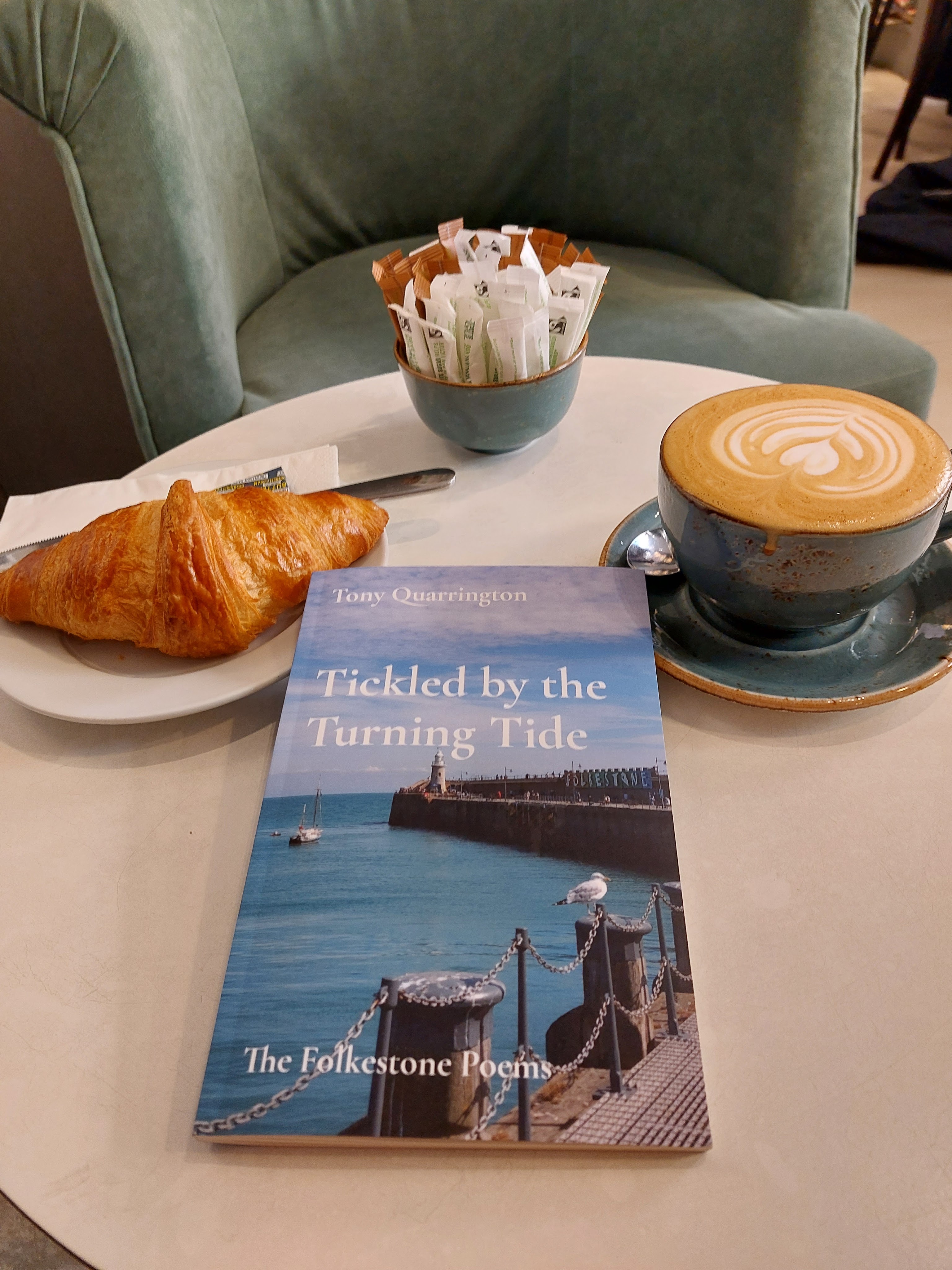
I did write a three volume “novel” at the age of seven based upon the Tommy Steele song, “Little White Bull”. I am equally proud of the book on Kent cricket I co-wrote ten years ago which was very well received. But, aside from the adolescent stuff, it is only really since I retired from work and moved to Folkestone that I was inspired to write poetry regularly. There was a significant increase in my output during the first Covid-19 lockdown when I was producing a poem a day for several months. Some of those verses feature in my collection, Tickled by the Turning Tide: The Folkestone Poems, which was published only a week ago on 7th April. 

You are both stranded on a desert island and can only take one book with you, what book are you choosing and why?

As with the radio programme, I am assuming that I can take a complete works of Shakespeare as well? That is an almost impossible question to answer, and my view might change, dependent upon my mood on a particular day. But I will say – today – Ulysses by James Joyce for its radical approach to the novel but especially its humour and evocation of a place (as my Folkestone poetry testifies, it is a sense of place that often appeals to me).

What do you enjoy most about living in Folkestone and do you have any particular favourite go-to spots in the town?

How long is this piece meant to be?! Being by the sea, with all its benefits, has to be the most important factor, though Folkestone’s creative vibe has helped inspire my own work. And then there is the dining scene – one of my poems is entitled I Sit in Coffee Shops, and that pretty much sums up my everyday life! I could recommend so many places, but Marley’s, Django’s, Folklore (where I had my recent book launch) and Steep Street Coffee House are probably my top four, though there are several others that meet different needs at different times.

Has living in Folkestone and being by to the sea helped inspire any of your poems?

Clearly!

Given the past 36 months and the evolving digital world, what are your thoughts on the current status of poetry, will it still have a future in say 40, 50 years’ time and will it need to adapt to survive?

Judging by the growing attendances at the local Poets’ Corner, Folkestone group, the town’s poetry scene seems to be thriving. Whilst I found that Covid gave my poetry a significant boost, providing me with a mechanism by which I could come to terms with what was happening, I know that others were completely floored and could, or wanted, not to write anything. I believe we have now moved out of that depression and many, maybe even more, people are writing again. Poetry has been with us for thousands of years, and I expect it to continue to have a role in attempting to make sense of the world and articulating it in a thought-provoking and – important for these days – manageable way. 

Do you have any upcoming books that readers should look out for?

I have already mentioned the Folkestone poetry book, which is available online through all the major retailers and also being sold on my behalf in a several outlets throughout the town.  The best way at present to get your hands on a copy – and a signed one at that – is direct from me by messaging me on my Facebook pages or email at tonyquarrington@msn.com.

Do you have a future vision of what you would like to achieve over the next 5-10 years?

Absolutely – I have several projects on the go. For the past twelve years I have been putting together a book about my love for San Francisco, and with the immediate Folkestone project completed now, I can return to that. Since I moved to the town I have been keen to produce a modern tourist guide, based upon my walking tours that I have been delivering for the past six years. And with an Italian holiday on the horizon, I am hoping to write a travel diary, hopefully in poetic form. And possibly a second volume of poetry!

Read Full Post »


This is the third in a series of articles about the writing of my new book: Smiling on a Cloudy Day: An Englishman’s Love Affair with San Francisco. The previous posts were:

http://www.tonyquarrington.wordpress.com/2013/08/07/the-next-book/

http://www.tonyquarrington.wordpress.com/2014/07/07/smiling-on-a-cloudy-day/

The dates of those posts might already indicate that progress has not been as swift as I would have liked. There are a variety of reasons for this, not least my father’s fluctuating health over the past eighteen months and a recent, but now concluded, return to paid employment.

It is a similar story with the blogging – only sixteen posts, admittedly some of them quite long, since returning from San Francisco in April last year, compared to almost double that number in the preceding nine months.

But that is now in the past, and I am determined to publish the book this year. Indeed, I have been working on a draft for many months.

One illustration of progress is that dozens of disparate sheets of paper scattered over various surfaces have now been incorporated into a smart folder in which that working draft is now housed (see below). True to type, inspiration has been sought in the attachment of Grateful Dead and Giants logos.

OLYMPUS DIGITAL CAMERA

Part travel diary, part guide book, part history and part analysis of modern city life from the perspective of a regular foreign visitor, Smiling on a Cloudy Day follows the adventures of my wife and I during a month in early summer (if June in San Francisco can ever be considered summer). You will be able to follow us as we explore many of the most popular, and some less well-known, sights, chuckle and groan in equal measure at the antics of fellow passengers on public transportation, ramble round our adopted neighbourhood of Bernal Heights, and endure extreme temperatures at AT & T Park while still believing that the Giants will avert the run of dismal defeats that have coincided with our attendance.

Unsurprisingly, food and drink will feature strongly, and there will be plenty of music too at festivals and concert halls.

I intend to press on with the draft over the next four months before our next pilgrimage to the City in May. Those two weeks will feel as much a research trip as a vacation as I attempt to clarify facts and solidify themes.

Irrespective of whether I publish digitally or in print (though I remain inclined towards the former method), I plan to do so in advance of my second trip, this time for a full month in September/October.

I will continue to supply periodic updates and brief extracts on my blog in an effort to whet readers’ appetites as the book develops.

But if you would now excuse me, I need to get on with writing it.

Read Full Post »


My wife observed the other day that she hadn’t seen me reading my Kindle lately. I’ll confess that I hadn’t realised this was the case, especially as I had been steadily adding books to it over recent weeks.

But she was right – I hadn’t sat down and read anything for any appreciable length of time since Christmas.

And that set me thinking.

What was the point, after years of agonising over the propriety of buying one in the first place, of not taking advantage of the opportunity it gave to read more widely and often? All I was doing was filling yet another bookcase – albeit a digital one – with more books I was unlikely to read (although I already owned some of them in print form).

And then I remembered that one of the prime motives for finally succumbing to the evil lure of the e-reader at all was to enable me to take all the books I “needed” on vacation without compromising my luggage allowance.

I had already been struggling with the dilemma of which guide to San Francisco I would take on our upcoming trip to the area, as well as which book I would take for leisure reading (not that I ever get beyond the first couple of chapters when I’m away, especially since now I devoted most “downtime” to my blog and other social networking).

So how might I resurrect the ailing appliance?

Well, it wasn’t much to look at for a start. The austere black cover I had bought for it, while practical and inexpensive, made it blend into the background in the office (a.k.a. the front bedroom). I’d effectively forgotten about it, except when I was browsing on Amazon.

I needed, therefore, to make it look as appealing as so many of the books I would be obliged to leave at home.

The dilemma was solved, however, by the simple addition of the last Grateful Dead sticker I had bought on Haight Street last June – cool, distinctive, colourful and exactly the right fit.

OLYMPUS DIGITAL CAMERA

Immediately, I wanted to delve inside and re-acquaint myself with my recent purchases.

A case of definitely judging an e-book by its cover.

Yes, the Complete Works of Shakespeare and the novels of Thomas Hardy were there as they should be. But, more importantly, the 2014 edition of San Francisco Not for Tourists and Gary Kamiya’s wonderful Cool Grey City of Love, and not forgetting Armistead Maupin’s latest and last Tales of the City novel, The Days of Anna Madrigal, were there waiting for me too.

So I am actually “good to go” (note how I am already slipping into the Californian vernacular) after all, although I hadn’t realised it.

An added bonus is that I had also loaded a couple of books that my wife might wish to read in the unlikely event that she should finish the supersized novel that she had already elected to weigh her hand luggage down with on the flight.

OLYMPUS DIGITAL CAMERA

So I’m now back into the groove of turning to my Grateful Dead infused e-reader when I have only a few minutes to spare – preparing the evening meal, sitting on a bus and even – no I won’t mention it – conducting business in the smallest room in the house (much more manageable than the Sunday Express my father used to disappear there with).

And with declining eyesight, how great to be able to increase the font size of what I am reading!

Now, where did I put the charger?

Read Full Post »


The fateful day has arrived. I have just taken custody of my first Amazon Kindle, a birthday present from my wife.  

But why? After all, I have expressed my love for books here on a number of occasions, and stated my distaste for a hugely popular but soulless phenomenon that has blasted many of my favourite bookstores into oblivion. 

But I have also acknowledged that the time would come when I would not be able to resist the inexorable march of the e-reader, in fact when I would only be “cutting off my nose to spite my face” by rejecting its blandishments. Trying to stem the tide of history didn’t work for Canute and it is not going to work for me either. 

But this does not mean the beginning of the end of my reading the traditional paper-based books. I’ve only just published one myself – hardback, dust cover, high quality paper – the works.

No – far from it.

I’m not going to suddenly ditch my entire book collection at a stroke. Indeed, neither my buying nor selling strategy should change, other than that I will purchase an e-book where the print version does not exist. Several books have come on the market recently that I would like, but are only available in electronic form. I have no alternative, therefore, but to acquire the means of reading them.

There is an added motivation in that, in this same spirit of “if you can’t beat them……”, I am contemplating self-publishing my next book as an e-book. So I need to join in the game sooner rather than later.

Now, rather than spending weeks beforehand deciding which book(s) to take on holiday, I will be able to download the two or three in contention, affording me the added advantages of not only of reducing the weight of my cabin luggage on the outward flight, but creating space for the addition of “proper” books for the return.

So – Shakespeare, Dickens, Hardy, Maupin, Bryson and company – rest easy, you will continue to have a cherished place on the bookshelves, or wherever I can find room for you in the house. You are no more likely to be destined for charity shops and boot fairs tomorrow than you were yesterday. 

And I fully expect that the arrival of my e-reader will encourage me to read much more than, shamefully, I have been able, or rather chosen, to do heretofore.

No more agonising for hours beforehand over which books to take with me to the local coffee shop or on a train journey.

And no more risk of developing back problems carrying too many bulky books around with me just in case I changed my mind as to which of them I wanted to read in transit.

If further evidence were needed of the reluctance with which I’ve taken this momentous step, I have, or rather my wife has, only purchased the basic model – bells and whistles are conspicuous by their absence.

But I might as well buy a fancy leather cover while I’m at it.

Oh……and my first download?

101 Free Things To Do In San Francisco by Daniel Davidson.

Now there’s a surprise.

Read Full Post »


I’ve taken pen to paper, or rather finger to keyboard, on two previous occasions on this blog to bemoan the demise of “high street” bookshops, both in principle and in my adopted city of San Francisco. In the first, I lamented the closure of the large branches of Border’s in Union Square, replaced now by a DSW shoe emporium, which, to add insult to injury, my wife loves, and 2nd and King opposite the ballpark. I consoled myself at the time with the knowledge that the Barnes and Noble branch in Fisherman’s Wharf was still carrying the flag, only to discover, shortly afterwards, that it too had made way for an expanded Cost Plus World Market.

OLYMPUS DIGITAL CAMERA

But, in one sense, that has been a blessing as it has forced me to seek out San Francisco’s rich family of neighbourhood bookstores. As a result, I’m no longer sure that I miss the big chains as much as I did three years ago.

On my recent trip I had the pleasure of visiting a number of the independent stores – some new to me, others old friends – and discovered a very different story to the one that confronted me when the giants (no, not those) were collapsing around me a couple of years ago.  Phoenix Books on 24th Street  in Noe Valley was my local store where, on the first morning of my vacation, I picked up a discounted copy of Comeback Kings, a book on the Giants’ (yes, those) 2012 World Series victory.

OLYMPUS DIGITAL CAMERA

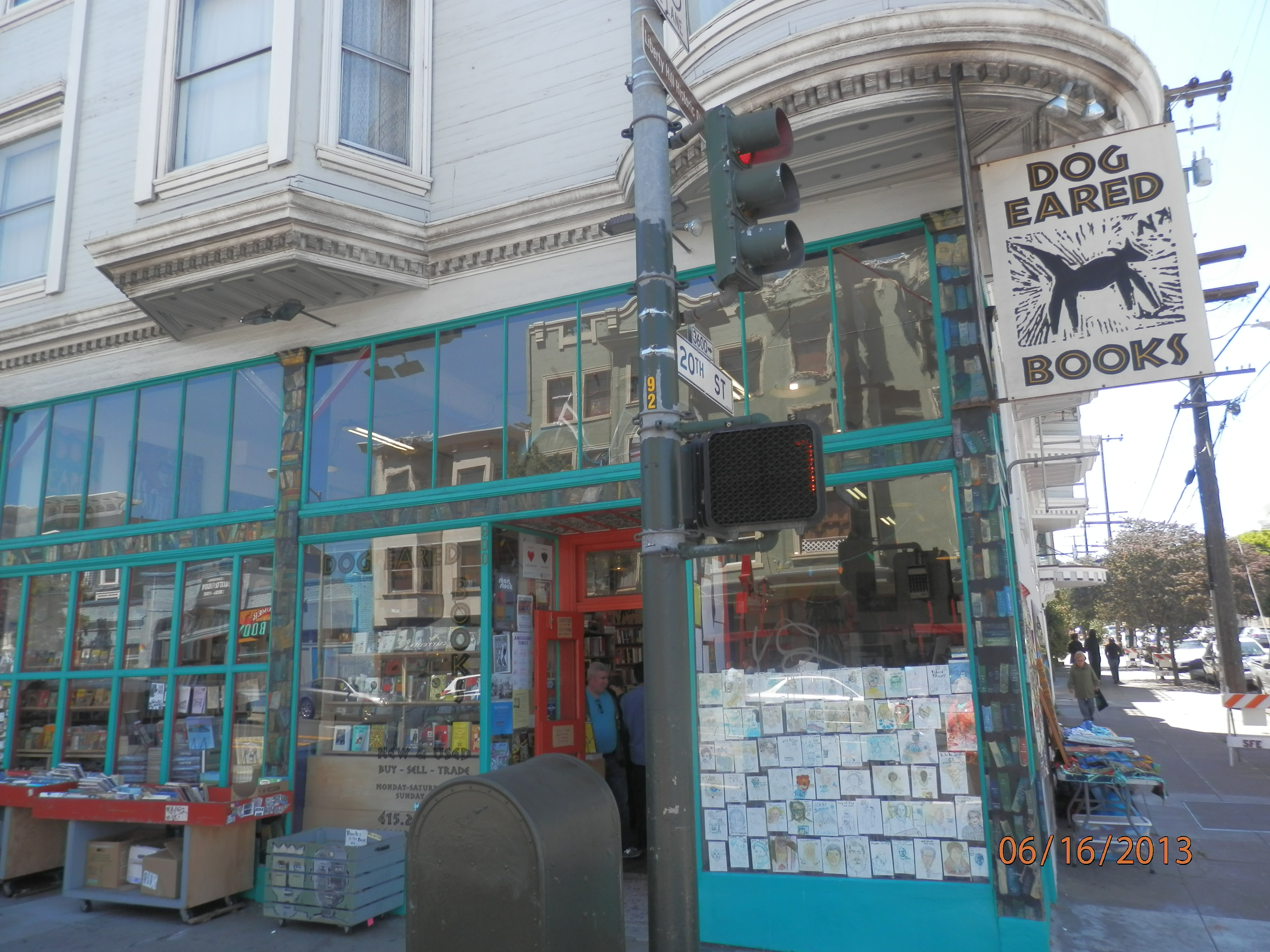
A Sunday afternoon stroll down Valencia Street in the Mission unveiled the dual delights of Dog Eared Books and Borderlands Books, though the latter’s sole focus on science fiction, fantasy, horror and mystery is not to my taste. But the painstakingly prepared coffee was! A happy birthday to Dog Eared Books, a partner of the aforementioned Phoenix Books, Badger Books (of which more below) and alley cat books, which turns 21 this very week! On the evidence of these two thriving outlets, the declaration on its website that ‘reports concerning “The Death of the Bookstore” have been greatly exaggerated’ rings resoundingly and joyfully true.

OLYMPUS DIGITAL CAMERA

What struck me most about all of the bookstores I visited was the sheer number of people frequenting them, not just browsing the shelves but writing their own blogs and engaging in social media on their laptops, drinking every conceivable coffee permutation and interrogating the community noticeboards for apartment lettings or reiki classes and, in some instances, all three.

OLYMPUS DIGITAL CAMERA

Badger Books on the corner of Cortland Avenue and Bennington Street in urbane Bernal Heights, displayed a particularly fine secondhand selection and boasted a lovely children’s section complete with multi-coloured stools.

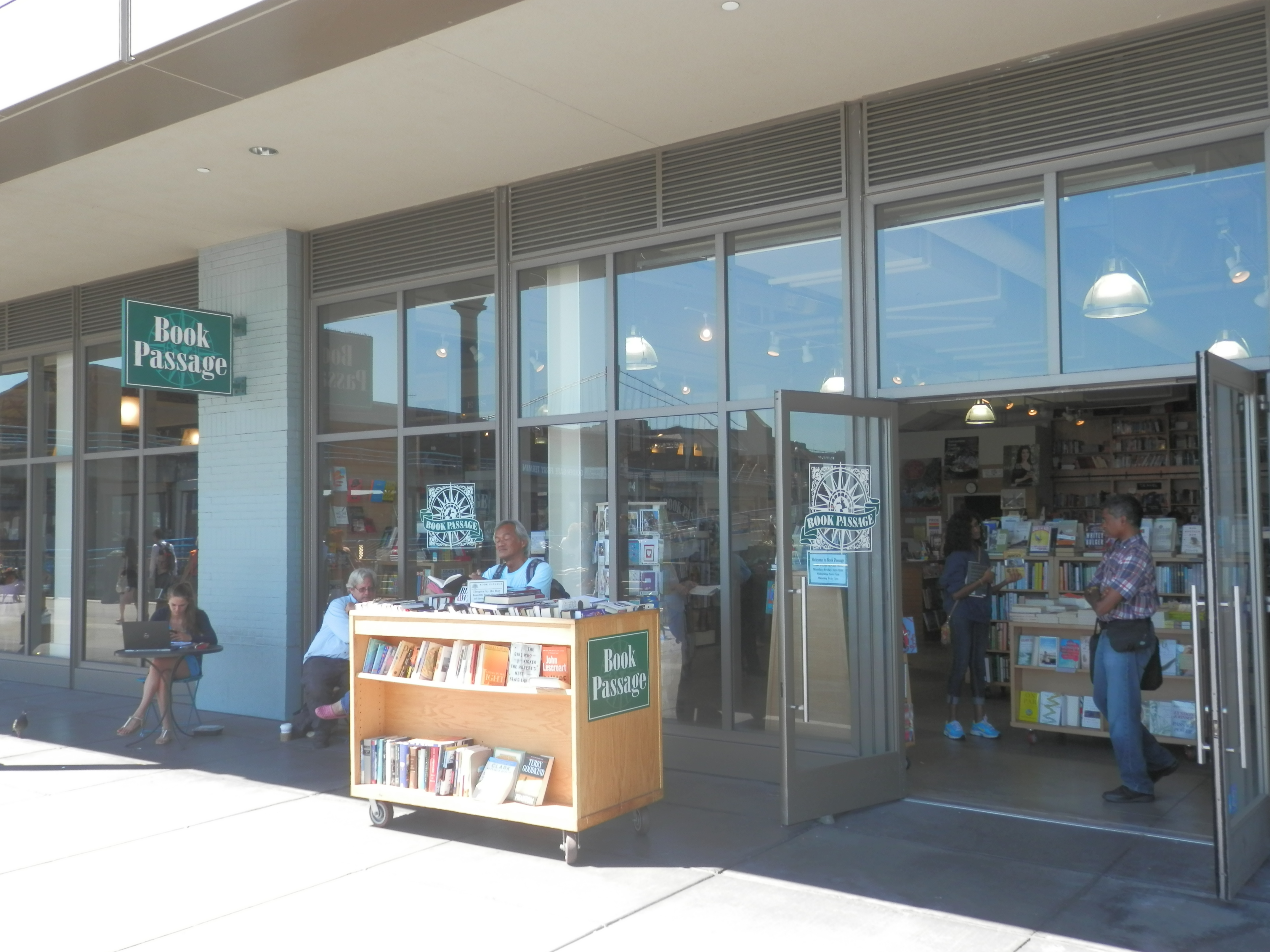
Needless to say, City Lights in North Beach afforded me several opportunities to part with my dollars and the Book Passage in the Ferry Building, though relatively small, always contains an interesting and eclectic collection. Besides, there are few better places to sit and read than outside with a cup of Peet’s coffee from the adjoining concession.

OLYMPUS DIGITAL CAMERA

Aardvark Books on Church Street near Market, where I bought a set of vintage San Francisco postcards at just fifteen cents each, The Booksmith (another regular haunt) and Browser Books on Fillmore between California and Sacramento are also fine places to stay awhile.

I may, to the purists, be about to join the dark side with my purchase of an Amazon Kindle, but I will never lose my love for plunging into bookstores (preferably those with adjoining cafes and a place to park the laptop), and divesting them of their stock. I expect that I only scratched the surface with San Francisco’s independent bookstores this time, but if the above branches are typical, their future is bright.

I dearly hope so.

Read Full Post »