Feeds:
Posts
Comments

Posts Tagged ‘Old High Street’


My upcoming poetry book, “Dust in my Cappuccino” is a collection of thirty two poems inspired by the coastal town of Folkestone in the south east corner of England. In order to provide some context to the poems for those readers unfamiliar with the town, I have written a short history of the town. This will feature as the introduction to the collection when it is published next month.

Located on the south east coast of England, a handful of miles from the famed White Cliffs, and only twenty two miles from continental Europe, Folkestone has had a long, varied history, boasting both Bronze and Iron Age settlements and a prominent Roman Villa, sadly now perilously close to the cliff erosion that has always afflicted this coastline.

Descended from the the Anglo-Saxon Kings of Kent, Eanswythe, a devout young princess, founded a nunnery in the town in the seventh century AD, and was subsequently made a saint. Her bones, discovered in the parish church by workmen in 1885, were radiocarbon tested and confirmed in 2020, and the church is now becoming a growing site of pilgrimage.

For a thousand years, Folkestone was a modest fishing village and, for most of that time, as a limb of the Cinque Port of Dover, also a busy trading port. Smuggling was a not insignificant business from the eighteenth century too. But it was the coming of the railway and associated cross-channel ferry industry from 1843, and the construction in later decades of grand hotels and white stuccoed family homes, notably in the West End, that contributed to its rise as a fashionable resort that attracted royalty, artists and writers in addition to the Victorian and Edwardian middle class. Much of this development was conceived, funded and overseen by the Earl of Radnor, who still owns land in the town and surrounding area.

The “golden age” that began around 1880 arguably came to a sudden halt with the outbreak of the Great War, which had a profound effect on Folkestone. It became a major port of embarkation for the Western Front, and the final sight of England for millions of troops, many of whom will have marched from the neighbouring Shorncliffe army camp. The bombing of Tontine Street in 1917 brought about the highest number of British civilian dead as a result of an air raid during the war up until that point.

The inter war years saw a revival, with Folkestone exploiting its natural beauty – the Channel views, rolling hills, delightful parks and gardens – by marketing itself as “Fashionable” and “Spacious and Gracious”. Moreover, its popularity as a resort was enhanced by the Earl of Radnor’s “foreshore development” that included the building of the Rotunda, the largest unsupported concrete dome in Europe, swimming pool and boating lake, supplementing the existing Victoria Pier, switchback railway and the 1885 Leas water lift.

The town suffered heavy bombardment during the Second World War, destroying much of the harbour, but recovered as a seaside destination during the fifties and early sixties, which is when my Folkestone story began. The Rotunda, quaint, steep Old High Street with the revered Rock and Joke shops and the popular ferry route to Boulogne-sur-mer, kept the visitors coming and the locals entertained.

But, like so many other UK coastal resorts, it suffered a deep decline as the advent of cheap air fares, duty free and longer annual leave allowance, led to an escape to resorts where the sun was twenty degrees warmer and the beer ten degrees colder. Many of the much loved attractions and hotels closed, were demolished and converted into flats, and trade in the town slumped. Although the cross-channel ferry industry stopped at the turn of the century, Folkestone has retained its role as a point of departure to the continent with the opening of the Channel Tunnel in 1994.

The new Millennium brought a revival, aided by the philanthropy of former Saga owner, Sir Roger De Haan, who renovated and refurbished many of the buildings in the old town, offering the properties to creatives, provided education and sporting facilities (the latest of which the world’s first multi-storey skatepark), and restored and remodelled the derelict harbour area. The construction of up to a thousand apartments along the shoreline between the Leas Lift (currently closed) and the Harbour Arm is also now underway.

Since 2008, the Folkestone Triennial has showcased new works from established British and International artists, around half of each remain in the town once the exhibition is over. There are now around ninety such pieces placed outdoors around town.  

De Haan’s influence and the arrival of the high speed rail link (only fifty four minutes from London) in 2007, has proved a happy marriage in rendering Folkestone more accessible. Comparatively cheap (but rising) house prices, the advantages of living by the sea, a vibrant dining scene and improving facilities, not least for children, have all led to a growing relocation of people, many of them young families, predominantly from London.

My love affair with Folkestone began at the age of ten when I was brought by my parents from my hometown of Rochester, forty-five miles away on the North Kent coast, on the first of a succession of summer holidays to the town. It was my mother’s admitted but modest pretensions to social mobility which led to the choice of Folkestone rather than the traditional “bucket and spade” resorts such as Herne Bay, Margate or Broadstairs.

Once I left home and moved around the country for study or work, visits became much less frequent, though I always retained my affection for the town. In fact, my parents long harboured the desire of retiring to Folkestone (on their last holiday together they had stayed in the Grand Burstin Hotel at the harbour), but with my mother’s relatively early passing, it never materialised. But their groundwork was not done in vain, as when the opportunity arose in 2016, my wife and I had no hesitation in moving here.

I have gathered together thirty two of my poems inspired by Folkestone, in which many of the themes and events I have outlined above are referenced and explored. One particular challenge has been whether to present them in a systematic way, for example, chronology, geography or subject matter, but ultimately, they are laid before you in an essentially random form, at least superficially.

Read Full Post »


Life was never better

Than in Nineteen Sixty Three

Between the end of the snowbound winter

And Freddie’s You Were Made For Me.

On a cool August morning in Foord Road

A blue Vauxhall Victor groans to a stop,

Disgorging two pairs of flustered parents 

And three kids chock full of crisps and pop.

No sooner the guest book’s been signed

The kids clamour to go to East Cliff Sands;

With the tide far out the beach is ripe 

For making castles and handstands.

But it’s for cricket the boy yearns the most,

Pitching stumps and bails he scans the beach

For willing, smaller boys to do the fielding 

While he smashed the ball out of their reach.

As sand recedes beneath insistent waves,

Cricket gives way to crazy golf with slides,

To amusement arcade and boating lake,  

Rollercoasters and Rotunda rides. 

He plays for plastic racing cars

And pinball machine high scores,

While parents play bingo for household goods 

They could buy much cheaper in the stores. 

And then there’s that first trip abroad 

On a ferry bound for Boulogne-Sur-Mer,

The boy spends his time bent overboard,

In bitter tears and silent prayer.

But he brightens at promise of fish and chips, 

White bread and butter, mugs of tea;

And climbing the crooked, sloping street

To Rock Shop’s window wide and free.

Life was never better

Than in Nineteen Sixty Three

Between the end of the snowbound winter

And Freddie’s You Were Made For Me.

Read Full Post »


A biting breeze and thin drizzle
Denote December’s arrival,
As twilight descends on the
Twisting, narrow street
Once one of Dickens’s daily haunts.

Many months have passed since
Crazy, cacophonous Charivari
Had snaked up that old thoroughfare;
And the ground had groaned
Beneath the weight of red-laced “Doc” Martens,
Worn by pilgrims strutting towards the
Grand Burstin or Gillespie’s
For an afternoon of Special Brew
To the sounds of The Selecter,
Prince Buster and The Specials.


I turn into that quiet, twinkling lane
And long for one last lingering look
At the dazzling, daily alchemy
Conjured up in Rowland’s Rock Shop.

The aroma of craft beer
Wafting from Kipps’ Alehouse
Cannot compete with the memory
Of the sickly sweet perfume
Pervading Rowland’s, where
Once I gaped in awe at the
Thick, long sticks of heaven being rolled,
A bag of broken bits
A highlight of my annual holiday.

It was often claimed that if it
Were to shut its doors for good,
Folkestone would die.
A prediction, thankfully,

Since proven dramatically wrong,


OLYMPUS DIGITAL CAMERA


I stumble into Steep Street Coffee House
For flat white, cake, warmth and inspiration.
The self-styled Folkestone Poet
Has vacated his customary sales pitch
Across the way at Big Boys Burger,
His heavy overcoat and leather balaclava
No more a match for declining temperatures.

The bitter cold slices through my flimsy jacket
And hastens my progress down the hill,
But not without momentary glances
On either side at steepling steps
To ancient Bayle and modern Tontine Street.


wp-image-1747716960jpg.jpg


I cross into the empty fish market,
Tiptoeing around the grimy puddles
That appear to assemble here
Whether it has rained or not.

A solitary gull plods apologetically past,
Pining for Spring and the reopening
Of Chummy’s, Bob’s and La’s,
When it can return to terrorising tourists
For fish and chips and tubs of whelks.

Back at the foot of the winding street,
Christmas lights flutter into action
As children huddle excitedly
Outside Blooms for tonight’s instalment
Of the Living Advent Calendar,
Jewel in the crown of
Folkestone’s festive year.

Apart from the echo of my boots
Upon the cobbles,
Silence is restored
As I drag my freezing bones
Back up the hill.

But………..
As I turn the corner
At the top
I stop.

Was that really
A childlike squeal I heard?
And did I just catch
A whiff of granulated sugar?

Read Full Post »


That staple of coastal living,
The pre-dawn chorus
Of ducks and gulls,
Of pigeons and crows,
And a single menacing magpie,
Echoes across a misty Radnor Park.

Untimely ripped from a fractured slumber,
I prepare for my morning ritual
Of checking if the sea is still there
And that this is not all a dream.

Caught in a leaf storm along Castle Hill Avenue
Joni in my ears telling me
She doesn’t know where she stands,
And there it is, that ever, never changing view!
Dunkirk and Dungeness
Wink from across the water.

The Leas is rife with life this morning
Walkers, joggers, mobility scooters,
Teenagers with learning difficulties
On escorted pilgrimages around town,
From each and every one
A “good morning” or “isn’t it beautiful?”.

This is such a friendly town.

Vacant, whispering benches
Call out across the century,
Remembrance of courage and sacrifice
That allow me to wallow
In this stunning spectacle today.

As the sun begins to burn,
Parched dogs yank at leads
And stop to lap at the cool water
Filling the empty margarine boxes
Left outside the Leas Cliff Hall.

Below, on windswept Mermaid Beach,
Young children sprint into the sea,
Mindless of the pebble and shingle
That scrape and bruise their fragile feet;
But soon they head for the refuge of towels,
New victims of the unforgiving Channel chill.

Across town, on the old, cobbled street,
Where art and cake have usurped rock,
A triumvirate of weary sprucers,
Unheralded heroes of this dirty old town,
Trudge past the The Quarter Masters store
Trailing bags of indeterminate bulk.

Young men, slaves to their primal needs,
Cajole reluctant wives and girlfriends
Into lunch at Big Boys Burger;
Buggies resignedly hauled over the threshhold
Wake the sleeping child within,
Soon to shatter the peace of other diners

At the foot of the winding hill,
Gleeful children squeal with ecstasy
As the newly repaired fountains,
Wedged between pub and seafood stall,
Erupt in thrilling power shower.

Gulls squawk and squabble
Over the crab and seafood remnants
Lobbed periodically from Chummy’s staff,
Before resuming their ablutions
In inner harbour pools
Left by the receding tide.

A single gull plants itself on a table behind Bob’s
And pleads silently for a bite of my crab sandwich,
Or the family’s chips on the next bench;
A staring contest ensues as I begin to eat,
Not daring to avert my eyes for one second.

I try to rationalise with my insistent guest,
Explaining that feeding it would be cruel
But it seems unconvinced
And resumes its glare.

As I finish the last mouthful and fold the wrapping
It flaps its wings and screeches its disappointment,
Before scooting perilously past my left ear
In pursuit of more sympathetic diners.

On Sunny Sands, oblivious of mermaid stare
Dogs scamper breathlessly after balls
Hurled by owners, equally relieved
At their release from summer banishment.

I head for Steep Street,
Swiftly become my second home,
To capture this all in print;
Renewed self-confidence, even nerve
To write this down and share with you,
Another thing to thank Folkestone for,
Or is that blame?

Read Full Post »


I am proposing to run twice, possibly thrice, weekly walking tours of Folkestone next summer (May to September 2017).

There are many practical considerations, including health and safety, marketing and potential licensing, that need to be addressed in the opening weeks of the New Year, but the crucial issue is the integrity of the tour itinerary itself.

Below are my initial thoughts on what route to take, and the issues to highlight at each stop and during the walk itself.

Currently, I envisage the tour lasting no longer than two hours.

These are still early thoughts and are subject to change. Being still a relative newbie, there is a distinct possibility that I may have missed something. This is where long term residents of Folkestone and others who have, like myself, come to love the town, can help me in fine tuning the details. I would be extremely grateful for their input and support.

I intend to finalise this by the end of February, allowing two months to work up the detailed commentary and supporting material.

I am extremely grateful for your assistance in this. Don’t feel you need to be gentle with me!

P8160014.JPG

Start: By the Earth Peace sign in front of The Grand Hotel on The Leas

Stop 1: The Grand Hotel
a. outline of tour – duration – route – stops – toilets – refreshments – approach to questions
b. history of The Leas and Folkestone as a holiday destination – English & French coast highlights
c. history of The Grand, including rivalry with The Metropole & links to royalty

d. introduction to Folkestone Triennial & Folkestone Artworks, specifically Earth Peace (Yoko Ono)

Walk 1: Along The Leas, passing the View Hotel, Ruth Ewan (clock) and Mark Ballinger’s (Folk Stones) artworks & talking benches

————————————————————————–

Stop 2: Leas Cliff Hall 
a. history – construction – programme
b. William Harvey statue

Walk 2: Along The Leas passing the Leas Pavilion Theatre and the Leas Lift

————————————————————————–

Stop 3: Step Short Arch
a. Folkestone’s role in war
b. construction
c. War Memorial
d. poppies

Walk 3: Down the Road of Remembrance

PA190104.JPG

Stop 4: Harbour Station / Harbour Arm entrance
a. role of trains bringing soldiers/holidaymakers
b. history of ferry / hovercraft services
c. Hamish Fulton’s metal sign
d. Grand Burstin Hotel
e. regeneration plans

Walk 4: Along the Harbour Arm, taking in views of the Harbour 

————————————————————————–

Stop 5: Lighthouse on Harbour Arm

a. history
b. Weather is a Third to Place and Time artwork
c. Champagne Bar

Walk 5: Back along Harbour Arm and towards Harbour

————————————————————————–

Stop 6: Harbour
a. fish market
b. history of fishing c/f activity today
c. seafood stalls
d. Rocksalt

Walk 6: Along The Stade to Sunny Sands

————————————————————————–

Stop 7: Sunny Sands
a. beach & Coronation Parade
b. views to France, Harbour Arm, East Cliff, Dover Strait, the Warren & Samphire Hoe
c. Folkestone Mermaid (Cornelia Parker)

Walk 7: Back along The Stade and across to Creative Quarter entrance


Stop 8: The Old High Street
a. history
b. role of Creative Quarter
c. Quarterhouse

Walk 8: Up the Old High Street and onto The Bayle, highlighting galleries, restaurants and coffee shops

OLYMPUS DIGITAL CAMERA


Stop 9: The Bayle
a. history
b. Parade Steps
c. Shangri-La
d. British Lion
e. pond – child’s mitten (Tracey Emin)

Walk 9: Around The Bayle into Church Street

————————————————————————–

Stop 10: Church of St Mary and St Eanswythe
a. history of christianity in Folkestone
b. life & sainthood of St Eanswythe

Walk 10: Through churchyard and along The Leas towards the Leas Lift

————————————————————————–

Stop 11: Leas Lift
a. history – construction – importance
b. take lift down to Marine Parade

Walk 11: Along Marine Parade to entrance of Lower Leas Coastal Park


Stop 12: Lower Leas Coastal Park
a. background, construction & awards
b. Fun Zone
c. Amphitheatre
d. Adam Chodzko’s Pyramid

Walk 12: Through Lower Leas Coastal Park to beginning of Zigzag Path

P3250033.JPG

Stop 13: Zigzag Path
a. history

Walk 13: Up the Zigzag Path and along The Leas to The Grand Hotel

————————————————————————–

Stop 14: The Grand Hotel
Finish by the Earth Peace sign in front of The Grand Hotel on The Leas

————————————————————————–

Read Full Post »


One of these days I might manage to walk past this place.

But it’s not likely to be anytime soon.

For a start, you can’t miss it. The attractive magenta, cyan and yellow (you can tell I use Epson printer cartridges) frontage in itself will cause all but the most rushed tourist or day tripper to stop momentarily, smile and ponder whether they should while away an hour inside.

OLYMPUS DIGITAL CAMERA

Ready for the Big Switch On!

The huge picture window of the upper (magenta) level of this independent coffee house near the top of the Old High Street in Folkestone allows that unsuspecting passer by to peer more closely at the interior, and marvel at the walls crammed with books of all ages and sizes. They will also observe the VIPs among the clientele who have snagged the settee and armchair in that window. Despite the fact that many complain that they feel in a goldfish bowl once they are ensconced there, they are never in a hurry to vacate the space, and when they do, there is always a civilised clamour to assume residency.

And after all, it is the best people watching spot in Folkestone!

The scholarly feel continues when you place your order with the welcoming staff. You become temporary custodian of part of the book collection with a number on the cover to identify your order, a twist on the ubiquitous wooden spoon. This morning I am handed a copy of The Faithless Lover and other Poems by Leonard Ley – no intended reflection, I’m sure, on my character, but, nonetheless, I shall move swiftly on.

I take my seat at the small table behind the settee. This is the best place to write as it provides an element of privacy and just enough space for laptop, phone, coffee and plate. And there is a tasteful lamp for reading purposes and the beautiful double-sided screen made exclusively for Steep Street by Zimbabwean born local artist Thurle Wright to stare at for inspiration and worth the visit alone – perfect.

20161104_125719

Beautiful centrepiece

I await my ethnically sourced cappuccino and brie, parmesan and tomato quiche, just one scrumptious item on a menu that includes the most luscious cakes as well as tasty paninis, salads and sandwiches, all  prepared, baked and cooked on the premises. There are plenty of vegan options too.

I spot a small girl, maybe three years old, dressed head to toe in pink, hurtling excitedly down the cobbled hill, while her frantic father strains to grasp her hand before she rolls down into the harbour. Should he fail, I am at least reassured that it is low tide at the moment.

Civilised, animated conversation is another attractive feature of life at Steep Street, and today is no different as it reverberates around the split level layout. Leonard Cohen’s untimely death, announced earlier this morning, vies with Trump, Brexit and the imminent new series of I’m a Celebrity Get Me Out of Here (I made this last one up) as the main topics of discourse. All is calm and unhurried. Even the background music (Paul Simon as I write this) is soulful and unobtrusive.

A bedraggled mutt (I think he must have been for an early morning dip in the Pent Stream) sidles up to me and engages in a couple of minutes’ foreplay that entails the licking of hands and coyly turning its head away when I try to stroke it, before settling at my feet and catching the crumbs of my quiche as they – accidentally on purpose – escape from my plate.

OLYMPUS DIGITAL CAMERA

Gates of Paradise!

Spotting the Grateful Dead lightning bolt and teddy bear stickers on my laptop, his owner begins to reminisce (as far as he can remember) about his involvement with the Deadhead community in the U.S. in the eighties. This leads to a conversation about his attempts to bring traditional Irish music to the town. We debate the respective merits as venues of the Leas Cliff Hall, with whom he already has a meeting arranged, and the Quarterhouse on Tontine Street. I assure him that there is an audience within Kent and recommend the latter as the more appropriate (and crucially smaller) venue.

On his departure, his place at the adjoining table is taken by the Member of Parliament for Folkestone and Hythe, Damian Collins, whom I had only come across the previous day at the Folkestone Jobs Fair. I introduce myself as one of his new constituents and exchange a few words about the recently launched business hub on West Terrace.

As a fellow devotee of Steep Street the man clearly has some taste, and his campaigning for Remain in the EU Referendum endears him to me still further.

But I wouldn’t vote for him.

A young couple with extensive facial piercings sit at the corner table and extract their laptops from their satchels, rendering the upper level a scene from an Apple interns’ breakout room. Or at least it would if Mr Collins, and especially I, didn’t double the average age.

20161108_145813

A great study space

As I stand and rummage in my trouser pockets for £2.60 for another cappuccino, one of the young women serving behind the counter informs me (and the customers around me) that the man that I had been talking to previously had, on leaving the cafe, paid for a large drink for me. I am delighted and humbled by the gesture, or at least I would be if I weren’t so darn embarrassed too.

The charming owners, Stephen and Alice, are committed supporters of the upcoming Folkestone Book Festival, sponsoring illustration, flash fiction and “short and tweet” competitions, as well as publishing a magazine containing the best five entries in each category. During the event itself, they are hosting creative writing and poetry workshops. In many ways they will be the epicentre of the entire festival.

Steep Street’s reputation as literary linchpin of a town increasingly defined by its artistic offering (the next internationally celebrated Triennial is scheduled for next year), is enhanced by the provision of “blackboard” tables upon which customers, primarily, but not exclusively of the milkshake rather than flat white persuasion, can chalk their own artworks.

20161104_125640

A rare opportunity to nab the best people watching seats!

The same pink-spattered child observed earlier had thankfully avoided a watery, or rather muddy, grave following her hair raising downhill run on the cobbles, courtesy of a relieved Daddy carrying her back up the hill. In celebration, she tips the tumbler of coloured crayons on the table and sets to work.

Witnessing the resulting, naturally pink (or is it magenta?), Christmas tree exposes my own artistic shortcomings and I resolve to offer to pay a surcharge next time I’m obliged to sit at that table. My signature art piece since the age of three, and still serving me well / ill (delete as appropriate) are matchstick men and women wearing top hats, and in the case of the latter, the additional, creative touch of equilateral triangle shaped skirts.

20161104_125709

My book is in there somewhere!

The self-styled Folkestone Poet stands stoically in his accustomed spot outside the Big Boys Fine Burger Co. restaurant directly opposite Steep Street. His sales technique entails whispering to passers by while waving three copies of his verse collections gently in the air, hardly likely to secure him a retail job, but quietly appropriate for his role in the town’s life . Most of those who stop tend to smile sheepishly and scurry off without making a purchase, deterred by a combination of price and content, but I find his work refreshingly direct, full of gallows humour and the most idiosyncratic spelling. And there are occasional flashes of heart rending poignancy.

My incipient bromance with Damian Collins attains a new level of intimacy as he buys a copy, though a cynical fellow patron speculates loudly whether he will claim the £3 back on his parliamentary expenses.

Oh ye of little faith.

But he could be right.

Regardless, I think he’s a “top bloke”.

But I still wouldn’t vote for him.

After two large cappuccinos and a (small) bottle of Pinot Grigio, I resolve to take advantage of the fast improving weather outside and drag myself away. My decision is rendered even  easier by the arrival of three young mothers with babies and associated paraphernalia who pounce on the settee / armchair combination in the window vacated by an elderly couple and begin to spread out.

It may be a long time before those coveted seats become available again.

Stephen and Alice

My final duty is to adjudicate among two middle aged ladies who cannot decide which of the enticing cakes adorning the counter they should indulge in. After some discussion about the relative merits of the blueberry vanilla sponge and raspberry and chocolate cake, they take my advice and plump for the lemon cheesecake, which, judging by the moaning and smacking of lips I hear as I open the door to leave, has been one of my better decisions.

If you live in or near Folkestone, are a young mum, aspiring writer or lady that lunches (other socio-economic groups are available), and have not tottered down the Old High Street in the past year, you are missing a treat.

Read Full Post »


This is the final part in a trilogy of posts centred on our recent relocation to Folkestone. The first outlined the historical and emotional reasons for making the move in the first place, whilst the second described the sometimes rocky road of searching for, buying and moving into our coastal retreat.

At the end of the last piece, written a fortnight after our arrival, I concluded that, not least because of the excellent weather we had enjoyed, it still felt as if we were on an extended summer vacation.

But now that another month has passed, and although the climate gods continue to shine upon us, we are beginning to feel that this is now our permanent home.

The frustrating saga of our landline, cable and broadband installation is finally over after forty two tortuous days.

We have purchased a number of new household appliances (and perpetrated an epidemic of hernia repairs among the delivery men into the bargain).

My wife has settled into her new office in town.

We are on first name terms with a pair of crows that have taken up residence in our beech tree. They love nothing more than to join the ducks in the lake across the road and the seagulls on the roof in a chaotic (pre-) dawn chorus.

And we have entertained guests from Norwich and Philadelphia.

For now then, it is fair to say that the fabulous Folkestone fairytale continues – as the images below demonstrate.

wp-image-853740679jpg.jpg

Folkestone must have more outdoor benches per square metre than anywhere else on the coast!


OLYMPUS DIGITAL CAMERA

One of the many attractive features of the award winning, child friendly Lower Leas Coastal Park – it can’t be claimed that this seaside town is the preserve of the elderly!

OLYMPUS DIGITAL CAMERA

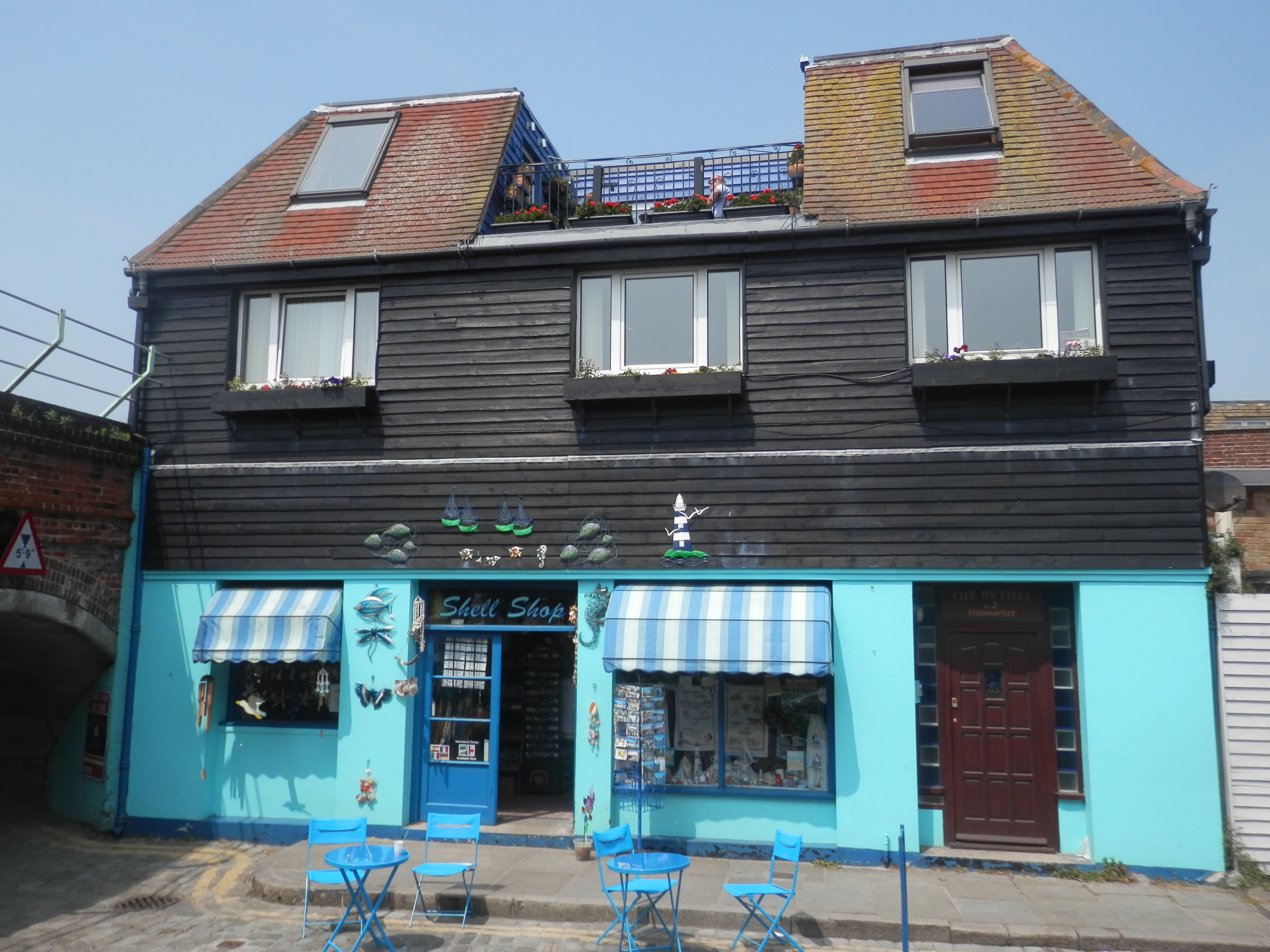
This shop in the harbour thrilled me as a child, and it is no different now as we’ve already adorned our apartment with artefacts from its shelves


OLYMPUS DIGITAL CAMERA

The Grade II Leas Lift, a much loved icon, was restored to full operation this summer

OLYMPUS DIGITAL CAMERA

“Ok, I get it that you won’t let me have any of your fish and chips, and you’re only looking after my own welfare by not feeding me, but just remember who runs this town”

OLYMPUS DIGITAL CAMERA

Folkestone’s own Little Mermaid, modelled on local mother of two, Georgina Baker, gazes on our “chums” on the Cote D’opale from the rocks of Sunny Sands

OLYMPUS DIGITAL CAMERA

My fetish (I prefer to call it passion) for directional signs is amply satisfied around town

OLYMPUS DIGITAL CAMERA

The wild, weird, wonderful Warren is a secret jealously guarded by (us!) locals 

OLYMPUS DIGITAL CAMERA

Cafe culture at its best at Steep Street – welcoming smiles, potent coffee, delicious pastries, stacks of books, literary competitions and seats for great people watching – a killer combination

In conclusion, a couple of general observations. Cynics might sneer at what they perceive to be an overly positive initial impression, and I acknowledge that the rose-tinted spectacles haven’t been discarded yet. However, I offer the following:

  1. The people of Folkestone, especially in the retail and hospitality sectors, have been friendly and cheerful. And I have been particularly impressed by the courtesy of drivers towards pedestrians around town; and
  2. Folkestonians appear to care for their physical surroundings too – flower displays and other open spaces are lovingly tended, littering is less visible than in many other places I have lived in and visited and there is extensive renovation and redecoration of buildings going on, especially near the seafront.

I am very conscious, however,  that Folkestone is no more immune from the contagion of drunkenness and lawlessness that infects town centres across the country. Only last weekend, for example, a group of innocent bystanders was attacked in the early hours of the morning in Sandgate Road. I will not shy away in future from highlighting negative as well as positive features.

As the council gardening staff begin to dig up the flower beds along the Leas under another limpid blue sky that belies the reality of today’s Autumn Equinox, my thoughts turn to the next six months. Most of the time I have spent in Folkestone, as child and man, until now has been during the summer or in the late spring. But whilst I might mourn the imminent passing of hot, sunny days, I am excited at the prospect of witnessing winter storms crashing (but not damaging further) Coronation Parade and walking from Mermaid Beach into Sandgate and Hythe on cold, crisp February mornings.

The next phase of our Folkestone story awaits!


The first two posts in this series can be found at:

http://www.tonyquarrington.wordpress.com/2016/01/11/it-was-always-folkestone/

http://www.tonyquarrington.wordpress.com/2016/08/18/so-glad-we-made-it/

Read Full Post »