Feeds:
Posts
Comments

Posts Tagged ‘Creative Quarter’


Talk given to the Folkestone is a Library: The Power of Reading Together” event at the Quarterhouse in Folkestone on Thursday 7th May 2026.

Thank you, Sophie and the team for inviting me to talk this evening. I am thrilled to be associated with this exciting project.

I had contemplated showing a series of slides, but after 30 years of delivering Powerpoint and similar presentations, I thought I would stick to just talking to my subject this evening.

After all, if the King can talk for 37 minutes without visual aids, I’m sure I can manage 10.

………………………………….

I moved to Folkestone (not quite from London) almost 10 years ago and have watched its reputation as a major arts destination grow exponentially.

But I have always felt that literature was the poor relation in the local creative scene, despite the outstanding work done by Poets’ Corner, Write by the Sea and many other groups and individuals.

I started the walks in 2017, focusing initially on The Leas, Creative Quarter and the Harbour and Seafront.

In the following years I added tours of the East Cliff, West End, Bayle, Sandgate and even the Town Centre (as part of the Levelling Up initiative) as well as those themed on Art, Literature and the town’s rock and roll heritage.

I should take this opportunity to put in a plug for the next free rock and roll tour this coming Saturday as part of the Music in May programme. Join me at 10.30am in Noel’s Yard aka Market Square for 2 hours exploring the blue plaques, Wall of Fame and reliving concerts and other events related to those.

………………………………..

But back to the literary tours.

Prior to researching Folkestone’s literary history, I was certainly conscious of H.G. Wells’ close connection to the area, and being from Rochester, of Dickens’s affinity with the town (far greater I might add then Broadstairs with whom he is more often linked), but little else.

I subsequently learnt that not only has Folkestone been the birthplace of a host of writers, but for the past 183 years since the coming of the railway, it has welcomed many others en route to and from the Continent, some of whom have left their observations on the town.

On the tours you will encounter both.

………………………………

I didn’t realise, for instance, that one of my favourite writers, a Nobel Prize winner no less as well as the only one ever to play first class cricket, actually spent 2 weeks here in 1961. I suspect many of you know to whom I’m referring – but if you don’t, I’m not going to tell you now – you’ll need to come on a tour!

………………………………

So, what do the tours entail?

We meet at the Step Short Arch and weave our way through the town via Albion Villas, the parish church, the Bayle, Old High Street, Harbour and Harbour Station and along the seafront to the Zig Zag Path where we return to the Leas.

If nobody is looking, we might also sneak a peek at the Road of Remembrance! And if you have the stamina, we can walk through to Sandgate, where Wells lived for almost a decade, before returning to the starting point.

Along the route, we make regular stops where I read relevant extracts from writers associated with that particular location. The latest author count is 12, though I am always looking for additional material.

The reopening of the library, at least at its temporary home, in Sandgate Road on 26th of this month, will be a great help in that process.

………………………………..

The tours take around three hours (more like four hours if we extend it via Sandgate), with a short break or two included, and cost just £10 per person.

Whilst I will be running many other tours over the summer, I have set aside a series of dates, initially in May and June, which are listed in a pack of handouts you can collect later this evening.

I have also negotiated a free tour for Creative Folkestone members on 12th June.

………………………………….

I’ll leave you with 3 short quotes that I cover on the tours to provide you with some flavour of what they entail.

The first is from Charles Dickens and describes the impact of the tides on Folkestone Harbour, and I think you’ll agree, he could have written it today.

I should first explain that Dickens christened Folkestone Pavilionstone in honour of the Royal Pavilion Hotel, which stood on the site now occupied by the Grand Burstin.

I wonder if, a hundred years or now, a famous writer will christen Folkestone “Burstinstone” in their work!

Dickens wrote: “We are a tidal harbour at Pavilionstone. At low water, we are a heap of mud, with an empty channel in it where a couple of men in big boots always shovel and scoop: with what exact object, I am unable to say.

At that time, all the stranded fishing-boats turn over on their sides, as if they were dead marine monsters; the colliers and other shipping stick disconsolate to the mud; the steamers look as if their white chimneys would never smoke more, and their red paddles never turn again, the green sea-slime and weed upon the rough stones at the entrance, seem records of obsolete high tides never more to flow; the flagstaff-halyards droop; the very little wooden lighthouse shrinks in the idle glare of the sun.

But, the moment the tide begins to make, the Pavilionstone Harbour begins to revive. It feels the breeze of the rising water before the water comes, and begins to flutter and stir. When the little shallow waves creep in, barely overlapping one another, the vanes at the mastheads wake, and become agitated. As the tide rises, the fishing-boats get into good spirits and dance, the flagstaff hoists a bright red flag, the steamboat smokes, cranes creak, horses and carriages dangle in the air, stray passengers and luggage appear.”

And it goes on.

…………………………………….

The second comes from Kipps. the novel by H.G. Wells which references many locations in Folkestone and beyond. This particular piece describes Kipps’ exciting Sunday exploits:

“On Sundays he was obliged to go to church once, and commonly he went twice, for there was nothing else to do. He sat in the free seats at the back; he was too shy to sing, and not always clever enough to keep his place in the Prayer-book, and he rarely listened to the sermon.

In the intervals between services he walked about Folkestone with an air of looking for something. Folkestone was not so interesting on Sundays as on week-days, because the shops were shut; but on the other hand, there was a sort of confusing brilliance along the front of The Leas in the afternoon…….

He would sometimes walk up and down The Leas between twenty and thirty times after supper, desiring much the courage to speak to some other person in the multitude similarly employed. Almost invariably he ended his Sunday footsore”.

…………………………………….

The final extract is from the late Robert Morley, actor and raconteur, who is likely to be more familiar to those in the room, like myself, of a certain age.

Morley spent much of his childhood in Folkestone due to ill health where he was constantly wheeled around in his sailor suit in a bath chair.

He claimed that “if there’s one thing young people lack today….it is Folkestone standards. It may well be what’s wrong with the country. No child brought up as I was in Folkestone and Kensington Gardens ever felt the need of a psychiatrist”.

……………………………………

Thank you.

Read Full Post »


I am proposing to run twice, possibly thrice, weekly walking tours of Folkestone next summer (May to September 2017).

There are many practical considerations, including health and safety, marketing and potential licensing, that need to be addressed in the opening weeks of the New Year, but the crucial issue is the integrity of the tour itinerary itself.

Below are my initial thoughts on what route to take, and the issues to highlight at each stop and during the walk itself.

Currently, I envisage the tour lasting no longer than two hours.

These are still early thoughts and are subject to change. Being still a relative newbie, there is a distinct possibility that I may have missed something. This is where long term residents of Folkestone and others who have, like myself, come to love the town, can help me in fine tuning the details. I would be extremely grateful for their input and support.

I intend to finalise this by the end of February, allowing two months to work up the detailed commentary and supporting material.

I am extremely grateful for your assistance in this. Don’t feel you need to be gentle with me!

P8160014.JPG

Start: By the Earth Peace sign in front of The Grand Hotel on The Leas

Stop 1: The Grand Hotel
a. outline of tour – duration – route – stops – toilets – refreshments – approach to questions
b. history of The Leas and Folkestone as a holiday destination – English & French coast highlights
c. history of The Grand, including rivalry with The Metropole & links to royalty

d. introduction to Folkestone Triennial & Folkestone Artworks, specifically Earth Peace (Yoko Ono)

Walk 1: Along The Leas, passing the View Hotel, Ruth Ewan (clock) and Mark Ballinger’s (Folk Stones) artworks & talking benches

————————————————————————–

Stop 2: Leas Cliff Hall 
a. history – construction – programme
b. William Harvey statue

Walk 2: Along The Leas passing the Leas Pavilion Theatre and the Leas Lift

————————————————————————–

Stop 3: Step Short Arch
a. Folkestone’s role in war
b. construction
c. War Memorial
d. poppies

Walk 3: Down the Road of Remembrance

PA190104.JPG

Stop 4: Harbour Station / Harbour Arm entrance
a. role of trains bringing soldiers/holidaymakers
b. history of ferry / hovercraft services
c. Hamish Fulton’s metal sign
d. Grand Burstin Hotel
e. regeneration plans

Walk 4: Along the Harbour Arm, taking in views of the Harbour 

————————————————————————–

Stop 5: Lighthouse on Harbour Arm

a. history
b. Weather is a Third to Place and Time artwork
c. Champagne Bar

Walk 5: Back along Harbour Arm and towards Harbour

————————————————————————–

Stop 6: Harbour
a. fish market
b. history of fishing c/f activity today
c. seafood stalls
d. Rocksalt

Walk 6: Along The Stade to Sunny Sands

————————————————————————–

Stop 7: Sunny Sands
a. beach & Coronation Parade
b. views to France, Harbour Arm, East Cliff, Dover Strait, the Warren & Samphire Hoe
c. Folkestone Mermaid (Cornelia Parker)

Walk 7: Back along The Stade and across to Creative Quarter entrance


Stop 8: The Old High Street
a. history
b. role of Creative Quarter
c. Quarterhouse

Walk 8: Up the Old High Street and onto The Bayle, highlighting galleries, restaurants and coffee shops

OLYMPUS DIGITAL CAMERA


Stop 9: The Bayle
a. history
b. Parade Steps
c. Shangri-La
d. British Lion
e. pond – child’s mitten (Tracey Emin)

Walk 9: Around The Bayle into Church Street

————————————————————————–

Stop 10: Church of St Mary and St Eanswythe
a. history of christianity in Folkestone
b. life & sainthood of St Eanswythe

Walk 10: Through churchyard and along The Leas towards the Leas Lift

————————————————————————–

Stop 11: Leas Lift
a. history – construction – importance
b. take lift down to Marine Parade

Walk 11: Along Marine Parade to entrance of Lower Leas Coastal Park


Stop 12: Lower Leas Coastal Park
a. background, construction & awards
b. Fun Zone
c. Amphitheatre
d. Adam Chodzko’s Pyramid

Walk 12: Through Lower Leas Coastal Park to beginning of Zigzag Path

P3250033.JPG

Stop 13: Zigzag Path
a. history

Walk 13: Up the Zigzag Path and along The Leas to The Grand Hotel

————————————————————————–

Stop 14: The Grand Hotel
Finish by the Earth Peace sign in front of The Grand Hotel on The Leas

————————————————————————–

Read Full Post »


A fanciful proposition?

Maybe.

Probably.

After all, there are no breathtaking bridges (unless you count the Foord Road railway viaduct), no crippling hills (no, not even the Old High Street), no $40 million properties (how much IS the Grand worth?) and no former high security prisons once claimed for Indian land sitting off the shore in Kent’s garden resort.

But, having spent a lot of time in San Francisco over the past twenty years, and written extensively about it in the past five years, I believe there are enough similarities to entitle me to suggest that it has more in common with my childhood playground, and now home, of Folkestone than one might at first think. The only differences are ones of scale and international repute.

OLYMPUS DIGITAL CAMERA

Before I plunge into this pool of fantasy, a brief disclaimer.

The only photographs included in this piece are those of Folkestone – for a variety of reasons: 1) Many people will already be familiar with some of the sights I refer to in San Francisco; 2) If they don’t, there are probably millions of images and billions of words on the internet to fill them in, and 3) I have posted hundreds of images elsewhere on this blog and I’d be delighted if you were inspired to go hunting for them!

Back to the proposition.

Firstly, they are both marine ports with world famous stretches of water/land on their doorstep (the Golden Gate and the White Cliffs of Dover) as well as glorious bay/sea views in all directions and weathers.

The boats in Folkestone’s pretty harbour hardly match up to the million dollar vessels you will find docked in Sausalito or Tiburon across San Francisco Bay. But the scene has a timeless charm that is endlessly captivating, whether at high or low tide.

OLYMPUS DIGITAL CAMERA

Both places teeter on the edge of their nation. Folkestone, with its proximity to mainland Europe, cemented by the opening of the Channel Tunnel in 1994, has long vied with neighbouring Dover for the title of “Gateway to England” (personally, I think it’s a draw), while San Francisco is on the seismically challenged tip of a vast continent.

And because of that position, they have both served as major embarcation points for their nation’s military in time of war. In the 1914-18 conflict, it is estimated that as many as eight million soldiers marched down Folkestone’s Road of Remembrance to the Harbour Station en route to the fields of Flanders and France, while in the Second World War, more than a million and a half soldiers left for the Pacific conflict from San Francisco and its neighbour on the other side of the Bay Bridge, Oakland.

OLYMPUS DIGITAL CAMERA

“The City” (as (we) San Franciscans call it) is consistently placed high (invariably first) on culinary surveys. The Foodie Capital of the U.S.A is no idle boast. Folkestone may not have attained that elevated status (for a start it’s not in the U.S.A. but you know what I mean), but a number of fine cafes and restaurants have sprouted in the town in recent years, a visible and tasty manifestation of the regeneration, courtesy in no small part to the beneficence of Sir Roger de Haan.

Rocksalt, the seafood restaurant perched alongside the small railway bridge that separates the inner from outer harbour, has recently been named the thirtieth best in the U.K and Googies has been adjudged Restaurant of the Year in the 2016 Taste of Kent Awards.

There are a number of other quality restaurants (Copper and Spices, Blooms @1/4 and Follies are personal favourites), both in the town and dotted along the recently reopened Harbour Arm, capped by the lovely Champagne Bar at the foot of the lighthouse.

And one can’t forget, this being a seaside resort, that there are many establishments serving up fish and chips (not forgetting the mushy peas, white bread and butter and mug of tea).

OLYMPUS DIGITAL CAMERA

Coffee culture is strong too – many shops provide coffee and cake in addition to their primary products – and there is a distinct hipster vibe about Folkestone that mirrors – on a smaller scale of course – the atmosphere in neighbourhoods like the Mission, Cole Valley and Potrero Hill on the “left coast” of America.

Any self-respecting coastal resort would not be complete without its harbourside seafood stalls selling freshly caught crab and lobster as well as cockles, whelks and prawns. Bob’s, Chummy’s and La’s are all well established and popular purveyors of the denizens of the sea. A Fisherman’s Wharf in miniature you might argue.

OLYMPUS DIGITAL CAMERA

Home to Jack London and Dashiel Hammett, the Beat poets and the Summer of Love, inspiration for the WPA and Mission muralists, San Francisco has always had a reputation for being a town for artists, writers and musicians. After all, it provides a gorgeous natural canvas upon which to create. However, one of the consequences of astronomical rents in recent years has been to drive many artists out of the city.

OLYMPUS DIGITAL CAMERA

In contrast, Folkestone’s star as an arts venue of international repute is rising. Every three years – the next is in 2017 – it becomes host to a prestigious arts festival (Triennial), where artists are permitted free rein about town to create public artworks (there are already twenty seven pieces on display by luminaries like Yoko Ono and Tracey Emin).

This is the most high profile manifestation of a burgeoning arts scene centred on the Creative Quarter where galleries and performance space adorn the once run down Old High Street and Tontine Street. Indeed, it is the arts that has been the fulcrum of the regeneration that has become the envy of other coastal resorts around the UK (which, admittedly, have not had the benefit of a sugar daddy like de Haan.

OLYMPUS DIGITAL CAMERA

The City by the Bay is renowned for its year round cavalcade of neighbourhood and city wide festivals and fairs celebrating its cherished devotion to diversity, including Pride, the Haight Ashbury Street Fair, North Beach Festival, Hardly Strictly Bluegrass and Folsom Street Fair.

In contrast, Folkestone’s admittedly more modest, but nonetheless impressive, calendar of annual events, notably Charivari, the Harbour Festival, Leas Village Fete, Armed Forces DaySkabour and the Folkestone Book Festival among many others.

I cannot resist including a pet (not literally) subject of mine – gulls.

Both places boast a feisty, ravenous population, hardly surprising given their coastal position, but these, reflecting their human compatriots in each town, are genuine “characters”. The giant seagull artwork, now serving on Folkestone’s Harbour Arm as an unconventional tourist information kiosk, has become an unofficial poster boy (or is that gull?) for the town. But generally, so far, I’ve found the local birdlife noisy but reasonably friendly, especially when I cross Radnor Park of a morning when they waddle up to greet me (but don’t let me get too close).

OLYMPUS DIGITAL CAMERA

The same cannot be said for those that begin to circle San Francisco’s (base) ball park during the late innings of a Giants game in anticipation of feasting on leftover garlic fries. Fans remaining until the end of evening games have to have their wits about them.

There is one aspect of San Francisco life that I would not want to see replicated in Folkestone. San Francisco rents and the broader cost of living are the highest in the States, due largely to the influx of tech workers from Google, Facebook and Oracle to name but a few.

Now, the Alkham Valley doesn’t have quite the same cudos as Silicon Valley (pretty as it is – Alkham not Silicon), but there are other forces at play – improved accessibility to London through the high speed rail link, continued development and gentrification and relatively cheap house prices (for now) – that increase the risk of Folkestone becoming a town split between affluent “transplants” and residents who cannot afford to live in the place they were born and brought up in.

OLYMPUS DIGITAL CAMERA

There is a more substantial analysis called for here, and I may attempt it in due course. Moreover, there are other issues I might have explored – dogs and drinking spring to mind (that’s not about the bowls left outside the Leas Cliff Hall for the delectation of our canine colleagues but rather two very distinct subjects).

But, for now, there is certainly one further similarity between the two places that I must mention – I left my heart in both, in Folkestone as a ten year old gleefully gambolling (not gambling) in the rotunda and in 1995 on a fateful West Coast tour of the U.S.A.

Read Full Post »


This is the final part in a trilogy of posts centred on our recent relocation to Folkestone. The first outlined the historical and emotional reasons for making the move in the first place, whilst the second described the sometimes rocky road of searching for, buying and moving into our coastal retreat.

At the end of the last piece, written a fortnight after our arrival, I concluded that, not least because of the excellent weather we had enjoyed, it still felt as if we were on an extended summer vacation.

But now that another month has passed, and although the climate gods continue to shine upon us, we are beginning to feel that this is now our permanent home.

The frustrating saga of our landline, cable and broadband installation is finally over after forty two tortuous days.

We have purchased a number of new household appliances (and perpetrated an epidemic of hernia repairs among the delivery men into the bargain).

My wife has settled into her new office in town.

We are on first name terms with a pair of crows that have taken up residence in our beech tree. They love nothing more than to join the ducks in the lake across the road and the seagulls on the roof in a chaotic (pre-) dawn chorus.

And we have entertained guests from Norwich and Philadelphia.

For now then, it is fair to say that the fabulous Folkestone fairytale continues – as the images below demonstrate.

wp-image-853740679jpg.jpg

Folkestone must have more outdoor benches per square metre than anywhere else on the coast!


OLYMPUS DIGITAL CAMERA

One of the many attractive features of the award winning, child friendly Lower Leas Coastal Park – it can’t be claimed that this seaside town is the preserve of the elderly!

OLYMPUS DIGITAL CAMERA

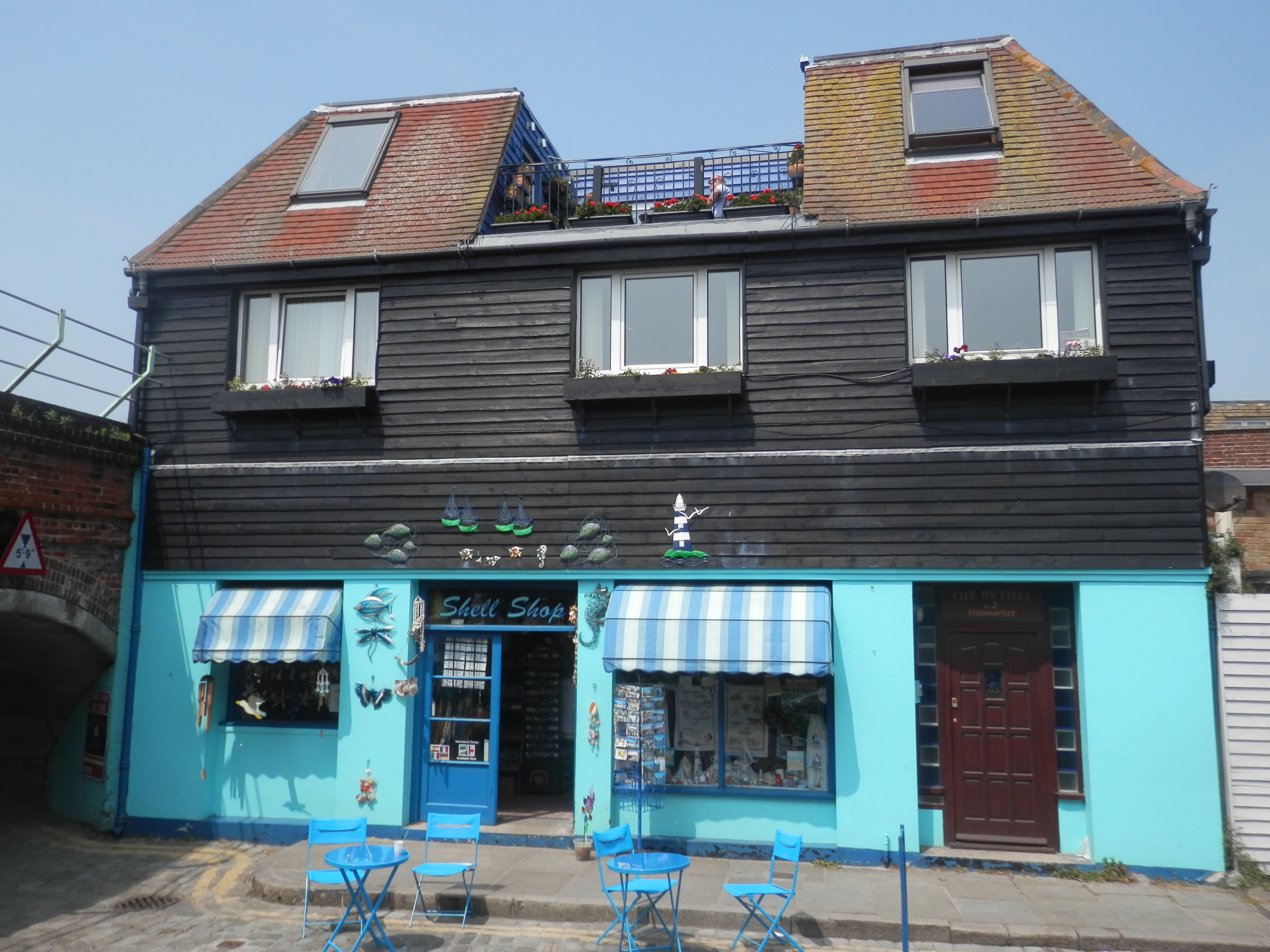
This shop in the harbour thrilled me as a child, and it is no different now as we’ve already adorned our apartment with artefacts from its shelves


OLYMPUS DIGITAL CAMERA

The Grade II Leas Lift, a much loved icon, was restored to full operation this summer

OLYMPUS DIGITAL CAMERA

“Ok, I get it that you won’t let me have any of your fish and chips, and you’re only looking after my own welfare by not feeding me, but just remember who runs this town”

OLYMPUS DIGITAL CAMERA

Folkestone’s own Little Mermaid, modelled on local mother of two, Georgina Baker, gazes on our “chums” on the Cote D’opale from the rocks of Sunny Sands

OLYMPUS DIGITAL CAMERA

My fetish (I prefer to call it passion) for directional signs is amply satisfied around town

OLYMPUS DIGITAL CAMERA

The wild, weird, wonderful Warren is a secret jealously guarded by (us!) locals 

OLYMPUS DIGITAL CAMERA

Cafe culture at its best at Steep Street – welcoming smiles, potent coffee, delicious pastries, stacks of books, literary competitions and seats for great people watching – a killer combination

In conclusion, a couple of general observations. Cynics might sneer at what they perceive to be an overly positive initial impression, and I acknowledge that the rose-tinted spectacles haven’t been discarded yet. However, I offer the following:

  1. The people of Folkestone, especially in the retail and hospitality sectors, have been friendly and cheerful. And I have been particularly impressed by the courtesy of drivers towards pedestrians around town; and
  2. Folkestonians appear to care for their physical surroundings too – flower displays and other open spaces are lovingly tended, littering is less visible than in many other places I have lived in and visited and there is extensive renovation and redecoration of buildings going on, especially near the seafront.

I am very conscious, however,  that Folkestone is no more immune from the contagion of drunkenness and lawlessness that infects town centres across the country. Only last weekend, for example, a group of innocent bystanders was attacked in the early hours of the morning in Sandgate Road. I will not shy away in future from highlighting negative as well as positive features.

As the council gardening staff begin to dig up the flower beds along the Leas under another limpid blue sky that belies the reality of today’s Autumn Equinox, my thoughts turn to the next six months. Most of the time I have spent in Folkestone, as child and man, until now has been during the summer or in the late spring. But whilst I might mourn the imminent passing of hot, sunny days, I am excited at the prospect of witnessing winter storms crashing (but not damaging further) Coronation Parade and walking from Mermaid Beach into Sandgate and Hythe on cold, crisp February mornings.

The next phase of our Folkestone story awaits!


The first two posts in this series can be found at:

http://www.tonyquarrington.wordpress.com/2016/01/11/it-was-always-folkestone/

http://www.tonyquarrington.wordpress.com/2016/08/18/so-glad-we-made-it/

Read Full Post »