Feeds:
Posts
Comments

Posts Tagged ‘San Francisco’


Five weeks tomorrow (Wednesday) my wife and I will be flying out to our second home, San Francisco, California, USA.  I use the word “home”, not in the sense that it is where we are permanently domiciled, but rather as the place where we feel most “at home”.  This will be our eighth trip to the City by the Bay and we could not be looking more forward to it.

Since the millenium we have, in the Spring of every even year (’00 to ’10 inclusive), spent 3-4 weeks “out west”.  Each vacation has followed a similar pattern – a week or so skiing in Heavenly, Lake Tahoe at the beginning and  week or two in San Francisco at the end, with three or four day visits to other locations sandwiched in between for a few days – these have included Vegas, San Diego, San Luis Obispo, Death Valley and Yosemite.

Following last year’s vacation we decided that life was too short to have to wait two years for our next skiing and SF fixes, so, at least for now, it has become an annual event.  Our long term aim, finances permitting, has always been that once my wife has joined me in Retirement Row, which may still be a few years yet, we will spend longer in San Francisco / Heavenly, upwards of three months at a time, twice a year. 

But for now it’s three and a half weeks, starting with the customary first night stay in San Francisco followed by the drive to South Lake Tahoe on the following day. Ever since the night in 2002 when we thought we could make the trip from SF to Tahoe immediately following an eleven hour flight, and then, after negotiating a heavy rain-splashed evening commute out of town, spent seven hours crawling through a four foot snow storm (of which more another time), we have seen sense and stayed in the City before venturing out refreshed the next morning. 

Besides, we have developed a routine, now I suppose it warrants being dignified with the word tradition, for that overnight stay that sets the scene for the entire vacation – dinner at Calzone’s on Columbus Avenue in North Beach followed by a scan of the shelves in the City Lights Bookstore and a few drinks in Vesuvio’s in the evening, and breakfast at the Eagle Cafe on Pier 39 the next morning, along with half an hour in the Barnes and Noble bookstore in Fisherman’s Wharf stocking up on any vacation reading before we head off to Tahoe.

We are only skiing for four days this year, though it’s four more days that we would have anticipated when we left there last March.  So we are hoping for perfect spring conditions – they snow is already there, all we need now is the sun.  And the best meal of our entire trip last year was at the Riva Grill on Ski Run Marina, so we plan to eat there again.
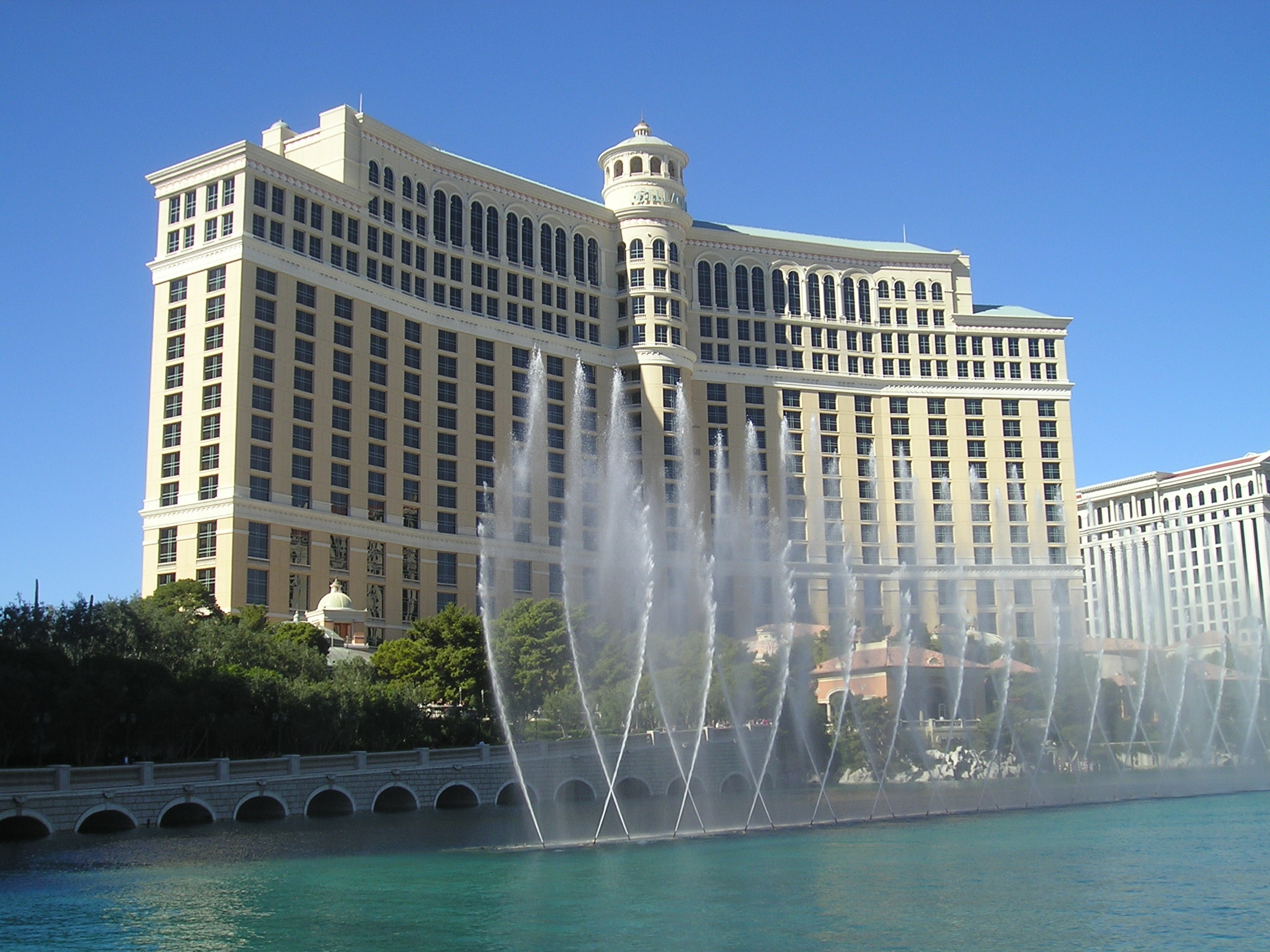
After five nights we fly from Reno to Vegas where we are meeting my wife’s parents, both of whom are now 80 and still hitting “Sin City”! Just three nights there but, as ever, action packed – Cirque de Soleil Viva Elvis show in the Aria, possibly another show yet to be booked and a trip to the Hoover Dam with a deluxe cruise on Lake Mead. And then there’s at least two of those nights spent tackling  feisty “Whiskey Girl” cocktails at Toby Keith’s I Love this Bar and Grill.

With such tasty appetisers cleared away we move onto the main course – San Francisco.  Last year we eschewed a hotel for the first time and stayed in an apartment in Hayes Valley for two weeks.  This will now be the template for the future.   We wanted to “live like locals” as much as possible, and staying in someone’s home is a good starting point – no maids knocking at your door in the morning anxious to clean your room, you can eat in as often or as little as you want and, if you have a washer and dryer, you are never short of clean clothing!  The last facility is particularly important this year since Virgin Atlantic has halved the cabin luggage allowance since our trip last year.

We are staying in a much larger apartment this year on Fulton Street, half way between Alamo Square and Golden Gate Park.  Not only is it more spacious but it comes with a huge TV, computer and, rarest and most precious of all in San Francisco, a designated parking space.

I will post separately about our plans for San Francisco but our emphasis this year will be on new places and new experiences, though I’m sure that we won’t be able to resist returning to many of our favourite haunts such as Beach Blanket Babylon (already booked for our fifth visit), the Cliff HouseHaight-Ashbury and AT & T Park.

Read Full Post »


As may already be apparent to anyone who has kindly read any of the first four entries in this series, my writing ship has been steering clear of political waters.  And, certainly for the foreseeable future, that will continue to be the case. 

At the outset I envisioned alternating between the serious and the populist, but as I consider future subjects I find myself drawn towards those individuals that most closely embody the word “character” in the sense of being “an unusual or amusing person” (OED), rather than those whose deeds have  been commendable but whose persona has been dull.

That is not to say that the occasional politician or other staid public figure will not gatecrash (formally, of course) the party at intervals, but the focus will continue to be on people whose lives and achievements reflected a colourful personality.    

So in coming features you can expect to read about such characters as Mrs Friedel Klussmann, “the woman who saved the cable cars”, Herb Caen, the legendary San Francisco Chronicle columnist, Lillian Hitchcock Coit, the fire engine follower whose bequest to the city funded the construction of the tower that bears her name and Diego Rivera, the Mexican painter whose dramatic murals adorn parts of the city.

In order that the features retain an interest for anyone stumbling upon this blog I would also very much welcome any requests for future subjects.

Read Full Post »


“There have been only two geniuses in the world”, actress Tallulah Bankhead said, “Willie Mays and Willie Shakespeare”. A trifle exaggerated perhaps (is Shakespeare THAT good?), but the former Giant was arguably the greatest baseball player of all time.

William Howard “Willie” Mays Jnr. was born on 6th May 1931 in Westfield, Alabama of talented sports playing parents. He came to prominence through playing for Birmingham Black Barons in the Negro American League and, having been declined by the Brooklyn Dodgers, was signed by the New York Giants on the day he graduated from high school in 1950.

After an impressive early season spell with the Minneapolis Millers of the American Association at the beginning of the following season he was called up for his Major League debut on 25th May 1951. Despite career lows in batting average, RBIs and HRs that year he was still voted Rookie of the Year.  His speed and agility in centre field were gaining notice, and in one game against Pittsburgh, he stopped a 475 foot drive with his bare hand.

Missing most of the 1952, and all of the 1953, seasons through Army service, he returned to the Giants in 1954, helping them to win their last World Series before 2010 and being voted National League MVP.  His phenomenal over the shoulder running catch in deep center field off Vic Wertz at the Polo Grounds, which is still regarded as one of the most spectacular pieces of fielding in baseball history, was instrumental in securing a first game win against the Cleveland Indians, leading to a four game sweep of the series.

In 1957, the last season of the Giants’ tenure in New York, he won the first of his 12 consecutive Golden Glove awards. There were few more exhilarating sights than Mays in full sail, chasing a long fly ball, oversize cap flying off his head as the ball sunk into his enormous, wide-palmen hands.  He perfected the “basket” catch in which the glove was held waist-high and face up like a basket.   Along with Joe diMaggio he is also reputed to have had the greatest throwing arm in the game.

His reception in San Francisco, following the Giants’ relocation in 1958, was not a particularly welcoming one – he was booed whilst the locals took rookies like Orlando Cepeda and Willie McCovey to their hearts and he and his wife experienced racial prejudice in their attempts to find a home in the city.   His wholehearted, stylish performances won over the fans and in 1961 he hit 4 home runs against the Milwaukee Braves in County Stadium and was on deck when the Giants’ final innings closed.  He is the only Major League player to have a 4 home runs and a 3 triple game.

His final World Series for the Giants was in 1962 when, having beaten the Dodgers in a three game play-off, they lost in seven to the Yankees.  He won his second league MVP with a career high 52 home runs.  He played in 150 games for 13 consecutive years between 1954 and 1966, another Major League record.  Despite hitting his 600th home run in 1969 he had an injury hit season, but returned to his best form and helped the Giants win the  National League West in the following year.  He was named “Player of the Decade” for the sixties by The Sporting News in 1970. 

In May 1972, unable to guarantee him a retirement income, the Giants  traded the 41 year old Mays to the New York Mets for pitcher Charlie Williams and $50 ,000.  He made his debut on the 14th against the Giants, hitting a home run.  His final home run, number 660, was made against the Reds on 17th August the following year.  He also made 3,283 hits and ran in 1,903 batters in his career.

For his two seasons in New York he was the oldest regular position player in baseball and the oldest to figure in a World Series Game during the series that the Mets lost to the A’s.  He stayed with the club until the end of the 1979 season as hitting instructor.


On 23rd January 1979 he was inducted into the Baseball Hall of Fame in his first year of eligibility, colecting 95% of the ballots.  But the period after his retirement was a difficult one, culminating in his being banned from baseball for working, along with Yankees legend Mickey Mantle, as a meeter and greeter for Bally’s Casinos in Atlantic City.  Although the ban was eventually rescinded, the decision affected Mays badly, inducing him to shun many public appearances, including All-Star games.  

In 1999 he was included in the Major League All-Century team in a popular vote by fans.

There is no doubting the affection in which he is held, not only by Giants’ fans but the citizens of San Francisco.  Since 1986 he has served as Special Assistant to the President of the San Francisco Giants, a lifetime appointment.  The address of AT & T Park is 24 Willie Mays Plaza and a larger than life statue of Mays in full slugging mode stands proudly in front of the main entrance. 

Although his #24 shirt had been formally retired, and even when Mays offered it to his godson Barry Bonds, who had visited him in his locker room in search of bubble gum when just five years old.  Such was the esteem in which he is held, however, that Bonds refused and opted to wear the #25 jersey instead.  

At former mayor Willie Brown’s instigation, and with the subsequent endorsement of mayor Gavin Newsom, he is now commemorated every 24th May in San Francisco which has been designated Willie Mays Day.  On his 79th birthday in 2010 the California Senate proclaimed Willie Mays Day in the state, and three years before, he had been inducted into the California Hall of Fame by Governor Arnold. Schwarzenegger.

For all the adulation and honours accorded him in California, it should not be forgotten that he is no less idolised on the East Coast for his services  to New York at the beginning and end of his career.  This was evident when he  joined the Giants organisation on 21st January 2011 in parading the newly won World Series trophy, visiting the grade school built on the site of the old Polo Grounds in Harlem, answering the students’ questions and distributing memorabilia.  

Willie Mays visits PS 46 in Harlem, next to the site of the former Polo Grounds, where the new York Giants played before moving to San Francisco in 1958, on Jan. 21, 2011 in New York City.  The Giants hadn't won the World Series since 1954.

I can’t finish this piece without reference to more of Mays’s remarkable playing achievements:

  • selected for the All-Star Game a (tied) record 24 times, including 20 consecutive years between 1954 and 1973;
  • MVP in the All-Star Game twice (1963, 1968);
  • the only player to have hit a home run in every innings from 1 to 16;
  • a record 22 extra innings home runs;
  • only one of five National League players to have hit at least 100 RBIs in eight successive seasons;
  • stole 338 bases; and
  • 7,095 outfield fielding putouts – Major League record

But the statistics and records do scant justice to his genius – constantly on the move, athletically and mentally, whether at the plate, on base or in the outfield, he was a menace to the opposition from start to finish.

I started with a quotation and I shall end with one.  Mays, who, in all modesty, believed himself to be the best baseball player ever, summed it up in these simple words: “If you can do that – if you run, hit, run the bases, hit with power, field, throw and do all other things that are part of the game – then you’re a good ballplayer”.  Well, he could do all of those things with a level of skill, style and, above all joy, unparalleled in the game’s history.

Read Full Post »


As this series develops I hope to be able, where the events of the day allow, to present a “main feature” i.e. a story in some detail supported by a list of “lesser” happenings that are worthy of note.  But I am at the mercy of history and this may not always be possible.  

The following events occurred on this day in history:

1848: Gold is discovered by James W. Marshall, a foreman working at Sutter’s Mill on the American River in Coloma, 130 miles to the north east of San Francisco, triggering the influx of 300,000 prospectors seeking their fortune and transforming the city from a small town into a booming, bawdy metropolis. 

Doubts persisted for some time whether the small, golden nugget that had made Marshall’s “heart thump” as it was more the colour of brass than the customary reddish-tinged gold found elsewhere.  A few tests revived his confidence that he had struck gold, though it was not until March before the rumours were confirmed for all in San Francisco to hear.  That story will be  be recounted on the relevant day.

1980: Just before 11am a powerful, rolling earthquake centred ten miles to the north west of Livermore and measuring 5.8 on the Richter scale, hit, destroying the Lawrence Livermore Laboratory, a major storage depot for nuclear materials.  Forty four people were injured and the estimated property damage was $11.5 million. 

It was felt over a large area of central California and parts of western Nevada and was followed by 59 aftershocks in the next six days and a second principal earthquake on 27th of the month.  

1982: The San Francisco 49ers won Superbowl XVI by defeating the Cincinnati  Bengals 26-21 in cold, snowy conditions at the Pontiac Silverdome in Pontiac, Michigan.  The treacherous roads leading to the stadium caused the 49ers motorcade to be delayed, though the team arrived in time for the kick off. 

Joe Montana, in only his third season, was named the Super Bowl MVP, completing 14 of 22 passes for 157 yards and one touchdown, and also rushing for 18 yards and a touchdown on the ground.  The Bengals were the first team in Super Bowl history to lose the game whilst accumulating the most yards and touchdowns.

Nearly thirty years on the game remains one of the most watched broadcasts in American TV history, pulling in 85 million viewers.

Read Full Post »


On a cool, sunny afternoon and evening on Saturday 14th January 1967 the The Human Be-In took place on Polo Fields in Golden Gate Park.  Billed as “the gathering of the tribes” it brought together all the elements of the burgeoning counterculture in the U.S. –  radical Berkeley and Stanford students protesting increasingly vehemently against the war in Vietnam, individuals seeking spiritual enlightenment and the hippies that had become synonymous with the adjoining neighbourhood of Haight-Ashbury.

It was here that Timothy Leary famously implored the throng to “Turn on, tune in, drop out”.  The Beat Generation was represented by poets Allen Ginsberg, Lawrence Ferlinghetti, Gary Snyder, who blew a conch shell to herald the beginning and end of the event, and Michael McClure.  Other speakers included “yippie” Jerry Rubin and comedian Dick Gregory.

The Hell’s Angels cared for young children and acted as security, a “service” they were to provide regularly until the tragic events of the Altamont speedway track two years later, and the Diggers, an anarchic community group that combined street theatre with art happenings and direct action, distributed thousands of turkey sandwiches.  A new dose of the recently banned LSD called White Lightning was passed around.

The scene was one of joy and freedom.  Blair Jackson, in his biography of Jerry Garcia, wrote: “People threw Frisbees, watched their dogs run free, danced, sang, tripped in the surrounding pine and eucalyptus groves, pounded on drums, played flutes, strummed guitars, clinked cymbals and clonked cowbells.  Incense and pot smoke rose into the air already colored by balloons, kites, flags and streamers.  Acid was everywhere, but there were no bad trips”.

The air reverberated to the sounds of popular San Francisco Bands, including the Grateful Dead, Jefferson Airplane and Quicksilver Messenger Service.  The former’s performance, which was accompanied by a parachutist descending into the crowd, provoked palpably different critical responses.  The legendary rock impresario Bill Graham described it as “terrible”, claiming that the Steve Miller Band and Moby Grape were the best acts, whereas equally celebrated San Francisco Chronicle music journalist Ralph Gleason felt the Dead were “remarkably exciting, causing people to rise up wherever they were and begin dancing”.

Only two policemen on horseback were required for a historic occasion enjoyed by somewhere between 20,000 and 30,000 young people.  At sunset Ginsberg asked everyone to stand up and run towards the sun. and, at the close, to clear all the trash, which they dutifuly did.  There was only one minor disturbance.  In his book Summer of Love, Joel Selvin wrote “Later in the evening, a small group flowed over the sidewalks into Haight Street, obstructing traffic, and the cops moved in and arrested almost fifty people.  It was the most trouble they could find”.

Nevertheless, the Human Be-In was arguably the zenith of the hippie era, a promise of a better future based on peace, love, and a higher, more liberal consciousness.   But it did not last long.  Garcia recalled later that there had been a sinister undercurrent to the event, epitomised by Rubin’s strident anti-war speech.  Unremitting, largely negative media coverage, a massive influx of young people seduced by the appeal of the “make love, not war” philosophy, coachloads of bemused, gawping tourists and the alarming proliferation of hard drugs all made Haight-Ashbury an undesirable area in which to live, and the Diggers, by October of the same year, to declare the “death of the hippie”, orchestrating a procession through the area to the Panhandle where an effigy was burnt.

Read Full Post »


At 1.48pm on Thursday 14th January 1954 in City Hall, Municipal Judge Charles S. Perry proclaimed Joseph Paul “Joe” DiMaggio, son of an immigrant Sicilian born fisherman, and Norma Jean Dougherty, better known by her screen name of Marilyn Monroe, man and wife. 

It was dubbed “The Wedding of the Century” by the American media.  He was the recently retired “Yankee Clipper” who had led the New York Yankees to nine World Series Championships in his thirteen years as a major league baseball slugger and centre fielder.  She was the beautiful screen actress whose career had taken off over the previous twelve months with the release of the films How to Marry a Millionaire, Gentlemen Prefer Blondes and Niagara

Although the couple had tried to keep the time and place a secret, a telephone call by Monroe that morning to her studio in Los Angeles announcing that she was to be married at 1pm, started a media feeding frenzy in San Francisco.  In the event 500 people turned up, delaying the ceremony for over half an hour.

Monroe wore a dark brown, figure hugging, broadcloth suit with a white ermine collar and matching bouquet, whilst DiMaggio was equally smart in a blue suit and blue and white checked tie. They looked and said that they were very happy as press men clamoured for quotes and photographs.

http://www.youtube.com/watch?v=LGmOD_cqxN4

Once he had cleared his courtroom Judge Perry was able to conduct the ceremony which lasted only two minutes, the end of which unleashed mayhem amongst the waiting press corps.  The challenge now for the newly married couple was to effect a getaway!  Attempts at escape via different floors only came up against a different crowd each time, and on one occasion they ended up in a cul de sac!

Eventually, they reached diMaggio’s blue Cadillac parked on McAllister Street and drove off to North Beach where, in front of the Church of the Saints Peter and Paul in Washington Square, they posed for photographs before proceeding to their honeymoon in Paso Robles.  As divorcees they had been barred from marrying at what is known locally as the “Fishermen’s Church”.

Sadly, the marriage lasted only 254 days after Monroe filed for divorce for mental cruelty.  However, they remained close, Monroe often turning to him in her darker moments and DiMaggio having six red roses delivered to her crypt three times a week for more than twenty years. There were even rumours circulating when she died in 1962 that they had been thinking of getting married again.

There is a further melancholy footnote to that wedding day.  In the post-ceremony chaos Judge Perry, to his eternal misery, had forgotten to kiss the bride!

My gratitude in particular to the later Arte Hoppe who reported on the wedding for the San Francisco Chronicle.

Read Full Post »


Tomorrow (Friday) I will post my first entry on the above subject.  I had intended to post one for the following day too but my research to date has revealed that 14th January is an eminently more eventful day in history in the city than the 15th!

Given that there is another event that I particularly want to share with you that occurred on the 14th you will, therefore, get two for the price of one!  That said, I may not be in a position to post it until Saturday.

It could be argued, of course, that on some parts  of the planet it WAS the 15th when the event took place in San Francisco on the 14th!  No, that’s a pretty feeble excuse isn’t it?  Anyway, hope you find them interesting.

Read Full Post »


In addition to the “On This Day in San Francisco” feature I also want to use this blog to celebrate the lives and achievements of prominent, and perhaps some less well known but no less extraordinary, San Francisco characters.  Whilst names like Emperor Norton, Adolph Sutro, Harvey Milk, Jerry Garcia and Willie Mays might spring immediately to mind I want to focus on others whose contribution to the city’s colourful history has been equally as remarkable.  I’m even open to offers as to suggestions who might be covered!

Again, I intend to introduce my first character in the coming days.

Read Full Post »


In my first post I stated that much of the content of this blog would be San-Francisco related.   Amongst other themes that I want to explore and share with you are prominent events that happened in the city on the particular day on which I post a blog.   This will cover the fields of politics, history, sport and the arts and will range from monumental catastrophes such as the 1906 earthquake to more mundane matters such as the birthday of prominent San Franciscans, and all notable things in between. 

My long term aim is to pull these together into a book that, one day, you may wish to have sat alongside your diary. 

Watch this blog for the first entry – it’s coming soon!

Read Full Post »

« Newer Posts