Feeds:
Posts
Comments

Posts Tagged ‘Tony Quarrington’


Oddly, it is only relatively recently that I became hooked on baseball.  Perhaps it was the flying rounders (the tame “British” version of the sport) bat that put me as a seven year old in the local hospital, for which I still have the bump on my forehead, which had, subconsciously, spooked me from engaging with the game earlier.

Or maybe it was the ambivalent relationship with American culture that I “enjoyed” until the mid nineties when I took that fateful first trip across the Atlantic.  Baseball epitomised the inferiority of American sport compared to games invented by the English such as association football (soccer) and, especially, cricket with which baseball has much in common.

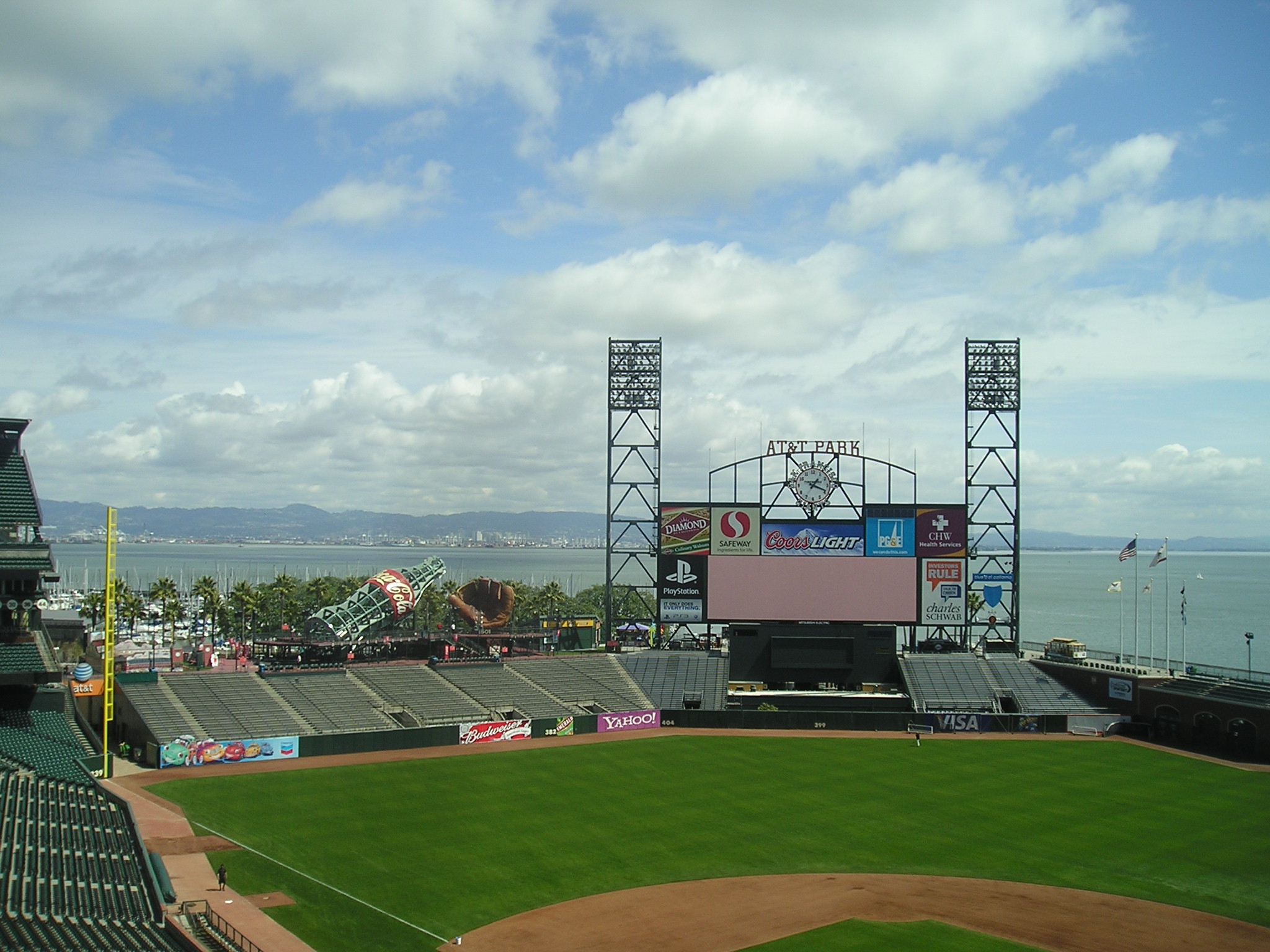
Despite trips to San Francisco in October 1995 and then the springs of 1999, 2002 (a season which culminated in an unsuccessful World Series appearance for my now adopted San Francisco Giants), 2004 and 2006 a trip to, respectively Candlestick, SBC, Pacific Bell and now AT & T Park never occurred to me. The prodigious exploits of Barry Bonds, both on and off the diamond, relayed on KRON 4 and other Bay Area TV stations were as close as I got, and their features focused as much on his controversial lifestyle as his sporting prowess.

Perhaps the fact that we were never in the city during the regular season, and , therefore, TV coverage was limited to cursory references to spring training, may also have accounted for my indifference.  Put simply, the opportunity to attend a game just wasn’t there.

To be fair, the little I had watched on television at home had intrigued me.  The reason I hadn’t given it a chance was due in no small part to the fact that games lasted up to three hours and were relayed live in the middle of the night.  Even in the comfort of my own home I was denied reasonable access to the sport.

Our first trip to AT & T Park was in March 2008, less than a week away before Opening Day, when we saw an understandably below strength Giants team beaten 7-1 by their neighbours across the bay, the Oakland Athletics (“A’s”).  They greeted our arrival with a mediocre performance in a half empty stadium lacking in any real atmosphere, and played in a bitterly cold wind that we could not escape, wherever we moved.  But we were hooked!

Firstly, the design and setting of the stadium were, of course, beautiful and the facilities outstanding.   Having been brought up to think that the catering, if such a word dignified it, in American sports arenas did not extend beyond hot dogs, popcorn and soda / beer, we were amazed by its range and quality.  There were at least two more converts to Gilroy’s garlic fries in the Bay Area that day!  The celebrated American customer service was prevalent everywhere, and we were struck by how fan friendly the whole experience was.

And then there was the crowd,  Ok, it was only a “pre-season friendly” in soccer parlance, albeit between two bitter local rivals, but there was no segregation, in fact Giants and A’s fans sat together in our section and maintained a barrage of feisty but light hearted banter throughout the afternoon.

But why should I fall for baseball and not american football or basketball?  The affinity with the traditional long form (i.e. 3, 4 or 5 day) of cricket is the best answer I can offer – a game that unfolds slowly but subtly with periodic bursts of excrutiating excitement, a rich literature (no other games have offered more to the English language), a noble history graced with remarkable characters and an obsession with statistics and records (one of the reasons both games captivate and capture for a lifetime the male of the species).   And not forgetting the attractive spectacle of field and “flannelled fools” where pitcher (bowler) and hitter (batsman) test their skills and character on an epic scale.

So I kept a close eye on the Giants’ exploits over the next two seasons, which were modest but promising of future success.  By the time we made our next visit in March 2010 I considered myself a long distance Giants fan.  We took the ballpark tour which was fascinating, and were given the opportunity to sit in the home team’s dugout.  We bought several items of merchandise to take home, including a Tim Lincecum bobblehead that we then contrived to leave in our apartment!

The general consensus seemed to be that the Giants, with their pitching strength in particular, could be more competitive that year.  But few dared to dream then, or even through most of the regular season, of division, league or World Series championships.

Or that, throughout October and the beginning of November, I would be going to bed at home at 8pm in order to rise again at half past midnight, or, on other occasions staying awake until 5am, living every strike, hit, walk and stolen base against the San Diego Padres (in the last regular season games), Atlanta Braves, Philadelphia Phillies and Texas Rangers.  How I enjoyed the rare daytime starts which meant that they were over by midnight UK time!

And I went through the same exhausting ordeal all over again last autumn. But it was worth it!

Sporting a Tim Lincecum t-shirt, kept company by a Pablo Sandoval soft toy and with a bottle of Jack Daniel’s by my side, I too endured the “torture” and ultimate glory of those Giants’ play off campaigns.

We finally made our first MLB games last year with the early season visits of the Pittsburgh Pirates and Phillies, with Barry Zito and Tim Lincecum pitching. The outcomes mirrored the fortunes of the two pitchers over the past twelve months, with Zito spearheading a walk-off 1-0 victory whilst the ailing Lincecum pitched erratically in a narrow defeat. I have written about the experience in another blog post: http://www.tonyquarrington.wordpress.com/2012/05/09/in-the-land-of-the-giants-and-garlic-fries/

Next month I will be back at AT & T Park for games against the Toronto Blue Jays, San Diego Padres and Miami Marlins and I can’t wait!

Go Giants!

Read Full Post »


How would you feel if you walked into a restaurant this evening and were immediately greeted by the head waiter admonishing you in a broken English Chinese accent to “sit down and shut up”, then ignoring you completely or, if you were lucky, hurling the menu at you?  Oh, and don’t make the mistake of requesting an English translation of that menu if you want to avoid a further volley of vitriol. And if you are a woman, or have women in your party, keep a close eye on that waiter because he is prone to grope female customers (the only time he is likely to crack into a smile).

So how would you react?  Walk out?  Ask to speak to the manager?  Post an adverse review on TripAdvisor?  Sue the restaurant?  Punch the waiter’s lights out?

Well, that is likely to have been your experience had you visited the Sam Wo restaurant on Washington Street, between Grant Avenue and Waverly Place, in Chinatown during the decades following the second world war.  And it is equally likely that you may have chosen to dine there in the express hope that you would be on the receiving end of such appalling service.  Indeed, being insulted at Sam Wo became as much a “must do” San Francisco experience as drinking Irish coffee at the Buena Vista Café or driving across the Golden Gate Bridge.

Your tormentor would have been Edsel Ford Fong, the “world’s rudest waiter”, who, in the words of Stephen Jay Hansen in his excellent The Other Guide to San Francisco – or 105 Things to Do After You’ve Taken a Cable Car to Fisherman’s Wharf, “baits and berates male customers and shamelessly hustles every woman who enters his domain.  He’ll throw you a load of chopsticks with a brusque “Dry!” or spirit away your date to help him wait on tables.  He’s a refreshingly irreverent wit and an absolutely crazed madman”.

It’s No. 58 by the way (of the things to do that is, not a dish on the menu).

Fong, who was born in Chinatown on 6th May 1927, was an imposing figure measuring six foot and weighing 200 pounds, sporting a severe crew cut hairstyle and wearing both a long apron and permanent scowl.  He exploited his reputation brazenly, criticising customers’ menu choices, getting orders wrong (deliberately?), slamming food on the table and spilling it over the customers, refusing to provide knives and forks as alternatives to chopsticks, removing plates before the customer had finished eating, and reacting angrily to tips that didn’t exceed 15% (surely such an entertainer has a right to expect more?!). Unsuspecting white tourists were particularly fair game for his most patronising and scurrilous comments.

Herb Caen, the celebrated San Francisco Chronicle columnist, was a regular patron of Sam Wo and an amused advocate of Fong, repeating Edsel’s finest insults from the night before in the next morning’s edition of the newspaper.  Fong would respond by proudly waving it at anyone in the restaurant who was interested or wan’t, it was all the same to him.

He died in April 1984 but his legacy lives on in many ways, not least in the occasionally churlish service still prevalent at Sam Wo today, though it lacks the panache brought to it by Fong.  A series of club-level Asian food stands at AT& T Park are named after him, and his status in the community has been visually commemorated in his inclusion in the 200 foot long, 7 foot tall “Gold Mountain” mural depicting Chinese contributions to US history, painted on the side of an apartment building in Romolo Place near the intersection of Broadway and Columbus in North Beach.

Fong also appears in  Tales of the City by Armistead Maupin and was played by Arsenio “Sonny Trinidad” in the ensuing miniseries.

I’ll finish with an excerpt from the book where our heroine, naive Mary Ann Singleton still fresh out of Cleveland, and taken to Sam Wo’s by bumbling private investigator, Norman Neal Williams, bears the brunt of Fong’s ire:

“Hey, lady! Go wash yo’ hands!’

Thunderstruck, she turned to see where the voice had come from. An indignant Chinese waiter was unloading plates of noodles from the dumbwaiter. She stopped in her tracks, stared at her accuser, then looked back towards the rest room.

The sink was outside the door. In the dining room.

A dozen diners were watching her, smirking at her discomfort. The waiter stood his ground. ‘Wash, lady. You don’t wash, you don’t eat!’

She washed, returning red-faced to the table. Norman grinned sheepishly. ‘I should have warned you’.

‘You knew he would do that?’

He specializes in being rude. It’s a joke. War lord-turned-waiter. People come here for it.’

‘Well, I didn’t’”.

Read Full Post »


As children, we develop strong affinities with certain characters from the books we read, sometimes because we can relate to their experiences, but more often because they fire our young imaginations. For me, it started, understandably, with Alice, Pooh and the Famous Five, but, in my teenage years, I graduated onto Hamlet, Pip, Elizabeth Bennett, Heathcliff, Leopold Bloom, Huck Finn and many others.

But it was later in life, when I discovered the Tales of the City series of books by Armistead Maupin, that I met the most attractive and extraordinary character of them all – Anna Madrigal, the green fingered-transgender landlady of the “crumbling, ivy-entwined relic” called  28 Barbary Lane on Russian Hill in San Francisco.  Her courage, warmth and humour (and taping of joints onto new tenants’ doors) have inspired and delighted in equal measure ever since.
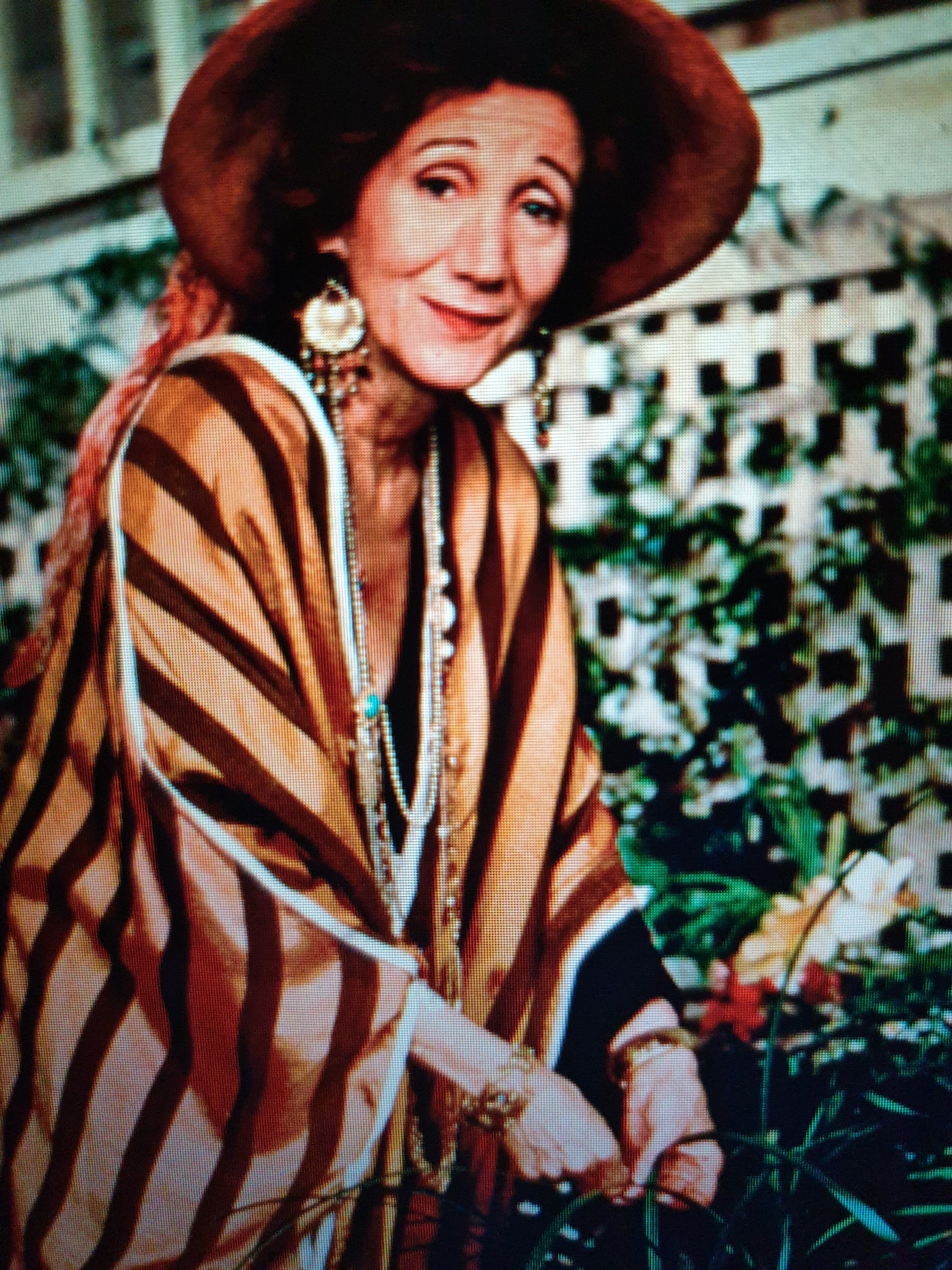
The stakes were high, therefore, when I first saw the Channel 4 TV series. Could any actress possibly play this woman? I was surely destined to be disappointed.

I needn’t have worried. The glorious Olympia Dukakis, due to be awarded with her Hollywood Walk of Fame star as I write this, was born to play her.

With the ninth book of the series, The Days of Anna Madrigal, scheduled for release later this year, it seems a good time to ponder some of the most memorable statements from the great lady. Here goes:
 

1

Mrs Madrigal smiled. There was something a little careworn about her face, but she was really quite lovely, Mary Ann decided. ‘Do you have any objection to pets?’ asked the new tenant.

‘Dear……I have no objection to anything’.


2

‘Help yourself to a joint, dear, and don’t bother to pass it around. I loathe that soggy communal business. I mean, if you’re going to be degenerate, you might as well be a lady about it, don’t you think?’

3

Mine’s (her favourite year) 1987,’ said Mrs Madrigal. ‘I’ll be sixty-five or so….I can collect social security and stash away enough cash to buy a small Greek island.’ She twirled a lock of hair around her forefinger and smiled faintly. ‘Actually, I’d settle for a small Greek.’

4

He felt a surge of recklessness. ‘What would you say?’

‘About what?’

‘The end. Your last words. If you could choose.’

The woman studied his face for a moment. Then she said: ‘ How about…”Oh, shit!”‘

5

‘Some people drink to forget,’ said Mrs Madrigal, basking in the sun of her courtyard. ‘Personally, I smoke to remember.’

6

‘How can Anna Madrigal be an anagram for Andy Ramsey?’

‘It’s not.’

‘But you said….’

‘I said it was an anagram. I didn’t say what for.’

‘Then what is it?’

‘My dear boy,’ said the landlady, lighting a joint at last, ‘you are talking to a Woman of Mystery!’

7

‘Oh Mona, we’re all damned fools! Some of us just have more fun with it than others. Loosen up, dear! Don’t be so afraid to cry…or laugh, for that matter. Laugh all you want and cry all you want and whistle at pretty men in the street and to hell with anybody who thinks you’re a damned fool!’ She lifted the wineglass in a toast to the younger woman. ‘I love you dear. And that makes you free to do anything.’

8

‘I can’t trust you.’

‘Yes, you can. I was a weasel of a man, but I’m one helluva nice woman.’

9

‘Girl? gasped Mona.’ ‘You’re a woman!’

Mrs Madrigal shook her head. ‘You’re a woman, dear. I’m a girl. And proud of it.’

Mona smiled. ‘My own goddamn father…a sexist!

‘My darling daughter,’ said Mrs Madrigal, ‘transsexuals can never  be sexists!’

‘Then…you’re a transsexist!’

The landlady leaned over and kissed Mona on the cheek. ‘Forgive me, won’t you? I’m terribly old-fashioned.’

10

She was sixty now, for heaven’s sake……Sixty. Up close, the number was not nearly so foreboding as it had once been afar. It had a kind of plump symmetry to it in fact, like a ripe Gouda or a comfy old hassock.

She chuckled at her own similes. Is that what she had come to? An old cheese? A piece of furniture?

She didn’t care, really. She was Anna Madrigal, a self-made woman, and there was no one else in the world exactly like her.

11

She tugged his earlobe affectionately. ‘I want what’s best for my children.’

A long pause, and then: ‘I didn’t know I was still part of the family.’

The landlady chuckled. ‘Listen, dear…when you get this old lady, you get her for life.’

12

The landlady knelt and plucked a weed from the garden. ‘ Sounds to me like you’re matchmaking. I thought that was my job around here.’

Mary Ann giggled. ‘If I find anybody good for him, I’ll make sure you approve first.’

‘You do that,’ said Mrs Madrigal.

13

Mrs Madrigal took it all in stride, but drew a deep breath when Mary Ann had finished.

‘Well, I must say….you’ve outdone yourself this time.’

Mary Ann ducked her eyes. ‘Do you think I was wrong?’

‘You know better than that.’

‘What?’

‘I don’t do absolutions, dear.’ She reached for Mary Ann’s hand and squeezed it. ‘But I’m glad you told me.’

14

‘Hey,’ he blurted, ‘you should grow your fingernails long.’

Now on her hands and knees, Mrs Madrigal looked up at him. ‘Why is that, dear?’

‘You know, like those housewives in Humboldt County. Works much better than tweezers, they say.’

She handled this clumsy inanity with her usual grace.

‘Ah yes, I see what you mean.’ Falling silent again, she searched until she found the tweezers, then stood up and brushed her hands on her skirt. ‘I tried that once….growing my nails long.’ She caught her breath and shook her head. ‘I wasn’t man enough for it.’

The last time we saw Anna was at the end of Mary Ann in Autumn – a frail old lady who cannot trust herself to pour a cup of coffee, a stroke survivor who puffs (admittedly “demurely”) on nothing more risqué than a vaporizer. But she still plays girlishly with her wayward hair and wears garish kimonos, and  is able to dispense sage advice to her “family”.

I almost hesitate to open that next book when it arrives.

Read Full Post »

Ask any visitor to San Francisco what was the most distinctive local foodstuff they tasted during their stay and they are likely to reply “sourdough bread”.  They may not have liked it because it is an acquired taste, but they will  certainly have tried it, if only in the form of a bowl containing clam chowder or, for the more adventurous, the Bread Bowl Scrambler of eggs, bacon, cheddar, onions and bell peppers.

Isidore Boudin (pronounced “boo-Deen), member of a French immigrant family of master bakers from Burgundy, founded the bakery, making the “Original San Francisco Sourdough Bread” in 1849 at the height of the Gold Rush.  It remains one of the oldest businesses in the city and still bears his name, despite having been, for much of the last 70 years, in the ownership of the Giraudo family.

P1000391

The original bakery, a tiny olde world affair, stood at 319 Dupont Street (now Grant Avenuein what was a raucous North Beach district during the Gold Rush.  Its unique flavour comes from a wild yeast that is found only in  San Francisco’s foggy climate, making it a truly local product.  Indeed, in 1970, a Federal study isolated a previously unidentified microorganism named “Lactobacillus Sanfrancisco”, proving, as Jay Hansen claimed in his book, The Other Guide to San Francisco, that “you can take the sourdough out of San Francisco, but you can’t take the San Francisco out of the sourdough”. This would account for the fact that, although sourdough is becoming increasingly accessible in Farmer’s Markets in the UK, it tastes nothing like the “real thing”.

Boudin perfected his recipe by combining his family’s traditional French baking methods with the “sour” or tangy dough taste beloved of the gold miners, to produce, in the company’s words, the “signature dark-gold, crunchy crust, soft chewy center and distinctive flavor”.

His secret lay in using the “mother dough” as a natural starter and allowing the bread to rise and “sour” at its own speed.  Even when caked yeast became the industry norm, he continued to use his slow method of leavening the bread with the mother dough.

When he died in 1887, his wife of 14 years, Louise, with the support of their four children, especially daughter Lucie, ran the business successfully for 23 years, moving twice, in 1890 to 815 Broadway and then in 1906 to its present 10th Avenue and Geary Boulevard location in the Inner Richmond district.

Louise’s greatest triumph was in rescuing the mother dough during the 1906 Earthquake and Fire by mobilising the family to carry it in buckets of ice to Golden Gate Park where they baked bread over open fires.  This ensured that they always kept a portion of the mother dough to mix for the next day’s bread. A formidable woman, she earned the title of the “social leader of the French colony”.e starter-yeast-bacteria culture that Isidore developed back in the 1840s.  At the start of the mixing process, a piece of the mother dough is combined with flour, water and salt, divided into batches and shaped into loaves, which are refrigerated for 24 hours.  The loaves are placed in a proof – or steam – box to rise.  They are then scored, or slit, and baked in a 400 degree oven.

Despite the advent of mechanisation and modern baking methods, the company has steadfastly refused to use fats, sugars, preservatives, or dough conditioners, insisting that only natural ingredients be used.

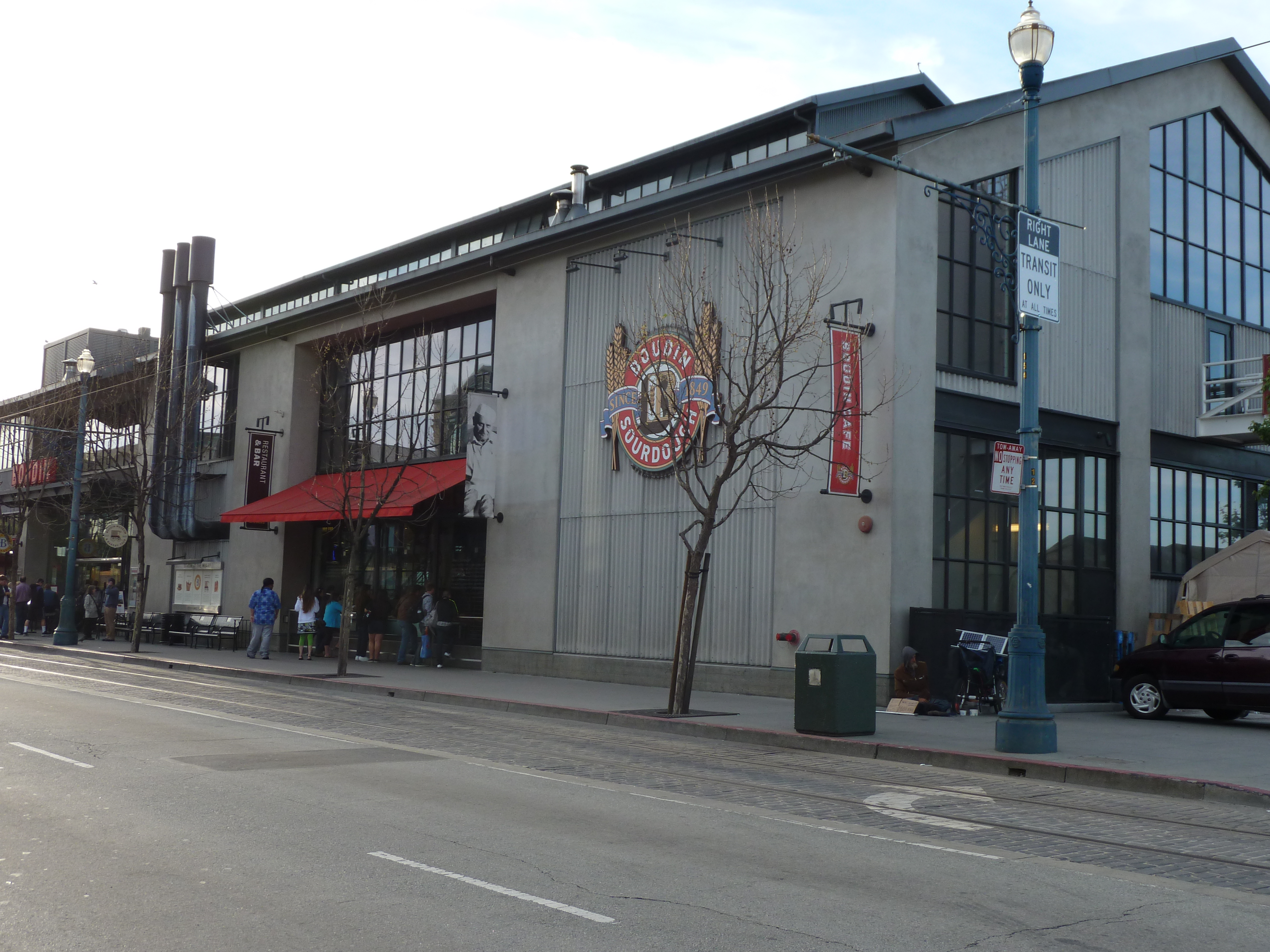
Recent visitors will be familiar with the half  block long flagship store on Jefferson Street on Fisherman’s Wharf  which opened in 2005.  Within its  26,000 square feet of space are an espresso bar, bistro, full service restaurant and private dining room, Bakers Hall market, museum and 5,000 foot demonstration bakery where the dough is mixed on a platform 20 feet above the ground floor, then tossed to the bakers below.   Passers-by are able to watch this spectacle through the 30 foot observation window fronting the bakery or, more excitingly, from a catwalk suspended directly over the bakery. Nearly 3,000 loaves are produced daily for sale in the adjoining café and shop.

P1000390

The museum upstairs chronicles the history of sourdough bread on a 28 foot timelinefocusing on the history of San Francisco through the eyes of bakers. Numerous artefacts associated with the baking process are also on display, including an antique baking wagon used to deliver bread, a replica of Louise’s desk and a carving of the founder himself.

In total, around 20,000 loaves are sold every day in the San Francisco area.  In addition to the 20 different flavours used, loaves are sculpted into numerous exotic shapes on request, including crabs, turtles, alligators, turkeys, pumpkins, shamrocks, snowmen and cable cars.  Boudin now has around 30 other bakeries in California, including one at  at Disney’s California Adventure Park which includes the hour long attraction The Bakery Tour.

I intimated at the beginning of this piece that the “Original San Francisco Sourdough Bread” is an acquired taste.  In 1990 city residents voted Boudin their favourite San Francisco bread.  Herb Caen claimed in the San Francisco Chronicle that “Fresh cracked crab with Boudin’s round “dark bake” sourdough and a well-chilled bottle of California Chardonnay is still the quintessential S.F. meal”.

Well, I’d like to raise a glass to that and say both “Merci” and “Santé” to Monsieur  Boudin!

Read Full Post »


Next time your cable car teeters tantalisingly on the intersection of Powell and California, hop off and take the short uphill hike to Nob Hill, so named for the grand edifices built and once occupied by the wealthy railroad barons and other nineteenth century entrepreneurs. It is still home to some of the most prime real estate in the city.

P1010954

Fairmont Hotel – survived the 1906 Earthquake and Fire and

hosted the signing of the UN Charter in 1945

P1010946

Lobby of the Fairmont Hotel 

P1010950

Majestic Grace Cathedral – home to two labyrinths, glorious

gilded bronze doors and fine stained glass windows

P1010970

California Street cable car – quieter than the Powell-Hyde and

Powell-Mason lines – but no less fun!

P1010942

The Bay Bridge complements the buildings that frame it

P1010962

One of the many fine murals in the Grace Cathedral

depicts the 1906 Earthquake and Fire

P1010956

Serene Huntington Park  watched over by

the Grace Cathedral

P1010969

Mark-Hopkins Inter-Continental Hotel – the glass-walled bar on its 19th 

 floor known as the “Top of the Mark” provides one of the great views of the city

Read Full Post »


Last year my wife and I rented an apartment in the San Francisco neighbourhood of Noe Valley, bordered to the north by the Castro and the Mission, and Bernal Heights and Twin Peaks to the east and west respectively. We only spent a week there, much of which was spent elsewhere in the city, but enjoyed the atmosphere so much that we are staying there for the whole of the month of June this year.

Here are a handful of the photos I took of the district. I hope to do much better this year!

P1010917

The view from our apartment on Dolores Street looking towards Bernal Heights

P1010901

It may be a valley but there are still plenty of hills! It’s still San Francisco!

P1010903

Oh to be able to afford something like this!

P1010937

Overlooked by Twin Peaks

P1020033

The faithful J Church MUNI Metro

P1020117 (2)

Leafy, civilised 24th Street for all your shopping needs

P1010916Another view from the apartment

P1010888

Classy, colourful (and expensive!) homes

P1020118

Eclectic 24th Street 

Read Full Post »


My home county of Kent has some of the finest castles and country houses in Britain. But my personal favourite is Scotney Castle near Lamberhurst on the Sussex border, a privately owned property for more than 600 years before it was bequeathed to the National Trust in 1970. The moated manor house’s ruins, with the small, lily-pad strewn lake caressing its walls, are the epitome of English romanticism.

I hope you agree.

OLYMPUS DIGITAL CAMERA

OLYMPUS DIGITAL CAMERA

OLYMPUS DIGITAL CAMERA

OLYMPUS DIGITAL CAMERA

OLYMPUS DIGITAL CAMERA

OLYMPUS DIGITAL CAMERA

Read Full Post »


Sometimes overshadowed by the more instant charms of the waterfront and Union Square, and by the seediness of the surrounding Civic Center area, City Hall is one of San Francisco’s most precious jewels.

OLYMPUS DIGITAL CAMERA

Its beautiful dome, resembling St. Peter’s in Rome, is the fifth largest in the world and is even forty feet higher than the U.S. Capitol in Washington D.C. Moreover, designed to withstand an earthquake, it is actually the world’s largest building  not touching the ground.

OLYMPUS DIGITAL CAMERA

P1000281

P1000278

P1010927

The interior is no less glorious with its central copper-domed rotunda and gleaming marble floors, and the offices must be some of the most palatial enjoyed by local politicians  anywhere.

P1010928

The above photograph illustrates its popularity as a wedding venue. On any working day, a continuous stream of couples tie the knot on the landing above its monumental staircase.

Whether you are a resident or a visitor, and you have not taken the opportunity before, walk inside and revel in its splendour.

Read Full Post »


Those “little cable cars” climbing “halfway to the stars” are one of the best loved and most iconic experiences for any visitor to San Francisco.  But few tourists hanging onto that lead rail as the Powell-Hyde car plunges down to the bay, or commuters perched atop Nob Hill on a California Street car about to sweep past the swanky hotels en route to the Financial District, will be aware that there was a time, shortly after the Second World War, when they became an endangered species.  Or even less so of the fact that they were saved for future generations through the foresight and resilience of a genteel, middle-aged lady from the eastern slopes of Telegraph Hill.

P1000416

The devastating earthquake and fire of 1906 destroyed much of the cable car system and triggered the rapid expansion in construction of electric streetcars with overhead wires, the first of which had been built in 1892.  And once it had been shown that the latest municipal buses, unlike the streetcars, could negotiate the steep hills, the continued viability of Andrew Hallidie’s invention was called into sharp focus.

By 1944 there were only five lines left in operation – the three independently owned by the California  Street Cable Railroad (Cal Cable) and the Powell-Mason and Washington-Jackson lines owned by the San Francisco Municipal Railway (Muni).

On 27th January 1947, in his annual message to the Board of Supervisors, Mayor Roger Lapham, a New York businessman who had been elected with a mandate to streamline the city’s finances, announced that the “city should get rid of its cable cars as soon as possible”, claiming that they were losing $200,000 a year.

Lapham’s vision of “super buses” replacing the cable cars met with little public favour, and the San Francisco Chronicle encapsulated the opposition’s argument in its editorial of 3rd February when it wrote that: “bus lines would be a good deal less expensive. But against this saving should be weighted………the market value of an institution which helps make the city stand out among cities of the world”.

Klussmann

But the strongest advocate for their retention came in the unlikely form of prominent socialite, Mrs Friedel Klussmann, who, outraged by this pronouncement, immediately began to mobilise opposition through the equally improbable auspices of the California Spring Blossom and Wildflowers Association and the San Francisco Federation of the Arts.

On 4th March, within sight of the Mayor’s office, she held a joint meeting attended by leaders of 27 women’s civic groups and formed a Citizen’s Committee to Save the Cable Cars, collecting more than 1,000 signatures in the first four hours of its campaign for an initiative charter amendment, a figure that was to rise to 50,000 by the end of the battle with City Hall. Despite the increasingly desperate arguments emanating from the Mayor’s office, the Board of Supervisors voted 7 to 4 to place Measure 10 on the November ballot.

Neither Mrs Klussmann nor her Committee were mere soft-hearted sentimentalists, and they put forth a robust rebuttal of the economic argument for closure in a detailed press release that spoke about the “$34,630,522 of new money” generated by tourism in the previous year, adding that San Francisco “is constantly striving to interest the rest of the world in its historical and colorful background, of which the cable cars are the No.1 attraction”.  The loss of the Powell and Market turnaround would be a blow to the city’s identity that “cannot be measured”.

P1000407

As Life Magazine put in in its 24th February edition: “It was as though Venice had proposed ridding itself of its gondolas”.  Visiting celebrities, including Elenor Roosevelt, publicly endorsed Mrs Klussmann’s campaign.  Newspapers were inundated with letters of support for the cable cars and accounts from passengers of their grim experiences waiting for and riding buses.

Measure 10 compelling the City to maintain and operate the existing cable car system was passed overwhelmingly by 166,989 votes to 51,457.  In her victory statement Mrs Klussmann said: “It is wonderful to know that San Franciscans appreciate their famous, efficient and safe cable cars”.  The Committee was galvanised again in 1950, 1951, 1954 and 1971 to fight further cost-cutting measures, with modest success.

OLYMPUS DIGITAL CAMERA

In the same year Mrs Klussmann also founded San Francisco Beautiful (www.sfbeautiful.org), the “only organisation in San Francisco whose sole purpose is to protect and enhance the city’s urban environment”, working to “improve the quality of daily life, strengthen communities and empower citizens to maintain the character of the city’s parks, neighbourhoods and streets”.  It continues to do excellent work today, not least through its Friedel Klussmann grants made to organisations that “seek to maintain or enhance San Francisco’s unique beauty and livability”.

When she died at the age of 90 in 1986 the cable cars were decorated in black in her memory.  On 4th March 1997, the fiftieth anniversary of the Committee’s initial meeting outside City Hall, the Friends of the Cable Car Museum dedicated a mural to Mrs Klussmann at the cable car barn.  The turntable at the outer terminal of the Powell-Hyde line was also dedicated to her.

So next time, dear visitor, when you skirt the ridge of Russian Hill on a clanking, rumbling Powell-Hyde cable car and catch your breath at the bay vista spread out before you, spare a thought for the prosperous, middle-aged lady, whose vision and courage sixty years ago ensured that you can have those unforgettable experiences today.

P1010990

I am particularly indebted to Walter Rice and Val Lupiz’s excellent article The Cable Car and the Mayor (www.cable-car-guy.com/html/cclm.html#top) for much of the detail provided above.

Read Full Post »


Stow Lake is frequented more by residents than tourists who are rather drawn to the heavily promoted, and undeniably impressive, adjacent attractions of the de Young Museum, California Academy of Sciences and Japanese Tea Garden. Yet it is only a few minutes walk away.

We stumbled upon it purely by accident on our second trip to the city fourteen years ago. Venturing west from those headliner venues, you quickly come across a pathway and 26 steps that lead to the south side of the lake. In the dense trees on the island opposite you soon encounter the charming Chinese Pavilion, a gift from the people of Taipei, shipped in 6,000 pieces and reassembled in 1981.

As you stroll along the path that encircles the lake you gain an immediate impression of both serenity and bustle. Young families, pushing strollers and trying to contain excited children, compete with joggers, dog walkers, cyclists and elderly immigrant couples reliving their first date 50 years ago for the narrow path. Ducks, gulls and other bird life glide along the placid surface, scanning for potential feeding stations wherever humans congregate by the water.

For now, pass the rustic stone bridge on your right and continue along the path  that leads to the boathouse (new photo) where you will be able to rent paddle boats, row boats – new, I believe, this year – bicycles, and in-line skates. Restrooms, picnic tables and a surprisingly well stocked snack bar greet you here also. Indeed, it has the distinction of being the first place in the U.S. where I tasted a vegetarian hot dog (whilst Janet ate ice cream!).

On a bright day you may be lucky enough to observe a row of turtles sunbathing on the rocks and logs alongside the boathouse.

For the more adventurous there is the short but relatively steep hike up to Strawberry Hill, the 430 foot high artificial island in the middle of the lake, which rewards you with fine, slightly tree obscured views across the western part of the city, and even as far as the Farallone Islands 26 miles out to sea.

You can either retrace your steps from the boathouse and access the island across the stone bridge (new photo), or you can approach it by crossing the second “Roman” bridge which appears shortly in the opposite direction. Be sure not to miss Huntington Falls which cascade down into the lake close to the Chinese Pavilion.

Encircling the entire lake and climbing Strawberry Hill amounts to around two and a half miles.

So if you want a few hours respite from the frenetic environs of Fisherman’s Wharf, Chinatown or Union Square, take a bus out to Golden Gate Park and visit Stow Lake, grab an ice cream and paddle gently for an hour in the civilising company of ducks and turtles.

Read Full Post »

« Newer Posts - Older Posts »