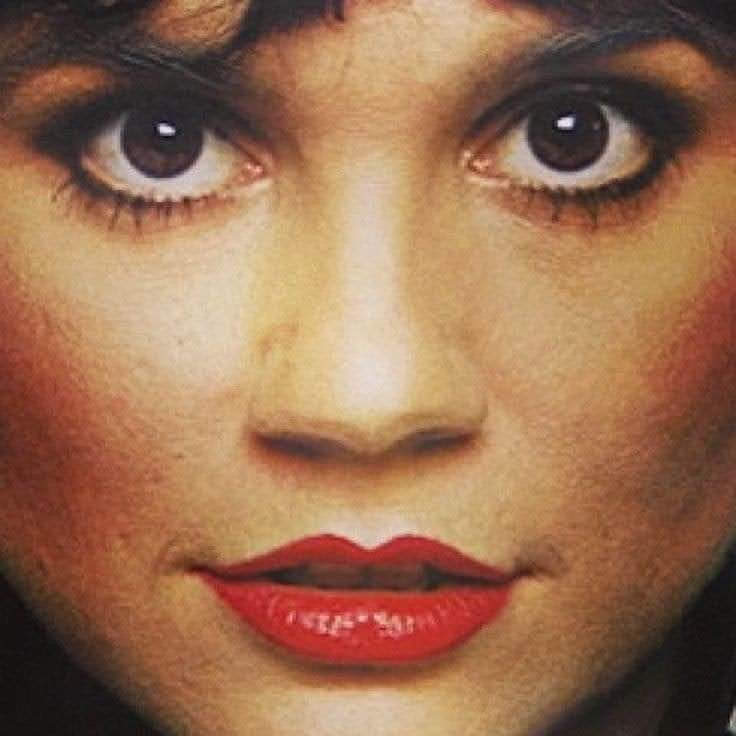
It was a raw September afternoon in York as Covid-19 restrictions began to ease. Scouting for a warm coffee shop my attention was drawn to a familiar face in the Shambles Market. And there she was, in the front of a jam packed cardboard box of vinyl records calling to me across the years, her impossibly big brown eyes pinning me momentarily to the spot.
But first, a short history lesson.
As a proud baby boomer born in the early fifties, my music buying activity began with “singles” (45rpm), followed in my late teens with “long playing” vinyl (33rpm) records. With the advances in technology over the next thirty years, I “progressed”, like many of my contemporaries, to cassette tapes, courtesy of the then revolutionary Sony Walkman, and then compact discs (CDs).
The bulk of my vinyl collection (did we refer to it as “vinyl” then?) was voraciously snaffled up by predatory dealers lurking at boot fairs on Sunday mornings. Selling a box full of classic sixties and seventies albums was as much a thrill for me (in retrospect, a short-sighted one) as it was to the wily buyer.
A single box, containing an eclectic range of rock, folk and classical titles, remained, consigned to a succession of lofts as we moved home three times. The only purchases I made for the next twenty years were CDs, and the turntable gathered dust before being discarded altogether.
I had succumbed to the prevailing mantra that CDs offered a cleaner, more precise and, therefore, satisfying, sound. Even the vinyl comeback in the early years of the new millennium failed to convince me to abandon this approach.
The reason was primarily a matter of cost. I was not in a position to pay £30 for a new 180g pressing of an album I had bought fifty years previously for thirty shillings (£1.50!). And then there was the outlay that would be required on a new turntable to consider.
But as vinyl collection became increasingly fashionable again, I found myself pawing through boxes in the growing number of independent record shops and market stalls, joining in the arcane and, to some tastes, boring, conversations among boomers like myself that accompanied the pursuit.
But the likelihood of my leaving with an LP under my arm remained a slim one.
Until our eyes met as dusk descended over the Shambles Market.
I think it’s time I revealed the identity of the person whose eyes so transfixed me and drove me to a fateful decision.
None other than Linda Ronstadt, not only the most beautiful, but also the most versatile (country rock, Hispanic ballads, American standards, opera, the list goes on) singer of her generation. I was unable to resist buying her eponymous album (readers lacking a soul might suggest that I would have been better just cutting up the outer sleeve and framing it).
It still took a lengthy sermon from the guy manning the stall in the market to cement my conversion. Jackson Browne’s For Everyman and Van Morrison’s Hard Nose the Highway , each at an affordable price, sealed the deal. Within a week I had introduced them to a new, attractive yet moderately priced turntable.
And then the fun started……with a twist.
Cost continued to be a major factor in my purchasing strategy. But there was an even more important criterion – I would not, with occasional exceptions, buy an album that post dated the time I had previously stopped collecting vinyl.
To date, I have bought a little over a hundred albums in the four years since my Yorkshire epiphany, some “new” but the majority second hand from independent stores, fairs and market stalls, online retailers and charity shops, ranging in price from £1.99 to £35, most in the lower price range. I have rejected others if they looked as if they were damaged. Very few have disappointed.
I have striven to resist becoming a vinyl bore but there is no question in my mind that it has a warmth and spirit that is largely absent from the more clinical, “perfect” alternatives. Some surface noise only adds to the enhanced atmosphere.
And I have overcome my propensity to whinge whenever I have to get up every twenty minutes to turn the disc over!
It was midday and the stores on Haight Street were drowsily coming to life under a warming sun. A gaggle of skateboarders, ageing “heads”, dogs and guitars waited at the lights at Stanyan to cross over to Hippie Hill for an afternoon of music, marijuana and merriment.
We had just enjoyed a sumptuous lunch of chicken pesto, Greek chicken wraps and hummus plate at the Blue Front Café, (sadly, one of the many eateries that has subsequently closed), and were entering a brightly coloured establishment which had historically divested us of our holiday dollars more than any other over the previous two decades.
As we planted ourselves in the rear of the store to look for any new tie-dye shirts from Liquid Blue, the silence was broken by a chirpy Californian female voice.
“Hey, you guys, let me explain the layout in here for you. At this end you will find the Grateful Dead t-shirts, organised by size, while over here are my own designs…….”
It was clear that the woman was going to continue with this well-rehearsed speech for some time, and, of course, she was only trying to be helpful. But I have an aversion to being what I perceive as “stalked” in stores by staff when all I want to do is look for myself and ask questions if I have a need.
So, I interrupted her rather abruptly – for which I have since apologised on many occasions – explaining that for nearly twenty years we had been rummaging through her colourful stock, and left laden with t-shirts, dresses, badges, stickers and other paraphernalia.
Rather than being deterred by my rude riposte, she squealed at the news, thanking us for our custom (not service – that is generally reserved for the military) and asking us where we were from, a perfectly reasonable icebreaker if one were really needed. I explained that we were from England, that I had revered the Dead since the late sixties and had visited the store many times before. This triggered a discussion about our mutual love for the music and the city.
I mentioned that we were heading for the Great American Music Hall that evening to see Dark Star Orchestra, the band formed in Chicago that had been replicating entire Dead shows since 1997. Alicia, as she was called, was thrilled to hear and said “we’re going too, do you wanna hang out?” By “we” she had included her partner, Jerry (no, not that one) who was, at the time, the long term owner of the store.
Despite the presumption (at least to British ears) in the question we instantly accepted the offer, and as we left with Casey Jones and Alice in Wonderland tees, arranged to meet in the line outside the venue at 6pm.
Disembarking the 47 Muni, rather uncharitably dubbed by my wife the “stinky bus”, at Van Ness and O’Farrell, we strode excitedly along the two blocks to join a mercifully short line at the venue. Dead concerts past were recalled as the air reeked of pot and a lone, long haired man patrolled the street with a barely legible, but at least grammatically correct, “I need a miracle” message scrawled on a scrap of cardboard with a Sharpie.
Alicia and Jerry joined us ten minutes later and we made our way to the upper floor where we had booked tables, allowing a prime position leaning on the railing that overlooked the stage below. We could not have had a better view as we christened our new tie-dye outfits. The ticket price had included a meal from a limited menu. With Californian and English choices on offer, we all opted for the latter – fish and chips (the American version of several small fish pieces rather than the single, larger British version).
This was the second time we had seen Dark Star Orchestra, the first having been at the House of Blues in Las Vegas on the eve of my sixtieth birthday two years earlier, when they had played a show from the early nineties which my wife had struggled to embrace, leading her to abandon the show midway through the second set halfway through a characteristically lengthy Eyes of the World jam in favour of the penny slot machines on the Mandalay Bay casino floor.
She had still not, at this stage, been fully converted to the Dead’s music, despite the fact that I had tried for thirty years to convince her of their greatness. She did, however, enjoy many of the earlier, shorter songs like Sugar Magnolia, Uncle John’s Band, Box of Rain and her favourite, Bertha.
I had been hoping that, being in San Francisco, they might play a Fillmore (West) concert on this evening, perhaps even from the run featured on the Live Dead album from 1969. And that, with some minor adaptations, is exactly what we got. I was beside myself, and my wife was happy too.
Mid way through the first set they announced that they were being joined by a special guest – Grateful Dead rhythm guitarist Bob Weir! He jammed with the band on St. Stephen and sang one of his signature cowboy songs, Me and My Uncle. The following year Bob similarly “gate crashed” Steve Earle’s set at Hardly Strictly Bluegrass in 2016. And more than a decade later, during which he had headlined Dead and Company, Wolf Brothers and countless other musical projects, and at the age of seventy eight, he shows little sign of putting himself out to pasture.
Sam Cutler, former manager of both the Dead and the Rolling Stones, spoke to the audience between sets when, naturally, I bought a t-shirt from the merchandise table, an item of clothing I reprised to lead guitarist Jeff Matson’s delight at the band’s concert at Shepherd’s Bush Empire in London in September 2022.
The concert continued past midnight. It had been a special evening, we had bonded with Alicia and Jerry, forging a friendship that continued to flourish and which led to us staying at their home with them in Petaluma on a number of occasions, attending concerts, Giants and 49ers games and meals together as well as them (separately) visiting the UK and all of us, including their two children, Aiden (Alicia’s by a previous marriage) and Ely (their own son) meeting up subsequently in Chicago.
As the Covid-19 pandemic caused a hiatus in our physical connection, we met up on Zoom on a weekly basis as they prepared to go for a morning cycle and we cooked our Sunday dinner! We even danced to favourite Dead songs when the conversation, as it did rarely, lagged.
The story of our relationship has subsequently taken several dramatic and unexpected turns, which I will address on another occasion.
I was recently asked by a local magazine a series of questions about my poetry, its provenance and future plans. This is a transcript of the “interview”.
Can you remember your earliest interaction with poetry?
I suppose, like most children, nursery rhymes would have been the first poems that I engaged with. And then, as I progressed through primary and grammar school, I was exposed to Shakespeare, Wordsworth and the “classic” English poets.
When did you realise that you not only had the talent and skill to be a successful poet but that you wanted to pursue a career in poetry?
That is making a big assumption! But, like most adolescent boys, I wrote soppy “love” poetry that, fortunately, has not survived!
To readers who may not have heard you before, how would you describe your poetry?
I subscribe to Leonardo da Vinci’s claim that “simplicty is the greatest sophistication”, so don’t try to over cook the imagery or make the poems too wordy and obscure. I still, on occasions, like to use rhyme and traditional metre, whereas so much of modern poetry is now free verse (which I also do). If there is one goal I try to obtain in an individual poem, it is the creation of a mood, at atmosphere – show not tell I suppose.
If you could pick the three most memorable moments in your career, what would they be and why?
I did write a three volume “novel” at the age of seven based upon the Tommy Steele song, “Little White Bull”. I am equally proud of the book on Kent cricket I co-wrote ten years ago which was very well received. But, aside from the adolescent stuff, it is only really since I retired from work and moved to Folkestone that I was inspired to write poetry regularly. There was a significant increase in my output during the first Covid-19 lockdown when I was producing a poem a day for several months. Some of those verses feature in my collection, Tickled by the Turning Tide: The Folkestone Poems, which was published only a week ago on 7th April.
You are both stranded on a desert island and can only take one book with you, what book are you choosing and why?
As with the radio programme, I am assuming that I can take a complete works of Shakespeare as well? That is an almost impossible question to answer, and my view might change, dependent upon my mood on a particular day. But I will say – today – Ulysses by James Joyce for its radical approach to the novel but especially its humour and evocation of a place (as my Folkestone poetry testifies, it is a sense of place that often appeals to me).
What do you enjoy most about living in Folkestone and do you have any particular favourite go-to spots in the town?
How long is this piece meant to be?! Being by the sea, with all its benefits, has to be the most important factor, though Folkestone’s creative vibe has helped inspire my own work. And then there is the dining scene – one of my poems is entitled I Sit in Coffee Shops, and that pretty much sums up my everyday life! I could recommend so many places, but Marley’s, Django’s, Folklore (where I had my recent book launch) and Steep Street Coffee House are probably my top four, though there are several others that meet different needs at different times.
Has living in Folkestone and being by to the sea helped inspire any of your poems?
Clearly!
Given the past 36 months and the evolving digital world, what are your thoughts on the current status of poetry, will it still have a future in say 40, 50 years’ time and will it need to adapt to survive?
Judging by the growing attendances at the local Poets’ Corner, Folkestone group, the town’s poetry scene seems to be thriving. Whilst I found that Covid gave my poetry a significant boost, providing me with a mechanism by which I could come to terms with what was happening, I know that others were completely floored and could, or wanted, not to write anything. I believe we have now moved out of that depression and many, maybe even more, people are writing again. Poetry has been with us for thousands of years, and I expect it to continue to have a role in attempting to make sense of the world and articulating it in a thought-provoking and – important for these days – manageable way.
Do you have any upcoming books that readers should look out for?
I have already mentioned the Folkestone poetry book, which is available online through all the major retailers and also being sold on my behalf in a several outlets throughout the town. The best way at present to get your hands on a copy – and a signed one at that – is direct from me by messaging me on my Facebook pages or email at tonyquarrington@msn.com.
Do you have a future vision of what you would like to achieve over the next 5-10 years?
Absolutely – I have several projects on the go. For the past twelve years I have been putting together a book about my love for San Francisco, and with the immediate Folkestone project completed now, I can return to that. Since I moved to the town I have been keen to produce a modern tourist guide, based upon my walking tours that I have been delivering for the past six years. And with an Italian holiday on the horizon, I am hoping to write a travel diary, hopefully in poetic form. And possibly a second volume of poetry!
Following the unexpected boost provided by the popular final tour of the preceding year, and the business award from Folkestone Town Council, 2020 always promised to be an exciting year. And within days of the commencement of the New Year, the season’s prospects looked even brighter. An approach from the leader of the Sandgate Parish Council resulted in an agreement to deliver ten walking tours of the village, linked to the dates of the Farmer’s Markets in Chichester Hall on the first and third Saturday of each month from May to September.
And, for the first time, I was given funding to research and design the programme, and to compensate for any slow take up in interest.
In addition, the Folkestone Channel Rotary Club asked me to deliver a day long tour and introductory presentation to their members, including colleagues from Belgium and the Netherlands, as part of their fortieth anniversary celebrations. A date had also been agreed with the Friends of Folkestone Museum to conduct a talk, followed by a walk around the Creative Quarter.
Finally, there was the added enticement of the fifth Folkestone Triennial, scheduled from 5 September to 8 November, during which I had undertaken to provide a series of artworks tours to complement the official programme.
But within three weeks of the launch event, all had “changed, changed utterly” in the prophetic words of W.B. Yeats a hundred years before.
And yet 2020 still became the most successful season in the four year life of Folkestone Walking Tours.
How could that have been?
As March begat April, which turned into May and then June, all the major events in town, including the Triennial, were postponed or cancelled. The only walking I was permitted to do fell into the category of daily “exercise”. I began to joke to anyone who would listen that, if and when lockdown restrictions were lifted, I might find myself the “only gig in town”.
And so it proved.
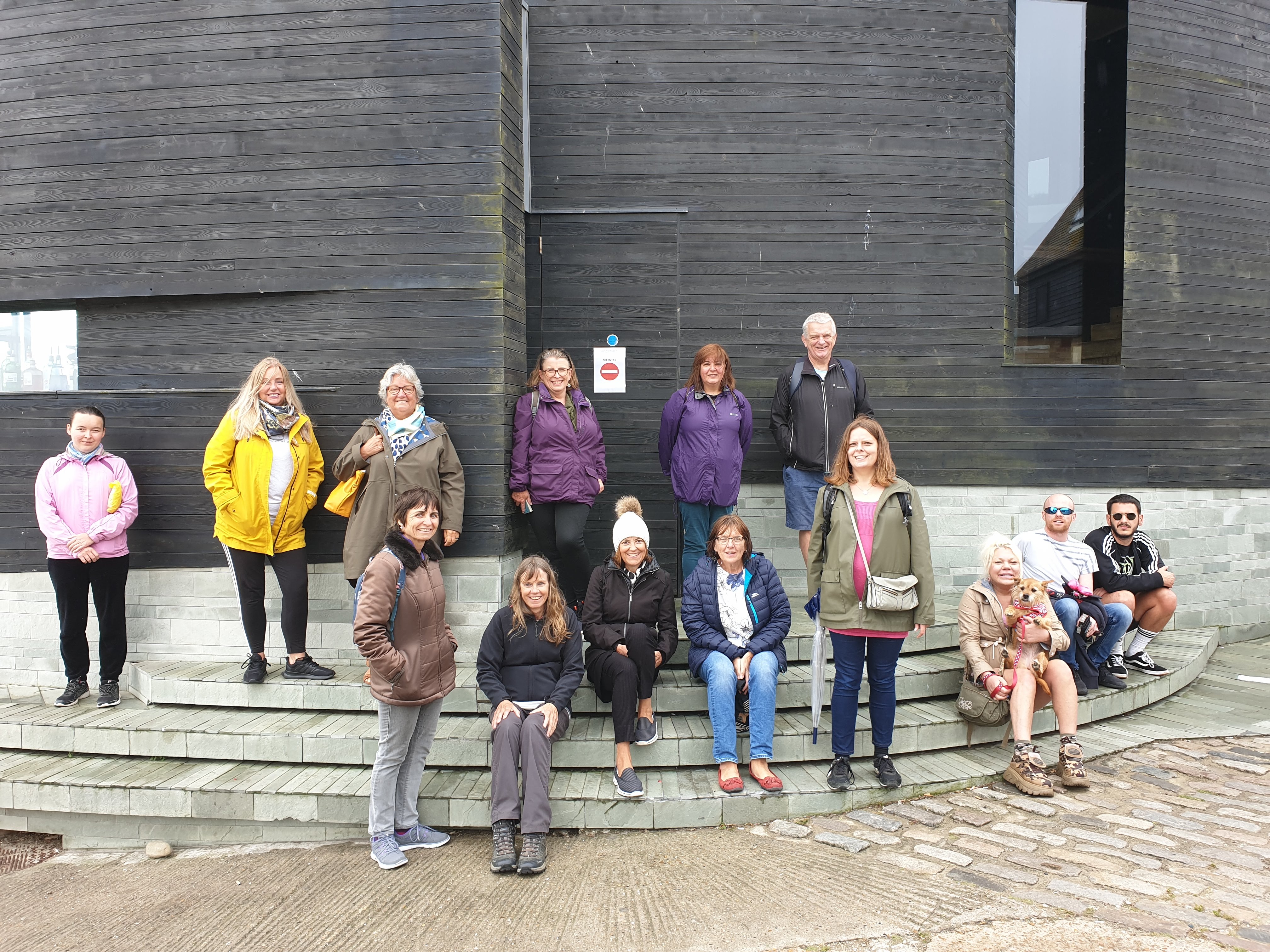
On a cool, wet morning on Saturday 4 July I was joined on the steps of Rocksalt by fourteen human guests and a dog for a three hour stroll around the harbour and seafront. Despite persistent drizzle and intermittent dives for cover to avoid the seagulls seduced into joining the group by one of our number with large handfuls of food, it had been a enjoyable and liberating event. My prior concerns about the legality of the size of the group, and the potential inability to maintain the appropriate distance between each other, proved unfounded too as the police in evidence allowed us to move around unchallenged.
The Sandgate tours got underway two weeks later, and I was eventually able to deliver the entire programme, with a further tour thrown in for good measure.
But a remarkable thing happened to confirm my earlier prediction.
As society reopened, and many felt comfortable in leaving their homes again, I began to receive requests for tours from leaders of groups such as the U3A (University of the Third Age) and other “Meetup” parties. Starved of their customary range of activities, they were determined to enjoy the great outdoors again. With so little else on offer, walking tours became an even more attractive proposition than they might otherwise have been.
I even found time to offer “new” literary and artworks walks – and a special birthday tour for the family of the former Prima Pottery shop owners on the Old High Street.
With holidays cancelled, there needed to be no end date to the season, other than if further restrictions were imposed, which duly returned in November. But in the intervening period, I was able to deliver twenty six tours for a total of two hundred guests. That figure would have been even greater had the “rule of six” not been in force during part of the period, which left a number of prospective guests disappointed.
In the space of eight months, 2020 had promised much, threatened to disappoint but ultimately delivered in unexpected but satisfying ways.



 Tony Quarrington