Feeds:
Posts
Comments

Posts Tagged ‘Step Short Arch’


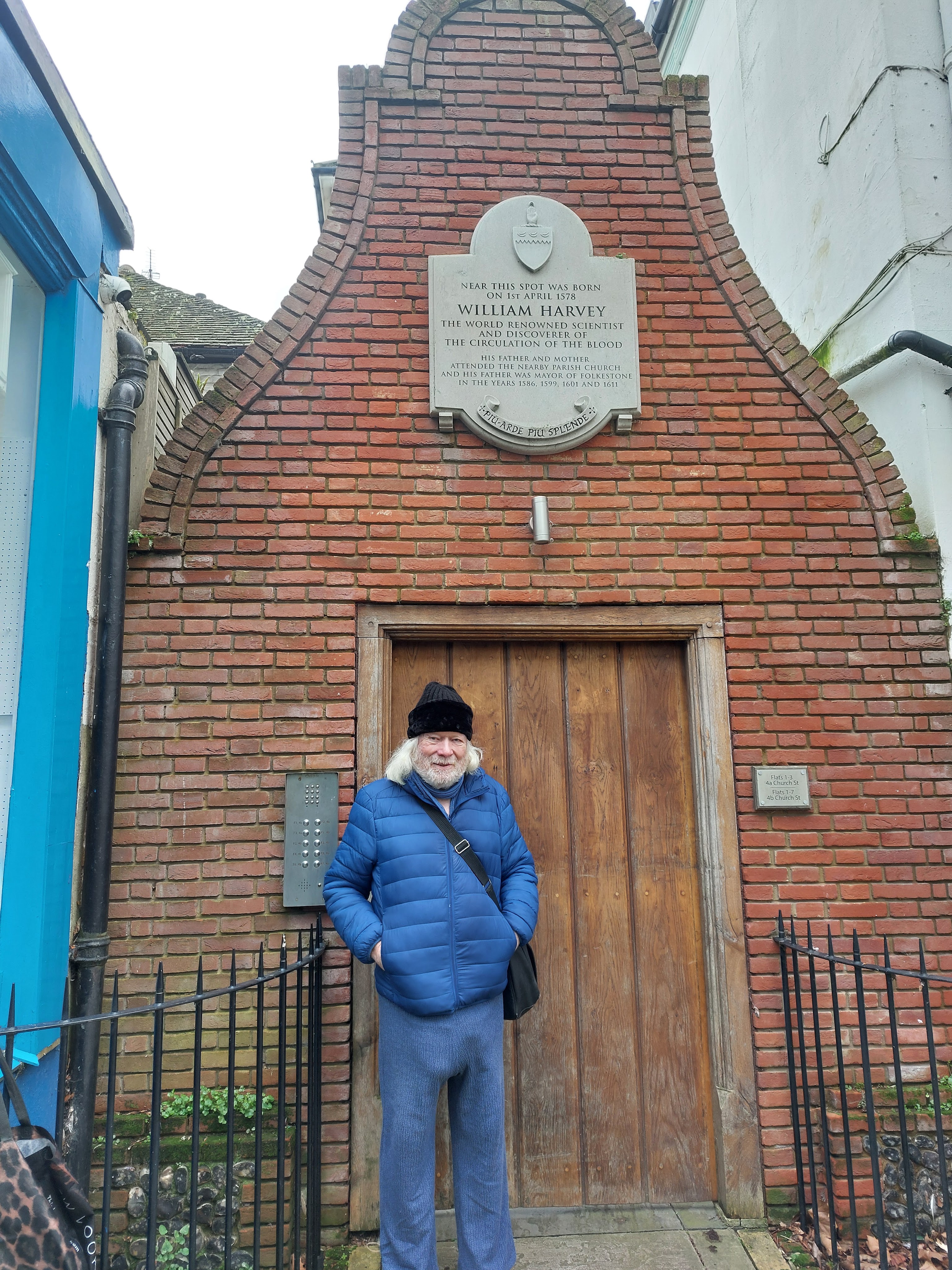
One of the most familiar figures in Folkestone town centre, with a shock of white hair sprouting out of his hat, and a bag of papers on his arm, is an octogenarian Irishman who reluctantly moved here in 1963 and never left.

The first time I met this man was shortly after I moved to the town in late 2016. I had decided to offer walking tours and was anxious to consult as many people as possible, not only to assess the interest in the project but also to tap into the experience of those who had previously done this.

The name that kept coming up as the best person to speak to was Eamonn Rooney, whom I was already aware of through buying some of his books on the history of the town.

But there was one snag – he was not the easiest person to track down as he was not on social media. But I managed to find him in his favourite coffee shop where he went every morning. He was sat in a corner of the restaurant with mug, pen, paper and books spread across the table.

And now, almost a decade later, I sat down with him again, in that very same cafe, on the eve of his 82nd birthday, to chat with him about his long association with Folkestone.

Born in Newry in 1944, spanning the counties of Armagh and Down, Eamonn was an average but lazy student. It was the influence of Mr O’Neill, his English teacher, and Mr McCourt, his Art teacher, that encouraged him to take his studies more seriously, though he was later told he “would never amount to anything” by the nuns who ran the school he attended in Belfast.

It was his parents who brought the name of Folkestone to his attention. So, in the spring of 1963, he took a trip, only intending to stay for a short while.

On arriving at Folkestone Central he was struck by the flower displays on roundabouts (after all, it was “Floral Folkestone”). He was impressed with The Leas (a “pleasant surprise”) and Kingsnorth Gardens (still a “hidden gem”).

His first encounter with a Folkestone “celebrity” occurred in the photocopy shop opposite Grace Hill Library. He started talking to American actress, singer (she starred in the long-running rock musical “Hair”), and mother of Mick Jagger’s son, Karis, Marsha Hunt, who was sending a fax (remember those?) to the USA. She said that she would never be able to remember his name, so christened him the “History Man”, and thereafter referred to him as that whenever they met, usually at the supermarket or Metropole jazz club.

On the recommendation of his brother who had just been demobbed from Shorncliffe, he took a summer job, but it was as a bus conductor that he first established himself in the town, and for which he is still fondly remembered. His route for 8 years primarily covered Cheriton, Morehall and the bus station and, as a result, the rest of the town remained largely an unknown quantity for him.

Time to buy a street map!

He had been told that Folkestone was primarily a Victorian town, so had “written off” the Bayle and the Old High Street as places of interest. But one day he met the watermills and windmills expert, C.P.Davies, whom he regards reverentially to this day as the preeminent local historian, who told him that there was “a lot of history” in Folkestone with a (buried) Roman Villa, significant Anglo-Saxon heritage, not to mention an extensive military history.

That was the moment when the “History Man” discovered his holy grail, starting a decades long love affair with the Heritage Room on the first floor of the Grace Hill Library. Eamonn was devastated when Davies retired shortly afterwards.

He also fondly remembers Amanda Oates of Shepway District Council who was responsible for organising events at the Lower Leas park Amphitheatre. Since she left, the facility has been sadly neglected.

The history research was all well and good, but he still had to earn a living. After being rejected by several Park Farm factories he was offered a job at FWM Plastics, followed by Silver Spring and Portex, for whom he worked for 15 years. It was during this time there that his writing career began with articles in the company’s Blue Line magazine and then the Portex and Folkestone camera clubs. And in 1985 he founded the local history society with Charles Whitney (chair), Alan Taylor and Peter Bamford.

In the early nineties, he took a three day a week job at the much lamented Martello No.3 visitor centre with an evening security role in the Leas Cliff Hall, followed by a winter job at the seafront car park. Between 1989 and 1996 he not only performed the role of town greeter but also delivered tours on behalf of the New Folkestone Society.

But it was in 1995 that the role for which most people remember him presented itself. Shepway Council had a vacancy at the Leas Lift, a position for which Eamonn’s undoubted customer facing skills made him ideally suited. When the council relinquished the lift in 2009, he was approached by the Folkestone Estate to take responsibility through a management agreement (CIC). With Terry Begent agreeing to handle all the business affairs, they formed a “dream team” until the lift closed in 2017, and it is a matter of great sadness to Eamonn that it remains closed (though, we hope, not for much longer).

Eamonn has more stories from his time as a tour guide than I have space for. One I particularly like is when he showed an American party into the British Lion pub, and as they were leaving, was asked “hey, buddy, aren’t we going to have what you Brits call a swift half before we go”? After the obligatory few drinks, Eamonn began to thank the group for joining the tour when the same guest enquired “hey, aren’t you going to finish the tour?”. Which, of course, like any self-respecting guide, he did.  

Eamonn finds it remarkable that the young teenager who left Northern Ireland with no immediate prospects should meet an array of prominent individuals in his adopted town over the next sixty years. In addition to Marsha Hunt, these included Lord Radnor himself at his Wiltshire castle, Eastenders actress, Michelle Collins, whom he met at a BBC Wales interview, and Prince Harry at the opening of the Step Short Arch on the centenary of the outbreak if the Great War on 4th August 2014.

Eamonn has utilised his research to publish many books and pamphlets on Folkestone’s history, both on his own and in collaboration with others, notably Alan Taylor and Terry Begent. Asked which he was most proud of, he cited the history of the Belgian refugees at the outbreak of the Great War and the illustrations and text he provided for   

John Rice’s Folkestone: A Photographic Record.

And the next? Probably Stuart Folkestone.

Whatever it might be, I for one will be buying it.

Happy Birthday Eamonn, may you have any more!
Read Full Post »


Ever since I started my walking tours in 2017, I had wanted to combine my passion for  literature with Folkestone and Sandgate’s rich tradition of welcoming eminent writers by visiting the locations they lived in and frequented. The temporary respite in pandemic lockdown restrictions allowed me to scratch that itch in September 2020.

One of the prerequisites of a good tour is to be blessed with fine weather, and this was the case today. An added bonus was the fact that most of the guests already knew each other, which with their mutual love of literature, contributed to a relaxed and enthusiastic atmosphere.

The number of guests was restricted due to the prevalence of the “rule of six”, though we did stretch the definition to mean six guests plus the tour guide, a minor infraction at a time when the beach and coastal park were regularly inundated with large groups of visitors. 

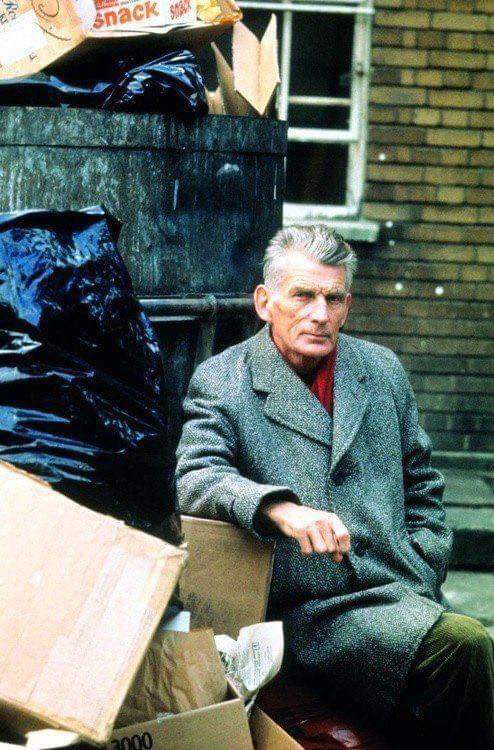
Meeting at the Step Short Arch on the eastern end of The Leas, pride of place for the first reading went to a Nobel Prize winner, Samuel Beckett. The Irish writer’s connection to Folkestone might not be well known to many residents, but in 1961 he had stayed at the Bristol Hotel, since demolished and replaced by No. 1 The Leas, as a condition of getting married to his long term lover, Suzanne Dechevaux-Dumesnil. 

I will spare the reader every precise detail of the itinerary, other than to report that we visited more than a dozen locations. These included The Bayle, Old High Street, Folkestone Harbour, Sunny Sands, Mermaid Beach, the Riviera and Radnor Cliff, returning to the Leas, with the final reading from Wilfred Owen at the Metropole. The recently opened Lift Cafe provided a welcome refreshment stop around half way through the tour.

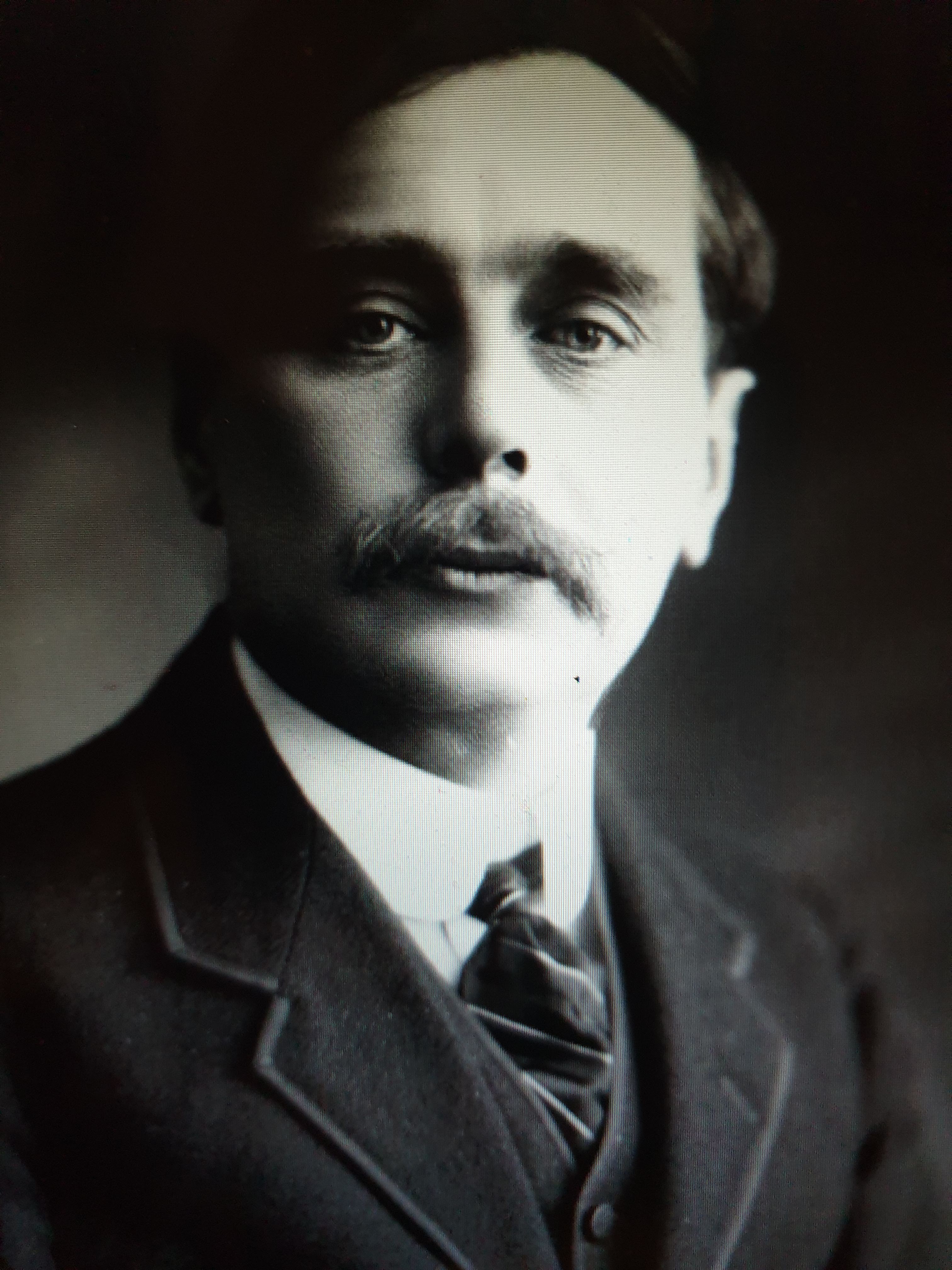
At each location I read an extract from a writer linked to it. In addition to Beckett, the following were represented – H.G. Wells, Charles Dickens, Wilfred Owen, Carol Ann Duffy, Thomas Ingoldsby, Jocelyn Brooke and Henry Williamson. I even slipped in a handful of my own Folkestone inspired poems, though I envisage that the inclusion of more noted authors on subsequent tours will mean a reduced role for my efforts. 

It was a huge success, lasting four hours (with the aforementioned pitstop), concluding with a drink outside Keppel’s. As an additional souvenir of the day, I provided everyone with a printed booklet, entitled A Sort of Confusing Brilliance (a quote from Kipps by H.G. Wells), containing all the readings and biographical information. 

A second tour was promptly planned for October, but it fell foul to awful weather, and any chance of an alternative date was scuppered by the subsequent lockdown. But, in 2021 it will become part of the standard package of tours.

Read Full Post »


The pace and commotion of modern life renders it all the more crucial that we grasp those increasingly infrequent opportunities to draw breath and rest awhile.

Where I would take issue with the Welsh poet, W.H. Davies, who asked what is this life if full of care / we have no time to stand and stare is that sitting works just as well.

And where better to do it than on a bench in the fresh air?

We are so accustomed to lounging on a sofa, whether it be at home, watching mindless television, or in a coffee shop, spending money we haven’t got and aggravating our caffeine levels. Why not do the same in the great outdoors?

One answer might be that the provision of facilities to do that is not always plentiful.

But we cannot claim that excuse in Folkestone.

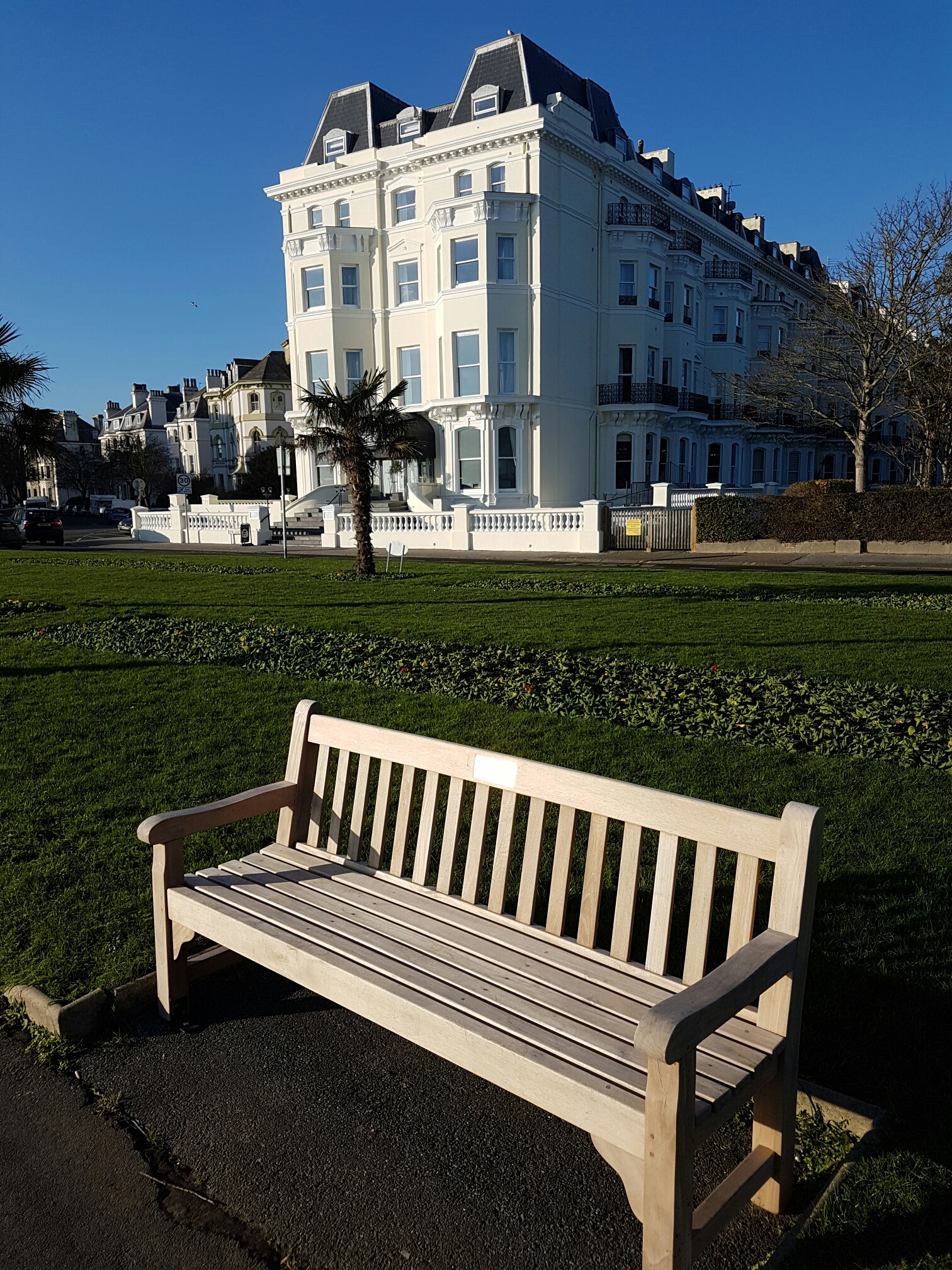
The town is blessed with more than its fair share, especially on the lovely Leas, once dubbed indisputably the finest marine promenade in the world,  where there are exactly one hundred wooden benches between the Step Short Arch and the Metropole Steps (seventy three alone between the Bandstand and the further of the large hotels (now apartments)). I would be surprised to learn if any other coastal resort had as many.

So, what has sitting on a bench ever done for us?

Let me count the ways.

OLYMPUS DIGITAL CAMERA

To “rest our legs”.

To pause and just breathe.

To think or meditate.

To be quiet and let time pass.

To eat lunch.

To read a book or newspaper (ok, or a tablet/phone).

wp-image-853740679jpg.jpg

To admire the view (and what a view!).

To watch the world go by.

To “people watch”.

To “sun bathe”.

To escape from conflict (at work or at home).

To grieve over disappointment or heartache.

To explore first love (within “reason” of course!).

Or a combination of any of the above.

And then there are less conventional reasons:

To drink or take drugs.

To “hide” with a lover.

To beg from passers by.

I am sure you can think of others (conventional or otherwise).

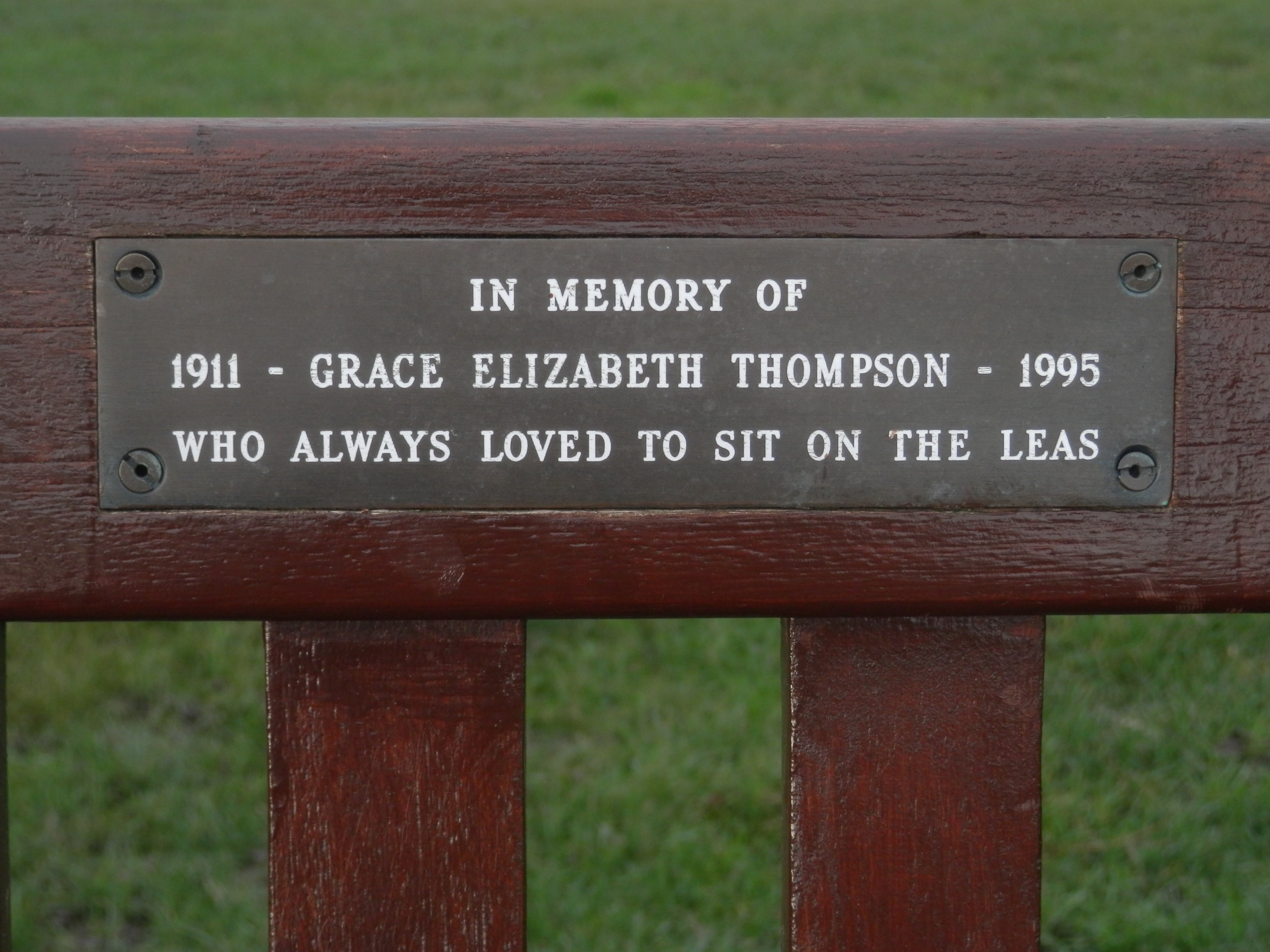
The value placed on the view afforded by benches is no better illustrated than on the plaques that grieving families have had affixed to commemorate the lives of loved ones who have passed away.

Arguably, these benches are a more life-affirming tribute than a concrete slab in a crematorium, though they have their place too, of course.

Benches are a visible and practical demonstration of a bygone age in a hectic world. Celebratory and consolatory in equal measure.

OLYMPUS DIGITAL CAMERA

And, as we have seen above, they can serve so many purposes that nothing else can quite deliver.

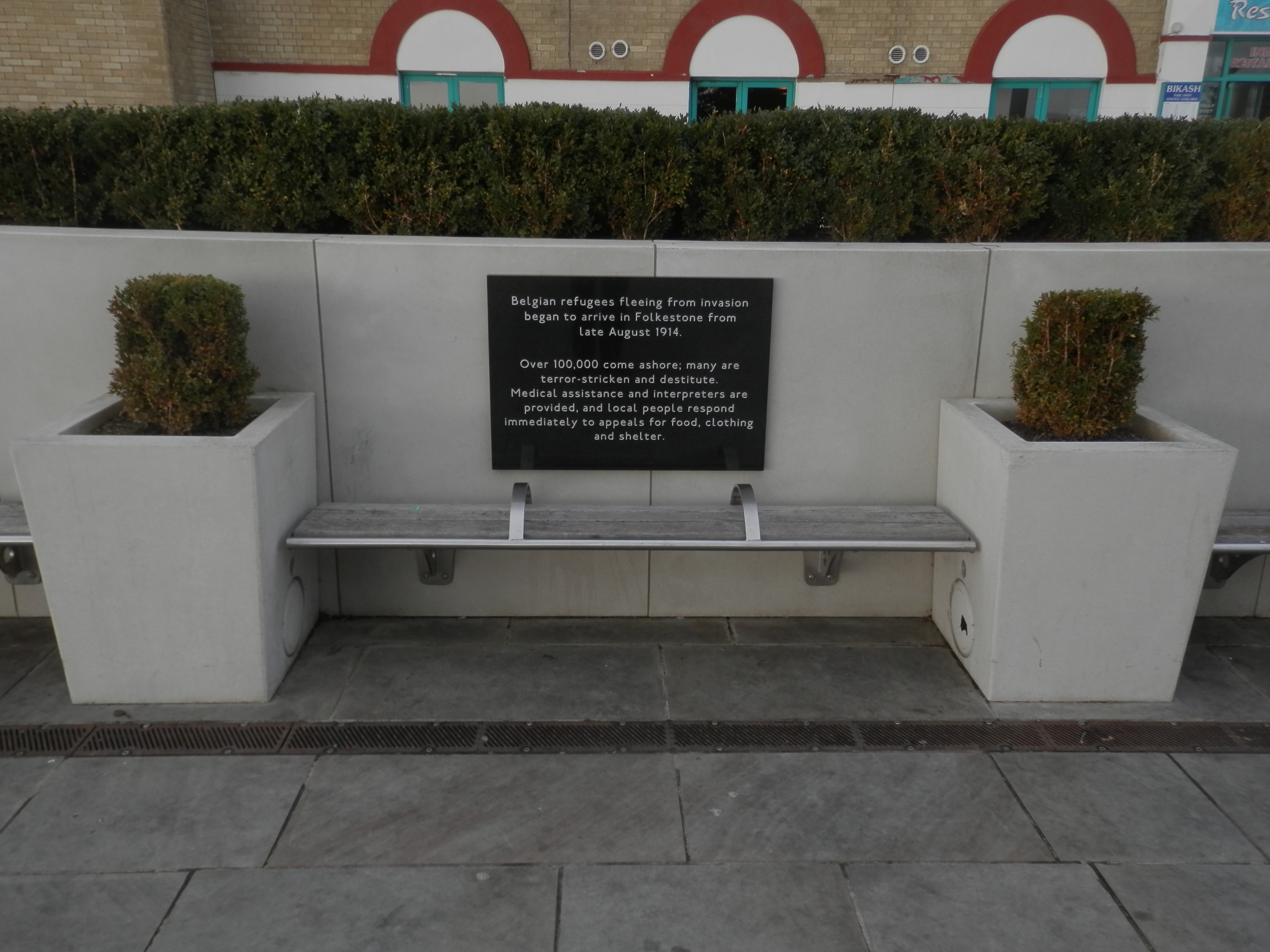
Whilst this post has focused on the wooden benches that festoon the Leas, especially at the West End, there are others at the eastern end that sit beneath the Step Short Arch and speak movingly of Folkestone’s critical role in war.

OLYMPUS DIGITAL CAMERA

I may not have picked the best weather (at least in Folkestone) in which to urge readers who live within reasonable travelling distance of The Leas to rush outside and “take a pew” in the outdoors.

But wherever you may be, try to take whatever opportunity you can to “sit and stare”. Aside from improving your mental wellbeing, you might just finish that book.

Or at least your lunch.

Read Full Post »


I am proposing to run twice, possibly thrice, weekly walking tours of Folkestone next summer (May to September 2017).

There are many practical considerations, including health and safety, marketing and potential licensing, that need to be addressed in the opening weeks of the New Year, but the crucial issue is the integrity of the tour itinerary itself.

Below are my initial thoughts on what route to take, and the issues to highlight at each stop and during the walk itself.

Currently, I envisage the tour lasting no longer than two hours.

These are still early thoughts and are subject to change. Being still a relative newbie, there is a distinct possibility that I may have missed something. This is where long term residents of Folkestone and others who have, like myself, come to love the town, can help me in fine tuning the details. I would be extremely grateful for their input and support.

I intend to finalise this by the end of February, allowing two months to work up the detailed commentary and supporting material.

I am extremely grateful for your assistance in this. Don’t feel you need to be gentle with me!

P8160014.JPG

Start: By the Earth Peace sign in front of The Grand Hotel on The Leas

Stop 1: The Grand Hotel
a. outline of tour – duration – route – stops – toilets – refreshments – approach to questions
b. history of The Leas and Folkestone as a holiday destination – English & French coast highlights
c. history of The Grand, including rivalry with The Metropole & links to royalty

d. introduction to Folkestone Triennial & Folkestone Artworks, specifically Earth Peace (Yoko Ono)

Walk 1: Along The Leas, passing the View Hotel, Ruth Ewan (clock) and Mark Ballinger’s (Folk Stones) artworks & talking benches

————————————————————————–

Stop 2: Leas Cliff Hall 
a. history – construction – programme
b. William Harvey statue

Walk 2: Along The Leas passing the Leas Pavilion Theatre and the Leas Lift

————————————————————————–

Stop 3: Step Short Arch
a. Folkestone’s role in war
b. construction
c. War Memorial
d. poppies

Walk 3: Down the Road of Remembrance

PA190104.JPG

Stop 4: Harbour Station / Harbour Arm entrance
a. role of trains bringing soldiers/holidaymakers
b. history of ferry / hovercraft services
c. Hamish Fulton’s metal sign
d. Grand Burstin Hotel
e. regeneration plans

Walk 4: Along the Harbour Arm, taking in views of the Harbour 

————————————————————————–

Stop 5: Lighthouse on Harbour Arm

a. history
b. Weather is a Third to Place and Time artwork
c. Champagne Bar

Walk 5: Back along Harbour Arm and towards Harbour

————————————————————————–

Stop 6: Harbour
a. fish market
b. history of fishing c/f activity today
c. seafood stalls
d. Rocksalt

Walk 6: Along The Stade to Sunny Sands

————————————————————————–

Stop 7: Sunny Sands
a. beach & Coronation Parade
b. views to France, Harbour Arm, East Cliff, Dover Strait, the Warren & Samphire Hoe
c. Folkestone Mermaid (Cornelia Parker)

Walk 7: Back along The Stade and across to Creative Quarter entrance


Stop 8: The Old High Street
a. history
b. role of Creative Quarter
c. Quarterhouse

Walk 8: Up the Old High Street and onto The Bayle, highlighting galleries, restaurants and coffee shops

OLYMPUS DIGITAL CAMERA


Stop 9: The Bayle
a. history
b. Parade Steps
c. Shangri-La
d. British Lion
e. pond – child’s mitten (Tracey Emin)

Walk 9: Around The Bayle into Church Street

————————————————————————–

Stop 10: Church of St Mary and St Eanswythe
a. history of christianity in Folkestone
b. life & sainthood of St Eanswythe

Walk 10: Through churchyard and along The Leas towards the Leas Lift

————————————————————————–

Stop 11: Leas Lift
a. history – construction – importance
b. take lift down to Marine Parade

Walk 11: Along Marine Parade to entrance of Lower Leas Coastal Park


Stop 12: Lower Leas Coastal Park
a. background, construction & awards
b. Fun Zone
c. Amphitheatre
d. Adam Chodzko’s Pyramid

Walk 12: Through Lower Leas Coastal Park to beginning of Zigzag Path

P3250033.JPG

Stop 13: Zigzag Path
a. history

Walk 13: Up the Zigzag Path and along The Leas to The Grand Hotel

————————————————————————–

Stop 14: The Grand Hotel
Finish by the Earth Peace sign in front of The Grand Hotel on The Leas

————————————————————————–

Read Full Post »