Feeds:
Posts
Comments

Posts Tagged ‘Tony Quarrington poet’


Picture the scene – one of the checkouts at Morrisons supermarket on Cheriton Road in the late summer of 2018.

I have placed my shopping on the conveyor belt along with my walking tour embossed satchel.

As the middle aged woman on the till begins to ring through my fresh tagliatelle, packet of arrabbiata sauce and bottle of Montepulciano d’Abruzzo – enough to begin with to raise her eyebrows at – she spies my bright red bag.

The conversation goes like this.

Woman (sniffily)

Folkestone Walking Tours – hmmm. What’s that mean?

Me (enthusiastically)

I deliver walking tours of Folkestone.

Woman (inquisitively)

Oh. You’re from Folkestone then, are you?

Me (informatively)

No, I moved here two years ago.

Woman (aggressively)

I’ve lived here all my life. What makes you think you know all about it then?

Me (pleasantly if defensively)

I certainly don’t. But I love Folkestone, having spent my holidays here as a child. And I want to share that with visitors and others,

I’ve also done a lot of research and talked to many people who are lifelong residents.

Woman (distrustfully)

Well, it doesn’t sound right to me.

Me (helpfully)

Perhaps you could come on one of my tours and see for yourself? You’d be very welcome.

Woman (irritatingly)

That’s not my sort of thing. Besides, I can’t walk very far.

I bag my Italian feast for two, pay and make my excuses.

I should finish by making it clear that I had nothing to do with the fire that raged through the building a couple of months later.

Read Full Post »


1.

The seven year old boy

In crew cut and tiny shorts

Sits cross-legged on

The chilly wooden floor of

The school assembly hall,

Singing, or rather miming

Along to his favourite carol.

Little Jesus, sweetly sleep,

Do not stir,

We will lend a coat of fur,

We will rock you,

Rock you, rock you

We will rock you,

Rock you, rock you

See the fur to keep you warm.

Snugly round your tiny form.

2.

As the clock strikes two

On a cold Christmas morning,

A short, portly figure,

Fuelled by Watney’s Red Barrel,

Creeps up creaking stairs,

And through half-closed bedroom door

Of the half-sleeping boy

To leave a bulging white paper sack,

Complimenting himself on fooling his son

That he is a certain someone else.

But the child has known better

These past two years,

And through half-open eyes

Perpetuates the falsehood.

3.

In the snow-sprinkled back yard,

The thrill of Meccano set,

Beano and Dandy Annuals

And Cadbury’s selection box

Still fresh in his giddy mind,

The boy is struck between the eyes

By a neatly rolled and deadly fastball

Flung by the same fake Santa

That visited him seven hours before.

But there is neither time for crying

Nor testing the capacity

Of the new chemistry set

To blow up the house

As the main event approaches.

4.

Three tables of differing design,

Height, width and degree of wonkiness

Are wedged together with an

Equally eccentric assortment of chairs

Looted from every room in the house,

Fifteen pews laid for a congregation

Spanning three generations.

The grandfather, prior to the

Ceremonial carving of the turkey,

Leads the toast to his wife

And four daughters-in-law

For the preparation of the feast.

Secretly, he prays there will be

Enough of the bird left over

To lie with his beloved piccalilli

In sandwiches he will take for lunch

At Chatham Dockyard

The day after Boxing Day.

5.

As the tables are cleared away,

The children squabble over

The sixpences and threepenny bits

Found in their Christmas pudding,

While the cooks sit down to squint

At Billy Smart’s Circus

On the seventeen inch

Black and white television,

Precariously perched beneath

The curtained budgerigar cage,

And husbands are grudgingly

Despatched to the kitchen

For washing up duties.

6.

The family singalong takes centre stage

When a favourite uncle, worse for wear

From a cocktail of cheap fizz,

Gassy beer and Bols advocaat,

Leads the traditional rendition

Of the “music master”

Who “comes from down your way”.

The children wrestle weariness

As they pi-a-pi-a-pi-a-no

And umpa-umpa-umpa-pa

To their heart’s content,

Their giggling intensified

By the bandleader flicking

A loose premolar with his tongue

In time to the music.

7.

Wives ascend the stairs to sleep,

But only after mock protests

At having to prepare Irish coffees

For their sozzled spouses,

A ritual as venerable as

The monarch’s festive message

Or overdone brussel sprouts.

8.

As the boy finally succumbs

To slumberous thoughts,

He dreams of the highlight to come –

The Boxing Day football match.

Read Full Post »


A tangle of wooden stairs

Criss cross the patios

On a humid late afternoon.

Bottlebrush and butterflies

Flutter in the stifling breeze.

Plump ripe limes droop

In cracked terracotta pots

And tireless bees cavort

Among the jasmine shrubs.

The breasts of the maiden

Temporarily lose their nipples

Till Sutro Tower pokes through the fog.

The screech of cop cars on Mission

Cannot compete with

The joyful laughter of

Mexican and Chinese children

Let loose from Saint James school

On Fair Oaks Street.

Read Full Post »


St Charles Place or posh Pall Mall,
Vermont Avenue or Euston Road?
Pancakes and waffles or Eggs Royale?
Depends I guess on your own post code.

Kentucky Avenue or The Strand,
Park Place apartments or Park Lane?
Theatre on Broadway or West End?
Luxury living or fancy hotel chain?

Reading Road or Kings Cross Station,
Ventnor Avenue or Coventry Street?
Which is the pride of their home nation?
I’d wager they both smell just as sweet.

Atlantic Avenue or Leicester Square,
Marvin Gardens or Piccadilly?
Would you wish to shop here or there?
Or am I being just plain silly?

The game’s the same either side of the pond
Full of guile and cunning, and just plain greed,
Which is why I am hopeless and cannot respond,
I much prefer Scrabble I have to concede.

Read Full Post »


A biting breeze and thin drizzle denote December’s inevitable but uninvited return. Twilight descends on the ancient churchyard.

Never has the phrase “quiet as the grave” seemed more apt. 

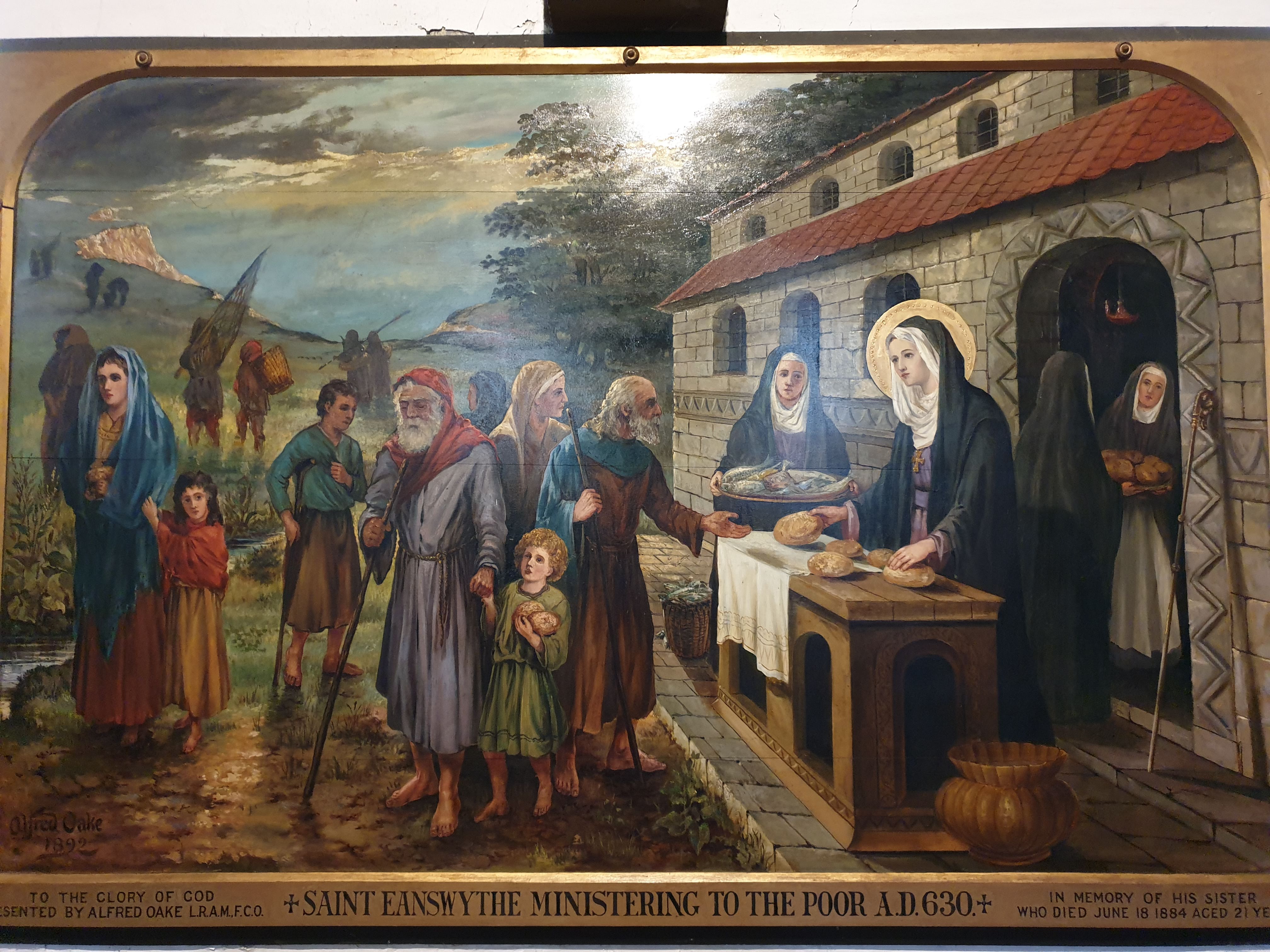
As I pause to tie my bootlaces by the Town Cross, venue for the making of mayors for many centuries, my body shudders as a young woman brushes past me, the hem of her blue dress grazing the grass border, and her white headpiece fluttering in the wind. She carries provisions – bread, leeks and a small flagon of beer – for the poor in a round wicker basket, forswearing another potentially lucrative tryst with a Northumbrian nobleman, orchestrated by her frustrated father.

Her head bowed, she whispers “Good evening, sir, God be with you”. Before I can frame an intelligible response, she disappears behind the west window.  

Composing myself as best I can in the circumstances, I shamble on past the crumbling tombs, narrowly avoiding a collision with a rat, scurrying across my path to the sanctuary of the lopsided lychgate leading into Church Street. The Pullman pub is empty, save for a few flickering candles and a lone member of bar staff deep in conversation with his mobile phone. 

The lanterns of Rendezvous Street are unusually dim, and the restaurants are sparsely populated. 

The stillness is unnerving, but strangely thrilling.

I turn into the narrow, twisting, rain drenched street that slides down towards the harbour.

Many months have elapsed since chaotic, cacophonous Charivari had snaked up that old thoroughfare, all drums and whistles and cymbals, and other less conventional instruments. More recently, the ground had groaned beneath the burden of polished, red-laced “Doc” Martens, worn by follicly challenged pilgrims lumbering towards Gillespie’s and The Ship for an afternoon of Special Brew, and worship at the altars of Prince Buster and The Specials.

I am alone.

But am I?

The fog in my brain mirrors the slowly enveloping mist approaching from the bottom of the hill. Images of times past in this salty, saintly town start to consume my thoughts. 

Nothing is quite what it seems.

My longing for one last lingering look at the dazzling, daily alchemy conjured up in the rock shop near the top of the street Dickens christened a “crippled ladder” is soon answered. The heady, fashionable aromas of craft beer and Nicaraguan coffee cannot compete with the memory of the sickly sweet perfume radiating from that beloved spot, where, nose squashed against the glass, a small boy gasped in awe at the thick, long sticks of heaven being rolled.

“Let me in at the front, Michael, you’ve been stood there for ages”, pleads his tearful younger sister, Anna, her view obscured by the taller girl stood in front of her.

“Have they started giving out the bags of broken bits yet?”, another boy bellows from further back in the crowd.

A sudden, excited scrum confirms his suspicion as I catch an intoxicating whiff of granulated sugar.

It was often claimed that if Rowlands were to shut its doors for good, Folkestone would die; a prediction, thankfully, since proven dramatically wrong, 

I stumble into Steep Street Coffee House for cake and cappuccino, a combination that never fails to comfort. I am their last customer of the day and the staff, without being obtrusive, are cleaning up around me. The self-styled Folkestone Poet has vacated his customary sales pitch across the cobbles at Big Boys Burger, his heavy overcoat and leather balaclava no longer a match for the diminishing temperatures. 

I pass by Marley’s – or what I thought was Marley’s. From a dark upstairs room, redolent of patchouli and cigarette smoke, a loud, piercing jukebox exhorts me to “go to San Francisco” a seductive reminder of the original Summer of Love on such a bleak winter’s evening.

Two young men in afghan coats, and a messy profusion of facial hair, are huddled at the foot of the crippling, crumbling Bayle Steps. 

“Hey man, how’s it going?”

“Far out, whatcha doing’ tonight?”

“Going’ to Archies. The Lonely Ones are playing”.

Nice. I hear there’s some hot Swedish chicks in town too”.

“That’s settled then, Archie’s it is”. 

“Yeah, and I could kill for one of his salami rolls right now”.

I start to follow them through the door, only to find that the closer I get, the scene dissolves in the moist air, and I am left once more outside Marley’s rather than the Acropolis

The piercing cold slices through my flimsy denim jacket and hastens my progress to the bottom of the street. Everything is still again as I try to rationalise the scenes I have encountered in the past half an hour. 

I cross a deserted Tram Road car park and pass under the arch by Ovenden’s old forge into the empty fish market, tiptoeing around the grimy puddles that tend to settle there, whether it has rained or not. 

A solitary gull plods apologetically past, pining for Spring and the reopening of Chummy’s and Bob’s seafood stalls, when it will again be afforded means, motive and opportunity to ambush tourists for their fish and chips and tubs of whelks.

Pausing outside The Shell Shop, I appear to have stepped into an earlier time again. Men in cloth caps and heavy, seaweed encrusted boots trudge up the slipway opposite, lobster pots and herring nets half empty after an exhausting and disheartening shift. They slap their meagre catch on the floor of Fish Shed One, light cigarettes and congregate in whispered conversation.

‘Darkie” Fagg, “Cottage” Featherbe and “Lobby” Spearpoint are leaning on the railing and reminiscing about better days, while Old Ned Saunders, retired these ten years, is mending the sprat nets for a “free” pint or two in The Oddfellows Arms later this evening. 

On The Stade, wives and daughters juggle the demanding tasks of cleaning fish and supervising the smaller, and not so clean, children. 

Observing this picture, it is difficult to gauge which gender had the tougher life.

Meanwhile, grubby, barefoot young boys, oblivious to the dedication and drudgery of their elders all around them, chalk stumps on the wall of Clouts Alley.

“I’ll be Jack “Obbs, you can be Clarrie Grimmett. I’ll ‘it you into the “arbour, every time, just you see” brags nine year old Harry Sharp.

But with his first delivery, Clarrie, better known about these parts as Edmund, and, later years, “La La”, Taylor, traps Jack in front of his wicket and appeals for leg before.

“Owzat! Got you with me flipper, pom”.

A heated dispute follows, culminating in the great English batsman hurling his bat against the wall and storming off in the direction of Redman’s boat builders.

His mother, ankle deep in half gutted dogfish and three scruffy toddlers, calls: 

“Harry, your tea is ready. And find your brother before you come in”.

“Five more minutes, mum. I’ve got to bowl Don Bradman out first. it won’t take long”.

“Five more minutes, my arse – you’ve got thirty seconds. This tea won’t wait. If you don’t get to the table soon, the other kids will have your share”

A case of bad mum stopped play.

As this scene of family harmony evaporates, I hear, from across the harbour, a sergeant major’s earsplitting admonition to “Step Short”  to a long procession of uniformed men stomping down the slope from the Leas above.

The rhythmic sound of boots on concrete is accompanied by raucous renditions of Pack up Your Troubles in Your Old Kit Bag and It’s a Long Way to Tipperary, as the soldiers march to the waiting ships that will take them to the Western Front.

But there is one last treat before their sombre adventure begins.

Inside the harbour station waiting room, two formidable middle aged women adjust their pinafores and rearrange any curls that have slipped beneath their flower bestrewn boaters. They inspect the massive urns containing the last hot, strong tea most of these men will ever drink.

“Come on boys, form a straight line, you don’t have long, you know”, Flora Jeffrey cries out with a tinge of regret in her voice, while her sister Margaret cuts thin slices of trench cake and bread pudding to complete what, for many of these condemned men, will be their last meal.  

“And don’t forget to sign the visitors’ book before you do”.

“All right, all right, you sound like me muvver – nag, nag, nag”, one private who claims to be twenty one but looks barely sixteen, retorts, as he lurches towards Margaret and slurs:

“Give us a kiss”.

But before he can perfect this unwise manouevre, a grizzled veteran of Mafeking and Ladysmith yanks him back by his collar and barks:

“Show the ladies some respect, young ’un’. You ain’t in the playground now, y’know”.

“Sorry, old timer, I didn’t mean nuffin’ by it, it was just a bit of fun”.

Flora chuckles: “You got off lightly there, my boy, that’s nothing to what Margaret would have done to you if you’d got any nearer!”.

An outpouring of communal hilarity is unleashed, and the embarrassed teenager slinks back into the anonymity of the crowd.

I separate from the excited, but fearful, throng with the final strains of Keep the Home Fires Burning ringing in my ears, and join the boardwalk that connects the station with the base of the thirty year old water lift along the beach to the west. 

But I have hardly stepped foot on the old railway sleepers before finding myself in the midst of a large conglomeration of buildings, including a swimming pool, boating lake and fairground rides.

As I try to take all this in, a crew cut kid in knitted cardigan and khaki shorts can be seen rushing into a huge, dimpled dome that is destined to be his whole world for the next two weeks. He will never tire of rolling a penny for plastic motor cars or shooting a steel ball into a hole for packets of mints.

His father and mother, the latter clutching a wad of what appear to be tickets, frown as they dismount from the blue plastic seats they have occupied for the past two hours, where they had been subjected to an increasingly annoying loop of “legs eleven”, “two little ducks, twenty two” and “two fat ladies’ eighty eight”. 

The boy drags himself from the penny pusher slot machine and scampers towards them in a frenzy of excitement.

“How many wins did you get, mum?”.

“Eight”.

His heart sinks. “Oh no, that big cuddly monkey on the bottom shelf is nine wins. Can you play some more games and win it for me?”.

“We don’t have time, darling; besides dad and I want that nice set of tea trays that are eight wins. They will be just perfect for our TV dinners when we get home”.

“Boring”. 

Feeling betrayed and despondent, the boy skulks off in the direction of the Runaway Coaster.

But he is soon appeased by a promise to go to his favourite fish and chip restaurant in Tontine Street for tea.

Intermittent drizzle and mist has given way to steady rain and a thickening gloom. Hungry and shivering, I resolve to return home. 

Christmas lights bestride the street across the ragged rooftops, and retailers and restaurateurs contend for the accolade of best dressed window, though tonight there is nobody about to judge them. 

Apart from the echo of my boots upon the sodden cobbles, silence is restored.

Until I reach Archie’s.

From that same gloomy upstairs window from whence the Flowerpot Men had serenaded me two hours – and a hundred and fifty years – earlier, the Small Faces remind me that:

“It’s all too beautiful”. 

After the battering my senses have taken this evening, I remain to be convinced of the veracity of this hypothesis.

So I try, for the second time, to gain access to the old haunt of hippies and radicals.

As I take my first hesitant steps in its direction, fully expecting to find myself in Marley’s again, the doors open of their own accord and I am permitted to enter.

And there, waiting to greet me, is the original owner, Mickey Argegrou, who is anxious to introduce me to his special guests for the night. 

To my astonishment, St Eanswythe is here. The modest blue and white garments she had been wearing during our perfunctory encounter in the churchyard earlier have been replaced by brightly coloured, patterned flower dress and matching peaked hat. She is sampling her first ever cup of coffee and, judging by the uncharacteristic grimace that quickly follows, she is unlikely to order a second. Water from her own spring and the occasional small goblet of mead will remain her preferred tipples. 

With the final troop ship of the day, Engadine, set sail for Boulogne, and the Mole Cafe consequently closed, the indomitable Jeffrey sisters have swapped their pinafores for elegant three quarter length dresses. They appear to be conducting a taste test of Mickey’s famed rum babas, comparing them in the process with their revered fruit cake.   

John Brickell, still in his overalls and safety cap, is here too. He has disappointed his vast army of young fans by holding back the remnants of today’s rock rolling, handing the broken bits around to the grateful regulars, who find them a perfect accompaniment to their cocktails. 

And Harry Sharp, grown in the past hour into a handsome young man, but still smarting from his first ball duck at the Clouts Alley Oval, is feeding the jukebox, while Old Ned Saunders, released from his net repairing duties, though not separated from his favourite fisherman’s jumper, for the evening, is leading a communal sing along to the latest tune selected by Harry:

“Those were the days, my friend”.

After the scenes I have witnessed this evening, I am inclined to agree. 

Read Full Post »


Waves sweep through railway arches

And Rip Tide and Isabella,

Sea Warrior and Connemara,

Long time inner basin residents,

Swing and sway

To a soaring seagull symphony.

Folkestone’s Marmite building too

Comes to life once more;

Buses from Runcorn, Rhyl and Redcar

Offload oversized congregations,

Suitcases outnumbered by

Disability impedimenta.

The quayside is converted

From pedestrian thoroughfare

To geriatric racetrack

As mobility scooters

Scatter unwary walkers,

While rickety zimmer frames

Clog up the wide, windowed doorway.

An elderly couple from Cleckheaton,

Weary and windswept from seafront stroll,

Stagger from harbour fish bar

To plant their tired torsos

On the refuge of roadside benches.

Weekend specials are back on the menu,

With almost every still standing Sixties star

Scheduled to perform in the coming months.

Inside, there’s not a spare seat

In the suffocating heat of the lounge bar;

Tables are laden with leftover sandwiches

And half empty glasses of gassy beer;

Debate lurches from Covid controls

To rabid rants about refugees,

Inflamed by hate-filled headlines

In the crumpled copies of the

Daily Mail and Daily Express

Left lying on abandoned chairs.

Another bus, bound for Margate,

Sandwich, Canterbury or Chatham,

Parks outside to await the sedentary rush

From couch to coach in thirty seconds;

Its passengers forsaking Folkestone

No sooner than they have arrived,

Only to return to eat and sleep tonight

Before escaping again to towns

No more deserving of their patronage.

Dover Docks and Cap Gris-Nez

Lurk somewhere beyond the growing gloom;

What catastrophes might be unfolding

On that slim, unstable stretch of water?

A headless chicken on Rocksalt’s roof

Reddens and revolves in sudden frenzy,

While in the ballroom along the road

A bingo caller hollers “two fat ladies”

To a sparse but satisfied audience.

As the sun punctually dips down

Beyond the Jelly Mould Pavilion,

The receding tide meanders 

Through the East Head gateway,

And the inner harbour boats

Collapse back on their sides.

Read Full Post »


Taking tea on the Spanish Steps

In the shadow of Shelley and Keats;

An English oasis under a Roman sun

Lace tablecloth, doilies and Sunday best.

As we gorge on hot buttered scones,

Strawberry jam and fresh whipped cream;

Hurriedly furled beach umbrellas

And shredded scarves on sticks

Bob down abruptly below the wall.

Guests turn from their unknowing guide

To ponder if this elegant couple

Are from the catwalk or TV.

But no celebrities to see here.

Just a couple of English tourists

Enjoying a birthday treat.

Curiosity extinguished,

The inattentive guests scuttle

To their TikTok shorts

And Instagram selfies.

I pour another pot of Babington blend

And scoop up the remaining crumbs

Of my salmon and cucumber sandwich.

While a group of Korean millennials

Fresh from a Via Condotti safari,

Flaunt and parade purchases from

Prada, Gucci and Versace.

More tea, your Holiness?

Read Full Post »


From Menlo Park and Mountain View

They stalk the streets where strollers go,

Forbidding beasts with blacked out eyes

Bound for Sunset, Haight and Castro.

As dusk falls over Salesforce Tower,

And Transamerica’s tip fades,

They blend in with the growing gloom

Yet still stand out on their parades.   

Beside a bougainvillea bush

Between wide Dolores and Church,

Silently these modern Molochs

Pull up to of their cargo purge.

They vomit forth a dozen men,
Each unaccompanied and young,

Not a word spoken between them

Nor glance of recognition sprung.

Their only friends matching backpacks

From which hang heavy hydro flasks,

Courtesy of the company  

That pays them for their key tech tasks.

This quiet yet purposeful dance

Will recommence next morn at eight,

When partners jog to coffee shops,

Before their nail and yoga dates.

Read Full Post »


A bright, brisk morning

In a small English town,

I order an extra shot americano

In the one coffee house

That does not reek of grease,

And take a seat outside.

From the doubtful comfort of my

Three and a half legged plastic chair

I scan the temptations around me:

“Nails Palace – Professional Nail Care for Ladies”,

“Cash Generator – the Buy, Sell and Loan Store”,

“Tanning Heaven”,

And the Salvation Army’s “Community Store”,

Promising “Heart to God, Hand to Man”.

“Eel Pie Island”, specialists in all day breakfasts,

Proudly proclaims in yellow, peeling letters,

It is a “Caf’e”, an apostrophe planted

Between the “f” and “e”.

The “Hot 4 U Pizza, Chicken and Kebab” house

Has closed, victim of too much competition

In the fast food field,

Proof that you CAN have

Too much of a good thing.

Unless it’s burgers and jumbo sausage rolls.

Obesity is a badge of honour here.

In frayed makeshift marquees

And spread along the pavement,

Traders display their wares –

Leather jackets, shell suits,

Batteries, watches, mobile phones, 

Toys, rugs, carpets, curtains,

Handbags, purses and luggage –

Each screaming the critical selling point of

Affordability.

Relatively.

The saucy entreaties of the meat wagon guy

To “come on girls, don’t be shy,

Give my lovely meat a try”

Trigger giggles but no takers;

A further invitation to pinch his pork loins

Is similarly snubbed.

Granville’s traditional barber’s shop

Has closed after fifty years;

Its red and white striped pole

No longer rotates, confirming

There’s nothing for the weekend here.

Supplanted by a succession

Of glitzy Turkish emporia

Offering an eye watering array

Of treatments for every part

Of the modern male head and face.

The Lord Raglan pub is also boarded up,

A ragged, handwritten paper sign

Flaps in the vape drenched breeze;

Some wag has inserted an “i”

Between the words “to” and “let”.

Country crooners from the fifties

Trill through the babble

Of Bengali, Romanian, Arabic

And English

That assail my ears.

The RAC canvasses for new recruits

But most people here do not drive,

Unless you count the cavalcade of

Motorised scooters and wheelchairs

Wreathed with union jacks and teddy bears

Parked outside the padlocked toilets.

Bald middle aged white men, 

Their relationship with teeth

Over,

Flaunt their body art

Of indecipherable oriental slogans,

Football team allegiances

And the obligatory catalogue

Of proud progeny,

Many of whom they have

Not seen for years.

Japanese tosas and pit bull terriers,

Acquired more for their menace

Than their questionable cuteness,

Slowly encircle each other,

Doing nothing more threatening

Than exploring each other’s private parts.

Teenage mums congregate outside Gregg’s 

To share a cigarette and debate

Last night’s episode of Love Island,

To compare frilly pram accessories,

And to show off the clothes just bought

For Noah and Amelia in Primark.

Occasionally they turn around to bark

At their same bored and testy toddlers

Committing the heinous crime of

Being children.

An Albert Steptoe tribute act

Stutters along the street,

Peering professionally

Into every bin and doorway

For bottles, fag ends

And unfinished food scraps,

Leaving the council street cleaner

To deal with the discarded needles.

The midday sun glints through

The single, leafless tree,

Where neither Vladimir nor Estragon wait,

As I drain my second americano

And head for home. 

And yet, it is I who feels observed,

A figure of curiosity,

Even suspicion,

With my fancy coffee,

Collection of Eliot’s poetry

And notebook and pen,

Observing and trying to capture

Life.

Read Full Post »


On what would have been his 106th birthday, a poem from the great Lawrence Ferlinghetti, founder and owner of the City Lights bookstore in San Francisco. Never have its sentiments been more pertinent.

Pity the nation whose people are sheep
And whose shepherds mislead them
Pity the nation whose leaders are liars
Whose sages are silenced
and whose bigots haunt the airways
Pity the nation that raises not its voice
but aims to rule the world
by force and by torture
And knows
No other language but its own
Pity the nation whose breath is money
and sleeps the sleep of the too well fed
Pity the nation Oh pity the people of my country
My country, tears of thee
Sweet land of liberty!

Read Full Post »

Older Posts »